Secure Payments and Certification Transparency in Online Jewelry Stores
Jewelry isn’t just a product—it carries emotional meaning, cultural symbolism, and long-term value. When customers purchase jewelry online, they aren’t simply choosing a design; they’re placing trust in purity, craftsmanship, and the brand’s credibility. Unlike fashion or fast-moving categories, jewelry transactions are considered purchases, often associated with gifting, milestones, and personal expression.
As digital commerce grows, so does the need for jewelry brands to demonstrate security and authenticity online. Customers not only expect aesthetic visuals and detailed descriptions, but also proof of originality, authorized certificates, and secure payment flows that protect their financial and personal information.
For brands scaling online, platforms like Shopaccino support structured product catalogs, secure checkout, customer profiles, payment gateway integration, and the ability to digitally attach certificates for each SKU—helping premium jewelry feel trustworthy and refined even in a digital environment.
In this guide, we explore how jewelry brands can create a digital buying experience rooted in luxury, confidence, and transparency.
Challenging Area – The Risk & Hesitation Behind Online Jewelry Purchases
Selling jewelry online demands more than a well-designed website. The concerns are deeper and emotional.
Customers hesitate because:
- They cannot physically inspect the craftsmanship,
- They are unsure about trust, purity, and originality,
- They fear counterfeit materials or misrepresented finishes,
- They want assurance that the payment is safe for high-value orders.
For brands, this translates into operational obstacles—handling different product categories, maintaining accurate documentation, managing return-unfriendly SKUs, and supporting secure transactions. When these elements are handled manually or inconsistently, customer confidence drops and conversion weakens.
Even visually beautiful sites fail if customers doubt authenticity.
Their Customer Challenging Area – What Jewelry Buyers Expect
Online jewelry customers may differ by budget, taste, and preference, but their expectations converge around trust.
They Need Proof Before Purchase
Buyers want to see certificates, origin notes, and brand-backed documentation, not just claims.
They Need Secure and Smooth Payments
A high-value checkout should feel effortless yet protected—it shouldn’t push customers into offline transfers unless chosen voluntarily.
They Want Product Transparency
Clarity in design detailing, finishing, materials, dimensions, and packaging builds confidence.
They Want Confidence in Post-Purchase Handling
Tracking, packaging, customer support, and safe delivery matter as much as pre-purchase experience.
Even fashion jewelry customers evaluate trust cues—not just fine jewelry buyers.
Solution – How Digital Platforms Enable Trust-Built Jewelry Commerce
To convert hesitant buyers, brands must combine storytelling, assurance, and technology.
Platforms like Shopaccino enable jewelry brands to:
Showcase Certification with Premium Presentation
Upload digital certificates, authenticity documents, or branded quality cards directly to product pages, ensuring customers feel validated at first glance.
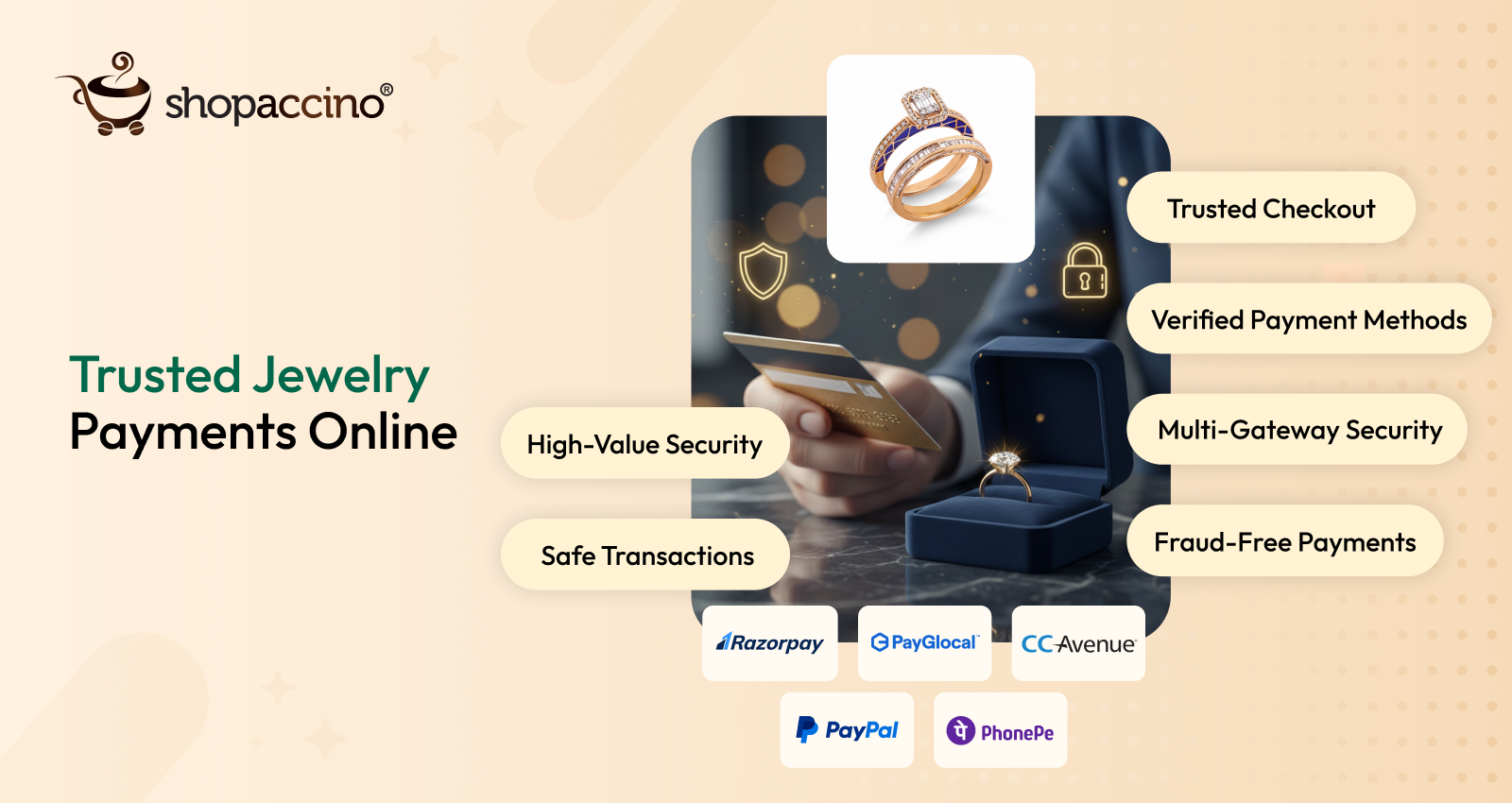
Offer Secure, Multi-Gateway Payments
Integrate trusted payment providers that support cards, wallets, UPI, and EMI options—reducing friction at checkout.
Run Centralized Order and Customer Workflows
High-value jewelry demands accuracy at every step—centralized workflows ensure orders, customer details, and fulfilment tasks stay coordinated, reducing errors and maintaining a premium service standard.
Maintain Structured Product Catalogs
Organizing collections by material, theme, and design style helps premium buyers shop intuitively.
These tools make trust scalable, not manually managed.
How to Implement – A Step-by-Step Approach for Jewelry Brands
Step 1: Build Clear Product Pages with Documentation Sections
Each individual SKU should have space to showcase certificates, packaging notes, and craftsmanship details. This elevates the product from "price and image" to "proven premium value."
Step 2: Integrate Multiple Secure Payment Gateways
Offer credible payment modes that instill confidence:
- Card payments for high-value items
- UPI for fast checkout
- Wallet or EMI options for younger buyers
The goal is to reduce hesitation at the final moment.
Step 3: Present Packaging & Handling as Part of Brand Experience
Safe packaging, tamper-proof seals, care instructions, and gift-ready presentation signal professionalism and value.
Step 4: Enable Communication Touchpoints
Order alerts, shipping updates, and support channels build trust through transparency.
Step 5: Centralize Order Management
Ensure dispatch accuracy, avoid manual mislabeling, and maintain clean workflows—high-value products demand precision.
Premium jewelry brands succeed when technology supports trust, not complicates it.
Benefits of a Transparent and Secure Online Experience
Higher Conversion and Faster Decisions
When proof and payment credibility exist upfront, fewer customers abandon carts.
Stronger Brand Authority
Documentation elevates perception, positioning brands above generic jewelry sellers.
Reduced Customer Support Friction
Proactive transparency reduces questions, complaints, and disputes.
More Repeat Purchases
Customers who trust the first purchase return for gifting, festive, and seasonal shopping.
Scalable Digital Operations
With centralized systems, brands expand without compromising quality control.
A trusted brand becomes a long-term asset—not just a digital store.
Conclusion
Jewelry is one of the most value-sensitive ecommerce categories, where trust is a currency as important as design. Buyers want clarity, proof, assurance, and smooth experience long before they click “Buy Now.” Premium brands must treat authenticity and payment security as central elements of digital strategy, not optional add-ons.
Platforms like Shopaccino empower jewelry brands to manage secure payments, structured catalogs, customer profiles, and certificate-backed product pages—helping turn digital storefronts into premium shopping experiences.
Trust is no longer a marketing statement—it’s a digital feature.
FAQs
Certificates help validate product quality and reduce purchase hesitation.
Secure and convenient payment modes build confidence for high-value checkout.
Yes—making them visible on product pages strengthens early trust.
Not always, but quality notes and material transparency still help conversions.
Yes, but using platform-structured uploads reduces errors and improves experience.
They reduce disputes and strengthen post-purchase trust, especially for first-time buyers.
Platforms like Shopaccino centralize catalog, payments, documentation, orders, and engagement in one system.