The Role of Email Marketing in eCommerce Growth
Email marketing has quietly remained one of the most powerful engines of ecommerce growth. While social media trends evolve every season and paid advertising gets more expensive each year, email continues to deliver consistent conversions, long-term customer relationships, and predictable revenue. For MSMEs, D2C brands, wholesalers, distributors, exporters, and manufacturers, email is not just a communication channel—it is a strategic layer of business growth.
Unlike rented audiences on social platforms, email gives you a direct line to your customers. Every campaign, every automated sequence, and every behavioural trigger directly influences how shoppers interact, return, and eventually become loyal buyers. And with integrated ecommerce platforms enabling automated emails—such as abandoned cart alerts, order updates, and loyalty notifications—email marketing has become even more indispensable.
This article explores how email drives ecommerce performance, where businesses struggle, what customers expect, and how a structured email system can transform a store’s repeat-purchase strength.
Challenging Area: Why Most Ecommerce Brands Struggle With Email
Even though email marketing is known for its high ROI, many businesses fail to tap into it meaningfully. The challenges usually fall into three categories:
Lack of Customer Segmentation
Most brands send the same newsletter to everyone. This leads to low opens, low engagement, and rising unsubscribe rates. Segmentation—based on buyer type, purchase history, geography, or browsing behaviour—is often missing.
No Automated Customer Journey
Email marketing becomes ineffective when it depends entirely on manual campaigns. Without automated flows (welcome emails, cart abandonment, upsell sequences), customers receive inconsistent communication.
No Integration With Store Activity
If emails are not connected to order status, inventory availability, or user behaviour, brands lose opportunities to engage customers at the right moment. Manual processes also lead to delays, errors, and missed conversions.
Low Content Quality
Some MSMEs struggle with writing persuasive copy, designing mobile-friendly templates, or sharing valuable content consistently. Referring to structured resources like sample warm email templates can help brands improve tone, clarity, and engagement while building consistent communication systems similar to those maintained in professional platforms such as Recruit CRM.
Heavy Dependence on Paid Ads
Many D2C and B2C brands rely excessively on Instagram and Google Ads for growth. When acquisition costs rise, stores without strong email systems find it difficult to sustain revenue.
These challenges accumulate over time, preventing stores from creating stable recurring revenue.
Their Customer Challenging Area: What Today’s Shoppers Expect
Modern buyers are far more informed, selective, and sensitive to brand communication. Their expectations include:
Useful Content, Not Just Promotions
Customers expect practical updates—order alerts, product recommendations, helpful tips—not constant sales pushes.
Timely and Accurate Notifications
Updates like order confirmation, shipping details, and return notifications must arrive instantly and reliably.
Personalized Recommendations
Shoppers want emails that match their browsing behaviour, previous purchases, preferred categories, and price ranges.
Mobile-Optimized Communication
Since most customers open emails on mobile, they expect short, clear, responsive designs that load instantly.
Clear Loyalty and Reward Updates
Customers desire transparency—how many points they earned, when they can redeem them, and which offers apply.
Any deviation from these expectations results in lower engagement and weaker brand relationships.
Solution: How an Integrated Ecommerce Platform Elevates Email Marketing
Email marketing only becomes truly powerful when it is connected to the ecommerce system. AI in Email marketing only becomes truly powerful when it is connected to the ecommerce system.Integrated platforms like Shopaccino enable stores to automate and personalize communication based on real customer actions.
Here’s how this creates business impact:
Automated Emails Triggered at the Right Time
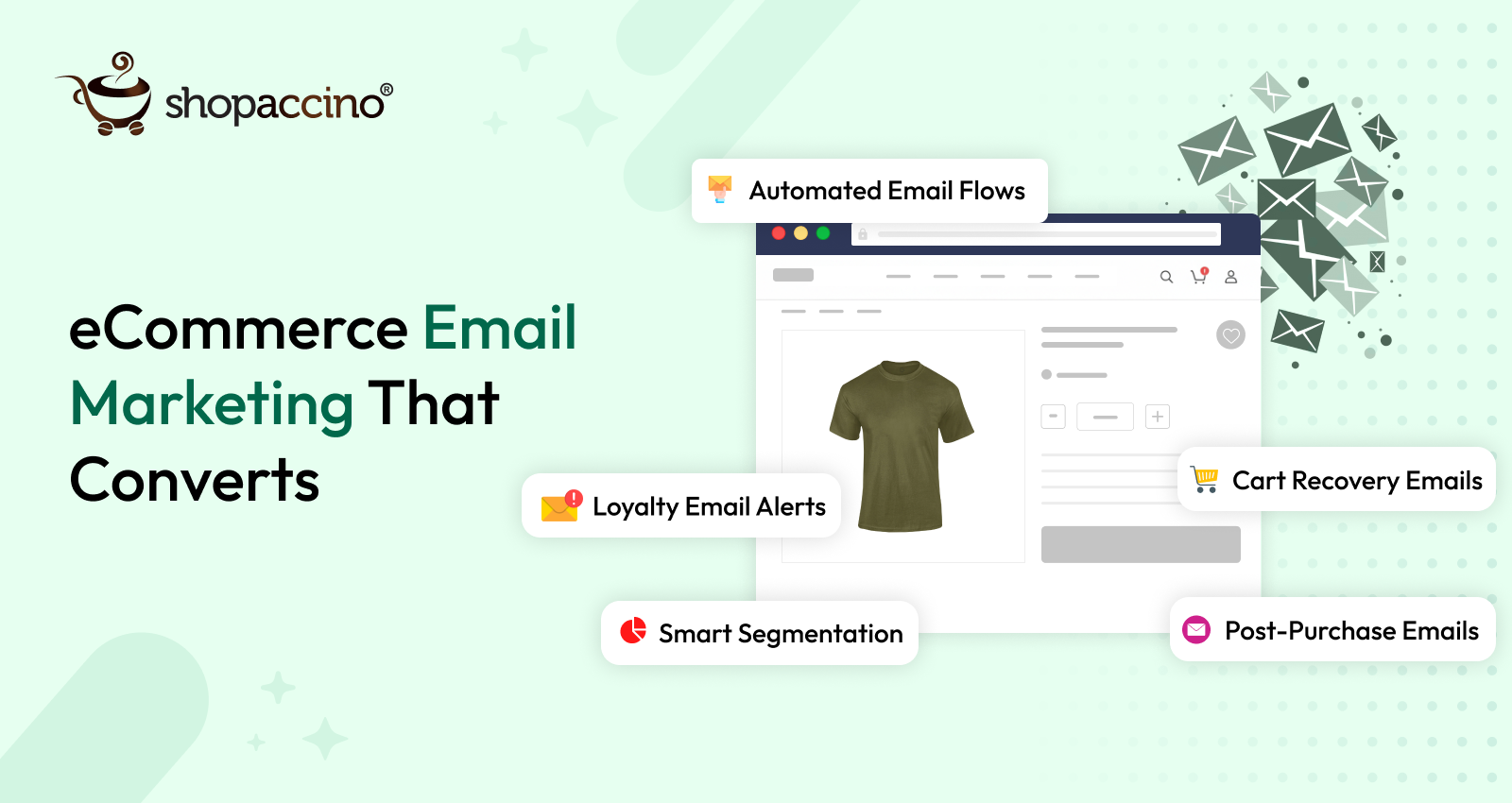
From welcome series to order status updates, automated flows transform email from a broadcast channel to a behaviour-based tool.
Examples include:
- Abandoned cart recovery messages
- Order confirmation & invoice emails
- Shipping and delivery updates
- Return request notifications
- Loyalty and reward updates
These emails run on autopilot, ensuring customers feel supported at every stage.
Smart Segmentation
Integrated systems can segment customers based on:
- Cart behaviour
- Order value
- Geographical region
- Lifecycle stage (new, returning, dormant)
Segmentation leads to higher open rates, stronger engagement, and increased conversions.
Personalization at Scale
When product data and customer behaviour are connected, brands can:
- Recommend related products
- Highlight previously viewed items
- Send special offers based on past orders
- Suggest replenishment items (for consumables)
This level of personalization fosters loyalty and repeat purchases.
Seamless Data Flow for Better Planning
Since customer data, inventory, coupons, and orders are unified in one place, brands can:
- Plan campaigns tied to stock levels
- Promote bestsellers
- Push slow-moving items
- Automatically exclude unavailable products
This eliminates mismatched promotions and reduces customer disappointment.
How to Implement an Effective Ecommerce Email Marketing Strategy
To transform email into a growth engine, brands should follow a structured implementation process.
Step 1: Build and Organize Your Email List
Start by collecting emails ethically through:
- Sign-up forms
- Pop-ups
- Checkout opt-ins
- Account registration
- Reward program enrollment
- Compliant B2B email finder tools
Segment your list from day one to maintain clarity as you scale.
Step 2: Set Up Essential Automated Flows
Every ecommerce brand must activate these foundational automations:
- Welcome Series
A warm introduction that builds trust and boosts first-purchase conversions. - Abandoned Cart Recovery
A series of reminders that bring customers back to complete transactions. - Order & Shipping Notifications
Reliable updates that keep customers informed at every step. - Post-Purchase Follow-up
Requests for reviews, recommendations, and repeat orders. - Win-Back Emails
Special offers for customers who haven’t purchased in 60–90 days.
Integrated platforms make these flows seamless, improving customer experience dramatically.
Step 3: Plan Monthly Campaigns
Along with automations, run regular campaigns such as:
- New arrivals
- Seasonal collections
- Customer stories
- Exclusive offers
- Restock updates
High-quality content builds brand recall.
Step 4: Optimize Design and Copy
Ensure emails follow best practices:
- Mobile-responsive
- Clear hierarchy
- Single CTA
- Concise copy
- Strong subject lines
Avoid clutter; clarity drives conversions.
Step 5: Measure and Improve Continuously
Monitor:
- Open rate
- Click-through rate
- Conversion rate
- Bounce rate
- Unsubscribes
- Revenue per email
Use insights to refine subject lines, offers, and segmentation.
Benefits of a High-Performing Email Marketing System
When executed well, email becomes one of the highest-ROI channels for ecommerce.
Higher Conversion Rates
Automated sequences ensure customers receive timely nudges, boosting purchase completion.
Repeat Purchases & Loyalty
Personalized emails, order updates, and reward notifications strengthen long-term relationships.
Reduced CAC Dependence
Strong email systems reduce reliance on expensive ads, improving profitability.
Better Customer Experience
Timely, accurate updates instill trust and minimize customer service queries.
Stronger Brand Authority
Thoughtful content builds a deeper emotional connection with customers.
Conclusion
Email marketing remains the backbone of sustainable ecommerce growth. For MSMEs and digital-first brands navigating rising acquisition costs, email is the channel that stabilizes revenue, nurtures relationships, and fuels repeat purchases. When integrated with ecommerce operations—through automated flows, segmentation, and real-time data—email becomes more than a tool; it becomes a strategic advantage.
With platforms like Shopaccino offering automated abandoned cart reminders, order updates, promotional campaigns, and loyalty notifications, businesses can manage sophisticated email journeys without technical complexity. For brands committed to long-term growth, email is not optional—it is essential.
FAQs
Email allows brands to communicate directly with customers, drive repeat purchases, share offers, and automate critical updates, making it one of the highest-ROI channels.
Most brands benefit from 4–8 emails per month, balancing automated flows and scheduled campaigns without overwhelming subscribers.
Abandoned cart reminders, welcome sequences, order confirmations, and post-purchase emails generate the strongest engagement and revenue.
Yes. Modern ecommerce platforms simplify email automation, allowing even MSMEs to manage segmentation, triggers, and workflows easily.
By nurturing existing customers and generating repeat sales, email reduces dependency on expensive paid advertising.
Clean layout, short text, responsive design, clickable CTAs, and images optimized for fast loading.
Yes. Personalized subject lines and tailored recommendations significantly improve open rates, click-throughs, and revenue.