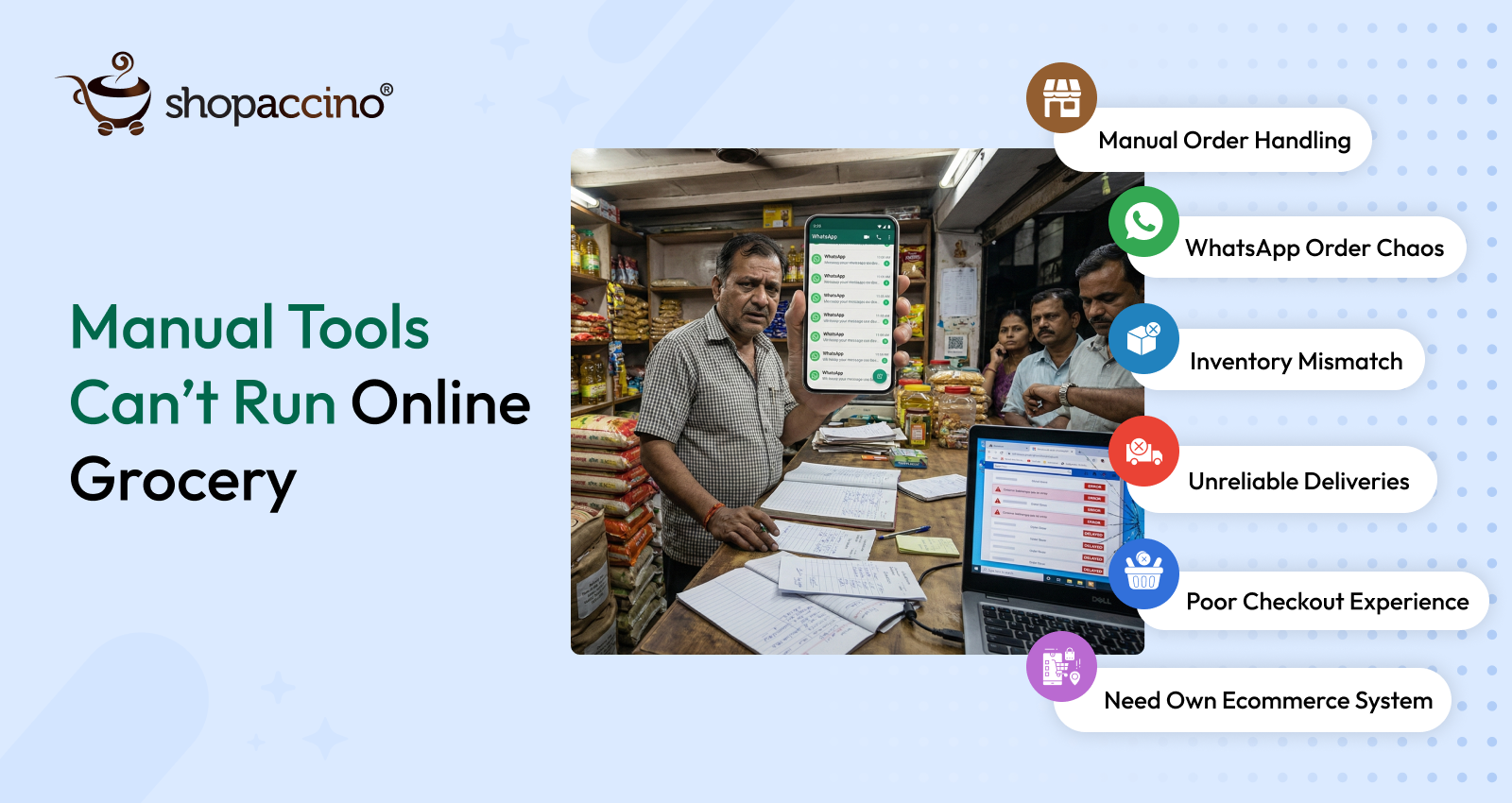
Why Grocery Stores Struggle Online Without Their Own E-commerce System
Going online looks easy for grocery stores. A WhatsApp number, a basic website, maybe an Instagram page—orders start coming in, and it feels like digital transformation has begun. But after a few weeks, cracks start showing. Orders are missed. Items go out of stock mid-day. Customers complain about wrong deliveries or delayed responses. Staff feel overwhelmed, and owners feel stuck.
This is not because grocery demand is low. In fact, online grocery demand is one of the most consistent and repeat-driven categories. The real problem is how grocery stores go online.
Most grocery stores struggle online because they try to run a digital business using manual tools and generic systems that were never designed for grocery operations. WhatsApp orders, spreadsheets, phone calls, and basic websites may work for a few customers, but they collapse as soon as order volume increases.
In this blog, we will explore why grocery stores struggle online without their own ecommerce system, what challenges store owners face daily, what customers actually expect, and how a purpose-built grocery ecommerce setup can transform online operations into a smooth, reliable, and scalable business.
Challenging Area: Where Grocery Stores Face Problems Online
Grocery stores are operationally complex by nature. When they go online without the right system, everyday tasks turn into bottlenecks.
Manual Order Handling Creates Daily Chaos
Many grocery stores receive online orders through WhatsApp messages, calls, or forms. Each order needs to be read, understood, rewritten, and shared with the packing team. This manual flow leads to:
- Missed messages during peak hours
- Incorrect quantities
- Forgotten items
- Duplicate entries
As order volume grows, manual handling becomes unmanageable.
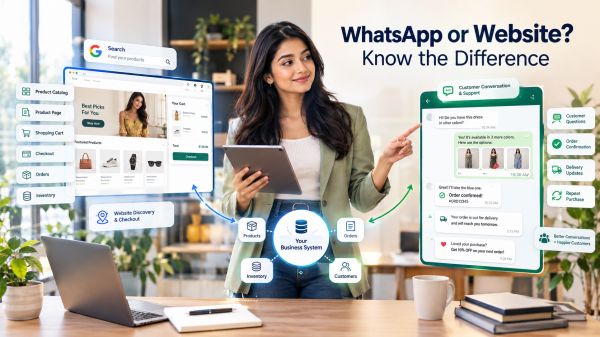
WhatsApp Orders Do Not Scale
WhatsApp feels convenient at the start, but it has serious limitations:
- No structured cart
- No real-time stock visibility
- No automatic order confirmation
- No order history for customers
Staff spend more time clarifying orders than fulfilling them.
No Centralized Product Catalogue
Without a proper e-commerce system, products exist only in physical shelves or Excel files. Customers cannot see:
- Available items
- Out-of-stock products
- Updated prices
- Variants or pack sizes
This leads to frequent follow-ups, substitutions, and customer frustration.
Inventory Mismatch Happens Daily
When stock is not synced digitally, items sold offline are still ordered online. This results in:
- Last-minute cancellations
- Partial deliveries
- Refund requests
- Loss of trust
Inventory confusion is one of the biggest reasons customers stop ordering again.
Checkout and Payment Friction
Generic websites often lack smooth checkout experiences. Customers struggle with:
- Multiple steps to place orders
- Limited payment options
- No clear order summary
Every extra step increases abandonment.
Delivery Becomes Unpredictable
Without a system to manage delivery slots, areas, and timing, grocery stores promise more than they can deliver. Riders get overloaded, routes become inefficient, and customers keep asking, “Where is my order?”
Their Customer Challenging Area: What Grocery Customers Expect Today
Grocery customers are not demanding luxury. They want clarity, speed, and reliability.
They Want to Order Without Explaining Everything
Customers do not want to type long messages or send voice notes for every order. They expect a simple list where they can select items and quantities easily.
They Expect Real-Time Availability
Seeing out-of-stock items after placing an order feels like a broken promise. Customers want to know what is available before they pay.
They Want Fewer Mistakes
Wrong items or missing products disrupt household routines. Accuracy matters more than discounts in grocery.
They Expect Fast, Clear Checkout
Customers want to review their cart, choose a delivery time, pay, and finish—all in one flow.
They Want a Consistent Delivery Experience
If delivery timing changes every day, customers lose confidence. Predictability builds trust.
They Prefer Professional Experiences
A structured ordering system makes customers feel they are dealing with a reliable brand, not an improvised setup.
Solution: How a Purpose-Built Grocery Ecommerce System Solves These Issues
A grocery ecommerce system is not just a website. It is an operational backbone designed specifically for daily grocery workflows.
Structured Online Ordering Instead of Messages
Customers browse a digital catalogue, add items to a cart, and place orders without manual interaction. This removes ambiguity and saves staff time.
Real-Time Inventory Synchronization
When stock updates automatically, customers only see what is actually available. This reduces cancellations, refunds, and complaints.
Clear Digital Product Catalogue
Products are displayed with names, prices, units, and images. Customers understand exactly what they are ordering.
Smooth Checkout and Payment Flow
An integrated checkout allows customers to:
- Review the cart clearly
- Select delivery options
- Choose payment methods
- Receive instant confirmation
This improves conversion and trust.
Delivery Flow That Matches Capacity
A proper system allows stores to manage delivery areas, slots, and order limits—so promises match reality.
Order History and Reordering
Customers can see past orders and reorder easily, which increases repeat business and reduces effort.
Platforms like Shopaccino are built specifically for grocery ecommerce, helping stores move away from chaos and toward structured, scalable online operations.
How to Implement an Own Grocery Ecommerce System (Step-by-Step)
Going from manual tools to a dedicated system does not need to be complicated.
Step 1: Digitise Your Product Catalogue
Upload all grocery items with prices, units, and categories. Keep it simple and accurate.
Step 2: Connect Inventory to Online Orders
Ensure stock updates automatically as orders are placed and fulfilled.
Step 3: Enable Structured Ordering
Allow customers to place orders through a cart-based system instead of messages or calls.
Step 4: Set Clear Delivery Rules
Define delivery areas, time slots, and daily order capacity to avoid overload.
Step 5: Activate Multiple Payment Options
Enable UPI, cards, and online payments to reduce cash handling issues.
Step 6: Train Staff on Digital Fulfilment
Teach staff how to process online orders, pick items, and update order status smoothly.
Step 7: Monitor and Improve Daily
Track common issues, customer feedback, and order patterns to refine operations.
Benefits of Having Your Own Grocery Ecommerce System
Fewer Order Errors
Structured ordering eliminates misunderstandings and missing items.
Better Customer Experience
Clear information, smooth checkout, and reliable delivery build trust.
Higher Repeat Orders
Customers return when ordering feels easy and dependable.
Reduced Staff Stress
Automation reduces manual coordination and constant clarifications.
Scalable Online Growth
The system grows with order volume without breaking operations.
Stronger Brand Image
A professional online experience sets the store apart from competitors.
Conclusion
Grocery stores do not struggle online because customers do not want to order groceries digitally. They struggle because manual tools and generic websites are not designed for grocery operations.
WhatsApp orders, spreadsheets, and phone calls create confusion, errors, and poor customer experiences. Over time, this drives customers away and discourages store owners from investing further in online growth.
An own grocery ecommerce system brings structure where there is chaos. It aligns ordering, inventory, checkout, and delivery into one smooth flow. With platforms like Shopaccino, grocery stores can move from survival-mode online selling to confident, scalable digital operations.
The future of grocery is not just online—it is system-driven.
FAQs
WhatsApp lacks structure, inventory visibility, and order history. As order volume increases, messages get missed, errors increase, and staff struggle to manage orders efficiently.
No. Grocery requires real-time stock, structured carts, delivery management, and smooth checkout—features basic websites usually do not support.
Customers prefer whatever is faster and clearer. A simple ecommerce ordering system is usually easier than typing long WhatsApp messages.
Yes. Purpose-built grocery ecommerce platforms are designed for small and mid-sized stores and reduce long-term operational costs.
It allows stores to control delivery slots, areas, and order limits, preventing overcommitment and late deliveries.
Yes. Easier ordering, order history, and reliability naturally encourage customers to return.