Why Indian D2C Brands Are Scaling Faster with Their Own E-commerce Website
The Changing Reality of D2C Growth in India
India’s Direct-to-Consumer (D2C) ecosystem has grown rapidly over the last few years. Brands across fashion, beauty, food, wellness, electronics, and lifestyle have emerged with strong products and loyal early customers.
However, as competition increases and customer acquisition costs rise, many D2C brands are discovering a hard truth:
Growth without ownership is unstable.
Early traction is no longer enough. To scale profitably and predictably, Indian D2C brands need more control over how they sell, how they engage customers, and how they build long-term value.
This realization is driving a major shift toward owning an ecommerce website powered by a reliable D2C ecommerce platform.
Why Marketplaces Were the First Growth Channel for D2C Brands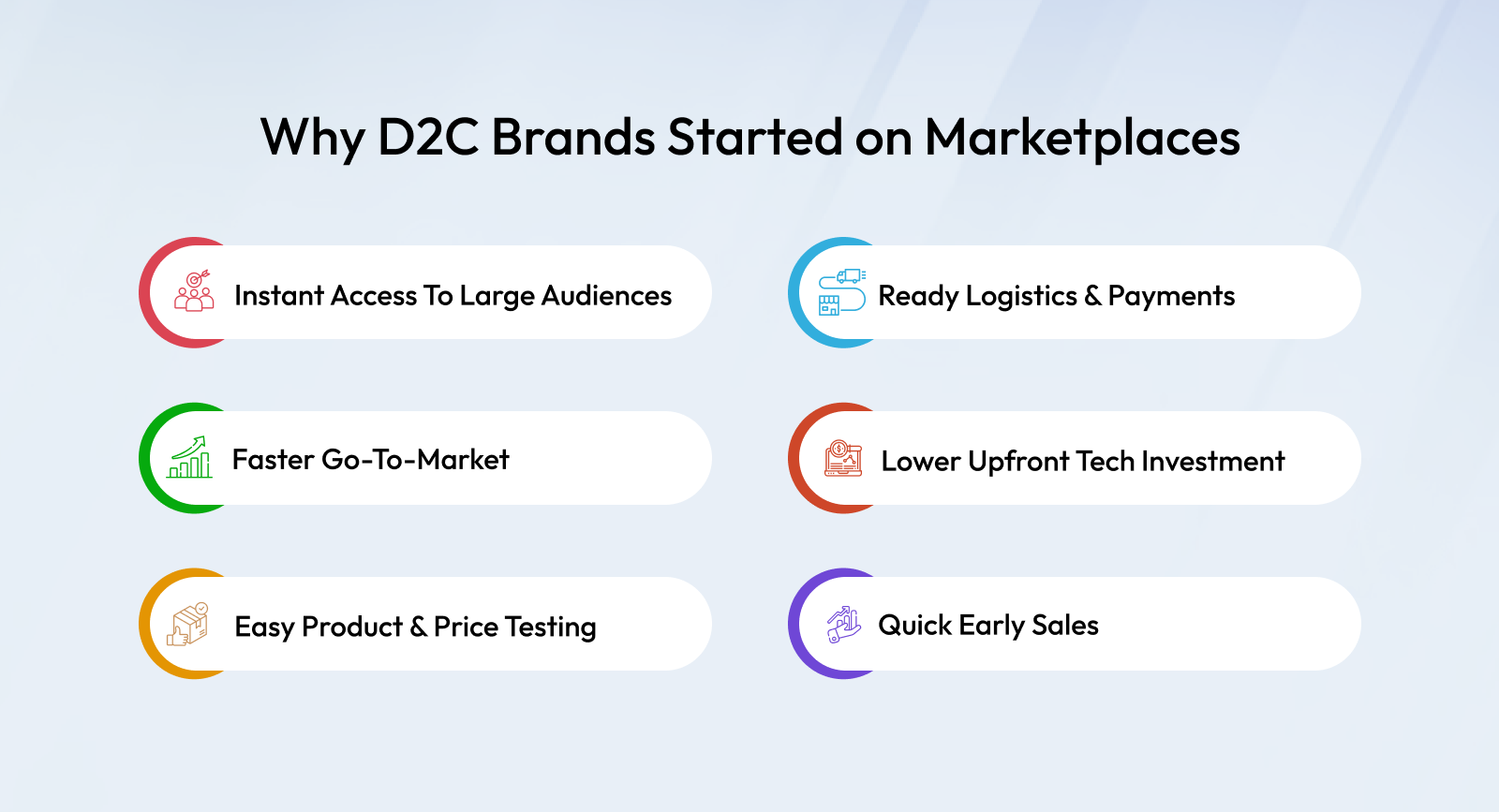
For most Indian D2C brands, marketplaces were the natural starting point.
What Marketplaces Offered Initially
- Instant access to large audiences
- Faster time-to-market
- Simplified logistics and payments
- Lower upfront technology investment
For new brands, this made marketplaces an efficient launchpad. They helped validate demand, test pricing, and generate early revenue.
But what worked well in the beginning started showing limitations as brands tried to scale.
D2C vs Marketplace: Where Scaling Starts to Break
The D2C vs marketplace discussion becomes important once brands move beyond survival mode and start thinking about long-term growth.
Key Limitations of Marketplace-Led Scaling
1. Shrinking Margins as Volume Grows
Marketplace commissions, logistics fees, advertising costs, and discount pressure increase with scale, reducing profitability.
2. Weak Brand Differentiation
On marketplaces, products are displayed in similar formats. It becomes difficult to tell a brand story or build an emotional connection.
3. No Ownership of Customer Data
Customer data belongs to the marketplace. Brands cannot directly communicate, personalize, or build long-term relationships.
4. Dependence on Algorithms
Sales performance depends heavily on algorithms, pricing wars, and sponsored visibility—factors outside the brand’s control.
As a result, many D2C brands find themselves growing revenue but struggling with predictability, profitability, and loyalty.
Why Owning an Ecommerce Website Changes the Growth Equation
An ecommerce website is not just another sales channel. For D2C brands, it becomes the center of gravity for growth.
1. Direct Ownership of Customers
When customers purchase through a brand’s website, the relationship belongs to the brand. This enables access to:
- Customer contact information
- Purchase history
- Browsing behavior
- Repeat buying patterns
This data is critical for building retention, personalization, and long-term value.
2. Full Control Over Brand Experience
A website allows brands to control:
- How products are presented
- How the brand story is told
- How trust is built
- How checkout and post-purchase journeys work
This level of control is impossible on marketplaces and plays a key role in building brand loyalty.
3. Stronger Unit Economics
Without marketplace commissions, brands retain more value per order. Even after accounting for marketing spend, direct sales often deliver healthier margins.
Better margins allow brands to reinvest in:
- Product innovation
- Customer experience
- Brand-building initiatives
Why Indian D2C Brands Scale Faster on Owned Channels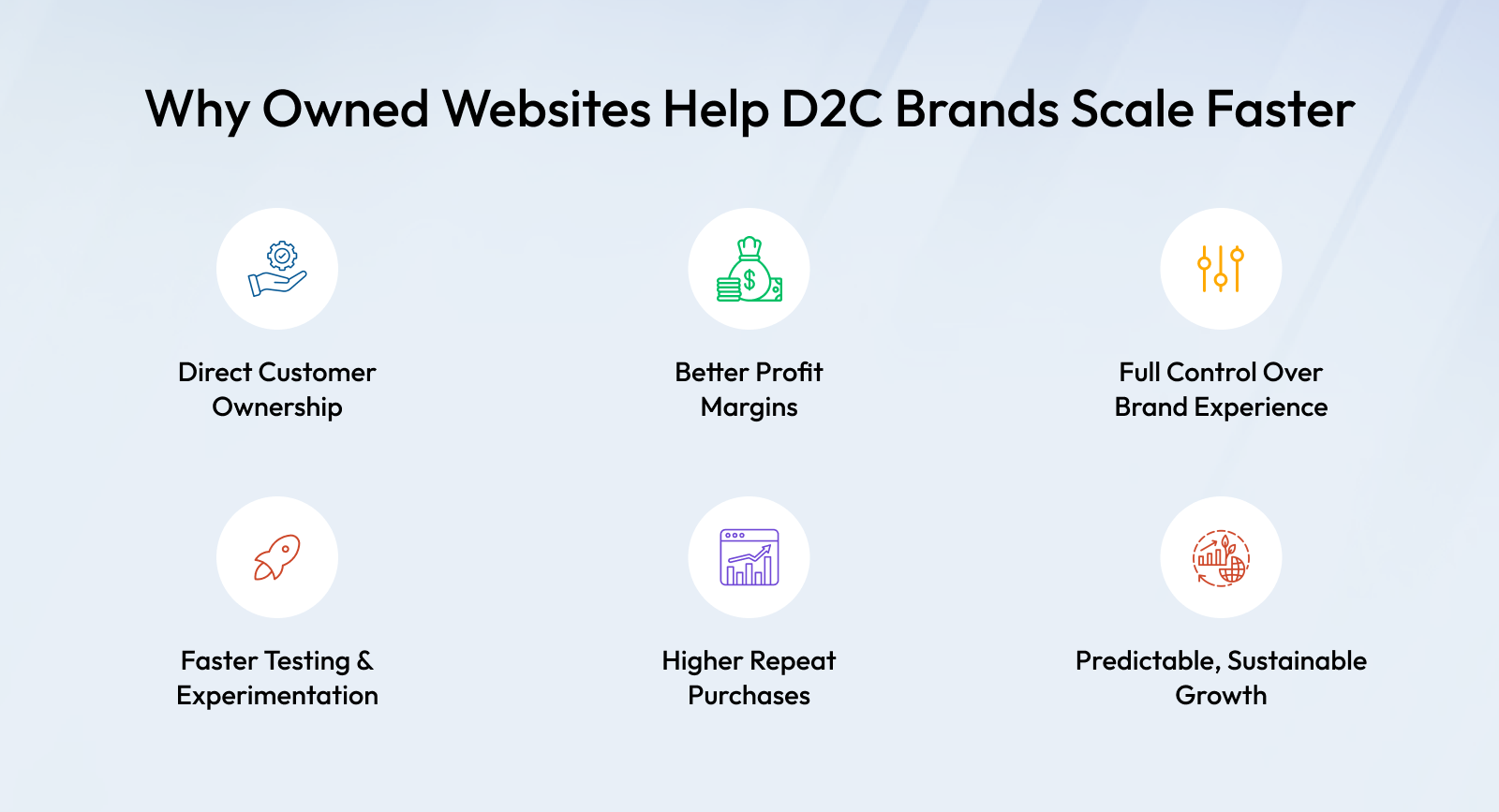
Scaling is not just about selling more—it’s about scaling efficiently and sustainably.
Brands with their own ecommerce websites can:
- Launch products without marketplace constraints
- Test pricing, offers, and bundles
- Build subscriptions and repeat purchase flows
- Optimize conversion journeys
- Develop direct customer communities
Over time, these advantages compound, making growth faster and more predictable.
The Role of Technology in This Shift
Owning a website alone is not enough. The speed at which a D2C brand scales depends heavily on the technology behind it.
Choosing the best e-commerce website builder is no longer a design decision—it’s a business decision. The best website builder for online store growth must support scalability, performance, and flexibility.
This is where choosing the right platform becomes critical for long-term success.
Why Technology Plays a Critical Role in D2C Scaling
For Indian D2C brands, growth challenges change quickly. What works at 100 orders a month often breaks at 1,000 or 10,000 orders. This is where technology becomes a growth enabler—or a bottleneck.
An e-commerce website is not just a storefront. It is the system that supports:
- Traffic spikes during campaigns
- Smooth mobile experiences
- Secure and fast checkout
- Marketing experiments
- Customer retention strategies
Brands that choose the right technology early are able to scale faster with fewer operational issues.
What Makes a Strong D2C Ecommerce Platform
A D2C ecommerce platform should be built for growth, not just for launching a website. Many brands start with basic tools but later struggle to scale because the platform cannot support increasing complexity.
Core Capabilities a D2C Platform Must Support
1. Scalability Without Performance Issues
As traffic and order volume grow, the platform must handle peak loads without slowing down or crashing.
2. Mobile-First Architecture
India is a mobile-first market. The platform must deliver fast, smooth experiences across devices, especially smartphones.
3. Flexible Checkout and Conversion Flows
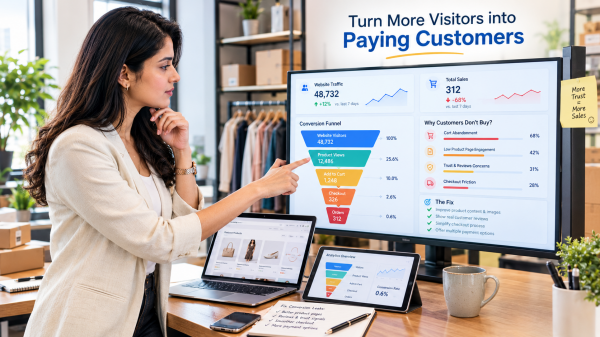
The ability to optimize checkout, test layouts, and reduce friction is critical for improving conversion rates.
4. Secure and Reliable Infrastructure
Downtime during sales or campaigns can be extremely costly. Stability is non-negotiable.
A platform that struggles in any of these areas will eventually slow down growth.
Best Ecommerce Website Builder: What D2C Brands Should Really Look For
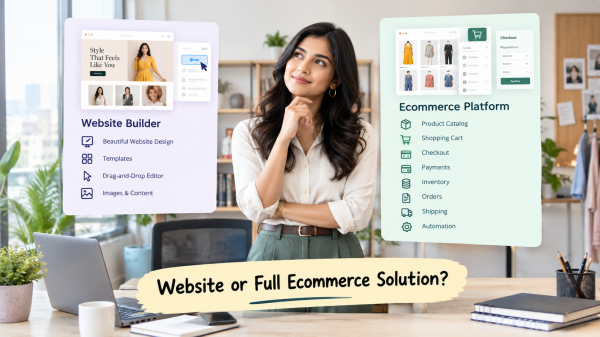
The term best ecommerce website builder is often misunderstood. It’s not about drag-and-drop ease or visual templates alone. For D2C brands, the best builder is one that supports long-term business goals.
Beyond Design: Key Evaluation Criteria
1. Growth Readiness
Can the platform support more products, more traffic, and more orders without requiring a rebuild?
2. Customization Control
Can brands customize product pages, checkout flows, promotions, and user journeys as they scale?
3. SEO and Performance Optimization
Organic traffic is a major growth lever. The platform must support SEO-friendly structures and fast load times.
4. Integration Capabilities
Marketing tools, payment gateways, logistics partners, and analytics must integrate seamlessly.
The best ecommerce website builder is the one that grows with the brand—not one that needs replacement after early success.
Best Website Builder for Online Store Growth (Not Just Launch)
Many platforms are excellent for launching an online store quickly, but scaling is a different challenge altogether.
The best website builder for online store growth must support:
- High-conversion product pages
- Optimized mobile checkout
- Advanced pricing and offer logic
- Retention tools like repeat orders and loyalty flows
Brands that outgrow their initial website builder often face costly migrations, lost SEO equity, and operational disruption. Choosing wisely early avoids this risk.
Choosing the Right Platform: A Practical Decision Framework
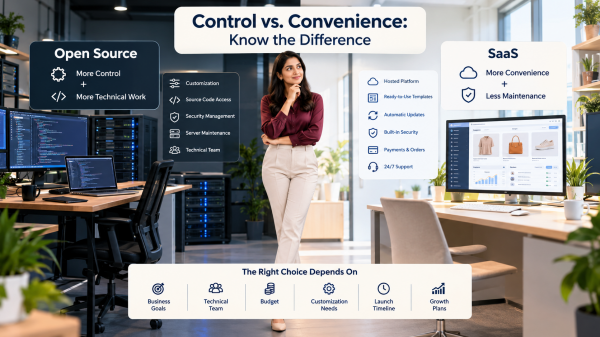
Choosing the right platform is one of the most important strategic decisions a D2C brand will make. Instead of relying on feature lists, brands should evaluate platforms through a growth lens.
Key Questions to Ask Before Choosing a Platform
- Will this platform support us 2–3 years from now?
- Can it handle traffic spikes during campaigns and sales?
- Does it allow us to own and leverage customer data?
- Can we optimize conversion without heavy development?
- How strong is platform support during critical moments?
If the answer to any of these questions is unclear, the platform may limit growth later.
D2C vs Marketplace: Why Technology Matters More on Owned Channels
When selling on marketplaces, technology decisions are largely out of the brand’s control. Marketplaces dictate layout, checkout, and customer experience.
On owned ecommerce websites, technology becomes a competitive advantage.
Brands can:
- Design unique shopping experiences
- Optimize conversion journeys
- Build retention and repeat purchase loops
- Experiment with pricing and offers
- Create long-term customer relationships
This is why brands that invest in the right platform early are able to scale faster and more sustainably.
How Technology Enables Faster Experimentation
One of the biggest advantages of owning an e-commerce website is speed of experimentation.
With the right platform, brands can:
- Test new landing pages
- Launch products instantly
- Run targeted promotions
- Optimize checkout flows
- Analyze user behavior in real time
This ability to test, learn, and iterate quickly gives D2C brands a significant edge over competitors relying only on marketplaces.
How Indian D2C Brands Are Using Their Websites as Growth Engines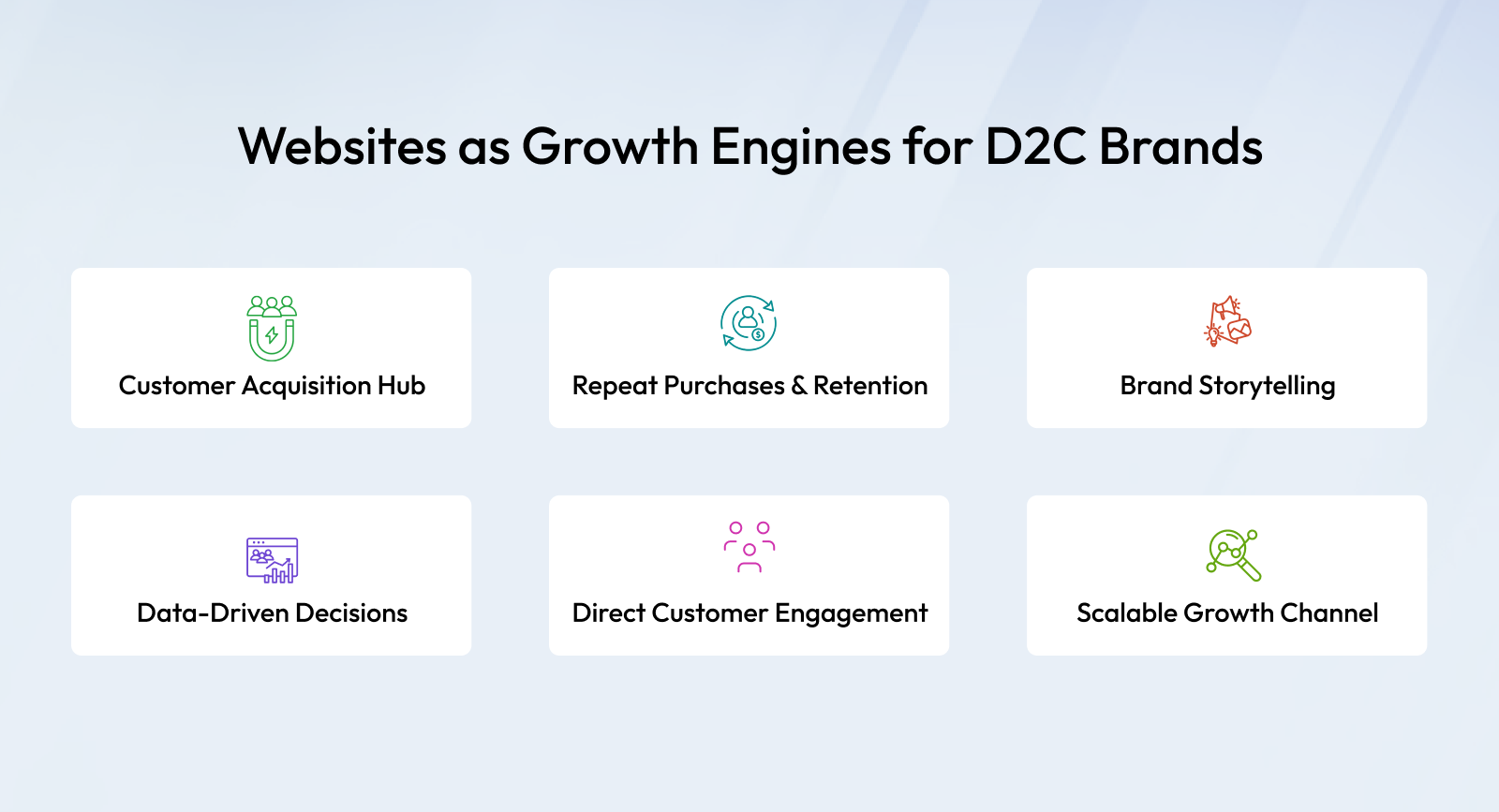
For Indian D2C brands, an ecommerce website is no longer just a sales channel—it has become the central hub of growth. Brands that scale faster use their websites strategically, not passively.
Instead of treating the website as a digital catalogue, high-performing D2C brands use it to drive:
- Customer acquisition
- Retention and repeat purchases
- Brand storytelling
- Data-driven decision-making
This shift is what separates fast-scaling D2C brands from those that stagnate.
Content-Led Growth: Building Trust Before Selling
One of the biggest advantages of an owned ecommerce website is the ability to educate before selling.
Indian D2C brands are increasingly using:
- Blogs and guides
- Product education pages
- FAQs and buying tips
- Use-case-based content
This content helps brands rank organically, build trust, and shorten the decision cycle—something marketplaces cannot offer.
Over time, content becomes a compounding growth asset that reduces dependence on paid ads.
Customer Retention: Where Real Scale Happens
Acquiring customers is expensive. Retaining them is profitable.
Brands with their own websites can build retention through:
- Personalized offers
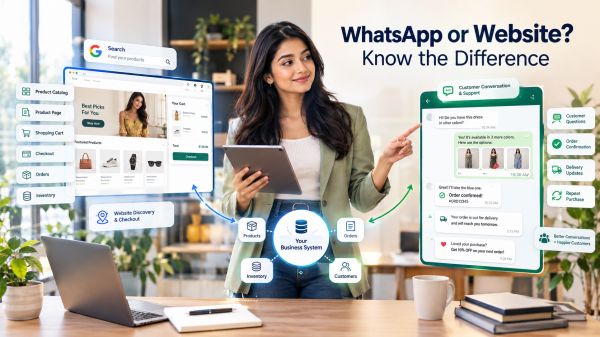
- Email and WhatsApp communication
- Loyalty and referral programs
- Post-purchase engagement
Because customer data belongs to the brand, every interaction becomes more relevant and effective. This is one of the biggest reasons D2C brands scale faster on owned channels.
Why Owned Websites Win Long-Term
Marketplaces dominate paid visibility, but owned websites win in organic discovery over time.
A well-optimized ecommerce website allows brands to:
- Rank for informational and commercial keywords
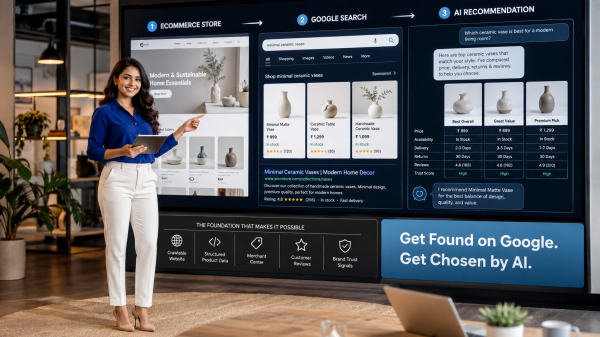
- Appear in AI-generated answers and summaries
- Build topical authority within their niche
In the era of SEO, AEO, and SGE, discoverability is no longer just about product listings—it’s about answering user intent. Websites give brands that control.
Omnichannel Control Through a Central Website
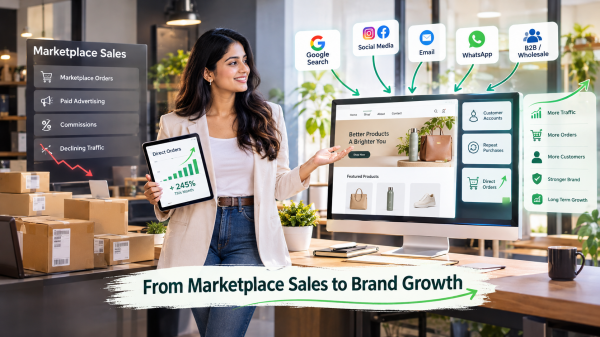
Many Indian D2C brands follow a hybrid strategy—selling through marketplaces, social commerce, offline retail, and their own website.
In this setup, the ecommerce website becomes the single source of truth:
- Pricing control
- Brand messaging
- Customer data
- Marketing attribution
Marketplaces bring reach, but websites bring stability and scale.
Where Platform Choice Becomes a Competitive Advantage
At scale, small technology limitations become big growth blockers. Brands that outgrow their platform face:
- Slower site performance
- Limited customization
- Conversion optimization constraints
- Costly migrations
This is why choosing the right platform early matters.
A scalable platform like Shopaccino enables Indian D2C brands to maintain performance, flexibility, and control as they grow—without rebuilding their tech stack every few years.
Final Verdict: Why Websites Accelerate D2C Growth Faster
So, why are Indian D2C brands scaling faster with their own e-commerce website?
The answer is simple:
Because ownership creates leverage.
Websites give brands:
- Control over experience
- Ownership of customer data
- Better margins
- Faster experimentation
- Long-term brand equity
Marketplaces can support early growth, but owned websites power sustainable scale.
FAQs
D2C, or Direct-to-Consumer, refers to brands selling directly to customers through their own ecommerce website instead of relying only on online marketplaces or distributors.
Many brands are reducing dependency on marketplaces due to high commissions, limited branding control, and lack of access to customer data.
An owned website allows brands to control pricing, customer experience, marketing, and data, which leads to better margins and long-term growth.
No. In fact, starting early helps brands build customer data, brand recall, and organic traffic while reducing long-term reliance on paid channels.
In D2C, brands own the customer relationship and data, while marketplaces control visibility, pricing competition, and customer access.
Choosing the right platform is critical because it affects scalability, website performance, customer experience, and operational efficiency as the brand grows.
Brands should look for scalability, mobile optimization, SEO-friendly architecture, secure payments, and flexibility in customization.
Yes. Many successful brands follow a hybrid approach, using marketplaces for reach and their ecommerce website for brand-building and repeat sales.
Websites enable direct communication, loyalty programs, personalized offers, and better post-purchase engagement, improving repeat purchases.
Yes. A well-optimized website can rank on search engines, appear in AI-generated answers, and build long-term organic visibility—something marketplaces cannot offer.