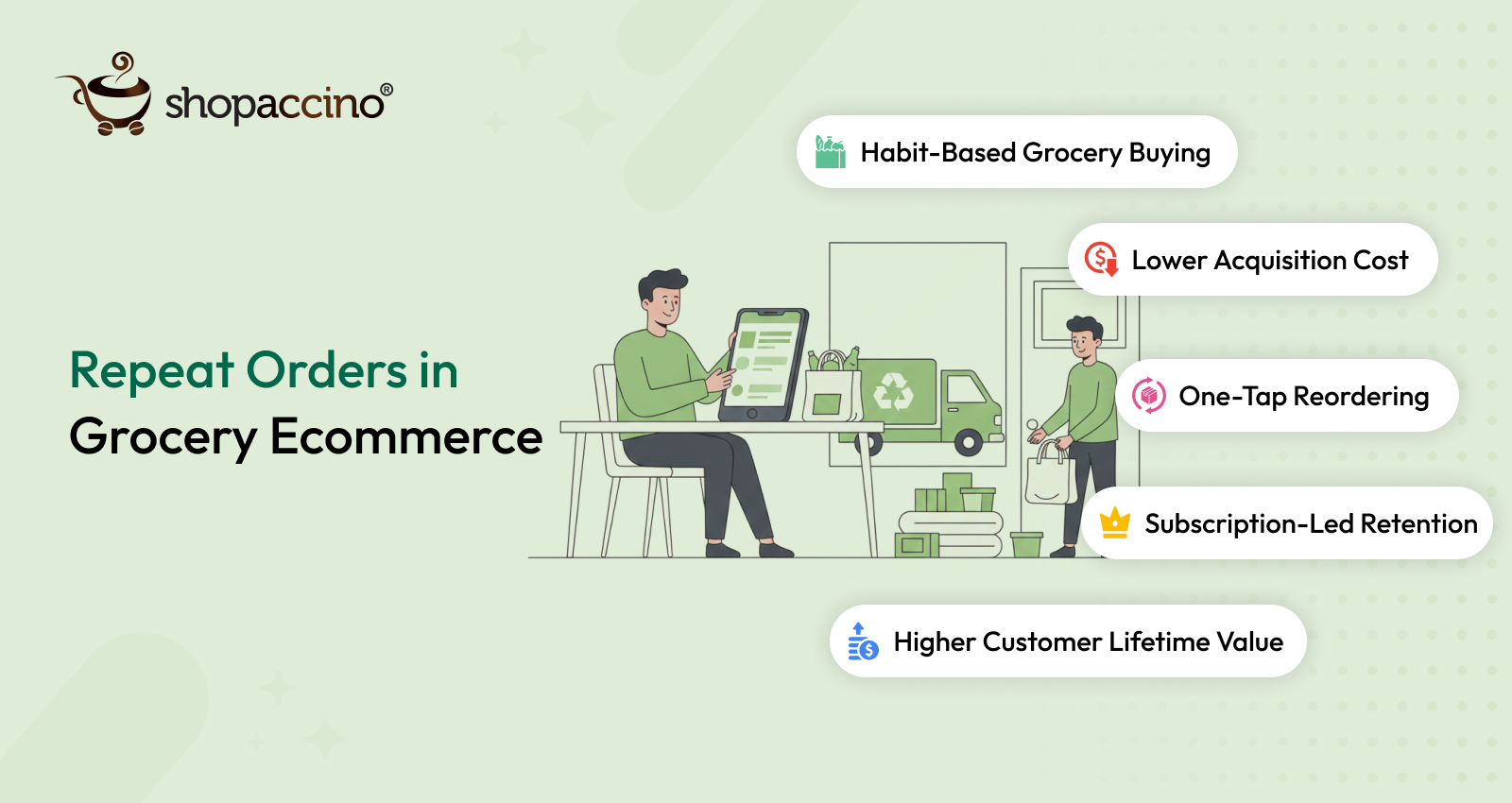
Why Repeat Orders Matter More Than New Users in Grocery Ecommerce
Grocery ecommerce looks deceptively simple from the outside. Customers need essentials every week, demand is consistent, and order frequency is high. Yet many grocery brands struggle to stay profitable, even with rising app installs and growing traffic. The reason is not lack of demand—it is misplaced focus. Winning at repeat orders ecommerce means shifting focus from constant new-user acquisition to keeping the customers you already have.
Most grocery startups pour budgets into ads, influencer campaigns, and cashback offers to acquire new users. The first order happens, discounts are redeemed, and the app looks busy for a few days. Then silence follows. The customer never returns. Acquisition costs rise, margins shrink, and the business keeps running faster just to stay in the same place.
In 2026, successful grocery ecommerce brands are realising a hard truth: repeat orders matter far more than new users. Grocery is not an impulse category like fashion or electronics. It is a habit-driven business. The brands that win are not the ones with the most installs, but the ones that become part of a customer’s weekly routine.
This blog explores why repeat purchases are the real growth engine in grocery ecommerce, what challenges brands face today, what customers actually expect, and how a retention-first digital approach helps build sustainable grocery businesses instead of discount-dependent ones.
Challenging Area: Why Grocery Brands Struggle With Retention
Grocery ecommerce brands often assume that high demand automatically translates into loyalty. In reality, several structural challenges prevent repeat ordering, even when the first experience is acceptable.
Heavy Dependence on Paid Acquisition
Most grocery apps rely on paid ads to drive traffic. Every new user comes at a cost, and that cost increases over time as competition grows. When users order only once, the entire acquisition spend is lost. The business keeps paying again and again for the same outcome—one-time orders.
Discount-Led First Orders With No Follow-Up
To attract users, brands offer deep discounts on the first order. While this drives sign-ups, it sets the wrong expectation. Customers associate the app with cheap pricing, not convenience or reliability. Once discounts reduce, they quietly leave.
Lack of Habit-Building Features
Many grocery platforms treat every order as a fresh transaction. They do not remember past behaviour, frequently ordered items, or weekly buying patterns. Without continuity, customers feel no reason to return to the same app.
Operational Focus on Volume, Not Value
Chasing new users increases order volume but not necessarily profit. High churn forces brands to keep scaling operations without building long-term customer value. This leads to rising logistics costs, operational pressure, and thin margins.
Poor Visibility Into Customer Lifetime Value
When orders come sporadically, brands struggle to forecast demand, plan inventory, or optimise delivery routes. The lack of predictable repeat orders makes growth unstable and risky.
In short, grocery brands are building traffic machines instead of relationship-driven businesses.
Their Customer Challenging Area: How Grocery Buyers Actually Think
To understand why repeat orders matter, it is important to understand grocery buyers themselves. Their expectations are very different from shoppers in other ecommerce categories.
Grocery Is a Routine, Not a Decision
Customers do not “decide” to buy groceries every time. They need milk, vegetables, grains, and essentials regularly. The friction is not about choosing products—it is about convenience, reliability, and speed of reordering.
They Want Familiarity, Not Discovery
Unlike fashion shoppers, grocery buyers do not want to browse endlessly. They want to see what they bought last time and reorder quickly. Searching for the same items again feels like wasted effort.
Trust Matters More Than Discounts
Customers return when they trust product quality, delivery timing, and pricing consistency. A slightly higher price is acceptable if the experience is smooth and predictable.
Time Is the Biggest Constraint
Grocery buyers value time more than anything else. If reordering takes more than a minute, they postpone it or switch platforms. Convenience drives loyalty far more than marketing messages.
They Prefer Commitment Over Choice
Many customers prefer setting routines—weekly milk delivery, monthly staples, fixed vegetable days. Subscriptions and scheduled orders reduce mental effort and build long-term engagement.
When grocery platforms fail to align with these expectations, customers quietly disappear after the first order.
Solution: How an Integrated Ecommerce Platform Improves Repeat Orders
A retention-first grocery platform focuses on reducing effort, increasing familiarity, and encouraging habitual usage. Instead of treating each order as a one-time event, it builds continuity into the buying journey.
Digital Order History as the Core Experience
When customers can see their past orders clearly, they gain confidence. Familiar products, known quantities, and previous prices reduce decision fatigue. Platforms like Shopaccino allow grocery brands to present order history as a starting point, not an archive.
One-Tap Reordering Removes Friction
The ability to reorder previous baskets with a single tap transforms behaviour. Customers no longer need to search, compare, or re-add items. The app becomes a shortcut to essentials, not a shopping destination.
Wallet Balances Encourage Locked-In Usage
When customers maintain a wallet balance, they are more likely to return to the same platform. Wallets reduce payment friction and subtly encourage repeat spending within the ecosystem.
Subscription-Based Recurring Orders Build Habits
Subscriptions for daily or weekly essentials turn grocery ordering into a background activity. Customers stop thinking about ordering and simply receive what they need. This creates predictable demand and stable revenue.
Consistent Pricing Builds Trust
Repeat buyers expect price stability. Integrated platforms allow brands to avoid frequent price shocks and communicate changes transparently, strengthening long-term relationships.
Instead of pushing promotions aggressively, these features quietly encourage customers to come back—again and again.
How to Implement a Repeat-Order Strategy (Step-by-Step)
Building repeat purchases does not require massive budgets. It requires thoughtful design and consistency.
Step 1: Make Order History Visible and Useful
Do not hide order history deep inside menus. Place it prominently on the homepage. Show previously ordered items clearly, with quantities and prices.
Step 2: Enable Quick Reorder Options
Allow customers to reorder full baskets or selected items with minimal clicks. Speed matters more than aesthetics here.
Step 3: Introduce Wallet-Based Payments
Encourage customers to preload balances through offers or convenience messaging. Wallet usage reduces checkout friction and increases return frequency.
Step 4: Offer Subscription Options for Essentials
Identify high-frequency items like milk, bread, vegetables, or grains. Allow customers to schedule recurring deliveries easily, with the flexibility to pause or modify.
Step 5: Communicate Reliability, Not Discounts
Use notifications to remind customers of reorder timelines, upcoming deliveries, or low stock—not constant promotions. Helpful reminders feel supportive, not intrusive.
Step 6: Track Repeat Behaviour and Improve
Monitor repeat order frequency, reorder intervals, and basket consistency. These insights help refine delivery schedules, inventory planning, and customer communication.
With the right digital foundation, repeat orders become a natural outcome, not a forced metric.
Benefits of Prioritising Repeat Orders in Grocery Ecommerce
Focusing on repeat purchases changes the economics of grocery ecommerce fundamentally.
Lower Customer Acquisition Cost Over Time
When customers return organically, reliance on paid ads reduces. The same customer generates multiple orders from a single acquisition effort.
Higher Customer Lifetime Value
Even small, frequent grocery orders add up. Over months, loyal customers become significantly more valuable than one-time buyers.
Better Inventory and Delivery Planning
Predictable demand allows brands to plan stock efficiently, reduce wastage, and optimise delivery routes.
Improved Margins Without Heavy Discounts
Retention reduces the need for constant promotions. Profitability improves as operational efficiency increases.
Stronger Brand Trust and Loyalty
Customers who reorder regularly build emotional comfort with the brand. Switching becomes inconvenient, which strengthens retention naturally.
Sustainable Growth Instead of Artificial Scale
Repeat-driven growth is stable, measurable, and resilient—unlike ad-driven spikes that collapse when budgets tighten.
Conclusion
In grocery ecommerce, growth does not come from chasing new users endlessly. It comes from becoming a habit. The brands that succeed are not the loudest advertisers, but the quiet enablers of routine.
Repeat orders reduce costs, improve margins, and stabilise operations. They turn grocery ecommerce from a high-burn experiment into a sustainable business. Platforms like Shopaccino help grocery brands move beyond traffic obsession and focus on what truly matters—customer lifetime value, convenience, and trust.
In 2026, the winning grocery brands will not be the fastest or the cheapest. They will be the ones customers return to without thinking.
FAQs
Repeat orders lower acquisition costs, improve margins, and create predictable revenue. Grocery is a routine category, and loyal customers generate far more value over time than one-time buyers.
Many platforms focus on discounts and acquisition but ignore retention features. Without easy reordering, subscriptions, or familiarity, customers do not form habits and stop returning.
Order history reduces effort and decision fatigue. Customers can reorder familiar items quickly, which makes the platform convenient and encourages frequent usage.
Yes. Subscriptions work well for daily or weekly essentials. They remove friction, ensure regular orders, and help brands forecast demand more accurately.
Wallets reduce payment friction and psychologically encourage repeat usage. Customers with stored balances are more likely to return to the same platform.
Absolutely. Retention strategies benefit small brands even more by reducing ad dependency and creating stable, predictable growth.