Why You Need a SaaS-Based eCommerce Platform for Scalability
Building an eCommerce business is no longer just about launching a website—it’s about creating a scalable digital ecosystem that can grow with changing demand, expand across regions, integrate multiple sales channels, and support long-term operational agility. While many brands begin their journey with custom-built websites, open-source scripts, or basic store builders, these platforms often struggle under real growth pressures such as higher traffic, multi-location inventory, advanced integrations, and enterprise-level automation.
This is where SaaS-based eCommerce platforms have emerged as the preferred foundation for modern digital commerce. Instead of building and maintaining infrastructure yourself, Software-as-a-Service platforms offer ready-to-use technology, continuous upgrades, and scalable infrastructure—allowing brands to focus on products, marketing, customers, and revenue rather than development cycles.
For MSMEs and fast-growing D2C brands, choosing SaaS over traditional development isn’t just a convenience—it’s a strategic advantage that unlocks speed, cost efficiency, and long-term scalability.
The Business Challenge: Why Traditional Platforms Struggle to Scale
Most brands initially choose cheaper or custom-built systems without anticipating growth needs. These platforms may function well in early stages but break once business complexity increases.
Common challenges include:
Manual upgrade dependency
Each new feature requires custom development, leading to delays and costs.
Server limitations
Traffic spikes during sales or campaigns crash the site without dedicated scaling infrastructure.
Integration bottlenecks
Connecting ERPs, logistics partners, payment gateways, or marketing tools becomes complicated.
High maintenance costs
Brands spend more on maintenance than innovation, slowing growth.
Inconsistent user experience
Multi-device experience suffers when technology isn’t optimized continuously.
Security and compliance risks
Brands must manage SSL, PCI compliance, patches, and data security on their own.
These limitations make traditional or self-hosted platforms costly in the long term—even if they seem affordable initially.
Their Customer Challenging Area: What Users Expect From Modern Digital Buying
Consumers today are highly discerning. They don’t differentiate between small and large brands—everyone is benchmarked against the best digital experiences they’ve used.
Customers expect:
Fast-loading pages, especially on mobile
Slow checkout leads to instant drop-offs.
Seamless payments and multiple methods
UPI, cards, wallets, BNPL, COD—flexibility drives conversion.
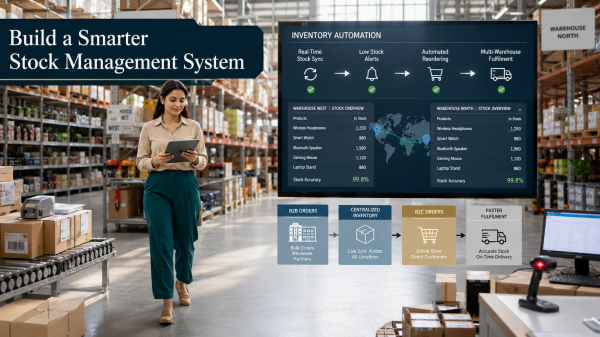
Real-time stock visibility
Users expect availability accuracy across locations.
Smooth app + web experience
Users want shopping continuity across devices.
Trust, security, and transparent delivery
A professional digital experience signals credibility.
A rigid, outdated platform makes brands look untrustworthy—even if the product quality is excellent.
Solution: Why SaaS Platforms Enable Long-Term eCommerce Growth
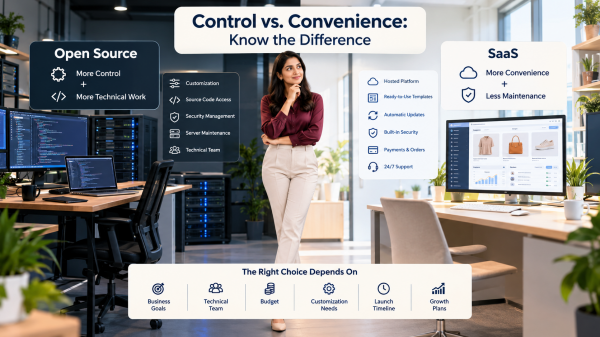
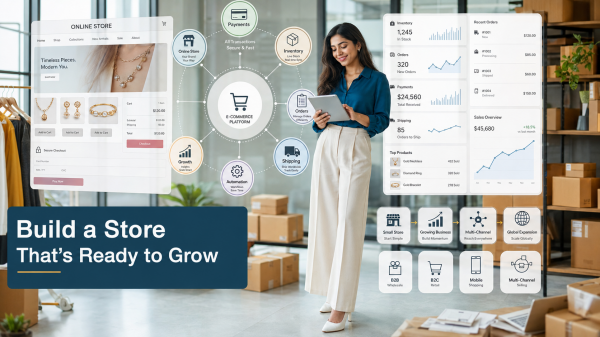
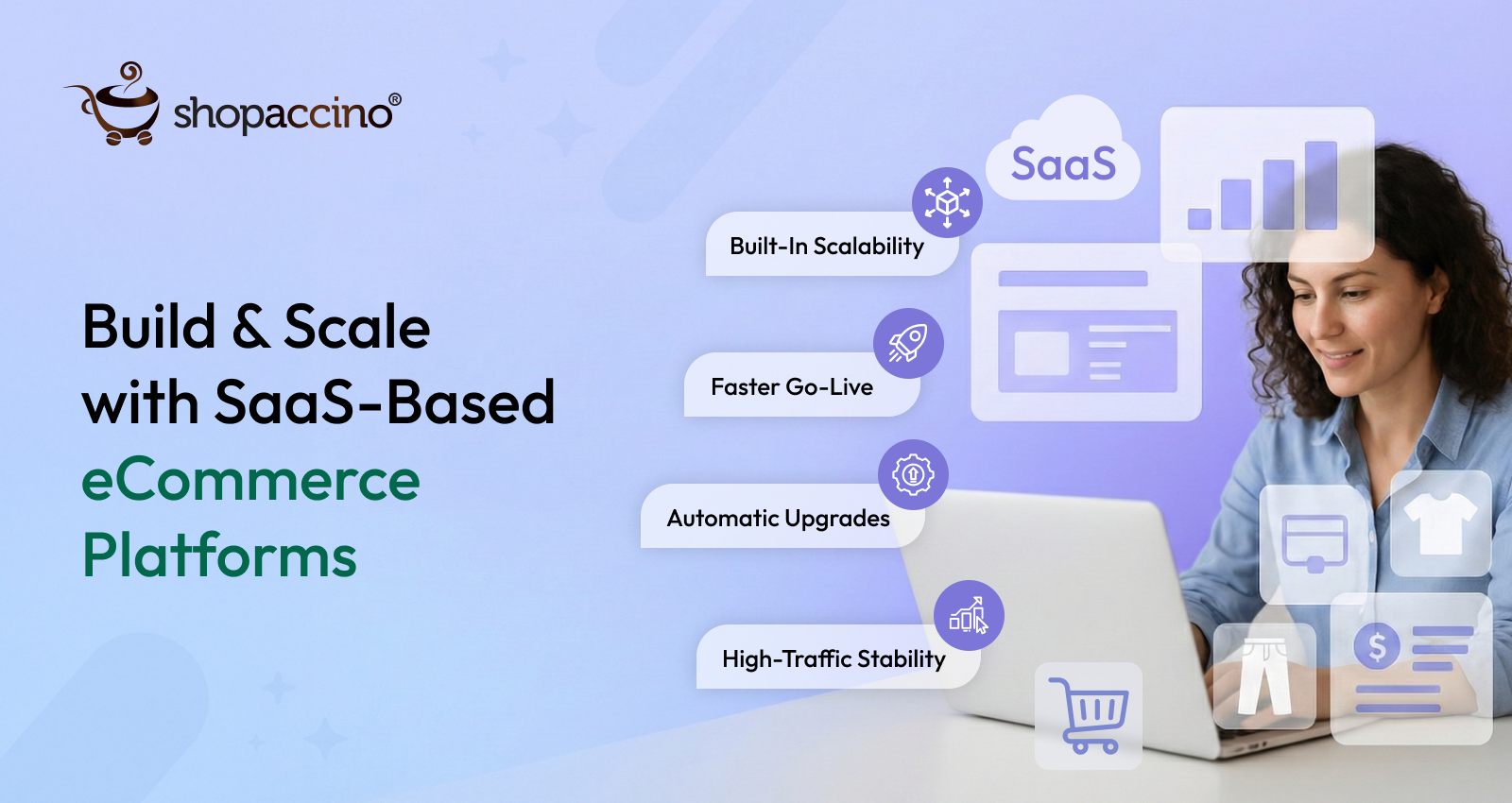
A SaaS-based platform provides pre-built infrastructure, managed hosting, performance optimization, feature upgrades, and integrations—all maintained by the provider instead of the merchant.
With a platform like Shopaccino, brands get:
- Secure, hosted infrastructure maintained by experts
- Real-time scalability without manual provisioning
- Integrations with payment gateways, shipping partners, CRM, and ERP
- Continuous feature upgrades without redevelopment
- Mobile-first storefronts and app support
- Automation tools for orders, marketing, and operations
This reduces dependence on developers and allows brands to innovate faster while maintaining operational stability.
SaaS acts as a long-term growth engine—not just a website builder.
How to Implement: A Practical Migration and Setup Strategy
Shifting to SaaS doesn’t require abandoning your existing systems. It requires structured onboarding to migrate operations seamlessly.
Step 1: Map Your Digital Requirements
Identify needs like catalog size, inventory rules, store locations, payment modes, logistics partners, and mobile experience.
Step 2: Migrate Catalog & Customer Data
Move products, images, past orders, and customer profiles into the SaaS platform.
Step 3: Integrate Gateways & Logistics
Connect partners like Razorpay, PayU, Shiprocket, Delhivery, and ERP or POS tools via APIs.
Step 4: Configure Store Models
Set up multi-location pricing, order workflows, roles, taxes, and fulfillment methods.
Step 5: Launch Web + Mobile Experience
Go live across responsive storefronts, apps, and marketplaces.
Step 6: Enable Automation
Add workflows for abandoned cart recovery, marketing triggers, reorder flows, coupon logic, and location-based rules.
Step 7: Optimize & Scale
Track performance dashboards, A/B test UX changes, and introduce new channels over time.
A SaaS platform reduces the operational burden of scaling while supporting faster go-to-market cycles.
Benefits of SaaS-Based eCommerce for Scaling Brands
A SaaS platform empowers businesses with outcomes that custom or open-source platforms struggle to deliver consistently.
Faster Time to Launch and Iterate
No need to start from scratch—features are ready to deploy.
Lower Long-Term Cost of Ownership
No recurring server, upgrade, patching, or development costs.
Built-In Security and Compliance
Security standards like PCI compliance, SSL certificates, and encryption are maintained by the platform.
Seamless Feature Upgrades
New capabilities are rolled out automatically at platform level—without downtime.
Multi-Layer Scalability
Supports expansion into multi-location retail, omnichannel selling, and mobile commerce.
Reduced IT Dependency
Brands focus on sales and marketing while the platform handles technical operations.
Better Performance and Conversion
Optimized UX, caching, CDN, and infrastructure support faster page speeds and lower drop-offs.
For brands scaling across countries, categories, or channels, SaaS provides a foundation that evolves with the business rather than holding it back.
Conclusion
Digital commerce is not static—it evolves constantly. Brands that rely on rigid, custom-built platforms eventually hit a ceiling where growth is slowed by technical limitations, high maintenance costs, and operational inefficiencies.
Choosing a SaaS-based eCommerce platform ensures scalability from the beginning. You can achieve faster testing by using automation, which plays a critical role in this scalability. By automating your testing processes, you can quickly identify performance issues and ensure your platform is ready to handle higher traffic and increased sales without delays. It allows businesses to grow faster, launch new initiatives without redevelopment, and stay technologically relevant without constantly rebuilding.
When platforms like Shopaccino manage infrastructure, security, upgrades, hosting, integrations, and automation, brands gain the freedom to focus on product innovation, brand storytelling, and customer relationships—the true drivers of long-term success.
Scalability isn’t about having more features; it’s about having a platform capable of adapting as your business expands.
FAQs
They support both—fast-growing brands benefit most from scalable infrastructure without high tech costs.
Yes—scaling is handled at server and infrastructure level.
Platforms offer structured customization without requiring full custom code, balancing flexibility with reliability.
Security standards are managed centrally, ensuring frequent updates and lower risk.
Modern SaaS platforms offer APIs to sync ERP, POS, logistics, and marketing tools.