10 B2B Ecommerce Trends Transforming Wholesale Businesses
Wholesale businesses have always been built on relationships, volume, and trust. Those foundations have not changed. What has changed is everything around them ,how buyers discover suppliers, how orders are placed, how payments are processed, and how quickly buyers expect all of it to happen. The B2B ecommerce trends shaping 2026 and beyond are not incremental improvements. They are structural shifts that are separating the wholesale businesses growing confidently from those watching their buyer base quietly move to competitors who have caught up.
If you run a wholesale business, whether you manufacture, distribute, or trade ,understanding these trends is not optional. Not because you need to chase every new technology, but because your buyers are already living in this world. The question is whether your business is ready to meet them there.
The wholesale businesses winning in 2026 are not the ones with the best products. They are the ones making it easiest for buyers to discover, order, and reorder from them.
10 Trends at a Glance
Here is a quick overview of the ten trends covered in this guide, with a note on what each means for your business right now.
B2B Ecommerce Trend | What It Means for Wholesale Businesses |
|---|---|
1. Buyer Self-Service Portals | Buyers order without calling your sales team |
2. AI-Powered Personalisation | Every buyer sees a tailored catalog and pricing |
3. Mobile-First B2B Ordering | Orders placed from phones, not just desktops |
4. B2B Buy Now Pay Later | Flexible credit terms go fully digital |
5. Headless and Composable Commerce | Flexible platforms that separate front and back end |
6. Unified B2B and B2C Commerce | Single platform serves wholesale and retail buyers |
7. Cross-Border B2B Ecommerce | Global buyers shop with local-feeling experiences |
8. Predictive Reordering | Smart platforms suggest reorders before buyers run low |
9. Sustainability and Ethical Sourcing | Buyers demand supply chain transparency |
10. Data-Driven Sales Intelligence | Account behaviour data replaces gut instinct |
1. Buyer Self-Service Portals Are Now a Basic Expectation
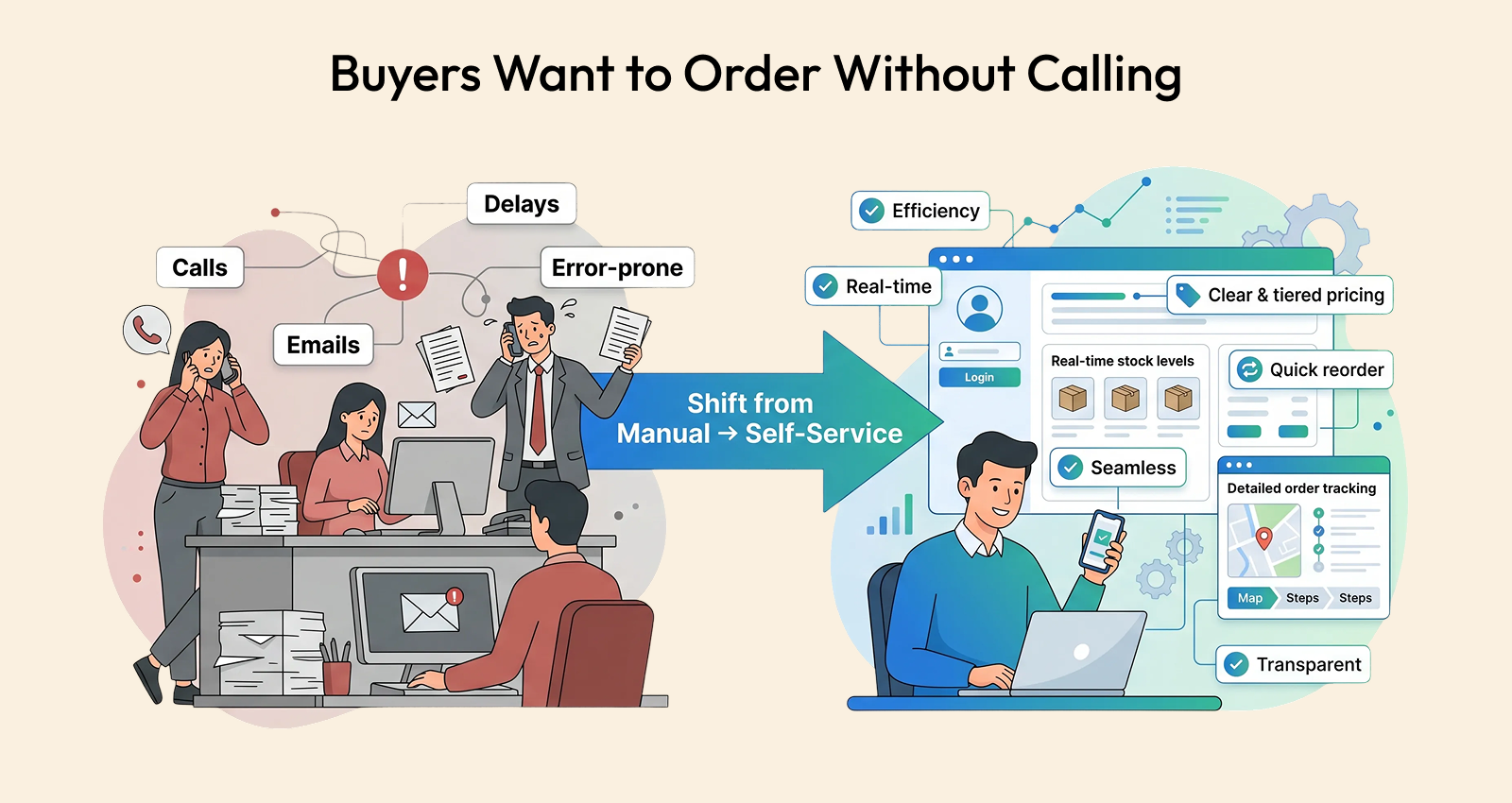
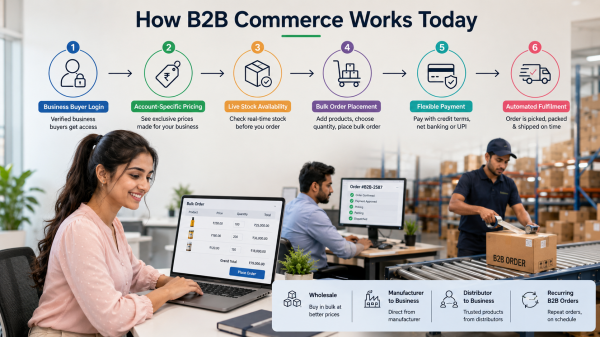
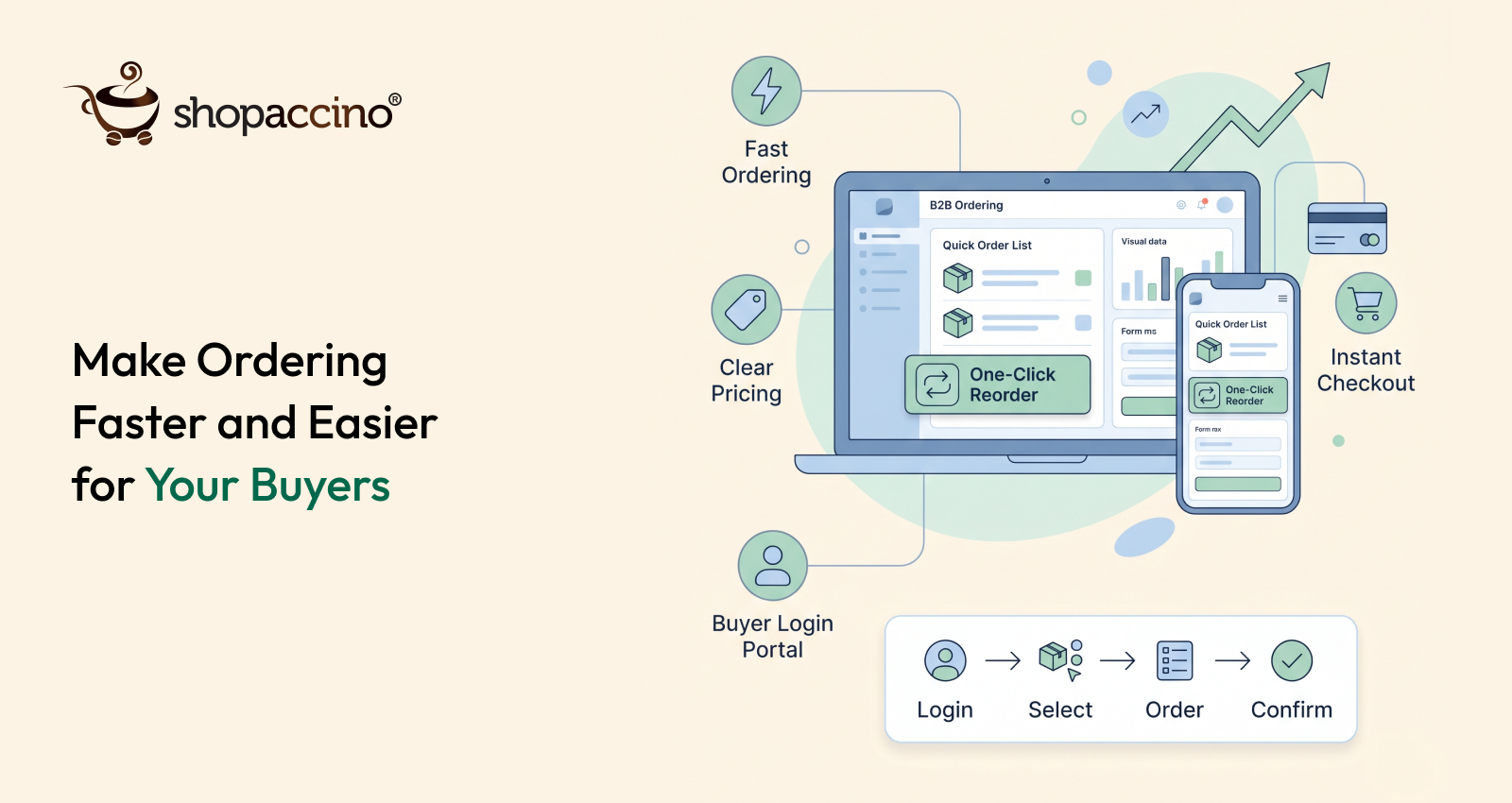
A few years ago, a wholesale buyer portal was a differentiator. Today it is a baseline expectation. Buyers ,particularly younger procurement managers who have grown up as consumers on platforms like Amazon ,expect to be able to log in, see their pricing, check stock, place an order, and track delivery without involving your sales team. If your business does not offer this, it is not just inconvenient for buyers. It is a reason to switch to a supplier who does.
The businesses investing in self-service portals are seeing two clear benefits. First, their sales teams stop spending time on routine reorders and start focusing on new account acquisition and strategic relationship management. Second, order accuracy improves dramatically because buyers enter their own orders rather than communicating them through email chains that get misread. Self-service is not about removing the human element from wholesale. It is about deploying human attention where it actually creates value.
Every order a buyer places themselves is an order your sales team did not have to process. At scale, that difference defines how many accounts one salesperson can manag
2. Smart Catalogue & Personalised Buying Is Moving Into B2B
Personalisation in B2C ecommerce ,product recommendations based on browse history, account-specific pricing, tailored home screens ,has been standard for years. The same expectation is now arriving in B2B, and it is changing how wholesale buyers evaluate and choose their supplier platforms.
In practice, Smart catalogue and account-based personalisation means a buyer logs into your wholesale portal and sees products relevant to their category, reorder suggestions based on their purchase history, and pricing specific to their account ,all organised automatically rather than buried in a generic catalog. It means your platform surfaces the product combinations a particular buyer tends to order together, making reordering faster and more intuitive. It means buyers discover products they would have otherwise missed, and your average order value increases without a single conversation.
For wholesale businesses, the practical starting point is clean buyer account data, purchase history tracking, and a platform that uses that data to surface relevant products and reorder prompts automatically. Platforms like Shopaccino support account-specific pricing, segmented catalogs by buyer type, and purchase history visibility ,giving wholesale businesses the building blocks of a personalised buying experience without requiring complex custom development. The advantage goes to the businesses that configure and use these features consistently.
3. Mobile-First B2B Ordering Is No Longer a Niche Behaviour
The assumption that B2B buyers sit at desks and place orders from desktop computers is outdated. Procurement managers, sales reps, store owners, and warehouse supervisors are all placing orders from mobile devices ,on factory floors, at trade shows, in the back of taxis, and at home in the evening. The wholesale ecommerce trends data consistently shows mobile as a growing share of B2B order traffic, and that share is accelerating.
A mobile-first B2B ordering experience is not simply a desktop site that works on a smaller screen. It is a purpose-designed interface where searching a large catalog, entering bulk quantities, reviewing account pricing, and completing checkout are all fast and intuitive on a phone. Businesses that offer a proper mobile app ,not just a mobile website ,for their wholesale buyers see higher order frequency and faster reorder cycles because the friction of ordering has been removed entirely.
If placing a wholesale order on your platform takes more than three minutes on a mobile device, your buyers are using a competitor's app instead.
4. B2B Buy Now Pay Later Is Digitising Trade Credit
Trade credit has always been the financial foundation of wholesale. Buyers receive goods and pay within agreed terms ,net 30, net 60, or longer for established accounts. What is changing is how this is managed. The manual process of issuing invoices, chasing payments, and managing credit limits through spreadsheets is being replaced by embedded digital payment solutions built directly into B2B ecommerce platforms.
The emergence of B2B “Buy Now Pay Later” providers means that even smaller wholesale buyers who would not traditionally qualify for trade credit can now access flexible payment terms, with the risk managed by a third-party finance provider rather than the supplier. This expands the accessible buyer base for wholesale businesses and removes one of the most common barriers to a buyer's first large order. For suppliers, getting paid immediately by the finance provider rather than waiting 60 days is a significant cash flow improvement.
5. Composable Commerce Is Giving Wholesale Businesses More Flexibility
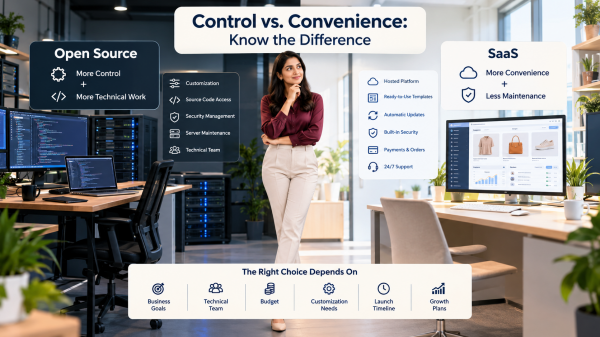
Traditional ecommerce platforms bundle everything together ,the storefront, the catalog management, the checkout, the order management, and the customer accounts ,into a single system you either use or replace entirely. Composable commerce breaks this apart. You assemble the platform you need from best-in-class components, each of which does one thing excellently and integrates with the others.
For wholesale businesses with genuinely complex requirements ,large catalogs, multiple buyer types, global markets, complex pricing logic ,composable architecture means you are not constrained by what any single platform decided to build. You can use a specialist catalog tool, a dedicated B2B pricing engine, a separate order management system, and a purpose-built buyer portal, all connected through APIs. This is particularly relevant for larger distributors and manufacturers whose operations have outgrown the limitations of any single platform.
For smaller wholesale businesses, the practical implication is simpler: choose a platform that offers open APIs and strong integration capabilities, so you can connect the specialist tools your operation needs without being locked into a closed ecosystem.
6. Unified B2B and B2C Commerce Is Becoming the Standard
Many businesses sell to both consumers and trade buyers. Historically, these two channels ran on separate systems ,a consumer-facing website on one platform and a wholesale ordering system on another, with inventory and order data managed separately between them. This creates duplication, inconsistency, and operational overhead that scales badly.
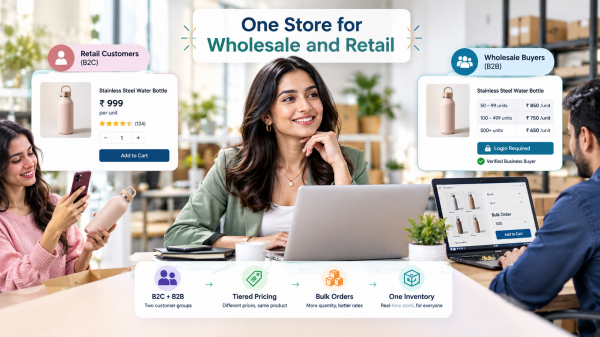
One of the clearest B2B ecommerce growth trends in 2026 is the consolidation of these channels onto a single platform that handles both models natively. The consumer storefront shows public pricing and standard checkout. The wholesale portal, accessed by logged-in trade buyers, shows account-specific pricing, minimum quantities, and invoice payment options. Both channels share the same product catalog, the same inventory pool, and the same order management system. Platforms like Shopaccino are built specifically to handle this unified commerce model, which is why businesses serving both retail and wholesale buyers are increasingly choosing platforms designed for both rather than trying to connect two separate systems.
Running B2B and B2C on separate platforms doubles your operational complexity and halves your visibility into what is actually happening across your business.
7. Cross-Border B2B Ecommerce Is Opening New Markets
Wholesale buyers are increasingly sourcing globally rather than locally. A retailer in Europe sourcing fashion from manufacturers in Southeast Asia, or a distributor in the Middle East buying home decor from suppliers across multiple continents ,these cross-border B2B relationships used to require trade agents, sourcing trips, and lengthy negotiation processes. Digital B2B ecommerce is shortening that process dramatically.
The future of B2B ecommerce in cross-border trade is a buyer in any market being able to browse a supplier's catalog in their own language, see pricing in their local currency, understand lead times and shipping costs accurately, and place an order with the payment terms relevant to their relationship ,all without a single phone call. The suppliers building this capability are accessing buyer networks that were previously unreachable through conventional sales approaches.
The practical requirements for cross-border B2B ecommerce are multi-currency pricing, multi-language catalog support, international tax and compliance handling, and connections with global freight and logistics partners. These are no longer enterprise-only capabilities. They are available on mid-market platforms and increasingly represent table stakes for any wholesale business with international ambitions.
8. Predictive Reordering Is Reducing Stockouts for Wholesale Buyers
One of the most frustrating experiences in wholesale is running out of a product before the next order arrives. It disrupts the buyer's operations, creates urgent requests that cost both sides extra in expedited shipping and manual processing, and damages the supplier relationship even when the stockout was the buyer's own planning failure. Predictive reordering shifts this dynamic entirely.
Platforms with predictive reordering capability analyse a buyer's historical order patterns ,which products they order, in what quantities, at what intervals ,and send proactive prompts when a reorder is due, before the buyer runs low. The prompt arrives in the buyer's portal or via email: “Based on your last order, you typically reorder Product X around now. Your account pricing is applied. One click to reorder.”
For wholesale businesses, this feature reduces churn because buyers who never run out of product have fewer reasons to test a competing supplier. It also increases order regularity, which smooths production planning and reduces the peaks and troughs in order volume that make fulfillment inefficient.
A buyer who never runs out of your product because your platform reminded them to reorder is a buyer who has no reason to call a competitor.
9. Sustainability Transparency Is Becoming a B2B Buying Criterion
Sustainability has moved from a marketing talking point to a genuine procurement criterion for an increasing number of wholesale buyers. Retailers sourcing from brands and manufacturers are being asked by their own customers where products come from, how they are made, and what the environmental footprint of production is. That pressure flows upstream ,retailers ask their suppliers, who ask their manufacturers, who are increasingly expected to provide verified data.
In practical B2B ecommerce terms, this wholesale ecommerce trend means buyers expect to see sustainability information integrated into the product catalog itself ,certifications, material sourcing, carbon footprint data, ethical production standards ,rather than buried in a PDF that requires a sales rep to send it on request. Suppliers who surface this information clearly in their online catalog make the buying decision easier for procurement teams that need to demonstrate responsible sourcing. Those who do not are increasingly filtered out early in the evaluation process.
10. Data-Driven Sales Intelligence Is Replacing Sales Team Guesswork
Traditional wholesale sales has always relied heavily on relationship intuition ,a sales rep who knows when an account is due to reorder, who can sense when a buyer is at risk of churning, and who can identify the right moment to introduce a new product line. That knowledge lived in the sales rep's head, which meant when the rep left, the knowledge left with them.
Modern B2B ecommerce platforms capture every buyer interaction ,which products they viewed, which orders they placed, which invoices are overdue, when their last order was, and how that compares to their typical cadence. This data, surfaced as actionable intelligence for your sales team, replaces guesswork with precision. A sales rep who can see that Account X has not ordered in 30 days when they typically order every 21 days does not need intuition to know a check-in is overdue. The data tells them before the account churns.
This is one of the most undervalued B2B ecommerce growth trends because it does not require a new technology investment for businesses already on a good platform. It requires using the data the platform already collects, surfacing it to the right people, and building the discipline to act on it systematically rather than reactively.
The best sales intelligence is not a new CRM. It is the order behaviour data already sitting in your B2B ecommerce platform, used consistently by a team trained to act on it.
What These Trends Mean for Your Wholesale Business Right Now
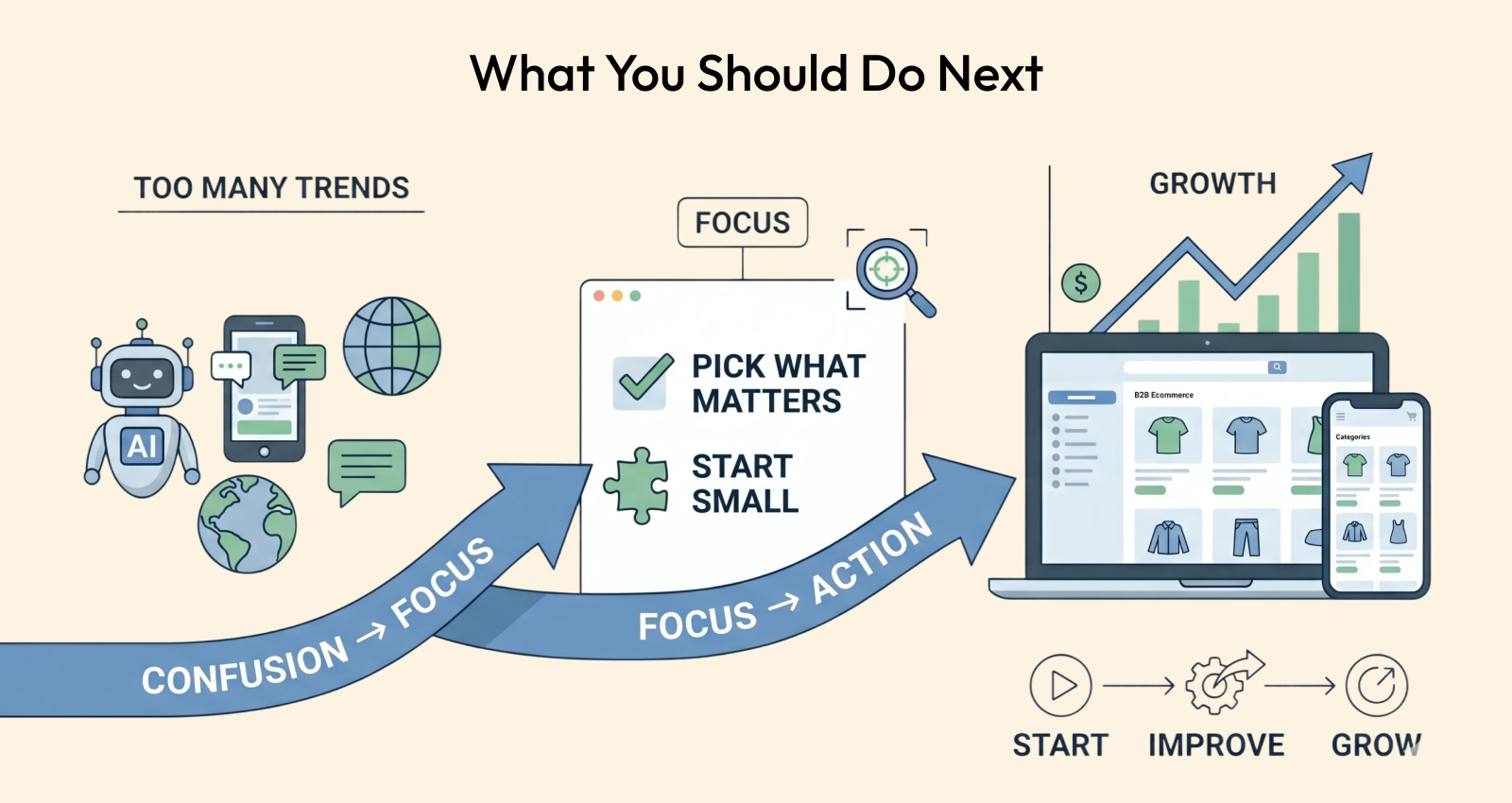
Reading about B2B ecommerce trends is useful only if it leads to decisions. The ten trends above cover a wide range ,technology, finance, sustainability, globalisation, data ,and no business should try to respond to all of them simultaneously. The practical question is: which of these trends most directly affects your current buyers and the buyers you want to win?
For most wholesale businesses, the highest-impact starting points are self-service ordering, mobile-accessible buying, and unified B2B and B2C commerce on a single platform. These three address the most immediate friction in the buyer experience and deliver the fastest measurable return. From there, the other trends ,predictive reordering, cross-border capability, data-driven sales intelligence ,become the layer of competitive differentiation that compounds over time.
The future of B2B ecommerce is already visible in the businesses leading their categories. What they have in common is not the most advanced technology or the largest marketing budget. It is the earliest commitment to making the buying experience genuinely better than what their category expected. That commitment, made now, is what creates the distance between you and competitors who are still deciding whether the investment is worth it.
Conclusion: 2026 Is the Year Wholesale Businesses Can't Afford to Wait
The ten B2B ecommerce trends covered in this guide are not predictions about what might happen in the distant future. They are changes already underway in buyer expectations, in platform capabilities, and in the competitive landscape of wholesale. The businesses acting on them in 2026 are not early adopters taking a risk. They are the mainstream, pulling ahead of those still deciding.
You do not need to respond to all ten trends at once. A focused, phased approach is both realistic and effective. Here is how to think about where to start based on where your business is today.
If You Are Just Starting With B2B Ecommerce
- Build a self-service buyer portal first. It delivers the fastest visible return ,fewer calls to your sales team, faster reorders, and buyers who see you as a modern supplier.
- Ensure your platform supports mobile ordering properly. Test it on a mid-range phone before going live, not just on a desktop.
- Choose a platform that unifies B2B and B2C from day one so you are not rebuilding everything in 18 months when both channels grow.
If You Are Already Selling Online and Want to Grow
- Activate predictive reordering if your platform supports it. Even a basic reorder reminder based on average order intervals reduces churn and increases order frequency without any extra marketing spend.
- Start using the buyer behaviour data already in your platform. Identify accounts that have gone quiet, flag those overdue for a reorder, and brief your sales team to act on these signals weekly.
- Evaluate cross-border readiness. If international buyers are finding your catalog and dropping off, multi-currency and multi-language support are the first barriers to fix.
If You Want to Lead Your Category in 2026
- Invest in AI-powered personalisation. Buyers who see a catalog curated to their account and history order more per visit and return more often than those navigating a generic catalog.
- Integrate digital trade credit or B2B BNPL. Reducing the friction of a buyer's first large order with flexible payment terms converts prospects who would otherwise have tested a smaller order or waited.
- Add sustainability data to your catalog. Buyers who need to demonstrate responsible sourcing to their own customers will choose the supplier that makes compliance easy over one that requires a request-and-wait process.
The wholesale businesses that will look back at 2026 as the year everything changed are not the ones who read the trends. They are the ones who picked the two or three that mattered most for their business ,and moved on them.
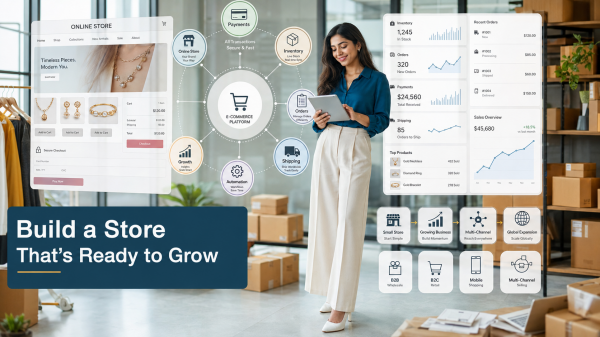
The right B2B ecommerce platform is where all of these trends converge. Not every platform supports all ten ,but the best ones are built to grow with your business as each capability becomes relevant. Evaluate your current platform honestly against the buyer experience your accounts will expect by the end of 2026. If the answer feels uncertain, that uncertainty is the signal to start looking.
FAQs
The biggest B2B ecommerce trends in 2026 are buyer self-service portals, AI-powered personalisation, mobile-first ordering, digital trade credit and B2B BNPL, unified B2B and B2C commerce, and predictive reordering. These trends reflect a shift in wholesale buyer expectations ,they want the speed and convenience of consumer ecommerce applied to their trade purchasing experience.
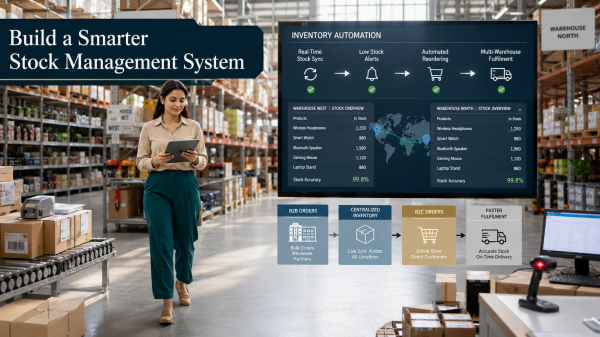
For distributors, the most impactful wholesale ecommerce trends are self-service buyer portals that reduce reliance on sales teams, predictive reordering to reduce stockouts and churn, multi-warehouse management for faster fulfillment, and data-driven sales intelligence that helps account managers act on buyer behaviour before accounts go quiet. These trends directly address the operational challenges most distributors face at scale.
The future of B2B ecommerce is fully digital buyer relationships where procurement happens through self-service portals, payments run on embedded digital credit terms, pricing is personalised per account automatically, and sales teams focus entirely on new account acquisition and strategic relationships. Cross-border B2B commerce will expand as platforms remove the language and currency barriers that historically limited wholesale to domestic markets.
Smart catalogue personalisation in B2B ecommerce means each buyer account sees products relevant to their category, pricing specific to their agreement, and reorder prompts based on their purchase history ,rather than a one-size-fits-all generic catalog. Wholesale businesses that configure account-specific catalogs and buyer-level pricing see higher average order values and stronger reorder rates. These capabilities are available today on purpose-built B2B platforms like Shopaccino without requiring complex custom development.
Mobile B2B ordering is growing because procurement managers and wholesale buyers are no longer office-bound. Orders are placed at trade shows, on warehouse floors, during evening hours, and while travelling. Buyers whose suppliers offer a fast, intuitive mobile ordering experience order more frequently and with less friction. Wholesale businesses that do not offer a proper mobile buying experience are losing reorders to competitors who do.
Cross-border B2B ecommerce allows wholesale businesses to reach international buyers without a physical sales presence in each market. Buyers in any geography can browse the catalog in their language, see pricing in their currency, access their account-specific terms, and place orders without requiring a sales agent to mediate. This opens wholesale businesses to a significantly larger addressable market than domestic-only distribution channels allow.