Global Shipping Simplified: Managing Cross-Border Logistics
Expanding into global markets is no longer limited to large enterprises. MSMEs, D2C brands, exporters, manufacturers, wholesalers, and distributors are entering international eCommerce faster than ever. Yet, while scaling globally promises growth and higher margins, the operational complexity of cross-border logistics remains one of the biggest hurdles.
Selling across borders is not just about listing products for international buyers—it’s about navigating customs requirements, shipping regulations, duties, taxes, delivery timelines, carrier integrations, packaging standards, and customer expectations that differ widely across countries.
This guide explores how cross-border logistics works, the challenges businesses face, what global customers expect, and how integrated eCommerce platforms simplify shipping workflows with automation, multi-warehouse routing, and compliant documentation. Shipping is step five of eight. See the full process in our guide to selling internationally step by step.
Challenging Area: Why Cross-Border Logistics Feels Overwhelming
International shipping introduces complexities far beyond domestic deliveries. These challenges multiply as businesses scale and enter new regions.
Complex Customs Rules and Clearance Standards
Customs regulations vary by country, product category, and value. Incorrect paperwork or inaccurate HS codes leads to:
- Delayed shipments
- Penalties
- Return-to-origin scenarios
- Negative customer experiences
Exporters and international sellers often struggle to keep up with compliance and documentation requirements.
High and Unpredictable Shipping Costs
Shipping rates fluctuate based on:
- Weight
- Volumetric dimensions
- Zones
- Carrier policies
- Fuel surcharges
- Delivery speed
Without proper tools, brands can undercharge or overcharge customers, affecting profit margins and customer trust.
Limited Visibility in Multi-Country Fulfilment
Managing shipments across countries without a unified system results in:
- Untracked shipments
- Lost parcels
- Manual coordination with carriers
- Disconnected warehouse teams
This becomes especially challenging for brands operating multiple warehouses or vendor partners.
Return Logistics Are Complicated
Handling returns internationally is costly and complex due to:
- Cross-border return duties
- Reverse shipping charges
- Loss or damage risks
Many MSMEs avoid global selling simply because they lack streamlined return workflows.
Payment, Currency, and Duties Confusion
Buyers abandon carts when:
- Duties are unclear
- Final price is unpredictable
- Currency conversion is inaccurate
Their Customer Challenging Area: What Global Buyers Expect from International Sellers
While businesses navigate backend complexity, global customers expect simplicity, clarity, and reliability.
Full Transparency in Duties, Shipping Charges, and Timelines
International shoppers want:
- Clear shipping fees
- Estimated delivery dates
- Duty visibility (DDP or DDU)
- No surprise charges at delivery
Lack of upfront clarity results in high abandonment rates.
Faster Delivery Options
Modern buyers compare delivery speeds offered by marketplaces like Amazon, which sets unrealistic expectations for small sellers.
Seamless Tracking from Checkout to Delivery
Customers expect:
- End-to-end tracking
- Real-time updates
- Carrier information
- Consistent communication
Delayed or unclear tracking creates distrust.
Secure and Damage-Free Packaging
Global shipments travel thousands of miles. Customers expect packaging that:
- Protects fragile items
- Meets airline guidelines
- Minimizes damage risks
Easy Returns
Even though international returns are costly, customers want the option to return products easily.
A global store that aligns with these expectations naturally earns higher conversions and repeat purchases.
Solution: How an Integrated eCommerce Platform Streamlines Cross-Border Logistics
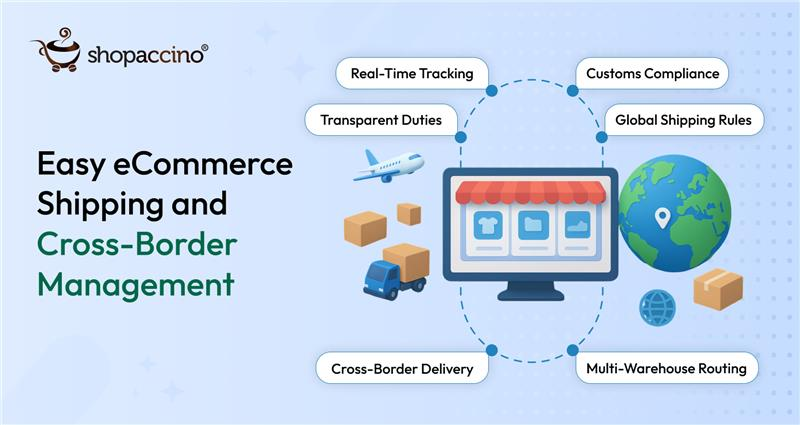
Global logistics becomes manageable when technology automates repetitive tasks and centralises data. Platforms like Shopaccino simplify international shipping by providing tools that connect warehouses, carriers, and order data into a single ecosystem.
Country-Based Shipping Rules
Businesses can define:
- Deliverable countries
- Restricted regions
- Country-specific shipping rates
- Minimum order thresholds
- Location-based offers
This ensures accurate and predictable checkout pricing.
Carrier API Integration
Shopaccino allows stores to integrate directly with carriers through API, enabling:
- Automatic shipping label generation
- Pre-filled waybills
- Consistent documentation
- Real-time shipping updates
This eliminates manual coordination and reduces operational overhead.
Multi-Warehouse Order Routing
With integrated multi-warehouse management:
- Orders are auto-assigned to the nearest fulfilment unit
- Inventory is updated in real-time
- Delivery timelines are optimized
Automated Documentation Support
Proper export documents ensure smooth customs clearance. Integrated platforms help generate:
- Invoices
- Packing slips
- Commercial declarations
- International waybills
This reduces errors and avoids clearance delays.
Real-Time Currency Conversion and Global Checkout
Accurate pricing improves buyer confidence. Automated currency conversion—based on customer location—helps create a seamless checkout journey.
Tracking Visibility for Customers
Platforms enable:
- Auto-synced tracking links
- Automated email alerts
- Delivery status updates
This keeps customers informed without manual involvement.
How to Implement a Cross-Border Shipping Strategy (Step-by-Step)
Step 1: Choose Your Target Countries
Identify markets with:
- Strong demand
- Favorable tax structures
- Predictable shipping costs
- Manageable competition
Resources such as WTO.org, CBP.gov, and International Trade Administration (trade.gov) offer reliable insights.
Step 2: Define Your Shipping Strategy
Decide whether to ship:
- Directly from your home country
- Using multiple warehouses
- Through third-party fulfilment
- Through dropshipping vendors
Each model affects cost, timelines, and responsibilities.
Step 3: Set Up Carrier & Shipping Rules
Configure:
- Country-based shipping fees
- Delivery timeframes
- Carrier options
- Restrictions
This ensures transparent checkout experiences.
Step 4: Prepare Export-Compliant Packaging
Follow packing guidelines for:
- Fragile products
- High-value items
- Apparel
- Electronics
- Furniture
Step 5: Automate Documentation & Tracking
Ensure your platform automates:
- Invoices
- Waybills
- Tracking numbers
- Status updates
This reduces customer service workload.
Step 6: Set Up Clear International Policies
Publish policies for:
- Duties and taxes
- Returns
- Delivery failures
- Shipping delays
Clarity builds trust.
Benefits of a Streamlined Cross-Border Logistics System
Faster Global Delivery
Intelligent warehouse routing shortens delivery timelines significantly.
Higher Conversion Rates
Clear shipping charges, accurate timelines, and transparent duties lead to better buyer trust.
Reduced Operational Effort
Automation eliminates repetitive tasks, allowing teams to focus on product and marketing.
Cost Control and Predictable Margins
Country-specific rules and automated calculations prevent loss due to mispricing.
Better Customer Experience
Tracking visibility, timely updates, and safe delivery shape customer loyalty.
Easier Global Expansion
Once logistics foundations are set, entering new countries becomes frictionless.
Conclusion
Global shipping may seem complicated, but with the right systems and processes, it becomes a strategic lever for growth. Cross-border logistics isn’t just about shipping products—it’s about managing expectations, compliance, documentation, duties, timelines, and customer trust.
Integrated platforms like Shopaccino simplify this complexity through automated carrier integration, intelligent warehouse routing, tracking workflows, and country-based checkout rules. For D2C brands, exporters, manufacturers, wholesalers and distributors, the path to global expansion becomes clearer when logistics operate in harmony with inventory, orders, and customer communication.
When technology handles the complexity, businesses gain the freedom to grow internationally without fear of operational bottlenecks.
FAQs
It refers to shipping goods from one country to another, involving customs clearance, duties, taxes, and international carriers.
By using integrated eCommerce platforms that automate shipping rules, documentation, and tracking while working with reliable global carriers.
Customs regulations, high shipping costs, unpredictable delivery timelines, and unclear duties for customers.
Compare carriers based on zones, pricing, delivery speed, tracking quality, and service availability in target countries.
Hidden duties, unclear shipping fees, and lack of transparency in delivery timelines.
Yes, through predefined return policies, automated return waybills, and clear communication.
Yes, platforms like Shopaccino auto-generate invoices, packing slips, and waybills for smoother clearance.