
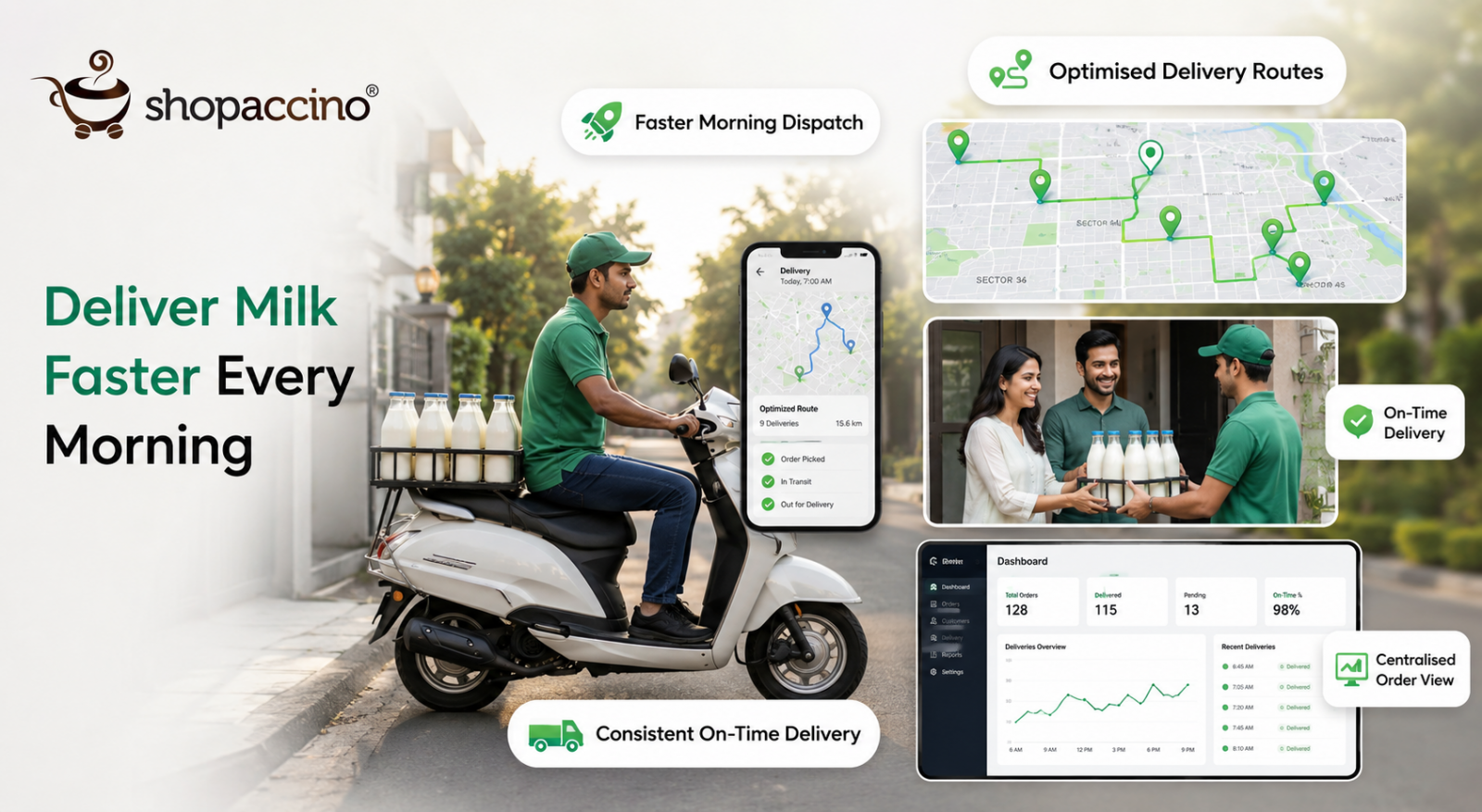
How a Milk Delivery App Helps Deliver Milk Faster Every Morning
For milk delivery businesses and dairy owners, morning is not just a time of day—it is the entire business window Customers expect fresh milk at their doorstep at the same time, every day, without reminders or follow-ups. A delay of even 15 minutes can break trust built over months. Missed deliveries lead to complaints, refunds, and eventually customer churn.
Yet many milk businesses still depend on manual delivery routes, handwritten lists, and memory-based planning. Riders decide their paths based on habit, not logic. Addresses change, subscriptions change, quantities change—but the route planning stays the same. This gap between growing demand and outdated delivery methods is where delays begin.
A milk delivery app solves this problem at its root. Instead of leaving delivery planning to guesswork, the app organizes orders, clusters customers, and shows the most efficient delivery route. The result is faster delivery, fewer missed orders, and calmer mornings for both riders and business owners.
This blog explains why manual delivery routes fail, what customers expect from milk services, and how a milk delivery app development helps ensure milk reaches every doorstep faster—every single morning.
Challenging Area: Why Manual Milk Delivery Routes Cause Daily Delays
Most delivery delays are not caused by traffic or riders. They are caused by poor planning before the ride even starts.
Route Planning Based on Memory
Many riders follow the same route every day, regardless of how orders change. When new customers are added or quantities increase, the route becomes inefficient, leading to backtracking and wasted time.
No Central View of Orders
Orders come from WhatsApp messages, calls, and paper notes. Without a single system showing all deliveries together, riders often miss addresses or carry incorrect quantities.
Subscription Changes Not Reflected
Customers pause, resume, or change quantities frequently. Manual systems fail to update these changes accurately, causing wrong deliveries and repeat visits.
Time Wasted on Sorting Orders
Before leaving, riders spend valuable time checking lists, grouping orders, and counting packets manually. This delays the start itself.
No Backup Plan for Missed Deliveries
When a delivery is missed, there is no quick way to reassign or reroute efficiently. The issue is discovered only after a customer complains.
Their Customer Challenging Area: What Milk Customers Expect Every Morning
Milk customers are not flexible buyers. Their expectations are fixed and routine-driven.
On-Time Delivery Without Follow-Ups
Customers do not want to call or message to ask where their milk is. They expect silent reliability.
Correct Quantity Every Day
Even a small mistake in quantity affects household routines, especially for families and small shops.
No Missed Deliveries
Missing one delivery often leads customers to look for alternative vendors immediately.
Consistency Over Speed
Customers value consistent timing more than faster delivery. They want milk at the same time every morning.
Peace of Mind
Customers want confidence that their subscription is running smoothly without daily monitoring.
Solution: How a Milk Delivery App Improves Morning Delivery Speed
A milk delivery app does not make riders faster—it makes delivery smarter. It removes confusion before the ride starts. Platforms like Shopaccino offer a complete online milk delivery app solution that helps milk businesses plan deliveries logically, not manually.
Centralised Order List
All orders for the day—subscriptions, add-ons, pauses—are visible in one place. Nothing is missed or assumed.
Optimised Delivery Routes
The app groups nearby customers and suggests the most efficient delivery sequence, reducing travel time and backtracking.
Accurate Quantity Calculation
Riders see the exact quantity needed for each stop, preventing overloading or shortages.
Real-Time Updates
Any last-minute changes are reflected instantly, avoiding wrong deliveries.
Delivery Status Tracking
Once delivered, orders are marked complete, creating accountability and clarity.
How to Implement Faster Milk Delivery Using an App (Step-by-Step)
Step 1: Digitise All Customer Orders
Move subscriptions, one-time orders, and changes into the app so every delivery is accounted for.
Step 2: Assign Delivery Areas
Define delivery zones so orders are automatically grouped by location.
Step 3: Use App-Based Route View
Riders follow the app’s delivery sequence instead of memory-based routes.
Step 4: Train Riders on App Usage
A short training ensures riders understand order lists, quantities, and delivery status updates.
Step 5: Monitor Daily Delivery Reports
Business owners can see completed, delayed, or missed deliveries and act immediately.
Step 6: Improve Routes Over Time
Delivery data helps refine routes further, making mornings smoother each day.
Benefits: Why Milk Delivery Apps Make Mornings Faster and Calmer
Faster Route Completion
Optimised routes reduce unnecessary travel, saving time and fuel.
Fewer Missed Deliveries
Clear order lists and routing prevent oversight and confusion.
Improved Customer Trust
Consistent delivery builds confidence and reduces complaints.
Lower Rider Stress
Riders focus on delivery, not problem-solving on the road.
Better Business Control
Owners gain visibility into delivery performance without micromanaging.
Easier Scale
Adding new customers does not disrupt routes when planning is digital.
Built for Milk Business Owners (Doodh Wala App for Daily Delivery)
For local dairy operators and doodh wala businesses running daily delivery rounds, a milk delivery app turns a memory-based, paper-driven morning into a planned, repeatable system. A milk business app (dudh delivery app) keeps every subscription, pause, and quantity change in one place, so whoever runs the route is never guessing.
This matters most for growing milk businesses in India, where delivery volumes rise fast and manual lists stop scaling. Instead of hiring more riders or stretching mornings longer, owners get tighter routes, accurate quantities, and clear delivery status — the planning a daily milk business needs to stay reliable as it grows
Conclusion
Milk delivery is a time-sensitive business where small delays create big problems. Manual routes, memory-based planning, and scattered order sources make mornings chaotic and unpredictable. These issues grow as the customer base expands.
A milk delivery app brings structure to this chaos. By organising orders, optimising routes, and giving riders clear instructions, it ensures milk reaches customers faster and more reliably every morning.
With solutions like Shopaccino, milk businesses do not need more riders or longer hours—they need better planning. When routes are smart, mornings become calm, customers stay loyal, and operations scale without stress.
FAQs
It plans efficient routes, groups nearby customers, and removes manual sorting, saving time.
Yes. The interface is simple and shows only what the rider needs for delivery.
Yes. Shorter routes and less backtracking reduce fuel usage.
The update reflects instantly, preventing wrong deliveries.
Absolutely. Even small routes become more efficient with digital planning.
Yes. Delivery status reports highlight issues immediately.