How a Milk Delivery App Helps Expand Service to More Locations
For most milk delivery businesses, growth begins naturally. A few nearby homes turn into an entire lane, then a colony, and soon requests start coming from the next area. What once felt exciting slowly becomes stressful. Routes grow longer, customer lists get confusing, and daily delivery planning turns into a guessing game.
Expansion sounds simple on paper—“add more areas”—but in reality, it is one of the hardest stages for a milk business. The moment deliveries spread across multiple localities, manual systems start breaking. Riders get confused, orders overlap, quantities go wrong, and customers from new areas feel neglected.
This is where many milk businesses slow down or stop expanding altogether.
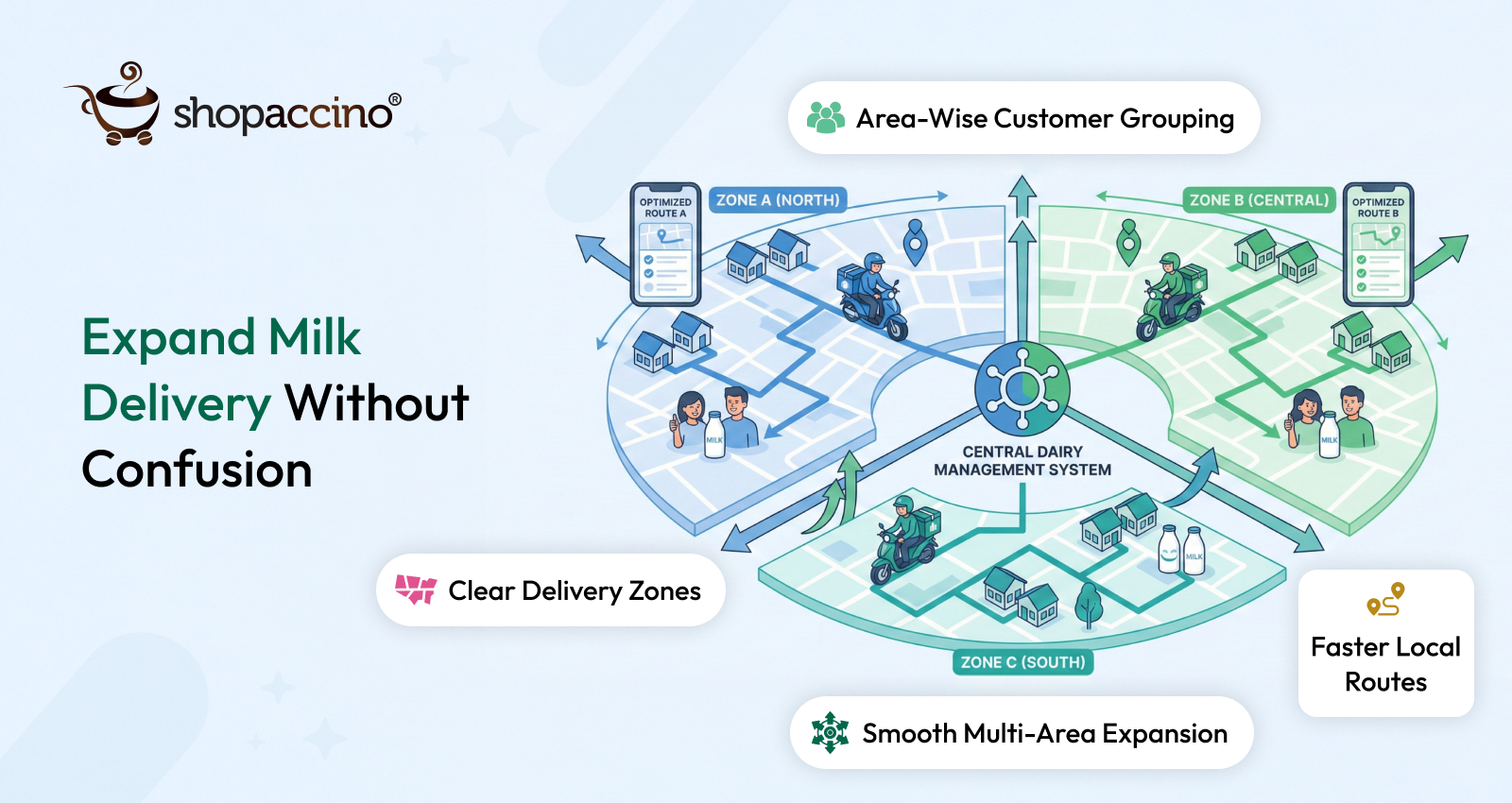
A milk delivery app removes this barrier. Instead of managing growth through memory, phone calls, and handwritten lists, the app introduces area-wise delivery management — helping you expand your milk delivery business to new localities without losing control. Each location is clearly defined, orders are automatically grouped, and expansion becomes controlled instead of chaotic.
This blog explains why expanding into multiple locations becomes confusing, what customers expect when a dairy grows, and how a milk delivery app helps businesses scale smoothly—without losing control or customer trust.
Challenging Area: Why Expanding Milk Delivery Becomes Difficult
Growth exposes weaknesses in manual systems. What worked for one area rarely works for five.
No Clear Area Separation
When customers from multiple locations are mixed into one list, riders struggle to know which area to serve first. This leads to unnecessary travel and delays.
Confusing Delivery Routes
As areas increase, riders often crisscross locations instead of following logical routes. This wastes time and fuel.
Wrong Quantity Allocation
Milk quantities are often calculated area-wise, but manual methods mix up totals, causing shortages or excess supply.
Difficult Rider Management
Assigning riders to specific areas becomes unclear, especially when orders change daily.
Inconsistent Service Quality
Early customers receive priority, while new areas experience delays, missed deliveries, or poor communication.
Their Customer Challenging Area: What Customers Expect as You Expand
Customers in new locations judge the business very quickly. Their expectations are simple but strict.
Same Reliability Everywhere
New customers expect the same on-time delivery as existing areas.
Clear Delivery Timing
They want to know when milk will arrive, not guess based on past experiences.
No Missed Deliveries
A missed delivery in the first few days often leads to permanent loss of trust.
Smooth Subscription Management
Customers expect their pause, resume, and quantity changes to work flawlessly, regardless of location.
Confidence in Scalability
Customers feel more secure when the service looks organised and professional.
Solution: How a Milk Delivery App Supports Area-Wise Expansion
A milk delivery app introduces structure into growth. Instead of stretching old processes, it builds a system designed for multiple locations.
Platforms like Shopaccino help milk businesses manage expansion in a clear, step-by-step manner.
Area-Wise Customer Grouping
Each customer is mapped to a specific delivery area. Orders are automatically organised location-wise.
Separate Delivery Routes Per Area
The app generates area-specific delivery lists, preventing overlap and confusion.
Accurate Area-Based Quantity Planning
Milk quantities are calculated per area, reducing wastage and shortages.
Rider Assignment by Location
Riders can be assigned to specific areas, creating accountability and consistency.
Central Visibility for Owners
Business owners can monitor all areas from one dashboard without micromanaging.
How to Implement Multi-Location Expansion Using a Milk Delivery App
Step 1: Define Delivery Areas
Create clear area boundaries such as sectors, colonies, or zones within the app.
Step 2: Assign Customers to Areas
Each customer is linked to their respective delivery area, creating organised clusters.
Step 3: Allocate Riders Area-Wise
Assign riders to specific zones so they become familiar with routes and customers.
Step 4: Track Area-Level Performance
Monitor deliveries, delays, and complaints by area to maintain service quality.
Step 5: Add New Areas Gradually
Expand one area at a time — for example, stabilize deliveries in one new locality for 2–3 weeks before adding the next — ensuring systems remain stable before moving further.
Step 6: Optimise Routes Continuously
Use delivery data to refine routes and improve efficiency over time.
Benefits: Why Area-Wise Delivery Management Enables Smooth Expansion
Controlled Growth
Businesses expand step by step instead of spreading too fast.
Consistent Customer Experience
Every area receives the same quality of service.
Lower Operational Stress
Clear systems reduce daily confusion for riders and managers.
Better Rider Efficiency
Defined areas reduce travel time and fuel costs.
Stronger Brand Trust
Customers feel confident when expansion looks organised.
Easier Long-Term Scaling
Adding new locations becomes a repeatable process.
Conclusion
Expanding a milk delivery business is not about delivering to more homes—it is about delivering with the same reliability everywhere. Manual systems struggle once operations spread across multiple locations, leading to confusion, delays, and unhappy customers.
A milk delivery app solves this problem by introducing area-wise delivery management. Orders are organised, routes are clear, riders are accountable, and business owners retain full visibility.
With platforms like Shopaccino, milk businesses can expand confidently—serving more locations without losing control, consistency, or customer trust. Growth stops being stressful and starts becoming sustainable.
FAQs
Yes. The app is especially helpful for small businesses planning gradual expansion.
Yes. Clear routing and customer grouping significantly reduce confusion.
Yes. This improves efficiency and customer familiarity.
The app updates the customer’s area, ensuring correct routing.
Yes. Optimised routes allow better utilisation of existing riders.
Absolutely. Consistent delivery builds long-term confidence.