How B2B Brands Can Improve Dealer Relationships With Self-Serve Ordering Portals
Dealer relationships are the backbone of every B2B brand. Whether you’re a manufacturer, wholesaler, exporter, or an established D2C brand entering distribution, your success is directly linked to how smoothly your dealers can place orders, access product information, and receive timely fulfilment. For decades, these relationships have relied heavily on manual communication—phone calls, emails, WhatsApp messages, sales visits, and handwritten orders. Although these methods worked in the past, they no longer match the pace or expectations of the modern B2B ecosystem.
In 2026 and beyond, dealers want a partnership that feels simple, transparent, and reliable. They want immediate clarity on stock availability, pricing, order status, schemes, and delivery timelines. They also want to place orders independently without depending on an overloaded sales team. This is where self-serve ordering portals are becoming a turning point for many B2B industries.
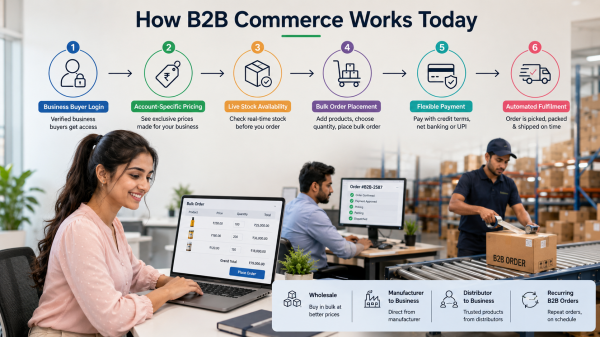
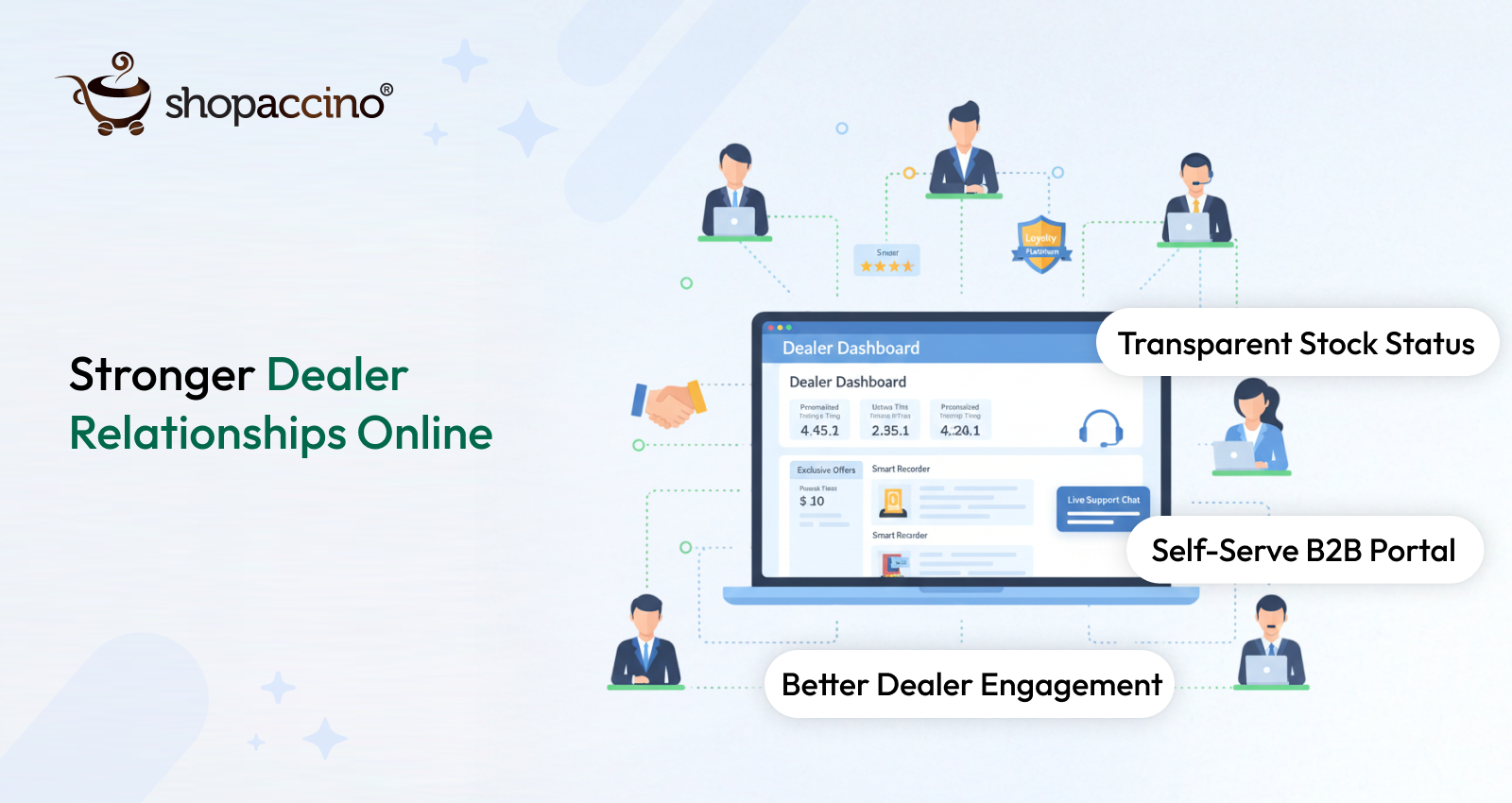
A self-serve B2B portal gives dealers the power to browse products, check stock, view customised pricing, and place orders anytime. Platforms like Shopaccino bring this convenience into a structured, automated environment—building a stronger, more trusting relationship between the brand and the dealer network.
This blog explores why dealer expectations have changed, how self-serve systems solve long-standing operational challenges, and what B2B brands can do to implement them effectively.
Challenging Area: The Business Challenges B2B Brands Face With Dealer Management
Managing dealers is not just about selling products. It involves coordination, communication, and consistency across a large and diverse network. Brands across segments—Established D2C Brands, Exporters, Manufacturers, Wholesalers, and Distributors—struggle with similar challenges.
Overdependence on Sales Representatives
When dealers rely entirely on sales reps to place orders, any delay in response slows down the entire supply chain.
A missed call, late message, or miscommunication directly affects order flow.
High Volume of Manual Orders
Orders sent via:
- Phone calls
- SMS
- Paper notes
- Sales visits
…all require manual entry into the system, increasing human error and reducing accuracy.
Miscommunication in Product Details
Dealers often place orders without:
- Updated catalogs
- Real-time pricing
- Variant availability
- Current schemes
This leads to confusion, rework, and frustration.
Long Order Cycles
Because the process depends on a chain of human communication, order cycles are slow.
By the time information flows back to the dealer, they often lose valuable selling time.
Difficulty Managing Dealer-Wise Pricing
Different dealers have:
- Different negotiated prices
- Discounts
- Credit terms
- Minimum order quantities
Managing this manually becomes extremely complicated.
Lack of Full Order Visibility
Without a system, dealers cannot see:
- Past orders
- Pending invoices
- Dispatch timelines
- Delivery status
- Backorders
This lack of visibility weakens confidence and causes frustration.
Their Customer Challenging Area: What Dealers Expect Today
Dealers today behave more like modern ecommerce buyers.
They want convenience, speed, and clarity—not back-and-forth discussions.
They Expect 24×7 Ordering Access
Dealers want to place orders anytime—late night, early morning, or during rush hours—without waiting for sales reps.
They Expect Real-Time Stock Visibility
They want to know:
- Available quantity
- Variants
- Warehouse stock
- Incoming inventory
…and they want it instantly.
They Expect Clear Pricing and Schemes
No confusion, no negotiation, no repeated confirmation.
They Expect Transparency in Order Status
Dealers want:
- Confirmation
- Dispatch updates
- Delivery timelines
- Documentation
…without asking repeatedly.
They Expect Ease of Reordering
If they buy the same items every week, they don’t want to repeat the entire process.
They Expect Error-Free Fulfilment
Incorrect dispatch or quantity mismatches disrupt their store operations and damage trust.
A self-serve ordering portal meets all these expectations with precision and simplicity.
Solution: How a Self-Serve B2B Portal Strengthens Dealer Relationships
A B2B self-serve portal is not just a tech upgrade—it is a relationship upgrade.
It gives dealers independence and removes friction from the ordering process.
Self-serve systems built on platforms like Shopaccino help brands provide a professional, reliable, and transparent ordering experience.
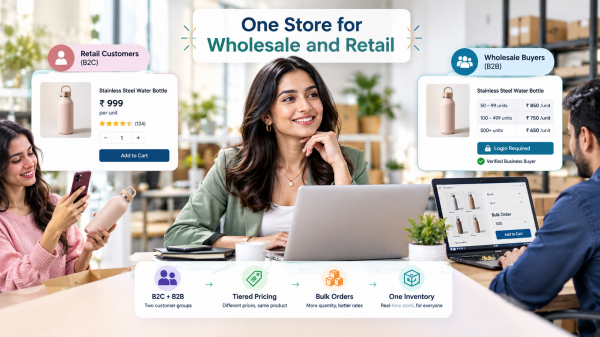
Dealers Can Place Orders Anytime
A digital portal eliminates dependency on sales reps.
Dealers browse, select, and place orders at their convenience.
Real-Time Inventory Visibility Builds Confidence
Dealers see:
- Exact stock
- Variant availability
- Backorder status
This reduces uncertainty.
Pricing Automation Ensures Transparency
Dealer-specific pricing is automatically applied.
No confusion, no mistakes, no disagreements.
Faster Order Processing
Because orders come digitally:
- No decoding WhatsApp messages
- No manual data entry
- No back-and-forth clarification
This reduces cycle time dramatically.
Complete Order History for Better Planning
Dealers can track:
- Current orders
- Past purchases
- Dispatch timelines
- Invoices
This helps them manage their own stores better.
Improved Dealer Loyalty and Trust
When ordering becomes smooth and predictable, dealers feel supported and valued.
How to Implement a Self-Serve Dealer Portal (Step-by-Step)
Implementing a digital dealer portal is straightforward when done with a structured approach.
Step 1: Prepare Your Product Catalog
Upload:
- Product names
- Clear images
- Packaging information
- Variants
- Case sizes
A detailed catalog helps dealers make quick decisions.
Step 2: Set Up Dealer Segments and Prices
Create groups such as:
- Distributors
- Retailers
- Superstockists
- Regional dealers
Then assign price lists and discount rules for each.
Step 3: Update Warehouse Inventory
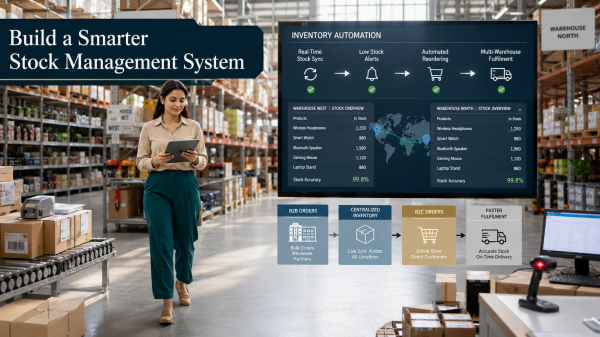
Assign stock to different warehouses so the system shows accurate availability.
Step 4: Share Login Access With Dealers
Invite your dealers to the portal.
They can now order independently.
Step 5: Train Your Internal Teams
Your staff must know how to:
- Approve orders
- Manage dispatch
- Track payments
- Handle returns
Step 6: Enable Automated Alerts
Set up alerts for:
- Order confirmation
- Invoice ready
- Dispatch
- Delivery updates
This eliminates repeated follow-ups.
Step 7: Analyse Data and Improve
Use analytics to identify:
- Fast-moving products
- Dealer-order patterns
- Stock needs
- Seasonal trends
This helps improve operations and support dealers better.
Benefits: How Self-Serve Portals Transform Dealer Relationships
Less Dependency, More Efficiency
Dealers become self-sufficient.
Sales reps focus on growth instead of routine order-taking.
Better Transparency and Communication
Dealers always know:
- Pricing
- Availability
- Order status
This increases trust.
Faster and More Accurate Orders
Digital orders eliminate errors common in manual communication.
Improved Delivery Speed
Accurate order capture means faster fulfilment.
Stronger Dealer Loyalty
When dealers find it easy to work with your brand, they prefer purchasing from you consistently.
Improved Sales Forecasting
Data from the portal helps brands plan inventory more effectively.
Scalable for Multi-Region Networks
As the brand grows, the portal grows with it.
Conclusion
Dealer relationships define the long-term stability of B2B brands. A smooth, transparent, and efficient ordering experience can strengthen trust, reduce friction, and improve overall business performance. In an environment where dealers expect speed, independence, and accuracy, relying solely on manual communication is no longer sustainable.
Self-serve ordering portals transform the dealer-brand relationship by giving dealers full control over their purchasing experience. Digital platforms like Shopaccino help brands eliminate operational bottlenecks, reduce errors, and build a more structured way of working—creating an ecosystem where both the business and its dealers thrive.
FAQs
Because they allow quick ordering, real-time stock visibility, transparent pricing, and complete independence from sales representatives.
Yes, it eliminates repetitive order-taking, reduces manual errors, and speeds up order processing.
Yes, even small brands benefit because it improves accuracy, speeds up fulfilment, and supports long-term scalability.
Dealers can see order history, dispatch status, invoices, and delivery timelines—all in one place.
Yes, each dealer can see pricing based on their segment, discount structure, and negotiated rates.
By offering convenience, speed, and reliability, dealers feel valued and tend to increase repeat orders.
Not at all. With proper onboarding, team training, and a structured approach, the transition is smooth for both the brand and the dealer network.