Multi-Warehouse Operations for B2B Brands: How to Keep Orders Flowing Smoothly
For growing B2B brands, managing a single warehouse is rarely enough. As customer demand spreads across regions and order volumes rise, businesses must expand their storage locations to reduce shipping delays, serve buyers faster, and optimise logistics costs. What once worked as a simple approach gradually turns into a complex network—multiple warehouses, regional hubs, zonal dispatch centres, and sometimes third-party fulfilment partners.
However, operating multiple warehouses is not only about storing stock in different locations. It requires precise coordination, accurate order routing, real-time inventory visibility, and predictable processes. When these elements are missing, orders get delayed, stock gets misplaced, and customer trust begins to weaken.
This is why more B2B brands are adopting digital platforms that centralise and automate multi-warehouse operations. Modern systems like Shopaccino help brands keep orders flowing smoothly across locations by synchronising inventory, routing orders intelligently, and eliminating the confusion caused by manual processes.
This blog explores the challenges of multi-warehouse management, what customers expect today, how an integrated ecommerce platform solves these issues, and how B2B brands can implement a scalable multi-warehouse model step-by-step.
Challenging Area: Business Challenges in Multi-Warehouse Operations
Managing multiple warehouses is a sign of growth, but it also multiplies operational complexity. The more locations you add, the more challenging it becomes to control accuracy, speed, and cost. B2B brands across categories—Established D2C Brands, Exporters, Manufacturers, Wholesalers, and Distributors—face similar problems.
Lack of Real-Time Inventory Visibility
When stock levels in every warehouse are updated manually:
- One team may think a product is available
- Another may unknowingly commit it to a different order
- The dispatch location may run out unexpectedly
Without real-time inventory management, errors become unavoidable.
Incorrect Order Routing
In multi-warehouse networks, choosing the right fulfilment location is crucial.
But without a digital system, teams often route orders based on guesswork or habit rather than:
- Customer location
- Stock availability
- Delivery timelines
- Logistics cost
This increases shipping time and expenses.
Inefficient Stock Movement
Brands often shift products between warehouses to balance availability.
When done manually, it causes:
- Inventory mismatches
- Wrong stock reports
- Delayed dispatch
Communication Overload
Multiple warehouses mean multiple teams.
Teams share updates through:
- Phone calls
- WhatsApp groups
- Spreadsheets
- Emails
This fragmented communication creates confusion and leads to fulfilment delays.
Difficulty Managing Bulk B2B Orders
B2B buyers place large and frequent orders.
A small mistake in stock calculation or fulfilment can affect the entire supply chain and disrupt customer relationships.
Their Customer Challenging Area: What B2B Buyers Expect in Multi-Warehouse Fulfilment
Today’s B2B buyers—including retailers, distributors, wholesalers, and corporate clients—have expectations shaped by modern ecommerce experiences.
They Want Faster Deliveries
Buyers expect brands to dispatch from the nearest warehouse so orders reach them quickly.
They Want Accurate Stock Availability
Customers want to know exactly what is available, in what quantity, and from which warehouse—without waiting for any confirmation call.
They Expect Error-Free Fulfilment
B2B orders are large. A small mistake in variant, quantity, or packaging can disrupt their entire business cycle.
They Prefer Transparent Timelines
Buyers want clarity on:
- Expected dispatch date
- Delivery timeline
- Backorder items
They Don’t Want to Repeat Information
Once they place an order, they expect the system to handle the rest.
Following up repeatedly frustrates them and damages brand trust.
Solution: How an Integrated Ecommerce Platform Solves Multi-Warehouse Challenges
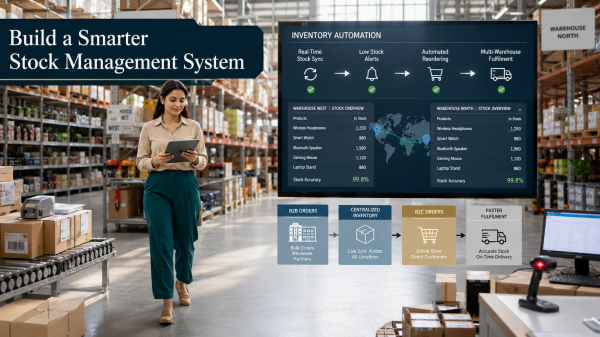
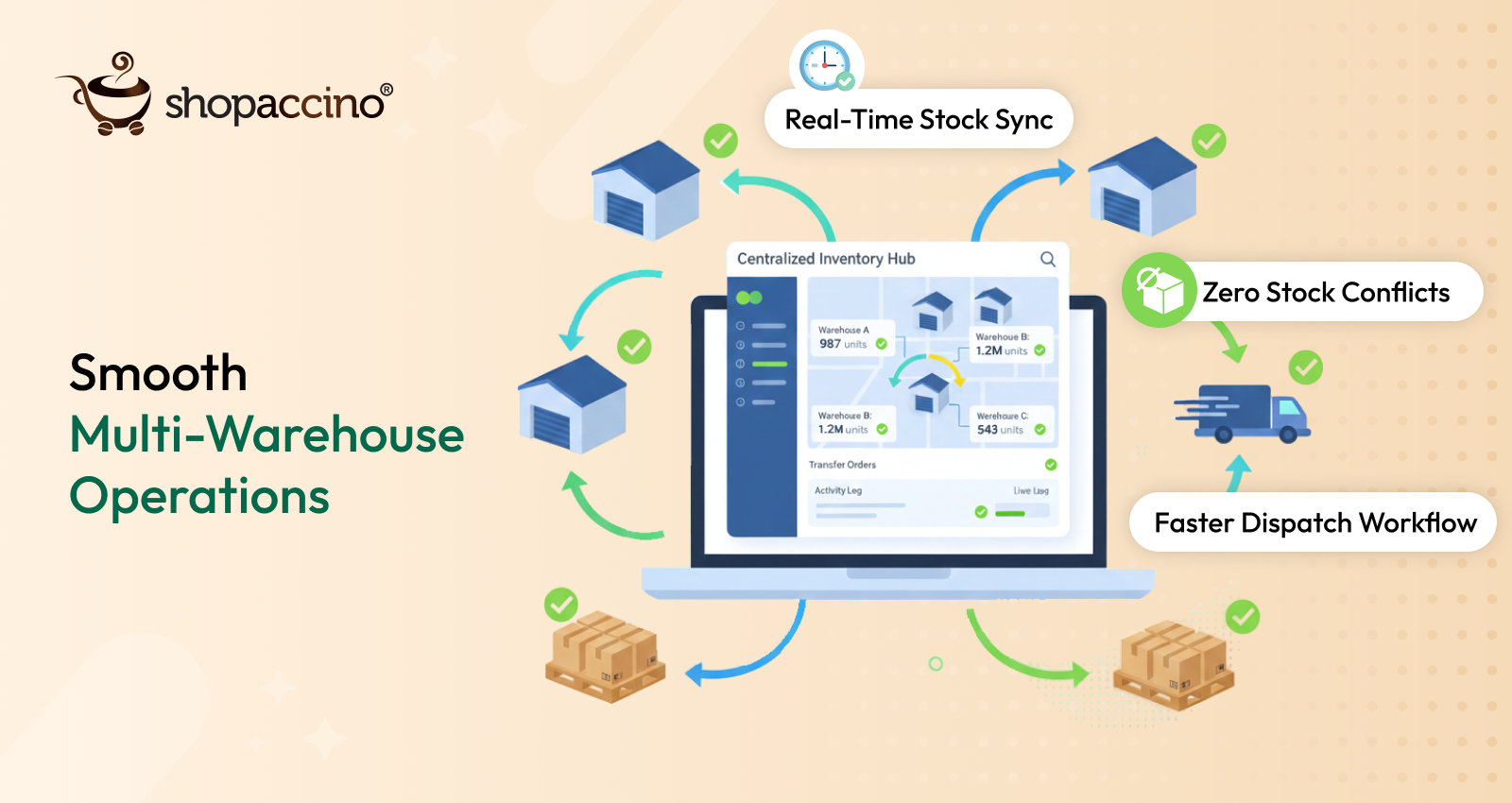
A modern B2B ecommerce platform acts as the central brain behind your multi-warehouse operations. Systems like Shopaccino give brands full control over their inventory, order routing, and fulfilment across locations—ensuring customer experience remains smooth and predictable.
Real-Time Multi-Warehouse Inventory Sync
The platform updates inventory instantly for each warehouse.
Teams can see:
- Available stock per location
- Reserved stock
- Incoming stock
- Low-stock alerts
Learn more in our guide on real-time inventory sync across warehouses.
Automated Order Routing
The system automatically selects the best fulfilment location based on:
- Buyer location
- Stock availability
- Regional order rules
- Delivery speed
See how Shopaccino's Multi-Warehouse Locations feature maps buyers to the right warehouse automatically.
Centralised Order Processing
Even if multiple warehouses handle fulfilment, orders appear in a single dashboard.
This helps teams coordinate better and avoid misunderstandings.
Accurate Stock Movement Records
If products move between warehouses, the system records:
- Source location
- Destination
- Updated quantities
- Time and date
This prevents inventory mismatch.
Customer-Specific Catalog and Pricing
The system can manage:
- Customer-wise pricing
- Region-wise catalog
- Warehouse-specific availability
This is crucial for large B2B networks.
Smart Insights and Data Analytics
Detailed analytics help brands understand:
- High-demand regions
- Fast-moving inventory
- Ideal stock levels
- Warehouse performance
This improves planning and reduces wastage.
How to Implement Multi-Warehouse Operations: Step-by-Step Guidance
Setting up a smooth multi-warehouse system is not complicated when approached in a structured way.
Step 1: Map Your Warehouses and Regional Demand
Begin by identifying:
- Existing warehouses
- Nearby customer clusters
- Regions with high order volume
- Logistics cost patterns
This helps decide which warehouse should serve which region.
Step 2: Digitise Your Product and Inventory Data
Upload:
- Product details
- SKU codes
- Variants
- Packaging units
- Case-wise quantities
Then assign initial stock to each warehouse in the system.
Step 3: Define Warehouse Roles and Permissions
Different warehouses may need different access.
Assign permissions for:
- Stock updates
- Order processing
- Dispatch
- Returns
This reduces dependency on central teams.
Step 4: Set Up Automated Order Routing Rules
Configure routing logic such as:
- Nearest warehouse first
- Warehouse with highest stock
- Priority for regional hubs
This ensures consistent fulfilment.
Step 5: Sync Inventory in Real Time
Enable auto-sync and ensure your warehouse teams update physical stock movements immediately.
Step 6: Train Teams Across All Warehouses
Train them on:
- Order checking
- Stock reconciliation
- Picking and packing
- Updating dispatch
Training improves accuracy and reduces errors.
Step 7: Track, Optimise, Scale
Once operations stabilise, review performance and refine:
- Stock allocation
- Routing rules
- Warehouse-wise assortment
This turns multi-warehouse management into a powerful growth engine.
Benefits: How Multi-Warehouse Management Transforms B2B Operations
An efficient multi-warehouse system improves both customer satisfaction and operational efficiency.
Faster Deliveries for Every Region
Dispatching orders from the nearest warehouse drastically reduces delivery time.
Reduced Logistics Costs
Shorter distance means lower shipping cost, making overall fulfilment cheaper.
Higher Order Accuracy
Real-time visibility reduces errors like wrong dispatch or insufficient stock.
Better Customer Experience
Buyers receive:
- Accurate timelines
- Quick responses
- Consistent service
This increases trust and repeat orders.
Improved Warehouse Productivity
Clear responsibilities and digital workflows reduce confusion and speed up dispatch.
Scalability Without Operational Overload
Brands can add more warehouses without creating chaos because the system manages complexity.
Data-Driven Decision Making
Advanced analytics help predict demand and maintain the right stock at the right location.
Conclusion
Multi-warehouse operations are no longer limited to large enterprises. Today, even MSMEs and mid-size B2B brands rely on distributed warehouses to meet rising customer expectations, reduce delivery timelines, and operate cost-effectively. But managing multiple locations manually almost always leads to errors, delays, and inefficiencies.A modern B2B ecommerce platform solves these problems by centralising orders, synchronising inventory, and automating routing—ensuring smooth order flow across all warehouses. Solutions like Shopaccino empower brands to run multi-warehouse networks with accuracy, speed, and transparency, helping them scale confidently in a digital-first market.
FAQs
It helps brands reduce delivery time, improve fulfilment accuracy, and serve customers in different regions without operational delays—ensuring strong long-term relationships.
It ensures teams always see updated stock availability, preventing wrong commitments, incomplete orders, and dispatch errors across warehouses.
Yes, even small brands benefit because distributed stock improves delivery speed and reduces logistics costs without adding manual workload.
It’s a system that selects the best warehouse for fulfilment based on location, availability, and speed—removing guesswork and reducing shipping delays.
It centralises orders, syncs inventory across locations, automates routing, and provides analytics for better planning and execution.
Brands should monitor data weekly and optimise stock, routing rules, and warehouse responsibilities to maintain smooth fulfilment.
Yes, because orders are dispatched from the nearest warehouse, brands save on transportation, packing, and handling costs.