
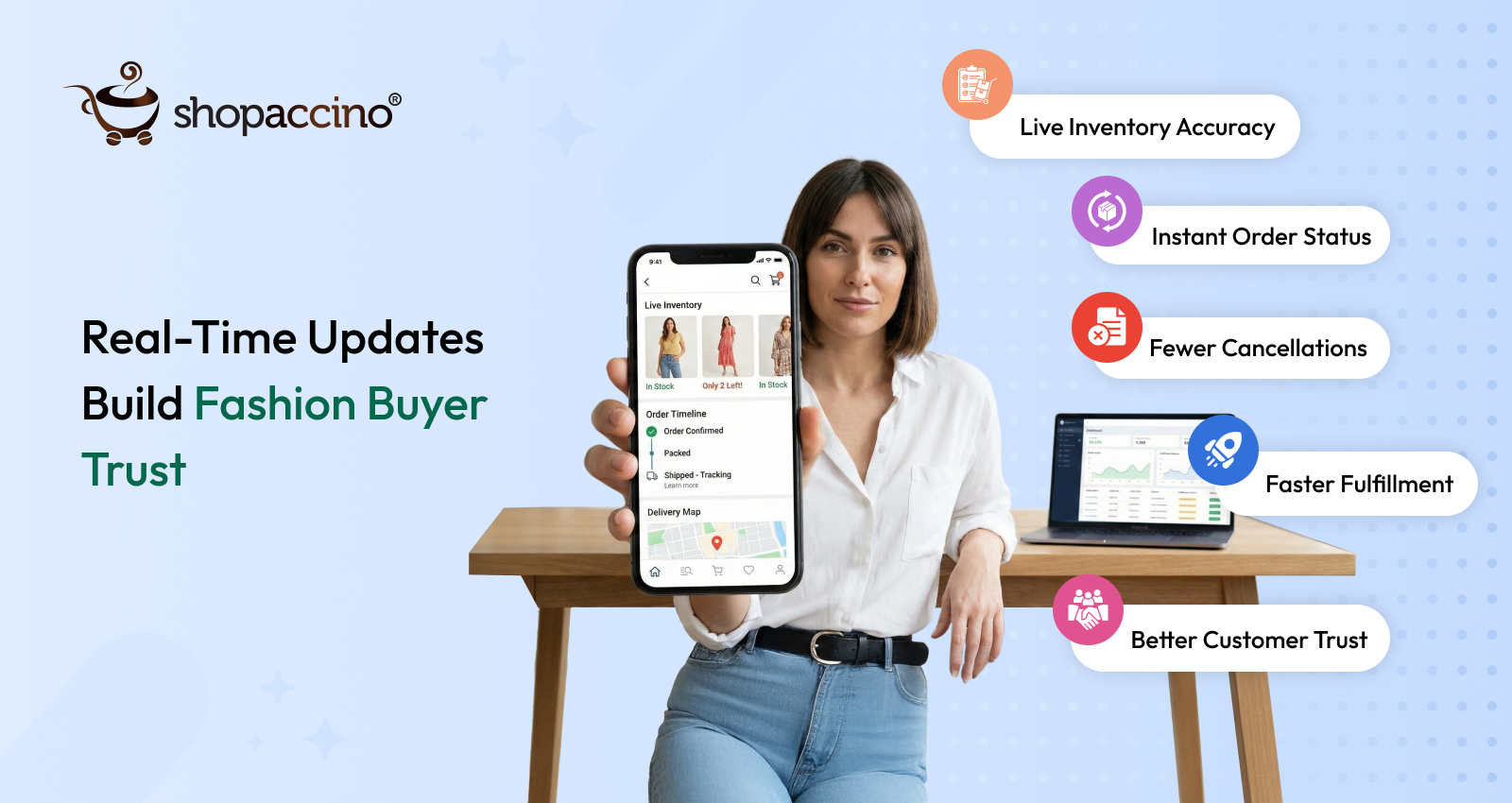
How Real-Time Updates in Ecommerce Software Boost Fashion Sale
Fashion ecommerce looks glamorous from the outside—new collections, trending designs, and fast-moving sales. But behind the scenes, many fashion brands quietly struggle with a very basic issue: outdated information. A product shows as available but goes out of stock after the order is placed. An order is shipped, but the customer has no update. A size is restocked, but the website still shows “unavailable.”
These small gaps create big problems.
Fashion shoppers are impatient by nature. They browse quickly, compare instantly, and expect clarity at every step. When stock levels or order statuses are unclear, trust drops. And when trust drops, sales suffer—sometimes permanently.
Real-time updates in ecommerce software solve this problem by keeping inventory, orders, and customer communication perfectly in sync. This blog explains why outdated information hurts fashion brands, what customers expect today, and how real-time ecommerce systems quietly improve conversions, reduce cancellations, and increase repeat sales.
Challenging Area: Why Outdated Information Hurts Fashion Businesses
Many fashion brands invest heavily in marketing but overlook operational accuracy. The result is frustration on both sides.
Stock Mismatch Creates Lost Sales
When a customer selects a size or color that looks available but later gets cancelled, the brand doesn’t just lose one sale—it loses credibility.
Manual Updates Don’t Scale
Teams updating stock manually across warehouses, stores, and online channels can’t keep up as order volume grows.
Order Confusion Leads to Support Overload
Customers start calling or messaging to ask simple questions:
“Has my order shipped?”
“Why is delivery delayed?”
“Is my size confirmed?”
High Return and Cancellation Rates
When customers feel uncertain, they cancel orders before delivery—or refuse them on arrival.
Poor Internal Coordination
Sales, inventory, and fulfillment teams often work with different data, leading to mistakes and delays.
These challenges don’t come from bad intentions. They come from systems that were never designed for fast-moving fashion ecommerce.
Their Customer Challenging Area: What Fashion Shoppers Expect
Fashion customers don’t tolerate uncertainty. They want clarity before, during, and after purchase.
They Expect Accurate Stock Availability
If a product is shown as available, they expect it to be deliverable—without excuses.
They Want Instant Order Confirmation
Customers feel reassured when their order details are confirmed immediately.
They Expect Live Order Status
From processing to shipping, they want visibility without chasing the brand.
They Want Trustworthy Delivery Timelines
Unclear or changing delivery dates increase anxiety and buyer regret.
They Expect Consistency Across Channels
What they see on mobile, website, and email should always match.
When these expectations are met, customers feel confident enough to buy—and buy again.
Solution: How Real-Time Ecommerce Software Fixes These Gaps
Real-time ecommerce software acts as a single source of truth. Every action updates the system instantly, across all touchpoints.
Live Inventory Synchronization
The moment an item is sold, stock updates everywhere—website, app, admin panel, and warehouse view.
Instant Order Status Updates
Order confirmations, packing updates, and dispatch notifications happen automatically.
Accurate Variant Availability
Sizes, colors, and styles update individually, reducing wrong selections.
Unified Dashboard for Teams
Sales, operations, and support teams see the same real-time data.
Customer Transparency
Shoppers no longer guess—they know exactly what’s happening.
Platforms like Shopaccino support real-time ecommerce workflows that help fashion brands operate with confidence rather than constant manual checks.
How to Implement Real-Time Updates in Fashion Ecommerce (Step-by-Step)
Step 1: Centralize Inventory Management
Connect all stock sources—warehouses, stores, and online channels—into one system.
Step 2: Enable Variant-Level Tracking
Track sizes and colors individually instead of grouping them under one product.
Step 3: Automate Order Status Changes
Trigger automatic updates when an order moves from processing to packing to shipping.
Step 4: Sync Customer Notifications
Ensure customers receive updates via email or app notifications at each stage.
Step 5: Train Internal Teams
Make sure teams rely on the system, not spreadsheets or manual notes.
Step 6: Monitor and Optimize
Regularly review data to identify delays, mismatches, or bottlenecks.
Benefits: How Real-Time Updates Boost Fashion Sales
Higher Conversion Rates
Customers are more likely to complete purchases when stock information is reliable.
Fewer Order Cancellations
Clear status updates reduce second thoughts and cancellations.
Lower Customer Support Load
When customers see updates themselves, they ask fewer questions.
Better Customer Trust
Transparency builds confidence, especially for first-time buyers.
Faster Fulfillment
Teams work faster when everyone sees the same real-time data.
Increased Repeat Purchases
Satisfied customers return because the experience feels dependable.
Conclusion
In fashion ecommerce, speed and accuracy are inseparable. Customers don’t just buy clothes—they buy confidence. When inventory data is outdated or order status is unclear, confidence disappears quickly.
Real-time updates transform ecommerce operations from reactive to reliable. They ensure customers always see the truth, teams always work with the latest data, and brands avoid avoidable mistakes.
With ecommerce platforms like Shopaccino, fashion brands can maintain real-time inventory accuracy, keep customers informed automatically, and build trust that directly translates into higher sales and stronger loyalty.
FAQs
They lead to cancellations, refunds, and loss of trust, making customers hesitate to buy again.
Customers always know product availability and order status, reducing anxiety and confusion.
Yes. Accurate product and delivery information reduces wrong expectations.
Absolutely. Fashion relies heavily on variant accuracy to avoid errors.
Yes. Modern platforms make real-time systems accessible without complexity.
Shopaccino synchronizes inventory, orders, and updates across channels in real time.