How Shopaccino Helped a B2B Exporter Manage 5 Warehouses Efficiently
For many exporters, scaling is not just about reaching new markets—it’s about managing the complexity that comes with higher volumes, multiple locations, and global demand. As orders grow and workflows expand, the systems that once worked for a small team often start breaking down. Inventory errors increase, dispatch speed slows, and miscommunication between warehouses becomes common.
This is exactly what happened to a rapidly growing Indian B2B exporter specialising in home décor and lifestyle goods. Their products were gaining strong traction in international markets like the US, UAE, and Europe. With increasing wholesale orders and repeat buyers, their business was ready to scale—but their backend operations were not.
This is the story of how the exporter transformed operations, reduced errors, and brought five busy warehouses under a single ecosystem using an integrated ecommerce platform like Shopaccino. It’s a roadmap for every manufacturer, wholesaler, and exporter looking to streamline multi-location fulfilment without increasing chaos.
Introduction: When Growth Becomes Operational Overload
The exporter started with one warehouse and a small team. As demand increased, they opened more units based on product categories and regional optimisation:
- Warehouse 1: Ready stock
- Warehouse 2: Bulk goods
- Warehouse 3: Fragile items
- Warehouse 4: International dispatch
- Warehouse 5: Returns & QC
Individually, each warehouse worked well. But managing them together became a daily struggle.
Orders were flowing, but so were errors.
Different teams maintained separate stock sheets. Their ERP and ecommerce systems were disconnected. Some products were available in one location but not the other. Delivery deadlines were missed because the correct warehouse didn't receive the order on time.
The business realised that scaling was no longer about increasing space or manpower—what they needed was a single system capable of synchronising everything.
Challenging Area: Where the Exporter Faced Slowdowns
Even though the exporter had strong demand, they struggled with operational consistency. Their main challenges included:
No Centralised Dashboard for All Warehouses
They had to check five separate stock reports daily. This caused delays and misalignment.
Stock Mismatch Between Digital and Physical Inventory
Slow-moving items piled up in some warehouses while urgent items ran out in others.
Manual Order Assignment
Teams had to decide manually which warehouse should fulfil which order — often leading to delays and confusion.
High Dependency on WhatsApp and Spreadsheets
Information was passing through messages, calls, and Excel sheets, increasing errors.
Difficulty Managing International Orders
Export documentation, packing list formats, and weight-based rates varied by warehouse.
No Real-Time Visibility
Management couldn’t quickly see:
- What’s in stock
- What’s reserved
- What’s in transit
- What needs replenishment
Return Handling and QC Delays
Returned goods piled up in one warehouse while other units didn’t know replenishment was pending.
These challenges began affecting buyer confidence and delivery reliability.
Their Customer Challenging Area: What B2B Buyers Expected
While the exporter battled internal inefficiencies, international B2B buyers had their own expectations — much higher than retail buyers.
Accurate Stock Availability Before Placing Orders
Wholesalers buy in bulk. They need to know exactly what is available.
Fast Processing for Large Quantity Orders
Delays in dispatch affect their store shelves and distribution chains.
Clean, Error-Free Invoicing
Export invoices, packing lists, and HS codes must be accurate.
Predictable Delivery Timelines
B2B buyers expect reliability over everything else.
Clear Communication
They want updates on:
- Stock
- Dispatch
- Tracking
- Backorders
Minimal Errors in Packaging
One mistake in SKU sorting can affect entire shipments.
To keep global buyers happy, the exporter needed a highly organised backend.
Solution: How Shopaccino Brought All Warehouses Under One System
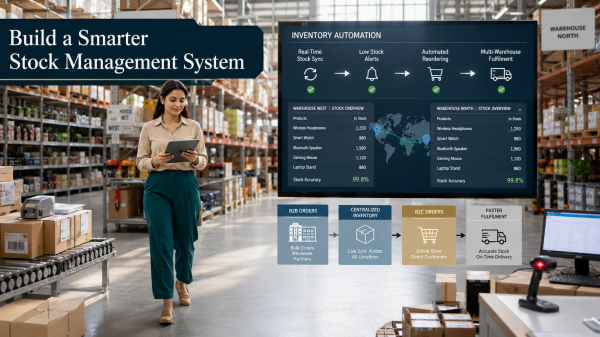
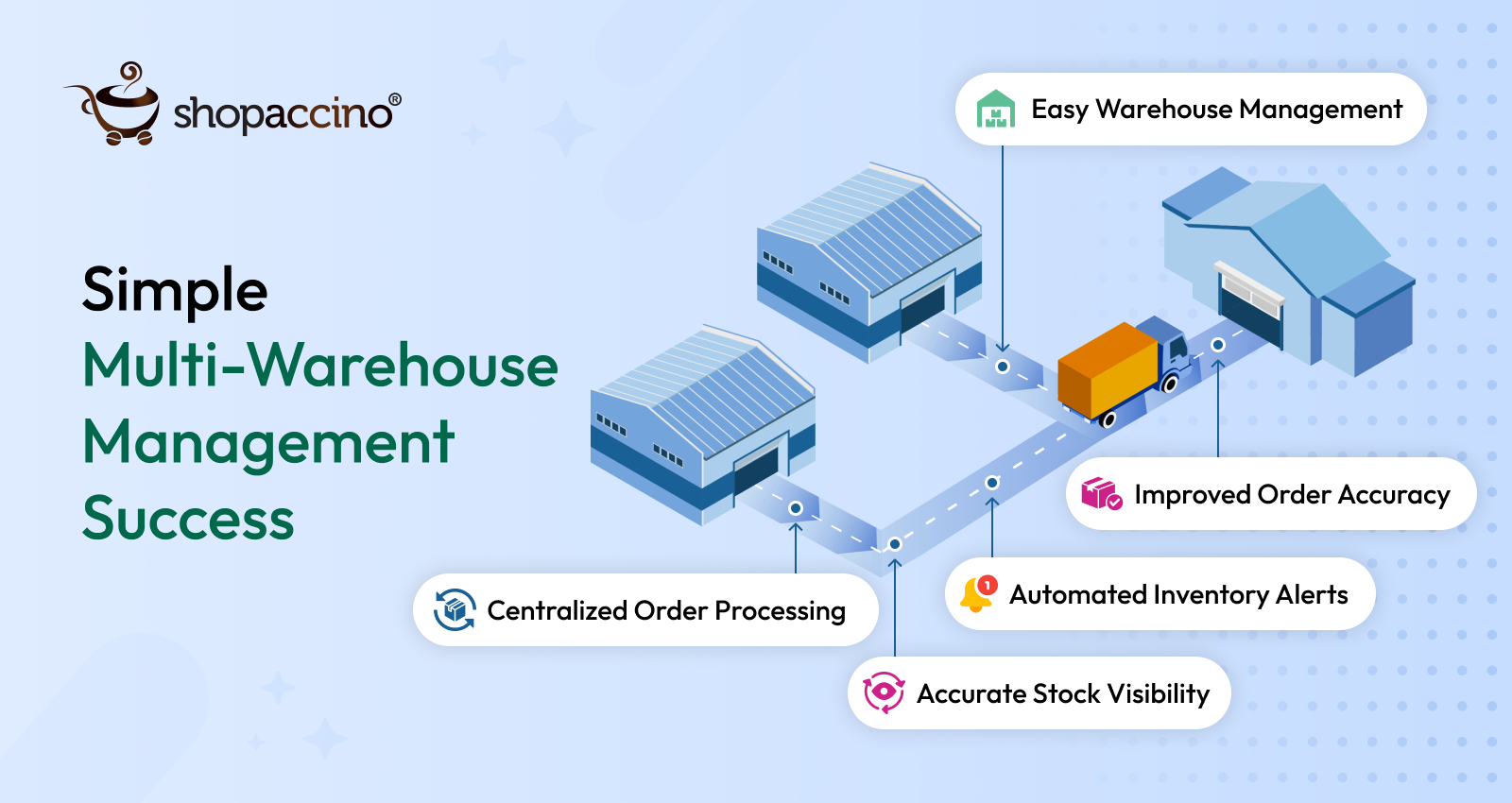
When the exporter implemented Shopaccino’s multi-warehouse architecture, they finally gained a centralised system capable of supporting scale. Instead of juggling separate operations, they could manage everything through a single dashboard.
Here’s how the solution created a complete operational shift:
Centralised Inventory Dashboard Across All Warehouses
Shopaccino allowed the team to view live stock across all five locations in one place.
This gave them immediate answers to:
- Where stock exists
- Which warehouse should fulfil an order
- What needs replenishment
Stock mismatches dropped dramatically.
Automated Warehouse Allocation Using Pincode Logic
Orders were assigned automatically based on warehouse rules such as:
- Location
- Product availability
- Priority settings
This eliminated manual decisions and reduced delays for global dispatches.
Real-Time Sync Prevented Stock Conflicts
Whenever stock changed in one warehouse, all systems updated instantly — reducing double-bookings and overselling.
Permission-Based Staff Access
Each warehouse team received limited access only to their unit, improving accountability and preventing data overlap.
Unified Order Management
Whether an order came from the website, direct B2B order entry, or sales team input, Shopaccino sent it instantly to the right warehouse.
This stopped cross-warehouse confusion.
Faster International Dispatch Through API-Integrated Shipping
Shopaccino supported API integrations with shipping carriers, simplifying:
- Label generation
- Pickup requests
- Commercial invoices
This helped the exporter meet international transit deadlines more easily.
Separate Return Handling Workflows
The return warehouse could log new arrivals in seconds, updating all other warehouses automatically.
Teams no longer asked:
“Has this item been returned yet? Can we reassign it?”
Bulk Inventory Uploads and Adjustments
Instead of updating every warehouse manually, they uploaded new stock once and allocated it efficiently.
Full Integration with Their ERP
With API connectors, their ERP and Shopaccino stayed synced, eliminating data duplication and clerical errors.
How to Implement Multi-Warehouse Success (Step-by-Step)
Here is the same process the exporter followed — a simple blueprint for any business managing multiple units.
Step 1: Map Out Warehouse Structure
Define:
- Product categories per warehouse
- Dispatch roles
- Return units
- Stock flows
A clear structure prevents overlaps.
Step 2: Add Warehouses into the System
Set up each location with:
- Staff
- Permissions
- Rules
- Inventory type
Step 3: Set Up Automatic Warehouse Allocation
Use rules such as:
- Nearest warehouse
- Stock availability
- Product category
This helps eliminate manual decision-making.
Step 4: Upload Real Stock Data
Upload:
- Opening stock
- SKU details
- Blocked inventory
- Reserved units
Accurate data ensures reliable operations.
Step 5: Train Warehouse Teams
Conduct short sessions on:
- Scanning
- Picking
- Packing
- Dispatch management
Warehouse staff adapt quickly when the system is simple.
Step 6: Integrate Shipping Partners
Connect carriers through API for automated:
- Labels
- Tracking
- Pickups
India Post reference (international shipping guidelines):
Step 7: Implement Weekly Inventory Audits
Compare:
- Physical stock
- System stock
Shopaccino’s audit tools simplify this process.
Step 8: Review Analytics Weekly
Study:
- Fast movers
- Slow movers
- Warehouse performance
- Fulfilment speed
This data helped the exporter reduce costs and improve reliability.
Benefits: The Exporter’s Transformation After Going Multi-Warehouse
After implementing the system, the exporter experienced measurable improvements.
70% Faster Order Processing
Automatic warehouse allocation reduced delays dramatically.
90% Reduction in Stock Mismatch
Real-time updates kept all warehouses aligned.
Faster Delivery to Global Buyers
International shipments became smoother and more predictable.
Transparent Operations Across Teams
No more calling between warehouses to locate stock.
Higher Buyer Satisfaction
Accurate dispatch, clean documentation, and timely communication built trust with overseas clients.
Reduced Operational Costs
Fewer errors = lower return cost + lower re-shipping cost.
Seamless Scaling Opportunity
The system now supports:
- More orders
- More warehouses
- More teams
- More destinations
without operational breakdown.
Conclusion
Managing one warehouse is simple, but managing five requires a structured, scalable, and unified system. This B2B exporter proved that growth becomes manageable when the right digital infrastructure is in place.
Shopaccino gave them the backbone to synchronise every warehouse, automate decisions, reduce manual effort, and deliver a smoother experience to global buyers.
Their transformation shows a powerful truth:
When a multi-warehouse exporter becomes digitally organised, scale is no longer a challenge—it becomes a competitive advantage.
FAQs
It helps fulfil orders faster, reduce delays, and distribute stock more effectively.
By using a real-time inventory system that updates instantly across all warehouses.
Yes, with permission-based access, each team handles only their assigned unit.
Automation assigns orders, updates stock, and speeds up fulfilment.
Accurate stock and faster delivery improve trust and repeat business.
Yes, centralisation reduces manual handling, which reduces mistakes.
Absolutely — even two warehouses benefit from unified management.