What Is a Multi-Vendor Marketplace Platform? A Complete 2026 Explainer
In today’s digital era, businesses are looking forward to the future of commerce that helps them enhance their operations spontaneously. Multi-vendor marketplace platforms have risen up to the expectations of business owners and have become increasingly popular among entrepreneurs.
But what exactly is a multi-vendor marketplace platform, and how do you choose the best software to start your own multivendor eCommerce plugin?
What is a multi-vendor marketplace platform?
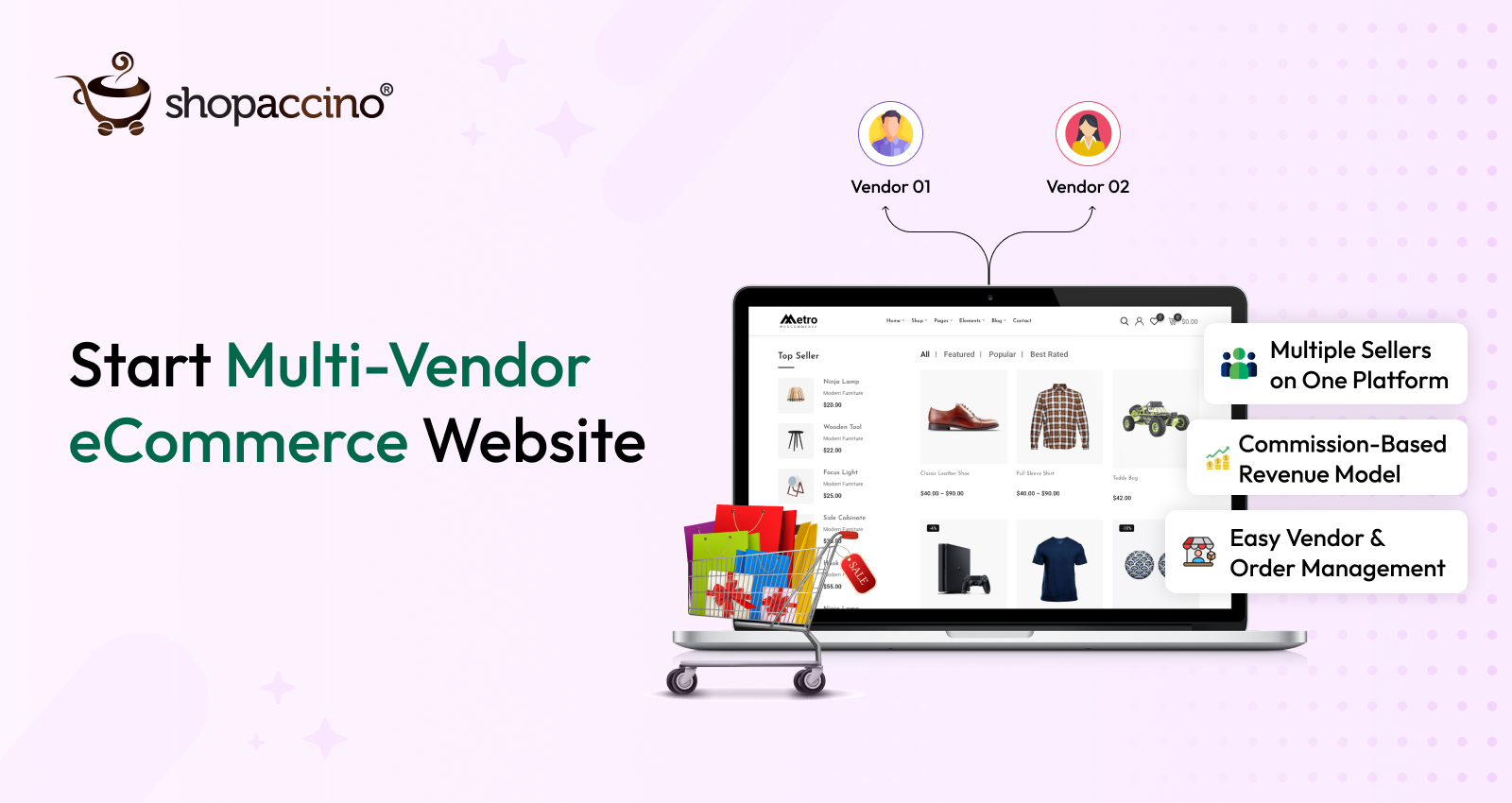
A multi-vendor marketplace platform is a software solution that enables multiple sellers or vendors to sell their products or services through a single online marketplace. The platform provides each seller with their own storefront, and buyers can browse and purchase products or services from multiple sellers in one place.
It is an ideal solution for all businesses looking to scale their businesses to the next level. The program enables store admins to manage multiple vendors and handle all the complexities of payment processing, order management, and other operational tasks from a single place.
By offering a centralized location for buyers to shop and compare products from different sellers, the platform acts as a catalyst to skyrocket your sales and profit to the next level. Some of the existing examples of popular multi-vendor marketplace e-commerce platforms include Amazon, eBay, Etsy, etc.
Read Also : How Manufacturers Can Manage B2B Customer Groups and Custom Pricing
How does multi-vendor marketplace software work?
A multivendor ecommerce website acts as a centralized portal for marketplace store admin, vendors, and buyers. It is a single system that efficiently manages the entire process of managing, selling, processing, and purchasing within a few clicks.
Store Admin/Owner - The marketplace owner is the sole decision maker for the entire activities that happen on the platform. They create and manage the marketplace for different vendors and customers. Marketplace payment providers invite different sellers to sell online on their platform and charge a certain percentage or fixed amount in commission. He can regulate and manage the role of vendors and their permissions single-handedly to decide on their business role.
Vendors - Multiple vendors register themselves on the marketplace platform to sell their products online. Depending on the owner’s set policy and defined roles as per their business strategy, all sellers or vendors pay either a commission for selling on the marketplace or pay a subscription fee on a regular basis.
Customers - Customers can easily buy or purchase from a single platform by exploring a wide range of products listed by different sellers at competitive pricing.
Multi-vendor marketplace vs single-vendor store: key differences
A multi-vendor marketplace module is a type of commerce platform, but it differs from a traditional ecommerce website in several ways:
- Multiple sellers: A multi-vendor marketplace supports multiple sellers to sell their products on a single platform. On the other hand, a traditional single-vendor store lists and sells the product through a single seller.
- Commission-based model: Multi-vendor software operates on a commission-based model, where the platform charges a percentage of each sale made by the sellers. In contrast, ecommerce websites sell the products directly to the consumers which eliminates any commission.
- Product variety: The marketplace offers a wider variety of products since it allows multiple sellers to offer their products on the platform. Whereas, commerce websites only offer the products of a single seller.
- Competition: Marketplaces often foster competition between sellers, which can lead to better prices and product quality for customers. However, ecommerce websites only offer products from a single seller, which may result in less competition and higher prices.
Read Also : Regional Selling Problems in Wholesale
Types of multi-vendor marketplaces
Not every marketplace works the same way. Before you choose a model, it helps to know which of the four common types your business actually fits, because vendor terms, commission structure and buyer expectations all change with it.
Horizontal marketplaces
A horizontal marketplace sells across many unrelated categories at once, with electronics sitting next to groceries and furniture. Amazon and Flipkart are the familiar examples. The model runs on volume: thousands of vendors, millions of listings, and a buyer who arrives with a search box rather than an intention to browse. It is the hardest model to start from zero, because you are competing on selection against companies that already have it. The horizontal marketplaces that do succeed today usually win regionally, or by serving categories the large players handle badly, such as bulky goods, regulated products, or anything that depends on local delivery.
Vertical or niche marketplaces
A vertical marketplace does one category properly. Handloom textiles, automotive spare parts, laboratory equipment, speciality foods. The catalogue is smaller, but the filters, product specifications and vendor vetting are built for that category specifically, which a general marketplace cannot justify building. Buyers come because the selection is curated and the sellers actually know the product. Vertical marketplaces typically command higher commissions than horizontal ones, because the traffic they send converts better. For most businesses launching a marketplace today, this is the realistic starting point.
B2B marketplaces
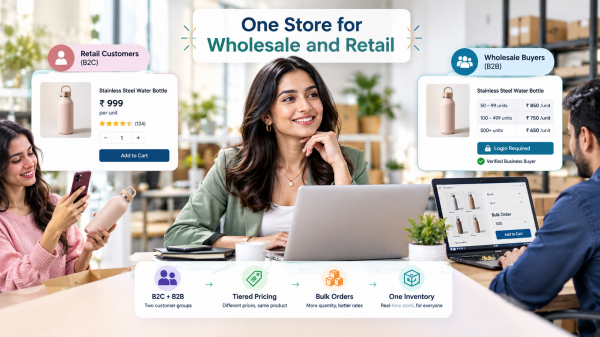
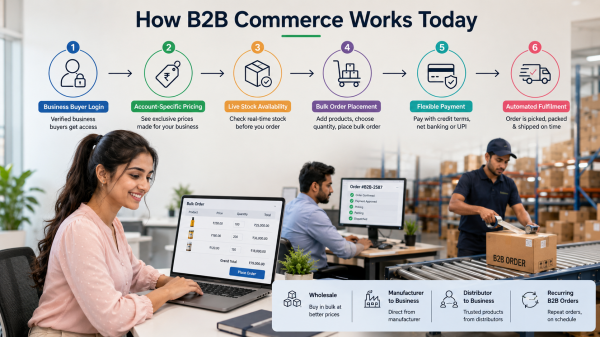
A B2B marketplace connects businesses rather than consumers, and the mechanics differ at almost every step. Prices are often hidden until login, quoted per customer group, or tied to order quantity. Buyers expect credit terms, purchase orders, GST-compliant invoicing and repeat-order templates. Minimum order quantities replace single-unit checkout, and vendors may need approval before they can see a particular buyer's rates. If you sell to distributors, retailers or institutional buyers, this is your model. It is worth checking that any platform you shortlist supports customer-group pricing natively, rather than bolting it on through a plugin.
Service marketplaces
A service marketplace sells time and availability rather than stock, covering things like home repairs, tutoring, salon appointments or equipment rental. Instead of inventory counts you are managing calendars, service areas and provider capacity. Cancellations and rescheduling matter more than returns, and reviews carry more weight because the buyer cannot inspect the product before committing. Commission is usually taken per booking. The real operational challenge is supply reliability: a provider who does not turn up damages your brand, not theirs.
Challenges and risks of running a marketplace
A marketplace is a harder business to run than a single-vendor store, and it is worth being honest about why before you commit to the model.
The first problem is getting both sides at once. Vendors will not join a marketplace with no buyers, and buyers will not visit one with no products. Most marketplaces solve this by seeding one side manually, usually by onboarding a small group of vendors on generous terms and treating them as partners rather than users until the traffic arrives. Plan for that phase to last months, not weeks, and budget for it.
The second is quality you do not directly control. Every vendor on your platform is representing your brand at the moment a customer opens the parcel, and none of them work for you. A late shipment, a wrong size or a poorly packed item becomes your review, not theirs. This is why vendor vetting, clear listing standards and a rating system that actually affects visibility are not optional features. They are how the business stays intact.
Returns are the third, and they are where most new marketplace operators get caught. Somebody has to absorb the cost of a return, and if your vendor agreement does not say who, the argument will happen after the fact. Decide up front whether returns are deducted from vendor payouts, borne by the marketplace as a cost of acquisition, or split. Then write it into the vendor terms before your first order.
Commission friction is the fourth. Your take rate is the most visible number in the relationship, and vendors will compare it against every alternative channel they have. Flat commission across all categories almost always creates resentment somewhere, because margins differ sharply between a handmade product and a mass-produced one. Per-category and per-vendor commission rules are worth having from day one, even if you start everyone on the same rate.
The last risk is the one people talk about least. Once a vendor has served enough of your customers, they have the relationship and the repeat demand, and they may decide they no longer need you. You cannot prevent this entirely. What you can do is stay worth the commission: keep the traffic coming, keep discovery and payments easier on your platform than off it, and treat the top vendors as partners you actively work with rather than accounts you invoice.
Benefits of Multi-Vendor Marketplace
For people looking to start their own Multi-vendor marketplace payment platform, here are a few of the benefits that can help you in various aspects. -
- Revenue Generation: Marketplace payment solutions allow store owners to set their own commission policy based on their business model, which generates revenue for the platform owner. The revenue generated can be used to cover operating costs and generate profit.
- Scalability: These marketplaces can scale quickly since they allow multiple sellers to join the platform. This increases the variety of products and attracts more buyers which supports instant growth.
- Reduced Inventory Management: Another crucial benefit of owning a marketplace software is since you don’t need to maintain inventory, you can reduce your operating costs and focus on other aspects of the platform.
- Access to Data: Most of the marketplaces provide the platform owner with access to valuable data such as sales volume, customer behavior, and product popularity, which can be used to optimize the platform and improve profitability.
- Reduced Liability: Since you don’t need to handle product fulfillment, it reduces your liability for issues such as shipping delays, product defects, and returns.
Must-Have Features of a Multi-vendor Marketplace Software
Before you go all-heads to purchase marketplace software for yourself, here is a multivendor marketplace software that can help you leverage the true power of the solution.
- All-in-one Software
Rather than integrating multiple software together, it is better that you choose a platform that offers all-in-one solutions to manage major commercial operations through a single dashboard. - Dedicated Administrator Level Access
Dedicated administrator-level access enables you to set permissions for vendors, set different levels of access for employees, order fulfillment process, and much more. Always look for a platform that allows you to delegate certain duties to your staff members by setting different levels of access for your employees. - Simplified Product Management
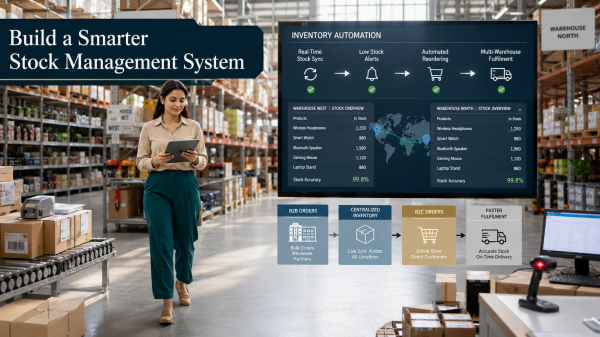
Another feature you must look for is simplified product management that takes off the burden of handling bulk inventory, and other product and stock-related operations. Features like real-time inventory tracking, bulk uploading of products, product variant management, and automated notification for low-stock inventory can help you efficiently manage your business operations. - Detailed Reports Structure
Comprehensive sales, customer engagement, and order placement report on a weekly /monthly/ annual basis to help vendors analyze their sales performance, identify trends, and make informed decisions. - Payment splitting options - commission management
Flexible payment splitting options are one of the most crucial features when you are owning a marketplace platform. For efficient commission management, while working with vendors, you require advanced marketplace payment system functionality to maintain your payment splitting with ease among different vendors. - Multi-Language and Multi-Currency
Also, in today’s fast-paced world, you require a technology that keeps up with the pace while leaving a space behind to expand. Multi-language and multi-currency options are such vital features that will help you expand your presence globally.
Read Also : Your Traffic Means Nothing Without Conversions
How to choose the right marketplace software
Although there are a host of marketplace builders available in the market, choosing the best multi-vendor marketplace software for your business needs careful analysis and consideration of the available options. You can compare their efficiency based on technology, features, ease of use, price, and most important - if it fits with your business model.
| Platform | Setup Time | Vendor Commission Management | Payment Splitting | Best For |
|---|---|---|---|---|
| Shopaccino | 1–2 days, no coding | Built-in, per-vendor rules | Automatic payouts | Fast launch, no developers needed |
| Yo!Kart | 1–2 weeks | Manual setup | Needs 3rd-party gateway | Full source-code ownership |
| CS-Cart Multi-Vendor | 1–2 weeks | Built-in but technical | Via add-ons | Technical teams |
| Arcadier | Few days | Built-in, simple | Native | Startups testing an idea |
An online marketplace solution must make it easy for the admins and other partners of an enterprise brand to run the show easily. One such effective and the only best solution that offers flexible features and works as per the practicality of business is Shopaccino Plus Multi-vendor marketplace.
Enterprise businesses are characterized by large volume sales, high scalability, and diverse product range. Shopaccino Plus marketplace helps businesses cater to such a huge network of dealers, sellers, distributors, and other partners that keep the wheels of the business moving.
Running such a mammoth setup requires advanced and flexible functionality that simplifies the complexities of running enterprise marketplace solutions by streamlining and automating their processes. Shopaccino Plus Marketplace platform is the perfect fit for such businesses.
FAQs
A multi-vendor marketplace platform is software that lets many independent sellers list and sell products through one storefront. It handles vendor onboarding, individual seller dashboards, commission calculation and split payouts, while the marketplace owner controls the catalogue standards, the customer experience and the payment flow.
A normal ecommerce website sells your own inventory, which you buy, store and ship. A multi-vendor marketplace sells other people's inventory and earns a commission on each order. You carry no stock, but you take on vendor management, quality control across sellers and the job of splitting payments correctly.
The marketplace collects the full payment from the customer, deducts its commission and any agreed charges, then settles the balance to each vendor on a fixed cycle, usually weekly or fortnightly. Good platforms calculate the split automatically per order, including orders that contain items from several vendors at once.
At minimum: self-service vendor onboarding with approval control, a separate dashboard for each seller, commission rules that can vary by vendor or category, automatic order splitting and payout settlement, shipping and tax handling per vendor, and a review system that feeds back into product visibility.
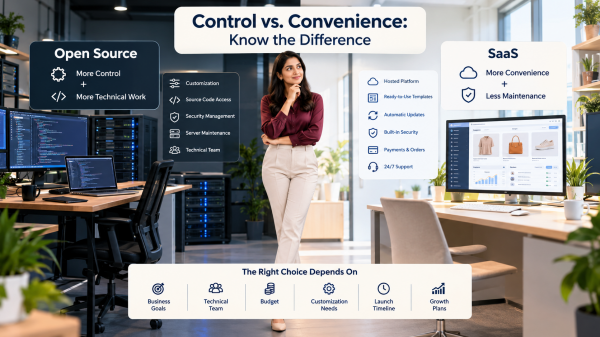
Cost depends almost entirely on whether you build or subscribe. A hosted SaaS marketplace platform typically runs on a monthly subscription with no development cost and can be live in days. A custom or open-source build carries a significant one-time development cost plus ongoing hosting, security and maintenance.