Why Grocery Stores Lose Customer Confidence When Delivery Communication Is Unclear
Online grocery shopping is built on trust. Customers are not just ordering products; they are planning their day around deliveries. Milk for the morning, vegetables for lunch, essentials for the week—each order carries an expectation that goes beyond price or variety. When delivery communication is unclear, that trust starts to crack.
Many grocery stores underestimate how deeply delivery updates affect customer confidence. They assume that once an order is placed, silence is acceptable until the delivery arrives. In reality, silence creates anxiety. Customers begin to wonder: Was my order received? Is it being packed? Will it arrive on time? Should I call the store?
In 2026, grocery ecommerce success depends as much on communication clarity as it does on product quality. Stores that fail to communicate clearly lose repeat customers—not because deliveries fail, but because customers never feel sure about what is happening.
This blog explains why unclear delivery communication damages customer confidence, the operational reasons behind this gap, what grocery customers actually expect, and how structured order confirmations and delivery updates transform the online grocery experience into something reliable and trustworthy.
Challenging Area: Where Grocery Stores Go Wrong With Delivery Communication
Most grocery stores do not intentionally ignore customers. The problem lies in systems and workflows that are not designed for proactive communication.
Orders Disappear Into a Black Hole
After placing an order, customers often receive no confirmation. No message, no email, no update. From the customer’s perspective, the order vanishes. This uncertainty immediately raises doubt about whether the store has even seen the order.
Delivery Timing Is Vague or Assumed
Many grocery stores rely on informal promises like “It will come today” or “By evening.” Without a clear time window, customers cannot plan their day. Each passing hour increases frustration.
No Updates During Packing or Dispatch
Between order placement and delivery, there is often complete silence. Customers have no visibility into whether items are being picked, packed, or sent out for delivery.
Last-Minute Changes Are Poorly Communicated
When items go out of stock or deliveries get delayed, customers are informed late—or not at all. This leads to disappointment, complaints, and loss of confidence.
Manual Communication Cannot Keep Up
Stores using calls or WhatsApp messages struggle during peak hours. Staff are busy packing orders and managing deliveries, leaving little time for proactive updates.
Customer Support Becomes Reactive
Instead of customers feeling informed, they are forced to chase updates. Repeated “Where is my order?” calls overload staff and damage the store’s image.
These issues compound quickly, especially as order volume grows.
Their Customer Challenging Area: How Customers Feel When Communication Is Unclear
To understand the impact, it is important to step into the customer’s mindset.
Uncertainty Creates Anxiety
Grocery orders are time-sensitive. When customers do not know when their order will arrive, they feel uneasy. This anxiety overshadows the entire shopping experience.
Silence Feels Like Neglect
Even if a store is working hard behind the scenes, silence feels like indifference. Customers interpret lack of updates as lack of care.
Trust Erodes Before Delivery Even Happens
By the time the order arrives, confidence may already be lost. The delivery could be perfect, but the stress experienced earlier leaves a negative impression.
Customers Lose Control Over Their Schedule
Without clear delivery updates, customers cannot plan meals, manage family needs, or step out. This loss of control is deeply frustrating.
Reordering Feels Risky
If customers are unsure whether the next order will be communicated better, they hesitate to reorder. They may return to offline shopping or switch to competitors.
Clear communication does not just inform—it reassures.
Solution: How Structured Delivery Communication Builds Confidence
Clear, timely communication transforms grocery ecommerce from a guessing game into a predictable experience.
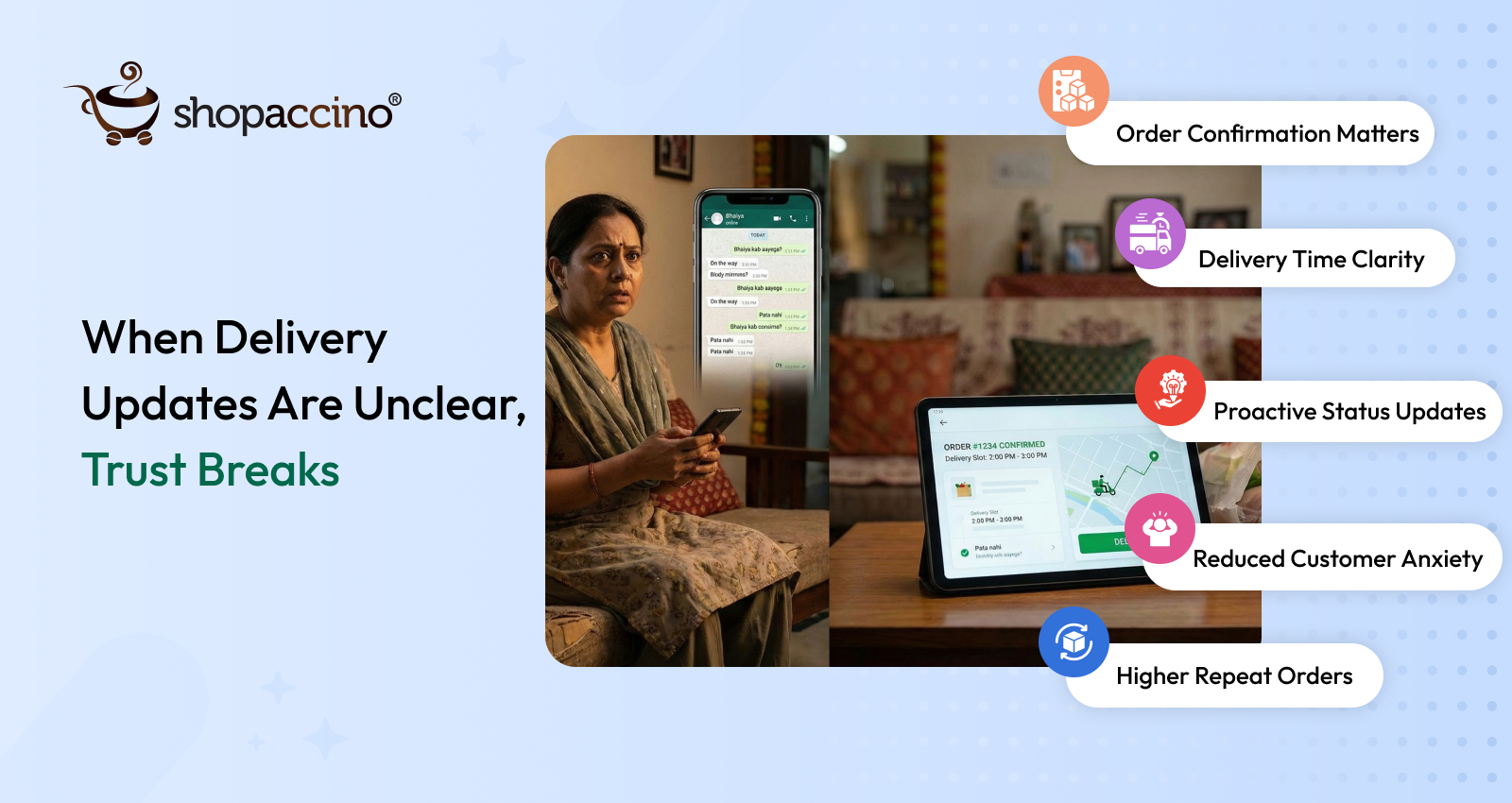
Instant Order Confirmation Sets Expectations
The moment an order is placed, customers should know it has been received. A simple confirmation message reassures them that the process has started.
Clear Delivery Time Windows Reduce Anxiety
Instead of vague promises, defined delivery slots or estimated time ranges help customers plan their day confidently.
Order Status Updates Create Transparency
Updates such as “Order Packed” or “Out for Delivery” keep customers informed without requiring them to ask.
Proactive Delay Notifications Preserve Trust
When delays happen—and they sometimes will—early communication makes all the difference. Customers are far more forgiving when informed in advance.
Automated Notifications Remove Manual Burden
Automation ensures updates are sent consistently, even during peak hours. Staff can focus on fulfilment while customers stay informed.
Integrated ecommerce platforms support these workflows seamlessly. Solutions like Shopaccino help grocery stores automate order confirmations, status updates, and delivery notifications—ensuring communication stays clear at every stage.
How to Implement Clear Delivery Communication (Step-by-Step)
Improving communication does not require complex processes. It requires thoughtful design.
Step 1: Confirm Every Order Instantly
Ensure customers receive an immediate confirmation after checkout. This can be via SMS, email, or app notification.
Step 2: Define Delivery Slots Clearly
Offer realistic delivery windows based on capacity. Avoid overpromising to please customers in the short term.
Step 3: Share Order Status Progress
Update customers when orders are packed and dispatched. Simple messages go a long way.
Step 4: Notify Customers Proactively About Issues
If an item is unavailable or delivery is delayed, inform customers early with clear alternatives.
Step 5: Centralise Communication Through the System
Avoid manual messaging. Use the ecommerce system to trigger updates automatically.
Step 6: Train Staff to Rely on System Updates
Encourage teams to trust automated communication rather than individual follow-ups.
Benefits of Clear Delivery Communication for Grocery Stores
Higher Customer Confidence
Customers feel informed and reassured throughout the order journey.
Reduced Support Calls
Fewer “Where is my order?” queries free up staff time.
Better Delivery Experience Perception
Even average delivery times feel better when communicated clearly.
Increased Repeat Orders
Confidence leads to loyalty. Customers return when they trust the process.
Stronger Brand Reputation
Professional communication differentiates serious grocery brands from informal setups.
Operational Efficiency
Automation reduces manual workload and errors.
Conclusion
In online grocery shopping, silence is not neutral—it is damaging. Unclear delivery communication creates anxiety, erodes trust, and pushes customers away, even if the actual delivery is successful.
Grocery stores lose customer confidence not because they fail to deliver, but because they fail to communicate. Clear order confirmations, realistic delivery timelines, and timely updates transform uncertainty into assurance.
With structured ecommerce systems like Shopaccino, grocery stores can replace reactive communication with proactive clarity. The result is not just smoother operations, but customers who feel confident, respected, and willing to reorder.
In 2026, grocery brands that communicate clearly will win loyalty. Those that do not will keep wondering why customers never return.
FAQs
Grocery orders are time-sensitive. Clear communication reduces anxiety, builds trust, and helps customers plan their day confidently.
Yes. Customers expect confirmations and status updates, especially when ordering essentials they depend on daily.
Uncertainty makes customers hesitant to reorder. Even one stressful experience can stop repeat purchases.
Yes. Automated ecommerce systems handle updates automatically, reducing manual effort.
Order confirmation is the most important. It reassures customers that their order has been received and is being processed.
When customers are informed proactively, they do not need to call or message for updates.