Why Growing Online Brands Choose Shopaccino as Their Scaling Partner
Every ambitious eCommerce brand eventually reaches a crossroads. The early excitement of setting up an online store gradually gives way to a more complex reality—growing product lines, increasing orders, expanding delivery regions, rising marketing expectations, and customers who want everything faster, easier, and more personalized.
At this stage, businesses recognize a critical truth: growth does not come from just having a website—it comes from having the right ecosystem behind it.
This is exactly where Shopaccino plays a transformative role. Rather than acting as just another store builder, it functions like a complete eCommerce operating system designed for businesses that want to scale sustainably. MSMEs, D2C brands, wholesalers, exporters, and manufacturers find it especially powerful because it simplifies operations, strengthens customer engagement, and creates room for expansion without increasing complexity.
This article explores why growth-driven businesses trust platforms like Shopaccino to go from local to national—and eventually global—while keeping operations smooth at every stage.
Challenging Area: What Blocks Businesses from Scaling Online
As brands grow, the challenges multiply. These obstacles affect businesses across multiple industries:
Managing complex operations from one place
Growth brings more inventory, more categories, more team members, and more tasks. Without an integrated dashboard, operations quickly become chaotic.
Lack of advanced inventory and warehouse control
Single-warehouse systems collapse when demand increases or when brands need regional warehouses, vendor fulfilment, or made-to-order workflows.
Digital marketing becomes expensive and unpredictable
Brands spend heavily on ads, but fragmented data makes it difficult to understand ROI or build automated journeys.
Customer experience fails to keep up
Slow websites, complicated checkout flows, outdated product information, and limited personalization hinder growth.
Scaling technological infrastructure
Businesses struggle when their initial platforms cannot handle bulk uploads, large catalogs, custom features, or high traffic.
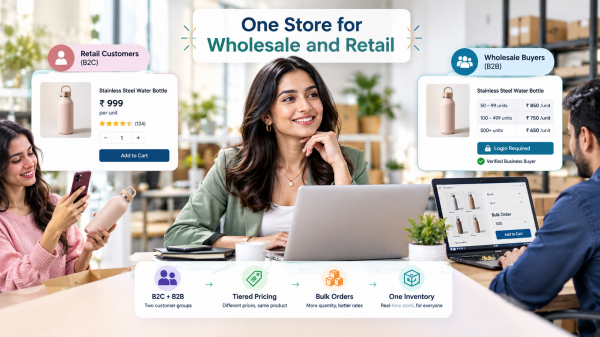
Difficulty managing B2B + B2C under one system
Many MSMEs sell both retail and wholesale, but most platforms do not support complex pricing, bulk ordering, or private catalog access.
These problems create a ceiling that prevents brands from scaling smoothly.
Their Customer Challenging Area: What Buyers Expect from Modern Brands
As online shopping evolves, customer expectations have become more specific and demanding:
Faster websites and frictionless navigation
Shoppers expect pages to load instantly and products to be easy to find.
Reliable stock visibility
They want real-time availability—no surprises at checkout.
Clear pricing and flexible payment choices
COD, UPI, wallets, EMI, international payments—customers want options that suit them.
Personalized shopping experiences
Recommendations, recently viewed items, curated bundles—all of these improve satisfaction.
Quick checkout
Every additional step increases the chance of cart abandonment.
Seamless returns
A complicated return process immediately reduces trust.
Brands that fail to meet these expectations lose customers not because their products are bad, but because the buying experience is weaker.
Solution: How Shopaccino Enables Growth for Modern eCommerce Brands
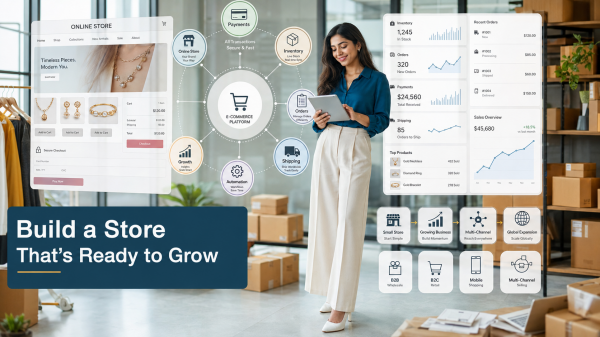
Platforms like Shopaccino solve these challenges by bringing all the tools needed for scaling into one unified system. Instead of juggling multiple software tools, brands can run their store, marketing, logistics, and automation from a single platform.
Here is how Shopaccino plays a growth-enabler role:
A complete ecosystem—not just a store builder
It manages the entire journey—from product setup to inventory, checkout, marketing automation, loyalty programs, payment integrations, order management, returns, and analytics.
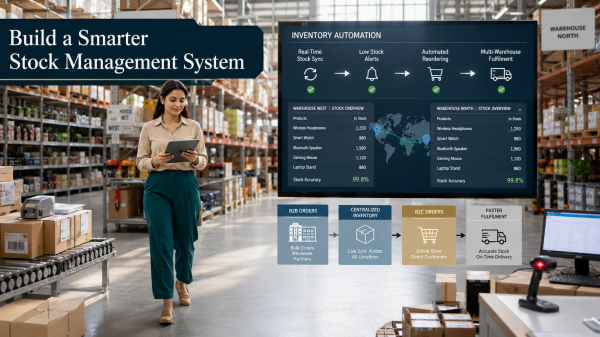
Multi-warehouse infrastructure to scale operations
Businesses get real-time sync, automatic warehouse routing, pincode-based visibility, and fast delivery support.
Flexibility for different business models
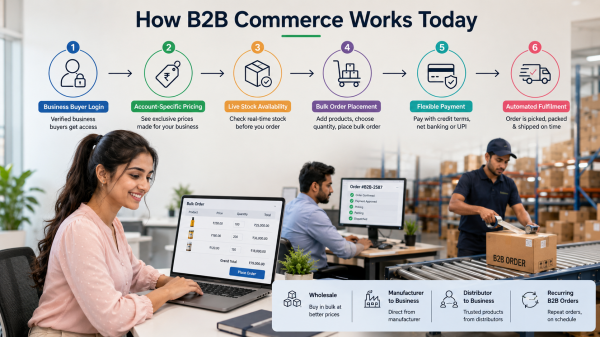
Whether B2B, B2C, or hybrid, Shopaccino supports:
- Special pricing
- MOQs
- Bulk ordering
- Private catalogs
- Role-based logins
Automation that saves time and increases revenue
With built-in marketing tools, automated cart recovery, behavioral triggers, discounts, and abandoned cart notifications, businesses don’t waste resources on manual follow-ups.
Fast checkout experience
Optimized checkout reduces friction, supports multiple payment gateways, and increases conversions.
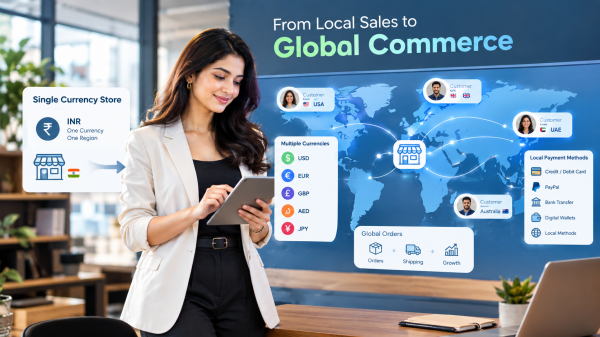
Global commerce support
Multi-currency checkout, international shipping, and integration with global payment gateways make overseas sales easier.
Easy customisation
Businesses can personalize themes, layouts, product views, and content using drag-and-drop elements with no coding needed.
Centralized order and return management
From dispatch to delivery to returns, everything is automated and easy to manage from a single dashboard.
Platforms like Shopaccino allow small and medium businesses to operate like large brands—without needing a technical team.
How to Implement a Growth-Ready eCommerce System (Step-by-Step)
Here is a simple and practical path that MSMEs and D2C brands can follow:
Step 1: Define your core product catalog
Prepare category structure, product variants, size charts, images, videos, and descriptions.
Step 2: Set up your warehouse structure
Add locations, map pincodes, assign staff rights, and upload inventory warehouse-wise.
Step 3: Configure payment gateways
Enable COD, cards, UPI, wallets, net banking, and international payments depending on your customer base.
Step 4: Activate your marketing automation
Use:
- Abandoned cart automation
- Push notifications
- Email/SMS workflows
- Discounts and offers
- Product recommendations
Step 5: Build customer loyalty
Enable loyalty points, referral rewards, wishlist, and personalized recommendations.
Step 6: Optimize the checkout experience
Keep it clean, quick, and mobile-friendly.
Step 7: Use analytics to refine your strategy
Track:
- Conversion rates
- AOV
- Repeat purchase behavior
- Inventory movement
- High-performing products
When businesses follow these steps on a powerful platform like Shopaccino, scaling becomes predictable and structured.
Benefits: Why Growth-Driven Businesses Prefer Shopaccino
Faster store performance
High-speed infrastructure improves browsing, search, and checkout.
Stronger customer experience
Customers enjoy personalized buying, faster fulfilment, and reliable communication.
Higher conversions
Optimized checkout, automation, and recommendations boost sales.
Reduced operational complexity
Stock, orders, delivery, returns, and marketing are managed in one place.
Lower cost of scaling
Businesses don’t need multiple external tools—everything is built-in.
Better control and visibility
Owners get full insight into inventory, orders, customers, and performance.
Prepared for global expansion
Multi-language, multi-currency, and international shipping capabilities support worldwide sales.
Together, these benefits make Shopaccino a powerful growth partner for modern online businesses.
Conclusion
Growth in eCommerce is no longer about how many products a brand sells or how much advertising it runs. The real advantage comes from how seamlessly the business operates, how fast it fulfills orders, how accurately it manages stock, and how intelligently it engages customers.
Shopaccino helps businesses achieve this balance effortlessly. By giving MSMEs, D2C brands, wholesalers, exporters, and manufacturers a unified platform that supports their operational, marketing, and fulfillment needs, it positions them to scale smoothly and sustainably.
For any brand dreaming of national or global presence, the right eCommerce platform becomes the backbone of long-term success—and Shopaccino offers exactly that foundation.
FAQs
Yes. It is designed for MSMEs and growing brands that need powerful tools without hiring a technical team.
Yes. It offers multi-currency checkout, international payment gateways, and cross-border shipping support.
Absolutely. Its automation, centralized dashboard, warehouse system, and marketing tools significantly reduce manual tasks.
Yes. You can customize themes, layouts, and sections using drag-and-drop elements without coding.
Yes. It supports B2B pricing, MOQs, private catalogs, and bulk ordering workflows.
Yes. Real-time syncing, pincode mapping, and auto-routing make multi-warehouse management simple.
Fast checkout, automation, loyalty programs, product recommendations, and analytics help increase overall sales.