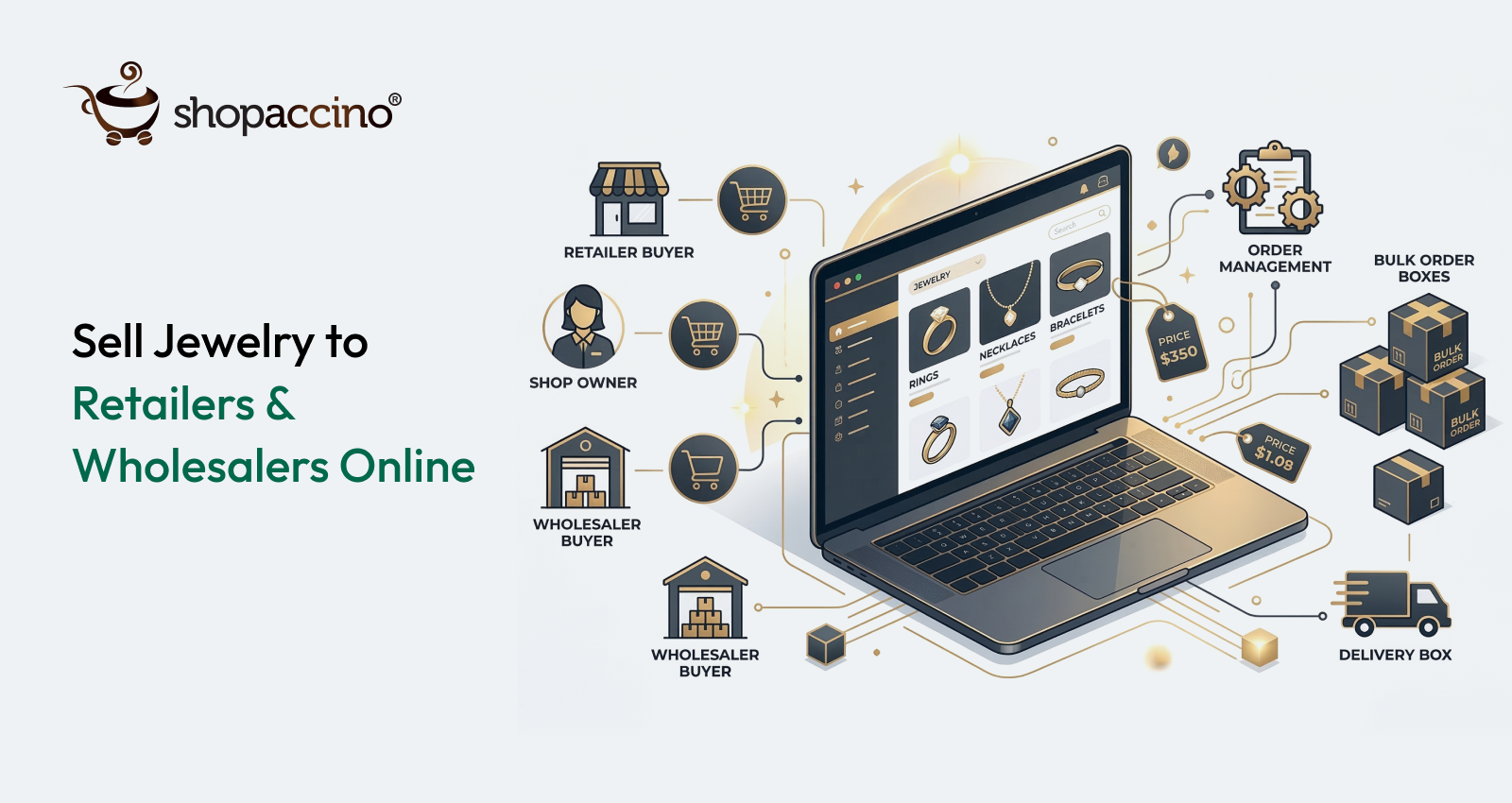
B2B Jewelry Ecommerce: Selling to Retailers & Wholesalers Online
The jewelry industry has traditionally relied on physical showrooms, trade exhibitions, and distributor networks to reach retailers and wholesalers. However, digital commerce is transforming the way jewelry brands connect with business buyers. Today, manufacturers and suppliers can sell jewelry online to retailers across cities, regions, and even international markets.
Instead of depending only on offline channels, jewelry businesses are now using ecommerce platforms to expand their reach. A well-structured Jewelry ecommerce website allows manufacturers to showcase their collections, manage orders, and connect with wholesale buyers more efficiently.
For jewelry brands that supply retailers or distributors, ecommerce is no longer just an optional channel. It has become an essential tool for growth. By using the right b2b ecommerce platform, businesses can streamline their operations while making it easier for retailers to discover and order products. If you're new to selling online, start by understanding jewelry ecommerce and how it applies to both B2B and B2C jewelry brands.
Why Jewelry Businesses Are Moving to B2B Ecommerce
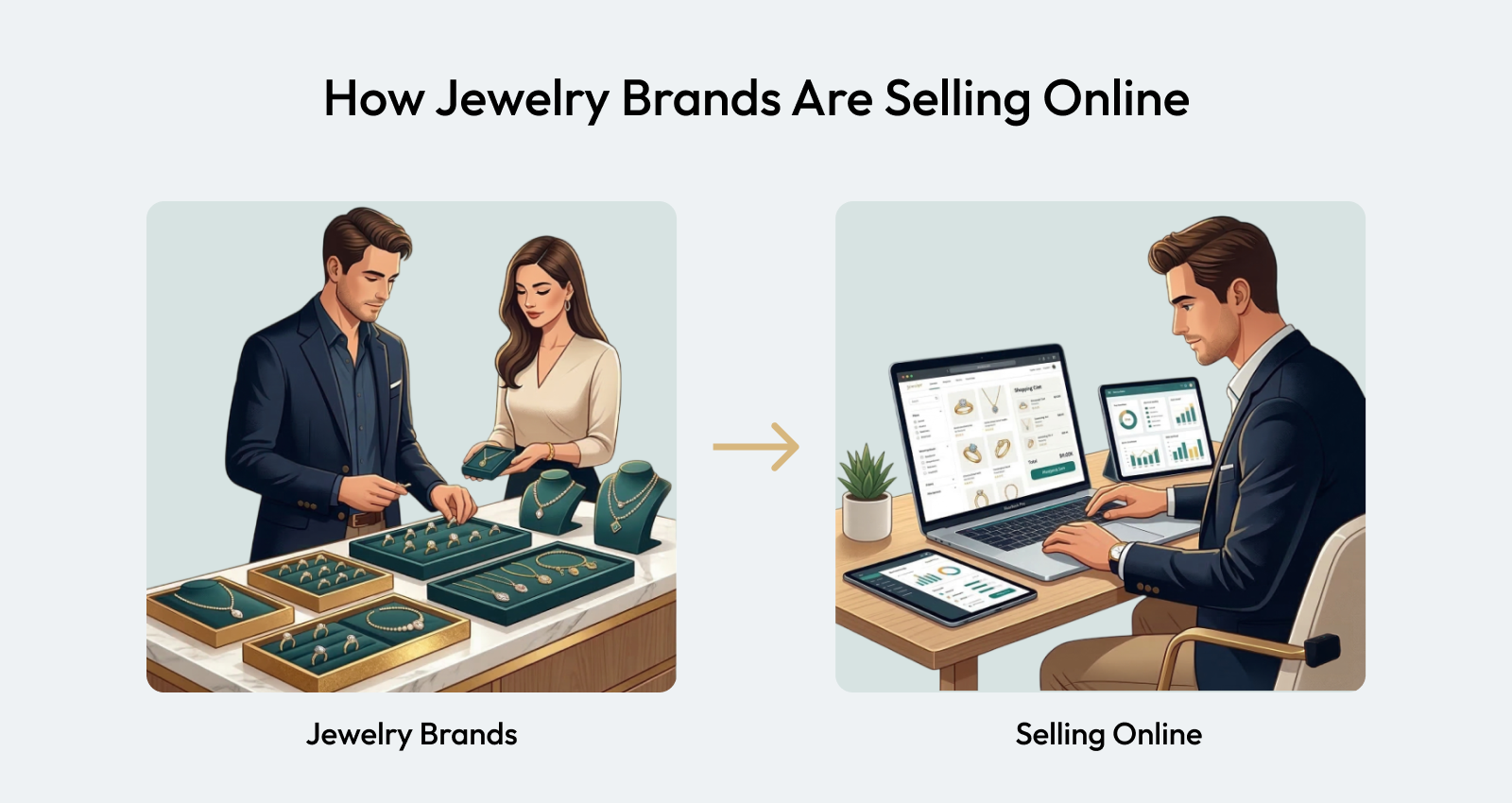
The traditional wholesale jewelry business often involves multiple intermediaries and manual processes. Retailers typically visit showrooms, communicate through sales representatives, or place orders via phone or email.
While these methods still exist, they often slow down the ordering process and limit market reach.
Digital commerce offers several advantages for jewelry suppliers that want to sell jewelry online and expand their wholesale network.
Some key benefits include:
- Retailers can browse product catalogs anytime without visiting a showroom
- Orders can be placed quickly through an online system
- Inventory and product availability can be updated in real time
- Jewelry brands can reach buyers in new markets
These advantages make wholesale jewelry online sales more efficient compared to traditional ordering methods.
Read Also : Manage Hallmarked & Non-Hallmarked Jewelry Clearly
The Role of a Jewelry Ecommerce Website
A well-designed Jewelry ecommerce website acts as a digital showroom for jewelry brands. Instead of displaying products only in physical stores, businesses can present their entire product catalog online.
This allows retailers and wholesalers to explore collections at their convenience.
A typical B2B jewelry ecommerce store usually includes features such as:
- Organized product categories for rings, necklaces, bracelets, and other collections
- Detailed product descriptions including material, weight, and design details
- High-quality images that showcase craftsmanship
- Pricing structures for wholesale buyers
These features help retailers make purchasing decisions more easily when buying wholesale jewelry online.
How B2B Ecommerce Supports Jewelry Wholesale Operations
Jewelry businesses that work with retailers often deal with complex pricing structures and large order volumes. Managing these processes manually can become difficult as the business grows.
This is where a specialized b2b ecommerce platform becomes valuable.
A B2B platform helps jewelry brands manage:
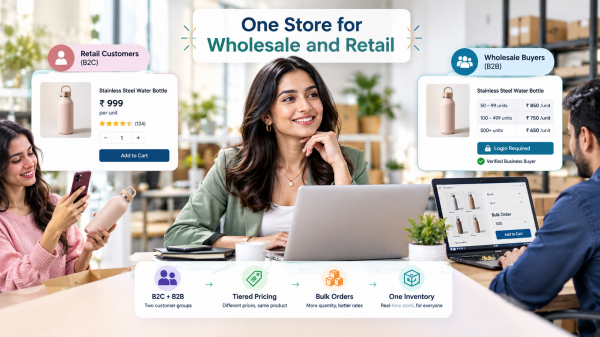
- Wholesale pricing for different retailer segments
- Bulk ordering processes
- Customer account management
- Inventory tracking across product collections
Using a digital system helps businesses sell jewelry online more efficiently while maintaining better operational control.
Read Also : Secure High-Value Jewelry Orders with Buyer Verification
Traditional Jewelry Sales vs B2B Ecommerce
The shift toward digital commerce has created a clear difference between traditional jewelry sales methods and modern ecommerce systems.
|
Traditional Jewelry Sales |
B2B Ecommerce Model |
|
Orders placed via phone or showroom visits |
Orders placed through online platform |
|
Limited product visibility |
Full digital product catalog |
|
Manual order processing |
Automated order management |
|
Restricted market reach |
Global access to retailers |
This transformation highlights why many jewelry manufacturers are investing in Jewelry ecommerce website solutions powered by advanced b2b ecommerce platform technologies.
Building the Right Digital Foundation
For jewelry brands planning to expand their wholesale operations, building the right digital infrastructure is essential. A reliable ecommerce system helps businesses manage their products, customers, and orders efficiently.
Platforms like Shopaccino provide tools that allow jewelry businesses to create structured online stores where retailers can browse collections and place orders easily.
With the right b2b ecommerce platform, jewelry brands can simplify operations while growing their wholesale jewelry online business.
Essential Features of a B2B Jewelry Ecommerce Website
Wholesale Pricing Management
One major difference between retail ecommerce and B2B ecommerce is pricing flexibility. Jewelry suppliers often offer different prices depending on the retailer’s purchase volume or long-term relationship.
A strong b2b ecommerce platform allows businesses to manage different pricing levels for various customer groups.
Typical wholesale pricing features include:
- Tiered pricing based on order quantity
- Special pricing for preferred retailers
- Bulk order discounts
- Minimum order quantity requirements
These pricing capabilities make it easier for jewelry suppliers to manage wholesale jewelry online transactions efficiently.
Business Account and Customer Management
In B2B jewelry ecommerce, retailers usually have dedicated business accounts. These accounts allow them to manage orders, view pricing, and track their purchase history.
A well-structured Jewelry ecommerce website includes account management features such as:
- Retailer registration and approval process
- Access to personalized pricing
- Order history tracking
- Saved product lists for quick reordering
These systems improve the buying experience for retailers and help businesses maintain strong relationships with their wholesale partners.
Read Also : Make High-Value Jewelry Affordable with EMI
Bulk Ordering and Easy Checkout
Retail buyers usually purchase jewelry products in bulk quantities. Therefore, a jewelry B2B website must support quick bulk ordering without complicated steps.
Efficient ordering systems help retailers place orders quickly when purchasing wholesale jewelry online.
Important ordering features include:
- Bulk product selection
- Quick add-to-cart options
- Order summary with pricing breakdown
- Secure payment and invoice generation
These features make it easier for businesses to sell jewelry online while ensuring retailers experience a smooth purchasing process.
Inventory Visibility and Product Availability
Inventory management is especially important in the jewelry industry. Retailers need to know whether a product is available before placing an order.
A modern b2b ecommerce platform provides real-time inventory updates so retailers can see product availability immediately.
Inventory features typically include:
- Real-time stock availability
- Automatic updates after orders are placed
- Notifications for low stock levels
- Inventory management across product collections
This transparency helps prevent order delays and improves the efficiency of wholesale jewelry online operations.
When jewelry brands decide to sell jewelry online to retailers and wholesalers, the structure of the ecommerce platform becomes extremely important. Unlike retail ecommerce stores, B2B jewelry websites must support bulk ordering, different pricing levels, and business customer accounts.
A well-designed Jewelry ecommerce website acts as a digital sales system where retailers can easily browse collections, evaluate products, and place wholesale orders.
To support these requirements, jewelry businesses need an ecommerce solution built for B2B operations. A reliable b2b ecommerce platform helps manage both the buying experience for retailers and the operational needs of the business.
Below are some essential features that help jewelry brands successfully manage wholesale jewelry online sales.
Read Also : Clear Return Policies Build Trust in Online Jewelry
Organized Product Catalog for Retail Buyers
Jewelry businesses often offer hundreds or even thousands of product designs. Retail buyers need an easy way to explore these collections and find products that match their store requirements.
An organized product catalog helps retailers browse collections efficiently when they sell jewelry online or purchase from suppliers.
Important catalog features include:
- Clear product categories such as rings, necklaces, bracelets, and earrings
- Filters based on metal type, gemstone, or price range
- Detailed product specifications including weight and material
- High-quality product images
These features allow retailers to evaluate products quickly and make confident purchasing decisions.
Key Features Summary
The most important features of a successful B2B jewelry ecommerce system can be summarized below:
|
Feature |
Business Benefit |
|
Product Catalog Management |
Easy browsing for retailers |
|
Wholesale Pricing |
Flexible pricing structures |
|
Business Accounts |
Personalized buying experience |
|
Bulk Ordering |
Faster order placement |
|
Inventory Visibility |
Accurate product availability |
These features help jewelry brands operate efficient digital sales channels through their Jewelry ecommerce website powered by a reliable b2b ecommerce platform.
Read Also : Bring the Jewelry Showroom Experience Online
Growing a B2B Jewelry Business Through Ecommerce
Once a jewelry brand builds a strong digital infrastructure, the next step is expanding its network of retailers and wholesalers. Ecommerce allows jewelry manufacturers and suppliers to reach business buyers far beyond their local markets.
Instead of relying only on physical showrooms or trade exhibitions, businesses can now sell jewelry online to retailers in different cities, regions, and even international markets.
A well-structured Jewelry ecommerce website helps brands showcase their collections, communicate with buyers, and process orders efficiently. This digital approach allows jewelry businesses to operate continuously without the limitations of traditional offline sales channels.
By using a reliable b2b ecommerce platform, jewelry suppliers can simplify their operations while building stronger relationships with retailers.
Expanding Retailer and Distributor Networks
One of the biggest advantages of ecommerce is the ability to connect with new buyers. Jewelry businesses that operate only through offline channels often have limited reach.
However, when suppliers offer wholesale jewelry online, retailers can discover their collections through digital platforms.
Jewelry brands can expand their network by:
- Promoting their product catalog through digital marketing
- Participating in industry marketplaces and directories
- Building partnerships with retailers in new regions
- Using online catalogs to present seasonal collections
These strategies allow jewelry businesses to attract new wholesale buyers while strengthening existing relationships.
Improving Retailer Experience
Retailers prefer suppliers that make ordering easy and efficient. A smooth digital buying experience encourages retailers to continue purchasing from the same brand.
A well-designed Jewelry ecommerce website helps retailers browse products, compare collections, and place orders quickly.
Retailers benefit from features such as:
- Easy product browsing and filtering
- Clear product specifications and pricing
- Quick reorder options for frequently purchased items
- Access to order history and invoices
These features make it easier for jewelry suppliers to sell jewelry online while providing retailers with a convenient purchasing experience.
Using Technology to Simplify Operations
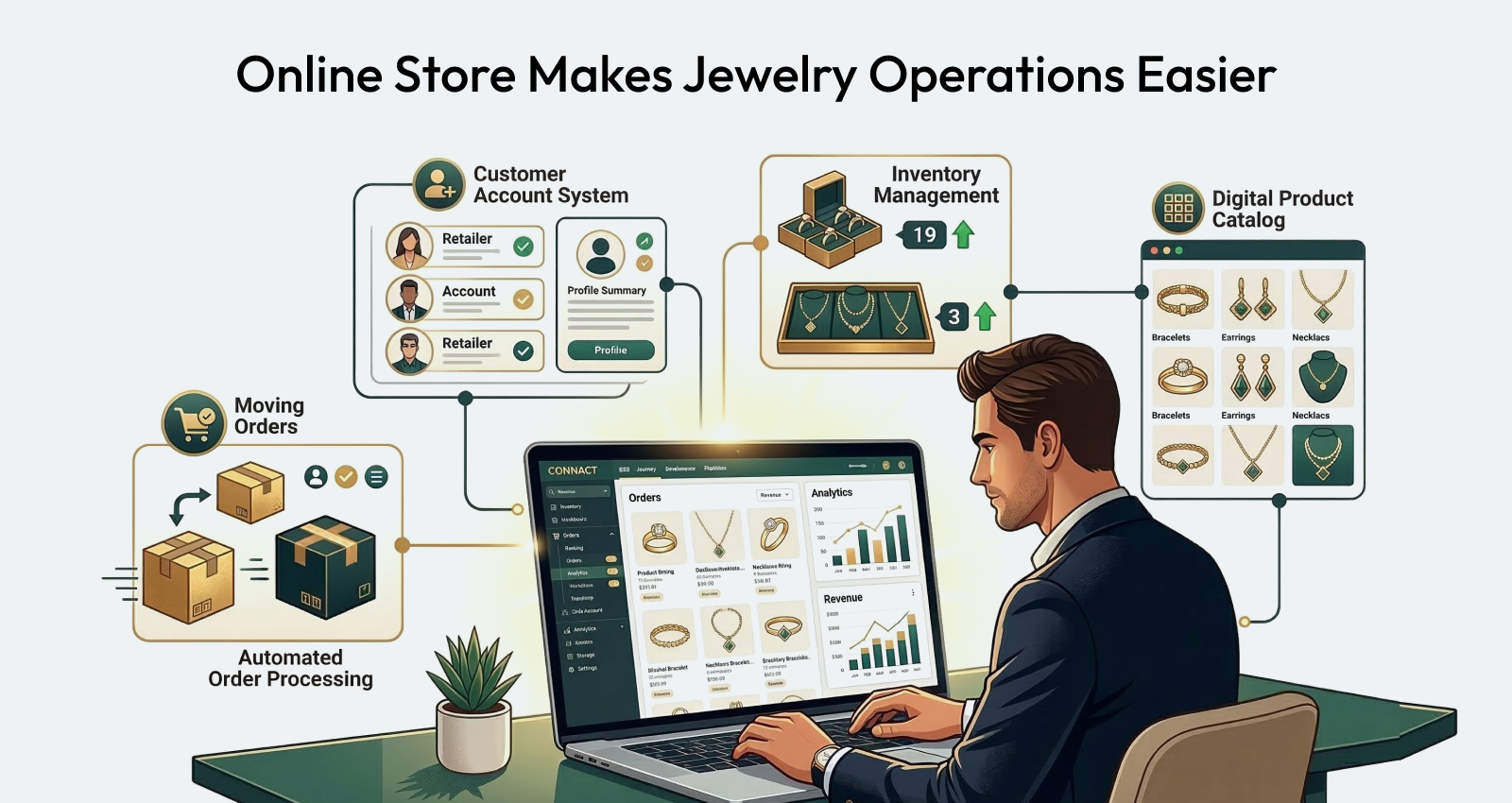
As a jewelry business grows, managing inventory, orders, and customer accounts manually becomes difficult. Digital platforms help automate many of these processes.
A modern b2b ecommerce platform allows jewelry businesses to manage their wholesale operations more efficiently.
Operational improvements often include:
- Automated order processing
- Real-time inventory updates
- Customer account management
- Digital product catalogs for retailers
These systems help businesses manage wholesale jewelry online sales without increasing operational complexity.
Platforms like Shopaccino provide infrastructure that supports these capabilities, allowing jewelry brands to manage products, orders, and customers within a structured ecommerce environment.
Comparing Traditional Wholesale vs Digital B2B Ecommerce
The shift from traditional wholesale models to ecommerce has created significant advantages for jewelry businesses.
|
Traditional Wholesale |
B2B Jewelry Ecommerce |
|
Retailers visit showrooms |
Retailers browse online catalog |
|
Orders placed manually |
Orders processed digitally |
|
Limited geographic reach |
Access to retailers globally |
|
Manual inventory tracking |
Automated inventory systems |
This comparison shows how digital platforms help jewelry businesses sell jewelry online more efficiently while improving operational visibility.
Read Also : Manage Daily Gold Price Changes Smoothly Online
Building a Scalable Jewelry Ecommerce Strategy
For jewelry brands planning long-term growth, ecommerce should be part of a broader digital strategy. Businesses must focus not only on selling products but also on creating systems that support scalability.
A successful digital jewelry strategy usually includes:
- A structured Jewelry ecommerce website that showcases product collections
- A reliable b2b ecommerce platform that manages wholesale transactions
- Digital marketing strategies that attract new retailers
- Efficient order and inventory management systems
By implementing these elements, jewelry businesses can strengthen their ability to manage wholesale jewelry online operations and build a sustainable ecommerce business.
Final Thoughts
The jewelry industry is evolving as digital commerce continues to reshape how businesses connect with buyers. Brands that adapt to these changes can expand their reach and create more efficient sales processes.
By building a strong Jewelry ecommerce website and using a reliable b2b ecommerce platform, businesses can successfully sell jewelry online to retailers and wholesalers while simplifying their operations.
Offering wholesale jewelry online allows jewelry brands to reach new markets, improve customer experience, and scale their business more efficiently.
Platforms like Shopaccino help jewelry businesses create structured ecommerce systems that support product management, retailer engagement, and wholesale order processing.
For jewelry manufacturers and suppliers, adopting B2B ecommerce is no longer just a trend. It has become an essential step toward building a scalable and competitive digital business.
FAQs
B2B jewelry ecommerce is a digital system that allows jewelry manufacturers and suppliers to sell products online directly to retailers and wholesalers through a structured ecommerce platform.
Jewelry businesses can sell to retailers online by creating a B2B ecommerce website where buyers can browse product catalogs, view pricing, and place bulk orders easily.
Important features include wholesale pricing management, bulk ordering, product catalog organization, business customer accounts, and real-time inventory tracking.
Ecommerce helps jewelry wholesalers expand their reach, simplify order management, and connect with retailers across different regions without relying only on physical showrooms.
It automates order processing, manages pricing for different buyers, provides real-time inventory updates, and improves communication between suppliers and retailers.
Yes, small and growing jewelry businesses can use B2B ecommerce platforms to create digital showrooms, attract new retailers, and manage wholesale operations efficiently.