How to Reduce RTO in Ecommerce Without Removing Cash on Delivery
Cash on delivery is not your RTO problem. Unchecked cash on delivery is.
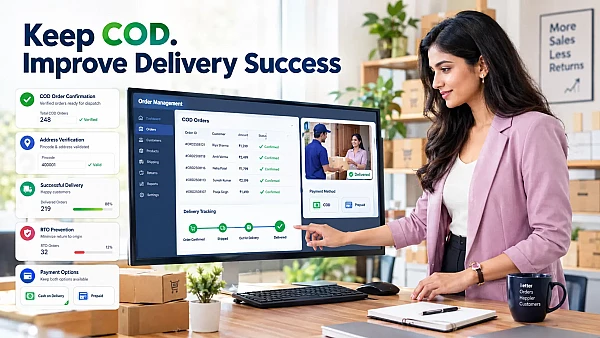
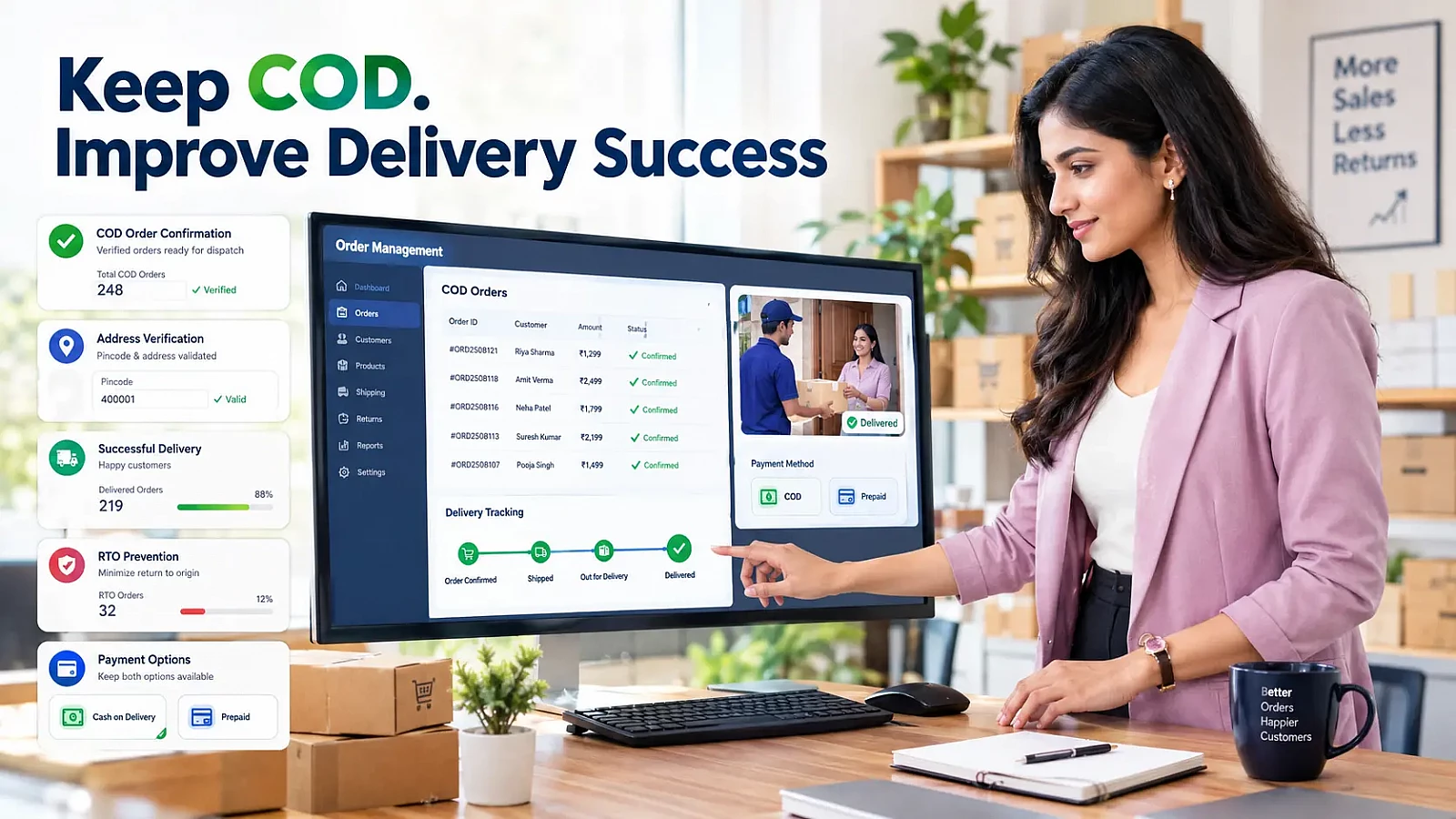
If one in every four COD parcels you ship comes back unopened, switching COD off looks like the obvious fix. Many store owners try it, then watch their conversion rate fall in the first week.
There is a better way. This guide shows you how to reduce RTO in ecommerce while keeping cash on delivery live for the buyers who actually want it.
Quick answer: To reduce RTO in ecommerce without removing cash on delivery, control COD instead of killing it. Confirm every risky COD order before dispatch, validate addresses at checkout, give buyers a real reason to prepay, limit COD by product, pincode and order value, ship faster with the courier that performs best in each area, and act on every failed delivery within 24 hours.
Key takeaways
- RTO is a process problem, not a payment problem. Most COD returns can be stopped before the parcel ships.
- Removing COD fixes the return rate but hurts revenue, especially in markets where buyers still trust cash more than cards.
- The cheapest RTO to fix is the one you cancel before dispatch.
- Delivery speed matters. The longer a parcel is in transit, the more likely the buyer is to refuse it.
- Track your RTO rate by pincode, product and courier every week, not just as one store-wide number.
What Is RTO in Ecommerce?
RTO (Return to Origin) is an order that leaves your warehouse but never reaches the customer, so the courier sends it back to you.
That makes RTO different from a customer return. With a return, the buyer accepted the parcel and sent it back later. With RTO, the sale never happened.
RTO in ecommerce usually happens for one of these reasons:
- The buyer refuses the parcel at the door
- The address is incomplete or wrong
- The buyer cannot be reached after several delivery attempts
- The buyer cancels while the order is already in transit
- The order was fake or placed as a prank
Here is how you calculate your RTO rate:
RTO rate = (Orders returned to origin ÷ Total orders shipped) × 100
Calculate this twice: once for all orders, and once for COD orders only. Prepaid orders rarely come back, so a store-wide number can hide a COD problem that is far worse than it looks. Many COD-heavy stores see 20 to 30% of their COD parcels return, while prepaid RTO often stays in single digits or lower.
Why Does Removing Cash on Delivery Backfire?
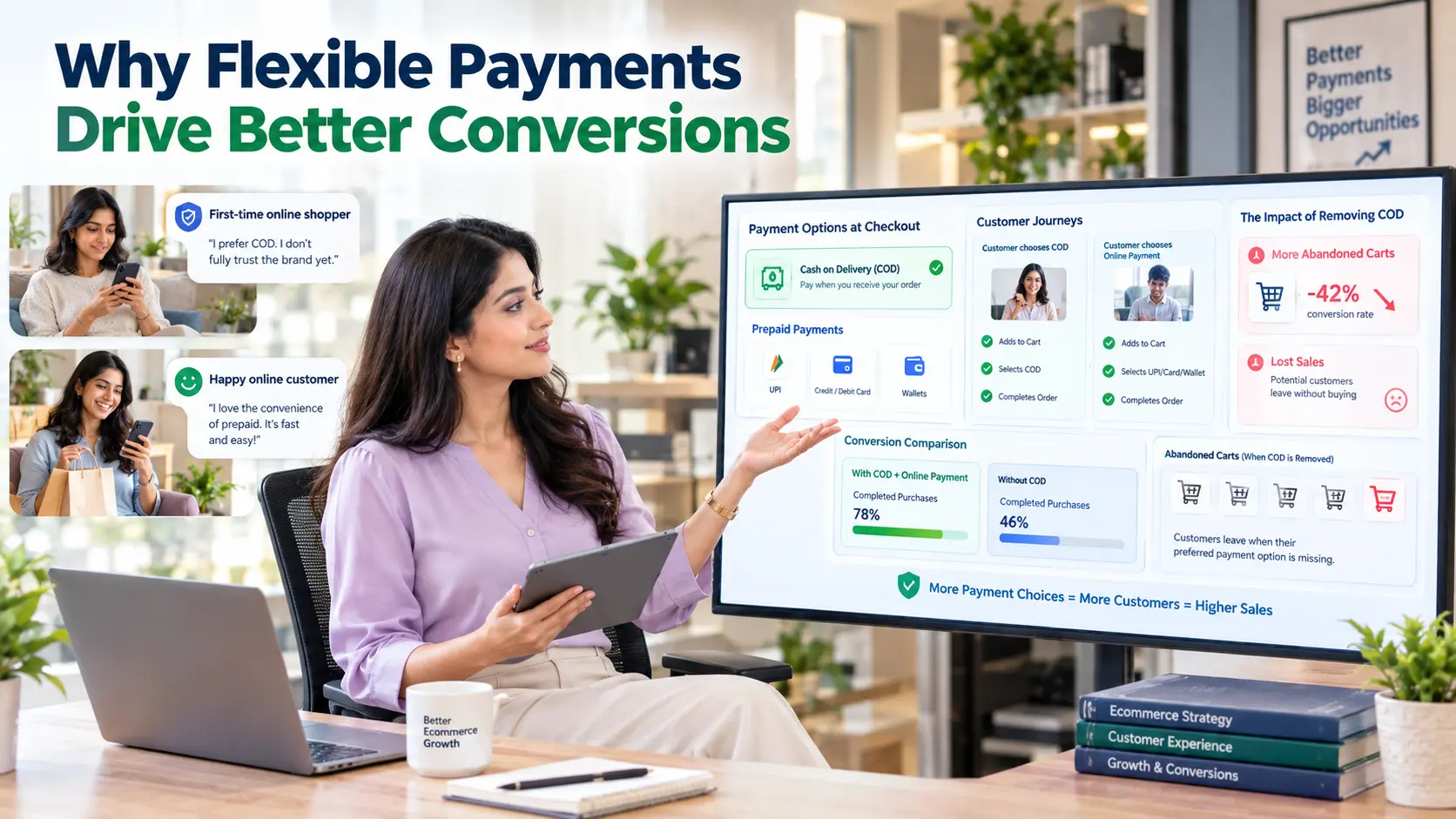
Removing cash on delivery cuts your RTO but also cuts your sales, and the lost sales usually cost more than the returns did.
COD is still the payment method of choice in many growing ecommerce markets, including India, the UAE, Saudi Arabia, Egypt, Indonesia, the Philippines and parts of Latin America and Eastern Europe. Buyers there use COD for three simple reasons:
- Trust. First-time buyers do not know your brand yet. Paying on delivery feels safe.
- Access. Not every shopper has a card or a comfortable digital payment habit.
- Control. Buyers like to see the product before they pay for it.
When you remove COD, most of these shoppers do not switch to prepaid. They just leave.
So the real question is not "COD or no COD?" It is "Which COD orders should I accept, and how do I make sure they get delivered?"
What Does One RTO Really Cost You?
A single RTO costs you two-way shipping, handling and blocked stock, with zero revenue in return.
Most store owners only count the return shipping fee. The real bill is bigger. Here is a simple worked example for an order worth 1,000 in your local currency:
Cost item | What happens | Typical cost (per order) |
|---|---|---|
Forward shipping | You paid to ship the parcel out | 60 to 120 |
Return shipping | You pay again to get it back | 60 to 120 |
COD handling fee | Charged by many couriers on COD parcels | 20 to 50 |
Repacking and quality check | Staff time, new packaging, damage checks | 30 to 80 |
Blocked inventory | Stock sits in transit for 7 to 15 days and can miss a sale | Hard to measure, but real |
Total | Roughly 170 to 370 lost per RTO |
Now scale it. If you ship 3,000 COD orders a month and 25% come back, that is 750 RTOs. At an average loss of 250 each, you are burning about 187,500 every month before you count the profit on sales that never happened.
Cut that RTO rate from 25% to 15% and you save 300 parcels and roughly 75,000 a month. That is why learning how to reduce RTO in ecommerce is one of the fastest ways to protect your margins.
Why Do COD Orders Come Back?
Most COD orders come back because of weak buyer intent, bad addresses, slow delivery or poor follow-up after a failed attempt.
Before you choose a fix, match the cause to its warning sign.
Cause | Warning sign before dispatch | Best fix |
|---|---|---|
Impulse or fake orders | First-time buyer, late-night order, high value, no reply to messages | Confirm the order before shipping |
Wrong or incomplete address | Missing house number, landmark or pincode mismatch | Address checks at checkout |
Buyer not available | Phone switched off or not answered | Delivery alerts and rescheduling |
Change of mind | Long gap between order and delivery | Faster dispatch and delivery |
Price shopping | Same buyer orders similar items from many stores | Prepaid nudges and COD limits |
Courier issues | One courier has far more failed attempts in a region | Choose couriers by success rate |
How to Reduce RTO in Ecommerce: 9 Fixes That Keep COD Switched On
The best way to reduce RTO is to act at three points: before the order is placed, before it ships, and after it ships.
You do not need all nine on day one. Start with the ones that match your biggest leaks.
1. Turn COD Into a Rule, Not a Default
Offer cash on delivery only where it makes sense, instead of on every product, pincode and cart value.
Look at your RTO data from the last three to six months. You will almost always find patterns:
- A few pincodes or cities with RTO rates far above your average
- Certain products, often low-priced impulse items or trend-driven fashion, that come back more often
- Order values where COD refusals spike
Use these patterns to set rules. Keep COD open for low-risk areas and products. Switch high-risk pincodes to prepaid only, or allow COD there only for repeat buyers. This is COD risk management in its simplest form, and it protects your sales because most buyers never see the restriction.
2. Confirm Every Risky COD Order Before You Ship
A quick confirmation message or call before dispatch stops many fake and impulse orders at almost no cost.
This is the single highest-return step for most stores. Send an automated WhatsApp, SMS or IVR message within a few minutes of the order, while the buyer still remembers it. Ask them to confirm the order and the address with one tap.
- If they confirm, ship it.
- If they cancel, you just saved two-way shipping.
- If they do not reply within a few hours, call once. If there is still no answer, hold the order.
You do not need to confirm every order. Repeat buyers with a clean delivery record can go straight to dispatch. Focus COD verification on first-time buyers, high-value carts and high-risk pincodes.
3. Fix the Address Before It Becomes a Problem
Address errors are one of the biggest causes of failed delivery, and most of them can be caught at checkout.
Small changes to your checkout form make a big difference:
- Make house number, street and landmark separate, required fields
- Check that the pincode or postal code matches the city and state
- Validate the phone number format so couriers can actually call the buyer
- Show delivery availability as soon as the buyer enters a pincode
A clean address helps your courier deliver on the first attempt, which is where most RTOs are won or lost.
4. Give Buyers a Real Reason to Prepay
A small, visible reward for prepaid orders moves a good share of COD buyers to online payment.
Many buyers choose COD out of habit. A small nudge changes that. Try one of these:
- A flat discount or percentage off for prepaid orders
- Free shipping on prepaid orders only
- Faster dispatch or priority handling for prepaid buyers
- Cashback or loyalty points that only apply to online payments
Show the reward on the product page and again next to the COD option at checkout. Test different amounts.
Also make paying online easy. Offer the methods your buyers use most, such as UPI, wallets, cards, EMI or local options, so prepaid feels as simple as COD.
5. Add Light Friction Only Where Risk Is High
A small upfront amount on high-risk COD orders filters out non-serious buyers without blocking genuine ones.
This is often called partial COD. The buyer pays a small token amount online, and the rest on delivery. Someone who has paid even a small amount is far more likely to accept the parcel.
Another option is a small COD handling fee on orders that fall into your risk rules. Be careful here. Apply friction only to the risky segment, keep the amount small, and explain it clearly. If every buyer sees a fee, you will push away good customers too.
6. Choose Couriers by Delivery Success, Not Just Price
The cheapest courier is often the most expensive once you add the cost of its failed deliveries.
Courier performance varies a lot by region. A partner that delivers well in one metro may struggle in smaller towns. Compare couriers on:
- First-attempt delivery rate in each region
- RTO rate by pincode
- Average delivery time
- How often parcels are marked "customer not available" without a real attempt
Then assign each region to the courier with the best results there.
7. Ship Fast, Because Delay Breeds Doubt
The longer a COD order takes to arrive, the more likely the buyer is to refuse it.
Every extra day gives the buyer time to rethink, find a cheaper option, or simply forget. Refusals tend to climb sharply once delivery stretches past four or five days.
Ways to speed things up:
- Set a daily dispatch cutoff, for example, ship all orders placed before 2 pm the same day
- Keep stock in more than one warehouse if a large share of orders comes from one region
- Use express delivery for nearby pincodes
- Move confirmed orders to packing immediately
8. Keep the Buyer in the Loop After Dispatch
Buyers who know exactly when their parcel will arrive are far more likely to be home and ready to pay.
Send short, useful updates at each key step:
- Order shipped, with a tracking link
- Out for delivery, with the expected time window
- A reminder to keep cash or UPI ready for COD
Let buyers reschedule or update their address from the message itself.
9. Treat Every Failed Delivery as a Rescue Window
A failed delivery attempt is not yet an RTO, and quick action can still save the sale.
When a courier cannot deliver, it raises an NDR (Non-Delivery Report). Good NDR management means you contact the buyer within hours, not days:
- Message the buyer as soon as the NDR is raised
- Offer clear options: deliver again tomorrow, choose another date, or update the address
- Pass the buyer's choice to the courier the same day
- Call the buyer yourself before a third attempt
Many stores leave NDRs to the courier. Owning this step can rescue a large share of failed deliveries.
Which RTO Fix Should You Start With?
Start with the fix that targets the cause behind most of your returns, then add the rest step by step.
Here is a simple if-then guide. Pull your last 100 RTO orders, tag each one with a reason, and see which row matches your biggest group.
If most of your RTOs are... | Start with... |
|---|---|
Fake, prank or no-response orders | COD confirmation before dispatch (Fix 2) |
Wrong or incomplete addresses | Checkout address checks (Fix 3) |
Concentrated in a few pincodes | COD rules by pincode (Fix 1) |
High-value impulse orders | Partial COD for those orders (Fix 5) |
Refused after slow delivery | Faster dispatch and better couriers (Fixes 6 and 7) |
"Customer not available" | Delivery alerts and NDR follow-up (Fixes 8 and 9) |
Most stores get the biggest early win from the first three fixes, because they stop problems before you pay for shipping.
How Does Shopaccino Help You Reduce RTO While Keeping COD?
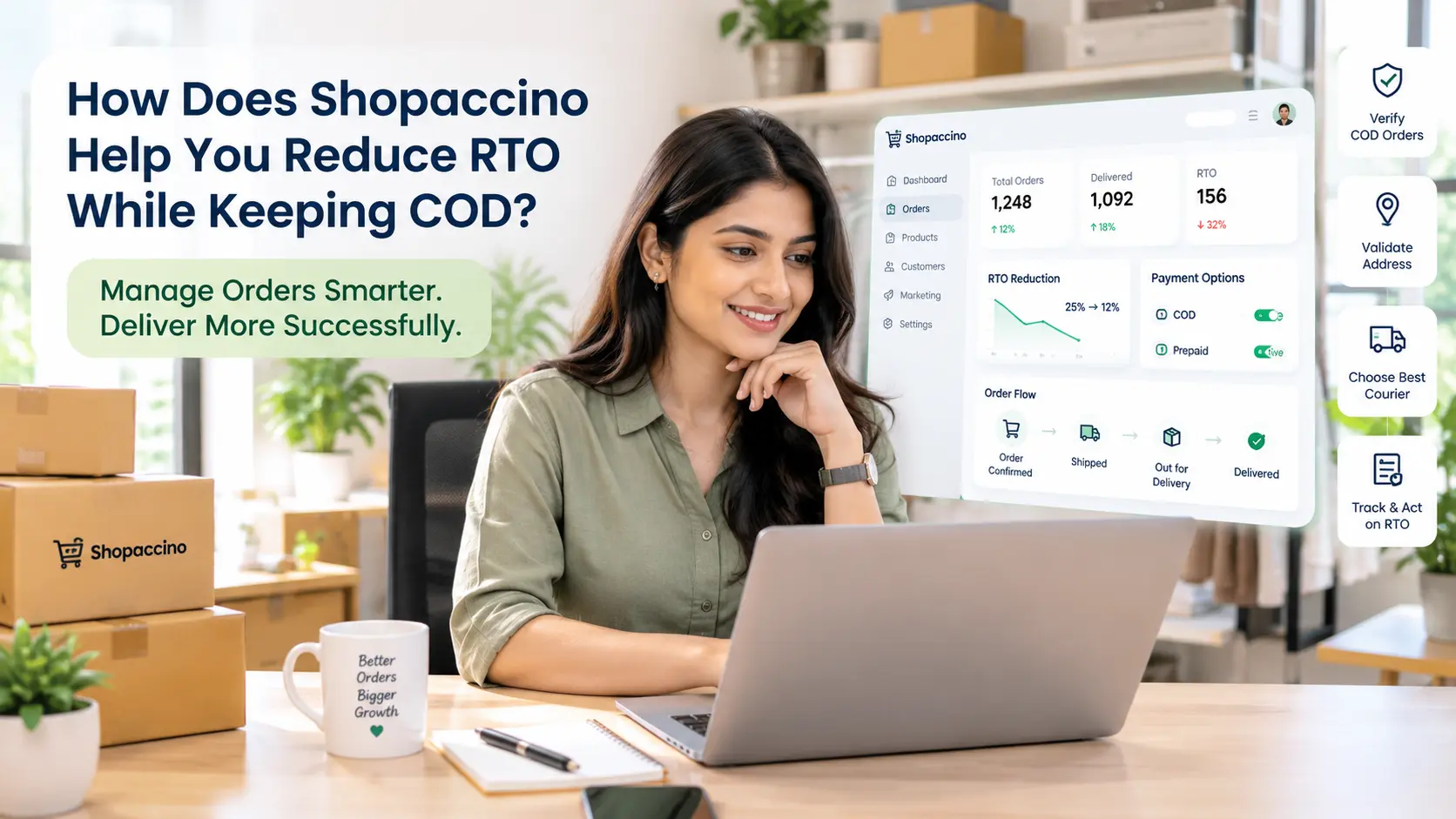
Shopaccino gives you control over where and when COD is offered, while making prepaid easy and keeping every order visible from dispatch to delivery.
Shopaccino is an ecommerce platform built for established businesses that sell online, offline or both, in India and across global markets. Here is how its built-in tools map to the fixes above:
- COD by product: Turn cash on delivery on or off for individual products, so high-RTO items can be sold as prepaid only.
- COD by location: Set COD availability by serviceable pincode or location, based on your logistics partner, so risky areas get prepaid only.
- Prepaid discounts: Offer discount codes that apply only to prepaid orders, and create conditional coupons limited to specific payment methods, categories or shipping zones.
- Easy online payments: Accept UPI, cards, wallets, net banking and EMI, plus international gateways such as PayPal and Stripe for cross-border buyers.
- Courier integrations: Connect with leading shipping partners and aggregators, including Delhivery, Blue Dart, DTDC, Xpressbees, Shiprocket, Shipway and Aramex, to generate waybills and get live shipping updates.
- RTO and NDR tracking: Delivery statuses such as Shipped, Out for Delivery, Delivered, NDR and RTO update automatically, so you can spot and act on problem orders fast.
- Order updates by email, SMS and WhatsApp: Keep buyers informed at every stage so they are ready when the parcel arrives.
- Multi-warehouse selling: Let buyers choose their delivery location and fulfil from the nearest warehouse for faster delivery.
For brands selling in more than one country, Shopaccino also supports multi-currency checkout and region-wise payment options. That means you can keep COD where buyers expect it and push prepaid where card payments are the norm, all from one store.
Which RTO Metrics Should You Track Every Week?
Track a few simple numbers every week so you catch RTO problems before they grow.
- Overall RTO rate: Your headline number
- COD vs prepaid RTO rate: Shows how much of the problem sits in COD
- RTO by pincode and city: Tells you where to tighten COD rules
- RTO by product: Highlights items that need better photos, size charts or prepaid-only rules
- RTO by courier: Shows which partners to use more, or less
- COD confirmation rate: How many buyers confirm when asked
- NDR recovery rate: How many failed deliveries you rescue
Small changes, made every week, add up to a much lower RTO rate within a few months.
Keep COD, Lose the Waste
Cash on delivery still brings in buyers you would never reach otherwise. The goal is not to shut that door. It is to make sure that every COD parcel you ship has a real buyer waiting at the other end. Start small. Pull your last 100 RTOs, find the top two causes, and apply the matching fixes this month. Then measure, adjust and repeat. That is how to reduce RTO in ecommerce in a way that protects both your margins and your growth. Ready to take control of COD without losing sales? Build your store on Shopaccino and set COD rules, prepaid offers and courier integrations from one dashboard.
FAQs
A good RTO rate is under 10% across all orders. For COD orders alone, many stores in COD-heavy markets aim to stay under 15%. Anything above 25% for COD needs urgent attention, because returns at that level can wipe out the profit on several successful orders.
Yes. You can reduce RTO without removing cash on delivery by confirming risky COD orders before dispatch, checking addresses at checkout, limiting COD by pincode or product, rewarding prepaid payments and following up on every failed delivery quickly. These steps target bad orders while keeping COD open for genuine buyers.
RTO happens when an order never reaches the buyer and goes back to the seller. A customer return happens after the buyer has accepted the order and later sends it back. RTO usually costs more because you pay shipping both ways and earn no revenue.
NDR stands for Non-Delivery Report. A courier raises an NDR when it cannot deliver a parcel, for example because the buyer was not available or the address was unclear. If no one acts on the NDR, the parcel usually turns into an RTO.
Yes, in most cases. Prepaid orders are rarely refused because the buyer has already paid. A small discount, free shipping or cashback on prepaid orders encourages many COD buyers to switch, which lowers your overall RTO rate.
Partial COD works well for high-value or high-risk orders. Asking for a small upfront payment filters out non-serious buyers, while the rest is still paid on delivery. Use it only for risky orders, so regular buyers keep a smooth checkout.