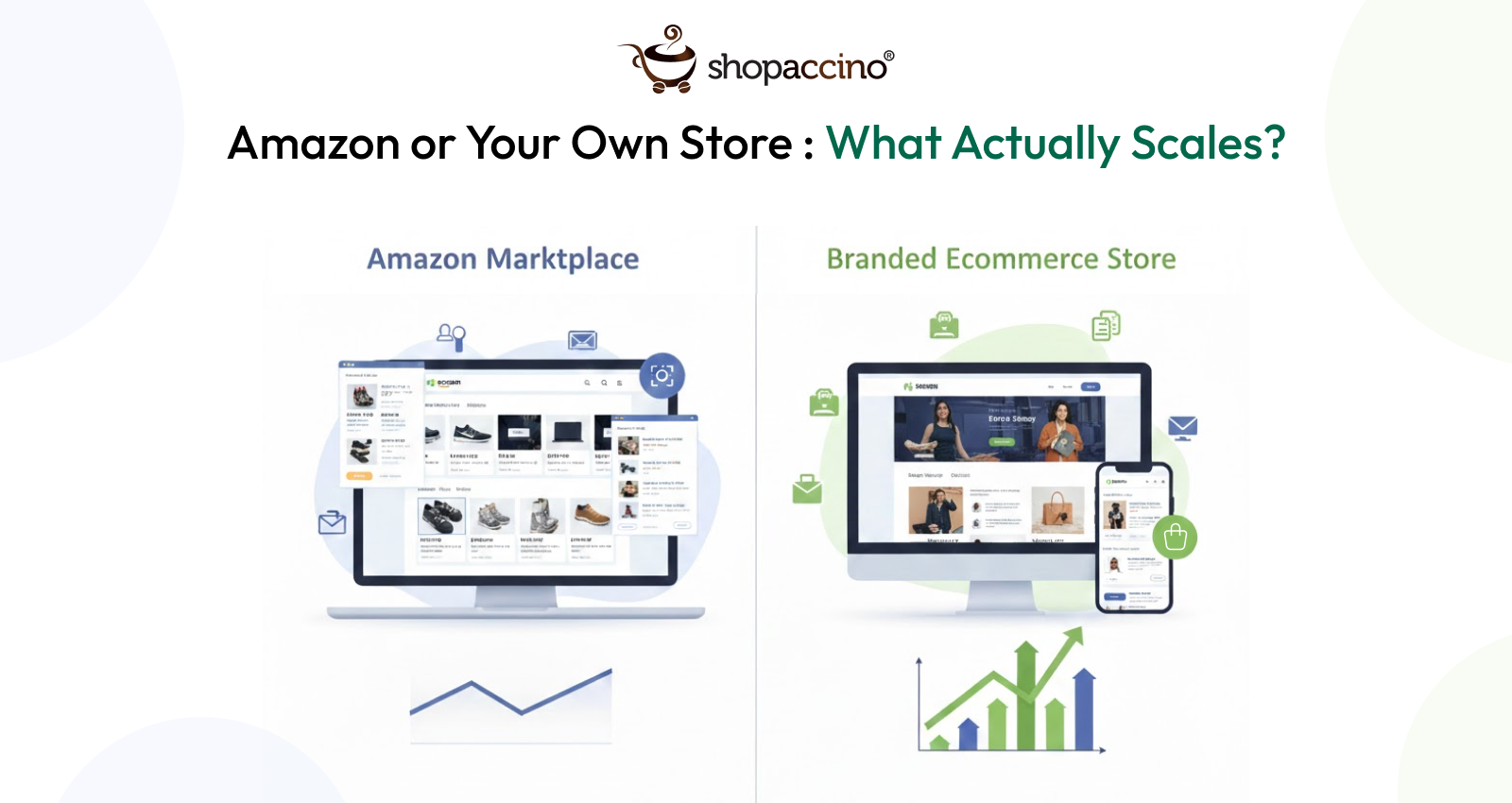
Difference Between Ecommerce Website & Marketplace (Amazon vs Own Store)
As ecommerce continues to grow, one question keeps coming up for sellers, brands, and entrepreneurs entering online selling:
Should I sell on a marketplace like Amazon, or should I build my own ecommerce website?
This confusion is natural. Marketplaces promise instant visibility and faster sales, while owning an ecommerce website feels like a bigger, more serious step. Many sellers postpone this decision, assuming they can “figure it out later.”
But the truth is, this decision shapes how your business grows, how much control you have, and how profitable you can become in the long run.
To make the right choice, it’s important to clearly understand the difference between an ecommerce website and a marketplace, especially when comparing Amazon vs own store.
Understanding How Marketplaces Like Amazon Work
A marketplace is a platform where multiple sellers list their products and sell to customers under one umbrella brand. Amazon is the most popular example, and for many sellers, it becomes the first step into e-commerce.
When you sell on a marketplace:
- The platform owns the customer relationship
- Product visibility depends on algorithms
- Pricing is influenced by competition
- The overall shopping experience is controlled by the platform
Marketplaces function like digital shopping malls. They bring customers in, but sellers must operate within the platform’s rules.
Why Sellers Start with Amazon
For beginners, selling on Amazon makes sense.
Amazon offers:
- Immediate access to millions of active buyers
- Built-in customer trust
- Ready logistics and payment systems
- Faster time to first sale
This is why, in the selling on Amazon vs own website debate, Amazon often feels like the easier and safer option at the start.
However, what works well for starting does not always work well for scaling.
What an E-commerce Website Really Means
An ecommerce website is a store that you own and control completely. Products, pricing, design, checkout, and customer communication are all managed by your business.
When you sell through your own website:
- You own the customer data
- You control pricing and offers
- You design the buying experience
- You build a brand, not just listings
An ecommerce website is not just a sales channel—it is a long-term business asset.
Ecommerce Website vs Marketplace: The Core Difference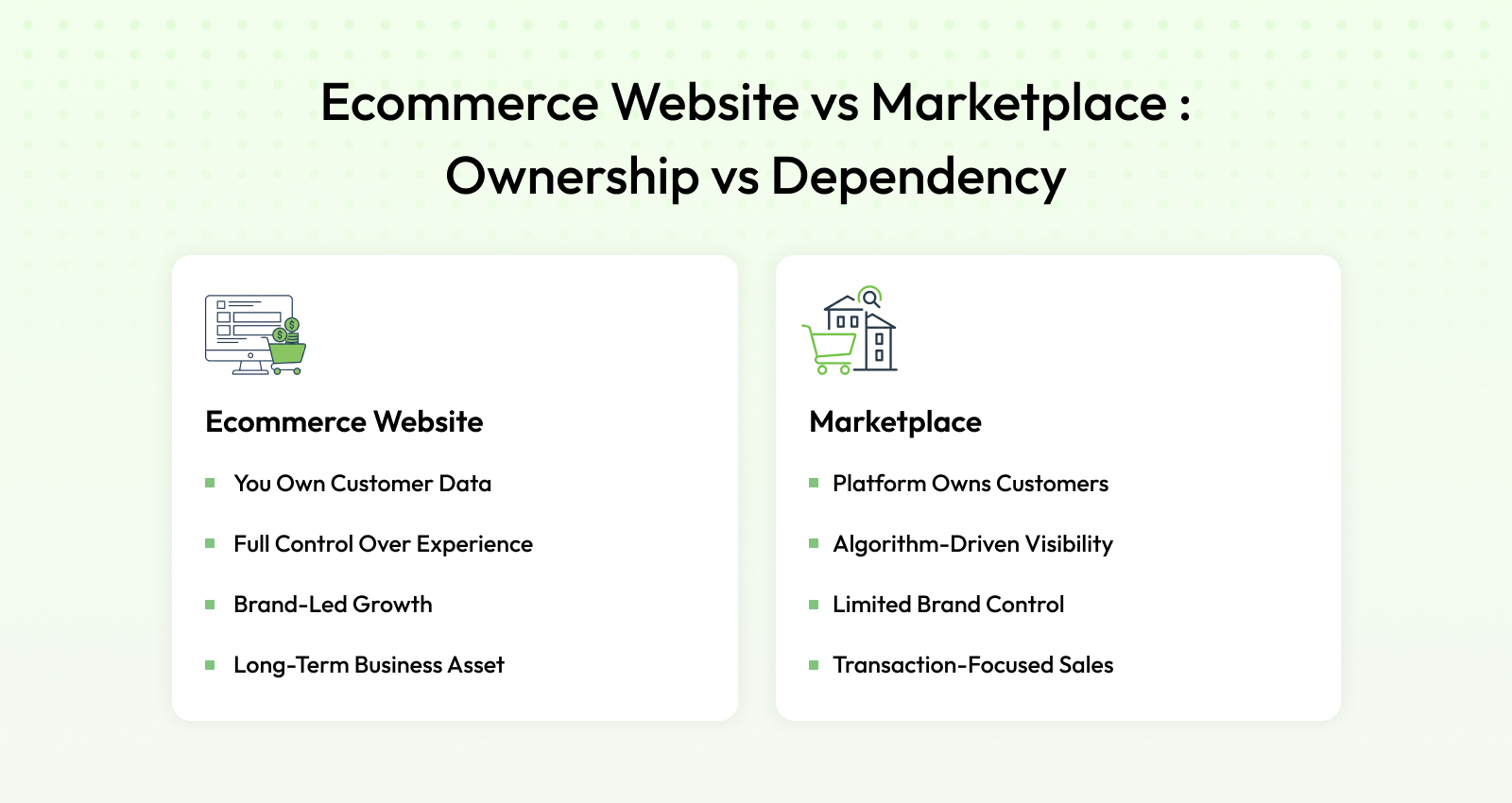
At its core, the ecommerce website vs marketplace comparison comes down to one critical factor:
Ownership versus dependency
Marketplaces help you sell quickly.
Ecommerce websites help you build a business.
This difference becomes clearer when you look beyond short-term sales and focus on long-term growth.
Amazon vs Own Website: Control and Flexibility
Control is where the biggest difference lies.
On Amazon:
- Your listings compete directly with similar products
- Pricing pressure is constant
- Customer communication is limited
- Policy or algorithm changes can affect sales overnight
On your own ecommerce website:
- You control how products are presented
- You decide pricing and discounts
- You communicate directly with customers
- You build loyalty outside any algorithm
As businesses grow, this control becomes increasingly important.
Selling on Amazon vs Own Website: Short-Term Gains vs Long-Term Growth
Selling on Amazon delivers quick results, but growth is largely transactional. Customers remember the platform, not the seller.
With an ecommerce website:
- Customers remember your brand
- Repeat purchases become easier
- Marketing efforts compound over time
This is why many sellers eventually realize that relying only on marketplaces limits their ability to grow sustainably.
Benefits of Ecommerce Website for Growing Brands
Some of the most important benefits of ecommerce website ownership include:
- Direct customer relationships
- Better margins over time
- Strong brand identity
- Independence from marketplace rules
- Long-term business value
These benefits are not immediate, but they compound as the business grows.
Why This Decision Matters More as You Scale
Many sellers delay building a website because marketplaces are “working fine.” But as order volume increases:
- Fees eat into margins
- Competition intensifies
- Brand differentiation becomes difficult
- Customer retention becomes harder
At this stage, the lack of an owned channel becomes a growth bottleneck.
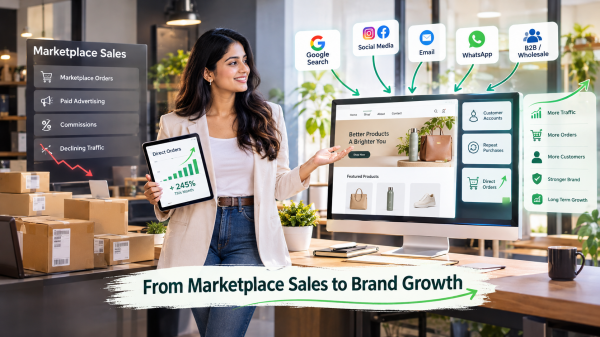
Marketplace and Website Are Not Opposites
Choosing an ecommerce website does not mean abandoning marketplaces.
The most successful businesses use:
- Marketplaces for reach and discovery
- Their own website for branding, conversion, and retention
Understanding this balance is key to making the right decision.
Amazon vs Own Store – A Practical Comparison That Matters for Growth
Now that we understand how marketplaces and ecommerce websites fundamentally differ, it’s time to look at the real-world comparison sellers actually care about.
This section focuses on how selling on Amazon compares with running your own ecommerce store when it comes to costs, margins, customers, branding, and long-term scalability.
Cost Structure: Where Your Money Actually Goes
One of the biggest differences between Amazon and an e-commerce website lies in how costs are structured.
Selling on Amazon: Layered Costs
When selling on Amazon, your revenue is shared across multiple fees:
- Marketplace commission
- Fulfilment and logistics charges
- Advertising costs to stay visible
- Storage and penalty fees (in some cases)
As competition increases, sellers often spend more just to maintain the same level of sales.
This directly impacts profitability, especially at scale.
Selling Through Your Own E-commerce Website: Controlled Costs
With an ecommerce website:
- You control pricing
- There are no per-order marketplace commissions
- Marketing spend is optional and strategic
- Margins improve as volume grows
While websites have setup and marketing costs, these expenses are predictable and scalable, unlike marketplace fees that grow with every order.
This difference becomes more visible as businesses grow.
Customer Ownership: The Biggest Long-Term Advantage
Customer ownership is where the ecommerce website vs marketplace debate becomes very clear.
On Amazon
- Customers belong to Amazon
- Sellers get limited access to customer data
- Retargeting and relationship building are restricted
You make a sale, but you don’t build a customer base.
On Your Own Website
- You own customer data
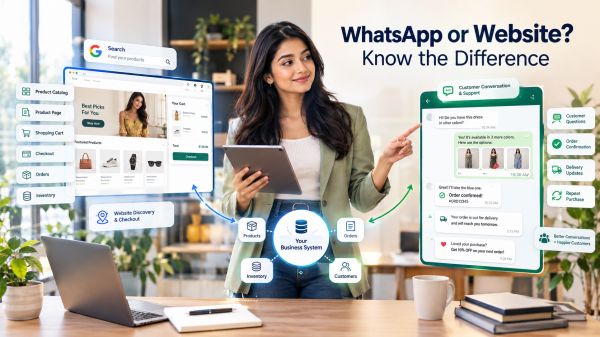
- You can build email, WhatsApp, and loyalty programs
- Repeat purchases become easier and cheaper
Over time, customer ownership helps businesses reduce dependency on paid ads and marketplaces.
This is one of the most important benefits of ecommerce website ownership.
Branding: Visibility vs Identity
Branding on Amazon
On Amazon:
- Your products appear alongside competitors
- Brand storytelling is limited
- Customers remember Amazon more than the seller
Even if your product performs well, brand recall remains weak.
Branding on Your Own Store
An ecommerce website allows you to:
- Control design and messaging
- Communicate your brand story
- Build emotional connection with customers
This is critical for businesses that want to grow beyond price-based competition.
Conversion and Buying Experience
Buying Experience on Amazon
Amazon optimizes for speed and familiarity. Customers trust the platform and checkout is seamless.
However:
- Your brand experience is secondary
- You cannot customize the buying journey
- Upselling and personalization are limited
Buying Experience on an Ecommerce Website
On your own website:
- You control product pages
- You can optimize checkout
- You can personalize offers and messaging
This flexibility helps improve conversion rates and average order value over time.
Selling on Amazon vs Own Website: Scalability Comparison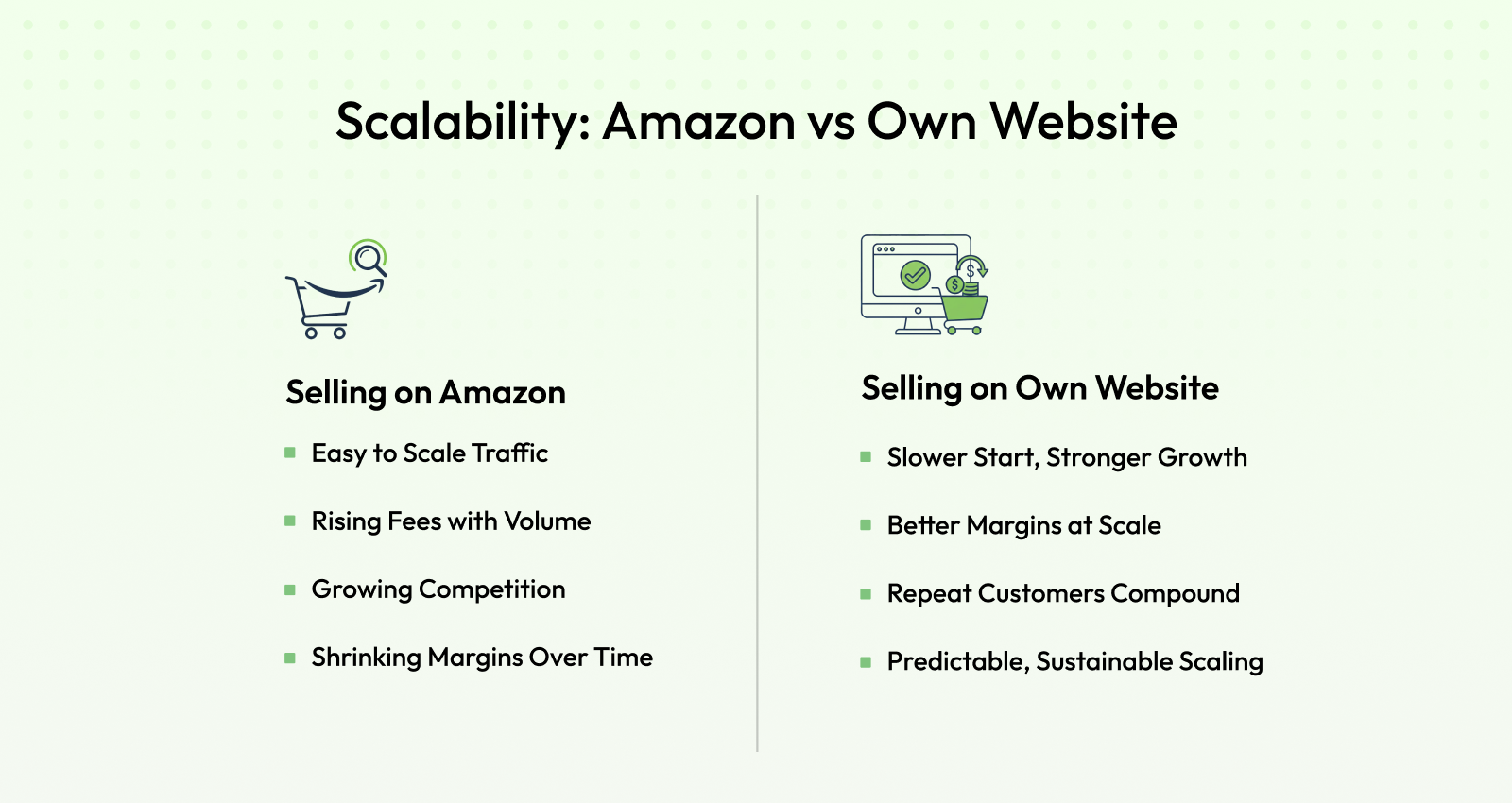
Scalability on Amazon
Amazon scales traffic easily, but:
- Competition increases as categories mature
- Advertising becomes mandatory
- Margins shrink as scale increases
Growth is possible, but often comes at a cost.
Scalability with an E-commerce Website
With your own store:
- Growth compounds through repeat customers
- Marketing becomes more efficient over time
- You scale the brand, not just transactions
This makes scaling more predictable and sustainable.
Risk and Dependency
Relying only on Amazon means:
- Policy changes can impact sales instantly
- Account suspensions can halt business
- Algorithm updates affect visibility
An ecommerce website reduces this risk by giving you a channel you fully control.
When Amazon Makes Sense
Amazon is a strong option when:
- You want fast market entry
- You are testing product demand
- You need instant reach
- You are in the early stage
Marketplaces are excellent starting points, not always long-term foundations.
When an Ecommerce Website Becomes Essential
An own ecommerce website becomes essential when:
- You want to grow margins
- You want repeat customers
- You want brand loyalty
- You want long-term business value
At this stage, relying only on a marketplace limits growth.
Marketplace and Website: Not a Choice, but a Strategy
The smartest businesses don’t choose Amazon or website.
They use:
- Amazon for discovery and volume
- Their own website for branding, retention, and profitability
This hybrid approach balances short-term sales with long-term growth.
When to Choose Amazon, When to Build Your Own Store, and the Smart Way to Scale
By now, the difference between selling on a marketplace and owning an ecommerce website should be clear. The final decision is not about which option is “better,” but which option is right at each stage of business growth.
This section focuses on when to rely on Amazon, when to invest in your own store, and how to use both strategically.
When Selling on Amazon Makes the Most Sense
Amazon is an excellent platform at certain stages of an ecommerce journey.
Selling on Amazon makes sense when:
- You are launching a new product and need quick visibility
- You want to test demand without heavy upfront investment
- You need access to an existing, high-intent customer base
- You are comfortable operating with thinner margins initially
For early-stage sellers, Amazon reduces friction and helps validate products faster than building a full ecosystem from scratch.
However, these advantages are strongest in the beginning.
When an Ecommerce Website Becomes a Growth Requirement
As businesses grow, priorities change. Profitability, control, and predictability start to matter more than quick exposure.
An ecommerce website becomes essential when:
- You want higher margins per order
- You want repeat customers, not one-time buyers
- You want to build brand loyalty
- You want independence from marketplace policies and algorithms
- You want long-term business value
At this stage, the benefits of ecommerce website ownership outweigh the convenience of marketplaces.
Why Relying Only on Amazon Becomes Risky Over Time
Many sellers remain marketplace-dependent longer than they should. This often leads to problems that slow or even stall growth.
Over time, Amazon-only businesses face:
- Rising fees and advertising costs
- Price wars with similar sellers
- Limited customer relationship building
- Sudden sales drops due to policy or algorithm changes
This makes growth unpredictable and difficult to control.
The Smart Approach: Using Amazon and Your Own Store Together
The most successful ecommerce businesses do not choose between Amazon and their own website. Instead, they assign clear roles to each channel.
A smart channel strategy looks like this:
- Amazon for discovery, reach, and volume
- Own ecommerce website for branding, conversion, and retention
Amazon brings customers in.
Your website builds the relationship.
This approach reduces risk while maximizing growth potential.
How an Ecommerce Website Strengthens Long-Term Profitability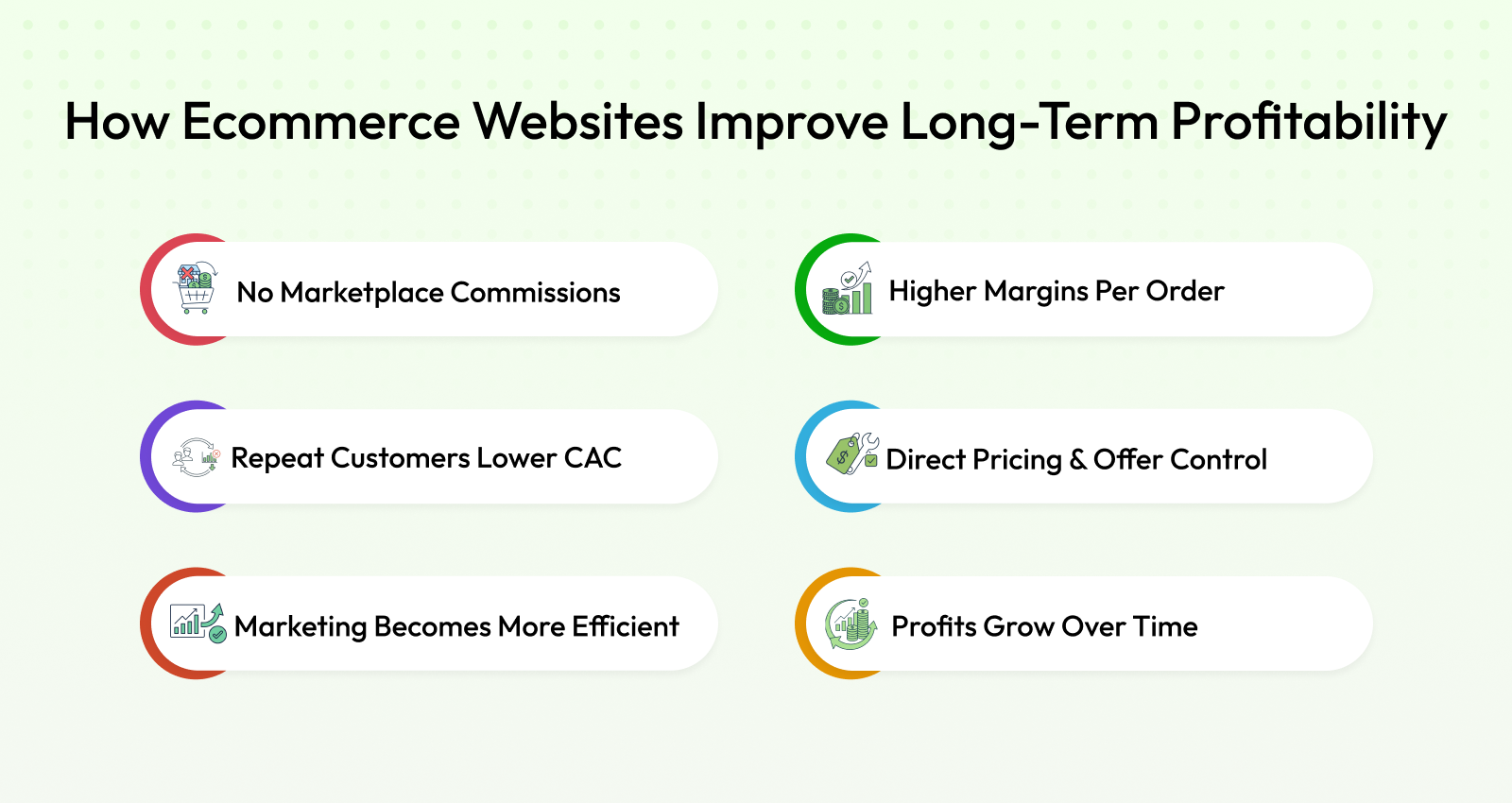
One of the biggest differences between marketplaces and owned stores shows up in profitability over time.
With your own website:
- Customer acquisition costs decrease through repeat purchases
- Marketing becomes more efficient
- Brand trust increases conversion rates
- You retain full control over pricing and offers
These factors help businesses grow sustainably, not just sell more units.
Why Platform Choice Matters for Your Own Store
Owning an ecommerce website is only effective if the platform supports growth.
A platform like Shopaccino enables businesses to build and scale their own stores with:
- Strong performance and reliability
- Control over branding and checkout experience
- Scalability as order volumes grow
- Reduced dependency on third-party marketplaces
This allows sellers to focus on growth instead of technical limitations.
Final Verdict: Ecommerce Website vs Marketplace
So, what’s the final answer to the ecommerce website vs marketplace question?
- Marketplaces like Amazon are powerful starting tools
- Ecommerce websites are essential growth engines
Selling on Amazon helps you enter the market quickly.
Owning an ecommerce website helps you build a real business.
The smartest strategy is not choosing one over the other—but knowing when and how to use both.
FAQs
The main difference is ownership. In a marketplace, the platform controls customers and visibility, while an ecommerce website gives the seller full control over branding, pricing, customer data, and the overall buying experience.
Selling on Amazon is better for quick entry and reach, but owning an ecommerce website is better for long-term growth, higher margins, and building a loyal customer base. The right choice depends on your business stage and goals.
Yes. Many sellers start on Amazon to validate products and generate early sales. Once demand is proven and orders grow, building an ecommerce website becomes important for scaling and profitability.
Marketplaces charge commissions, logistics fees, and advertising costs. As competition increases, sellers often reduce prices to stay visible, which directly impacts margins compared to selling through an own website.
The key benefits of an ecommerce website include customer data ownership, better branding, higher profit margins over time, control over pricing, and the ability to build repeat purchase and loyalty strategies.
Yes. Depending only on Amazon means your business is affected by policy changes, account issues, and algorithm updates. Having your own ecommerce website reduces this dependency and business risk.
No. Many successful businesses use Amazon for reach and their own website for branding, conversion, and retention. Using both together often delivers the best results.
It’s the right time when order volumes are consistent, margins feel tight, customers start recognizing your brand, and you want repeat sales instead of one-time marketplace transactions
An ecommerce website helps build brand value, customer loyalty, predictable revenue, and better profitability. Over time, it turns an online selling activity into a scalable and sustainable business.