
Why Shopaccino Is the Best eCommerce Platform for Growth-Driven Businesses
Building an online store is no longer the final milestone in digital transformation—it is the beginning. As ecommerce matures in India, brands need more than catalog uploads, basic checkout features, or generic storefront templates. They need platforms that help them scale, diversify, and operate with agility across categories, fulfillment networks, and marketing channels.
Most businesses start their ecommerce journey with short-term goals: listing products, connecting payments, and fulfilling orders. But once demand increases, they require systems that accommodate real-time inventory workflows, order routing, multi-location expansion, recurring revenue models, data reporting, and personalized customer engagement.
This is where many businesses get stuck—they realize their initial ecommerce setup was not designed for growth.
What brands need today is a platform that evolves with them, not one they outgrow. A system that supports scaling from a single store to multiple warehouses, from domestic orders to global transactions, from one-time purchases to subscription models, and from simple catalog pages to deeply personalized shopping experiences.
Platforms like Shopaccino are built for that stage of growth. Instead of offering a basic online store builder, they equip businesses with the tools to operate like mature ecommerce brands without needing a development team or fragmented third-party systems.
Challenging Area – What Businesses Struggle With While Scaling Online
Growth introduces friction. While starting online is relatively simple today, scaling introduces operational, experience-based, and financial challenges that most businesses underestimate.
One of the biggest barriers is platform limitations. Many businesses launch with low-cost, entry-level solutions that work initially but restrict essential features such as advanced logistics, custom product catalogs, mobile-first performance, API integrations, or multi-location support.
Another major challenge is the fragmented tech stack. Brands often rely on separate tools for marketing automation, payments, analytics, inventory, CRM, loyalty, and shipping. Each tool adds cost and complexity when systems don’t sync in real time.
Operational bottlenecks also surface: slow checkout processes, inconsistent stock accuracy, delayed fulfillment, and lack of tracking transparency. These issues impact customer satisfaction and retention, turning growth into a burden rather than an advantage.
Lastly, businesses struggle to scale without increasing operational cost. As order volume increases, manual workflows multiply. Without automation, growth becomes expensive, not profitable.
These challenges make it essential for brands to choose platforms designed for long-term operations rather than short-term launch success.
Read Also - From ₹1L to ₹1Cr in Ecommerce Sales
Their Customer Challenging Area – What Buyers Expect From Scalable Brands
A brand’s growth depends on repeat customers, not just new traffic. But repeat orders happen only when customer experience remains consistent as demand increases.
Today’s shoppers expect:
Frictionless Mobile Experience
Online shopping is primarily mobile-driven. Customers expect fast loading, intuitive navigation, and minimal steps to checkout.
Real-Time Availability and Delivery Clarity
If a product is listed, it must be available. Customers expect updated stock, accurate timelines, and reliable delivery tracking.
Multiple Payment Options
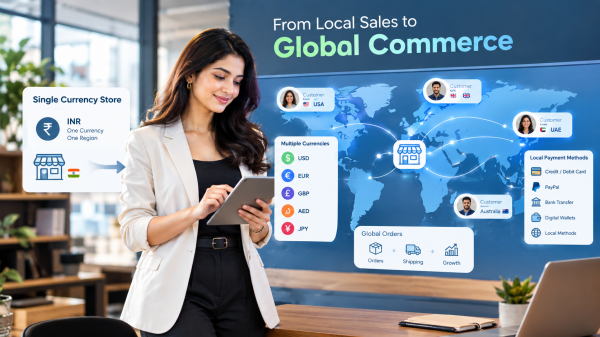
Buyers switch platforms when they cannot use their preferred payment method—UPI, wallets, cards, BNPL or COD.
Personalized, Contextual Interaction
Customers prefer brands that remember their orders, preferences, and browsing behavior.
Trust and Transparency
Clear pricing, easy returns, secure payments, and defined policies drive purchase confidence.
When platforms cannot maintain these expectations at scale, conversion rates drop even as traffic increases.
Read Also : Convert Mobile Browsers into Fashion Buyers
Solution – How an Integrated Ecommerce Platform Enables Sustainable Growth
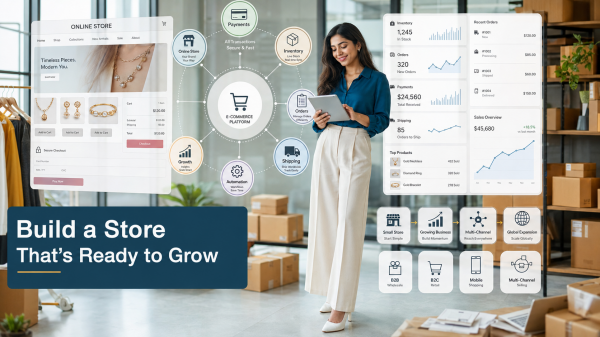
For growth-oriented businesses, success is not about having extra features—it is about having a unified ecosystem. Instead of assembling separate tools across payments, CRM, marketing, inventory, shipping, and sales, businesses need a single operational system that connects them.
This is where platforms like Shopaccino play a crucial role. By combining storefront management, inventory workflows, logistics, marketing automation, and analytics into one infrastructure, businesses can scale without rebuilding technology at every stage.
Here’s how:
Unified Commerce Backend
Stores can manage catalog, orders, payments, logistics, and customer data in one place—reducing tool dependency.
Multi-Location and Fulfillment Support
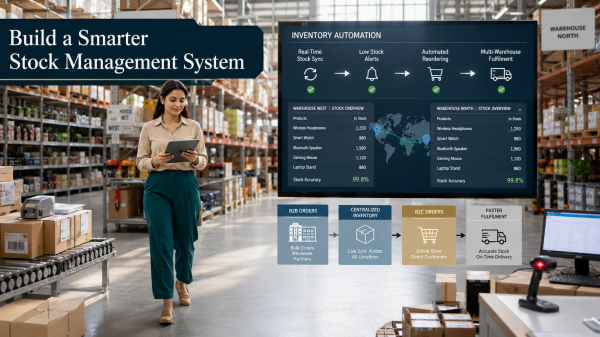
Brands can expand from one warehouse to multiple fulfillment points while maintaining accurate stock control and order routing.
Built-In Marketing and Data Tools
Rather than relying on plugins, brands can enable automated messaging, customer segmentation, and reporting directly inside the system.
Flexible Catalog and Pricing
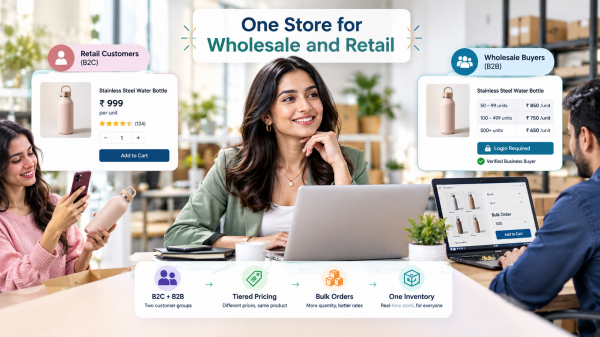
Variable product structures, bulk pricing, variants, and business-specific workflows make the platform suitable for diverse industries.
Integration-Ready Architecture
Brands can connect couriers, CRMs, Accounting Software, and marketplaces without custom development.
A platform designed for scale reduces operational cost, improves productivity, and future-proofs business expansion.
How to Implement – A Roadmap for Growth-Driven Digital Commerce
Scaling requires structured execution, not just technology. Here’s a step-by-step approach to building a scalable online business.
Step 1: Identify Core Sales Channels and Customer Segments
Understand where orders originate—website, app, stores, resellers, or social channels. This ensures the platform supports multi-channel operations from the beginning.
Step 2: Build a Branded Storefront With Efficient Checkout
A professional storefront reduces drop-offs, while secure gateways improve trust. Platforms like Shopaccino help brands launch without developers, keeping costs predictable.
Step 3: Set Up Inventory and Order Workflows
Enable:
- Centralized stock management
- Warehouse allocation rules
- Courier partner integrations
This ensures accuracy as order volumes rise.
Step 4: Enable Post-Purchase Customer Journeys
Shipping updates, re-ordering prompts, targeted offers, and feedback loops create long-term engagement and repeat sales.
Step 5: Track Performance and Optimize
Monitor:
- Conversion rates
- Retention rates
- Fulfilment speed
- Product performance
- Marketing ROI
Insights drive future decisions and expansion.
Read Also : Missed Milk Deliveries Break Customer Trust
Benefits of Choosing Growth-Focused Platforms
When businesses choose platforms built for scaling, they see compounding benefits.
Lower Cost of Scaling
No need to rebuild systems or migrate platforms as demand increases.
Higher Operational Efficiency
Real-time automation reduces manual work and errors.
Stronger Retention and Customer Lifetime Value
Consistent experiences drive repeat purchases.
Business Expansion Without Technical Barriers
Brands can add warehouses, products, markets, and channels without rebuilding.
Data-Driven Growth Decisions
Insights power forecasting, planning, and performance improvement.
Growth becomes strategic—not accidental.
Conclusion
Scaling ecommerce is not about adding more products or increasing advertising budgets—it is about building a digital infrastructure that can support rising demand, expanding logistics, evolving customer behavior, and diversified revenue models.
Businesses that begin with basic tools often hit operational ceilings and struggle to expand. Those that choose platforms built for growth operate efficiently, convert better, retain customers, and scale sustainably without increasing complexity.
Platforms like Shopaccino empower businesses to manage storefronts, logistics, payments, customer journeys, and analytics under a single framework. By eliminating tool fragmentation and providing scalable infrastructure, they help brands operate with speed and efficiency as they grow.
The ecommerce ecosystem rewards businesses that think long-term. With the right foundation, growth is not just possible—it becomes predictable.
FAQs
Basic platforms lack features required for logistics, automation, analytics, and multi-location scale.
Yes. It saves future migration cost and supports long-term expansion.
Yes, through automation and unified dashboards.
Flexible checkout, reliable integrations, inventory accuracy, data tools, and delivery workflows.
Yes—better retention, reduced errors, faster fulfilment, and improved conversions all impact revenue.
With platforms like Shopaccino, yes—no coding or custom setup required.
Absolutely; digital expansion supports wider reach beyond physical stores.