Which Ecommerce Marketing Strategies Are Driving Real Growth in 2026?
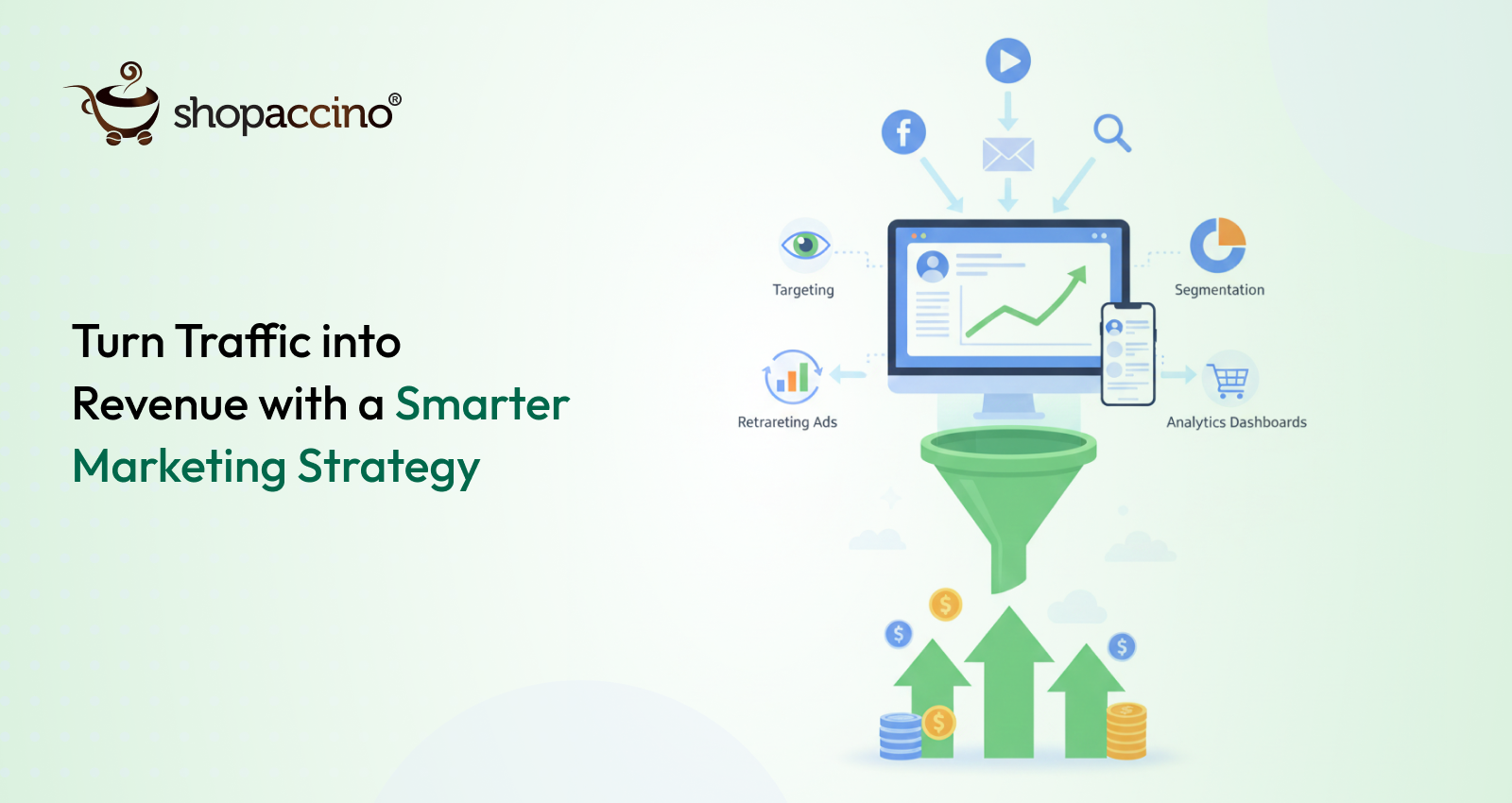
Ecommerce marketing is entering a decisive phase. What worked even a couple of years ago—heavy discounts, aggressive ads, and broad targeting—is no longer enough to drive sustainable growth. Rising acquisition costs, smarter consumers, and intense competition are forcing brands to rethink how they attract, convert, and retain customers.
The ecommerce marketing strategy of 2026 is not about doing more marketing. It is about doing better marketing—more intentional, more customer-centric, and more connected across channels.
This playbook is designed to help ecommerce brands understand what’s changing, why it matters, and how to build a marketing approach that actually delivers long-term growth.
Why Ecommerce Marketing Needs a Rethink in 2026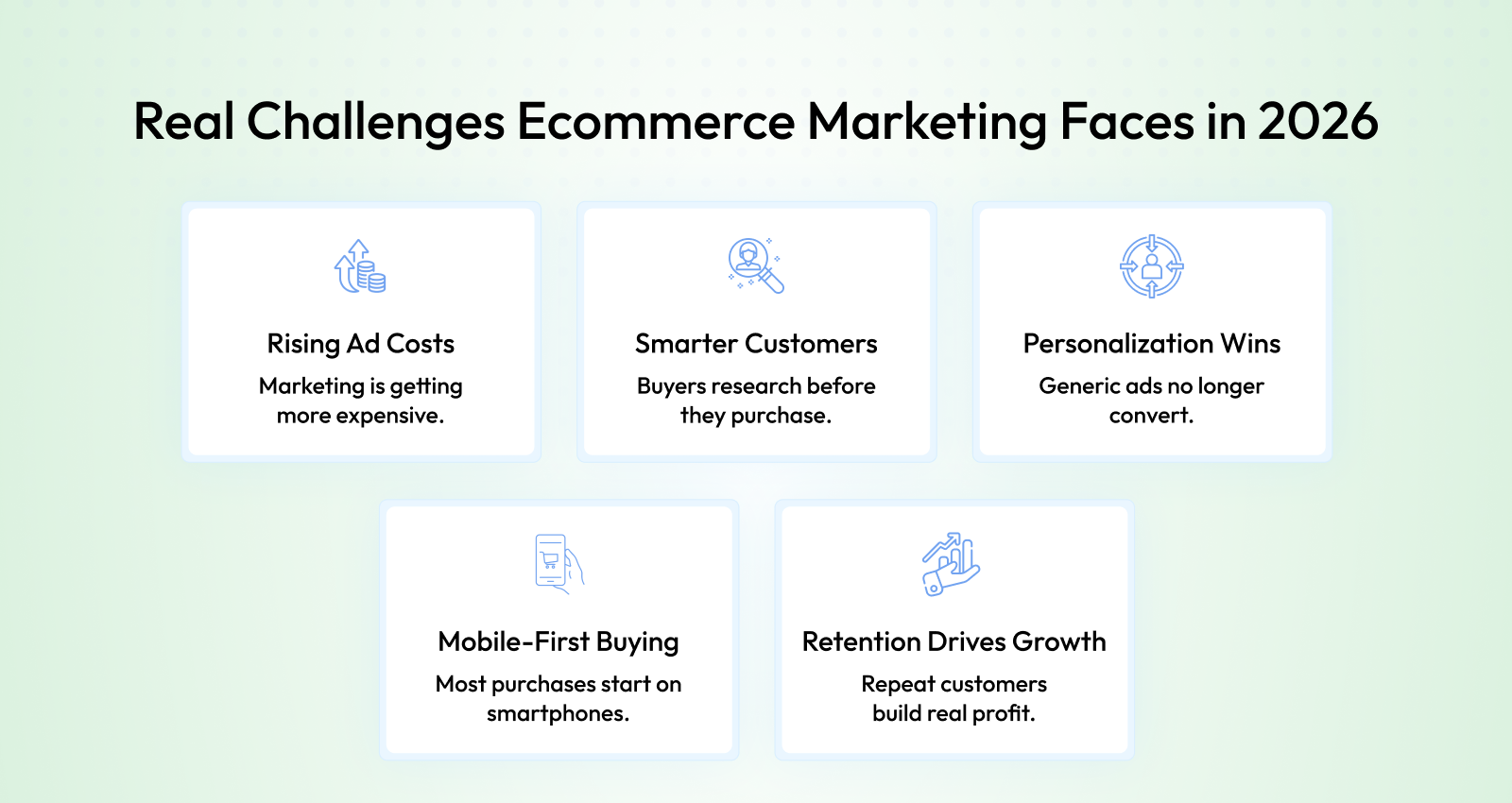
The ecommerce ecosystem has matured. Customers are no longer impressed by flashy ads or endless promotions. They compare brands, read reviews, and expect personalized experiences at every touchpoint.
Several factors are reshaping ecommerce marketing:
- Paid advertising costs continue to rise
- Customers demand trust, transparency, and relevance
- Mobile-first behavior dominates buying journeys
- Retention matters more than one-time conversions
In this environment, ecommerce marketing can no longer operate in silos. Performance marketing, content, retention, and brand storytelling must work together.
The Shift from Channel-Based Marketing to Growth Systems
Traditional ecommerce marketing focused on individual channels—Google Ads, Facebook Ads, email, or SEO. While these channels still matter, success in 2026 depends on how well they are connected.
Modern brands are moving toward ecommerce growth strategy frameworks instead of isolated campaigns.
A growth system focuses on:
- How customers discover the brand
- How trust is built before purchase
- How conversion friction is reduced
- How customers are retained after purchase
Marketing is no longer just about acquisition—it’s about the entire customer lifecycle.
Understanding the Modern Ecommerce Customer
To build an effective ecommerce marketing strategy, brands must first understand how customers behave today.
Modern ecommerce customers:
- Research before buying
- Compare multiple brands and platforms
- Expect seamless experiences across devices
- Value authenticity over aggressive selling
They don’t respond well to generic messaging. They expect relevance.
This shift is why digital marketing for ecommerce in 2026 is deeply rooted in personalization, education, and experience.
Why Retention Is Becoming the Core of Ecommerce Growth
For years, ecommerce brands focused heavily on acquiring new customers. In 2026, retention has become equally—if not more—important.
Retained customers:
- Cost less to convert
- Buy more frequently
- Trust the brand more
- Are easier to upsell and cross-sell
A strong ecommerce marketing strategy balances acquisition with retention, ensuring growth is both scalable and sustainable.
The Role of Brand in E-commerce Marketing
Performance marketing alone no longer guarantees growth. Brands that rely only on ads often struggle when costs increase or algorithms change.
Brand-building plays a critical role in e-commerce marketing today.
A strong brand:
- Reduces dependence on paid ads
- Increases conversion rates
- Builds long-term customer loyalty
- Creates emotional connection
In 2026, the best ecommerce brands integrate brand storytelling into every stage of their marketing funnel.
Content as the Foundation of Ecommerce Marketing
Content is no longer optional. It is the backbone of trust-building in ecommerce.
High-performing ecommerce brands use content to:
- Educate customers
- Answer pre-purchase questions
- Reduce hesitation
- Support SEO and discovery
Content-driven digital marketing for ecommerce improves both acquisition and conversion by addressing customer intent naturally.
Why Data-Driven Decisions Matter More Than Ever
Guesswork has no place in modern e-commerce marketing.
Successful ecommerce marketing strategies rely on:
- Customer behavior analysis
- Funnel performance tracking
- Conversion rate optimization
- Continuous experimentation
Data helps brands understand what actually works, allowing them to refine campaigns instead of chasing trends blindly.
Building the Right Foundation Before Scaling Marketing
Before scaling traffic or budgets, ecommerce brands must ensure their foundation is strong.
This includes:
- Clear positioning and messaging
- Optimized product pages
- Smooth checkout experience
- Reliable post-purchase communication
Marketing cannot compensate for poor experience. In 2026, experience and marketing are deeply connected.
Core Pillars of a High-Impact Ecommerce Marketing Strategy
By 2026, ecommerce marketing is no longer about running isolated campaigns. Brands that grow consistently are those that build connected systems, where every marketing effort supports the next stage of the customer journey.
In this part, we break down the core pillars that define a successful ecommerce marketing strategy in 2026—and how they work together to drive sustainable growth.
Customer-Centric Strategy Over Channel-Centric Thinking
The biggest shift in ecommerce marketing is moving away from channel-first planning. Instead of asking, “What should we post on Instagram?” or “How much should we spend on ads?”, brands are asking:
- What does the customer need at this stage?
- What information builds trust right now?
- What removes friction from the buying decision?
This shift is critical because customers don’t experience marketing in channels—they experience it as a journey.
A modern ecommerce growth strategy starts with mapping customer intent and aligning marketing efforts accordingly.
Acquisition in 2026: Quality Traffic Over Volume
Traffic alone no longer guarantees sales. In fact, chasing volume without intent often leads to wasted budgets and poor conversion rates.
How Ecommerce Acquisition Is Changing
In 2026, high-performing ecommerce brands focus on:
- High-intent traffic sources
- Clear value-driven messaging
- Content that educates before selling
This approach reduces dependence on aggressive promotions and improves conversion efficiency.
Paid ads still play a role, but they work best when combined with strong organic discovery and content-driven trust.
SEO and Content: The Long-Term Growth Engine
SEO is no longer just about ranking for product keywords. It’s about becoming a trusted source of information.
Modern ecommerce brands use content to:
- Answer pre-purchase questions
- Address objections
- Compare options transparently
- Support decision-making
This approach strengthens digital marketing for e-commerce by aligning search visibility with real customer intent.
Over time, content compounds—bringing consistent traffic without increasing spend.
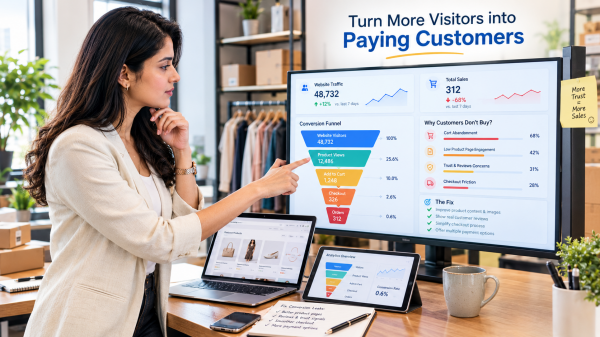
Conversion Optimization: Turning Attention into Revenue
Acquiring traffic is only half the job. Conversion optimization is where ecommerce marketing strategy proves its value.
Key Areas That Impact Conversion
In 2026, conversion-focused ecommerce brands optimize:
- Product page clarity and structure
- Mobile-first experiences
- Trust signals like reviews and policies
- Checkout simplicity
Even small improvements in conversion rates can significantly improve overall profitability.
This is why conversion optimization is a core pillar of ecommerce marketing—not an afterthought.
Retention Marketing: The Real Growth Multiplier
Retention has become one of the most important pillars of ecommerce growth.
While acquisition brings customers in, retention builds predictable revenue.
Why Retention Matters More in 2026
Retained customers:
- Cost less to convert
- Purchase more frequently
- Are easier to communicate with
- Trust the brand more deeply
A strong ecommerce marketing strategy includes:
- Post-purchase communication
- Repeat purchase incentives
- Personalized offers
- Ongoing customer engagement
Retention-focused marketing increases lifetime value and stabilizes growth.
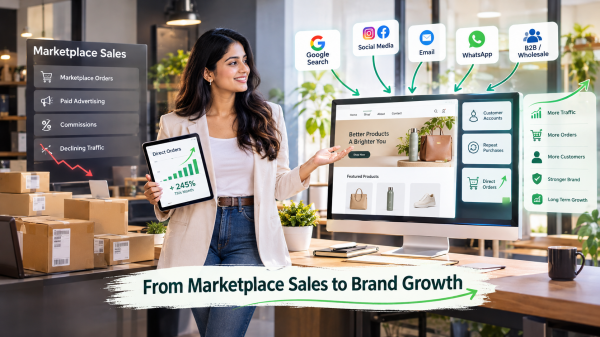
Email, WhatsApp, and Owned Channels
In 2026, brands are prioritizing owned communication channels over rented ones.
Owned channels like email and WhatsApp allow:
- Direct customer communication
- Personalization based on behavior
- Independence from algorithm changes
These channels play a critical role in ecommerce marketing by supporting retention, reactivation, and loyalty.
Brand Storytelling as a Performance Lever
Brand and performance are no longer separate. In 2026, brand storytelling directly influences conversion rates.
Customers are more likely to buy from brands that:
- Communicate clearly
- Share values transparently
- Show authenticity
- Build emotional connection
Brand storytelling strengthens all stages of the funnel—from first click to repeat purchase.
Data-Driven Marketing Without Over-Complexity
Data is powerful, but complexity often slows action.
Successful ecommerce brands focus on:
- Clear KPIs
- Funnel-level insights
- Actionable metrics
Instead of tracking everything, they track what matters—and act on it consistently.
This balanced approach keeps digital marketing for ecommerce effective without overwhelming teams.
Aligning Marketing with the Ecommerce Experience
Marketing cannot fix a broken experience.
In 2026, ecommerce marketing works best when aligned with:
- Website performance
- UX and checkout flow
- Post-purchase experience
When experience and marketing work together, growth becomes easier and more predictable.
Turning Strategy into Action and Building Sustainable Ecommerce Growth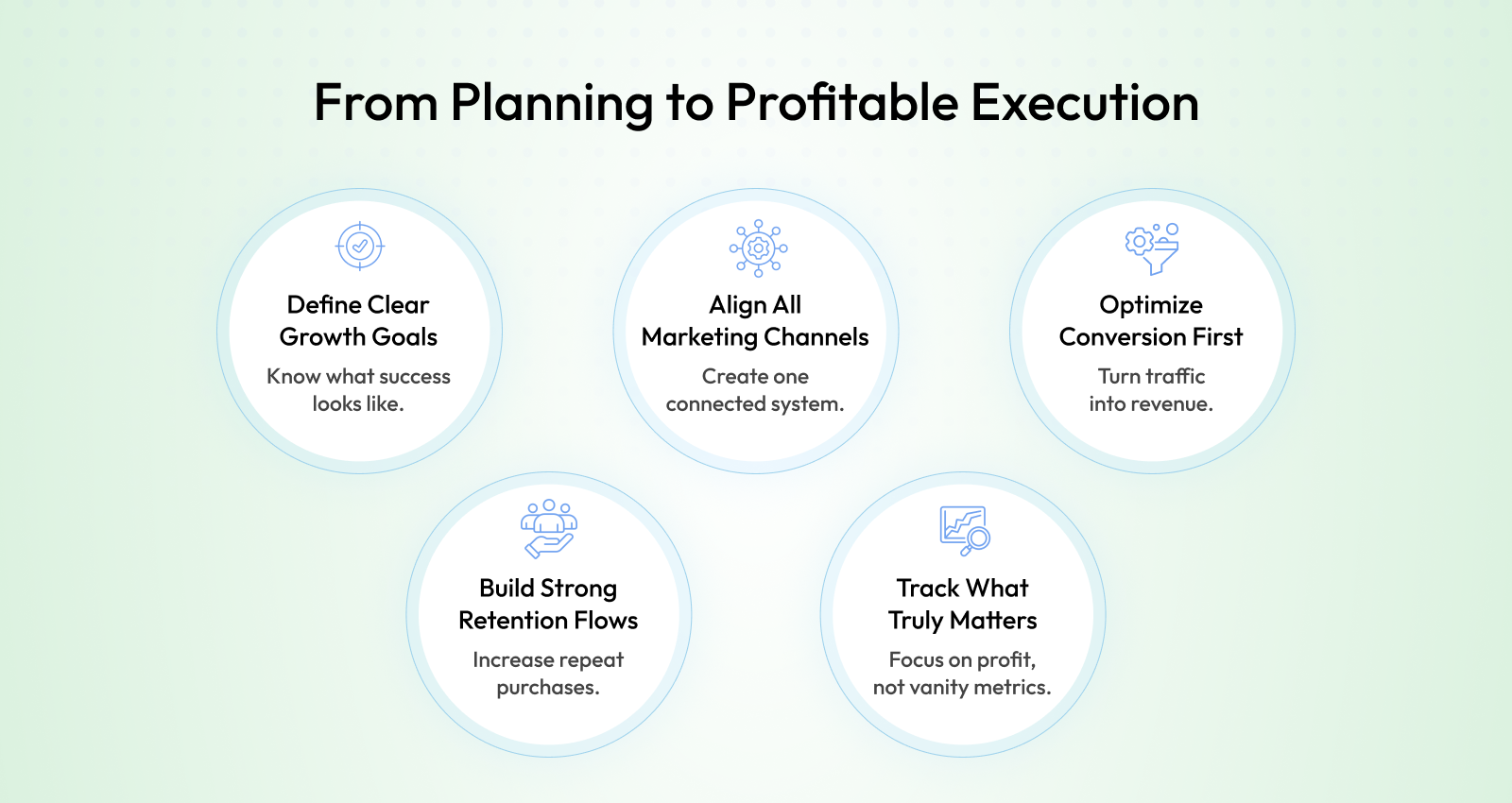
Channel Strategy in 2026: How to Use Each Channel with Purpose
One of the biggest mistakes ecommerce brands make is treating every channel the same. In 2026, each channel has a specific role in the customer journey.
Paid Advertising: Precision Over Scale
Paid ads work best when they focus on:
- High-intent audiences
- Clear value propositions
- Supporting proven products and pages
Instead of using ads to “test everything,” successful brands use ads to amplify what already converts.
Organic Search and Content: Trust at Scale
SEO and content play a long-term role in ecommerce marketing by:
- Capturing research-stage customers
- Educating buyers before they convert
- Reducing dependency on paid traffic
Content-driven discovery strengthens both brand credibility and conversion rates over time.
Social Media: Engagement, Not Just Promotion
In 2026, social media is less about direct selling and more about:
- Building brand familiarity
- Educating audiences
- Creating community and trust
Social platforms support ecommerce marketing best when they guide users toward deeper brand engagement, not instant conversion.
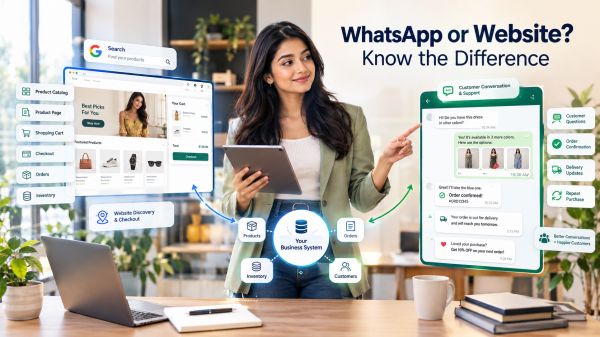
Owned Channels: Email and WhatsApp as Revenue Drivers
Email and WhatsApp remain two of the most powerful tools in ecommerce marketing.
They are used to:
- Nurture new customers
- Drive repeat purchases
- Recover abandoned carts
- Launch new products
Owned channels give brands control, consistency, and predictable engagement.
Structuring a Complete Ecommerce Marketing Playbook
A strong ecommerce marketing strategy in 2026 connects all channels into a single system.
A complete playbook includes:
- Clear acquisition goals
- Conversion optimization plans
- Retention and lifecycle marketing
- Content and SEO strategy
- Data and performance tracking
Each element supports the others, creating momentum rather than isolated wins.
Common Ecommerce Marketing Mistakes to Avoid in 2026
Even experienced brands make mistakes that slow growth.
Some of the most common ones include:
- Over-investing in acquisition without fixing conversion
- Ignoring retention and repeat purchases
- Relying too heavily on one channel
- Chasing trends without understanding customer intent
Avoiding these mistakes often has a bigger impact than adding new tactics.
Why Technology and Platform Choice Matter for Marketing Success
Marketing strategy can only perform as well as the platform supporting it.
In 2026, ecommerce platforms must:
- Support fast, mobile-first experiences
- Allow easy optimization of product pages and checkout
- Handle growing traffic and order volumes
- Integrate smoothly with marketing tools
A platform like Shopaccino provides a stable, scalable ecommerce foundation that allows brands to execute marketing strategies effectively—without being held back by performance or operational limitations.
(Brand mentioned once, contextually and honestly.)
Measuring What Actually Matters
In a mature ecommerce marketing strategy, success is not measured by vanity metrics.
Brands focus on:
- Conversion rate trends
- Customer acquisition cost vs lifetime value
- Repeat purchase rates
- Revenue contribution by channel
These metrics provide clarity and guide smarter decisions.
How Ecommerce Marketing Will Continue to Evolve Beyond 2026
The future of ecommerce marketing will continue to move toward:
- Deeper personalization
- Better experience-driven conversion
- Stronger focus on retention
- Closer alignment between marketing and product experience
Brands that build flexible systems today will adapt more easily tomorrow.
Final Verdict: What Makes E-commerce Marketing Work in 2026
The most effective e-commerce marketing strategy in 2026 is not built on hacks or shortcuts.
It is built on:
- Understanding customer behavior
- Creating value at every stage of the journey
- Connecting channels into a unified system
- Investing in long-term growth, not just short-term sales
Marketing works best when it supports the business—not when it operates in isolation.
FAQs
An effective ecommerce marketing strategy in 2026 focuses on customer experience, not just traffic. It combines acquisition, conversion optimization, retention, and brand building into one connected system that supports long-term growth.
Ecommerce marketing in 2026 is more customer-centric and less channel-driven. Instead of relying only on ads, brands focus on personalization, content, retention, and owned channels to reduce dependency on rising ad costs.
Retention matters because repeat customers cost less to convert and buy more frequently. A strong ecommerce growth strategy prioritizes post-purchase engagement, loyalty, and lifecycle marketing to increase lifetime value and revenue stability.
No single channel works alone. Successful digital marketing for ecommerce uses a mix of paid ads, SEO, content, social media, and owned channels like email and WhatsApp, each with a specific role in the customer journey.
Content helps educate customers, answer pre-purchase questions, and build trust. It improves SEO, supports conversion, and reduces hesitation, making it a core pillar of modern ecommerce marketing strategies.
Common mistakes include over-focusing on acquisition, ignoring conversion optimization, underestimating retention, and relying too heavily on one marketing channel instead of building a balanced growth system.
Marketing success should be measured using meaningful metrics like conversion rates, customer acquisition cost, lifetime value, and repeat purchase rates rather than vanity metrics such as impressions or clicks.
Yes, but its role has changed. Paid ads are most effective when used strategically to amplify proven products and pages, rather than as the only driver of growth in an ecommerce marketing strategy.
Yes. Even small brands can apply 2026 ecommerce marketing principles by focusing on clarity, customer experience, retention, and efficient channel use, without needing large budgets or complex tools.