How Exporters Use Cross-Border Ecommerce Software to Sell Product
Global trade has changed dramatically in the digital era. In the past, exporters relied heavily on distributors, trade exhibitions, and international agents to reach buyers in other countries. While these traditional methods still exist, ecommerce has created new opportunities for exporters to sell their products directly to customers around the world.
Today, businesses can showcase their products online and receive orders from international buyers without establishing physical stores in every country. However, managing global ecommerce operations requires the right technology infrastructure.
This is where Cross-Border Ecommerce Software becomes essential.
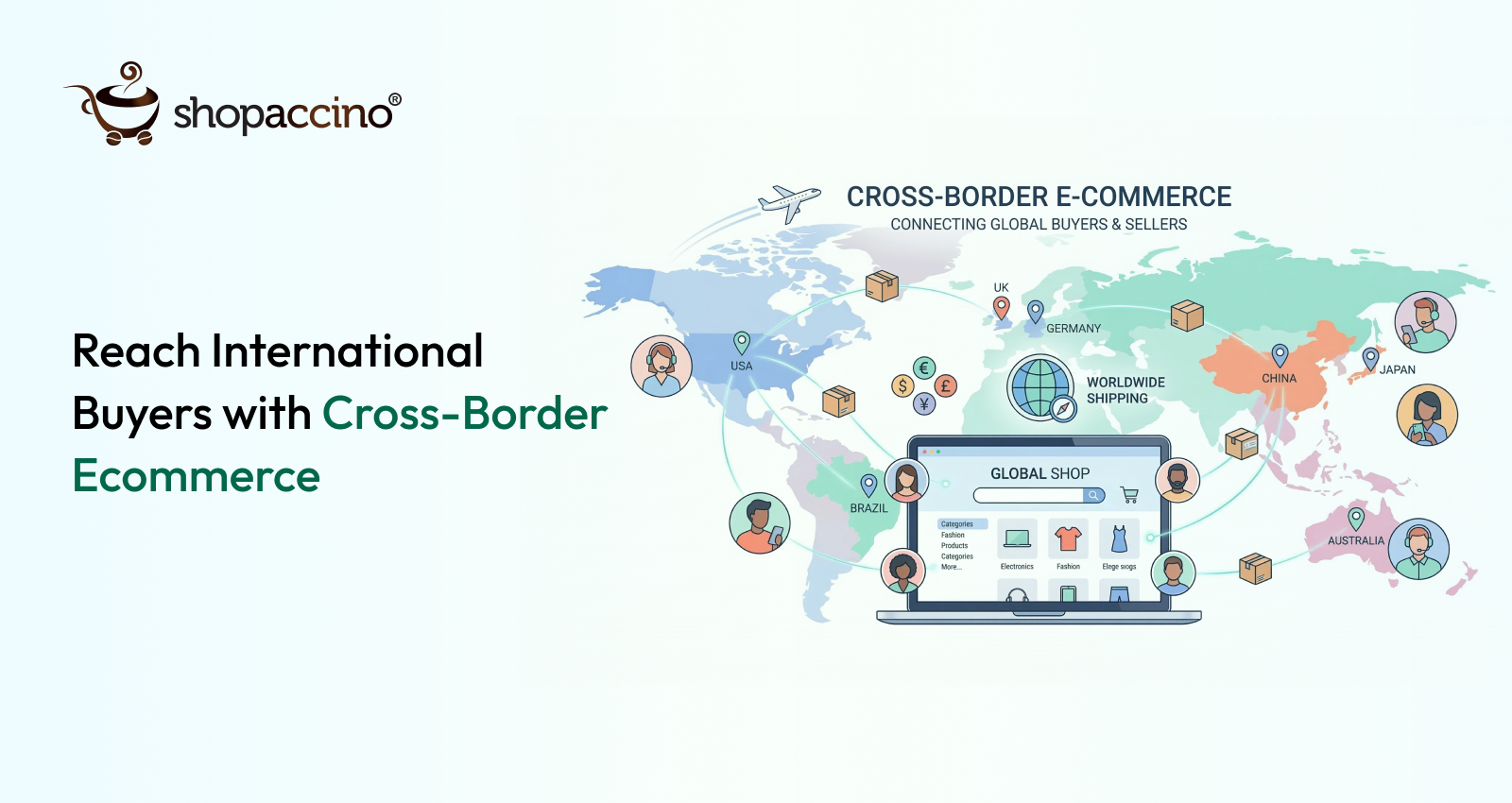
A modern ecommerce system helps exporters manage international transactions, product catalogs, order processing, and logistics from one centralized platform. By using advanced cross border ecommerce solutions, exporters can simplify global selling while reaching customers across multiple markets.
Platforms like Shopaccino help exporters build structured ecommerce stores that support international commerce and simplify global operations.
The Growing Importance of Cross-Border Ecommerce for Exporters
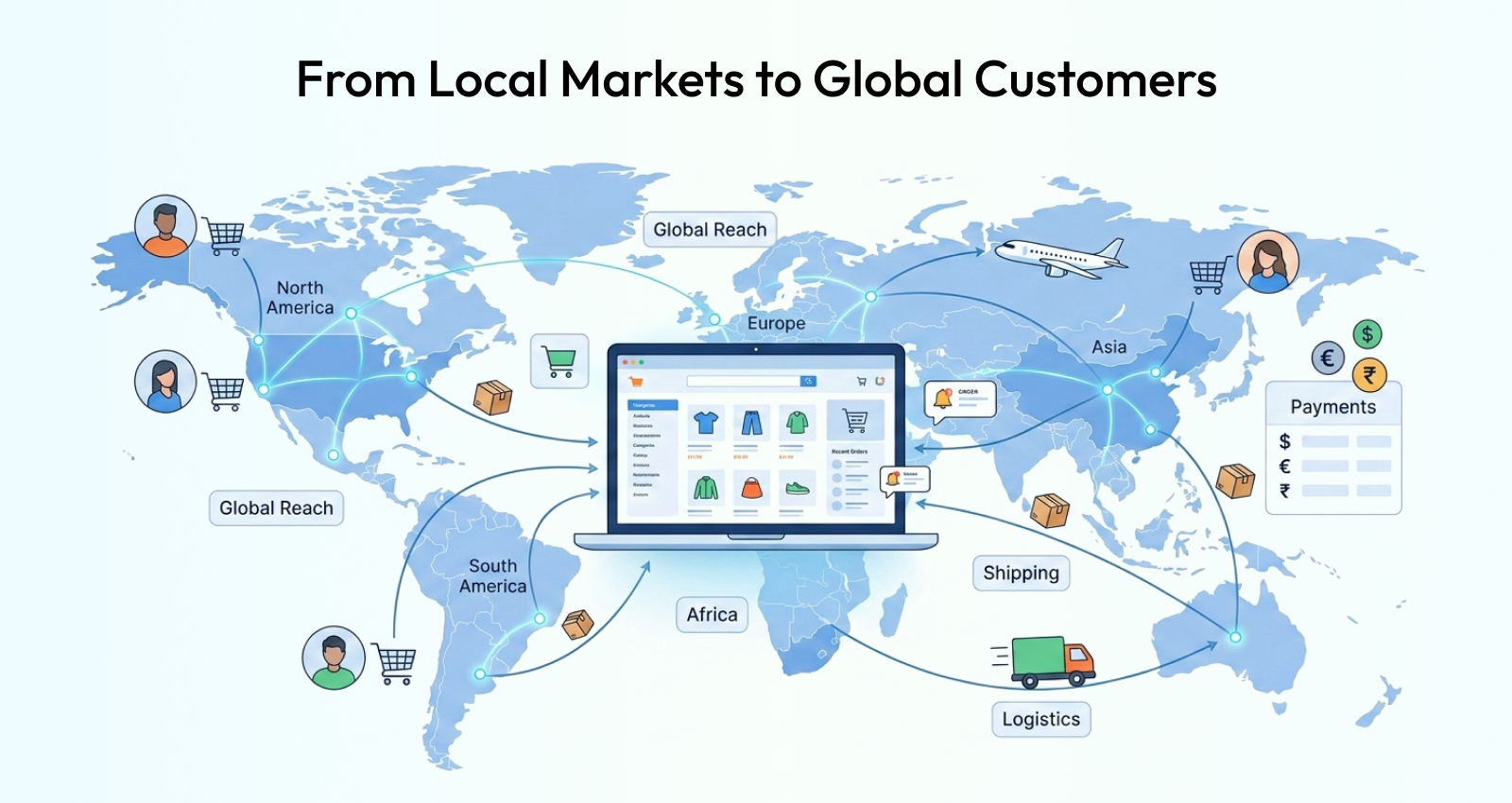
Global ecommerce has expanded rapidly over the last decade. Customers are increasingly comfortable purchasing products from international brands if the buying process is simple and transparent.
This shift has opened new opportunities for exporters.
Businesses that once depended only on wholesale buyers can now sell directly to customers worldwide through digital platforms.
However, entering global markets requires careful planning and operational efficiency. Exporters must handle several international trade processes, including:
- Currency conversion and international payments
- Global shipping and delivery logistics
- Import and export regulations
- Inventory coordination for international orders
Managing these processes manually can be difficult. A reliable Cross-Border Ecommerce Software helps exporters automate many of these tasks.
Read Also : Cut Export Costs & Expand Global Reach
Why Exporters Are Moving Toward Digital Commerce
Export-oriented businesses often face limitations when relying only on traditional trade channels. Finding international buyers through offline networks can be time-consuming and expensive.
Ecommerce platforms provide a more scalable approach.
Using a cross border ecommerce platform, exporters can present their products to a global audience and receive orders directly through their online store.
This digital approach offers several advantages.
Global Market Access
Exporters can reach customers from different countries without opening physical stores.
Direct Customer Relationships
Selling online allows exporters to interact directly with customers instead of depending only on distributors.
Better Product Visibility
Online stores allow exporters to showcase product catalogs with detailed descriptions and images.
Scalable Business Growth
With the right cross border ecommerce solutions, exporters can expand their international operations gradually.
These advantages explain why many exporters are adopting digital commerce strategies.
Key Challenges Exporters Face in International Ecommerce
While global ecommerce offers significant opportunities, exporters must manage several operational challenges when selling internationally.
Some of the most common challenges include:
- Managing product pricing in different currencies
- Coordinating international shipping and logistics
- Handling customs documentation and compliance
- Tracking orders across multiple regions
Without structured systems, managing these processes can become complicated.
This is why exporters increasingly rely on advanced Cross-Border Ecommerce Software that integrates international ecommerce operations into one platform.
Read Also : Helping Global Buyers Find the Right Product Faster
The Role of Technology in Global Export Operations
Technology plays a central role in enabling exporters to operate in global markets. Modern ecommerce systems combine several tools that help businesses manage international trade processes more efficiently.
A reliable cross border ecommerce platform typically integrates the following components:
- Product catalog management
- Global payment systems
- Order processing and tracking
- Inventory visibility across markets
- Logistics and shipping integrations
These integrated capabilities form the foundation of modern cross border ecommerce solutions used by exporters worldwide.
Cross-Border Ecommerce Framework for Exporters
A simplified framework for global ecommerce operations can be illustrated below.
|
Ecommerce Layer |
Role in Export Operations |
|
Ecommerce Platform |
Hosts global online store |
|
Payment Systems |
Handles international transactions |
|
Logistics Integration |
Manages cross-border shipping |
|
Inventory Management |
Tracks product availability |
This structured framework allows exporters to manage international ecommerce operations using reliable Cross-Border Ecommerce Software.
Read Also : Faster Dealer Approvals in Wholesale
The Role of Import Export Technology
Exporters must also comply with international trade regulations when shipping products across borders. This includes preparing documentation, managing customs requirements, and coordinating logistics with shipping providers.
Many ecommerce systems integrate import export software solutions that simplify these processes.
These solutions help exporters manage:
- Customs documentation for international shipments
- Product classification for global trade
- Compliance with international regulations
- Shipment tracking and trade documentation
By combining ecommerce infrastructure with import export software solutions, exporters can create a reliable system for managing global commerce.
Why Exporters Need Structured Ecommerce Systems
Global ecommerce operations involve many moving parts. Exporters must manage product listings, customer orders, payments, logistics, and compliance processes simultaneously.
Without structured systems, international operations can quickly become difficult to manage.
Using advanced Cross-Border Ecommerce Software, exporters can centralize these processes and maintain better visibility across their global operations.
Key advantages of these systems include:
- Centralized management of international orders
- Better inventory tracking for global sales
- Automated pricing for different currencies
- Improved operational efficiency
These capabilities allow exporters to scale their international ecommerce operations more effectively.
Read Also : Regional Selling Problems in Wholesale
Key Features Exporters Need in Cross-Border Ecommerce Software
When exporters begin selling products internationally, they quickly realize that global ecommerce operations involve many moving parts. Managing international payments, product catalogs, orders, shipping, and compliance requires a structured system.
This is why exporters rely on Cross-Border Ecommerce Software to manage their global operations efficiently.
A well-designed cross border ecommerce platform integrates multiple tools that allow exporters to handle international ecommerce processes through a centralized system.
Instead of using separate tools for payments, logistics, and inventory management, exporters can manage everything from one dashboard.
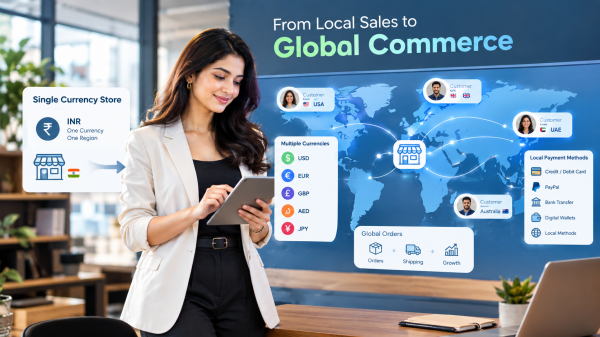
Multi-Currency Pricing and International Payments
One of the most important capabilities of global ecommerce is the ability to manage multiple currencies. Customers prefer to see product prices in their local currency because it makes purchasing decisions easier.
A reliable Cross-Border Ecommerce Software automatically supports currency conversion and allows exporters to display product prices for different regions.
Multi-currency capabilities help exporters:
- Improve transparency for international buyers
- Reduce confusion during checkout
- Simplify international payment processing
- Increase global conversion rates
These capabilities are essential components of modern cross border ecommerce solutions.
Read Also : Create Your Private Wholesale Portal Easily
Centralized Order Management for Global Sales
Exporters often receive orders from customers located in different countries. Without centralized order management, tracking these orders can become difficult.
A strong cross border ecommerce platform allows exporters to manage all international orders through a single dashboard.
This system helps businesses:
- Track orders from different countries
- Monitor delivery progress
- Manage customer information across regions
- Maintain accurate order records
Centralized order management improves operational visibility and helps exporters respond to customers quickly.
Inventory Management for International Commerce
Inventory management becomes more complex when businesses sell products internationally. Exporters must ensure that product availability is updated in real time while fulfilling orders from multiple regions.
Modern Cross-Border Ecommerce Software includes integrated inventory management systems.
Important inventory features include:
- Real-time stock updates after each purchase
- Inventory alerts for low stock levels
- Product availability tracking across regions
- Centralized inventory monitoring
These capabilities help exporters maintain accurate stock levels and avoid overselling products.
Read Also : Smart Inventory Management for Scalable Ecommerce Growth
Integration with Global Shipping and Logistics
Shipping logistics are one of the most important components of cross-border ecommerce. Exporters must ensure that international orders are delivered efficiently and that customers receive accurate shipping information.
A reliable cross border ecommerce platform integrates with logistics providers to simplify global shipping.
Logistics integrations help exporters:
- Calculate international shipping costs automatically
- Generate shipping labels and tracking numbers
- Monitor delivery timelines
- Manage international shipping documentation
These capabilities are essential parts of comprehensive cross border ecommerce solutions.
Managing Compliance with Import Export Software Solutions
International trade involves compliance with customs regulations and documentation requirements. Exporters must ensure that shipments include accurate trade documentation.
To simplify these processes, many ecommerce platforms integrate import export software solutions.
These tools help exporters manage:
- Customs documentation for international shipments
- Product classification and compliance requirements
- Import and export documentation
- Global shipping records
Integrating import export software solutions with ecommerce platforms helps exporters maintain compliance with international trade regulations.
Key Capabilities of Cross-Border Ecommerce Platforms
The most important capabilities exporters should look for when selecting a cross-border ecommerce system can be summarized below.
|
Platform Feature |
Benefit for Exporters |
|
Multi-Currency Pricing |
Supports global customers |
|
Centralized Order Management |
Simplifies international order tracking |
|
Inventory Management |
Maintains accurate stock levels |
|
Logistics Integration |
Streamlines international shipping |
|
Trade Compliance Tools |
Supports import export operations |
These features define a reliable Cross-Border Ecommerce Software that supports global export businesses.
How Exporters Use Technology to Simplify Global Operations
Export businesses often operate in complex international environments. They must coordinate product catalogs, orders, logistics, and customer communication across different regions.
Without structured systems, managing these operations can become inefficient.
Using integrated cross border ecommerce solutions, exporters can automate many operational processes.
This approach allows businesses to:
- Maintain visibility across international operations
- Reduce manual workload for order processing
- Improve efficiency in logistics coordination
- Provide better experiences for global customers
Platforms like Shopaccino support exporters by providing ecommerce infrastructure that helps manage product catalogs, orders, and international operations from a centralized system.
How Exporters Scale Their Global Sales Using Cross-Border Ecommerce Software
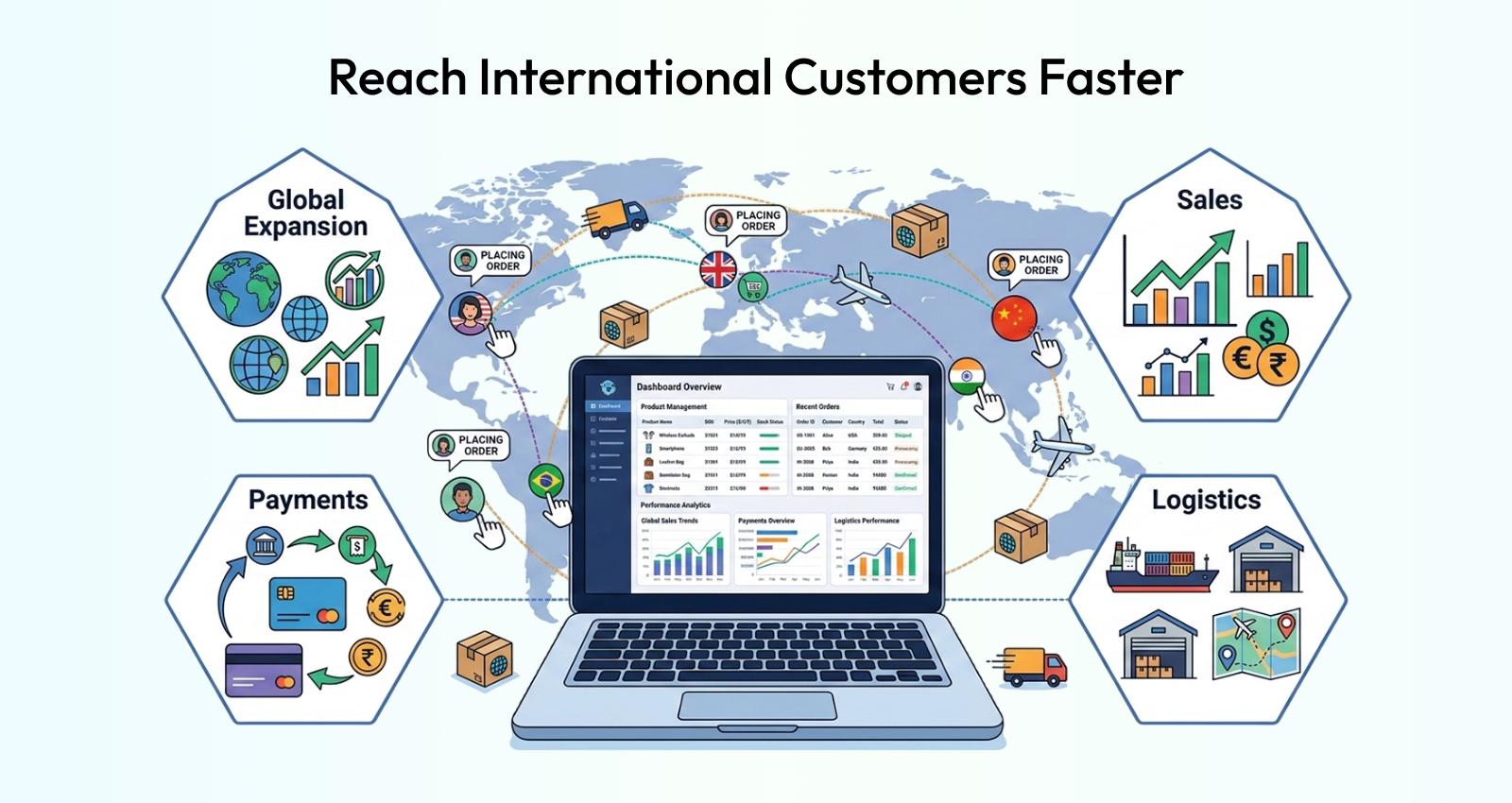
Once exporters establish their digital infrastructure, the next step is scaling their international sales. Expanding into global markets requires more than just launching an ecommerce website. Businesses must build systems that can support growing order volumes, multiple currencies, and international logistics.
This is why many exporters depend on advanced Cross-Border Ecommerce Software to manage their global operations efficiently.
By using structured cross border ecommerce solutions, exporters can streamline international trade processes while reaching customers in multiple countries.
Platforms like Shopaccino help businesses organize their ecommerce operations and support international growth through centralized store management.
Expanding into International Markets
Exporters who want to grow globally must identify new markets where their products have demand. Digital commerce platforms allow businesses to test different markets without opening physical stores.
Using a reliable cross border ecommerce platform, exporters can sell products worldwide while managing operations from a single dashboard.
Businesses often expand internationally through strategies such as:
- Launching global ecommerce stores that support multiple regions
- Promoting products through international digital marketing campaigns
- Partnering with distributors or retailers in foreign markets
- Offering localized pricing through multi-currency support
These strategies help exporters build a global presence while relying on efficient cross border ecommerce solutions.
Improving Customer Experience for Global Buyers
Customer experience plays an important role in international ecommerce success. Buyers purchasing products from overseas expect a smooth and transparent buying process.
Exporters that use reliable Cross-Border Ecommerce Software can provide better experiences for global customers.
Key elements of a strong cross-border shopping experience include:
- Clear product descriptions and images
- Pricing displayed in local currencies
- Transparent shipping and delivery timelines
- Secure international payment methods
When exporters focus on customer experience, they increase trust and improve global conversion rates.
Managing Global Operations Efficiently
International ecommerce involves coordinating orders, payments, inventory, and logistics across different regions. Without structured systems, these processes can become difficult to manage.
A modern cross border ecommerce platform allows exporters to manage global operations through a centralized system.
These platforms help businesses manage:
- International customer orders
- Product inventory across markets
- Shipping and logistics coordination
- Customer data and purchase history
Using advanced cross border ecommerce solutions, exporters can maintain operational visibility across their global ecommerce operations.
Read Also : Integrate Payment Gateways for Global Selling
Supporting International Trade Compliance
Exporters must also comply with international trade regulations when selling products globally. Customs requirements, shipping documentation, and regulatory compliance are critical aspects of international commerce.
Many ecommerce systems integrate import export software solutions that help exporters manage these processes more efficiently.
These solutions assist businesses in:
- Generating customs documentation
- Managing product classification for global trade
- Maintaining compliance with international shipping regulations
- Tracking international shipments
By integrating ecommerce platforms with import export software solutions, exporters can simplify complex global trade processes.
The Global Ecommerce Growth Framework for Exporters
Many exporters follow a structured approach when expanding internationally. Instead of entering multiple markets at once, they gradually expand their operations while building reliable infrastructure.
The typical growth framework for export businesses looks like this:
|
Growth Stage |
Focus Area |
|
Domestic Ecommerce |
Establish strong local ecommerce presence |
|
Regional Expansion |
Enter nearby international markets |
|
Global Ecommerce Launch |
Implement Cross-Border Ecommerce Software |
|
Global Scaling |
Optimize operations through cross border ecommerce solutions |
This framework helps exporters expand sustainably while maintaining operational stability.
Why Technology Is Critical for Export Businesses
International ecommerce operations involve many complex processes. Exporters must manage product catalogs, payments, logistics, customer communication, and regulatory compliance.
Without the right systems, these operations can become inefficient.
By adopting reliable Cross-Border Ecommerce Software, exporters can automate many operational tasks and improve efficiency.
The main advantages of these systems include:
- Centralized management of global orders
- Better inventory visibility for international markets
- Automated currency management for global customers
- Improved logistics coordination
These benefits explain why exporters increasingly rely on modern cross border ecommerce platforms.
How Shopaccino Supports Export-Oriented Ecommerce
Shopaccino provides ecommerce infrastructure that helps exporters build online stores capable of serving international customers.
With centralized store management, product catalog tools, and order tracking systems, the platform allows businesses to manage ecommerce operations efficiently.
Exporters using Shopaccino can organize their digital commerce operations while implementing effective cross border ecommerce solutions.
By combining ecommerce capabilities with structured product and order management systems, Shopaccino supports exporters who want to expand their global presence.
Final Thoughts
Global ecommerce has created new opportunities for exporters to sell products directly to customers worldwide. Businesses that adopt digital commerce strategies can expand their reach and build stronger international customer bases.
However, managing international ecommerce operations requires structured systems that simplify complex processes such as payments, logistics, and compliance.
By using reliable Cross-Border Ecommerce Software, exporters can manage global operations efficiently while providing better experiences for international buyers.
Advanced cross border ecommerce platforms, integrated cross border ecommerce solutions, and supporting import export software solutions allow exporters to build scalable ecommerce systems that support long-term global growth.
For businesses aiming to expand internationally, investing in the right ecommerce infrastructure is one of the most important steps toward building a successful global export business.
FAQs
Cross-Border Ecommerce Software is a digital platform that helps businesses sell products to customers in different countries. It supports international payments, multi-currency pricing, order management, and global shipping so exporters can manage worldwide ecommerce operations efficiently.
A cross border ecommerce platform allows exporters to showcase products online and receive orders from international buyers. It helps manage global payments, logistics, inventory, and customer orders from one centralized dashboard.
Cross border ecommerce solutions include tools and technologies that help businesses manage international ecommerce activities such as global payments, order tracking, shipping coordination, and product catalog management.
Exporters need Cross-Border Ecommerce Software to simplify international selling. It helps automate currency conversion, manage international orders, track shipments, and handle global customer transactions efficiently.
Good Cross-Border Ecommerce Software should include multi-currency pricing, secure payment gateways, centralized order management, logistics integration, and inventory tracking to support international ecommerce operations.
Import export software solutions help exporters manage customs documentation, international trade compliance, and shipping records. These tools simplify global trade processes and reduce operational complexity.
Yes, small exporters can use a cross border ecommerce platform to sell products worldwide. Modern ecommerce platforms provide tools that simplify international payments, product listings, and logistics management.