How to Build a Website to Sell Home Decor Online
Overview: The Home Decor Opportunity Online
The home decor industry is one of the fastest-growing ecommerce categories globally. With consumers spending more time at home and placing greater value on personalised living spaces, the demand for curated, aesthetically rich decor has never been stronger. Understanding how to start home decor business online is the first step toward building a brand that resonates deeply with modern buyers.
Unlike commodity products, home decor is inherently visual and emotional. Customers do not just buy a cushion cover or a wall hanging; they buy the feeling of a beautiful, complete home. This means your online store must do more than list products. It must inspire, tell a story, and create desire.
What Sets Home Decor Apart in Ecommerce
Aesthetics are everything: Your website, product photography, and brand palette must communicate a cohesive visual identity.
Product presentation matters as much as the product itself: Flat catalogue images do not sell; styled, room-setting visuals do.
Lifestyle appeal drives purchasing decisions: Show customers not what the product looks like, but what their life will look like with it.
Pricing must reflect value, not just cost: Premium positioning requires premium presentation.
Logistics require extra care: Fragile, bulky, or handcrafted items demand robust packaging and reliable delivery partners.
Identify Your Market
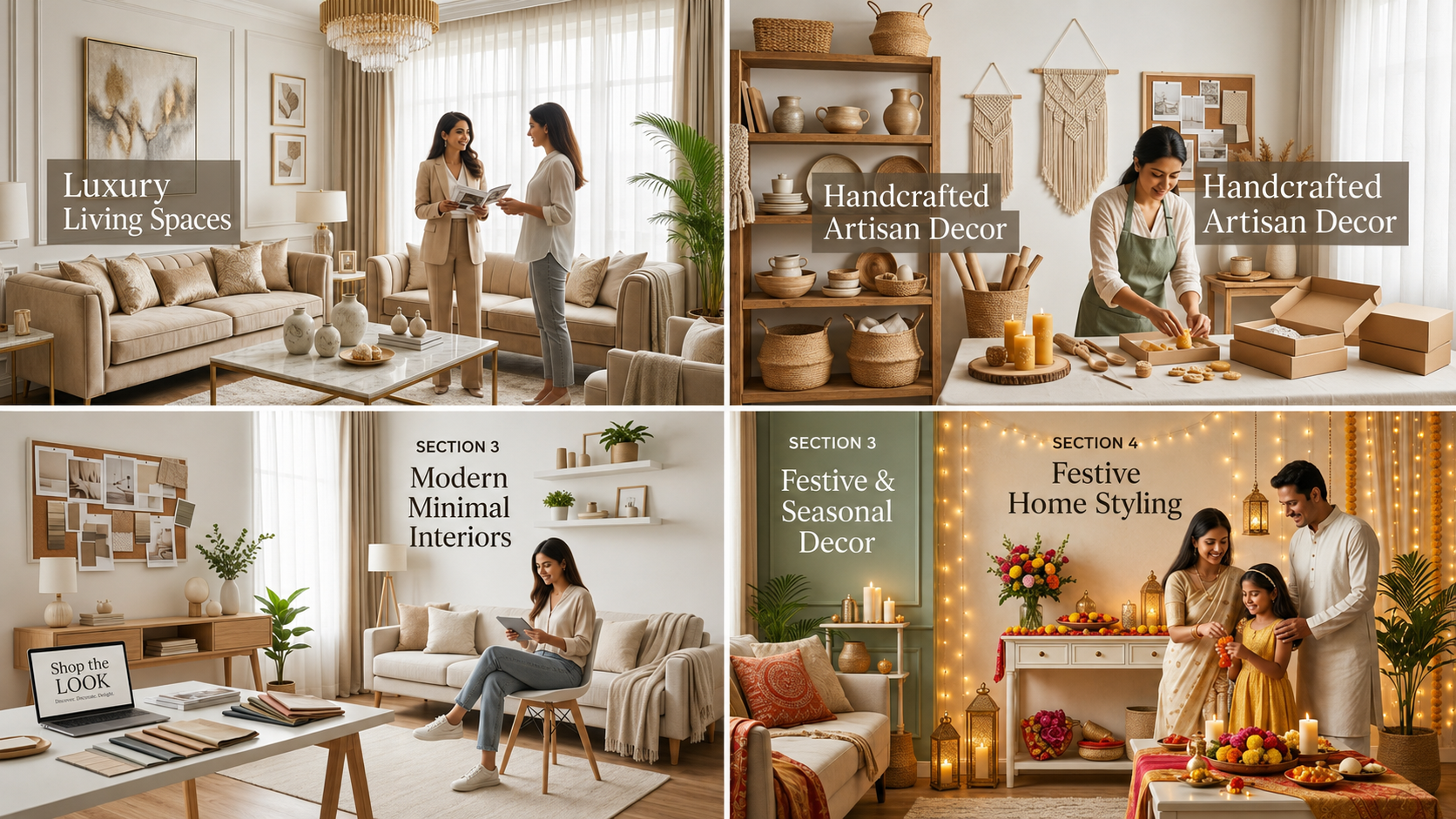
The home decor market is broad and segmented. Before you build your store, you need to define precisely who you are selling to and what tier of the market you are entering. Each segment carries different expectations, price sensitivities, and content strategies.
Key Market Segments
Luxury & Premium Decor: High-end buyers seeking unique, artisanal, or designer pieces. Price is secondary to quality, provenance, and exclusivity. Think hand-painted ceramics, imported textiles, bespoke furniture.
Handmade & Artisanal Decor: A growing segment of conscious consumers who value craft, sustainability, and the story behind a product. Etsy has validated this globally; Indian artisan decor has enormous export potential.
Modern & Minimal Decor: Buyers drawn to clean lines, neutral tones, and functional aesthetics. Scandinavian and Japanese-inspired decor falls here. Strong demand from urban, design-aware millennials.
Festive & Seasonal Decor: Diwali, Christmas, Eid, Holi — India's festive calendar is a goldmine for decor brands. This segment demands quick catalogue refresh cycles and timely marketing.
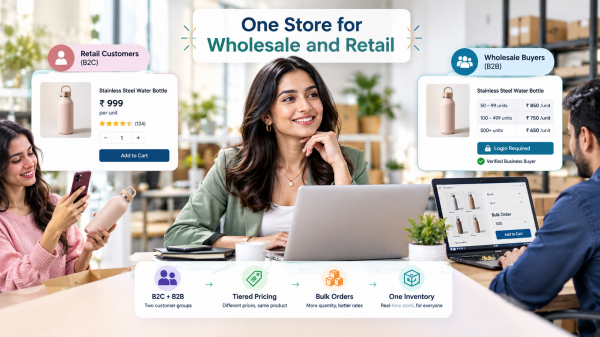
B2B Decor Supply: Hotels, restaurants, offices, interior designers, and event planners buy in volume. If you can serve this segment, your average order value rises dramatically. Understanding how to build b2b home decor ecommerce website capabilities into your store early will give you a significant competitive edge.
Identify the Gap in the Market
Before you invest in building your store, conduct a structured competitive analysis. Visit your top 10 competitor websites as a real customer would. Add products to cart, read descriptions, look at photography, and note the overall brand experience. What you find missing is your opportunity.
Common Gaps You Will Find
Poor visual presentation: Many decor sellers use plain white-background images that fail to inspire. If your competitors show a vase in isolation, you can show it on a dining table with flowers, linen, and candlelight.
Lack of coordinated collections: Customers want to buy a look, not just a product. If no one is offering room-based collections — living room essentials, bedroom refresh kits, balcony corner sets — you have a white space to own.
Weak storytelling: Most sellers list what a product is; few communicate why it matters. Craftsmanship, material sourcing, regional heritage — these narratives build brand loyalty and justify premium pricing.
Limited inspiration for customers: Buyers often do not know what they want until they see it styled. Competitors who lack lookbooks, styling guides, or inspiration pages leave this need unmet.
No B2B pathway: Most home decor websites are built purely for retail. A bulk inquiry form, a trade login, or wholesale pricing tiers can open an entirely new revenue channel.
Once you have identified two or three clear gaps, build your brand strategy and store architecture around filling them with precision and consistency.
Select a Product Range & Prepare Your Catalogue
Your product catalogue is the backbone of your store. A well-structured catalogue not only improves the customer experience but also powers your SEO, simplifies inventory management, and enables smooth order fulfilment. When planning how to start an online home decor store, catalogue preparation is one of the most important foundational steps.
Required Product Data for Every SKU
Product Name: Clear, descriptive, and SEO-friendly. Avoid vague names like 'Brown Pot'. Use 'Terracotta Hand-Painted Planter — Medium' instead.
Category & Sub-category: Organise products into intuitive taxonomies (e.g., Home Furnishings > Cushion Covers > Geometric Prints).
Material: Specify accurately — cotton, teak, marble, recycled glass. Material builds trust and sets expectations.
Dimensions: Always include length, width, and height in centimetres. For furniture and large decor, include weight.
Colour & Finish: Use precise colour names (sage green, ivory, matte black). For finishes, specify matte, gloss, textured, or distressed.
Pricing: Set a retail price, a discounted price where applicable, and a wholesale price if you serve B2B buyers.
SKU: Assign a unique, logical stock-keeping unit to every product variant. This is non-negotiable for inventory accuracy.
Stock Quantity: Maintain real-time inventory counts, especially for handmade items with limited production runs.
Care Instructions: Decor buyers frequently ask how to clean, maintain, or store products. Include this in every listing.
Usage Suggestions: Tell customers where and how to use the product — 'Ideal for living room console tables or bedside settings.'
Gathering Accurate Product Information
If you are a manufacturer, this information should come from your production team. If you are a reseller or aggregator, obtain data sheets from your suppliers and verify dimensions physically. For handmade products, document specifications for every batch since variations are inherent and must be communicated transparently.
Invest in High-Quality Visuals
In home decor ecommerce, visuals are not a supporting element — they are the product. A buyer cannot touch the fabric, smell the wood, or feel the weight of a ceramic bowl. Your photography and videography must bridge this sensory gap completely.
Types of Visual Content You Need
High-Resolution Product Images: Minimum 1500 x 1500 pixels on a clean, neutral background. Capture every angle, every colour variant, and close-up texture details.
Lifestyle Images: This is your most powerful sales tool. Show the product in a real-life, styled setting. A candle holder placed on a marble kitchen counter with a linen runner tells a far richer story than a standalone shot.
Room-Based Visuals: Create full-room photography that shows how multiple products from your catalogue work together. This supports your 'Shop the Look' features and increases average order value.
Product Videos: Short, ambient videos showing texture, movement, or scale are highly effective. A 15-second clip of a hand-woven basket being filled, or a lamp casting warm light in an evening-lit room, can outperform ten static images.
Why Visuals Drive Purchase Decisions
Research consistently shows that ecommerce conversion rates improve significantly when lifestyle imagery is present alongside product shots. For home decor specifically, customers are buying a vision of their home. If your visuals communicate that vision clearly and beautifully, the purchase becomes an emotional act, not a rational one. This is why how to sell home decor products online is, at its core, a question of visual storytelling.
Prepare Your Brand Content
Content is what gives your store depth, authority, and personality. Before you build a single page, document the following clearly:
Core Content Elements
Business Goal: Are you building a direct-to-consumer brand, a wholesale platform, or both? Your goal shapes your navigation, pricing structure, and messaging.
About the Brand: Write a compelling brand story. Where did the idea begin? What drives your aesthetic choices? Who are the artisans or craftspeople behind your products?
Vision Statement: Define what kind of homes and lifestyles you aspire to help create. This becomes your north star for all creative decisions.
Product Descriptions: Every product needs a description that balances emotional language with practical detail. Lead with the experience, follow with the specifications.
Unique Selling Propositions: What makes you different? Handcrafted quality, sustainable materials, regional artisan partnerships, exclusive designs? Be specific.
Store Policies: Shipping timelines, return policy, damage claims, payment methods — these must be written clearly and displayed prominently to build customer confidence.
Register Your Brand
Whether you are launching a new brand or formalising an existing business, legal and brand registration creates the foundation for trust, scalability, and IP protection.
New vs Existing Business
For a new business: Register as a sole proprietorship, partnership, LLP, or private limited company depending on your scale and growth plans. Obtain GST registration if your turnover crosses the prescribed threshold.
For an existing business: Ensure your brand name is trademarked or in the process of trademark registration before you invest heavily in brand-building online.
Define Your Brand Guidelines
A brand guidelines document ensures visual and tonal consistency across all touchpoints:
Colour Scheme: Define your primary, secondary, and accent colours with exact hex codes.
Typography: Choose one or two fonts — a serif for elegance or a clean sans-serif for modernity — and use them consistently across your website, packaging, and communications.
Tone of Voice: Is your brand warm and conversational, or refined and editorial? Define this and apply it to every product description, email, and social post.
Do's and Don'ts: Document what your brand never does visually or tonally. Consistent restraint is the hallmark of premium branding.
Choose the Right Ecommerce Platform
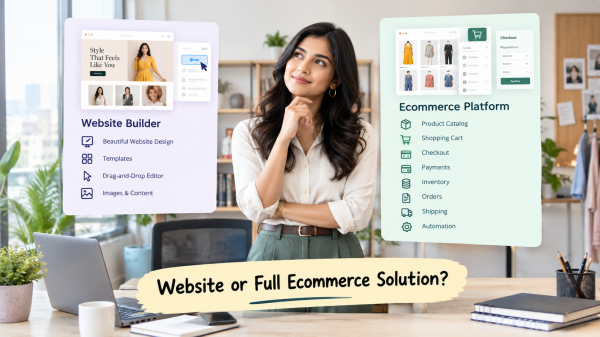
Your ecommerce platform is the engine of your online business. Choosing incorrectly means rebuilding from scratch later — an expensive and time-consuming exercise. For home decor brands specifically, the platform must support rich visual experiences, marketing mechanics, and B2B capabilities.
Features Your Platform Must Have
Shop the Look Functionality: This feature allows you to tag multiple products within a single lifestyle image, enabling customers to purchase the entire styled scene in one click. For home decor, this is not a nice-to-have — it is essential.
Buy X Get Y and Promotional Offers: Home decor sells well in sets and collections. Platforms that support bundle pricing, volume discounts, and promotional mechanics drive higher average order values.
Ability to Embed Videos: Product pages must support video embeds or native video uploads. Ambient lifestyle videos significantly improve engagement and conversion.
B2B / Wholesale Capabilities: If you plan to serve interior designers, hospitality businesses, or retail resellers, look for platforms with separate pricing tiers, bulk order support, or trade login features.
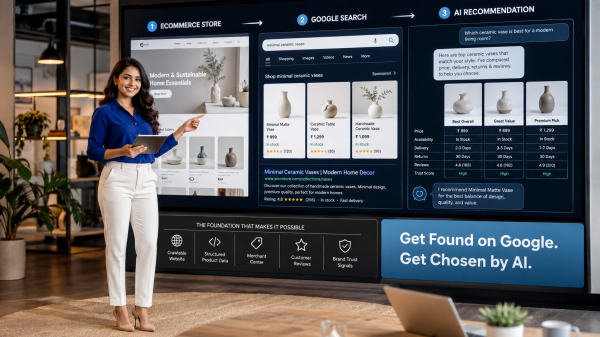
SEO and Marketing Tools: The platform should give you full control over meta titles, descriptions, URL structures, canonical tags, and sitemap generation.
Mobile-First Design: A significant portion of decor inspiration and shopping happens on mobile. Your platform must render beautifully on all screen sizes.
A Platform Built for Visual Commerce
Shopaccino is designed specifically for Indian ecommerce brands that want to build premium, visually immersive online stores. With features including Shop the Look, promotional mechanics, video support, B2B capabilities, and a clean mobile-first design infrastructure, it provides the right foundation for home decor sellers who want to scale without technical complexity.
Choose a Design Theme That Reflects Your Brand
Your website's design is your brand's physical manifestation online. For home decor, where aesthetics are everything, a poorly designed store will immediately undermine even the most beautiful product range.
Design Principles for Home Decor Stores
Visually Appealing Layout: Prioritise large, full-width imagery, clean white space, and elegant typography. Clutter is the enemy of premium presentation.
Premium, Edited Feel: Resist the temptation to show everything at once. Curate your homepage to reflect your brand's aesthetic identity, not your entire SKU count.
Easy Navigation: Organise categories logically — by room, by style, by material, or by collection. The fewer clicks between discovery and purchase, the better.
Mobile Responsive: Over 65% of ecommerce traffic in India originates from mobile devices. Every page, image, and interaction must perform flawlessly on small screens.
Inspiration-Driven Browsing: Build in features like lookbooks, style edits, seasonal collections, and curated gift guides that encourage customers to browse beyond their initial search intent.
Upload and Organise Your Store Content
With your platform chosen and your theme set, it is time to populate your store. Approach this systematically to ensure quality and consistency.
Products
Upload all product data including names, descriptions, pricing, dimensions, materials, and SKUs.
Assign each product to its correct category, collection, and tags.
Add all USPs clearly — handmade, eco-friendly, limited edition, export quality.
Informative Content
Styling Guides: Create pages or blog posts that show customers how to style your products in real spaces — 'Five Ways to Style a Woven Wall Hanging' or 'How to Create a Cohesive Bedroom Palette.'
Inspiration Pages: Build room-by-room inspiration galleries that use your product photography in full lifestyle settings.
Visuals and Banners
All hero banners, collection banners, and homepage visuals must be brand-aligned, high resolution, and aesthetically consistent.
Avoid generic stock imagery. Every visual should either feature your actual products or reflect your brand's visual language.
Policies
Shipping Policy: Clearly state delivery timelines by region, courier partners used, and handling times.
Return Policy: Define what is eligible for return, the return window, and the process.
Damage Policy: For fragile decor items specifically, communicate how damage in transit will be handled and what documentation is required.
Set Up Store Operations: Payments, Shipping & Compliance
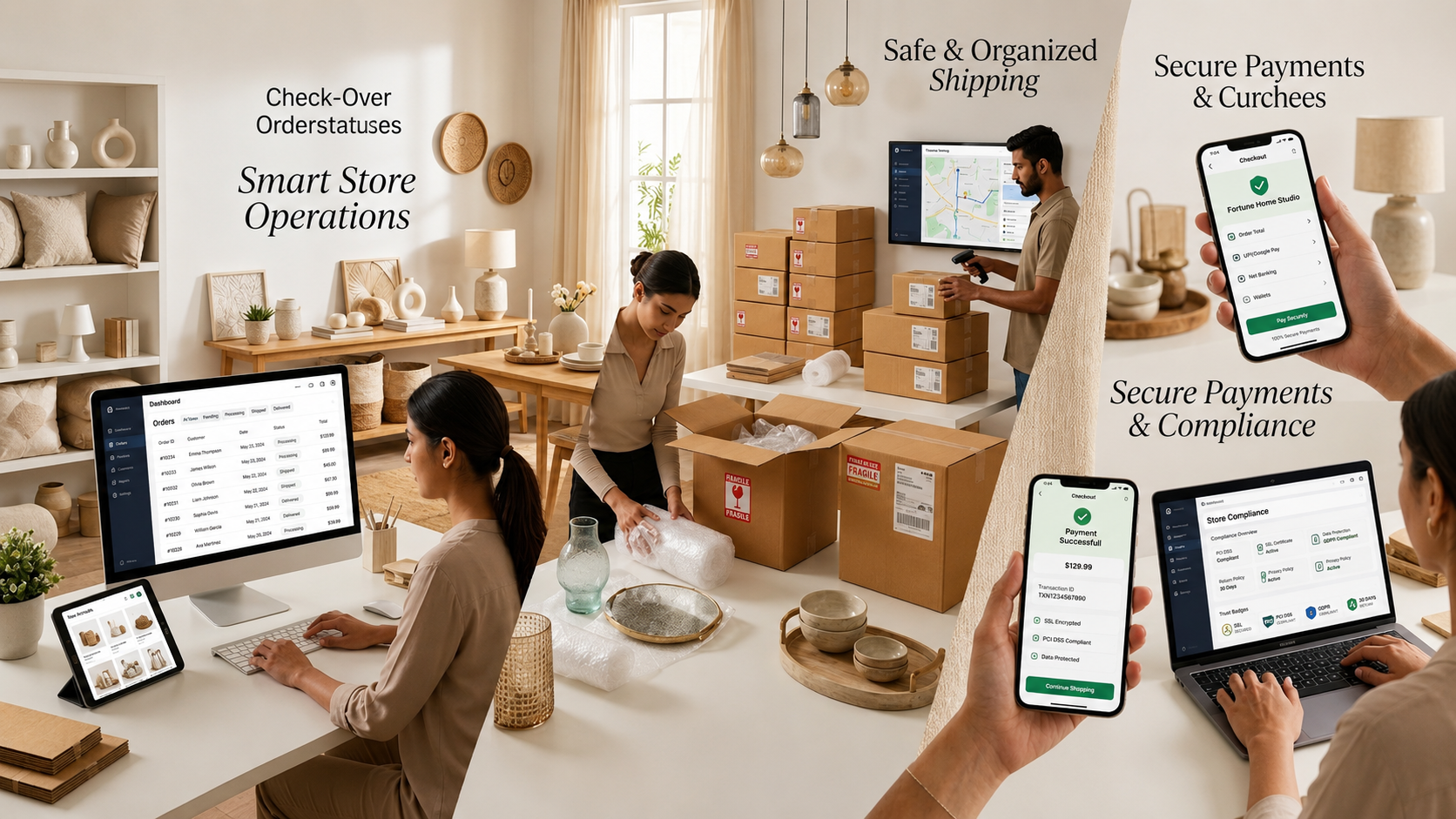
A beautifully designed store with a broken checkout is revenue lost. Ensure every operational element is configured correctly before going live.
GST and Invoicing
Configure GST rates correctly for each product category. Home decor products fall under different tax slabs depending on material and classification.
Set up automated GST-compliant invoice generation for every order.
Checkout Setup
Minimise checkout steps. A three-step maximum — cart, address, payment — is best practice.
Enable guest checkout to reduce friction for first-time buyers.
Add reCAPTCHA to your checkout and contact forms to prevent spam and bot orders.
Shipping Integration
Integrate with a reliable multi-carrier shipping aggregator. This gives you flexibility across pin codes, service levels, and costs.
Configure special handling rules for fragile items — bubble wrap, double boxing, or custom packaging options.
Payment Gateway
Enable UPI, credit/debit cards, net banking, wallets, and EMI options. Limiting payment options is a direct cause of checkout abandonment.
Ensure PCI-DSS compliance through your payment provider.
Analytics and Security
Google Analytics: Install and configure Google Analytics 4 from day one. Understanding where your traffic comes from and how users behave is critical for growth.
Google Search Console: Submit your sitemap and monitor indexing health.
Market Your Home Decor Store
Understanding how to sell decorative items online ultimately comes down to visibility. You can have the most beautiful store in the world, but without consistent, strategic marketing, it will remain invisible.
Search Engine Optimisation
Optimise every product page, collection page, and blog post with target keywords.
Build internal links between related products, collections, and content pages.
Focus on long-tail keywords like 'handmade terracotta planters online India' or 'minimal living room decor sets' — these convert at a higher rate than broad terms.
Paid Advertising
Run Google Shopping campaigns for your best-selling products. These appear directly in search results with your product image and price.
Use Meta (Instagram and Facebook) ads with lifestyle imagery for brand awareness and retargeting. Instagram is particularly powerful for home decor given its visual nature.
Pinterest ads are underutilised in India but highly effective for home decor, where purchase intent is high.
Content Marketing and Blogging
A regularly updated blog positions your brand as an authority in the home decor space, improves your organic search rankings, and gives you shareable content for social media. Topics could include:
'How to Style a Small Living Room on a Budget'
'The Best Indoor Plants and Planters for 2026'
'Festive Decor Ideas for a Modern Home'
'Behind the Craft: How Our Artisans Make Each Piece'
Order Fulfilment: Deliver the Experience, Not Just the Product
For home decor brands, the unboxing moment is a powerful brand touchpoint. A beautiful product delivered in poor packaging immediately undermines the premium experience you have spent effort creating.
Fulfilment Best Practices
Timely Dispatch: Commit to a dispatch timeline and adhere to it consistently. Delayed shipping is the leading cause of negative reviews in ecommerce.
Regular Tracking Updates: Send automated shipping confirmation emails and SMS updates with tracking links. Informed customers are more patient and less likely to raise complaints.
Safe Packaging for Fragile Items: Wrap ceramic, glass, and other breakable decor in bubble wrap or foam, secure within a snug inner box, and place in an outer corrugated carton with sufficient void fill. Include a 'Fragile' sticker prominently.
Branded Packaging: Custom tissue paper, branded stickers, a handwritten note, or a styled product card elevate the unboxing experience and encourage social sharing.
Returns Handling: Have a clear, frictionless returns process. For damaged goods, photographic evidence submitted within 24–48 hours of delivery should trigger a replacement or refund swiftly.
Scale Your Online Home Decor Business
Launching your store is the beginning, not the destination. The brands that build sustainable ecommerce businesses treat growth as a continuous cycle of analysis, strategy, implementation, and iteration.
The Growth Cycle
Analyse: Review traffic sources, conversion rates, best-selling products, abandoned cart rates, and customer lifetime value. Let data guide every decision.
Strategise: Identify your highest-leverage opportunities. Is it expanding your product catalogue? Improving photography? Launching email marketing? Entering the B2B segment?
Implement: Execute with precision. Test one change at a time so you can attribute results accurately.
Repeat: Growth is not linear. Iterate relentlessly based on what the data tells you.
Strategic Growth Levers
Expanding Product Collections: Introduce new collections seasonally. Festive launches, limited editions, and exclusive collaborations with artists or designers keep your catalogue fresh and drive repeat visits.
Entering B2B Markets: As your brand matures, explore how to sell home decor products online to wholesale buyers, interior designers, and institutional clients. Build a dedicated B2B section on your store with trade pricing, bulk order options, and a dedicated inquiry form.
Improving Visual Merchandising: Continuously elevate your photography, styling, and content. As your brand grows, invest in professional photoshoots for every new collection.
Expanding to Marketplaces: Use your website as your primary brand channel, but consider listing on curated marketplaces for incremental reach. Ensure your own website always offers the best price, selection, and experience.
Loyalty and Retention: Acquire a customer once; retain them forever. Build email lists, create loyalty programmes, and personalise communications based on past purchase behaviour.
Ready to Build Your Home Decor Store?
Shopaccino provides everything you need to launch, manage, and scale a premium home decor ecommerce business — from Shop the Look and video support to B2B capabilities and seamless shipping integrations.