
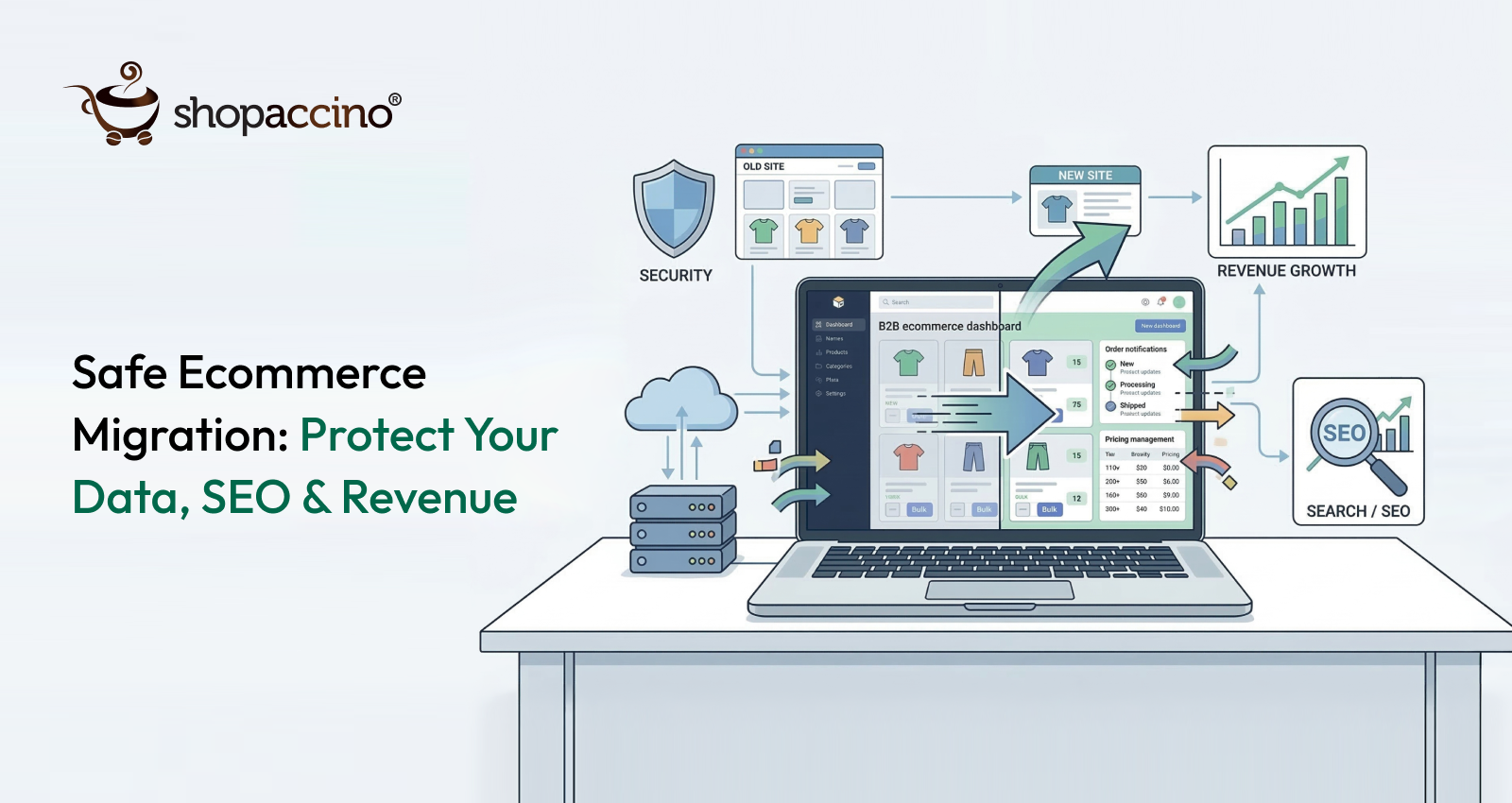
How to Migrate Your Ecommerce Store Without Losing Product Data, Sales & SEO
To migrate an ecommerce store without losing sales or SEO, back up all data, map old URLs to new ones with 301 redirects, preserve titles and metadata, and test thoroughly before launch. Done right, migration protects rankings while unlocking better scalability and features. Some platforms lack scalability, others limit customization, and some simply cannot handle growing traffic and operational complexity. At this stage, businesses often decide to migrate ecommerce website to a more powerful platform.
However, migration is not just a technical task. It directly affects your website traffic, search rankings, and customer experience. If the process is not handled carefully, businesses may lose valuable search engine visibility, experience drops in organic traffic, and even see a decline in sales.
This is why planning your ecommerce platform migration properly becomes extremely important.
A successful migration should preserve everything that already works well for your store. Your product pages, category structure, SEO rankings, and customer experience should remain intact while the underlying technology improves.
When businesses approach migration strategically, they can migrate website without losing SEO and maintain stable revenue during the transition.
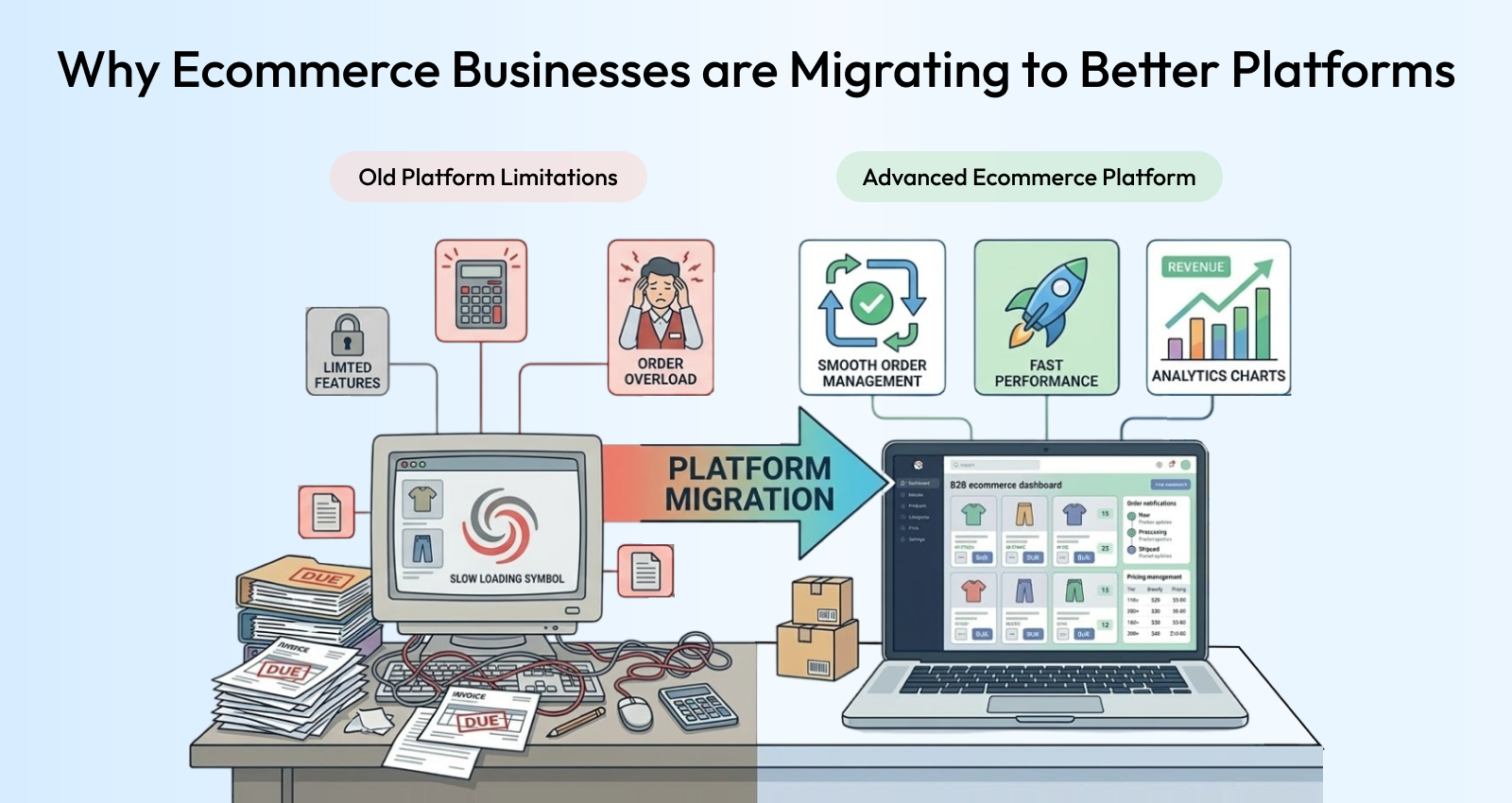
Why Ecommerce Businesses Decide to Migrate Their Platform
Quick Ecommerce Migration Checklist: audit your current site, map every URL to its new address, set up 301 redirects, back up product and customer data, preserve titles/meta/content, test checkout and site speed, then monitor rankings and sales for 4–6 weeks post-launch.
Every ecommerce business eventually reaches a stage where the existing platform starts creating limitations. In the early stages of a business, simple platforms may work well. But as traffic grows and operations expand, the need for a more advanced system becomes clear.
Scalability is one of the biggest reasons businesses decide to migrate their ecommerce website to a more advanced platform. As product catalogs grow and order volumes increase, the platform must handle more data, more users, and more transactions. If the platform cannot support this growth, performance issues may start affecting customer experience.
Another reason is operational efficiency. Ecommerce businesses require strong order management, inventory visibility, payment integration, and marketing capabilities. If the existing platform lacks these features, managing daily operations becomes difficult.
Many businesses also migrate because they want more control over their website design and functionality. A flexible platform allows them to create better customer experiences, improve site speed, and optimize product pages for search engines.
Platforms like Shopaccino are designed to support growing ecommerce businesses by providing scalable infrastructure, advanced ecommerce features, and integrated operational tools. For businesses planning long-term growth, choosing the right platform can significantly improve operational efficiency.
Read Also : Your Ecommerce Platform will Decide Your Growth
How to Ensure a Smooth Ecommerce Migration Without Losing SEO
Migrating to a new ecommerce platform can open new opportunities for growth when handled with the right strategy. With proper planning and execution, businesses can successfully upgrade their platform while maintaining strong performance.
One important aspect during migration is preserving existing SEO value. Search engines like Google index thousands of pages across an ecommerce website, including product pages, category pages, blog content, and landing pages that contribute to organic traffic.
Platforms like Shopaccino follow a structured ecommerce migration process designed to protect and even improve search performance. This includes maintaining existing URL structures wherever possible, implementing accurate 301 redirects, preserving metadata and on-page SEO elements, and ensuring proper site architecture during the transition.
Maintaining Search Rankings During Platform Migration
When migration is managed carefully, businesses can ensure that page structures, URLs, and content remain properly aligned. This helps search engines recognize the new website structure and maintain search visibility. In many cases, improved site performance, better technical SEO setup, and optimized page structures can even help increase rankings and organic visibility after migration.
A structured migration process also protects customer experience. By carefully transferring product data, optimizing site performance, and testing the checkout process, businesses can ensure that visitors continue to enjoy a smooth shopping experience.
With the right ecommerce migration strategy and the support of platforms like Shopaccino, companies can transition to a more powerful system while preserving their SEO strength, maintaining customer trust, and setting the foundation for long-term growth.
Understanding the SEO Impact of Migration
Search engine rankings depend on many factors including page structure, internal linking, metadata, and content quality. During migration, even small changes in these elements can influence search engine visibility.
For example, if a product page URL changes but the old URL is not properly redirected, search engines may treat the new page as completely different. This causes the original page ranking to disappear.
This is where a proper seo migration checklist becomes valuable. It helps businesses ensure that important SEO elements such as URLs, meta tags, page content, and internal links remain consistent throughout the migration process.
When migration is planned with SEO in mind, businesses can successfully migrate ecommerce website while protecting their search rankings and maintaining organic traffic.
Read Also : The Complete Checklist to Rank & Scale with Organic Traffic
Migration Planning Overview
A simplified view of ecommerce migration planning looks like this:
Migration Stage Focus Area
Planning Identify data, URLs, and platform requirements
Preparation Backup data and prepare SEO mapping
Migration Move products, customers, and content
Testing Ensure site performance and SEO integrity
Launch Monitor rankings, traffic, and user experience
This structured approach ensures that the ecommerce platform migration process remains controlled and organized.
Preparing Your Ecommerce Store for a Safe Migration
Once a business decides to migrate ecommerce website, preparation becomes the most important stage of the entire process. Many ecommerce migrations fail not because of technology limitations, but because businesses rush into the process without proper planning.
A successful ecommerce platform migration begins long before the actual migration happens. Businesses must first understand what currently exists on their website and what needs to be preserved. Every product page, category page, blog post, and landing page contributes to the website’s organic visibility. If these elements are not handled carefully during migration, search engine rankings may be affected.
Preparation allows businesses to understand their current SEO structure and ensure that nothing important is lost during the transition.
Understanding Your Current Website Structure
Before moving to a new platform, it is essential to analyze how the current website is organized. Ecommerce websites usually contain hundreds or even thousands of pages, including product pages, categories, filters, and blog content.
Each of these pages may already be indexed by search engines and may be contributing to organic traffic. When businesses migrate ecommerce website, these pages must remain accessible to both users and search engines.
The first step is identifying which pages generate the most traffic and sales. These pages should receive special attention during migration because any disruption can affect revenue.
Understanding the structure of the existing website also helps developers rebuild the same architecture on the new platform. Maintaining a familiar structure allows businesses to migrate website without losing SEO while improving performance and functionality.
Read Also : SEO Strategy for eCommerce Websites
Preserving URLs During Ecommerce Platform Migration
One of the most sensitive elements during ecommerce platform migration is the website URL structure. Search engines treat each URL as a unique page. If URLs change without proper redirection, search engines may treat the new pages as completely unrelated to the old ones.
For example, if a product page originally exists at:
/mens-running-shoes
and the new platform changes it to:
/products/mens-running-shoes
search engines may lose the connection between the two pages unless the proper redirects are implemented.
This is why URL mapping is an essential step when businesses migrate ecommerce website. Every existing URL must be mapped to its new equivalent on the new platform.
By doing this, businesses can migrate website without losing SEO and maintain the authority already built by their existing pages.
Protecting On-Page SEO Elements
Search engine rankings depend heavily on on-page elements such as page titles, meta descriptions, headings, and content. During migration, these elements must be preserved carefully.
When migrating product pages, businesses should ensure that the original product descriptions, metadata, and structured content remain intact. If these elements are accidentally removed or modified, search engine rankings may drop.
This is where a detailed seo migration checklist becomes extremely valuable. It ensures that every SEO element is reviewed and verified before the new website goes live.
For example, product pages should retain the same keywords and content structure that helped them rank previously. Category pages should maintain internal links that guide search engines through the website structure.
Maintaining these elements ensures that the ecommerce platform migration does not disrupt the SEO signals already established.
Data Backup and Content Transfer
Another important step before migration is creating a full backup of the existing website data. This includes product catalogs, customer information, order history, images, blog posts, and SEO metadata.
Backing up this information ensures that nothing is permanently lost during the migration process.
Once the backup is secured, businesses can begin transferring the data to the new platform. This stage requires careful validation to ensure that product information, pricing details, and content remain accurate.
For businesses planning to migrate ecommerce website, data accuracy is critical. Even small errors in product data or category mapping can affect both user experience and search visibility.
Pre-Migration SEO Preparation
Before launching the new platform, businesses should conduct a thorough SEO review. This step verifies that the migration process aligns with the seo migration checklist and that important SEO signals remain intact.
Key aspects of this preparation include checking internal links, ensuring that category structures remain logical, and confirming that the new platform supports essential SEO features.
Platforms like Shopaccino are designed with built-in SEO capabilities that help ecommerce businesses maintain visibility while upgrading their technology. By providing structured product management and optimized website architecture, such platforms simplify the ecommerce platform migration process.
This preparation stage ensures that businesses can confidently migrate website without losing SEO and maintain their existing search rankings.
Migration Preparation Workflow
A simplified preparation process may look like this:
|
Preparation Step |
Purpose |
|
Website Audit |
Identify high-performing pages |
|
URL Mapping |
Maintain search engine indexing |
|
SEO Element Review |
Preserve titles, metadata, and content |
|
Data Backup |
Protect product and customer information |
|
Platform Setup |
Prepare the new ecommerce environment |
This workflow helps businesses manage the complex process of migrate ecommerce website while protecting their SEO performance.
Post-Migration Testing and Monitoring to Protect SEO & Sales
After the technical process to migrate ecommerce website is completed, the work does not end there. In fact, the post-migration stage is one of the most important phases because it ensures that the new platform performs correctly and that search rankings remain stable.
Even a carefully planned ecommerce platform migration can introduce small issues. Broken links, missing redirects, slow page loading, or incomplete data transfers can affect both search visibility and customer experience. If these issues are not identified quickly, they may lead to traffic drops or lost sales.
That is why businesses must monitor their website closely after the new platform goes live.
Testing Website Functionality After Migration
Once the migration is complete, the first priority should be verifying that the website functions properly for customers. Every product page, category page, and checkout process must work smoothly.
Businesses should review their website from a customer’s perspective. Product pages should display correct information, images should load properly, and payment systems should function without errors. If customers encounter problems during checkout, it can directly impact revenue.
During this stage, testing also ensures that the data transferred during the ecommerce platform migration remains accurate. Product prices, stock availability, and order processing workflows should operate exactly as expected.
This level of testing helps ensure that businesses can successfully migrate website without losing SEO while maintaining a reliable shopping experience.
Read Also : Supercharge Your eCommerce Sales
Monitoring Search Engine Visibility
Search engine visibility should be monitored carefully during the weeks following migration. Even when migrations are executed properly, search engines may take time to fully process the new website structure.
Businesses should review search performance data regularly to confirm that important pages remain indexed and continue to attract organic traffic.
This monitoring helps identify any potential SEO issues quickly. If a page that previously ranked well suddenly loses visibility, it may indicate that redirects are missing or page structure has changed.
Using a structured seo migration checklist helps businesses confirm that all important SEO signals remain intact after the migration.
For example, businesses should verify that redirects are working correctly, metadata remains consistent, and internal links guide search engines properly through the new website structure.
Tracking Customer Behavior and Sales Performance
Another important step after businesses migrate ecommerce website is analyzing how customers interact with the new platform. Migration should not only preserve traffic but also maintain or improve sales performance.
Businesses should monitor user behavior metrics such as page engagement, checkout completion rates, and overall conversion performance. These insights reveal whether the new platform provides a better customer experience.
A well-executed ecommerce platform migration often improves website speed, navigation, and mobile usability. These improvements can help increase conversions over time.
Platforms like Shopaccino provide structured ecommerce infrastructure that allows businesses to monitor orders, product performance, and customer interactions efficiently. This operational visibility helps businesses ensure that their new platform supports both SEO and sales growth.
Maintaining SEO Stability Over Time
SEO stability does not depend only on the migration itself. It also depends on how businesses maintain their website after the migration is complete.
Once the new platform is live, businesses should continue optimizing their content, updating product pages, and improving internal linking structures. These efforts help strengthen search visibility and maintain organic traffic growth.
Following a consistent seo migration checklist ensures that businesses continue monitoring important SEO factors such as page indexing, technical performance, and search engine accessibility.
When businesses combine strong SEO practices with a reliable ecommerce platform, they create a stable foundation for long-term growth.
Migration Success Overview
A successful migration can be understood through the following stages:
|
Migration Phase |
Key Focus |
|
Planning |
Evaluate platform and SEO structure |
|
Preparation |
Backup data and map existing URLs |
|
Migration |
Transfer products, content, and customers |
|
Testing |
Verify functionality and redirects |
|
Monitoring |
Track SEO performance and customer behavior |
This structured process helps businesses migrate ecommerce website while protecting both organic traffic and revenue.
Final Thoughts
Migrating an ecommerce store is a complex process, but it can also create significant opportunities for growth. Businesses often upgrade their platforms to improve scalability, operational efficiency, and customer experience.
However, migration must be handled carefully. Without proper planning, businesses risk losing valuable search engine visibility and disrupting their sales performance.
By following a structured ecommerce platform migration strategy, preserving URLs, maintaining SEO elements, and using a detailed seo migration checklist, businesses can confidently migrate website without losing SEO.
Choosing the right platform also plays an important role in this process. Platforms like Shopaccino provide the infrastructure needed for growing ecommerce businesses to manage operations, improve performance, and maintain strong search visibility.
When migration is executed strategically, businesses not only protect their SEO rankings but also create a stronger foundation for future ecommerce growth.
FAQs
To migrate ecommerce website means moving your online store from one platform to another while transferring products, customer data, orders, and content. This process helps businesses upgrade their technology, improve performance, and support long-term growth.
Yes, businesses can migrate website without losing SEO if the process is planned carefully. Preserving URLs, maintaining page content, implementing proper redirects, and following a structured seo migration checklist help protect search rankings during migration.
Businesses often start ecommerce platform migration when their current system limits growth. Common reasons include improving website performance, adding advanced ecommerce features, scaling product catalogs, and enhancing customer experience.
The biggest risk when businesses migrate ecommerce website is losing search rankings due to broken URLs or missing redirects. If search engines cannot find the correct pages after migration, organic traffic may drop temporarily.
A proper seo migration checklist usually includes URL mapping, redirect implementation, metadata preservation, internal link verification, website testing, and post-migration monitoring. These steps help maintain SEO stability during ecommerce platform migration.
The time required for ecommerce platform migration depends on the size of the store. Smaller ecommerce websites may migrate within a few weeks, while large stores with thousands of products may require more planning and testing.
To maintain sales while they migrate ecommerce website, businesses should ensure the checkout process works smoothly, product pages remain accessible, and website performance remains stable throughout the migration process.
Maintaining the same URL structure helps businesses migrate website without losing SEO. If URLs must change, proper redirects should be implemented so search engines can connect the old pages with the new ones.