How to Start an Ecommerce Business in 2027: A Step-by-Step Guide That Actually Works
Building an online store has never been easier. Building one that makes money is a completely different job.
Anyone can put up a website in an afternoon. The hard part is picking a product people will pay for, pricing it so you keep a profit, getting it to the customer on time, and giving them a reason to come back. That is where most new sellers get stuck, and it is exactly what this guide covers.
Whether you want to sell handmade candles, wholesale machine parts or your own clothing label, the steps below show you how to start an ecommerce business the right way, without wasting money on things that do not matter in the first few months.
Quick answer: To start an ecommerce business, choose a niche, validate demand, pick a business model (D2C, B2B, marketplace or dropshipping), source your products, register your business and tax details, build an online store on a reliable ecommerce platform, set up payments and shipping, then market the store and track your numbers every week.
Key Takeaways
- Validate demand before you buy stock. Real sign-ups or pre-orders tell you more than any opinion.
- Your business model decides your margin, your brand control and how much money you need on day one.
- You do not need a big budget. You need a clear e-commerce business plan, a lean first order, and a store that converts.
- Shipping, returns, and payment options affect profit as much as product quality does.
- Your own website builds a brand and customer data you own. Marketplaces give reach but keep the customer.
What Is an Ecommerce Business, and Is It Still Worth Starting in 2027?
An ecommerce business is any business that sells products or services online and collects payment digitally, and it is still worth starting if you solve a clear problem for a clear audience.
A designer selling prints from her own website runs an e-commerce business. So does a manufacturer taking bulk orders from 500 retailers through a B2B portal, and a brand selling through its website, app and physical shop at the same time.
Yes, the market is crowded. But crowded markets are proof that people are buying. What has changed is that "me too" stores rarely survive. Businesses that grow today usually have one of three advantages:
- A specific audience they understand better than the big players do
- A product that is hard to copy, such as their own designs, formulas or manufacturing
- A buying experience that is noticeably easier, faster or more personal
If you can claim at least one, you have a real shot.
How Do You Find an Ecommerce Business Idea That Will Actually Sell?
The best ecommerce business ideas combine a real problem, a reachable audience and healthy margins, not whatever is trending this week.
Start with what you already know. Your job, hobbies, family business and the complaints you hear from friends are all good sources of ecommerce business ideas. Someone with ten years in the auto parts trade already knows where buyers struggle, and no outsider can buy that knowledge.
Spot the difference between a trend and a fad
A trend grows steadily over years. A fad spikes and disappears. Fidget spinners were a fad. Pet wellness and refillable home care products are long-running trends. Check a five-year view in Google Trends, not a 90-day view, before you commit.
Run a quick idea filter
Score each idea from 1 to 5 on these points:
- Demand: Are people already searching for it and buying it?
- Margin: Can you sell it for two to three times what it costs you?
- Shipping profile: Is it light, compact and hard to break?
- Repeat potential: Will customers need it again?
- Competition: Can you stand out on design, quality, niche or service?
Anything below 15 out of 25 needs more thought. Be honest with your scores, because the idea you love most is not always the one buyers want.
Validate before you spend
Validation means proof that strangers will pay. Try a one-page site with a pre-order or "Notify me" button, sell a small batch to your network, read competitors' one-star and three-star reviews to find gaps, or run a small ad test that measures sign-ups, not likes. If people hand over their email or money, you have something. If they only say "nice idea", keep testing.
Which Ecommerce Business Model Is Right for You?
Your business model decides how much money you need, how much profit you keep and how much control you have over your brand.
1. Direct to consumer (D2C)
You sell your own brand directly to shoppers through your website or app.
- Pros: Full control over pricing, branding and customer data. Higher margins.
- Cons: You must bring in all the traffic yourself.
2. Business to business (B2B)
You sell to retailers, distributors or companies, often in bulk at tiered prices.
- Pros: Larger order values and loyal repeat buyers.
- Cons: Longer sales cycles, credit terms and complex pricing.
3. Marketplace selling
You list products on large marketplaces that already have millions of shoppers.
- Pros: Instant access to buyers and built-in trust.
- Cons: Fees cut into margins, and you do not own the customer.
4. Dropshipping
A supplier stores and ships the products. You handle the store and marketing.
- Pros: Very low upfront cost and no inventory risk.
- Cons: Thin margins, little quality control and slower delivery.
5. Multi-vendor marketplace
You build your own marketplace where other sellers list products and you earn a commission.
- Pros: Scales without you holding stock.
- Cons: You must attract both sellers and buyers.
Many successful brands become a hybrid: a D2C website as the home of the brand, a B2B portal for wholesale buyers and marketplaces for extra reach. You do not need all of this on day one, but pick a platform you can grow into.
Where Will Your Products Come From?
You can make, manufacture, buy wholesale, dropship or sell digital products, and each option trades margin against effort and risk.
- Make it yourself: Best for handmade and small-batch products. High control, limited speed.
- Work with a manufacturer: Best for your own branded products. Negotiate a small first run.
- Buy wholesale and resell: Faster to start, but margins depend on negotiation and uniqueness.
- Dropship: Fastest to start. Order samples to your own address first.
- Sell digital products: Templates and courses have almost no delivery cost and very high margins.
Always keep a backup supplier. One delayed shipment can wipe out a month of sales. And start lean on stock: order enough for six to eight weeks of expected sales, learn what moves fastest, then reorder with real data.
Do You Need an Ecommerce Business Plan?
Yes, but a one or two page ecommerce business plan is enough to keep your decisions focused.
Answer these questions in plain words:
- Who is the customer? Location, budget, habits and the problem you solve.
- What are you selling and at what price? Include cost per unit and target margin.
- Why you? What makes your product better or different.
- How will people find you? The two or three channels you will focus on first.
- How will orders reach customers? Fulfilment, shipping and returns.
- When will you break even? A simple monthly budget for the first year.
- What could go wrong? Supplier delays, slow sales, cash gaps, and your backup plan.
Review it every quarter. It is a working document, not a school project. If a number in your plan turns out to be wrong, that is useful information, not failure. Update it and adjust your next move.
What Legal and Tax Steps Do You Need Before You Start Selling?
You will usually need to register your business, get a tax ID, register for sales tax, GST or VAT where required, and publish clear store policies before your first order.
Rules depend on where you are based and where your customers live, so check your local government portal or a qualified accountant. In most countries the checklist looks like this:
- Choose a business structure. A sole proprietorship is simplest. A limited company or LLC separates personal assets from business debts. The U.S. Small Business Administration and GOV.UK explain the options clearly.
- Register your business name and check that the domain and social handles are free.
- Get a tax ID and register for indirect tax such as sales tax, GST or VAT, depending on location and turnover.
- Open a separate business bank account to keep your accounts clean.
- Check product licences. Food, cosmetics, supplements and children's products often need extra approvals.
- Publish store policies for shipping, returns, privacy and terms of service.
- Follow consumer and data rules. Be honest about delivery times and get consent before sending marketing emails. The U.S. Federal Trade Commission has a useful guide on shipping promises for online sellers.
Selling across borders? Also look into export registration, customs duties and the tax rules of the countries you ship to. Getting these basics right early saves you from costly fixes later.
How Much Does It Cost to Start an Ecommerce Business?
You can start a small online store for a few hundred dollars, while a stocked brand with paid marketing usually needs a few thousand dollars to launch properly.
Plan for these main costs:
- Registration and licences: Varies widely by country.
- Ecommerce platform and domain: A monthly or yearly subscription plus a small domain fee.
- First inventory and samples: Usually the biggest cost for stocked brands.
- Packaging, branding and photos: A good phone camera and natural light work at the start.
- Payment and shipping costs: Gateway fees per transaction, plus the cost of returns and failed deliveries.
- Marketing: Ads, creator samples, email tools and content.
Keep three months of operating costs aside after launch. Sales rarely grow in a straight line, and that cushion stops panic decisions.
Should You Sell on a Marketplace or Build Your Own Website?
For long-term growth, make your own website the core of the business and use marketplaces as an extra channel, not your only one.
Marketplaces are great for early sales and product testing. But they set the rules, charge fees on every sale, can change policies overnight and rarely share customer details. Your competitor often sits right next to you on the same page.
When you start an online store on your own domain, you own the customer relationship. You can collect emails, run loyalty programmes, test prices and build a brand people search for by name. Every repeat order is profit for you, not commission for someone else.
The smartest approach for most sellers is simple. Build your own store first, then add marketplaces for reach once your operations run smoothly. That way, every channel feeds the brand you own instead of replacing it.
How Do You Build Your Online Store?
Choose an ecommerce platform that handles your catalogue, payments, shipping and marketing in one place, so you can focus on selling instead of fixing technology.
What to look for in an ecommerce platform
- Easy setup without a developer for every change
- Mobile-first design, since most shoppers buy on their phones
- Secure, short checkout with multiple payment options
- Inventory and order management that syncs stock across channels
- Built-in SEO tools for titles, descriptions, clean URLs and fast loading
- Marketing features like discount codes and abandoned cart reminders
- Room to grow into B2B, a mobile app, multiple currencies or a marketplace
Why many growing businesses choose Shopaccino
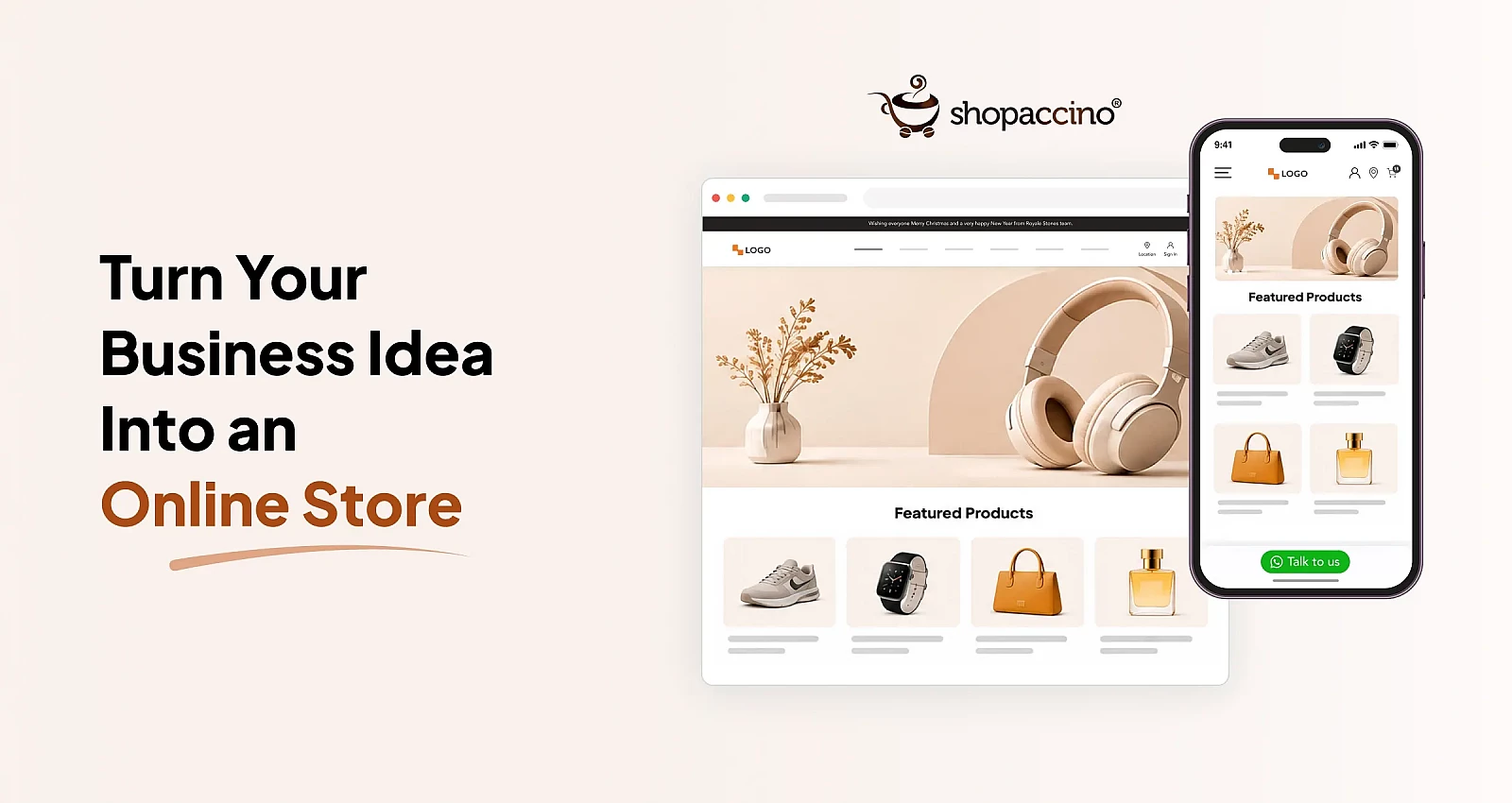
Shopaccino is an ecommerce platform for businesses that sell online, offline or both, at home or around the world. You get a mobile-ready store with catalogue management, secure payment gateways, shipping integrations, discounts and SEO settings in one dashboard.
- 0% platform transaction fee, so you keep more of every sale
- Stores go live in 2 to 5 days with guided onboarding
- D2C, B2B and multi-vendor options on one platform, so you never switch systems as you grow
- Global and cross-border selling to customers in different countries
- Branded mobile apps to bring customers back with push notifications and app-only offers
You can create an ecommerce website with Shopaccino and explore the features before you commit.
Store essentials before you go live
- Clear photos from several angles, plus one in-use shot
- Descriptions that answer size, material, delivery and return questions
- Trust signals: reviews, secure payment badges, contact details and policies
- Test orders on mobile and desktop, including a refund
A store that looks good but loads slowly will still lose sales. Compress your images, keep pop-ups to a minimum and check your page speed before launch day.
What Mistakes Should New Ecommerce Sellers Avoid?
Most new stores fail because of avoidable mistakes in pricing, stock and focus, not because the idea was bad.
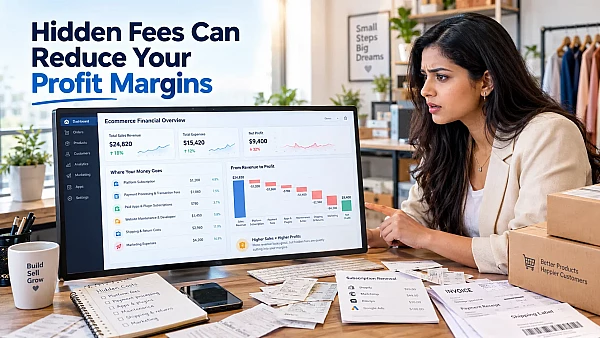
- Pricing without counting every cost, including fees, packaging, shipping, returns, ads and taxes
- Buying too much stock too early, which locks up cash
- Trying to be everywhere instead of mastering one or two channels
- Ignoring mobile shoppers with a slow or clumsy store
- Treating customer service as an afterthought, when fast replies create repeat buyers
Ready to Start Your Ecommerce Business?
You now have the full roadmap: validate an idea, choose a model, source smart, sort out the legal basics, build a store that converts and market it with focus. None of it needs to be perfect on the first try. What matters is starting and improving every week.
When you are ready, Shopaccino gives you everything you need to launch, sell and grow, online and offline, at home and across borders. Book a free demo and see how quickly your store can go live.