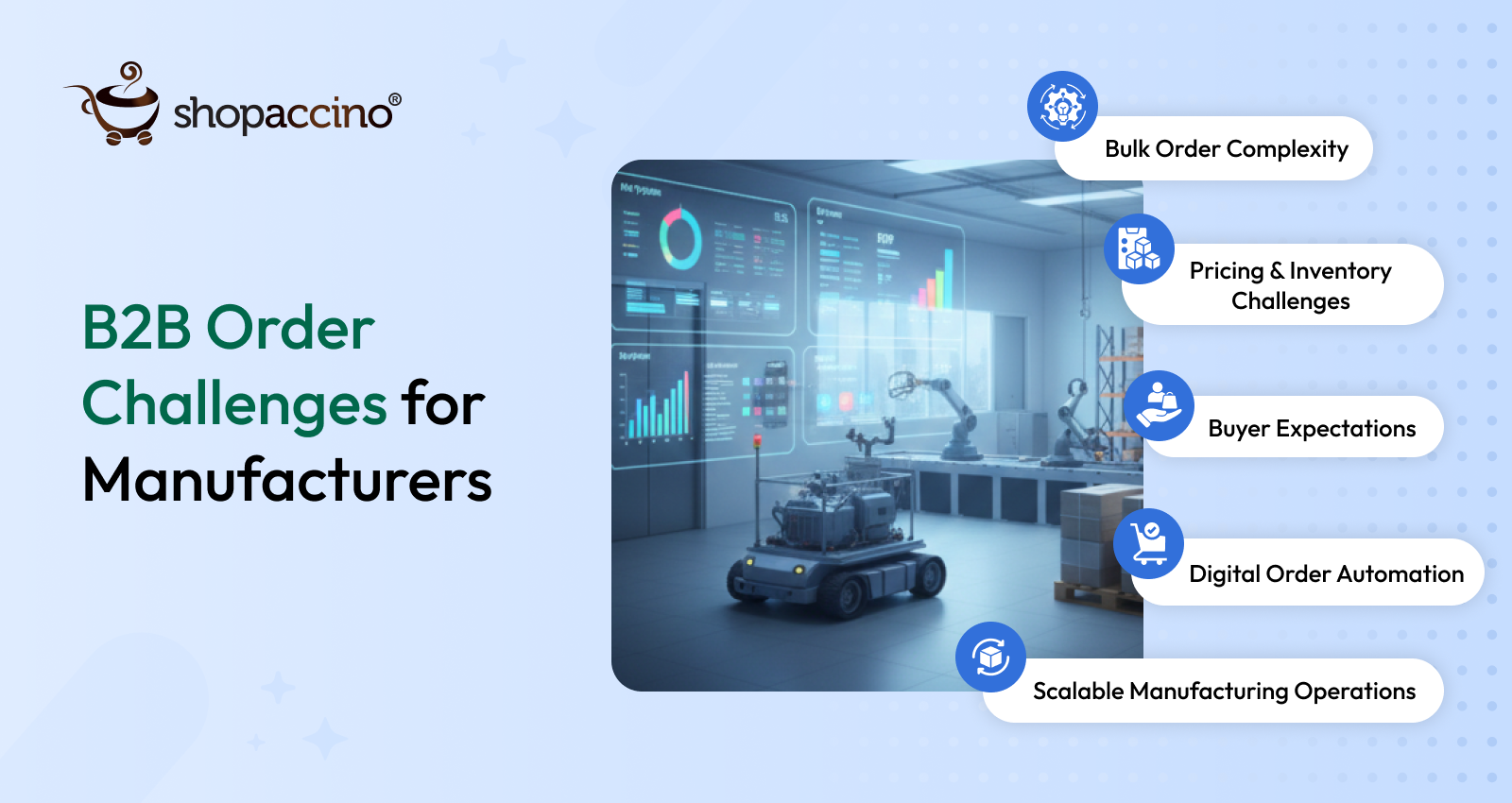
Key Challenges Manufacturers Face When Handling High-Volume B2B Orders
For manufacturers, high-volume B2B orders are a sign of success. Large distributors, wholesalers, exporters, and institutional buyers place bulk orders because they trust the product, pricing, and reliability of the manufacturer. But behind this success lies a growing operational burden. As order sizes increase and customer networks expand, managing bulk B2B orders becomes far more complex than simply producing goods.
In 2026, manufacturers are no longer competing only on price or production capacity. They are competing on speed, accuracy, transparency, and consistency. A single error in a bulk order—wrong quantity, incorrect variant, delayed dispatch, or mismatched pricing—can strain long-term business relationships.
Many Manufacturers, Wholesalers, Exporters, Distributors, and even Established D2C Brands still rely on fragmented systems: WhatsApp messages, spreadsheets, emails, phone calls, and manual approvals. These methods may work at a small scale, but they break down when order volumes increase.
This blog explores the real challenges manufacturers face while handling high-volume B2B orders, what buyers expect today, and how integrated ecommerce systems help bring structure, speed, and confidence to bulk order operations.
Challenging Area: Core Business Challenges in High-Volume B2B Order Handling
Handling bulk orders is not just about production. It involves multiple teams, moving parts, and dependencies that must work in perfect coordination.
Unstructured Order Intake
High-volume orders often arrive through:
- Emails with attachments
- WhatsApp messages with screenshots
- Excel sheets shared by sales teams
- Phone calls followed by handwritten notes
When orders are not captured in a structured system, manufacturers spend hours re-entering data. This increases the risk of mistakes and delays order processing.
Errors Multiply With Order Size
A small error in a large order has a big impact. High-volume orders involve:
- Multiple SKUs
- Variants like size, color, material, or packaging
- Case quantities and carton-level calculations
Manual handling makes it easy to miss details, leading to incorrect dispatch or rework.
Lack of Real-Time Inventory Visibility
Manufacturers often struggle to answer a simple question: Is stock available right now?
Without real-time inventory tracking across warehouses and locations, teams commit to orders they cannot fulfil on time.
This results in:
- Partial fulfilments
- Delayed dispatches
- Customer dissatisfaction
Complex Customer-Specific Pricing
Bulk buyers rarely pay standard prices. They expect:
- Volume-based pricing
- Region-specific rates
- Contract pricing
- Freight adjustments
Applying these manually across dozens or hundreds of orders increases workload and pricing errors.
Poor Coordination Between Teams
High-volume B2B orders require collaboration between:
- Sales teams
- Warehouse teams
- Accounts teams
- Logistics partners
When each team works on different systems or spreadsheets, miscommunication becomes inevitable.
Difficulty Managing Multi-Warehouse Fulfilment
As manufacturers grow, stock is stored across multiple warehouses. Without automated allocation, deciding where to dispatch from becomes slow and inefficient.
Limited Order Tracking and Documentation
Manufacturers often struggle to track:
- What has been dispatched
- What is pending
- What is delayed
Buyers frequently follow up for updates, increasing manual communication.
Their Customer Challenging Area: What High-Volume B2B Buyers Expect
While manufacturers face operational stress, buyers face their own challenges—and their expectations have changed.
Buyers Expect Speed Without Follow-Ups
Bulk buyers do not want to wait for confirmations or clarifications. They expect fast order acceptance and predictable dispatch timelines.
Buyers Want Pricing Transparency
Customers want to see their correct pricing upfront, without negotiation or back-and-forth communication.
Buyers Expect Accuracy Every Time
Even a small error can disrupt their downstream operations. Accuracy is not optional.
Buyers Want Easy Reordering
High-volume buyers often reorder the same products. They expect one-click reordering instead of repeating the entire process.
Buyers Want Order Visibility
Buyers want to track:
- Order status
- Dispatch updates
- Invoices and documents
Lack of visibility leads to frustration and loss of trust.
Buyers Expect Professional Digital Experiences
Modern B2B buyers prefer manufacturers who offer self-serve portals instead of manual coordination.
Solution: How an Integrated Ecommerce Platform Solves These Challenges
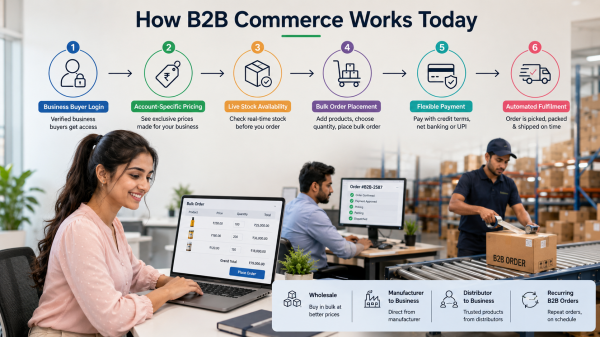
An integrated B2B ecommerce platform brings structure and clarity to bulk order operations. Instead of relying on scattered tools, everything happens in one connected system.
Platforms like Shopaccino help manufacturers digitize and automate high-volume order workflows.
Structured Order Capture
Buyers place orders directly through a digital portal or mobile app. Product selection, variants, and quantities are clearly defined, reducing ambiguity.
Real-Time Inventory Visibility
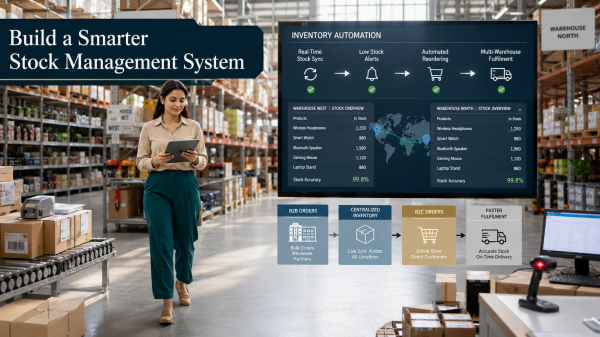
Inventory updates automatically across warehouses as orders are placed, cancelled, or fulfilled. This prevents overselling and ensures realistic commitments.
Simplified Multi-Warehouse Fulfilment
Orders are allocated to the appropriate warehouse based on stock availability and location, speeding up dispatch.
Centralised Order Tracking
Manufacturers and buyers can track every order from confirmation to delivery, reducing unnecessary communication.
Complete Documentation Management
Invoices, order summaries, and dispatch details are generated automatically and stored digitally.
Scalable Operations Without Extra Teams
Automation allows manufacturers to handle higher volumes without increasing manpower.
How to Implement a Digital System for High-Volume B2B Orders
Manufacturers can move step-by-step toward a more efficient bulk order system.
Step 1: Digitise the Product Catalogue
Create a clear catalogue with SKUs, variants, pack sizes, and pricing rules.
Step 2: Segment B2B Customers
Group buyers such as Wholesalers, Distributors, Exporters, Manufacturers, and Established D2C Brands to manage pricing and access.
Step 3: Sync Inventory Across Locations
Ensure real-time stock updates across all warehouses and sales channels.
Step 4: Enable Self-Serve Ordering
Allow buyers to place and repeat orders without sales team intervention.
Step 5: Integrate Shipping and Dispatch
Automate dispatch workflows and tracking notifications.
Step 6: Train Internal Teams
Ensure sales, warehouse, and accounts teams work from the same system.
Benefits of Solving High-Volume B2B Order Challenges
Faster Order Processing
Orders move from placement to dispatch without delays.
Fewer Errors
Structured systems reduce mistakes in quantity, pricing, and variants.
Better Buyer Relationships
Transparency and reliability strengthen long-term partnerships.
Reduced Operational Stress
Teams spend less time on manual tasks and follow-ups.
Improved Cash Flow
Accurate invoicing and faster fulfilment lead to quicker payments.
Scalable Growth
Manufacturers can grow order volume without operational breakdowns.
Conclusion
High-volume B2B orders are essential for manufacturing growth, but managing them manually creates bottlenecks, errors, and strained relationships. As buyer expectations rise in 2026, manufacturers must move beyond spreadsheets and fragmented communication.
Integrated ecommerce platforms give manufacturers the structure, automation, and visibility needed to handle bulk orders efficiently. With solutions like Shopaccino, manufacturers can centralise operations, improve accuracy, and scale confidently without adding complexity.
The future of B2B manufacturing belongs to brands that combine production strength with digital operational excellence.
FAQs
Because bulk orders involve complex pricing, inventory coordination, and multiple teams, which manual systems cannot handle efficiently.
It standardises product selection, automates pricing, and syncs inventory in real time.
Yes, it helps MSMEs scale without increasing staff or operational risk.
Yes, digital platforms support quick reordering using past order history.
Yes, orders can be routed automatically based on stock availability
Accurate pricing, clear tracking, and timely fulfilment build confidence.