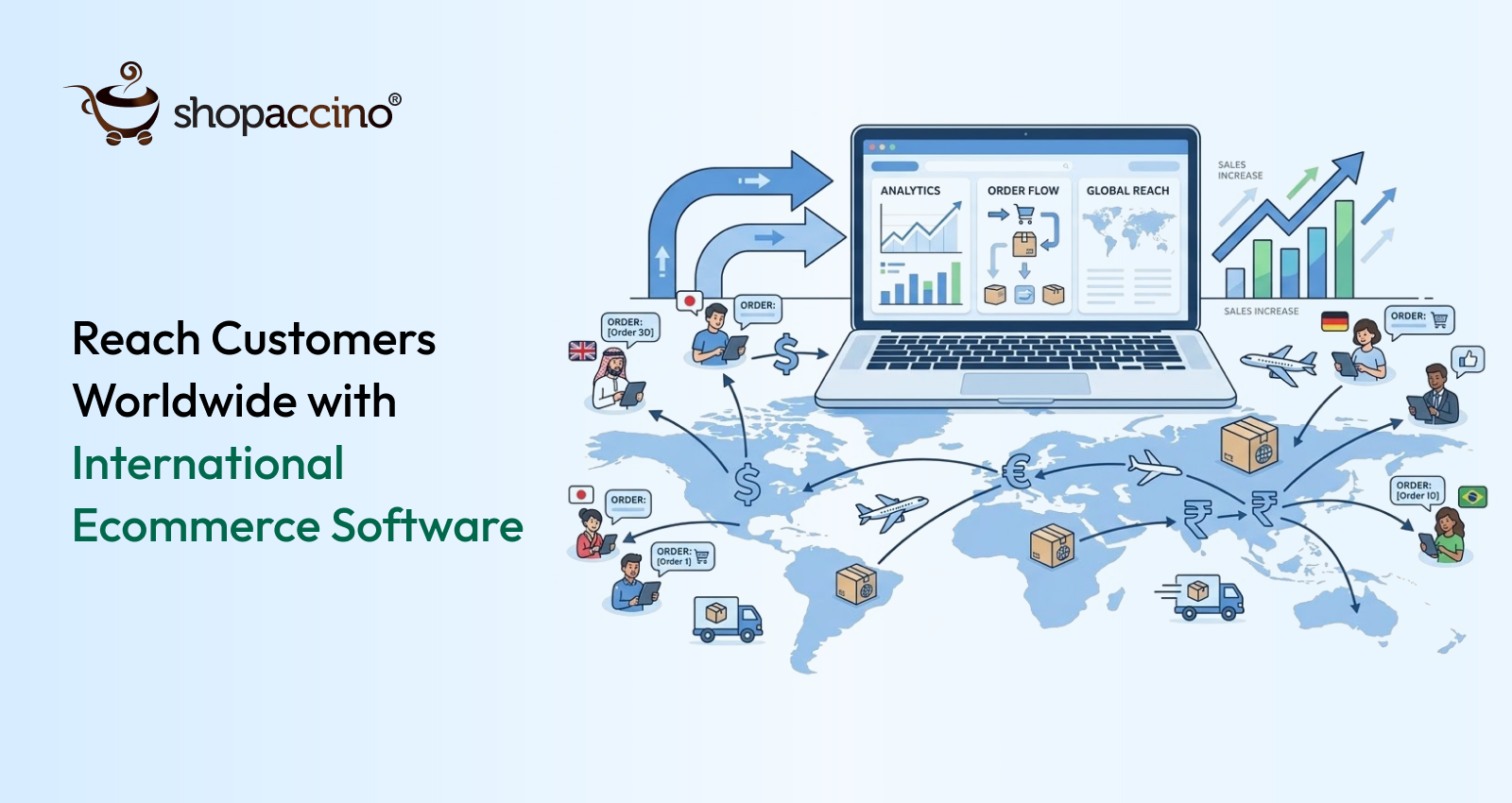
Want to Reach Customers Worldwide? Why Businesses Choose International Ecommerce Software
The ecommerce industry has transformed how businesses operate and connect with customers. Today, companies are no longer limited to selling products within a single city or country. With the rise of digital commerce, businesses can now reach customers across multiple regions and expand their market globally.
Customers from different countries actively search for products online, compare options, and make purchases from international brands. This shift has created a major opportunity for businesses that want to grow beyond their domestic markets.
However, expanding globally is not as simple as launching a standard ecommerce website. Businesses must manage multiple currencies, languages, payment systems, shipping logistics, and customer expectations.
This is where international ecommerce software becomes essential.
International e-commerce software helps businesses manage cross-border operations efficiently. It provides tools that support global payments, localized experiences, multi-channel selling, and scalable infrastructure for handling customers from different countries.
Instead of managing multiple systems separately, businesses can operate their global ecommerce store through a unified platform.
In this article, we will explore why businesses are choosing international ecommerce software and how it helps them reach customers worldwide.
The Rise of Global Ecommerce Opportunities
Global ecommerce has opened new growth opportunities for businesses of all sizes. Even small and medium-sized businesses can now sell products internationally without setting up physical stores in different countries.
Several factors have contributed to this growth.
Increased Online Shopping Worldwide
Consumers across the world are becoming more comfortable with online shopping. This trend allows businesses to access customers beyond their local markets.
Expansion of Digital Payment Systems
Modern payment gateways support international transactions, allowing customers to pay using their preferred methods.
Improved Logistics and Shipping Networks
Shipping providers now offer reliable international delivery services, making it easier for businesses to fulfill global orders.
Growth of Digital Marketing Channels
Businesses can promote their products globally through search engines, social media platforms, and online advertising.
These developments make international ecommerce an attractive option for businesses looking to scale.
Why Businesses Are Expanding Globally
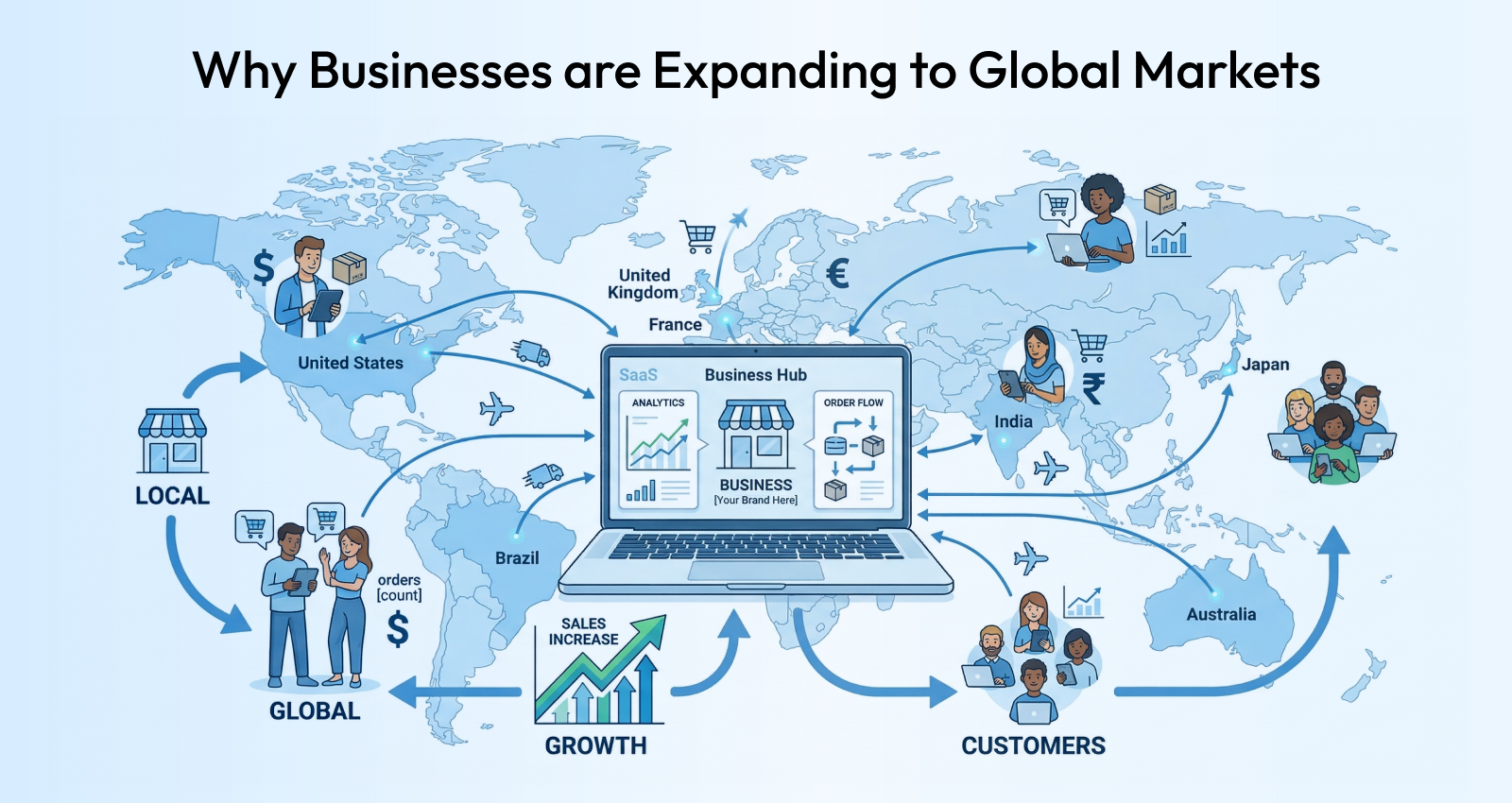
Many businesses initially focus on local markets, but as they grow, they start exploring international opportunities.
Selling globally offers several advantages.
Access to a larger customer base
Businesses can reach customers from different countries and increase their potential market size.
Increased revenue opportunities
Selling in multiple markets allows businesses to generate revenue from different regions.
Brand expansion
Global presence helps businesses build brand recognition and credibility.
Reduced dependency on one market
Operating in multiple regions helps reduce risks associated with economic changes in a single market.
These benefits encourage businesses to adopt international ecommerce strategies.
Challenges of Managing International Ecommerce
While global expansion offers many advantages, it also introduces several challenges that businesses must manage carefully.
Without the right tools, international ecommerce operations can become complex.
Some common challenges include:
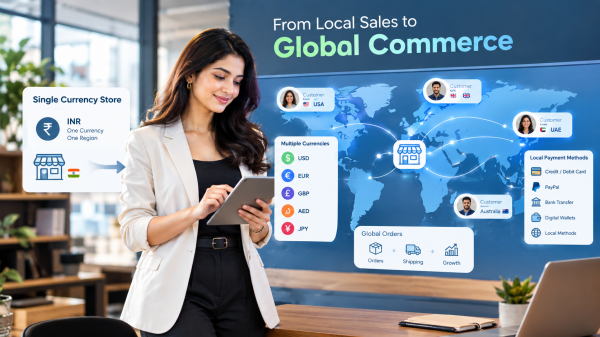
Managing Multiple Currencies
Customers prefer to see product prices in their local currency. Businesses must provide accurate pricing and currency conversion.
Language Localization
Customers are more likely to trust and purchase from websites that display content in their native language.
International Payment Processing
Different countries use different payment methods. Businesses must support multiple payment options.
Cross-Border Shipping
Shipping products internationally requires coordination with logistics partners and tracking systems.
Regulatory Compliance
Businesses must follow tax rules and import regulations in different countries.
Handling these challenges manually can slow down business operations and affect customer experience.
How International Ecommerce Software Simplifies Global Selling
International ecommerce software provides the infrastructure needed to manage global operations efficiently.
Instead of handling different processes separately, businesses can use one platform to manage their entire ecommerce ecosystem.
Key capabilities include:
|
Feature |
Benefit |
|
Multi-currency support |
Customers can shop in their local currency |
|
Multi-language support |
Improves customer experience |
|
Global payment integration |
Enables secure international transactions |
|
Shipping integration |
Simplifies delivery management |
|
Centralized dashboard |
Manages global operations in one place |
These features help businesses operate smoothly while serving customers across multiple regions.
Why Technology Plays a Critical Role in Global Expansion
Technology is the foundation of successful international ecommerce operations. Businesses that rely on outdated systems often struggle to manage global complexities.
A reliable ecommerce platform helps businesses:
- manage product catalogs across regions
- track international orders and deliveries
- process global payments securely
- monitor sales performance across markets
Without the right technology, scaling internationally becomes difficult.
Choosing the right ecommerce software ensures that businesses can operate efficiently and deliver a consistent customer experience worldwide.
Key Features Businesses Should Look for in International Ecommerce Software
When businesses plan to expand globally, choosing the right platform is one of the most important decisions. A strong ecommerce system must support international operations while keeping processes simple and efficient.
A reliable multi-channel ecommerce software solution provides tools that allow businesses to manage sales across multiple platforms such as websites, marketplaces, and mobile apps from one centralized system.
Several key features play a major role in helping businesses operate successfully across different countries.
Multi-Channel Selling Capabilities
Selling through multiple channels is essential for reaching a wider audience. Customers today shop through websites, mobile apps, online marketplaces, and even social media platforms.
A multi-channel system allows businesses to:
- manage product listings across platforms
- synchronize inventory in real time
- track orders from different channels
- maintain consistent pricing across marketplaces
This approach helps businesses expand their reach while maintaining control over operations.
Supporting Global Payments and Currency Management
One of the biggest challenges in international ecommerce is handling payments from customers in different countries.
Customers prefer to pay using familiar payment methods and see product prices in their local currency.
A strong ecommerce platform should support:
- multiple currency pricing
- automatic currency conversion
- region-specific payment methods
- secure global payment gateways
These features make the buying process easier for international customers and improve conversion rates.
How Ecommerce Software Helps Small Businesses Go Global
International ecommerce is no longer limited to large enterprises. Small and medium-sized businesses can also expand globally using modern ecommerce platforms.
Today, ecommerce software for small business provides tools that simplify international selling without requiring complex technical infrastructure.
These platforms allow small businesses to:
- launch global online stores quickly
- manage international orders efficiently
- track customer data across regions
- access global markets without physical expansion
This makes it possible for startups and small brands to compete with larger businesses in the global market.
The Role of D2C Ecommerce in Global Expansion
Direct-to-consumer (D2C) ecommerce has become a popular business model for brands that want to sell directly to their customers without relying on intermediaries.
A strong d2c ecommerce software platform allows businesses to build direct relationships with customers while maintaining full control over pricing, branding, and customer experience.
D2C ecommerce helps businesses:
- build stronger brand identity
- collect customer data for personalization
- offer exclusive products and promotions
- improve customer retention
When combined with international ecommerce capabilities, D2C strategies allow businesses to expand globally while maintaining control over their brand experience.
Centralized Management for Global Ecommerce Operations
Managing multiple countries, channels, and customer segments can quickly become complex without the right tools.
Modern ecommerce platforms provide centralized dashboards that allow businesses to manage all operations from one place.
With centralized management, businesses can:
- monitor global sales performance
- update product catalogs across regions
- manage customer data and orders
- track inventory across multiple locations
This centralized approach reduces operational complexity and improves efficiency.
For example, platforms like Shopaccino provide businesses with tools to manage global ecommerce operations, multi-channel selling, and customer engagement from a single system. This allows businesses to focus more on growth while the platform handles operational processes.
Enhancing Customer Experience for Global Buyers
Customer experience plays a critical role in international ecommerce success. Businesses must ensure that customers from different countries can easily browse, purchase, and receive products.
Important elements that improve global customer experience include:
Localized Storefronts
Customers should see content that matches their language, currency, and region.
Transparent Pricing
Clear pricing that includes taxes and shipping costs helps reduce confusion.
Fast and Reliable Delivery
Customers expect timely delivery with proper tracking updates.
Mobile-Friendly Experience
Many customers shop through mobile devices, so the website must be responsive and easy to navigate.
Providing a consistent and convenient shopping experience helps businesses build trust with international customers.
Advanced Capabilities That Help Businesses Scale Globally
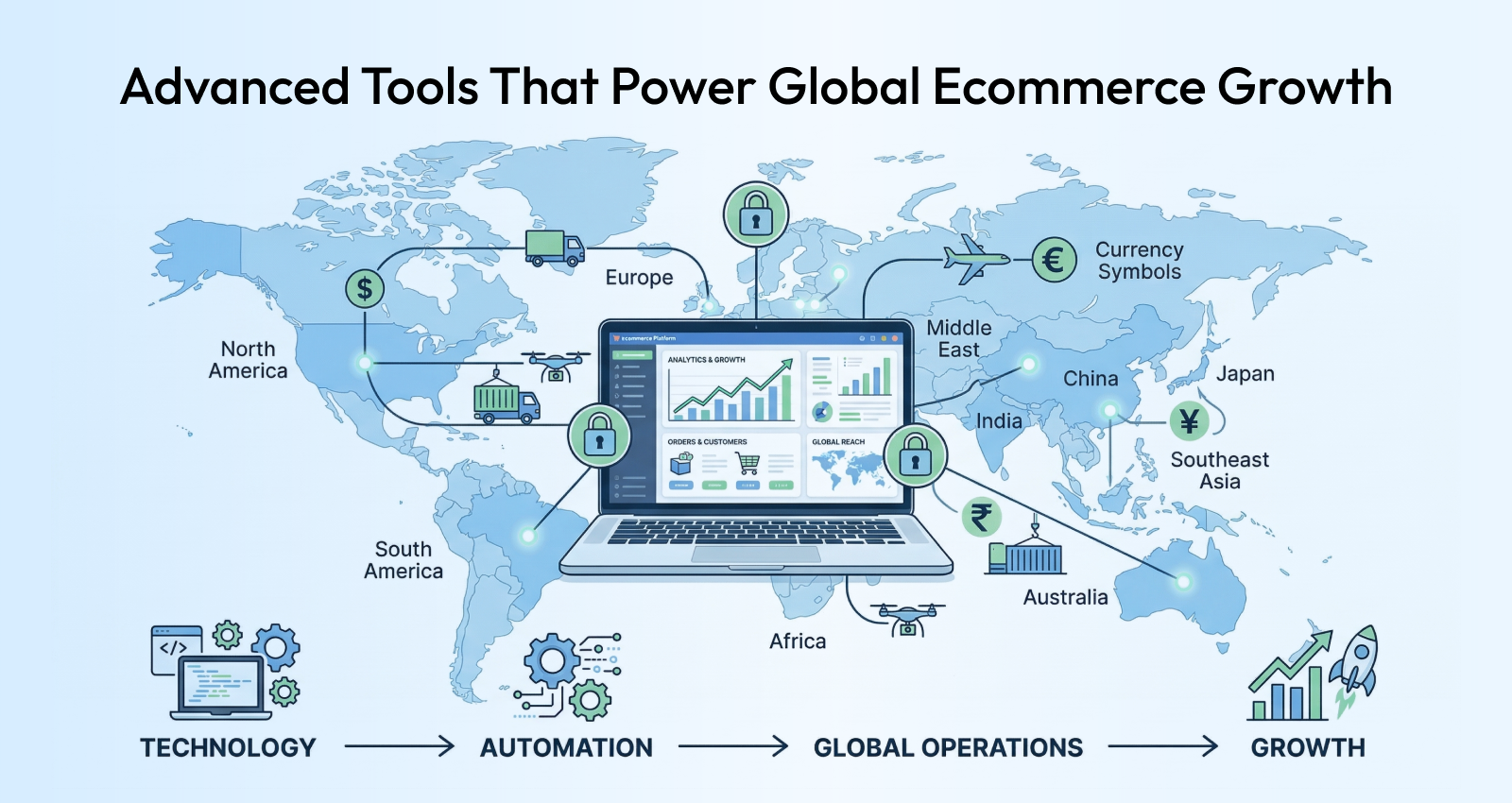
As businesses expand into international markets, their ecommerce system must support higher traffic, larger product catalogs, and more complex operations. A basic ecommerce setup is often not enough to handle global demand.
This is where advanced features of international ecommerce software become critical. These capabilities help businesses scale efficiently while maintaining smooth operations across different regions.
Scalable Infrastructure for Global Growth
When businesses start selling internationally, website traffic and order volumes can increase significantly. A scalable platform ensures that the website remains fast and stable even during peak sales periods.
Scalable systems help businesses handle:
- high customer traffic from multiple countries
- large product catalogs
- increased order volumes
- global marketing campaigns
This ensures a consistent shopping experience for customers worldwide.
Data and Analytics for Smarter Business Decisions
Data plays a key role in helping businesses understand how their global operations are performing.
Modern ecommerce platforms provide analytics tools that help businesses track important metrics such as:
- sales performance by country
- customer behavior across regions
- popular products in different markets
- conversion rates and traffic sources
These insights allow businesses to make informed decisions and improve their strategies.
For example, if certain products perform well in a specific country, businesses can focus marketing efforts in that region and increase inventory for those products.
Managing Global Logistics and Fulfillment Efficiently
One of the biggest challenges in international ecommerce is managing shipping and delivery across different countries.
A strong ecommerce platform helps simplify logistics by integrating with global shipping providers.
Key logistics capabilities include:
- automated shipping calculations based on location
- integration with international courier services
- real-time delivery tracking
- management of returns and exchanges
These features help businesses provide reliable delivery services to international customers.
Security and Compliance for International Transactions
Security is essential when handling global ecommerce operations. Customers need to trust that their payment information and personal data are protected.
A reliable ecommerce system includes:
- secure payment gateway integration
- encrypted transactions
- fraud detection systems
- compliance with international regulations
These security measures help build customer trust and ensure smooth transactions across different countries.
Common Mistakes Businesses Make in Global Ecommerce
Many businesses face challenges when expanding internationally due to avoidable mistakes.
Some of the most common mistakes include:
Ignoring Localization
Failing to provide local language, currency, and payment options can make it difficult for customers to complete purchases.
Underestimating Logistics Complexity
International shipping requires proper planning and coordination with logistics partners.
Using Limited Ecommerce Platforms
Some platforms are not designed for global operations and may lack features such as multi-currency support or international payment integration.
Lack of Market Research
Entering new markets without understanding customer preferences can limit growth opportunities.
Avoiding these mistakes helps businesses build a stronger global ecommerce strategy.
Key Takeaways for Businesses Going Global
Expanding into international markets can unlock significant growth opportunities for ecommerce businesses.
Important insights include:
- International ecommerce allows businesses to reach customers worldwide.
- Multi-channel selling helps expand market reach.
- Localization improves customer experience and conversion rates.
- Data insights help businesses optimize global strategies.
- Choosing the right ecommerce platform simplifies international operations.
With the right approach and technology, businesses can successfully scale their ecommerce operations across multiple countries.
Final Thoughts
The global ecommerce landscape continues to grow as more customers prefer online shopping. Businesses that adopt international strategies can expand their reach, increase revenue, and build strong global brands.
However, managing international operations requires the right tools and infrastructure.
By choosing reliable international ecommerce software, businesses can simplify global selling, manage cross-border operations efficiently, and provide seamless experiences to customers around the world.
With the right strategy and technology, businesses can successfully build and scale their presence in the global ecommerce market.
FAQs
International ecommerce software is a platform that allows businesses to sell products across multiple countries through a single system. It supports features such as multi-currency pricing, global payment gateways, language localization, and international shipping integration. This helps businesses manage global operations efficiently while providing a smooth shopping experience for customers worldwide.
Businesses need international ecommerce software to expand beyond local markets and reach global customers. It simplifies cross-border operations by handling payments, currencies, logistics, and localized experiences. This allows businesses to scale their ecommerce operations without managing multiple systems separately.
Multi channel ecommerce software helps businesses sell products across different platforms such as websites, marketplaces, and mobile apps. It synchronizes inventory, manages orders, and maintains consistent pricing across channels. This allows businesses to reach more customers while managing operations from one centralized system.
Yes, modern ecommerce software for small business allows even small brands to expand globally. These platforms provide tools for managing international orders, payments, and customer data without requiring complex technical setup. This makes global ecommerce accessible to startups and growing businesses.
D2C ecommerce software allows businesses to sell directly to customers without intermediaries. This helps brands maintain control over pricing, customer experience, and branding. When combined with international capabilities, D2C models allow businesses to build strong global customer relationships.
A strong international ecommerce platform should include multi-currency support, language localization, global payment gateways, shipping integrations, and analytics tools. These features help businesses manage global operations efficiently and provide a better experience for international customers.
Businesses often face challenges such as managing multiple currencies, handling international shipping, supporting different payment methods, and complying with regional regulations. International ecommerce software helps overcome these challenges by providing integrated tools that simplify global operations.
Businesses can improve global customer experience by offering localized storefronts, transparent pricing, secure payment options, and reliable delivery services. These features make it easier for international customers to browse products, make purchases, and trust the brand.