How Multi Vendor Shopping Cart Software Helps Build and Manage a Successful Online Store
The ecommerce industry has evolved rapidly over the past decade. Online marketplaces have become one of the most successful business models in digital commerce. Platforms like large online marketplaces allow multiple sellers to list their products and sell to customers through a single website.
This model is known as a multi vendor marketplace, where one platform connects different sellers and buyers in one place.
For entrepreneurs and businesses planning to launch such platforms, technology plays a critical role. Managing multiple vendors, products, payments, and orders requires a reliable system that can handle complex operations.
This is where Multi Vendor Shopping Cart Software becomes extremely important.
A multi vendor shopping cart solution allows businesses to create an online marketplace where many sellers can register, upload their products, manage inventory, and process orders through a centralized system.
Instead of building everything from scratch, businesses can use specialized marketplace software that simplifies vendor management and ecommerce operations.
In this article, we will explore how multi vendor shopping cart software works and how it helps businesses build and manage successful online marketplaces.
Understanding the Multi Vendor Marketplace Model
A multi vendor marketplace is an ecommerce platform where multiple sellers offer products to customers through one website. The marketplace owner manages the platform while independent vendors sell their products using the same system.
This model benefits both sellers and customers.
Customers gain access to a wide variety of products from different vendors, while sellers can reach a larger audience without building their own ecommerce store.
Typical examples of multi vendor marketplaces include platforms where different sellers offer products such as electronics, fashion, groceries, handmade goods, or home decor.
In a multi vendor system, the platform owner usually earns revenue through:
- Vendor subscription fees
- Commission on each sale
- Featured product listings
- Advertising opportunities
Because of these advantages, many businesses are now interested in building their own multi vendor marketplaces.
Why Multi Vendor Marketplaces Are Growing Rapidly
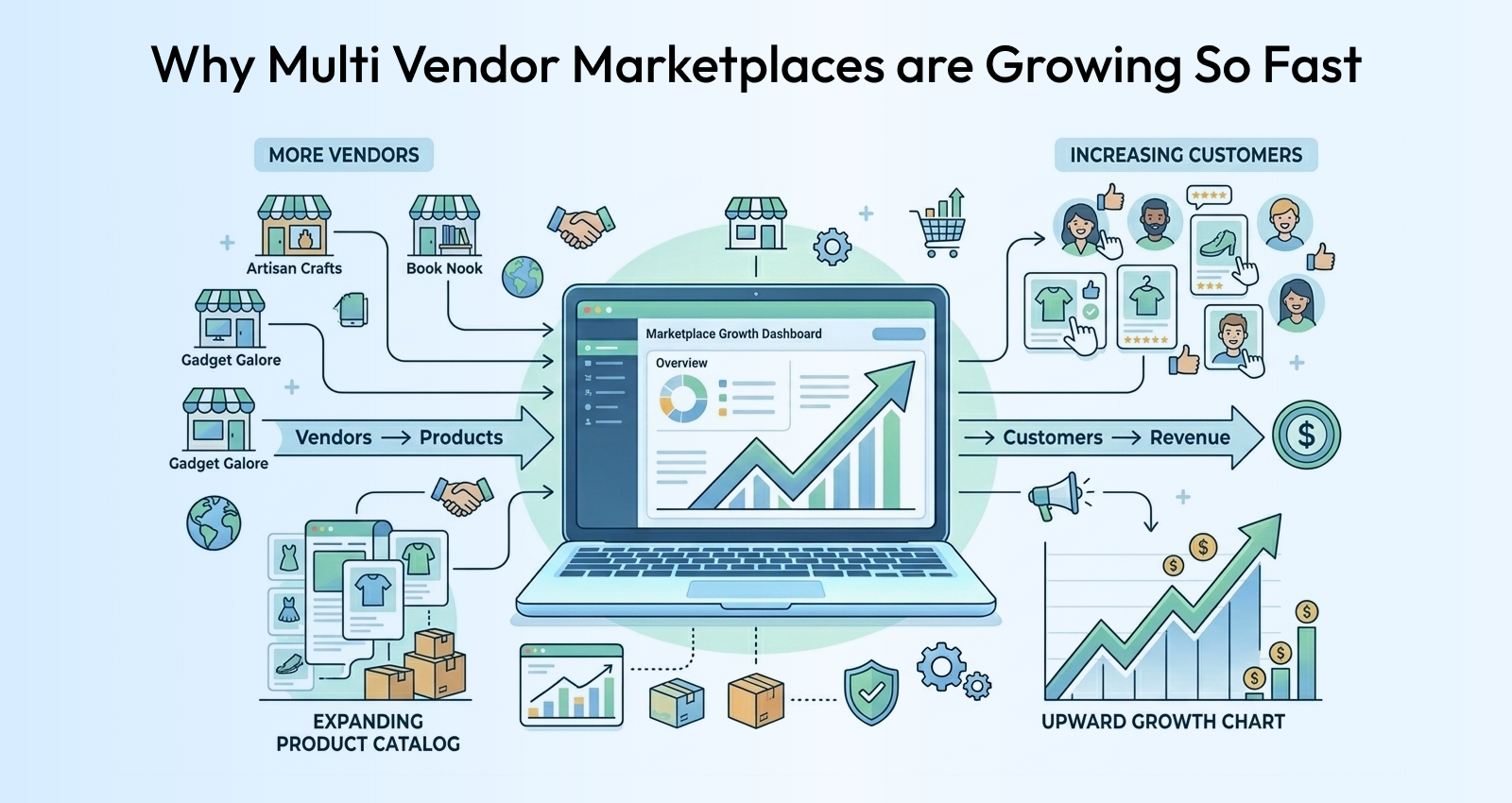
The popularity of multi vendor marketplaces continues to grow because they create a win-win situation for both sellers and customers.
Several factors contribute to the success of this business model.
Large Product Variety
Customers prefer platforms that offer multiple options in one place. A marketplace with many vendors can provide a wider range of products compared to a single online store.
Lower Risk for Marketplace Owners
Instead of managing their own inventory, marketplace owners allow vendors to manage their products. This reduces operational risk.
Opportunities for Small Sellers
Small businesses and independent sellers can use marketplace platforms to reach customers without investing heavily in their own ecommerce websites.
Scalable Business Model
As more vendors join the platform, the product catalog grows automatically, making the marketplace more attractive to customers.
These advantages make the multi vendor model one of the most scalable ecommerce business strategies.
How Multi Vendor Shopping Cart Software Supports Marketplace Operations
Running a multi vendor marketplace involves many operational tasks that must work smoothly together.
Marketplace owners must manage:
- vendor registration and verification
- product listings from multiple sellers
- order processing
- payment distribution
- customer communication
- inventory management
Handling these processes manually is extremely difficult.
A powerful Multi Vendor Shopping Cart Software platform helps automate and manage these operations efficiently.
The software acts as the central system that connects vendors, customers, and the marketplace owner.
Here is a simplified overview of how the system works.
|
Marketplace Component |
Function |
|
Vendor dashboard |
Sellers manage products, orders, and inventory |
|
Admin dashboard |
Marketplace owner manages vendors and commissions |
|
Customer interface |
Buyers browse products and place orders |
|
Payment system |
Handles transactions and vendor payouts |
This structure allows the marketplace to operate efficiently while providing a smooth experience for both vendors and customers.
Key Components of a Multi Vendor Ecommerce Platform
To build a successful marketplace, the software must include several important components that support daily operations.
Vendor Management System
The platform should allow vendors to register, create profiles, and manage their products independently.
Product Catalog Management
Vendors must be able to upload product details, images, prices, and inventory information easily.
Order Management
Orders placed by customers should automatically reach the respective vendors so they can process and fulfill them.
Commission Management
Marketplace owners typically earn revenue by charging a commission on each transaction. The system must calculate and track these commissions automatically.
Payment Processing
Secure payment integration ensures smooth transactions between customers and vendors.
When these components work together efficiently, marketplace owners can manage large numbers of vendors and products with minimal manual effort.
Benefits of Using Multi Vendor Shopping Cart Software
Using specialized marketplace software offers several advantages for businesses planning to build an online marketplace.
Some of the most important benefits include:
Faster Marketplace Launch
Businesses can launch their marketplace platform quickly without developing the system from scratch.
Simplified Vendor Management
The software provides tools for managing multiple sellers, their products, and their orders.
Centralized Marketplace Control
Marketplace administrators can monitor vendor activities, product listings, and transactions from one dashboard.
Scalable Marketplace Growth
As more vendors join the platform, the marketplace expands without requiring significant infrastructure changes.
Improved Customer Experience
Customers can browse products from multiple sellers, compare options, and place orders easily.
These advantages make multi vendor platforms attractive for businesses that want to build scalable ecommerce marketplaces.
Why Choosing the Right Marketplace Software Matters
While the multi vendor model offers many opportunities, its success depends heavily on the technology used to build the platform.
A poorly designed marketplace system can create problems such as:
- slow website performance
- complicated vendor onboarding
- difficult product management
- payment errors
- poor customer experience
Choosing the right software helps avoid these issues and ensures that the marketplace can grow smoothly.
Businesses should evaluate several factors before selecting a marketplace solution, including scalability, ease of use, vendor management tools, and payment integration capabilities.
A reliable multi vendor platform provides the foundation needed to build a successful online marketplace.
Essential Features Every Multi Vendor Marketplace Platform Should Have
When businesses plan to launch a marketplace, choosing the right technology becomes extremely important. A strong marketplace platform must provide tools that support both vendors and customers while allowing administrators to manage the entire system smoothly.
A reliable best multi vendor ecommerce platform usually includes several important features that simplify marketplace operations and help businesses grow.
Some of the most essential features include:
Vendor Registration and Profile Management
The platform should allow vendors to register easily and create their own seller profiles. Vendors should be able to manage their business information, product listings, and order details from a dedicated dashboard.
Product Listing and Catalog Management
Vendors need the ability to upload product images, descriptions, prices, and stock information. A well-designed product management system helps vendors organize their catalog efficiently.
Order Processing System
Orders placed by customers should automatically reach the respective vendors. The platform must provide tools that help sellers track orders, update order status, and manage shipping.
Commission and Revenue Management
Marketplace owners typically earn commissions on vendor sales. The system should automatically calculate and track commissions to simplify financial management.
These features ensure that the marketplace operates smoothly while allowing vendors to manage their businesses independently.
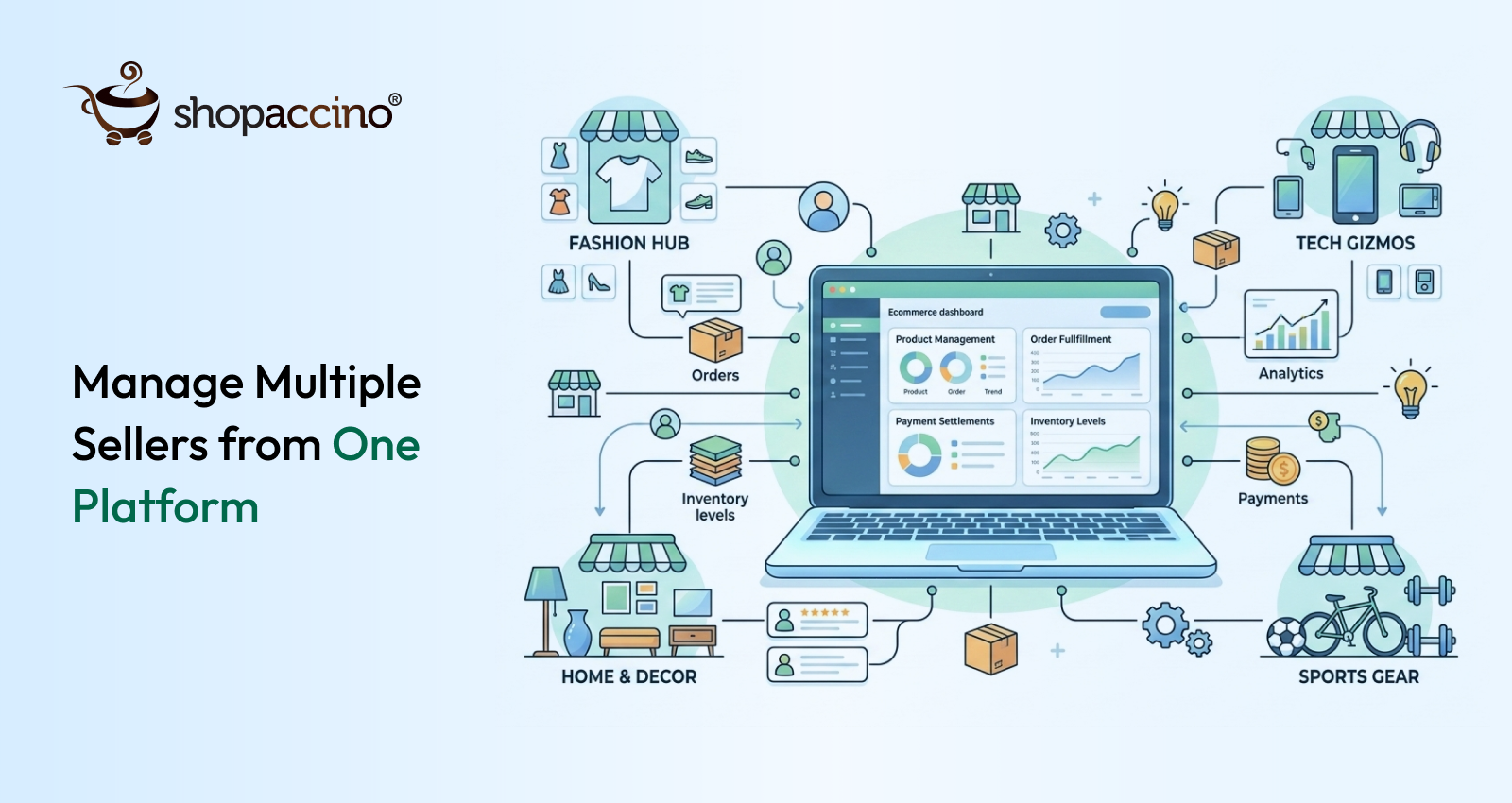
Vendor Dashboard for Efficient Seller Management
One of the most important components of a marketplace platform is the vendor dashboard. This interface allows sellers to manage their store activities without relying on the marketplace administrator.
Through the vendor dashboard, sellers can perform several tasks such as:
- uploading and managing products
- updating pricing and stock availability
- tracking incoming orders
- monitoring sales performance
- communicating with customers
A user-friendly vendor dashboard encourages more sellers to join the marketplace because it simplifies their daily operations.
For example, many modern ecommerce platforms including Shopaccino provide vendor-friendly dashboards that help sellers manage products and orders efficiently while the marketplace owner maintains overall control of the platform.
When vendors can easily manage their store activities, the entire marketplace ecosystem becomes more efficient.
Order and Commission Management for Marketplace Owners
Managing orders from multiple vendors can become complex if the platform does not provide the right tools.
A well-designed system ensures that orders are automatically routed to the correct seller. Vendors receive notifications about new orders and can update the order status once the product is prepared for shipping.
At the same time, the marketplace administrator must track commissions earned from vendor sales.
A strong best multi vendor marketplace software platform provides automated commission management that calculates earnings based on predefined rules.
This allows marketplace owners to monitor revenue and vendor performance without performing manual calculations.
Key capabilities of order and commission management systems include:
- automatic order routing to vendors
- commission calculation based on sales
- vendor payout tracking
- financial reporting for administrators
These features help marketplace owners maintain transparency and efficient financial operations.
Product Discovery and Search Experience for Customers
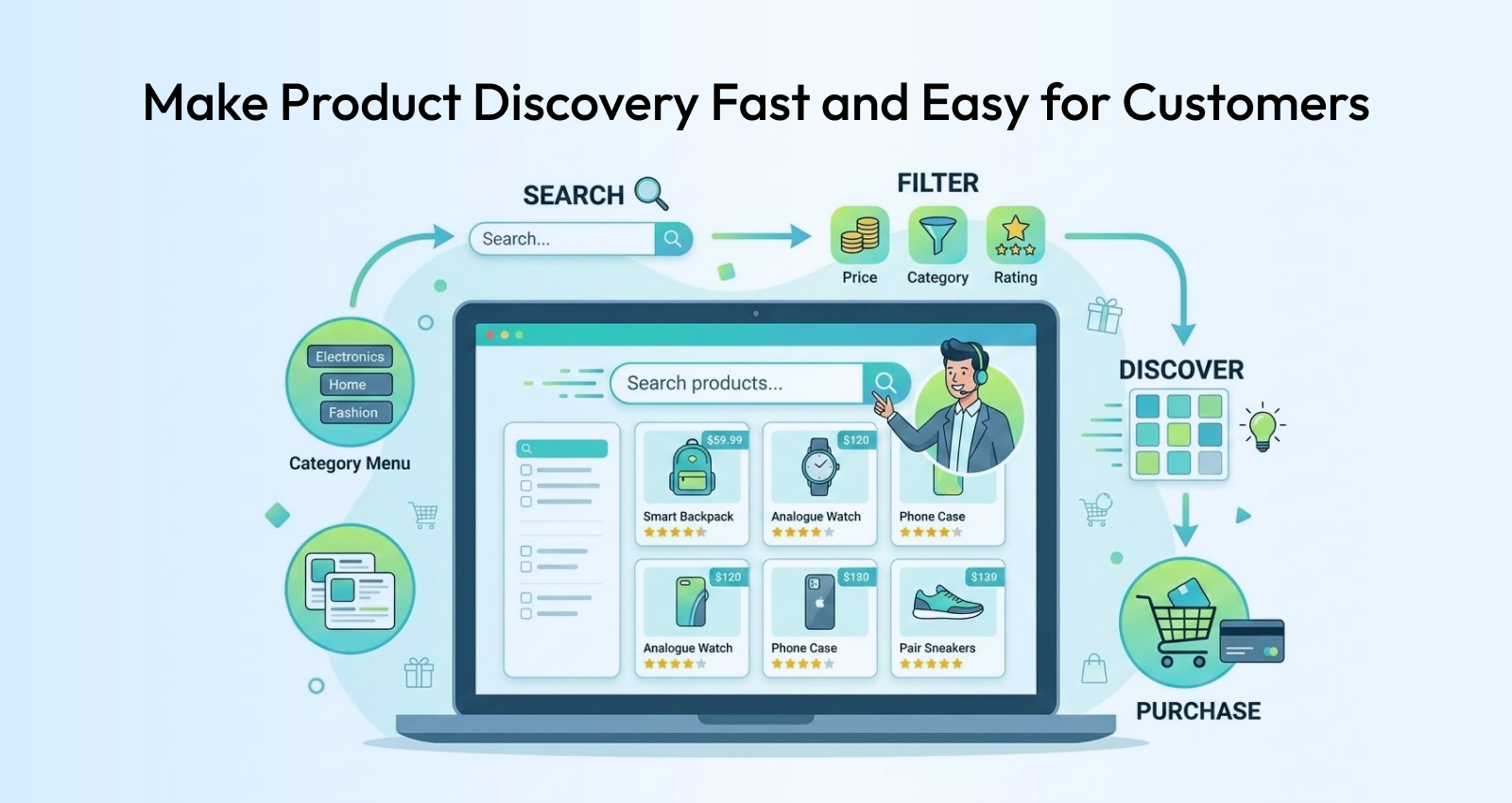
Customer experience plays a major role in the success of any online marketplace. If customers cannot easily find the products they are looking for, they may leave the platform and choose competitors.
A well-designed multivendor ecommerce website should provide powerful search and filtering tools that make product discovery easy.
Some useful features include:
Smart Search
Customers should be able to search products using keywords and receive accurate results instantly.
Category Navigation
Clear product categories help customers browse products more easily.
Advanced Filters
Filters such as price range, brand, ratings, and popularity help customers narrow down their choices.
Product Reviews and Ratings
Customer reviews provide social proof and help buyers make confident purchasing decisions.
When customers can easily explore products and compare options, they are more likely to complete purchases.
Inventory Management for Multiple Sellers
Inventory management becomes more complicated when multiple vendors are selling products on the same platform.
Each vendor must be able to manage their own inventory while the marketplace owner maintains overall visibility of stock availability.
An efficient inventory management system helps vendors:
- update stock levels in real time
- avoid overselling products
- manage product variations such as size or color
- receive alerts when stock levels are low
These capabilities help ensure that customers only see products that are available for purchase.
Real-time inventory management also improves operational accuracy across the marketplace.
Payment and Vendor Payout Management
Handling payments in a multi vendor marketplace requires a reliable financial system.
When customers place an order, the payment must be processed securely while ensuring that the vendor receives their share after deducting marketplace commissions.
The platform should provide:
- secure payment gateway integration
- automatic commission deduction
- vendor payout tracking
- transaction history records
These systems ensure transparency and build trust between the marketplace owner and vendors.
A structured payment management process is essential for maintaining a healthy marketplace ecosystem.
Advanced Features That Make a Multi Vendor Marketplace Successful
As online marketplaces grow, they require more advanced capabilities to handle increasing vendor activity, product listings, and customer traffic. A strong marketplace platform should not only manage basic operations but also provide advanced features that help businesses scale efficiently.
A modern Multi Vendor Shopping Cart Software solution includes tools that improve vendor performance, customer engagement, and marketplace management.
Some advanced capabilities include:
Automated Vendor Onboarding
Marketplace owners should be able to approve new vendor registrations quickly. Automated onboarding systems allow sellers to create accounts, submit verification details, and start listing products easily.
Marketing and Promotional Tools
Marketplace owners can offer promotional features such as discount campaigns, featured product listings, and banner promotions. These tools help attract customers and increase product visibility.
Multi-Language and Multi-Currency Support
If the marketplace serves customers in different regions, the platform should support multiple languages and currencies. This feature allows the marketplace to reach a broader audience.
Vendor Performance Monitoring
Administrators should be able to track vendor performance based on order fulfillment speed, customer ratings, and sales activity.
These advanced capabilities help marketplace owners maintain quality and ensure a smooth shopping experience.
How Multi Vendor Platforms Support Marketplace Growth
One of the biggest advantages of the multi vendor business model is scalability. As more vendors join the marketplace, the product catalog grows automatically.
This allows the marketplace to expand without requiring the owner to manage inventory directly.
A well-designed platform helps businesses grow in several ways.
Expanding Product Variety
With multiple vendors selling on the platform, customers gain access to a wider range of products. This increases the chances of attracting more buyers.
Attracting More Sellers
When vendors see that a marketplace has strong traffic and reliable management tools, they are more likely to join the platform.
Increasing Revenue Opportunities
Marketplace owners can generate revenue through commissions, vendor subscriptions, advertising placements, and premium seller services.
Improving Customer Retention
When customers find a wide range of products and competitive pricing in one place, they are more likely to return to the platform.
A scalable marketplace platform makes it easier for businesses to grow their digital commerce ecosystem.
Common Challenges in Managing Multi Vendor Marketplaces
While the multi vendor marketplace model offers many advantages, managing multiple sellers can also create certain challenges.
Some common challenges include:
Vendor Quality Control
Marketplace owners must ensure that vendors maintain product quality and provide reliable service.
Order Fulfillment Coordination
Different vendors may have different shipping processes, which can affect delivery times.
Dispute Management
Occasionally, customers may raise complaints regarding product quality or delivery issues. The marketplace must handle these disputes effectively.
Maintaining Platform Performance
As the number of vendors and products grows, the platform must continue to operate smoothly without performance issues.
Choosing the right marketplace technology helps businesses manage these challenges more effectively.
Key Factors to Consider When Choosing Marketplace Software
Selecting the right technology platform is one of the most important decisions when building a multi vendor marketplace.
Businesses should evaluate several important factors before choosing a solution.
Ease of Use
Both vendors and administrators should be able to navigate the system easily.
Scalability
The platform should support marketplace growth as more vendors and customers join.
Security and Payment Integration
Secure payment systems and reliable transaction management are essential for building trust.
Customization Options
Marketplace owners should be able to customize the platform according to their business requirements.
Choosing a reliable best multi vendor ecommerce platform helps ensure that the marketplace operates smoothly and supports long-term growth.
Key Takeaways for Businesses Building Multi Vendor Marketplaces
Launching a multi vendor marketplace can be a powerful ecommerce strategy when supported by the right technology.
Important insights for marketplace businesses include:
- Multi vendor marketplaces allow multiple sellers to reach customers through one platform.
- Marketplace owners can generate revenue through commissions and vendor subscriptions.
- Efficient vendor management tools help maintain operational efficiency.
- Advanced features improve customer experience and marketplace scalability.
- Choosing reliable marketplace software is essential for long-term success.
With the right technology and strategy, businesses can build successful online marketplaces that connect sellers and buyers effectively.
Final Thoughts
The multi vendor marketplace model has become one of the most successful ecommerce business strategies. By allowing multiple sellers to operate within one platform, businesses can create large digital marketplaces with diverse product offerings.
Using reliable Multi Vendor Shopping Cart Software helps simplify vendor management, product listings, order processing, and payment distribution.
For entrepreneurs and businesses planning to build a marketplace, investing in the right technology platform provides the foundation needed for sustainable growth.
A well-designed ecommerce multivendor website can create opportunities for sellers, deliver value to customers, and generate consistent revenue for marketplace owners.
FAQs
Multi Vendor Shopping Cart Software is a platform that allows multiple sellers to register, list products, and sell through a single online marketplace. The marketplace owner manages the platform while vendors handle their own inventory and orders. This system helps businesses create large ecommerce marketplaces without managing products themselves.
A multivendor ecommerce website works by connecting buyers and multiple sellers on one platform. Vendors create their own store within the marketplace and upload products, while customers browse items from different sellers and place orders. The marketplace owner manages payments, commissions, and overall platform operations.
Businesses choose multi vendor marketplaces because they allow them to scale quickly without maintaining inventory. Vendors supply products while the marketplace owner earns revenue through commissions, subscription fees, and promotions. This model also increases product variety, which attracts more customers to the platform.
The best multi vendor marketplace software should include vendor registration, product catalog management, order tracking, commission management, secure payment gateways, and vendor dashboards. It should also support search filters, product reviews, and analytics tools to help marketplace owners monitor performance and improve customer experience.
A single vendor ecommerce platform allows only one business to sell products on a website, while the best multi vendor ecommerce platform allows multiple sellers to list and sell products on the same marketplace. This model increases product variety and allows marketplace owners to generate revenue from multiple vendors.
An ecommerce multivendor website allows businesses to create a marketplace where many sellers can offer products. This increases product diversity, attracts more customers, and reduces the need for inventory management. Marketplace owners can earn revenue through commissions, vendor subscriptions, and advertising opportunities.
Yes, multi vendor marketplace platforms are suitable for startups because they allow entrepreneurs to launch online marketplaces without managing their own inventory. By inviting vendors to join the platform, startups can build large product catalogs quickly and focus on marketing, customer experience, and marketplace growth.
Multi vendor software provides vendor dashboards where sellers can manage their products, orders, and inventory independently. At the same time, the marketplace owner can monitor vendor activities, commissions, and platform performance from an admin dashboard. This centralized system makes it easier to manage large numbers of vendors.