Struggling With Wholesale Sales? How Order Automation Simplifies Everything
Running a wholesale business isn’t as simple as it used to be.
You’re probably dealing with endless calls, WhatsApp orders, Excel sheets, and constant back-and-forth for pricing. One customer gets a different rate, another wants bulk discounts, and your team spends hours just managing orders.
Sound familiar?
Manual processes slow everything down. Errors creep in. Orders get delayed. And scaling? That feels nearly impossible.
This is exactly where B2B eCommerce Software Solutions step in.
Instead of juggling spreadsheets and calls, businesses are now moving to centralized digital platforms where everything—from pricing to order management—is automated and streamlined.
If you’re a wholesaler, manufacturer, distributor, or MSME trying to grow, understanding how these solutions work can completely change your operations.
Let’s break it down step by step.
What Are B2B eCommerce Software Solutions?
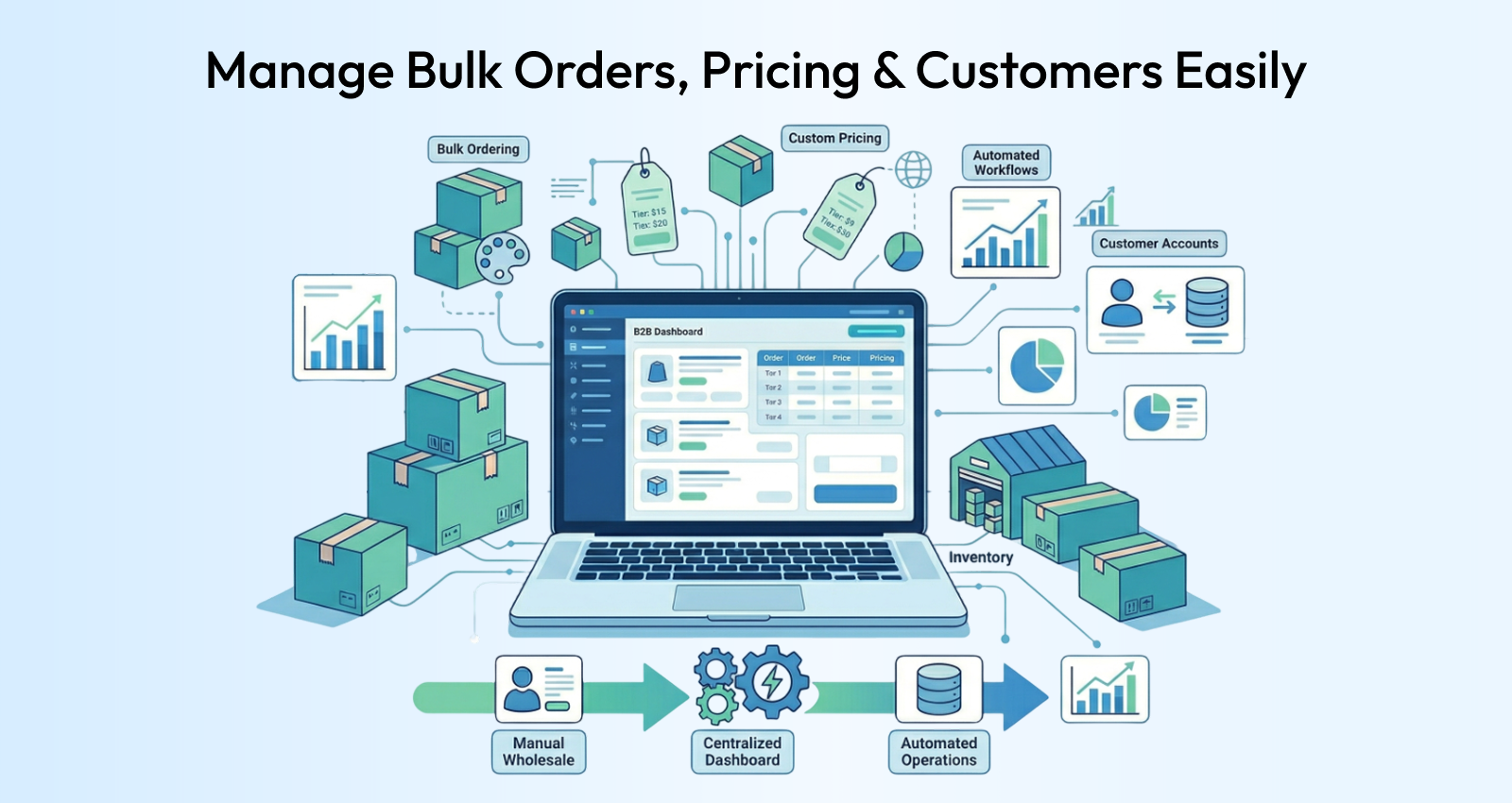
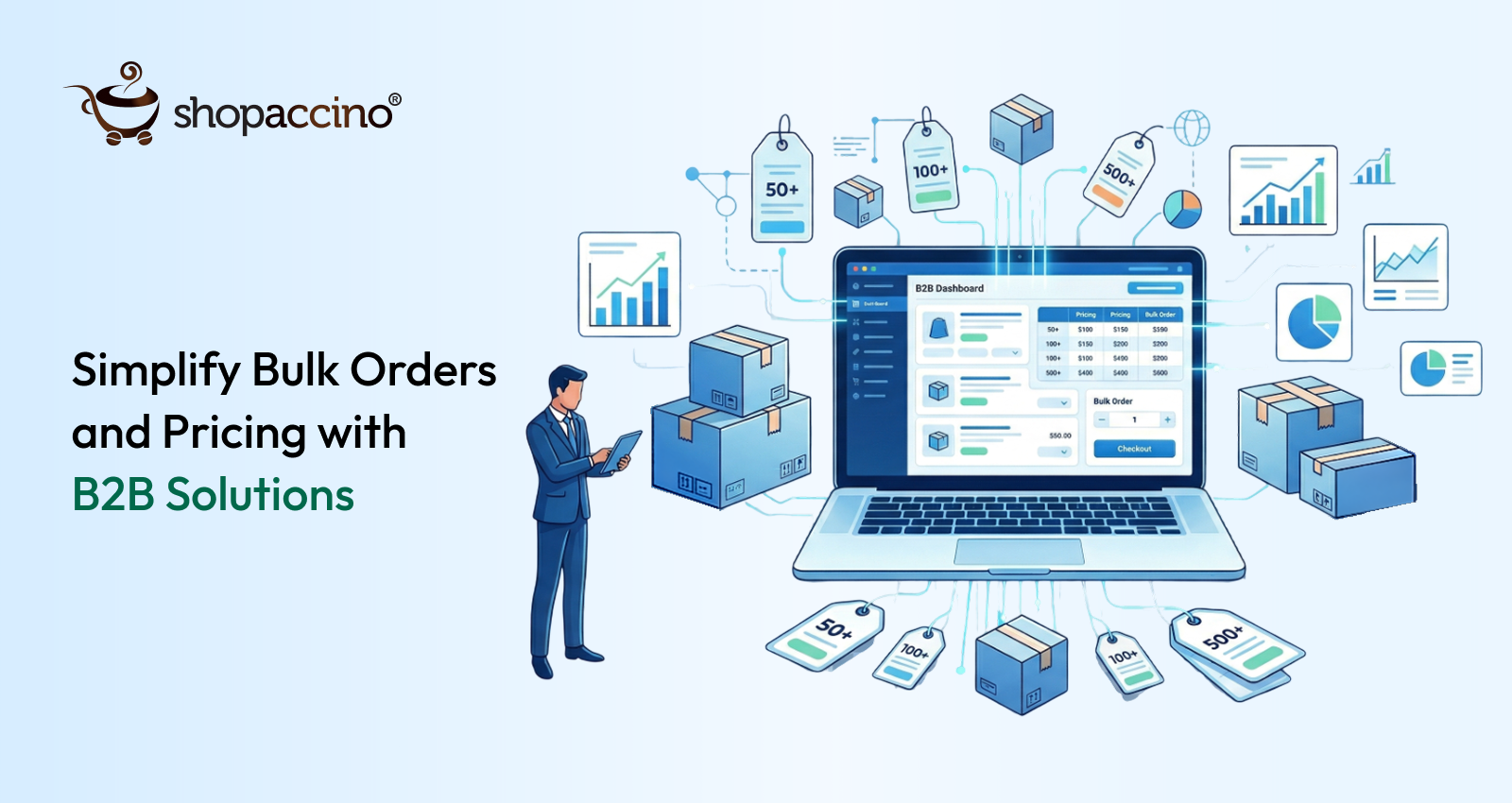
B2B eCommerce Software Solutions are digital platforms that enable businesses to sell products in bulk to other businesses through an online system, with features like custom pricing, bulk ordering, automated workflows, and account-based access.
Unlike B2C platforms, these solutions are designed specifically for complex wholesale needs.
They allow businesses to:
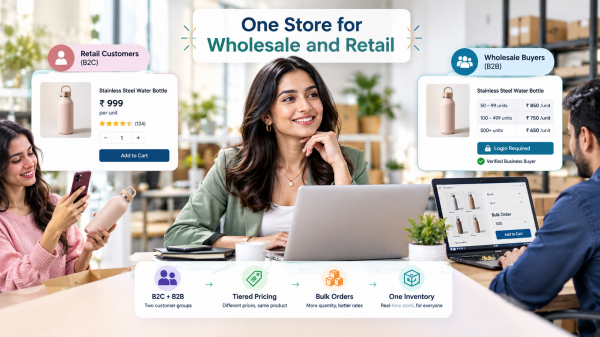
- Offer different pricing for different customers
- Accept bulk orders easily
- Automate order processing
- Manage distributors and retailers in one place
- Reduce manual communication
In simple terms, it’s like turning your traditional wholesale business into a smart, automated online system.
Why Wholesale Businesses Struggle Without Digital Solutions
Before we talk about solutions, let’s understand the real problem.
Why do so many wholesale businesses feel stuck?
1.Manual Order Management
Most wholesale businesses still rely on:
- Phone calls
- Emails
- WhatsApp messages
This leads to:
- Miscommunication
- Order errors
- Time delays
A single wrong entry can affect inventory, billing, and customer trust.
2.Complex Pricing Structures
Wholesale pricing isn’t simple.
You might have:
- Different rates for distributors
- Special pricing for bulk buyers
- Region-based pricing
- Negotiated deals
Managing this manually becomes chaotic.
3.Lack of Real-Time Inventory Visibility
Without a centralized system:
- Stock updates are delayed
- Overselling becomes common
- Customers get inaccurate information
This directly impacts customer satisfaction.
4.Inefficient Order Processing
From receiving orders to invoicing and dispatch, everything takes longer when done manually.
Result?
- Delayed deliveries
- Increased operational costs
- Frustrated customers
5.Limited Scalability
Here’s the biggest challenge.
Manual systems work when you have 10–20 clients.
But what happens when you grow to 100+?
You need more staff, more time, and more effort—just to maintain operations.
That’s not scalable.
Key Features of the Best B2B eCommerce Software
Not all platforms are built the same.
The best B2B eCommerce software focuses on solving real wholesale challenges.
Here are the must-have features:
Custom Pricing & Tiered Pricing
Every customer is different.
A good system allows you to:
- Set customer-specific pricing
- Offer bulk discounts
- Create pricing tiers
This eliminates manual negotiation for every order.
Bulk Ordering System
Wholesale buyers don’t purchase one item.
They buy in bulk.
Your platform should support:
- Quick bulk order uploads
- Minimum order quantities (MOQ)
- Reorder functionality
This makes buying faster and easier for customers.
Customer-Specific Catalogs
Not every product is for every customer.
With advanced B2B platforms, you can:
- Show personalized catalogs
- Restrict product visibility
- Offer exclusive items
This improves the buying experience.
Automated Order Management
Automation is the real game changer.
A strong wholesale ecommerce solution will:
- Automatically process orders
- Generate invoices
- Update inventory in real-time
No more manual tracking.
Multi-User Accounts
In B2B, one company may have multiple buyers.
Your platform should allow:
- Multiple logins under one account
- Role-based access
- Approval workflows
This is critical for larger clients.
Seamless Payment Options
Unlike B2C, B2B payments are flexible.
Features should include:
- Credit limits
- Partial payments
- Payment terms
This builds trust with buyers.
Mobile-Friendly Experience
Many buyers place orders on the go.
A mobile-optimized platform ensures:
- Faster ordering
- Better accessibility
- Improved user experience
Integration Capabilities
Your software should connect with:
- ERP systems
- Accounting tools
- CRM platforms
This ensures smooth operations across departments.
At this point, you can already see how a structured system replaces chaos with clarity.
In fact, platforms like Shopaccino are built keeping these exact challenges in mind, helping businesses move from manual workflows to streamlined operations without heavy technical complexity.
How B2B eCommerce Software Solutions Simplify Wholesale Operations
Now let’s connect the dots.
How exactly do B2B eCommerce Software Solutions make your life easier?
1.Centralized Operations
Everything comes into one system:
- Orders
- Customers
- Inventory
- Payments
No more switching between tools or spreadsheets.
2.Faster Order Processing
What used to take hours now takes minutes.
Customers can:
- Log in
- Select products
- Place bulk orders
And the system handles the rest.
3.Reduced Human Errors
Automation minimizes:
- Wrong pricing
- Order mismatches
- Inventory errors
This improves accuracy and trust.
4.Better Customer Experience
Your buyers get:
- Personalized dashboards
- Easy reordering
- Transparent pricing
This makes you easier to do business with.
5.Improved Decision-Making
With real-time data, you can:
- Track best-selling products
- Monitor customer behavior
- Optimize pricing strategies
You’re no longer guessing—you’re making informed decisions.
6.Scalability Without Chaos
This is where the real impact shows.
Whether you have:
- 50 customers
- 500 customers
- 5000 customers
The system scales without increasing manual workload.
B2B eCommerce vs Traditional Wholesale Model
For decades, wholesale businesses have operated on relationships, calls, and manual coordination. While that model built strong networks, it also created limitations that are hard to ignore in today’s fast-moving market.
In a traditional wholesale setup, the entire process depends heavily on human involvement. A buyer calls or messages to place an order, the seller checks pricing manually, confirms availability, and then processes the order offline. This approach not only consumes time but also increases the chances of miscommunication.
Now compare that with a business using B2B eCommerce Software Solutions.
Instead of calling, buyers log into a dedicated portal. They see their custom pricing, browse products, check real-time stock, and place bulk orders within minutes. The system automatically processes everything—from order confirmation to invoicing.
The difference isn’t just digital vs manual. It’s about efficiency vs dependency.
Traditional wholesale:
- Relies on people and manual coordination
- Slower order processing
- Limited working hours
- Difficult to scale
B2B eCommerce model:
- Runs on automation and systems
- Faster, error-free order flow
- 24/7 ordering capability
- Easily scalable
Imagine a distributor who used to handle 40 orders a day manually. After shifting to a digital platform, the same business can handle 200+ orders without increasing staff. That’s the kind of transformation we’re talking about.
Wholesale Ecommerce Solution: Custom vs SaaS
Once businesses decide to go digital, the next big question is:
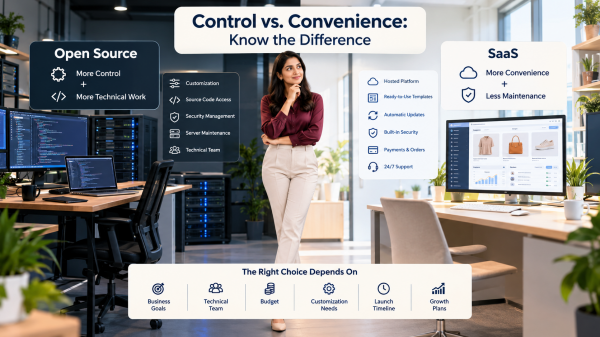
Should you build a custom platform or use a SaaS-based wholesale ecommerce solution?
Let’s break this down in a practical way.
Custom-Built Solutions
Custom platforms are developed from scratch based on your specific requirements. On paper, this sounds ideal—you get everything tailored exactly to your business.
But in reality, it comes with trade-offs.
Custom development requires:
- High upfront investment
- Long development timelines
- Continuous maintenance
- Dependence on developers for updates
For large enterprises with unique workflows, this might make sense. But for most startups, MSMEs, and growing wholesalers, it often becomes expensive and slow.
SaaS-Based B2B eCommerce Platforms
SaaS (Software as a Service) platforms are ready-to-use systems designed specifically for businesses like yours.
You don’t build from scratch. You start quickly.
A good SaaS-based wholesale ecommerce solution allows you to:
- Launch faster (sometimes within days)
- Avoid heavy development costs
- Get regular updates and new features
- Scale without technical complexity
For example, platforms like Shopaccino are designed to help wholesalers and manufacturers go digital without needing a full tech team. You can set up your B2B store, manage pricing, and start accepting orders—all from a single dashboard.
Which One Should You Choose?
If your business is still growing or transitioning from offline to online, SaaS is usually the smarter choice.
It gives you:
- Speed
- Flexibility
- Lower risk
Custom solutions, on the other hand, are better suited for enterprises with highly complex and unique needs.
How to Choose the Best B2B eCommerce Software
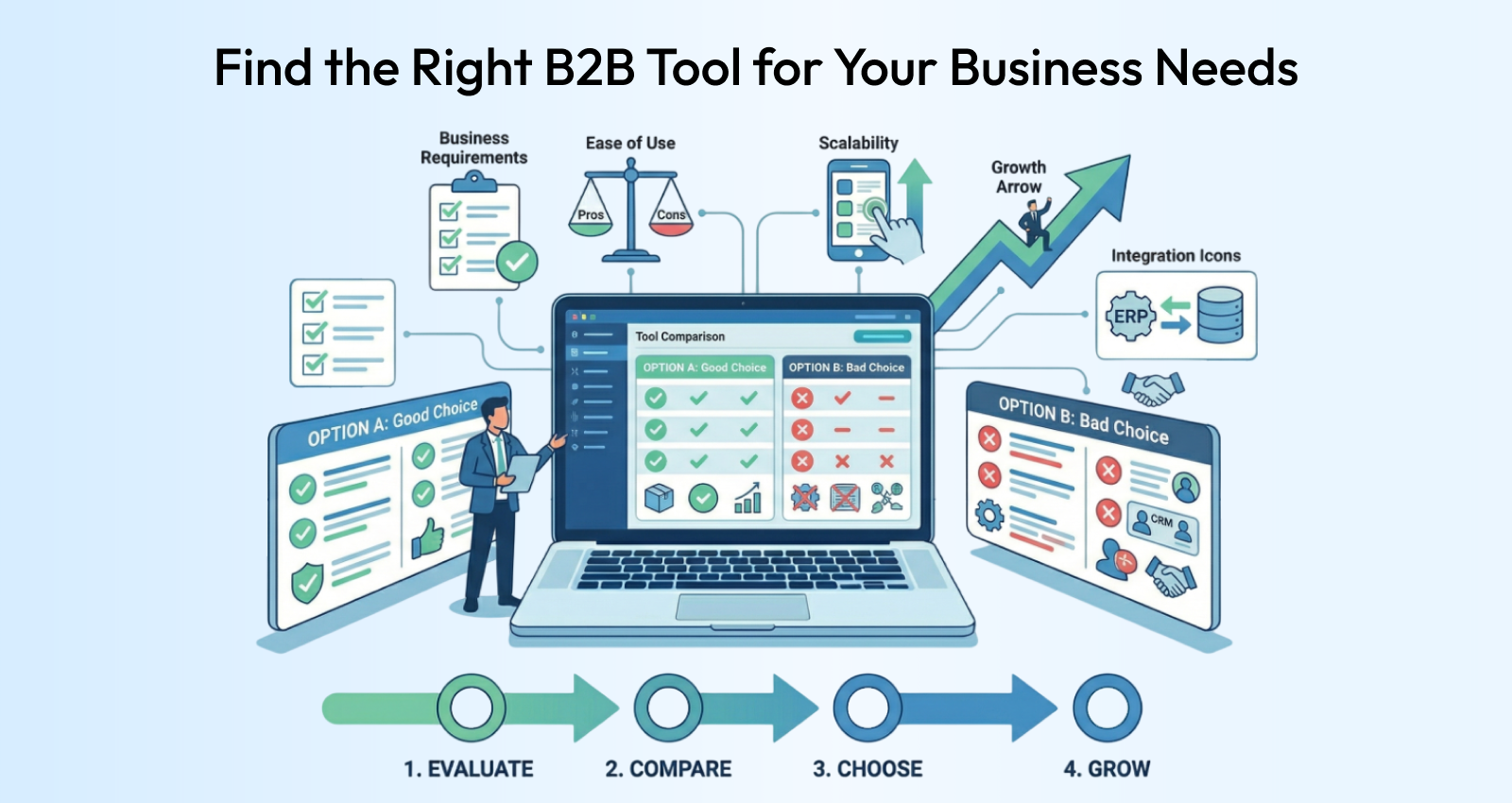
Choosing the best B2B eCommerce software isn’t about picking the most popular tool. It’s about finding the one that fits your business model.
Before making a decision, take a step back and think about your daily challenges.
Are you struggling with pricing complexity?
Is order management taking too much time?
Do your customers face difficulty placing repeat orders?
Your answers will guide your choice.
1.Understand Your Business Requirements
Start with clarity.
List down:
- Your product types
- Customer segments (distributors, retailers, etc.)
- Pricing structure
- Order volume
For example, a manufacturer dealing with bulk industrial goods will have very different needs compared to a distributor selling FMCG products.
2.Look for Industry-Specific Features
Not every platform is truly built for B2B.
Make sure the software supports:
- Customer-specific pricing
- Bulk ordering workflows
- MOQ (Minimum Order Quantity)
- Multi-user accounts
If these features are missing, the platform will create more problems than it solves.
3.Check Ease of Use
A powerful system is useless if your team can’t use it.
The platform should be:
- Easy to navigate
- Simple to manage
- Quick to onboard your team
Remember, your customers will also use this platform. Their experience matters just as much.
4.Evaluate Scalability
Think long-term.
Today you may have 50 customers. Tomorrow it could be 500.
The right B2B eCommerce Software Solutions should grow with your business without requiring a complete rebuild.
1.Define Your Business Model and Goals
Start with clarity.
Ask yourself:
- Who are your buyers—distributors, retailers, or bulk customers?
- What kind of products are you selling?
- Do you need region-based pricing or customer-specific pricing?
For example, a manufacturer supplying to dealers across India will need structured pricing and tier-based access. Without defining this early, your platform setup can become confusing later.
2.Choose the Right Platform
This is the most critical step.
Instead of jumping into development, evaluate platforms based on:
- Features (bulk ordering, pricing control, etc.)
- Ease of use
- Scalability
Most growing businesses today prefer SaaS-based B2B eCommerce Software Solutions because they are faster to launch and easier to manage.
3.Organize Your Product Catalog
Before going live, your product data needs to be clean and structured.
This includes:
- Product names and descriptions
- Minimum order quantities
- Images and specifications
A well-organized catalog makes it easier for buyers to find and order products without confusion.
4.Set Up Customer-Specific Pricing
One of the biggest advantages of a digital system is pricing automation.
Instead of negotiating every time, you can:
- Assign fixed pricing to each customer
- Create bulk discount rules
- Define special pricing for key accounts
This not only saves time but also ensures consistency.
5.Configure Payment and Order Workflows
Wholesale transactions are rarely “pay and buy instantly.”
You may need:
- Credit limits
- Payment terms
- Partial payments
Your platform should support these workflows so that your existing business model continues smoothly in a digital format.
6.Onboard Your Customers
This step is often underestimated.
Even the best platform won’t work if your customers don’t use it.
Guide them by:
- Sharing login access
- Giving a quick demo
- Helping them place their first order
Once they experience the convenience, adoption becomes much easier.
7.Test Before Full Launch
Before opening it to all customers, test everything internally.
Check:
- Order placement
- Pricing accuracy
- Inventory updates
- Payment flow
Fix any issues early to avoid problems later.
8.Launch and Optimize Continuously
Launching your platform isn’t the end—it’s the beginning.
Track:
- Customer behavior
- Order frequency
- Popular products
Use these insights to improve your system over time.
Many businesses start simple and gradually expand features as they grow. Platforms like Shopaccino make this easier by allowing businesses to scale without rebuilding everything from scratch.
Common Mistakes to Avoid
Even with the right intentions, many businesses make mistakes while adopting digital solutions.
Avoiding these can save you time, money, and frustration.
Ignoring User Experience
If your platform is complicated, customers won’t use it.
A confusing interface leads to:
- Low adoption
- Continued manual orders
- Lost efficiency
Always prioritize simplicity.
Trying to Digitize Everything at Once
Some businesses try to replicate every offline process exactly as it is.
This often leads to:
- Overcomplicated systems
- Delayed launch
- Poor usability
Start simple. Optimize later.
Choosing the Wrong Platform
Not every tool labeled as “B2B” truly supports wholesale complexity.
Choosing the wrong wholesale ecommerce solution can result in:
- Missing features
- Frequent workarounds
- Frustrated teams
Take time to evaluate before deciding.
Lack of Customer Onboarding
Many businesses assume customers will automatically start using the platform.
They don’t.
Without proper onboarding:
- Adoption remains low
- Teams fall back to manual processes
Support your customers during the transition.
Not Using Data for Decisions
One of the biggest advantages of digital systems is data.
If you’re not analyzing:
- Sales trends
- Customer behavior
- Product performance
You’re missing out on growth opportunities.
Conclusion: The Future of Wholesale Is Digital
Wholesale is changing—and fast.
What once worked through calls, spreadsheets, and manual coordination is no longer enough in a competitive market.
B2B eCommerce Software Solutions are not just a trend. They are becoming the foundation for scalable, efficient wholesale businesses.
They help you:
- Simplify operations
- Reduce errors
- Improve customer experience
- Scale without increasing workload
And most importantly, they give you control over your business in a way manual systems never can.
If you’re still managing wholesale operations the traditional way, it might be the right time to rethink your approach.
Start small if needed. Explore your options. Understand your requirements.
Because the sooner you move towards a structured wholesale ecommerce solution, the faster you unlock growth.
FAQs
B2B eCommerce Software Solutions are platforms that help businesses sell products in bulk to other businesses online. They offer features like custom pricing, bulk ordering, and automated workflows, making wholesale operations faster, more accurate, and scalable.
A wholesale ecommerce solution automates order processing, pricing, and inventory management. This reduces manual work, minimizes errors, and speeds up operations, allowing businesses to handle more orders without increasing resources.
The best B2B eCommerce software should include custom pricing, bulk order management, customer-specific catalogs, multi-user accounts, and integration with ERP or accounting systems to ensure smooth and scalable operations.
Yes, modern B2B eCommerce Software Solutions are designed for businesses of all sizes. Many SaaS platforms offer affordable and scalable options, making it easier for small businesses and MSMEs to digitize and grow.
B2B platforms focus on bulk transactions, custom pricing, and long-term business relationships, while B2C platforms are designed for individual consumers with fixed pricing and simpler buying processes.
With SaaS-based B2B eCommerce Software Solutions, businesses can launch their platform within a few days or weeks. The timeline depends on product setup, pricing configuration, and customer onboarding.
Yes, advanced B2B platforms support tiered pricing, customer-specific rates, bulk discounts, and region-based pricing, making it easy to manage even the most complex wholesale pricing models.
Wholesalers should go digital to reduce manual work, improve order accuracy, offer better customer experience, and scale operations efficiently. Digital platforms also provide valuable data insights for smarter business decisions.