What If Amazon Stopped Sending You Customers? How to Sell Online Without Amazon (and Grow Faster)
Most Amazon sellers do not own a business. They rent one.
The products are yours. The inventory risk is yours. The late nights are definitely yours. But the customers, the reviews, the traffic and the rules? Those belong to someone else. And that someone can change the deal overnight with a new fee, a tweaked algorithm or an account review you never saw coming.
So let's run the thought experiment most sellers avoid. What if Amazon stopped sending you customers tomorrow? Not a slow decline. A full stop. Would your business survive the month?
This guide walks through exactly what that scenario looks like, how to measure your own risk, and a practical plan to sell online without Amazon while keeping marketplaces as one channel instead of your only lifeline.
Quick answer: To sell online without Amazon, build your own ecommerce website on a platform you control, then drive traffic through Google search, free product listings, email, WhatsApp, social media, and wholesale buyers. Your own store lets you keep customer data, set your own prices, and avoid marketplace fees that, according to the U.S. Federal Trade Commission, can reach close to 50% of a seller's revenue. Start by moving your repeat buyers and best-selling products first, then grow new traffic over 90 days.
Key Takeaways
- Amazon traffic is rented. One policy change, Amazon account suspension or algorithm shift can cut your sales to zero.
- The FTC alleges that combined Amazon fees push many sellers to pay close to half their revenue to the platform.
- A direct store gives you three things Amazon never will: first-party customer data, pricing freedom and a brand buyers remember.
- You do not have to quit Amazon. The goal is to reduce Amazon dependence so no single channel controls more than about 40% of your sales.
- A realistic transition takes around 90 days: set up the store, move loyal buyers, then build search and social traffic.
What Would Actually Happen If Amazon Stopped Sending You Customers?
Your revenue would drop immediately, but the real damage would show up in the weeks after, when you realize you have no way to reach the people who used to buy from you.
Week 1: The silence
Orders stop. Inventory sits in a fulfillment center you still pay storage fees on. You open your customer list to send an email and realize something uncomfortable. There is no list. Amazon holds the relationship. You only ever had order numbers.
Month 1: The cash squeeze
Payroll, supplier invoices and loan repayments do not pause because your traffic did. Stock bought on credit turns from an asset into a liability, and you start discounting elsewhere just to move units.
Month 3: The brand question
Your reviews, star ratings and bestseller badges were all tied to Amazon listings. None of it transfers. To a new shopper on Google, your brand looks like a stranger. You are not restarting a channel. You are restarting trust.
Every step above is avoidable. Not by working harder on Amazon, but by building something you own before you need it.
Why Is Depending on Amazon Riskier Than It Looks?
Because Amazon controls your traffic, your costs and your customer relationships at the same time, and its business model grows when sellers pay more.
This shows up in Amazon's own numbers and in official legal filings.
The fee stack keeps getting taller
In its antitrust lawsuit, the U.S. Federal Trade Commission alleges that monthly fees, per-item fees and advertising charges that have become "virtually necessary" add up so that many sellers pay close to 50% of their total revenue to Amazon.
Now look at the other side of the ledger. In its second quarter 2026 results, Amazon reported $46.78 billion from third-party seller services, up from $40.35 billion a year earlier. Advertising services brought in $19.81 billion, up from $15.69 billion. Seller services and ads are growing faster than many sellers' profits. That money comes from somewhere.
Advertising is now the cost of being seen
Sponsored placements keep taking more of the page. In many categories, stop paying for ads and you disappear from page one. That means your Amazon fees are not really fixed. They rise every time a competitor bids higher.
Pricing freedom is limited
The FTC complaint also alleges that Amazon can bury sellers in search results if they offer lower prices elsewhere. Even when you build a cheaper channel, you may feel pressure not to use it.
Suspensions happen without warning
An account health issue, a complaint from a competitor or a listing flagged by automation can freeze your account and payouts while you wait for a review. The business does not slow down. It stops.
You never own the customer
This is the biggest risk and the easiest to ignore. With a marketplace, you cannot build customer lifetime value because you cannot talk to the buyer after the sale. No welcome email. No reorder reminder. No loyalty program. Every repeat purchase has to be won again, often by paying for another ad.
How Dependent Is Your Business on Amazon Right Now?
Give yourself 1 point for every "yes" below. If you score four or more, your business has a single point of failure.
Question (1 point for each "yes") | Why it matters |
|---|---|
Does Amazon bring in more than 50% of your total revenue? | One channel controls your cash flow |
Would you lose most of your sales if your account was suspended for 30 days? | You have no backup channel |
Do you have fewer than 1,000 customer emails or phone numbers you can legally contact? | You cannot reach buyers directly |
Do you spend more than 15% of Amazon revenue on Amazon ads? | Your visibility depends on paid clicks |
Is your brand name rarely searched on Google? | Buyers know the listing, not your brand |
Do you have no website that can take orders and payments? | You have nowhere else to sell |
Do you store most of your stock inside Amazon's fulfillment network? | Your inventory is hard to move fast |
0 to 1 points: You are diversified. Keep strengthening your direct channel.
2 to 3 points: You are exposed. Start building your own store this quarter.
4 to 7 points: You are one policy change away from a crisis. Treat the plan below as urgent.
How Do You Sell Online Without Amazon?
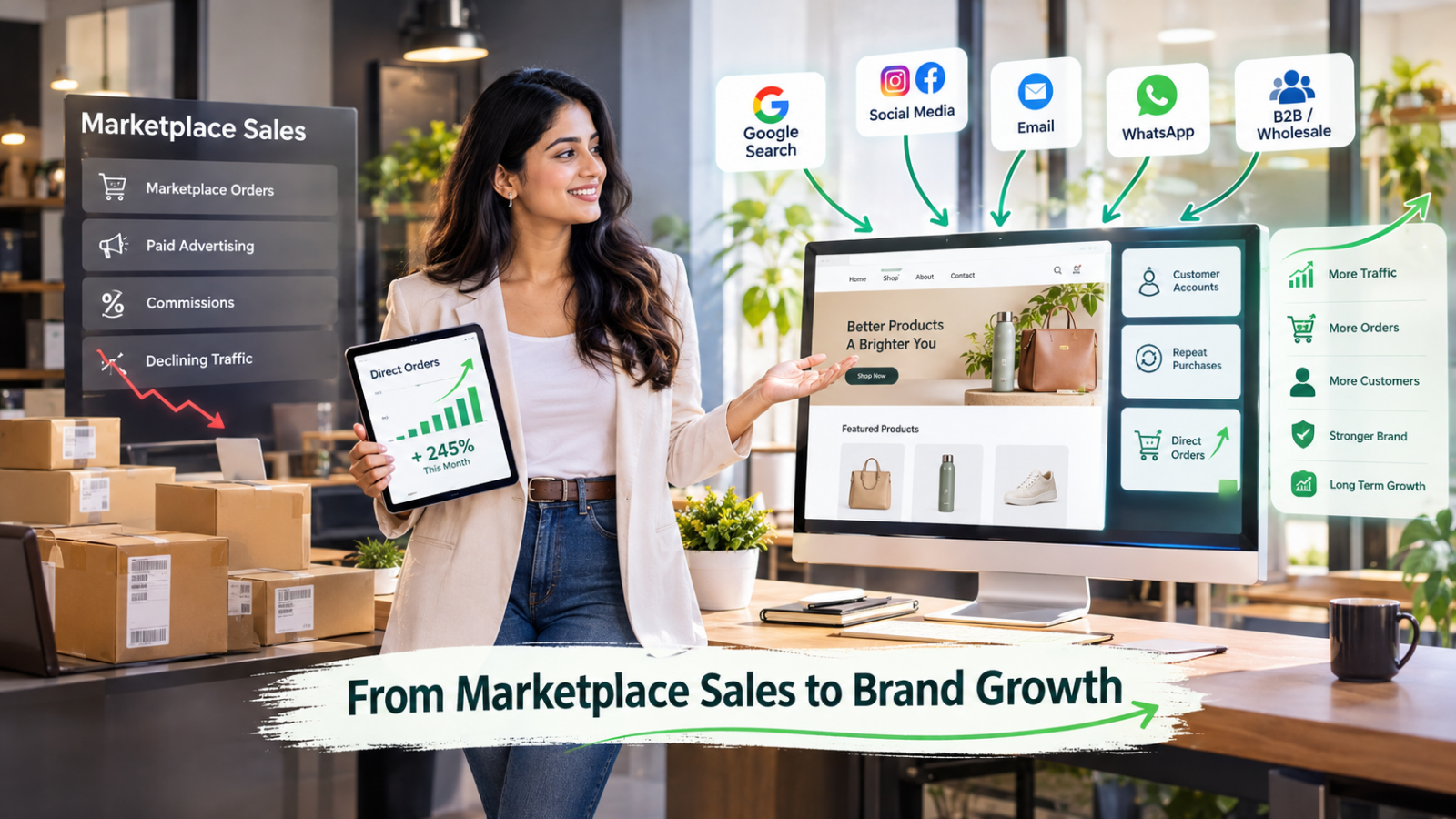
You sell online without Amazon by owning the store and renting only the traffic you choose, then slowly shifting that traffic toward channels you control, like search, email and repeat buyers.
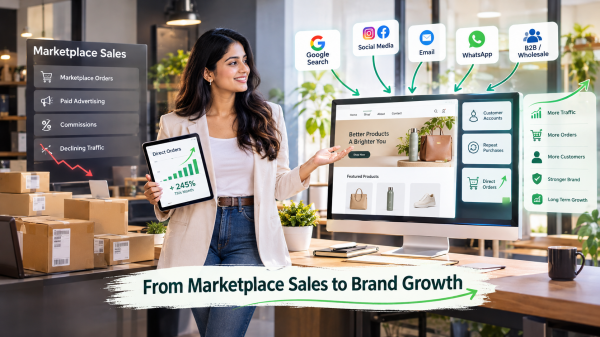
Think of it as five engines feeding one owned storefront.
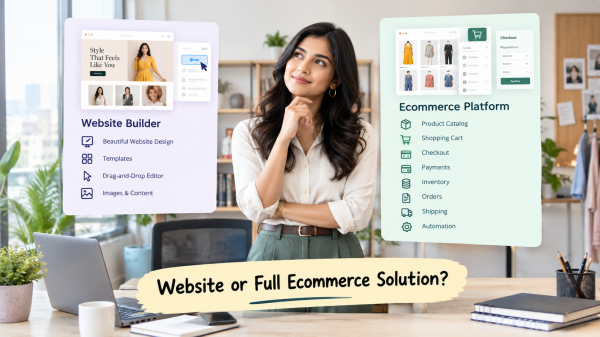
Engine 1: Your own ecommerce website
Everything starts here. The most reliable Amazon alternative for sellers is a store you own, because it is where orders, payments and customer data live. When you choose an ecommerce platform, look for:
- A fast, mobile-friendly storefront that loads well on slow connections
- Built-in SEO controls for titles, meta descriptions, URLs and product schema
- Multiple payment gateways and multi-currency selling if you ship abroad
- Inventory and order management that can sync with any marketplace you keep
- Zero or low transaction fees, so growth does not raise your costs
A direct-to-consumer (D2C) website also lets you build pages that marketplaces never allow: brand stories, size guides, bundles, subscriptions, B2B price lists and gift options.
Engine 2: Google search and free product listings
Google is where many buyers start before they ever open a marketplace app. Two opportunities matter most.
First, ecommerce SEO. Well-structured category pages, helpful buying guides and product pages that answer real questions can bring free, compounding traffic for years.
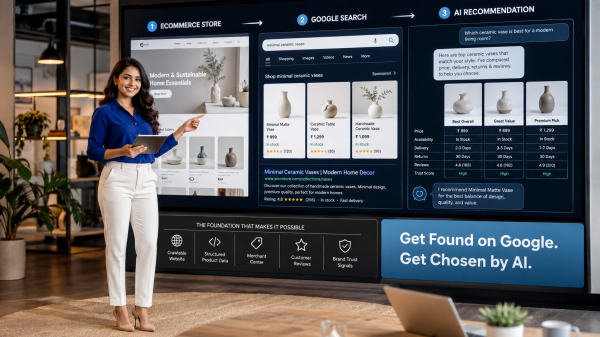
Second, product visibility inside Google itself. Google's own merchant listing documentation explains that pages with correct Product markup can become eligible for shopping knowledge panels, Google Images, popular product results and product snippets. Google also notes that only pages where a shopper can actually buy the product are eligible. In other words, you need your own store to play.
Engine 3: Email and WhatsApp marketing
This is where owned customer data turns into money. Once shoppers buy from your site, you can:
- Send a welcome series that tells your brand story
- Trigger abandoned cart and reorder reminders
- Share early access to launches with your best customers
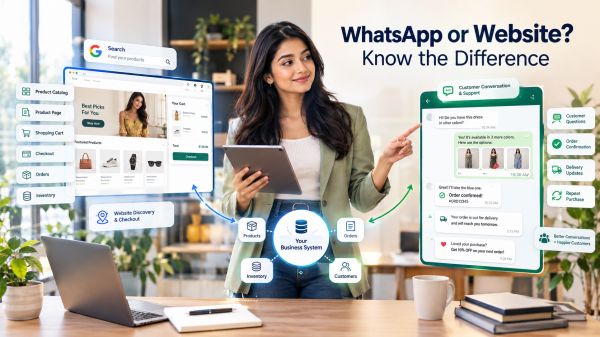
- Use WhatsApp for order updates and quick product questions in markets where it is the main messaging app
A repeat customer reached by email costs almost nothing. On a marketplace, the same customer often costs another ad click.
Engine 4: Social commerce and content
Instagram, Facebook, Pinterest, YouTube and TikTok (where available) are discovery machines. The key is to send that traffic to your own store, not to a marketplace listing. Short product demos, behind-the-scenes clips and customer stories build the brand recognition that marketplaces strip away.
Engine 5: Wholesale and B2B buyers
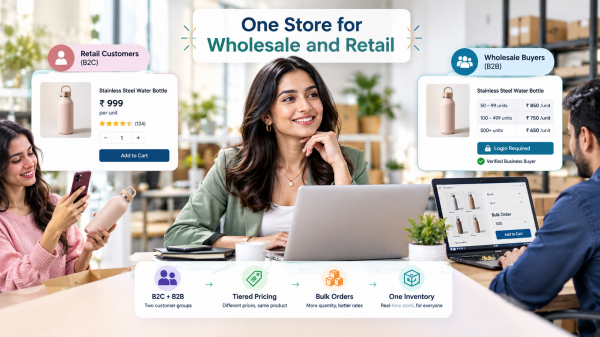
Many sellers forget this channel completely. Retailers, distributors and corporate buyers order in bulk, reorder on schedule and rarely shop on consumer marketplaces. A B2B portal with login-based pricing, minimum order quantities and quote requests can bring steady revenue that is completely independent of Amazon's algorithm.
What about other marketplaces?
Keep them if they are profitable, but treat them as multichannel selling support, not a replacement. Moving from full dependence on one marketplace to full dependence on another just swaps one landlord for a new one. The rule is simple: marketplaces are for reach, your website is for relationships.
How Much More Can You Keep When You Sell on Your Own Website?
On your own site, you trade marketplace commissions for your own marketing costs, and for repeat buyers, that trade is almost always in your favor.
Here is an illustrative example for a single order of a $100 product. Plug in your own numbers.
Cost per $100 order | Large marketplace | Your own store (new buyer) | Your own store (repeat buyer) |
|---|---|---|---|
Platform or referral commission | $15.00 | $0.00 | $0.00 |
Fulfillment and storage | $9.00 | $8.00 | $8.00 |
Advertising to win the sale | $12.00 | $18.00 | $2.00 |
Payment processing | Included | $3.00 | $3.00 |
Total cost of the sale | $36.00 | $29.00 | $13.00 |
What you keep before product cost | $64.00 | $71.00 | $87.00 |
Notice the pattern. Your first sale on your own store may cost more to win than a marketplace sale. But from the second order onward, your costs collapse because you already own the relationship. On a marketplace, the repeat buyer usually costs close to the same as the first.
What Does a 90-Day Plan to Reduce Amazon Dependence Look Like?
Spend the first month building, the second month moving your existing buyers and the third month growing new traffic.
Days 1 to 30: Build the foundation
- Pick your ecommerce platform and connect your domain.
- Upload your top 20% of products first. These usually drive most of your revenue.
- Write original product descriptions. Do not copy your marketplace listings word for word.
- Set up payment gateways, shipping rates, taxes and return policies.
- Add product schema, clean URLs and unique meta tags to every product page.
- Install analytics and connect Google Search Console.
Days 31 to 60: Move the customers you already have
- Add a branded insert card in every package with a first-order discount code for your website.
- Launch a simple loyalty program so buyers have a reason to come back directly.
- Offer something the marketplace cannot: bundles, exclusive colors, subscriptions or free gift wrapping.
- Collect emails and phone numbers at checkout, with clear consent.
- Follow each marketplace's rules for buyer communication. Inserts that focus on your brand and warranty registration are usually safer than direct solicitation.
Days 61 to 90: Grow traffic you own
- Publish two to four helpful blog posts or buying guides each month around what your buyers actually search for.
- Submit your product feed to Google and fix any errors.
- Run a small, tightly targeted social ad campaign that sends traffic to your site, not a listing.
- Reach out to 20 potential wholesale buyers with a B2B price sheet.
- Review numbers weekly: direct revenue share, repeat purchase rate, and cost per new customer.
By day 90, you are not replacing Amazon. You have a working second engine that could keep the lights on if the first one stalled.
What Mistakes Do Sellers Make When They Leave Amazon?
The most common mistake is expecting marketplace-level traffic on day one and quitting before the direct channel has time to compound.
Watch out for these as well:
- Copying marketplace listings. Duplicate content helps nobody rank. Rewrite descriptions for your own audience.
- Racing to the bottom on price. Your website should compete on experience, trust and exclusives, not just the lowest number.
- Ignoring site speed. Heavy themes and oversized images kill conversions, especially on mobile.
- Skipping trust signals. Clear return policies, real contact details, secure checkout badges and genuine reviews matter more on a new store than on a famous marketplace.
- Treating data carelessly. Once you own customer data, you also own the duty to protect it. The FTC's guide to protecting personal information is a practical place to start.
- Pulling out of Amazon overnight. A sudden exit throws away profitable volume. Shift gradually while your direct channel grows.
Is There Enough Demand Outside Amazon to Grow?
Yes. Online shopping keeps growing across major markets, and much of that spending happens outside any single marketplace.
The U.S. Census Bureau reported that retail ecommerce sales reached $340.2 billion in the second quarter of 2026, up 12.2% from a year earlier and equal to 17.1% of total retail sales. In Europe, Eurostat found that 78% of internet users in the EU bought goods or services online in 2025, up from 62% a decade earlier.
Shoppers discover brands on search, social media, WhatsApp, email and word of mouth. The question is whether your brand is there when they look.
How Does Shopaccino Help You Sell Online Without Amazon?
Shopaccino gives established businesses one platform to run their own branded store for retail and wholesale buyers, in their home market and across borders, without handing over a share of every sale.
Here is how it maps to the five engines above:
- Your own storefront: Customizable themes, a fast mobile-ready store and full control over your brand, pricing and customer data.
- No platform commission: Shopaccino offers a 0% transaction platform fee, so your costs do not rise just because your sales do.
- Built-in SEO tools: Control titles, descriptions, URLs and product pages so search engines and AI tools can understand and surface your catalog.
- B2B and B2C together: Run retail and wholesale on one platform with customer-specific pricing, quote workflows and credit terms.
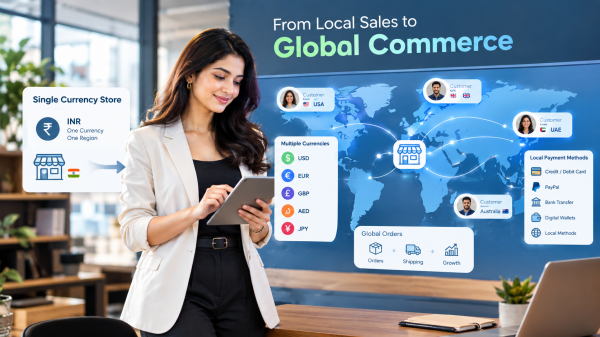
- Global selling: Multi-currency pricing, multiple payment gateways and international shipping integrations for buyers anywhere.
- Retention built in: Loyalty points, tiered rewards, referral codes, coupons and segmented campaigns to turn first-time buyers into repeat customers.
- Branded mobile app: An iOS and Android app with push notifications, so your best customers are one tap away instead of one search away.
- Operations that scale: Order management, multi-warehouse inventory and delivery tools that keep up with growth.
Shopaccino is built for businesses that already sell online, offline or both. Keep your marketplace listings running while your own store becomes the center of your business.
That gap is the entire business case for going direct. You are not trying to beat Amazon on the first order. You are trying to win on the fifth.
Build the Business You Would Still Have Tomorrow
Here is the real answer to the question in the title. If Amazon stopped sending you customers, the sellers who survive would be the ones who had already built a place of their own.
That place does not have to replace your marketplace sales today. It just has to exist, collect customers and grow a little every week. Every email you capture, every repeat order on your own site and every product page that ranks on Google makes your business harder to switch off.
Start small. Move your best products. Invite your best buyers. And give your brand a home that nobody else can take away.
Ready to build it? Explore how Shopaccino helps you launch a branded store for retail, wholesale and global buyers, and start selling on your own terms.
FAQs
Yes. Many brands earn higher profit per order on their own website because they avoid marketplace commissions and can sell again to repeat buyers at a very low cost. The key is to build owned traffic through search, email and social media instead of relying on a single platform.
The best Amazon alternative for sellers, and the strongest long-term alternative to selling on Amazon, is your own ecommerce website on a platform you control, supported by Google search, free product listings, email marketing and wholesale buyers. Other marketplaces can add reach, but they carry the same dependency risk.
Not necessarily. If Amazon is profitable, keep it as one channel. Focus on reducing Amazon dependence so that no single marketplace brings in more than about 40% of your revenue. Shift gradually while your direct channel grows.
Start with ecommerce SEO on your category and product pages, add Product schema so Google can show your items in shopping results, collect emails at checkout, use social media to drive visitors to your site and approach wholesale buyers directly.
Most sellers can launch a store and move existing buyers within 60 days. Search traffic usually takes three to six months to build momentum, and it keeps compounding after that. Plan for a 90-day foundation and steady growth afterward.
No. A modern ecommerce platform lets you launch with your best-selling products first and expand later. Your biggest early investment is time spent on product content, SEO and moving loyal customers to your store.