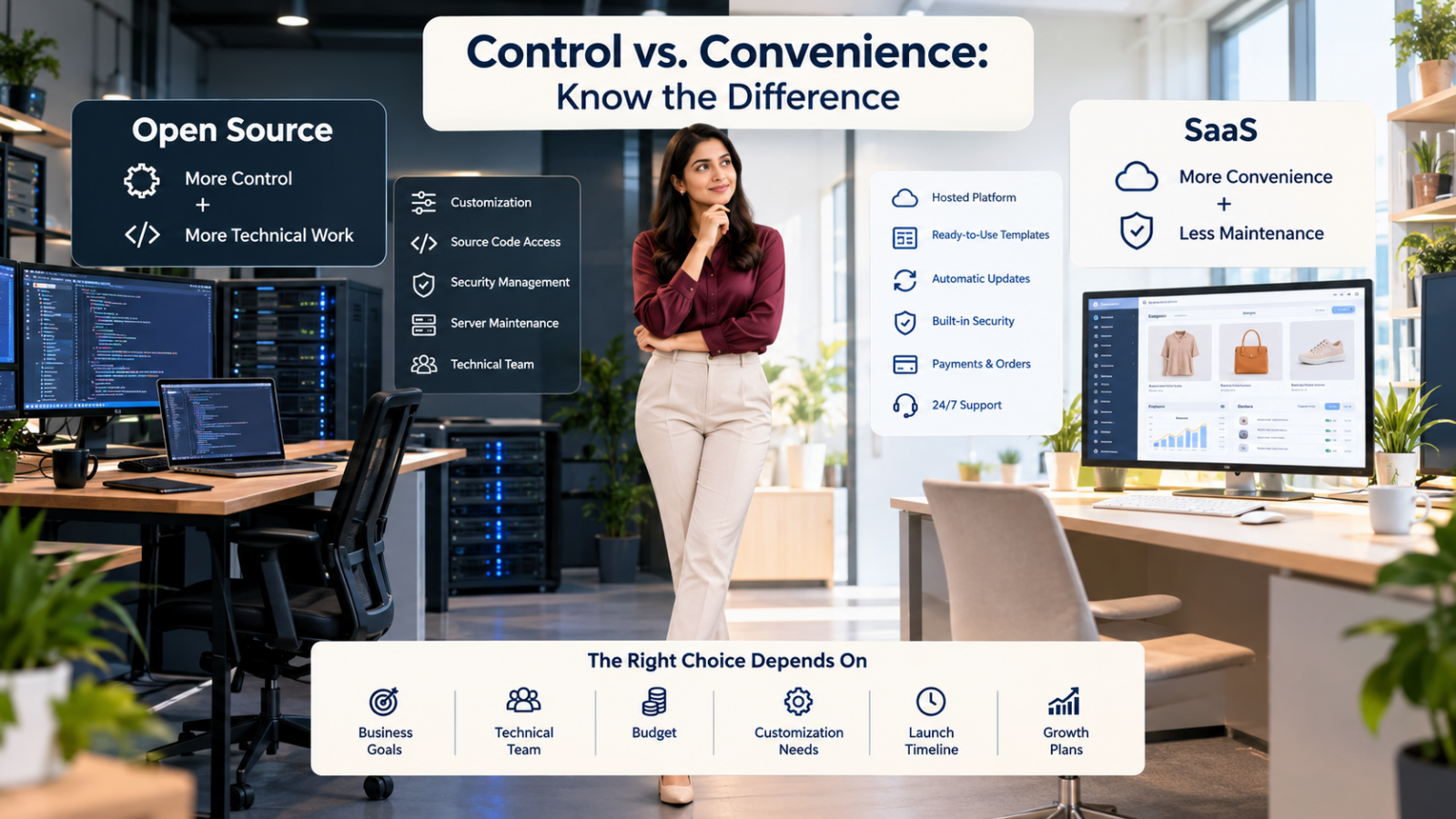
Open Source vs SaaS eCommerce Platforms: Which Is Right for You?
Every founder building an online store hits the same fork in the road. On one side sits open source software you download, host, and reshape however you like. On the other sits a subscription platform that hands you a working store on day one and quietly keeps the lights on while you sell. Both can power a thriving business. Neither is universally better. The right pick depends on what you are trying to build, how much technical muscle you have on hand, and how far you actually plan to grow.
This guide breaks down the open source vs SaaS ecommerce platforms question the way a seasoned operator would explain it over coffee. No jargon dumps, no sales pitch, just the trade-offs that genuinely change your outcome once real orders start coming in.
What is an open source ecommerce platform?
Short answer: An open source ecommerce platform is software whose code is public, so you can download it, change it, and host it yourself. You gain total control, but you also take on hosting, security, and every update.
When you run an open source ecommerce platform, you (or your developer) install the software on a server you rent or own, wire up the pieces, and take full responsibility for how the store behaves. Well-known names in this space include WooCommerce, Magento Open Source, PrestaShop, and OpenCart.
The headline appeal is control. Because you hold the code, you can rewrite checkout logic, build custom features from scratch, connect any database, and design the storefront down to the pixel. There is usually no monthly license fee for the core software itself, which is where the "free" reputation comes from.
That freedom is paid for in a different currency: your time and your team's skill. A self-hosted ecommerce platform means you own hosting, servers, security patches, backups, plugin conflicts, and every version upgrade. When something breaks at 2 a.m. during a flash sale, the responsibility to fix it is yours alone. There is no support line that owns the uptime for you.
Who is open source usually a fit for?
- Businesses with in-house developers or a reliable agency on retainer.
- Brands with unusual workflows that packaged tools simply cannot model.
- Teams that want to own their entire stack and avoid vendor lock-in on principle.
What is a SaaS ecommerce platform?
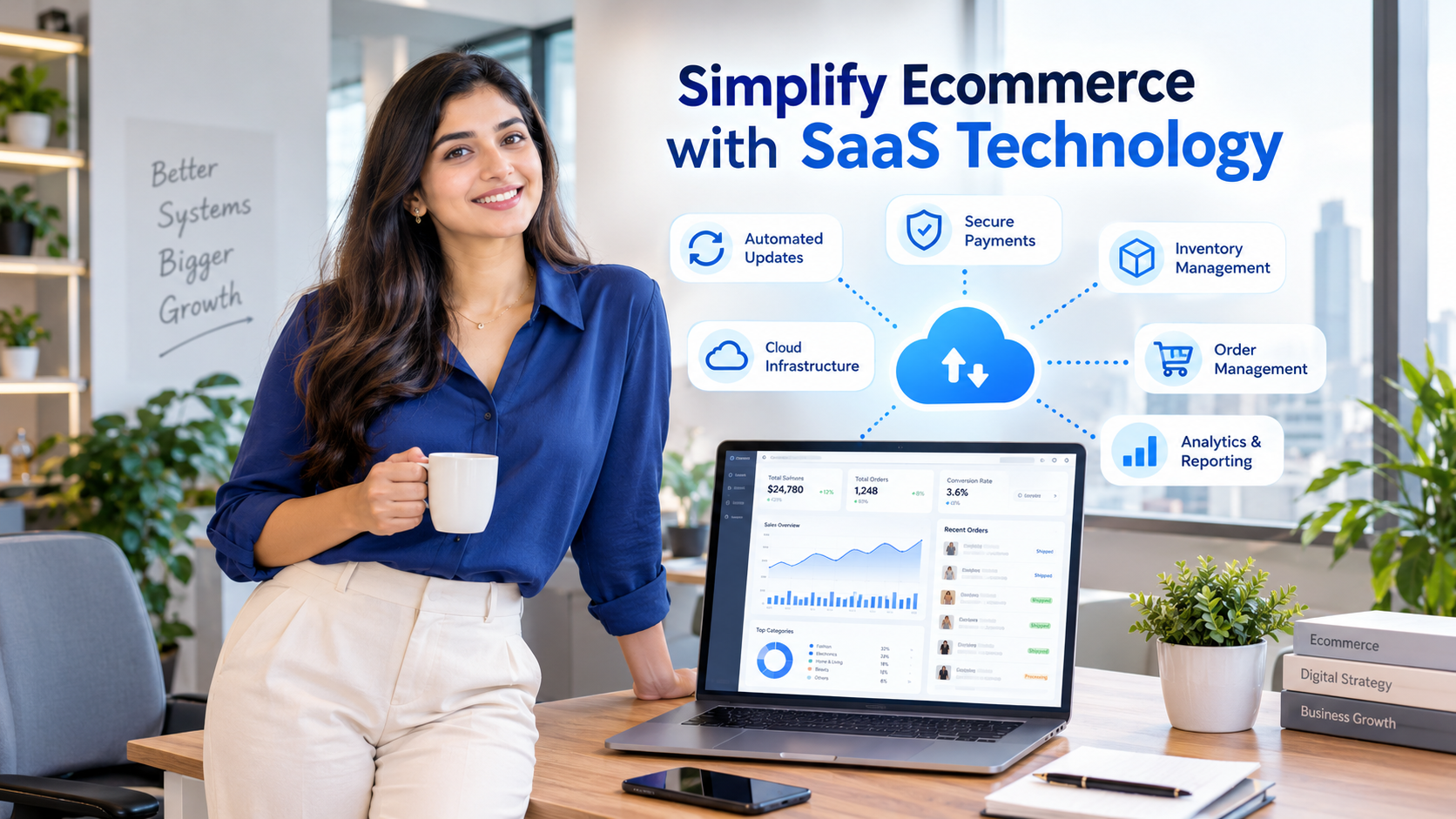
Short answer: A SaaS ecommerce platform is a fully hosted store you access through a subscription. The provider runs the servers, ships updates, handles security, and keeps you online, so you can focus on products and customers.
SaaS stands for Software as a Service. A SaaS ecommerce platform is a fully managed product you reach through a monthly or annual plan. The provider runs the infrastructure, ships new features, patches security, and keeps your store online while you concentrate on products, marketing, and customers. Shopify, BigCommerce, and Shopaccino all live in this camp.
Think of it as renting a fully serviced storefront rather than buying a plot of land and constructing the building yourself. With a hosted ecommerce platform, the heavy lifting of infrastructure is already done for you. You log in, add products, choose a theme, connect a payment gateway, and start selling, often within a single day.
The trade-off is a recurring fee and a defined set of boundaries. You customize within what the platform allows through themes, apps, and APIs. For the vast majority of businesses those boundaries are generous enough that you never bump into them. For a small minority with very specific engineering needs, they can occasionally feel like guardrails.
Who is SaaS usually a fit for?
- Founders who want to launch fast and start selling, not manage servers.
- Growing brands that need rock-solid reliability during traffic spikes.
- Teams that would rather spend budget on growth than on ongoing maintenance.
How do open source and SaaS platforms actually differ?
Marketing copy makes both models sound perfect. The real differences show up in a handful of areas that decide your day-to-day life as an operator. This ecommerce platform comparison walks through each of them, so you can see where the trade-offs land instead of guessing.
Factor | Open Source | SaaS |
|---|---|---|
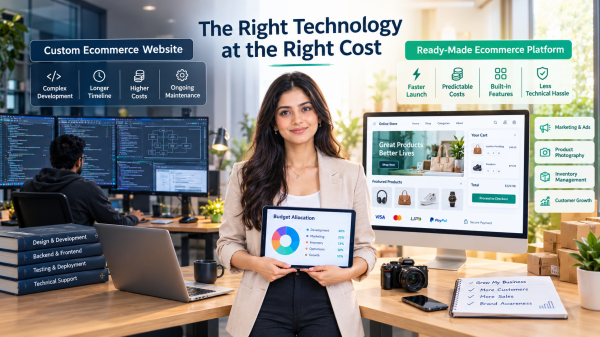
Setup and control | Full code-level control, host anywhere | Guided setup, deep but bounded customization |
Cost model | Free core, but hosting, devs and plugins add up | Predictable subscription that bundles the essentials |
Hosting and upkeep | You manage servers, backups and updates | Provider handles hosting, uptime and updates |
Security and PCI | You own patching and PCI compliance | Provider manages PCI compliance and SSL |
Scalability | Scales well with expert tuning | Scales elastically in the background |
Integrations | Huge ecosystem, variable plugin quality | Curated, vetted app marketplace |
Time to launch | Weeks to months | Days |
Best for | Teams with strong developer support | Founders who want to sell, not maintain |
Who owns the setup and the control?
Open source hands you the keys to everything. You can modify any file and host anywhere on earth. That is genuine power when you have the skill to wield it. SaaS gives you a polished, guarded environment instead. You get deep customization through themes, apps, and APIs, but you never touch the underlying servers. If code-level control is non-negotiable for you, open source wins here. If "control" really means running your business without babysitting infrastructure, SaaS wins.
What does each option truly cost?
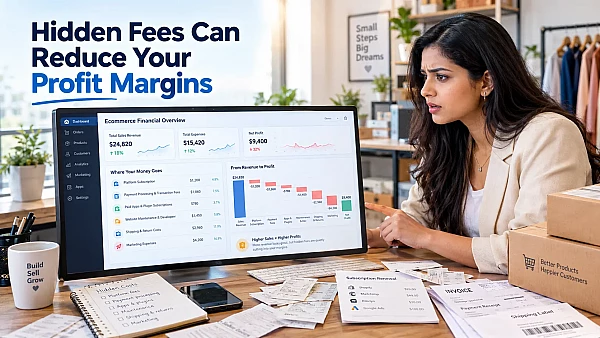
This is where the "free" label on open source gets misleading. The software may cost nothing to download, but the total cost of ownership rarely does. Add hosting, a developer or agency, premium plugins, security tooling, an SSL certificate, and ongoing technical maintenance, and a supposedly free store can quietly cost more per month than a subscription would.
SaaS bundles hosting, security, updates, and support into one predictable fee. You accept a lower ceiling on customization in exchange for a much lower floor on nasty surprise costs. One line item worth checking closely is transaction fees. Some SaaS platforms take a slice of every sale on top of your plan, which grows painful as volume climbs. Others, like Shopaccino, charge zero platform transaction fees, so the margin you earn is the margin you keep.
Who handles security and PCI compliance?
With open source, you are the security team. Patching vulnerabilities the day they surface, achieving and maintaining PCI compliance for card payments, and hardening your server all land squarely on your plate. Miss a patch and you leave a door open. For a store handling real customer payment data, that is a serious ongoing obligation, not a one-time setup.
SaaS platforms handle this at scale on your behalf. PCI compliance, SSL, DDoS protection, and security updates are managed by the provider as part of the service you pay for. For most merchants who are not security specialists, this single factor is enough to tip the decision.
How well does each one scale?
Platform scalability behaves very differently across the two models. On open source, scaling means provisioning bigger servers, tuning databases, adding caching layers, and load-testing before every major sale. Done by an expert it scales beautifully. Done carelessly it crashes on your single busiest day of the year, which is exactly when it hurts most.
SaaS scales elastically in the background. Sudden surges during a festival sale, a viral moment, or a paid campaign are absorbed by the provider's infrastructure without you lifting a finger. You rarely have to think about capacity, and that peace of mind is much of what you are paying for.
How do integrations and add-ons compare?
Both models support third-party integrations, but the experience is not identical. Open source ecosystems are enormous, though plugin quality varies wildly and conflicts between two plugins are a common headache. SaaS marketplaces tend to be more curated, with apps vetted to behave inside the platform. You get fewer nasty surprises, and occasionally fewer exotic options for a truly unusual need.
How fast can you launch and keep things updated?
An open source build can take weeks or months to design, develop, and deploy properly. A SaaS store can be live and taking orders in days. When a new version ships, SaaS applies the update automatically. On open source you test and apply each update yourself, then hope no plugin breaks in the process. Over a year, that difference in effort adds up to real money and real focus.
When does an open source ecommerce platform make more sense?
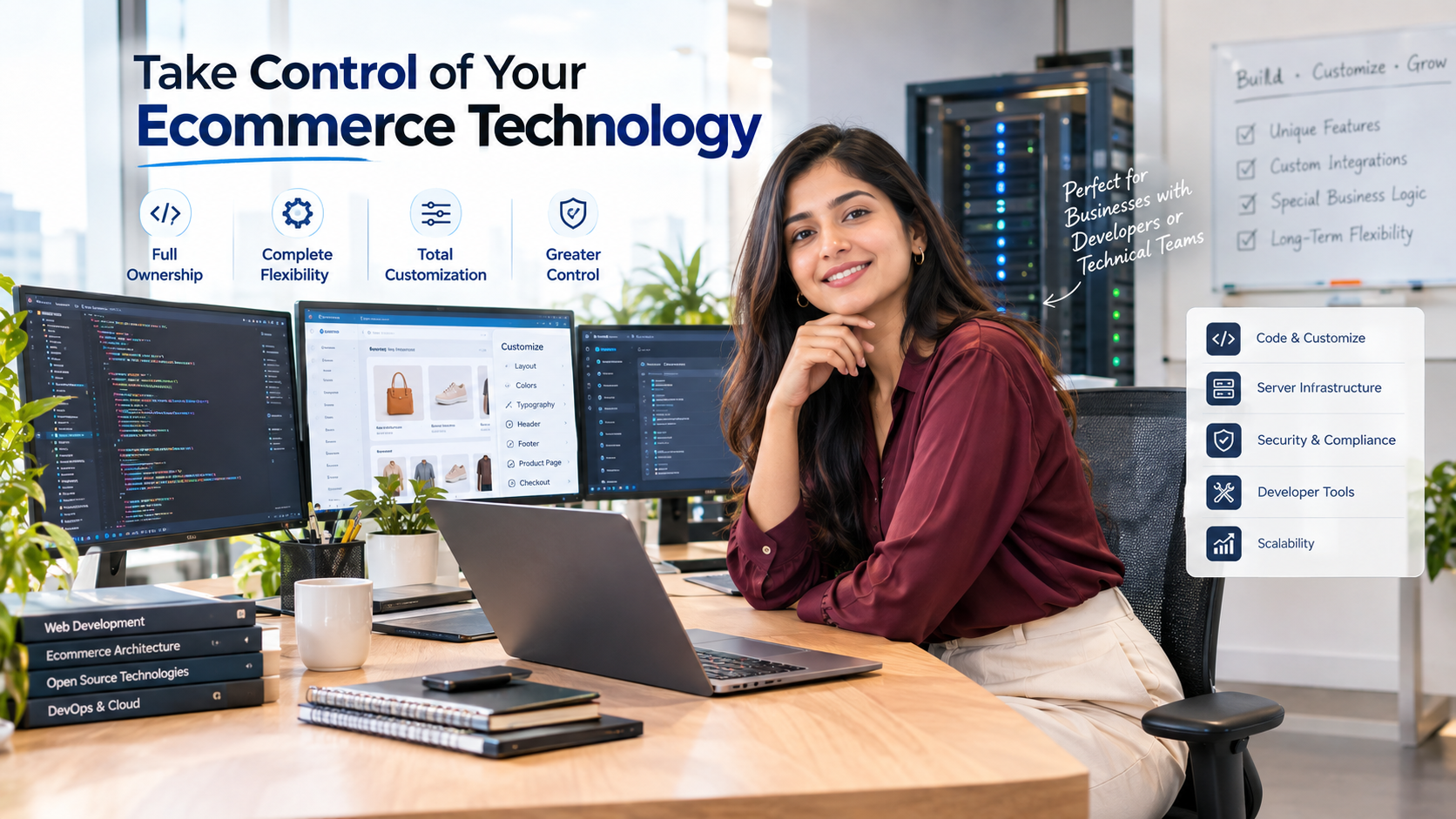
Short answer: Open source is the stronger choice when you have developers on hand and genuinely unusual requirements that packaged software cannot handle, and you want to own every line of code.
Open source shines when your requirements genuinely fall outside what packaged software offers. Reach for it when the following are true:
- You have a skilled development team or a trusted agency on retainer.
- Your business logic is unusual, such as complex B2B pricing tiers built from scratch, bespoke fulfilment rules, or a deep custom ERP tie-in.
- You want to own every line of code and avoid vendor lock-in as a matter of strategy.
- You have the budget to treat your store as an ongoing engineering project rather than a one-time setup.
If that describes you, the flexibility is well worth the overhead. You are effectively building and running software, and you have the people to maintain it for the long haul.
When is a SaaS ecommerce platform the smarter choice?
Short answer: SaaS is the smarter choice for most merchants who want to sell rather than engineer, especially when speed, reliability, predictable costs, and cross-border selling matter.
For the majority of sellers, and particularly those who want to grow a business rather than run a server room, SaaS is the pragmatic pick. Lean toward it when:
- You want to launch quickly and start earning without a long build cycle.
- You do not have, and do not want to hire, a full technical team.
- Reliability during traffic spikes matters more to you than code-level control.
- You want predictable costs and someone else owning security and uptime.
- You plan to sell across borders and need cross-border features ready out of the box.
If you already run WooCommerce and these points sound familiar, Shopaccino is a fully managed WooCommerce alternative that moves your store to SaaS with guided migration support.That last point carries more weight than founders expect. Selling internationally on a self-hosted ecommerce platform means stitching together multi-currency, multi-language, region-based pricing, and international shipping yourself, then maintaining all of it. A global-ready SaaS platform bakes these in, which can save you months of build time and a great deal of ongoing worry.
What are the biggest myths about open source vs SaaS?
A few stubborn myths push founders toward the wrong choice. Clearing them up makes the decision far easier.
Myth: open source is always cheaper
Only the license is free. Once you factor in hosting, developers, premium extensions, and security, the total cost of ownership often matches or beats a subscription, especially in the first two years while you are still building.
Myth: SaaS locks you in forever
Reputable SaaS platforms let you export your products, customers, and orders. Vendor lock-in is a real consideration, but a platform with clean data export and open APIs keeps your exit door open if you ever need it.
Myth: SaaS cannot handle serious or B2B businesses
Modern SaaS platforms run large catalogs, wholesale pricing, and mixed B2B and B2C operations comfortably. Many established manufacturers, distributors, and exporters run entirely on hosted platforms today.
How do you choose the right platform for your business?
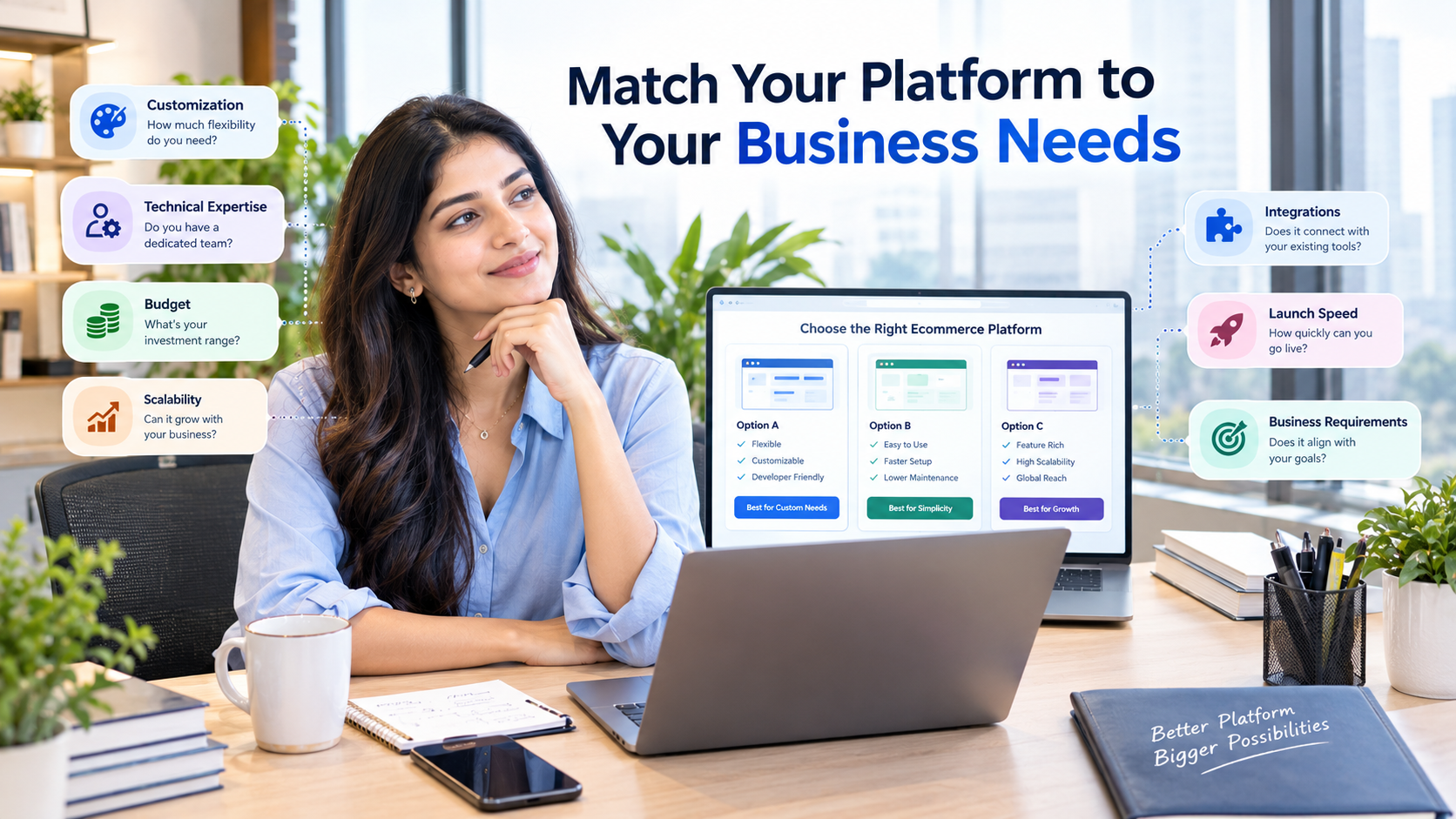
Short answer: Answer five honest questions about your technical team, timeline, real budget, how unusual your needs are, and where your customers live. Your answers point clearly to one model.
Set the brand names aside for a moment and answer these five questions truthfully. The pattern in your answers usually points to one model without much drama.
- What is your technical reality? In-house developers make open source viable. No dev team points firmly to SaaS.
- How fast do you need to launch? A few weeks is fine for either. Live this month almost always means SaaS.
- What is your true budget? Count hosting, developers, plugins, and maintenance, not just the license price on the tin.
- How unusual are your requirements? A standard catalog and checkout are covered by SaaS. Deeply custom logic may genuinely need open source.
- Where do your customers live? Selling worldwide raises the bar, and built-in cross-border tools save serious time.
There is no trophy for choosing the harder path. The best platform is the one that lets you spend your energy on customers, products, and growth instead of on plumbing.
Where does a platform like Shopaccino fit in?
Shopaccino is a global SaaS commerce platform built around real operational pain points rather than a generic one-size-fits-all template. It helps exporters sell across borders, lets manufacturers and distributors run B2B and B2C sales from a single system, and gives D2C brands a branded website and mobile app to scale on. Built-in multi-currency, multi-language, international payments, region-based pricing, and international shipping mean you can sell worldwide from one dashboard, backed by integrated inventory, payments, logistics, multi-warehouse order fulfilment, and zero platform transaction fees. For businesses that want SaaS convenience without giving up room to grow, it is a clear example of how far modern hosted platforms have come.
The bottom line: match the model to your team, not the hype
The open source vs SaaS decision is not really about which technology is superior in the abstract. It is about which trade-offs fit your team, your timeline, and your ambition right now. Open source rewards those with the skill and appetite to build and maintain their own stack. SaaS rewards those who want to pour their focus into selling and scaling while a provider keeps the engine running. Be honest about which of those describes you today, and you will pick correctly, then be free to change your mind later as your business evolves.
FAQs
The core software is free to download, but running it is not. You pay for hosting, developers, premium plugins, security, and maintenance. Once you add these up, the total cost of ownership often matches or exceeds a SaaS subscription.
SaaS is far friendlier for beginners. It handles hosting, security, and updates for you, so you can launch and start selling within days without technical skills. Open source suits people who already have developer support in place.
Yes, with planning. You would migrate products, customers, and orders, then rebuild your store on new software. Many businesses start on SaaS to launch fast and only revisit open source if very specific needs later emerge.
SaaS is generally more secure for the average merchant, since the provider manages PCI compliance, SSL, and patching. Open source can be just as secure, but only if you have the expertise to maintain it consistently over time.
A global-ready SaaS platform is usually easier for cross-border selling, because multi-currency, multi-language, and international shipping are built in. On open source you assemble and maintain these yourself, which adds cost and time.
Some do, taking a percentage of each sale on top of your plan, which eats into margins as you grow. Others charge none. Shopaccino, for example, applies zero platform transaction fees, so your earnings stay entirely with you.