What Successful Ecommerce Brands Do Differently From Day One
Starting an online store today is easier than ever. Anyone can launch a website, upload products, and start selling. But the reality is that many ecommerce stores fail within the first few years, while some brands grow rapidly and become industry leaders.
So what makes the difference?
The answer is not just the product. It is the strategy behind the business from day one.
Successful brands do not randomly launch an online store and hope customers will come. They follow a clear ecommerce business strategy, understand their market, build strong customer experiences, and create systems that support long-term growth.
In this guide, we will explore what successful ecommerce brands do differently from the beginning, and how you can apply the same principles while building your online business.
If you are planning how to start a successful ecommerce business, the insights in this article will help you build a strong foundation.
Why Strategy Matters More Than Just Launching an Online Store
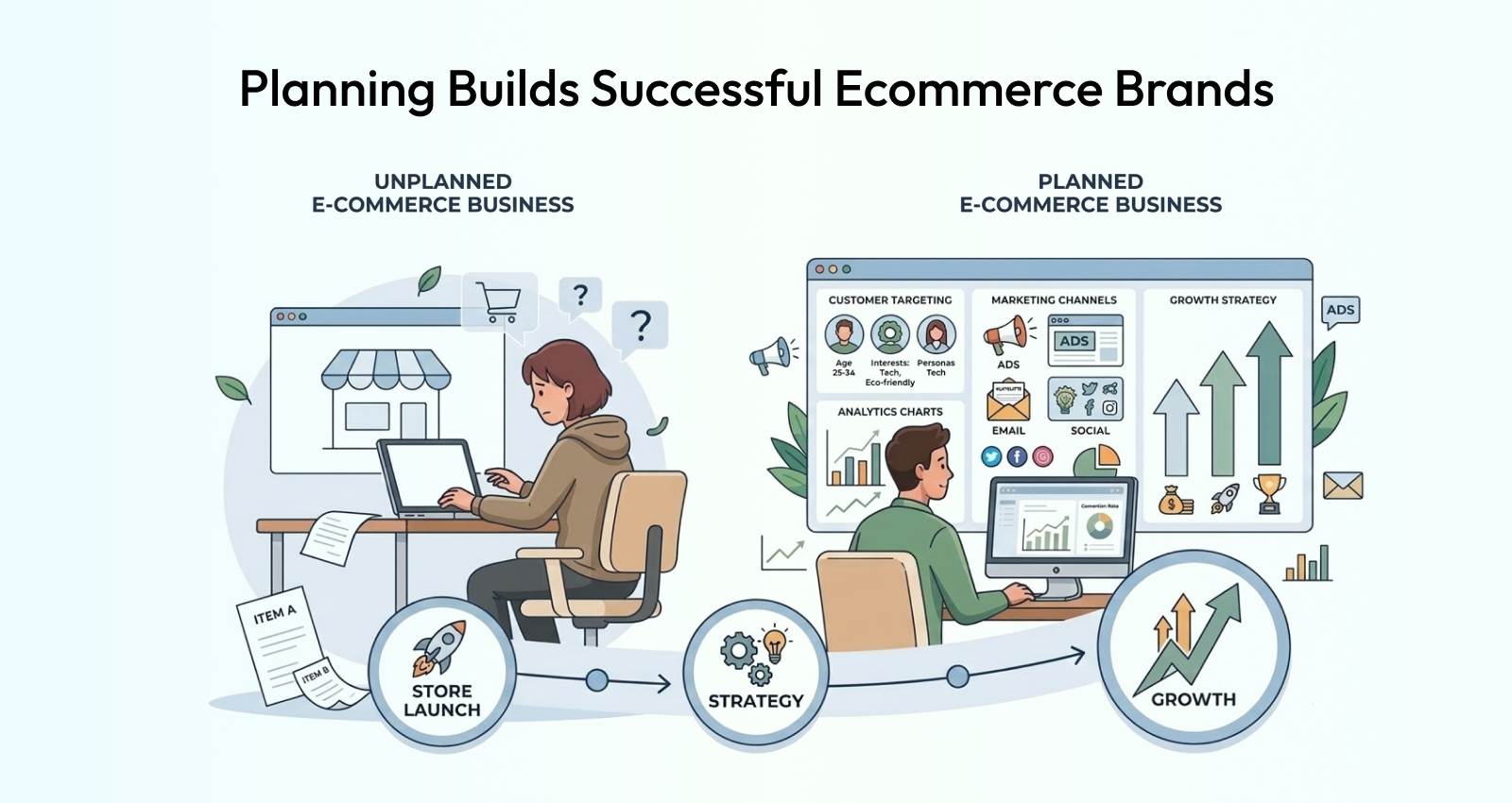
Many new entrepreneurs believe that launching an ecommerce website is the biggest step. But experienced brands know that launching is only the starting point.
Without a proper ecommerce growth strategy, businesses often face problems such as:
- Low website traffic
- Poor customer conversion
- High marketing costs
- Low repeat purchases
- Difficulty scaling operations
Successful brands avoid these challenges because they begin with a structured ecommerce business strategy.
Read Also : Why Visitors Don’t Become Buyers
Instead of thinking only about selling products, they think about:
- Who their customers are
- Why customers should choose them
- How they will attract traffic
- How they will convert visitors into buyers
- How they will retain customers
In simple words, they plan the journey before launching the store.
Key Foundations of a Strong Ecommerce Business Strategy
Before we explore the exact actions successful brands take, it is important to understand the core foundations of a strong ecommerce strategy.
|
Strategy Element |
Why It Matters |
|
Clear target audience |
Helps focus marketing efforts |
|
Unique value proposition |
Makes your brand different from competitors |
|
Customer experience |
Builds trust and improves conversions |
|
Marketing channels |
Drives consistent traffic |
|
Technology platform |
Supports growth and automation |
When these elements are defined early, businesses can scale faster and avoid common mistakes.
1. They Start With a Clear Customer Problem
One of the biggest differences between average and successful ecommerce brands is customer understanding.
Many new businesses choose products first and customers later. Successful brands do the opposite.
They start by asking:
- What problem are customers facing?
- What solution are they looking for online?
- Why are current products not satisfying them?
When a brand solves a real customer problem, marketing becomes easier.
For example:
|
Business Idea |
Customer Problem Solved |
|
Organic skincare store |
Customers want chemical-free skincare |
|
Custom furniture brand |
Customers need personalized home furniture |
|
Grocery delivery platform |
Customers want quick doorstep delivery |
This approach creates a strong ecommerce marketing strategy because messaging becomes clear and relatable.
Read Also : Build & Scale Your Online Store in India
2. They Focus on a Niche Instead of Selling Everything
Another major mistake new ecommerce businesses make is trying to sell too many products to too many people.
Successful brands understand that focus creates authority.
Instead of building a general store, they build niche-focused ecommerce businesses.
Examples of niche stores include:
- Handmade jewelry brand
- Premium coffee beans store
- Eco-friendly home decor shop
- Fitness accessories brand
This strategy helps businesses:
- Build a loyal customer base
- Create stronger brand identity
- Improve marketing efficiency
- Rank better in search engines
When businesses clearly define their niche, it becomes easier to design their ecommerce business strategy and create targeted campaigns.
How Successful Ecommerce Brands Design Powerful Marketing Strategies
Many ecommerce businesses fail not because of poor products, but because they do not have a clear marketing direction. Successful brands understand that launching a store is only the beginning. To grow consistently, they build strong ecommerce marketing strategies that attract the right audience and convert visitors into loyal customers.
Instead of relying on only one marketing channel, they build a multi-channel system that brings continuous traffic and engagement.
A strong marketing foundation usually includes:
- Search engine visibility
- Content marketing
- Social media presence
- Email marketing
- Customer retention campaigns
These strategies together support a long-term ecommerce growth strategy that helps brands scale over time.
Read Also : Increase Your Ecommerce Conversion Rate by 30%
3. They Build Their Store for Search Visibility From Day One
Successful ecommerce brands know that organic traffic can become their biggest source of customers. That is why they focus on search visibility from the beginning.
When businesses think about how to start a successful ecommerce business, one of the most important steps is building an SEO-friendly store.
They optimize their store for search engines by focusing on:
- Clear category structures
- Keyword-focused product pages
- Informative blog content
- Fast website speed
- Mobile-friendly design
This approach helps brands rank for valuable keywords like ecommerce business strategy, product-related searches, and buying-intent keywords.
Over time, this reduces dependency on paid advertisements.
4. They Focus on Customer Experience, Not Just Products
Another key difference between average and successful ecommerce brands is the importance they give to customer experience.
Many businesses focus only on product listings and pricing. But successful brands understand that customers remember how easy and enjoyable the buying experience was.
They improve customer experience by focusing on:
- Simple website navigation
- Fast checkout process
- Clear product information
- Quick order confirmation
- Easy returns and exchanges
A smooth experience increases customer satisfaction and builds long-term trust.
Here is a simple comparison:
|
Approach |
Result |
|
Product-focused store |
One-time purchases |
|
Experience-focused store |
Loyal customers and repeat orders |
When businesses invest in customer experience, their ecommerce growth strategy becomes stronger because satisfied customers often return and recommend the brand.
Read Also - why commission reduces profits and how to sell smarter
5. They Create Content That Educates and Builds Trust
Content marketing is another major factor that helps ecommerce brands grow sustainably.
Instead of only promoting products, successful brands create helpful content that answers customer questions.
This content may include:
- Buying guides
- Product comparisons
- Industry insights
- Tutorials and tips
- Blog articles
For example, a fitness equipment store may publish blogs about workout routines, while a skincare brand may write about skincare routines and ingredients.
This approach helps brands:
- Rank in search engines
- Build customer trust
- Increase website traffic
- Support their ecommerce marketing strategies
Content also plays an important role in explaining how to start a successful ecommerce business for entrepreneurs who want to learn from successful brands.
6. They Focus on Customer Retention, Not Just Customer Acquisition
Many ecommerce businesses spend most of their budget on acquiring new customers. However, successful brands know that repeat customers drive long-term profitability.
Acquiring new customers can be expensive, but retaining existing customers is much more cost-effective.
That is why successful brands include retention strategies in their ecommerce business strategy.
Common retention strategies include:
- Loyalty programs
- Reward points
- Exclusive offers for existing customers
- Email newsletters
- Personalized recommendations
These methods encourage customers to return and purchase again.
A simple retention strategy can significantly increase overall revenue because repeat customers usually spend more than new customers.
- They Use Data to Improve Their Strategy
Data-driven decision making is one of the most powerful advantages successful ecommerce brands have.
Instead of making guesses, they analyze data such as:
- Customer behavior
- Product performance
- Marketing campaign results
- Conversion rates
- Customer lifetime value
This information helps them adjust their ecommerce growth strategy continuously.
For example:
|
Data Insight |
Business Decision |
|
High cart abandonment |
Improve checkout experience |
|
Low conversion rate |
Improve product pages |
|
High returning customers |
Invest more in loyalty programs |
Using data allows businesses to refine their ecommerce marketing strategies and make smarter decisions over time.
7. They Build Systems That Support Long-Term Growth
Successful ecommerce brands do not rely only on manual operations. As their business grows, they implement systems that support scalability.
These systems help manage:
- Orders
- inventory
- customer communication
- marketing automation
- sales analytics
When these processes are automated, businesses can focus more on strategy and customer relationships.
Automation becomes a key part of a scalable ecommerce business strategy.
Read Also : When Instagram Stops Scaling Your Business
8. They Build a Strong Brand Identity From the Beginning
One of the biggest differences between ordinary online stores and successful ecommerce brands is branding. Many businesses focus only on products, pricing, and promotions. However, strong ecommerce brands build a clear identity that customers can recognize and trust.
Brand identity is not only about a logo or colors. It includes the overall experience customers associate with the business.
Successful brands focus on:
- A consistent brand voice
- Professional website design
- Clear messaging about their value
- Consistent visuals across website and social media
- A memorable brand story
When customers connect emotionally with a brand, they are more likely to return and recommend it to others.
A strong brand identity supports a long-term ecommerce business strategy because it creates trust and loyalty that competitors cannot easily copy.
Read Also - Build your own ecommerce store and keep 100% of your revenue
9. They Think Long-Term Instead of Chasing Quick Sales
Many new ecommerce businesses focus only on short-term sales. They run heavy discounts, spend large budgets on ads, and expect quick results.
Successful brands think differently.
They build a sustainable ecommerce growth strategy that focuses on long-term success rather than temporary spikes in sales.
Their strategy includes:
- Building a loyal customer base
- Improving customer experience
- Strengthening brand trust
- Creating consistent marketing channels
- Expanding product lines gradually
Instead of asking “How can we sell more today?”, they ask:
- How can we improve our customer experience?
- How can we increase repeat purchases?
- How can we build long-term brand value?
This mindset creates stronger businesses over time.
10. They Continuously Improve Their Ecommerce Marketing Strategies
Successful brands understand that ecommerce is constantly evolving. Consumer behavior changes, new technologies emerge, and competition increases.
Because of this, successful businesses continuously refine their ecommerce marketing strategies.
They regularly test and improve:
- Website layout and product pages
- Advertising campaigns
- Email marketing performance
- Customer engagement strategies
- Pricing and promotional strategies
This process is often called optimization.
By continuously improving their marketing efforts, brands can maintain steady growth and stay competitive in the market.
Common Mistakes New Ecommerce Businesses Make
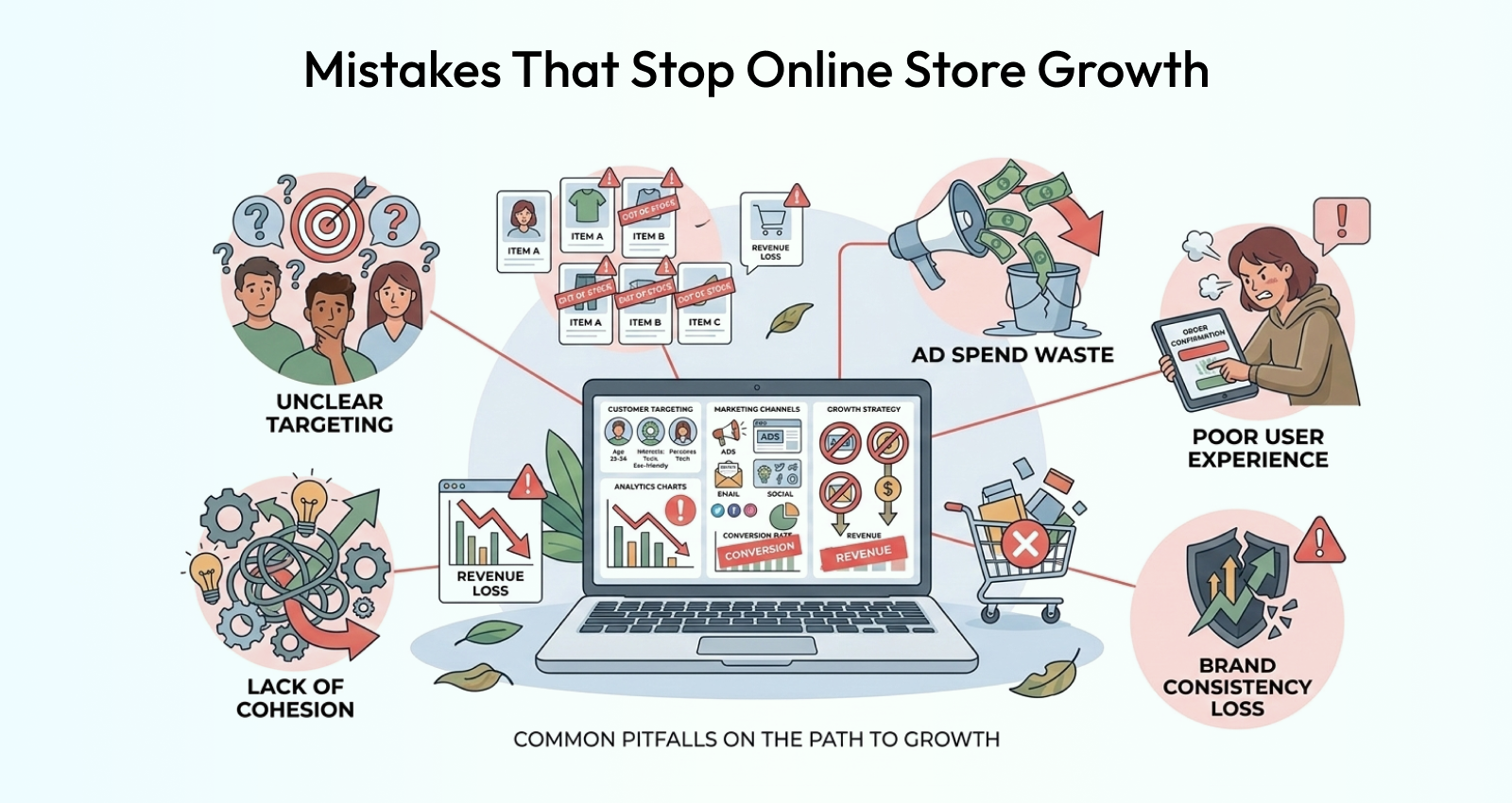
Understanding what successful brands do is important, but it is also helpful to recognize common mistakes that new businesses often make.
Many ecommerce stores struggle because they:
- Launch without a clear ecommerce business strategy
- Try to target too many customer groups
- Depend only on paid advertisements
- Ignore customer experience
- Do not invest in long-term brand building
These mistakes can slow growth and increase marketing costs.
Avoiding these issues early can significantly improve the chances of building a successful online business.
Key Takeaways for Building a Successful Ecommerce Business
If you are planning how to start a successful ecommerce business, the strategies followed by successful brands provide valuable guidance.
Here are the most important lessons:
- Start with a clear ecommerce business strategy instead of launching without direction.
- Understand the customer problem your business is solving.
- Focus on a niche rather than trying to sell everything.
- Build strong ecommerce marketing strategies that attract and engage customers.
- Invest in customer experience to improve trust and conversions.
- Use data to improve decisions and refine your ecommerce growth strategy.
- Build systems that support long-term scalability.
- Focus on branding and customer relationships.
When these elements are implemented together, businesses create a strong foundation for long-term success.
Final Thoughts
Building a successful ecommerce brand is not about luck or timing. It is about making the right strategic decisions from the very beginning.
Businesses that focus on a clear ecommerce business strategy, invest in strong customer experiences, and develop effective ecommerce marketing strategies are more likely to grow sustainably.
Whether you are launching your first online store or improving an existing one, the key is to focus on strategy, customer value, and long-term growth.
With the right ecommerce growth strategy, even small businesses can build powerful brands and compete successfully in the ecommerce market.