10 Online Business Ideas That Actually Make Money
Everyone has searched for online business ideas that make money at least once. The problem is that most results give you the same recycled list — start a blog, do affiliate marketing, sell on Amazon — with almost no guidance on how to actually execute the idea or where to find your first buyer. This guide is different.
Every idea below is specific, proven, and comes with a clear picture of what it involves, how to get started, and where to sell. Whether you're completely new to online business or you already sell something and want to expand, these ten ideas are built around real demand, realistic effort, and genuine earning potential. No hype, no theory — just ten paths that work.
|| The goal is not to find the perfect idea. The goal is to find the right idea for your skills, your market, and your starting point — and then build it properly.
Quick Overview: 10 Ideas at a Glance
Before diving deep into each idea, here is a quick comparison to help you spot which ones match your situation.
Business Idea | Startup Cost | Best For |
|---|---|---|
Niche Product Store | Low – Medium | Ecommerce beginners |
Handmade & Artisan Products | Low | Creators and makers |
B2B Wholesale Online | Medium | Manufacturers & distributors |
Subscription Box | Medium | Curators & niche brands |
Print-on-Demand Brand | Very Low | Designers & creatives |
Reselling Vintage / Secondhand | Medium | Deal hunters & sourcing lovers |
Online Courses & Coaching | Low | Experts & educators |
Private Label Brand | Medium | Brand builders |
Niche Digital Products | Very Low | Problem solvers & creators |
Home-Based Food Business | Low | Home cooks & food enthusiasts |
1. Build a Niche Product Store
A niche product store is one of the most reliable ecommerce business ideas for beginners because it is focused. Instead of trying to sell everything to everyone, you pick one specific category and own it. A store selling only left-handed tools. A brand for dog owners of large breeds. A home decor shop built entirely around sustainable materials. These examples sound narrow — and that is exactly what makes them work.
When your store speaks directly to a specific type of buyer, everything becomes easier. Your product selection makes sense. Your marketing message is clear. Your customers feel understood rather than just sold to. And because you are not competing with general retailers across every category, you can win in your corner of the market even without a large budget.
How to Start and Where to Sell
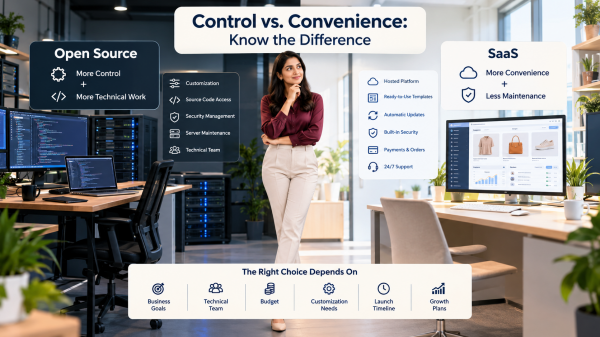
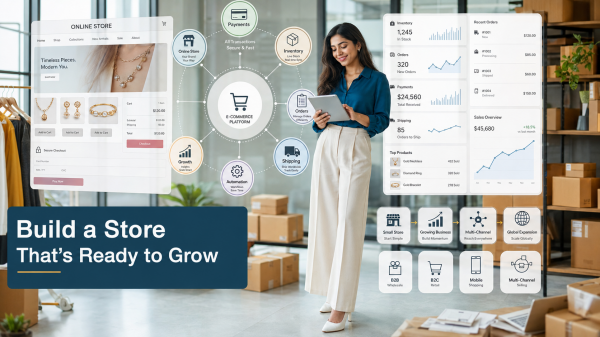
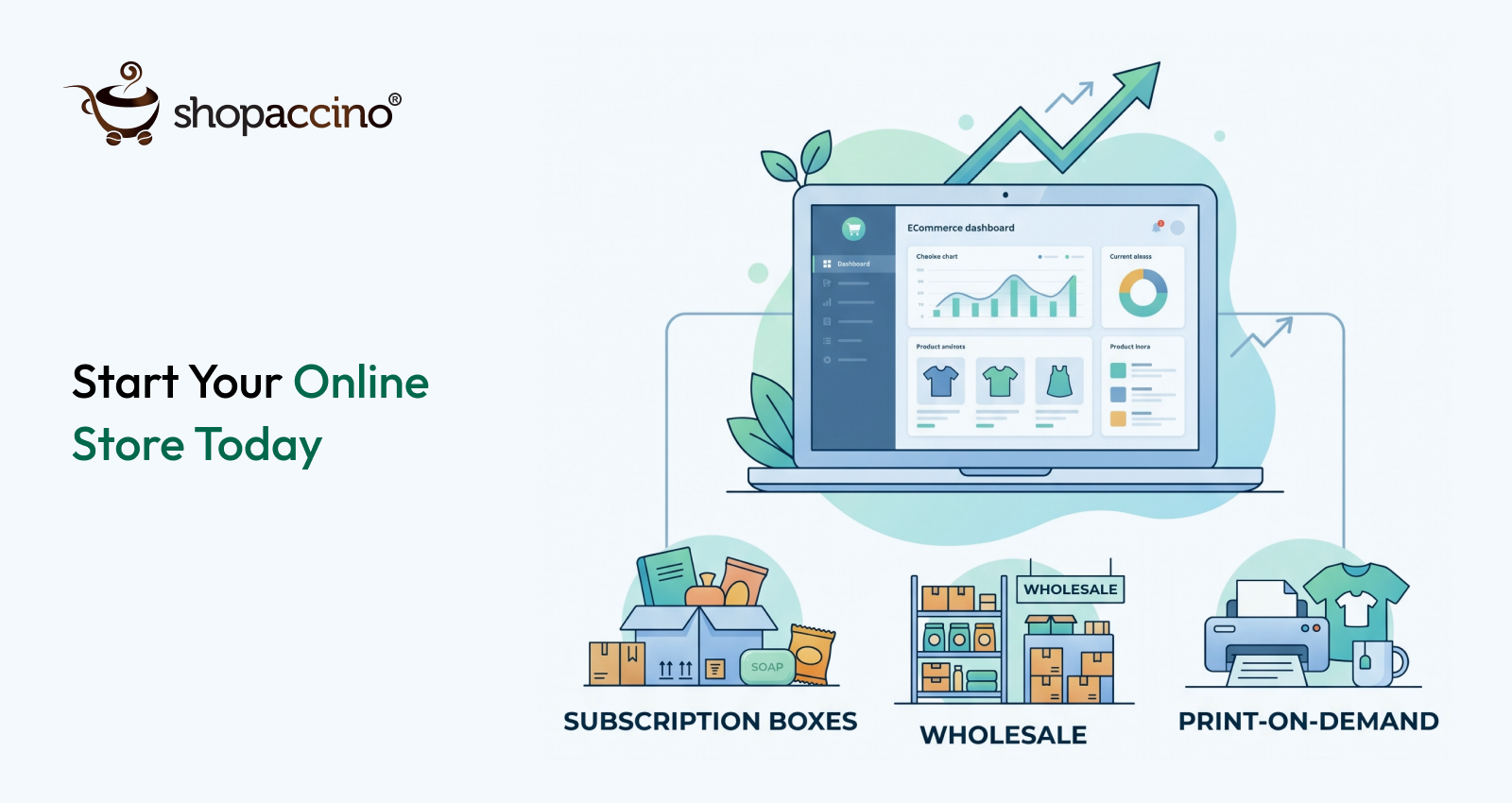
Pick a niche where you have some knowledge or genuine curiosity — you will need to understand your buyer's problems to market effectively. Build your store on a platform that gives you full control over branding, pricing, and customer data. Platforms like Shopaccino let you launch a branded ecommerce store with a mobile app, payment integrations, and shipping partner connections without needing a developer. Drive early traffic through Instagram and Pinterest for visual products, Google SEO for search-driven categories, and Facebook groups where your niche audience already gathers.
The narrower your niche, the easier it is to become the obvious choice for a specific buyer. You do not need to be everything — you need to be exactly right for someone.
2. Sell Handmade and Artisan Products Online
If you make something with your hands — jewellery, candles, ceramics, leather goods, textiles, skincare, baked goods, woodwork — the online market for handmade products is genuine and growing. Buyers in this space are specifically looking for things that are not mass-produced. They want the story behind the product, the craft behind the making, and the feeling that what they are buying is one of a kind.
How to Start and Where to Sell
Start by building your own store so you control your margins and own your customer list. Etsy is the natural marketplace for handmade goods and gives you access to millions of buyers actively searching for artisan products — list there early for discovery. Instagram is where handmade brands build audiences fastest because the visual nature of the products performs well in feeds and Reels. Local markets and pop-up events, combined with a QR code to your online store, build your first loyal base of repeat buyers who then spread the word.
3. Move Your Wholesale Business Online
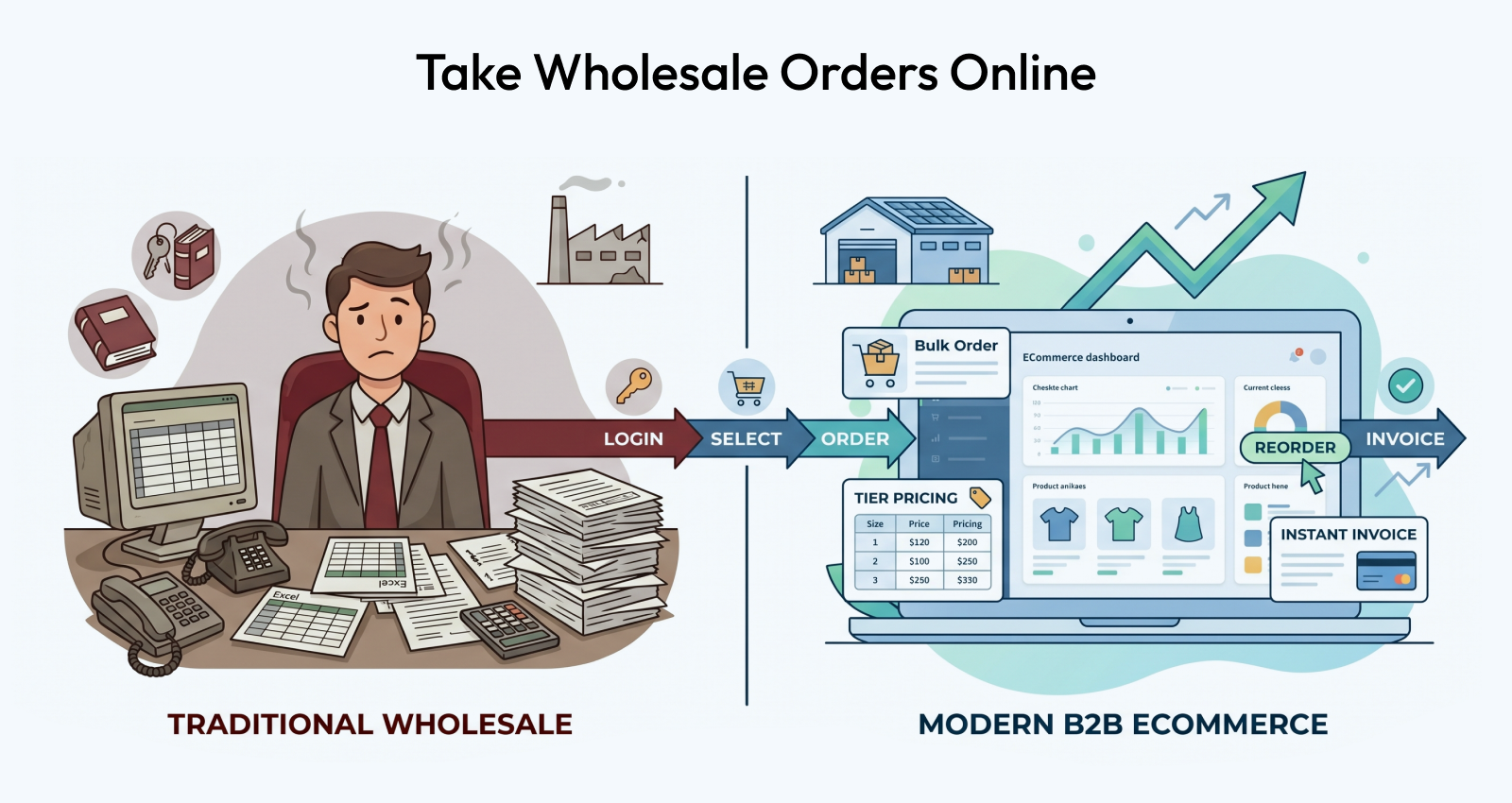
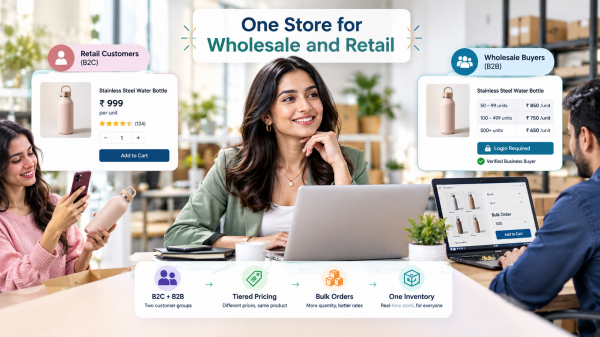
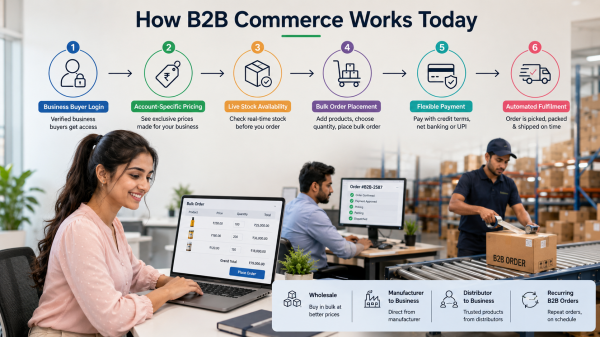
Manufacturers, distributors, and traders who still process wholesale orders through phone calls, emails, and spreadsheets are leaving money on the table. Moving B2B sales online is one of the most successful online businesses for anyone who already has a product and a network of trade buyers — because the demand is already proven. You are not building a market from scratch. You are making it easier for existing buyers to do business with you, and opening the door to buyers you could never reach through a traditional sales force.
A wholesale buyer who can log in at any time, see their negotiated pricing, place a bulk order, and receive an automatic invoice is a buyer who reorders more often and with less friction. That self-service experience is what separates wholesale businesses that scale from those that plateau because they cannot process more orders without hiring more people.
How to Start and Where to Sell
Build a B2B store with account-based pricing, minimum order quantities, and invoice payment support so your wholesale operation runs like a proper trade channel rather than a retail store with bigger baskets. Google SEO targeting trade-specific search terms drives inbound buyers who are actively sourcing. LinkedIn is where procurement managers and retail buyers live — consistent outreach and content in your category builds pipeline without paid advertising. Trade directories and industry-specific B2B marketplaces add international reach.
The wholesale businesses growing fastest online are not the biggest ones. They are the ones that made ordering easiest for their buyers.
4. Launch a Subscription Box Business
A subscription box combines three things buyers love: curation, convenience, and surprise. Instead of browsing hundreds of products and choosing, a subscriber trusts your taste to choose for them. Coffee, snacks, beauty, fitness gear, pet treats, books, stationery, craft supplies — almost any category with repeat-purchase potential works. The key is that your curation adds genuine value that the buyer could not easily replicate by shopping themselves.
Subscription businesses are particularly attractive from a revenue perspective because income is predictable. When you know roughly how many subscribers will renew each month, you can plan inventory, manage cash flow, and invest in growth with confidence. That predictability is rare in ecommerce and is why subscription businesses command higher valuations when sold.
How to Start and Where to Sell
Your own store with recurring billing capability keeps margins higher than subscription-specific platforms. Cratejoy is a dedicated subscription marketplace worth listing on early for discovery. Unboxing content on YouTube and TikTok is the most effective free marketing channel for subscription boxes — send boxes to relevant creators and let the content drive subscriptions. Build your email list from day one because email is where you retain subscribers and reduce churn through honest communication about what is coming each month.
5. Start a Print-on-Demand Brand
Print-on-demand is one of the most genuinely accessible online business ideas for beginners because the startup cost is close to zero. You create designs, list products — t-shirts, hoodies, mugs, tote bags, phone cases, posters — and a third-party supplier prints and ships each item only when an order comes in. You never touch stock, never pay for inventory upfront, and never deal with fulfillment.
The businesses that make real money from print-on-demand are not the ones uploading generic slogans. They are the ones building a coherent brand identity around a specific community or interest. A print-on-demand brand for ultramarathon runners. A store with original illustration-based designs for plant parents. A line of motivational apparel for female entrepreneurs. The design and the community it speaks to are the entire product.
How to Start and Where to Sell
Platforms like Printful, Printify, or Gelato integrate directly with your online store so orders flow automatically to production without any manual work. Etsy and Redbubble have built-in audiences for print-on-demand products, useful for early sales while you build your own store's organic traffic. TikTok is the fastest-growing discovery channel for creative print brands — showing your design process, your products in use, and the community behind your brand consistently drives both follows and direct sales.
In print-on-demand, the design is the product. A generic design on a quality blank sells nothing. A design that makes the right person feel seen sells itself.
What makes handmade businesses sustainable online is not just the product but the brand story around it. Your process, your materials, your reason for making — these details are not just nice background information. They are your marketing. A candle brand that sources botanicals from family farms and hand-pours in small batches has a story that a factory candle will never have. That story commands higher prices and builds genuine loyalty.
6. Resell Vintage and Secondhand Products
Reselling secondhand and vintage goods is one of the oldest forms of commerce — and online, it has become one of the fastest-growing. The global secondhand market is expanding rapidly as buyers prioritise sustainability, seek unique pieces, and look for value. Vintage clothing, antique homewares, pre-owned electronics, collectibles, rare books, vinyl records — the categories are enormous and the supply is largely free or very cheap if you know where to source.
The skill in this business is sourcing, not selling. Finding undervalued items at estate sales, thrift stores, auctions, and clearance events — and knowing which of those items have strong resale demand online — is what separates the people doing this casually from those building real income. Once you know your category well, your eye for value becomes a genuine competitive advantage that is difficult to replicate.
How to Start and Where to Sell
Start selling on established secondhand marketplaces where buyers already exist: eBay for broad categories and international reach, Depop and Vinted for vintage clothing, 1stDibs for high-end antiques, and Facebook Marketplace for local high-value items. As your operation grows, your own store gives you the ability to build a brand identity around your curation and attract direct buyers who trust your taste — rather than competing on price with every other seller on a marketplace.
7. Sell Online Courses or Coaching
If you have knowledge or expertise that other people want and struggle to find clearly explained, an online course or coaching programme is one of the most scalable ways to monetise it. You create the course once and sell it repeatedly. The knowledge you have spent years acquiring can become a product that earns while you sleep.
The mistake most course creators make is going too broad. A course called “How to Grow Your Business” attracts nobody specifically. A course called “How to Get Your First 10 Wholesale Stockists Without Cold Calling” attracts exactly the right person with exactly the right problem. Specificity determines whether your course sells or sits. The narrower the promise, the easier it is to find and convince your ideal student.
How to Start and Where to Sell
Platforms like Teachable, Kajabi, and Podia handle course hosting, payment, and delivery so you can focus on the content itself. YouTube is the most effective free channel for building trust before a sale — free video content that demonstrates your knowledge attracts students who are pre-sold by the time they reach your sales page. LinkedIn works especially well for B2B-adjacent courses where your audience is professional. An email list of subscribers who have already found value in your free content converts to paid courses at the highest rates of any channel.
8. Build a Private Label Brand
Private labelling means sourcing an existing product from a manufacturer, adding your branding, and selling it as your own. The product exists already — you are building the brand and the audience around it. Beauty and skincare, supplements, home goods, pet products, and kitchen accessories are categories where private label brands consistently outperform generic alternatives because buyers in these spaces are deeply brand-loyal.
Two businesses can source the identical moisturiser from the same manufacturer and have completely different outcomes based on packaging, positioning, and marketing. One sells at a commodity price on Amazon. The other builds a community of loyal customers who subscribe, repeat-buy, and recommend to friends. The product is the same. The brand is the business.
How to Start and Where to Sell
Source from verified manufacturers through Alibaba, Global Sources, or local trade fairs and request samples before committing to any minimum order. Build your own store first to establish brand credibility and control your margins. Amazon is powerful for private label reach but competitive on reviews and listing quality. Instagram and TikTok are where beauty and lifestyle private label brands grow fastest — user-generated content and creator partnerships drive awareness at a fraction of paid advertising costs.
A private label brand built on a strong community costs less to market and retains customers longer than one competing purely on price and product features.
9. Create and Sell Niche Digital Products
Digital products — templates, tools, spreadsheets, design assets, planners, prompt libraries, swipe files — are created once and sold unlimited times with no inventory and no shipping. The margin on every sale is essentially 100% after platform fees. And unlike courses, they require no ongoing delivery, no student support, and no filming.
What makes niche digital products work is solving a very specific problem for a very specific person. A financial tracking spreadsheet for freelance photographers. A Canva template pack for wedding florists. A content calendar system for ecommerce brands posting daily. The more precisely you understand the problem, the more directly you can speak to the buyer, and the easier the sale becomes. Generic digital products compete on price. Specific ones compete on relevance.
How to Start and Where to Sell
Sell through your own store for maximum margin, or on Etsy and Gumroad where buyers actively search for digital tools. Pinterest drives significant organic traffic to digital product listings, particularly for visual categories like templates and planners. SEO-driven blog content that answers the exact question your product solves is the most sustainable long-term traffic source — a well-ranking article can drive product sales for years without any paid promotion.
10. Start a Home-Based Food or Beverage Business
Food and beverage is one of the most underestimated online business ideas that make money for people who can cook, bake, brew, or blend. Specialty sauces, artisan jams, baked goods, health snacks, spice blends, cold brew, herbal teas, flavoured salts — buyers in the specialty food space pay significant premiums for products that feel personal, local, and crafted. And unlike many other product categories, food creates emotional connections that drive fierce loyalty.
The regulations around selling food online vary by country and product type, so verifying the compliance requirements in your market before you launch is essential. But for many categories — shelf-stable products, baked goods, packaged dry foods — home production is a legal and practical starting point that lets you test demand before investing in commercial kitchen space.
How to Start and Where to Sell
Your own online store handles direct-to-consumer sales with the margins intact. Farmers markets and local food festivals build your first loyal customer base and give you instant feedback on which products people respond to. Specialty food marketplaces and local delivery platforms extend your reach without a large advertising budget. Instagram is the strongest social channel for food businesses because the visual appeal of well-photographed food content consistently drives both follows and direct orders. A subscription option for your best-selling products adds recurring revenue to what would otherwise be one-off purchases.
Food builds loyalty faster than almost any other product category because it is personal, sensory, and tied to memory. One great product experience brings buyers back repeatedly.
How to Choose the Right Idea and Actually Start
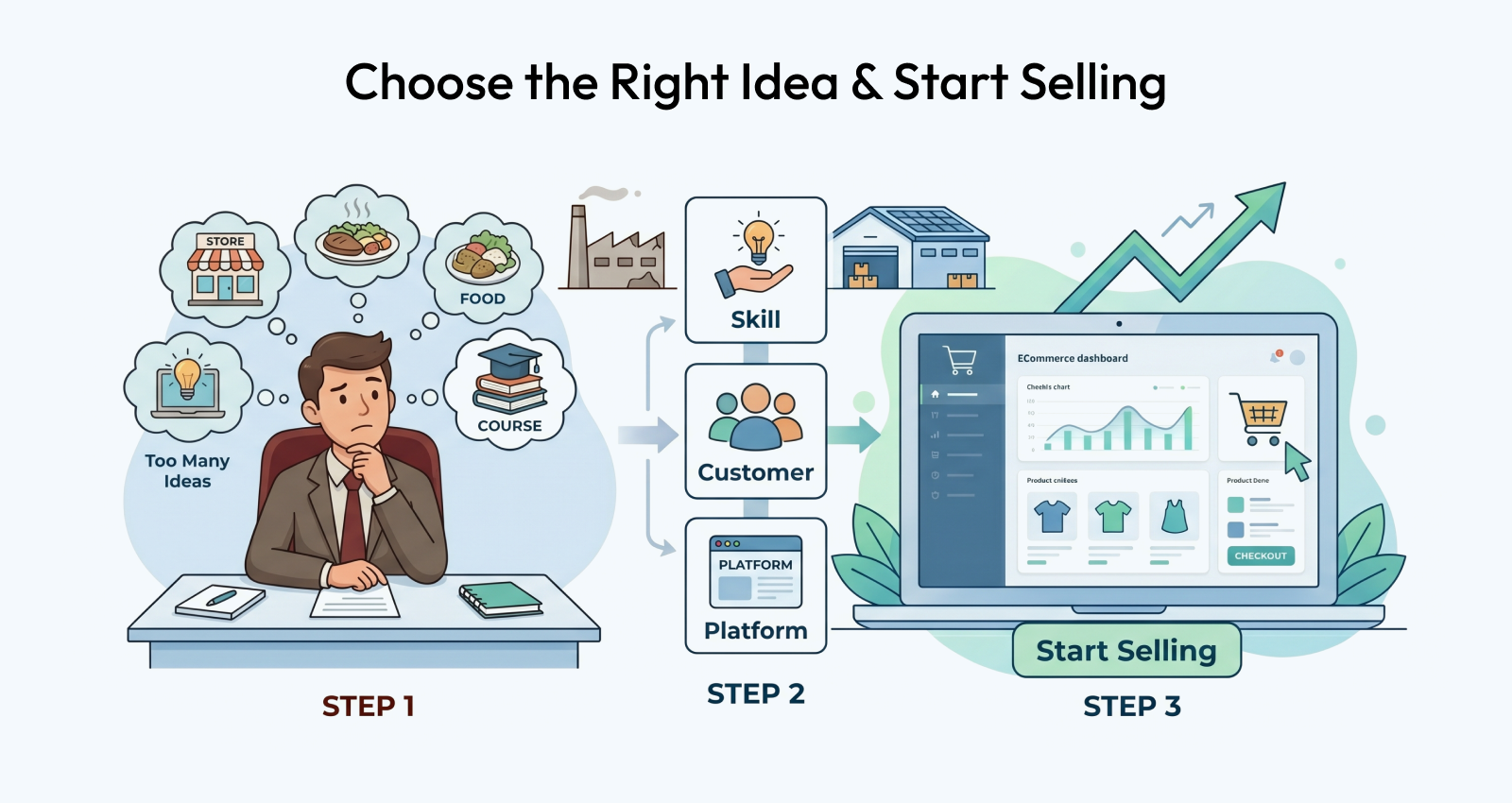
Reading ten ideas is the easy part. Choosing one and starting is where most people stall. Here is a practical framework to move from reading to doing.
Ask yourself three questions. First: do I have a product, skill, or sourcing access that gives me a real starting point? Second: can I identify a specific group of people who have the problem this business solves? Third: can I reach those people through at least one channel I understand? If you can answer yes to all three, you have enough to begin.
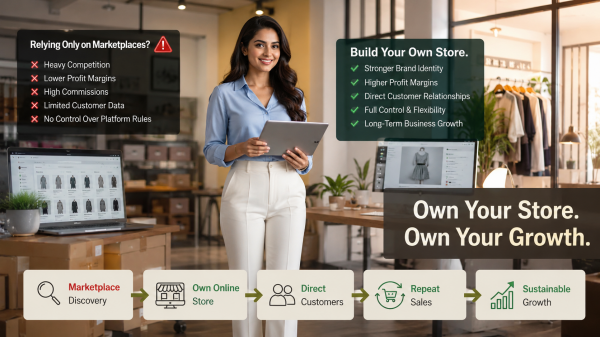
On the selling side, the consistent answer across every idea above is this: build your own store alongside any marketplace presence. Marketplaces give you access to existing traffic but they own the customer relationship. Your own store builds your brand, your list, and your long-term asset. The most successful online businesses use both — marketplaces for reach, their own store as the foundation.
Start with one product, one channel, and one clear customer. Do not wait until everything is perfect. The businesses that win online are almost never the ones with the best initial idea. They are the ones that started, learned from real buyers, and kept improving.
The Best Online Business Is the One You Actually Build
There is no shortage of online business ideas that make money. The shortage is in execution — in doing the work of understanding a specific buyer, building something that genuinely serves them, and staying consistent long enough for the business to compound. Every idea on this list has created real income for real people. None of them did it overnight, and none of them required genius. They required a clear idea, a real customer, and the willingness to start before feeling fully ready.
Pick the idea closest to your current skills and market knowledge. Build your own channel. Focus on one buyer, one problem, and one product before expanding. The rest follows from actually beginning.
FAQs
The best online business ideas for beginners are niche product stores, print-on-demand brands, and selling niche digital products. These require low upfront investment, can be started without technical skills, and have clear paths to a first sale. The key is starting narrow — one product, one audience — rather than trying to serve everyone from day one. Execution beats idea selection every time.
The most successful online businesses in 2026 are niche ecommerce stores, private label brands, B2B wholesale operations, subscription businesses, and digital product creators. What they share is a clearly defined buyer, a focused product range, and a direct customer relationship built through owned channels like email and a branded store rather than dependence on third-party platforms.
Start by choosing a specific product or niche you understand, build a store on a beginner-friendly platform, set up payment and shipping integrations, and drive your first traffic through one channel — social media, SEO, or a marketplace listing. Do not try to master every channel simultaneously. Get your first ten orders and learn from real buyers before scaling anything.
Your own branded store should be the foundation because it gives you full control over pricing, branding, and customer data. Marketplaces like Amazon, Etsy, and eBay add reach for specific product categories. Social commerce through Instagram and TikTok Shop works for visually driven products. B2B platforms suit wholesale sellers. The strongest businesses use their own store as the core and marketplaces as additional traffic sources.
Yes. Print-on-demand, digital products, and freelancing all have near-zero startup costs. Print-on-demand requires no inventory purchase. Digital products require only the time to create them. Freelancing monetises skills you already have. These are the closest things to genuinely no-cost online businesses. Even a niche product store can start small with a single product and grow from reinvested revenue.
Uniqueness comes from specificity, not from inventing something new. A general pet store is not unique. A store for owners of senior dogs with joint issues is. A generic design course is not unique. A course on selling to boutique retailers without cold calling is. The more precisely you define the buyer and the problem, the less competition you face and the higher the price you can charge.