Wholesale Ecommerce: Complete Guide for Manufacturers and Distributors
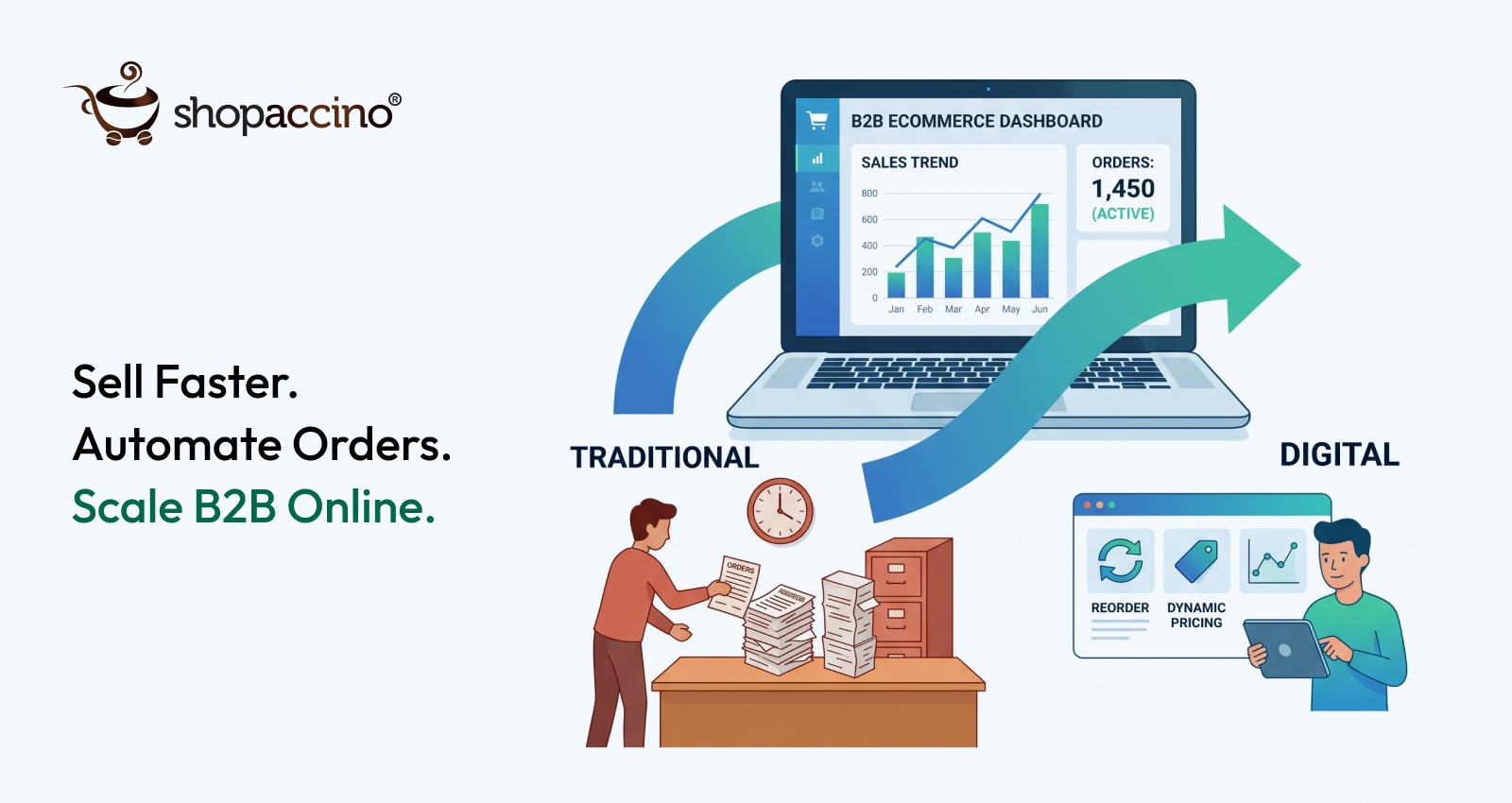
Wholesale has always been a relationship business. You know your buyers, they know you, and the trade moves on the strength of those connections. That part will never change. What has changed dramatically is how those relationships are managed and how orders actually get placed. Phone calls and emailed price lists are not just slow — they are becoming a liability. While you process a quote manually, a competitor with a proper wholesale ecommerce platform has already confirmed the order.
This guide is for manufacturers and distributors who want to understand wholesale ecommerce properly — not just what it is, but what it requires, how to build it correctly, and what the future of B2B ecommerce looks like for businesses at every stage of the journey. Whether you are starting from scratch or improving an existing setup, everything you need to make a confident decision is here.
Wholesale ecommerce is not about replacing your sales team. It is about giving your buyers a channel that works as hard as your best salesperson — but available 24 hours a day, seven days a week.
What Is Wholesale Ecommerce and How Does It Differ from B2C?
Wholesale ecommerce is the process of selling products to business buyers — retailers, distributors, resellers, or institutions — through an online platform. It looks similar to consumer ecommerce on the surface but operates with fundamentally different rules underneath.
In consumer ecommerce, one price applies to everyone. In wholesale, pricing is a negotiated relationship. Your tier-one distributor gets a different rate than a new regional reseller. A buyer hitting volume thresholds unlocks better pricing automatically. Credit terms differ by account. Some buyers pay upfront, others pay on net-30 or net-60. Orders are larger, more frequent within accounts, and involve multiple stakeholders on the buyer side before an order is confirmed.
A genuine wholesale ecommerce platform accounts for all of this. It is not a retail store with a bulk discount. It is a separate commercial infrastructure built around how trade actually works — with account-specific pricing, invoice-based payment, approval workflows, minimum order quantities, and a buyer portal where each account manages their relationship with you independently.
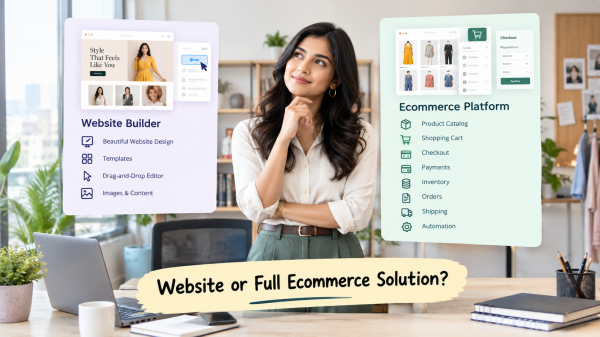
The single most common mistake in wholesale ecommerce is choosing a retail platform and trying to make it work for B2B. The workarounds always cost more than the savings.
Why Manufacturers and Distributors Are Moving Online in 2026
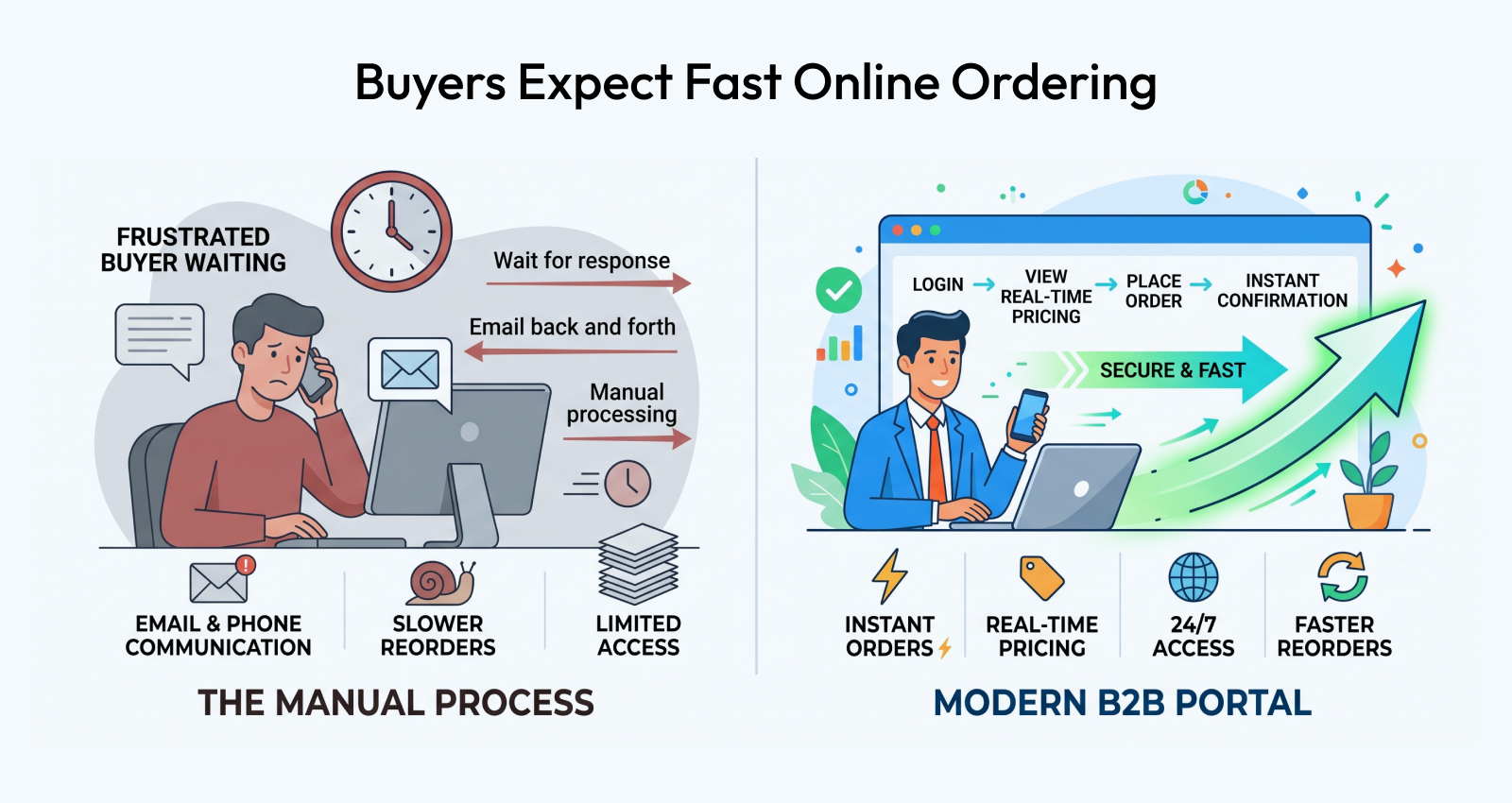
The shift to ecommerce for manufacturers and distributors is not driven by technology enthusiasm. It is driven by buyer behaviour. The procurement managers, retail buyers, and trade purchasers who place your orders are the same people who shop on Amazon and book travel through apps. They have been conditioned by consumer ecommerce to expect speed, transparency, and the ability to transact without speaking to anyone unless they choose to.
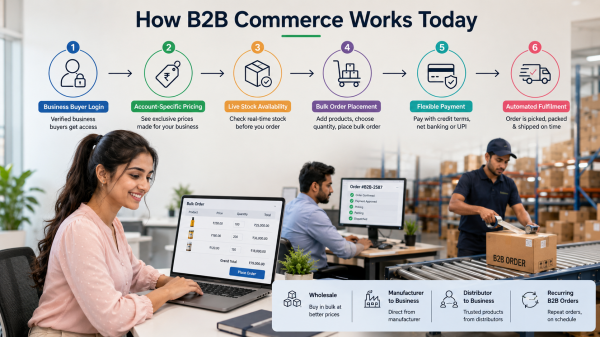
When those same buyers encounter a supplier whose ordering process requires a phone call, a wait for a quote, an email confirmation, and then another email with the invoice — the friction is noticeable. Not insurmountable. But noticeable. And when a competitor offers a portal where the same buyer can log in, see their pricing, check stock, place a bulk order, and receive an automated invoice in under five minutes, the comparison is unflattering.
The B2B ecommerce growth trends of 2026 tell the same story from multiple angles. Average order values are higher on digital B2B channels than through traditional sales processes because buyers can browse the full catalog without the pressure of a sales call. Reorder rates are higher because the self-service experience removes friction from repeat purchasing. And customer acquisition costs are lower because a well-optimised wholesale platform attracts inbound buyers through search rather than requiring outbound sales effort to find every new account.
Core Features Every Wholesale Ecommerce Platform Must Have
Not every platform marketed as wholesale-ready actually delivers what manufacturers and distributors need. Before evaluating specific options, these are the features that genuinely matter.
Account-Based Pricing
Every buyer account should have its own pricing profile, managed automatically by the platform. When a buyer logs in, they see their prices and only their prices. There should be no manual quote process for established accounts, no risk of showing the wrong price to the wrong buyer, and no dependency on a sales rep to communicate pricing for every order. This is the foundation of a wholesale ecommerce platform that actually works for distribution.
Invoice-Based Payment and Credit Terms
Trade credit is standard in wholesale. A platform that requires payment at checkout is not suitable for serious B2B selling. Your platform must allow buyers to complete orders without upfront payment, generate invoices automatically on the agreed schedule, and give your finance team real-time visibility into outstanding amounts across all accounts. When this works correctly, the cash flow and reconciliation burden on your team drops significantly.
Minimum Order Quantities and Bulk Order Entry
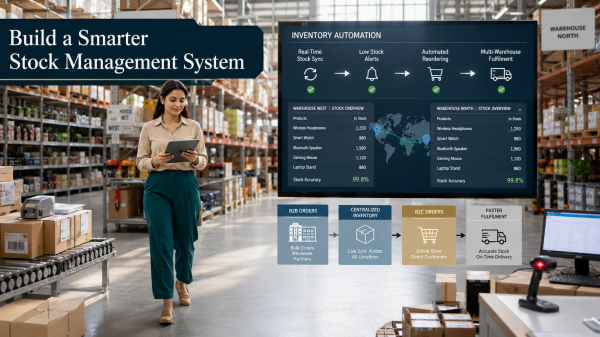
Wholesale economics depend on volume. Setting minimum order quantities at the product, category, or account level protects your margins and ensures every order is commercially viable. Bulk order entry — where buyers can input quantities across many SKUs simultaneously rather than navigating product pages one by one — is essential for procurement teams managing large catalogs. Without it, the buying experience is slow enough to push buyers back to phone ordering. For a closer look at managing bulk orders and multi-warehouse stock, see our guide on bulk order and multi-warehouse inventory management for B2B distributors.
Order Approval Workflows
Many of your buyer accounts are companies with internal purchasing controls. An order placed by a junior buyer may need sign-off from a purchasing manager before it is confirmed. A platform with built-in approval workflows handles this automatically: the order is held in a pending state, the right person is notified, and it is released to your fulfillment team only after authorisation. Without this, large accounts either bypass your platform or create manual workarounds that introduce errors.
Self-Service Buyer Portal
A buyer portal is where the return on wholesale ecommerce investment becomes visible. Buyers log in to see their account-specific pricing, their full order history, current stock levels, outstanding invoices, and shipment tracking. They can reorder from previous purchases, download invoices for their accounts team, and manage their relationship with you entirely self-sufficiently. Every query answered by the portal is a query your team did not have to handle. See our detailed guide on how distributors can use a B2B portal to receive orders faster and more accurately for a step-by-step breakdown.
Wholesale Ecommerce vs Traditional Wholesale: A Direct Comparison
Here is how the two approaches compare across the metrics that matter most to manufacturers and distributors.
Metric | Traditional Wholesale | Wholesale Ecommerce |
|---|---|---|
Order placement | Phone, email, sales rep | Self-service portal, 24/7 |
Pricing accuracy | Manual, error-prone | Automatic, account-specific |
Invoice generation | Manual, delayed | Automated on order confirmation |
Order tracking | Requires a call or email | Real-time in buyer portal |
Reorder friction | High — full process repeated | Low — one-click from history |
New buyer reach | Outbound sales only | Inbound via search and SEO |
Scalability | Requires more staff | Scales without headcount |
Data and insights | Limited, in sales rep's head | Full account behaviour data |
Ecommerce for Manufacturers: Specific Considerations
Manufacturers face a distinct set of challenges when moving wholesale online that distributors do not always share. Products often have complex configurations — sizes, materials, finishes, custom specifications — that require more than a standard variant selector. Lead times vary by product and production schedule. Minimum order quantities are tied to production runs rather than warehouse stock. And relationships with trade buyers often involve negotiated contracts rather than posted prices.
For ecommerce for manufacturers, the platform needs to handle product complexity without making the buyer experience complicated. A buyer ordering custom-specification tiles, bespoke furniture, or made-to-order clothing should be able to configure their requirements online, receive a confirmed price for their account, and place the order without a back-and-forth with your team for standard specifications. The platform absorbs the complexity so the buyer experience is clean.
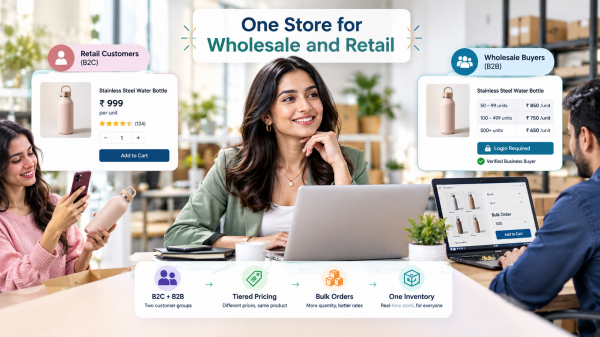
Manufacturers also tend to serve multiple buyer types simultaneously — direct retail consumers, wholesale distributors, and trade buyers like architects, contractors, or interior designers who buy in commercial quantities at trade prices. A platform that handles all three buyer types with different pricing, different catalog visibility, and different checkout flows from a single backend is the difference between efficient multi-channel selling and managing three separate systems with three separate inventories.
The manufacturers winning new wholesale accounts in 2026 are the ones whose online ordering experience is as impressive as their product. A great product on a clunky ordering platform loses deals to a good product on a smooth one.
The Future of B2B Ecommerce for Wholesale Businesses
The future of B2B ecommerce is not a single technology shift. It is a convergence of several changes happening simultaneously, all moving in the same direction: making the wholesale buying experience faster, more personalised, and more autonomous for buyers.
AI and Personalisation at the Account Level
Artificial intelligence is moving into wholesale in practical, immediate ways. Predictive reordering — where your platform analyses a buyer's order history and sends a proactive prompt when a reorder is due — reduces stockouts for buyers and increases order regularity for suppliers. Personalised catalog views, where each buyer sees products relevant to their purchasing history rather than a generic catalog, increase average order values without any additional sales effort. These are not future capabilities. They are features available on the leading wholesale ecommerce platforms today.
Embedded Digital Payment and Trade Finance
Trade credit is going digital. Instead of manual invoice management and payment chasing, wholesale platforms are integrating with embedded finance providers that handle credit assessment, invoice financing, and payment collection automatically. Buyers get the payment flexibility they need. Suppliers get paid faster. And the administrative burden of managing credit across hundreds of accounts is absorbed by the platform rather than your finance team.
Cross-Border Wholesale Without a Local Presence
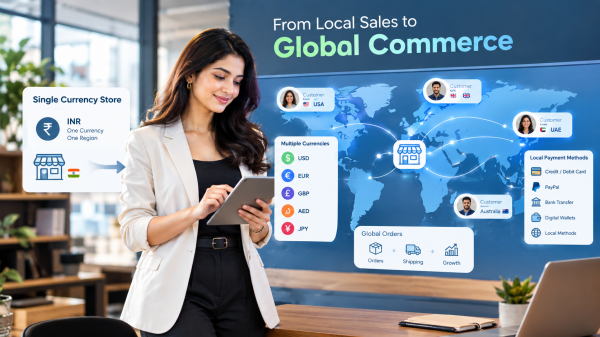
Manufacturers and distributors are reaching international trade buyers without establishing physical sales operations in each market. A platform with multi-currency pricing, multi-language catalog support, and connections to international logistics partners allows a manufacturer in one country to supply retailers and distributors in another with the same ordering experience they would get from a local supplier. The trade barriers that used to require a local agent or distributor are becoming navigable through digital infrastructure alone.
Choosing the 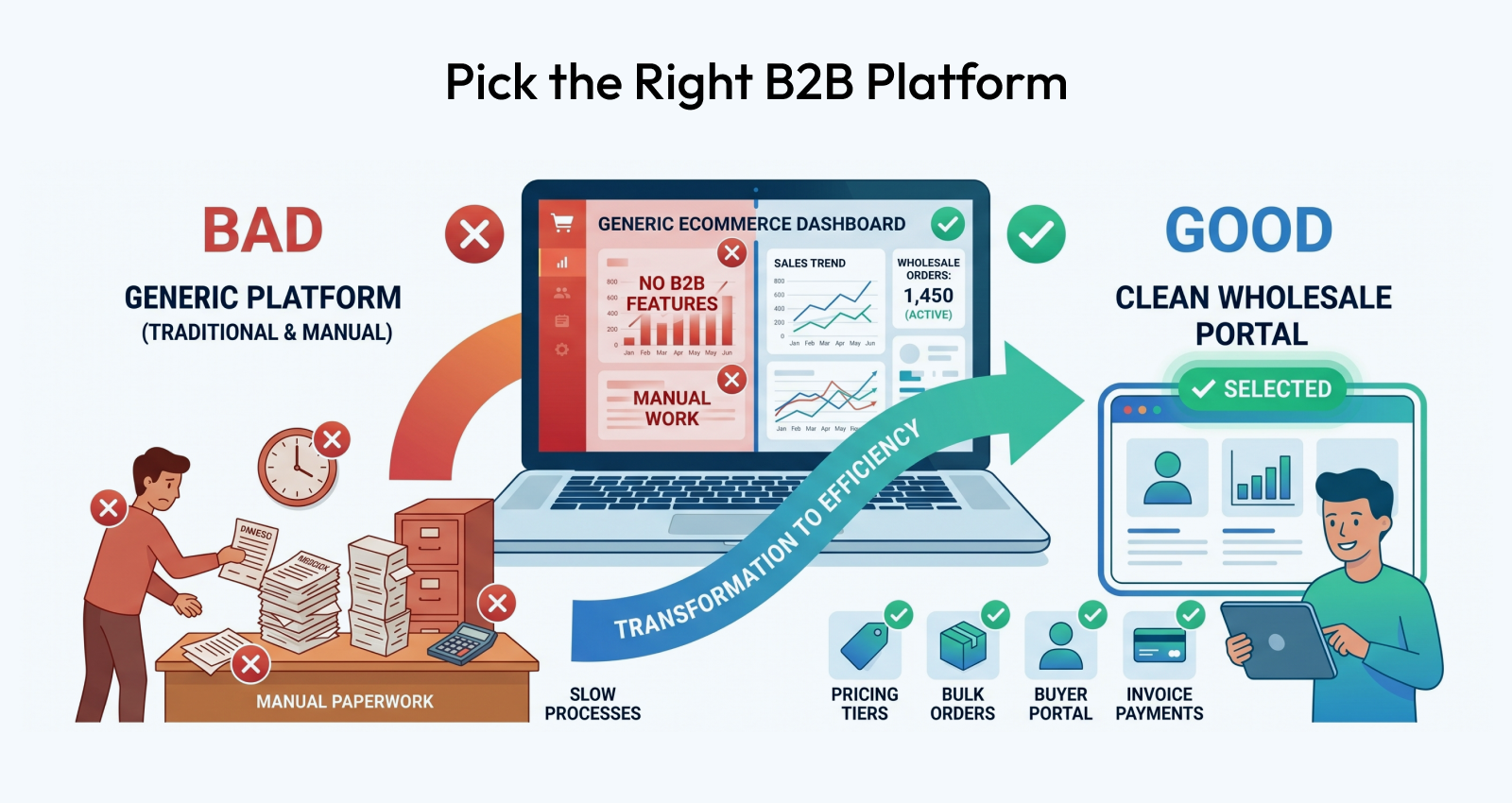
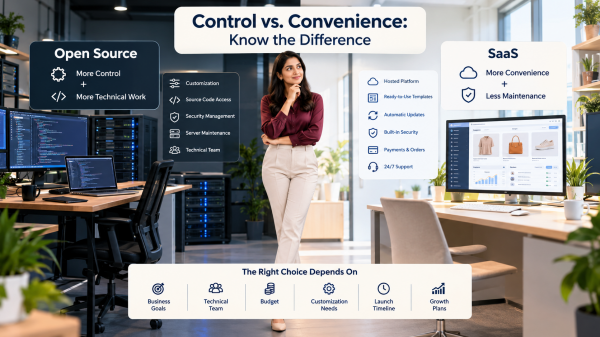
The wholesale ecommerce platform market is large and varied. The right choice depends on the complexity of your pricing structure, the nature of your buyer relationships, whether you also sell direct to consumers, and how important international capability is to your growth plans.
The most important evaluation criterion is how much of your B2B workflow is handled natively versus through third-party apps. A platform that includes account pricing, invoice payment, approval workflows, and buyer portals as core features will serve you significantly better than one where each of these requires a separate app subscription, adding cost and reducing reliability. Before committing, load your actual catalog and pricing structure into any trial environment and test the end-to-end buyer experience with your real data. If you're comparing options, our guide on which B2B ecommerce platform is best for manufacturers, wholesalers, and distributors breaks down the must-have features to evaluate.
Platforms like Shopaccino are built specifically for businesses that need to handle B2B and B2C from a single system — offering wholesale pricing, buyer account management, mobile app support, and logistics integrations as part of the core platform rather than as optional extras. Whether or not you choose a platform of this type, the principle it represents is the right one: your wholesale ecommerce infrastructure should be designed for B2B from the ground up, not adapted from a retail starting point.
Beyond features, evaluate the platform's integration capabilities. Your wholesale platform needs to connect with your ERP or inventory management system, your accounting software, your logistics partners, and your CRM. Without clean integrations, you will be manually reconciling data between systems — which defeats much of the operational benefit that wholesale ecommerce is supposed to deliver.
How to Launch Wholesale Ecommerce Without Disrupting Your Business
The biggest concern most manufacturers and distributors have about going online is disruption — to existing buyer relationships, to pricing confidentiality, to the operational rhythm of the business. These concerns are valid but manageable with the right approach.
Start with your existing accounts rather than trying to attract new ones through the platform immediately. Migrate your current buyers first. Show them the portal, walk them through placing their first order digitally, and demonstrate that their pricing, their terms, and their relationship history are all preserved and visible in their account. Buyer resistance to online ordering almost always disappears once they have used the portal once and experienced how much faster it is than their current process.
Run the online and offline channels in parallel during the transition. Do not force all accounts to use the portal from day one. Allow buyers to migrate at their own pace while you continue to accept orders through traditional channels. As the portal handles more volume, your team's attention shifts from processing routine orders to managing new account development and strategic relationships. The transition happens organically rather than through a disruptive cutover.
Set realistic timelines. A basic wholesale portal with your top 20 accounts migrated can be live in four to six weeks with the right platform. A full deployment covering all accounts, all product lines, and all integrations typically takes two to four months. The businesses that move fastest are those that start with a focused scope and expand, rather than waiting until every edge case is solved before going live with anything.
The best time to launch your wholesale ecommerce platform was two years ago. The second best time is this quarter — before another reorder cycle passes through a manual process that your buyers are already tired of.
Conclusion: Wholesale Ecommerce Is Not the Future — It Is the Present
There is a version of this guide that frames wholesale ecommerce as an opportunity — something forward-thinking businesses can use to gain an edge. That framing was accurate in 2020. In 2026, it is no longer quite right. Wholesale ecommerce is not an opportunity to get ahead. It is a baseline that buyers increasingly expect, and the gap between having it and not having it is widening every year.
Manufacturers and distributors who build their wholesale ecommerce infrastructure properly — with a platform designed for B2B, not adapted from B2C — gain something more valuable than just an online ordering channel. They gain data on how their buyers behave. They gain the ability to reach international buyers without a physical sales presence. They gain a buyer experience that retains accounts through convenience rather than just relationship loyalty. And they gain the operational capacity to grow without a proportional increase in the cost of serving each account.
The businesses that will look back at 2026 as a turning point are the ones that made this investment now — not after watching buyers migrate to competitors who already had it. The technology is accessible. The platforms are ready. The buyers are waiting. The only remaining question is how long your business takes to meet them there.
FAQs
A wholesale ecommerce platform is software that allows manufacturers and distributors to sell products to business buyers online. Unlike retail ecommerce platforms, it handles account-based pricing, invoice payment, minimum order quantities, approval workflows, and buyer self-service portals natively. It is designed around how trade buying actually works, not adapted from a consumer shopping model.
Regular ecommerce uses a single price for all buyers, requires payment at checkout, and is designed for individual consumers. Wholesale ecommerce uses account-specific pricing, supports credit terms and invoice payment, handles minimum order quantities, and includes approval workflows for multi-stakeholder buying decisions. The entire commercial structure is different because business buyers operate on fundamentally different terms than consumers.
Manufacturers need a platform that handles complex product configurations, account-based pricing, minimum order quantities tied to production runs, invoice-based payment with credit terms, and a buyer portal where trade customers can place and track orders independently. The platform should also support multiple buyer types — consumers, wholesale distributors, and trade buyers — from a single backend with separate pricing and catalog rules for each.
The future of B2B ecommerce involves AI-powered personalisation that curates catalog experiences for each buyer account, predictive reordering that prompts buyers before they run low, embedded digital trade finance that automates credit terms, and cross-border commerce capabilities that allow manufacturers to reach international trade buyers without establishing local sales operations. These capabilities are already available on leading platforms in 2026.
A basic wholesale portal with your top accounts migrated can be live in four to six weeks with the right platform. A full deployment covering all accounts, product lines, and system integrations typically takes two to four months. The fastest launches start with a focused scope — top accounts and core product lines — and expand from there rather than waiting until every edge case is solved before going live.
Yes, if the platform is designed to support both models. The right wholesale ecommerce platform allows you to run a public consumer storefront with standard pricing alongside a B2B buyer portal with account-specific pricing, minimum order quantities, and invoice payment. Both channels share the same product catalog and inventory, managed from a single backend. This is significantly more efficient than running two separate systems.
Yes, if the platform is designed to support both models. The right wholesale ecommerce platform allows you to run a public consumer storefront with standard pricing alongside a B2B buyer portal with account-specific pricing, minimum order quantities, and invoice payment. Both channels share the same product catalog and inventory, managed from a single backend. This is significantly more efficient than running two separate systems.