Wholesale Ecommerce Software Buying Guide: What to Look For
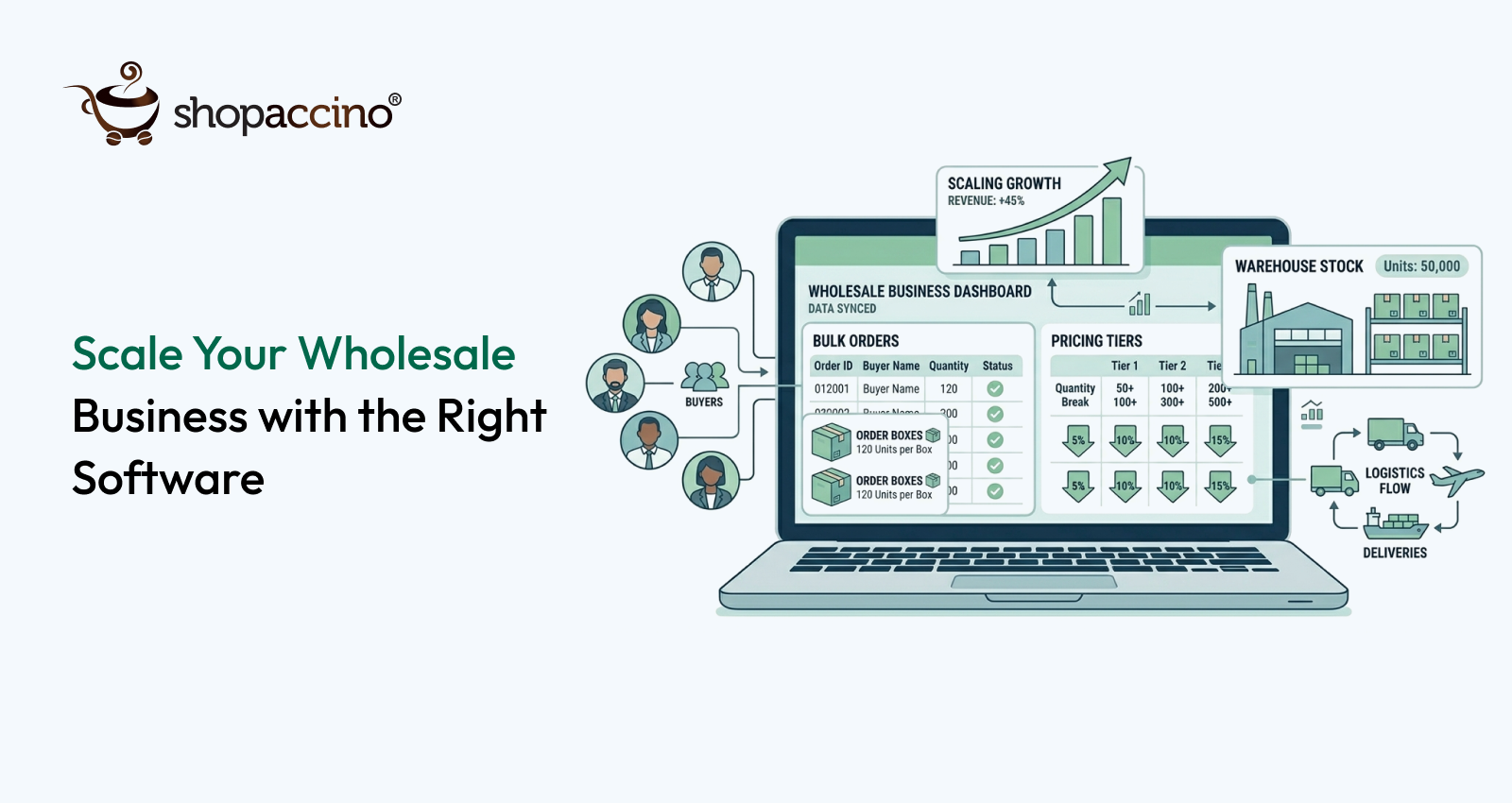
Running a wholesale business has always been about relationships — knowing your buyers, understanding their volumes, and keeping the orders moving. For a long time, that meant phone calls, Excel price sheets, and a sales rep who knew every client by name. It worked. But it doesn't scale. And in a market where buyers expect the same speed and convenience from their suppliers that they get as consumers, the businesses still running on manual processes are slowly losing ground to those who aren't.
This is exactly what B2B eCommerce software solutions are designed to solve. Not by replacing your relationships, but by giving them the infrastructure they deserve — a system where buyers can log in, place orders at their negotiated pricing, track shipments, and manage their account without needing to call your office. This guide is for wholesale business owners who want to understand what that software actually does, what to look for, and how to make a decision they won't regret six months in.
What Makes Wholesale Ecommerce Different — And Why Generic Platforms Fall Short
Here's a situation most wholesale business owners will recognise. You try a popular ecommerce platform, spend weeks setting it up, and then realise it doesn't support different prices for different buyers. Or there's no way to set a minimum order value. Or your buyer wants to pay on a 30-day invoice, but the platform only accepts card payments at checkout. So you start adding apps — one for pricing, one for invoicing, one for order management — and suddenly you're managing a patchwork of tools that don't quite talk to each other, and your team is back to manual reconciliation anyway.
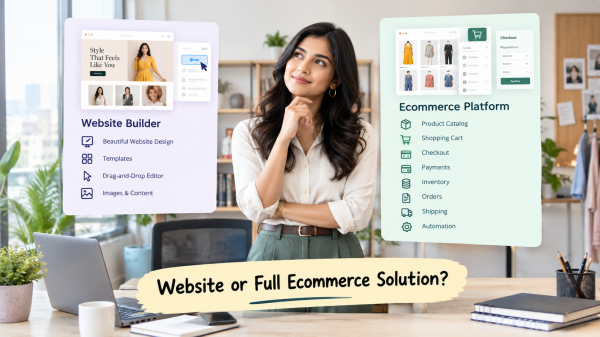
The problem isn't that those platforms are bad. It's that they were built for something else. Consumer ecommerce and wholesale ecommerce look similar on the surface — products, cart, checkout — but underneath they operate completely differently. In B2B, a single buyer might represent hundreds of thousands in annual revenue. Pricing is negotiated, not listed. Orders are large, recurring, and complex. Payment happens on terms, not upfront. A platform that doesn't understand these realities isn't just inconvenient — it's a liability.
Purpose-built B2B eCommerce software solutions are designed around wholesale trade from the start. Every feature — from how pricing is structured to how orders are approved — reflects the way B2B actually works. That's the difference between a tool that fits your business and one you're constantly working around.
The Core Features Your B2B Ecommerce Software Must Have
Not every platform marketed as “B2B” actually delivers what wholesale businesses need. Before evaluating options, it's worth being clear about what genuinely matters.
Customer-Group Pricing That Works Automatically
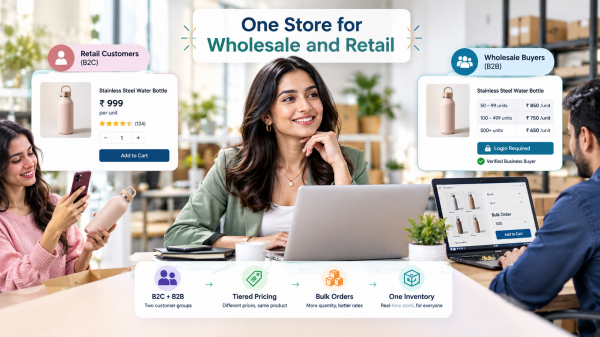
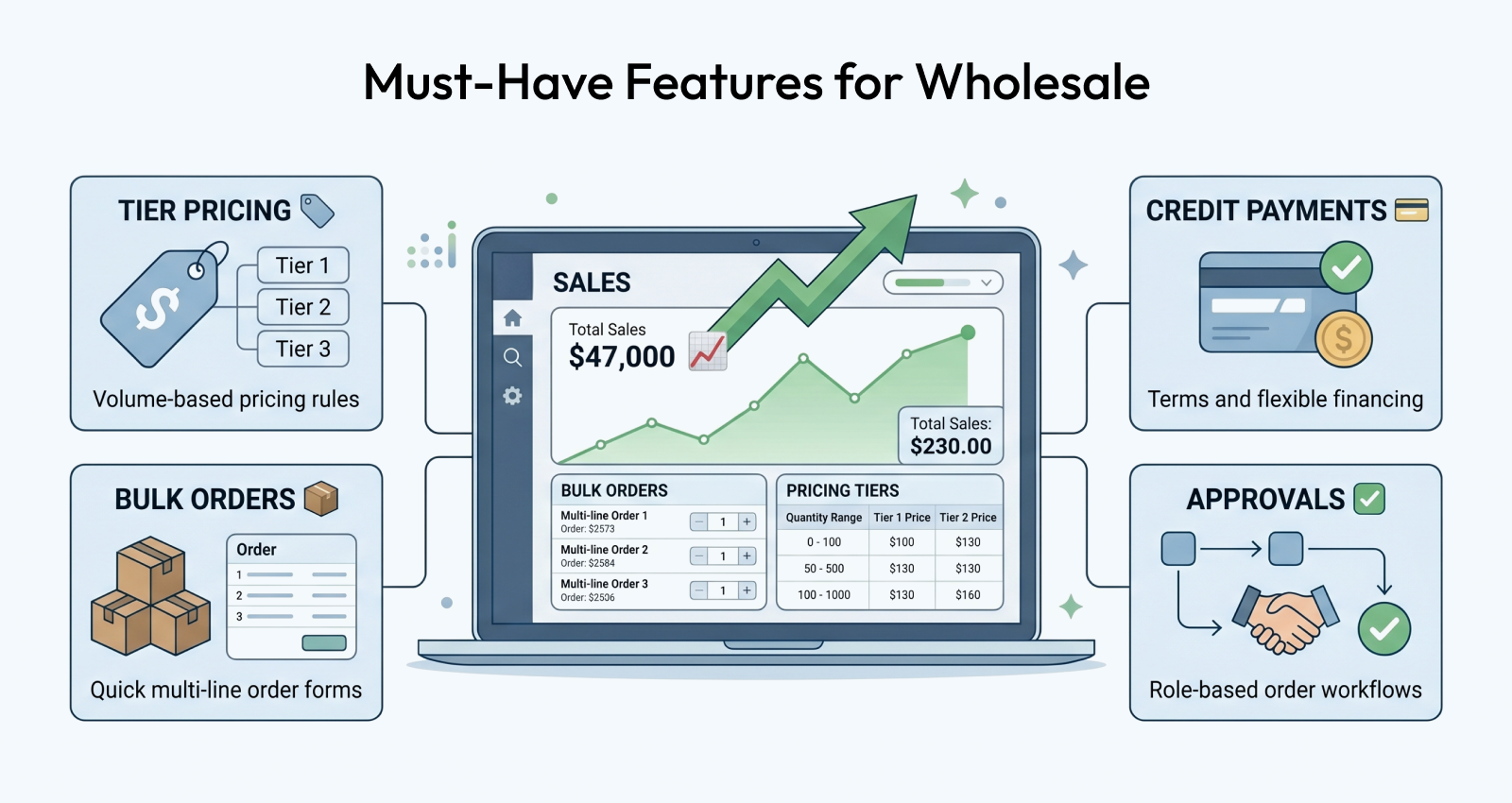
Wholesale pricing isn't one-size-fits-all. A long-term distributor gets a different rate than a new reseller. A buyer hitting a volume threshold unlocks a better tier. Your B2B eCommerce software solutions should handle all of this automatically — each buyer logs in and sees their specific pricing, without anyone on your team manually adjusting it. If your platform can't do this natively, you'll spend more time managing pricing exceptions than running your business.
Minimum Order Quantities and Bulk Order Entry
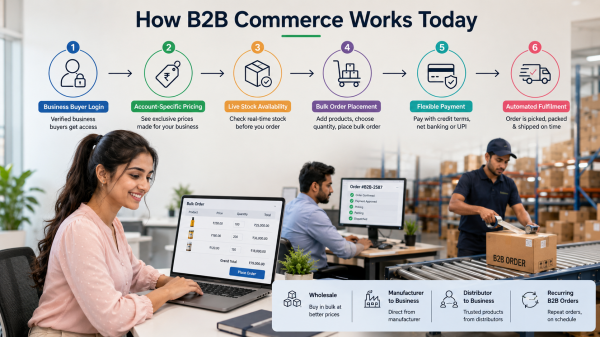
Wholesale economics depend on volume. Selling a single unit at a wholesale price breaks your margin. The right platform lets you set minimum order quantities at the product, category, or buyer level so every order that reaches you is commercially viable. Bulk order entry — where a buyer can enter quantities across dozens of SKUs at once — is equally important. Procurement teams managing large catalogs don't want to click through individual product pages. They want to enter quantities, confirm, and move on.
Invoice-Based Payment and Credit Terms
Trade credit is the default in wholesale, not the exception. Your buyers need to be able to place orders and pay within agreed terms — net 30, net 60, or however your relationships are structured. A platform that requires payment at checkout is structurally incompatible with how wholesale trade works. Look for B2B eCommerce software solutions that generate invoices automatically, allow buyers to complete orders without upfront payment, and give your finance team clear visibility into what's outstanding and when it's due.
Order Approval Workflows
Large buyer accounts often have internal purchasing controls. A buyer submits an order; a manager approves it before it goes to your fulfillment team. Without this in your platform, large clients either avoid your online channel entirely or create workarounds that create confusion on both sides. Built-in approval workflows handle this automatically — the order stays in a pending state, the right people are notified, and it's only released once approved. This is standard practice in serious B2B operations and should be standard in your software.
B2B Order Management Software That Keeps Everything Visible
As order volumes grow, visibility becomes the challenge. Which orders are pending? Which are fulfilled? Which invoices are overdue? Solid b2b order management software gives your team a single place to see the status of every order, every shipment, and every account — in real time. When your operations team, your sales team, and your finance team are all working from the same data, the errors and delays that come from disconnected systems disappear. This is especially important when you're managing hundreds of active buyer accounts simultaneously.
Multi-Vendor Ecommerce: When Your Wholesale Business Involves Multiple Suppliers
Some wholesale businesses don't just distribute their own products — they act as a marketplace connecting multiple suppliers with a network of buyers. If this describes your business model, you need more than a standard B2B store. You need multi vendor ecommerce software that lets multiple sellers list products, manage their own inventory, and receive their portion of each sale, all within a single platform that your buyers interact with seamlessly.
The complexity in multi-vendor wholesale goes beyond just listing products from different suppliers. Pricing rules may vary by vendor. Fulfillment might happen from different warehouses. Commission structures, revenue splits, and reporting need to be managed per vendor without exposing one supplier's data to another. A platform built for multi-vendor ecommerce handles all of this with proper access controls, vendor-specific dashboards, and automated payout calculations — so you're running a clean marketplace, not a spreadsheet nightmare.
For wholesale businesses considering this model, the key question to ask any platform is how vendors are onboarded and managed. Can a new vendor list products independently? Can buyers see products from multiple vendors in a single cart and checkout? These operational details determine whether the platform actually supports your model or just approximates it.
Selling Globally: What a Global Ecommerce Platform Actually Requires
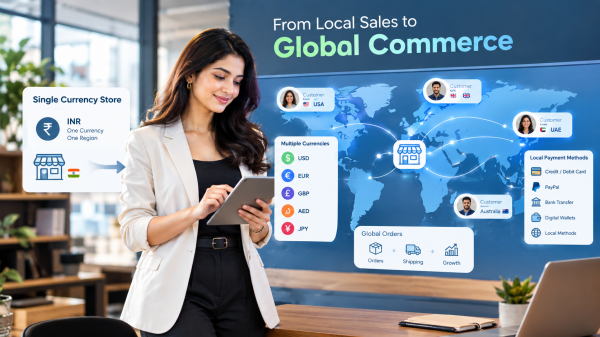
If your wholesale business serves buyers across multiple countries — or you're planning to expand internationally — the platform you choose needs to handle global trade properly. A global e commerce platform that does this well isn't just one that accepts international credit cards. It's one that manages the full complexity of cross-border wholesale.
Multi-currency pricing is the starting point. A buyer in Germany should see pricing in euros. A buyer in the UAE should see it in dirhams. You shouldn't have to maintain separate price lists for every currency you trade in — the platform should handle conversion logic automatically while letting you set specific regional pricing where needed for market competitiveness.
Multi-language support matters more in B2B than most people expect. When a procurement manager in Japan or Brazil is evaluating your catalog, a platform that works in their language removes a significant barrier to conversion. Wholesale decisions involve more scrutiny than consumer purchases — specifications, compliance documents, payment terms — and language friction at any of these stages can cost you a deal.
Tax and compliance requirements vary dramatically across borders. VAT rates, customs classifications, import duties, and trade compliance rules differ by country and product type. A global e commerce platform built for wholesale applies the right tax logic based on buyer location and product category automatically, so you're not manually managing a compliance spreadsheet for every market you enter.
International logistics integration completes the picture. Your platform should connect with freight partners, calculate accurate cross-border shipping costs based on destination and order weight, and generate the documentation buyers need for customs clearance. When international buyers can place an order and receive accurate delivery information immediately — without a back-and-forth with your team — you become significantly more competitive as a global supplier.
The Self-Service Buyer Portal: What Wholesale Buyers Actually Want
Ask any wholesale buyer what frustrates them most about ordering from suppliers, and you'll hear the same things: waiting for quotes, not knowing if stock is available, not having visibility into their order status, and having to call someone just to place a reorder they've placed a dozen times before.
A proper buyer portal built into your B2B eCommerce software solutions solves all of this. Buyers log in and see their account-specific pricing, browse your catalog with their relevant products visible, add items to a bulk order, submit for approval if required, and track fulfillment — all without contacting your team. Their order history is there when they need to reorder. Their outstanding invoices are visible when their finance team needs to reconcile. Their account manager's contact details are a click away when they genuinely need a human.
The commercial benefit of this for your business is significant. Every order placed through the portal is one your sales team didn't process manually. Every reorder completed by a buyer referencing their history is revenue that required no outbound effort. Buyers in different time zones can order outside your business hours without waiting. And because the portal gives them transparency, your support queue shrinks — fewer “where is my order” emails, fewer pricing queries, fewer duplicate order submissions.
Integrations That Make Your B2B Software Actually Work
The best B2B eCommerce software solutions don't operate in isolation. They connect with the systems your business already depends on, and for wholesale operations, that list is usually substantial.
ERP and Inventory Systems
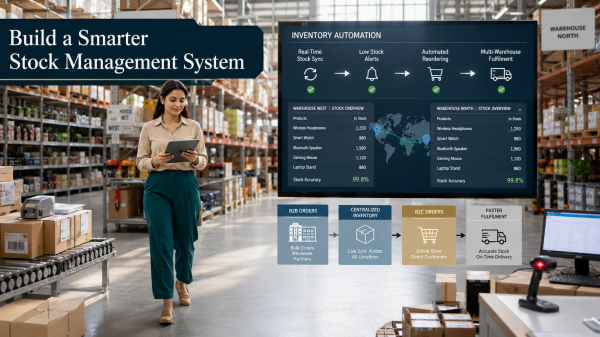
If your inventory management, production planning, or financial reporting runs through an ERP system, your ecommerce platform needs to sync with it in real time. When a buyer places an order, your inventory count should update immediately. When stock levels hit a threshold, your purchasing team should be notified automatically. Without ERP integration, you end up with a disconnect between what your online store is promising buyers and what your warehouse can actually fulfill — which means order errors, delays, and damaged relationships.
Accounting and Finance Tools
Credit-term orders create financial obligations the moment they're placed. Your finance team needs to see new orders immediately, issue invoices, and track payment against terms without manual data entry. Platforms like Shopaccino integrate with accounting tools so that order data and financial records stay in sync automatically — removing the reconciliation work that eats into your team's time every month-end. Platforms like Shopaccino integrate with accounting software tools so that order data and financial records stay in sync automatically — removing the reconciliation work that eats into your team's time every month-end.
Shipping and Logistics
For wholesale businesses with complex fulfillment — multiple warehouses, multiple carrier relationships, orders shipping across borders — logistics integration is critical. Your platform should route each order to the right fulfillment location automatically, based on stock availability and buyer destination. It should calculate accurate shipping costs at checkout, book shipments with the right carrier, and generate tracking information that's visible to both your team and your buyer. When fulfillment runs without manual intervention, your operations team can focus on exceptions rather than routine coordination.
Marketing and CRM Tools
Wholesale relationships don't manage themselves. CRM integration lets your sales team see buyer order history, account value, and engagement patterns in the same place they manage client relationships. Marketing automation connected to your B2B store can trigger reorder reminders when a buyer's typical ordering interval has passed, send low-stock alerts for products a buyer regularly purchases, and flag accounts that haven't ordered in an unusual period. These aren't luxuries — they're how you protect and grow revenue from existing accounts.
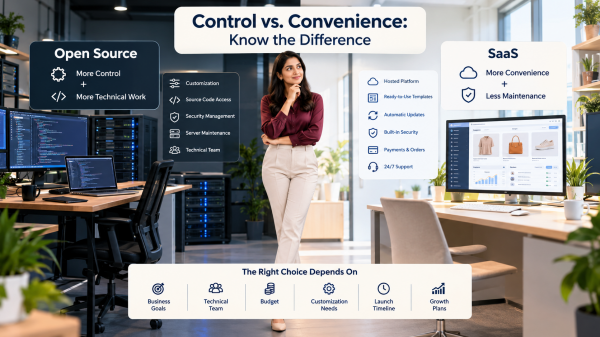
How to Choose B2B Ecommerce Software Without Getting It Wrong
The platform selection process is where most businesses make their most expensive mistakes — usually by choosing based on price alone, or by being convinced in a demo that a B2C platform with a few B2B features will “work fine.” Here's a more reliable approach.
Run your real data through it. Don't evaluate a platform using their demo store. Load your actual catalog, set up your real pricing tiers, and run a test order with the payment and approval workflow your business uses. Problems that are invisible with 20 generic products become obvious with 1,500 SKUs and six buyer groups. If the platform struggles during a trial, it will struggle in production.
Calculate the actual total cost. The subscription fee is rarely the whole story. Add the cost of any apps needed to fill B2B feature gaps, any development required for customisation, transaction fees on every order, and the ongoing support cost if something breaks. Platforms that include B2B features natively — pricing logic, approval workflows, credit terms, buyer portals — tend to be genuinely cheaper in practice than retail-first platforms that require add-ons for everything.
Test the buyer experience, not just the admin. Log in as one of your buyers. Try to place a bulk order. Check how pricing displays. Submit an order for approval. Look at the order history. If the buyer experience is clunky or confusing, your buyers won't use it — they'll call your sales team instead, and you haven't solved the problem.
Ask about scalability before you need it. How does the platform handle a 10x increase in order volume? What happens when you add a new market or currency? Can you add buyer tiers without a developer? Choosing a platform based on your current scale that can't grow with you means doing this process again in 18 months — and migrating at scale is painful.
The Wholesale Business That Grows Is the One That's Easiest to Buy From
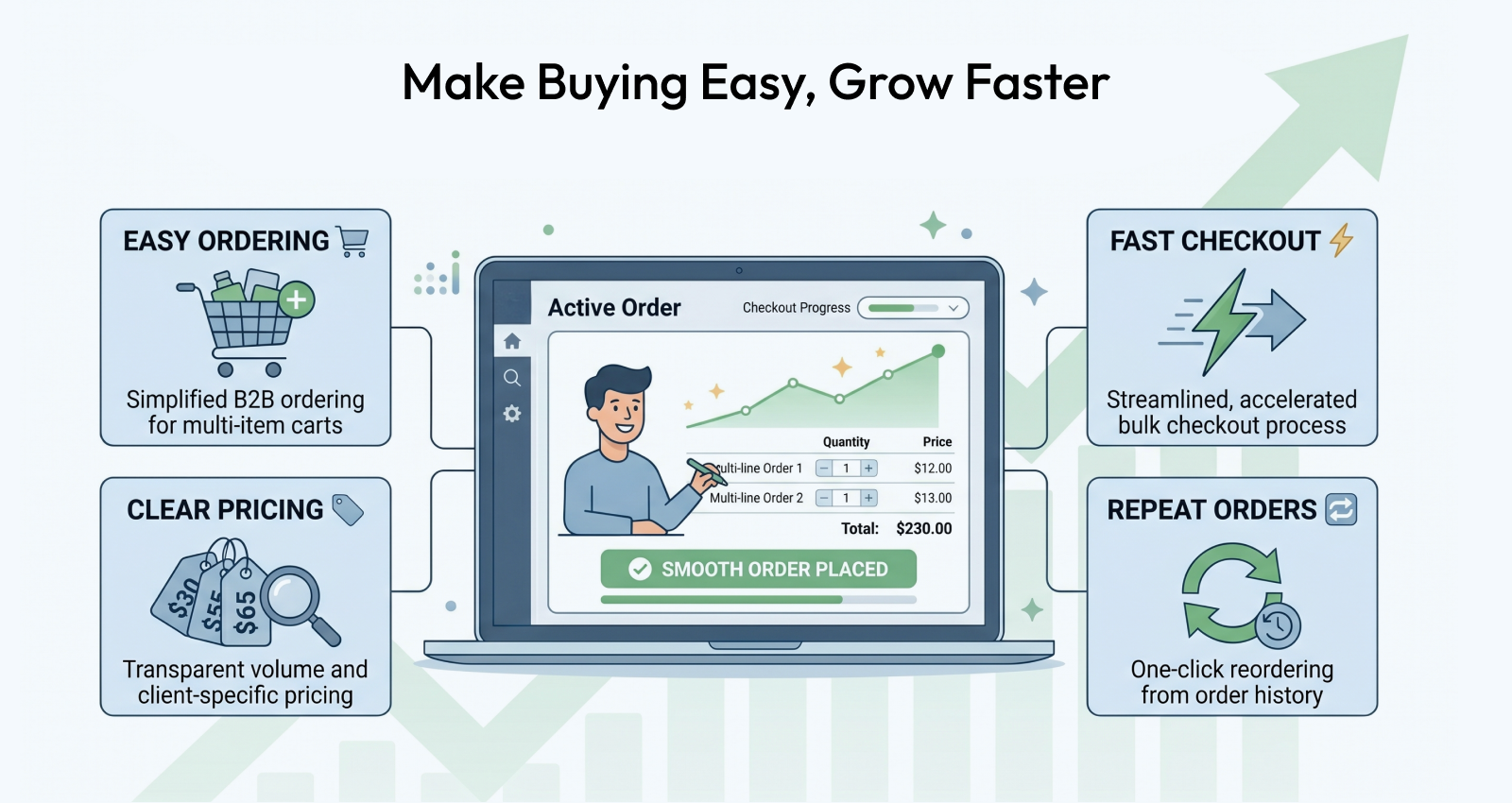
Wholesale growth doesn't come from working harder. It comes from making it easier for buyers to work with you — faster ordering, transparent pricing, real-time stock visibility, and an account experience that respects their time. That's what the right B2B eCommerce software solutions deliver when they're implemented properly.
The businesses that move the fastest in wholesale ecommerce aren't the ones spending the most. They're the ones that chose a platform built for how B2B actually works — and committed to the transition with real data, real buyer structures, and a genuine plan. The longer that decision is delayed, the more of a head start competitors with proper b2b order management software and self-service buyer portals are building over those still processing wholesale orders manually.
The question isn't whether wholesale ecommerce is worth it. For any business that sells in volume to other businesses, it absolutely is. The question is how long you're willing to wait before the benefits start working for you.
FAQs
B2B eCommerce software is a platform designed for businesses that sell products to other businesses rather than individual consumers. It handles wholesale-specific requirements like account-based pricing, bulk ordering, invoice-based payment, order approval workflows, and buyer portals. Unlike retail ecommerce tools, it's built around the way wholesale trade actually works — with volume, credit terms, and account relationships at its core.
Essential features include customer-group pricing, minimum order quantities, bulk order entry, credit terms and invoice-based payment, order approval workflows, and a self-service buyer portal. For scaling businesses, B2B order management software that gives real-time visibility across all orders, accounts, and fulfillment status is equally critical. Integration with ERP, accounting, and logistics tools is what makes these features work in practice.
B2B order management software is the part of your ecommerce system that tracks every order from placement through fulfillment, payment, and delivery. It gives your operations, sales, and finance teams a shared, real-time view of order status across all buyer accounts. Without it, wholesale businesses rely on manual tracking, which leads to errors, delays, and poor buyer experiences as order volumes grow.
A wholesale business needs multi vendor ecommerce software when it acts as a marketplace connecting multiple suppliers or brands with a network of buyers. This model requires separate vendor dashboards, per-vendor pricing and inventory management, automated commission or revenue-split calculations, and buyer-facing catalog integration across all vendors. Standard single-seller B2B platforms don't support this structure natively.
A global ecommerce platform for wholesale must support multi-currency pricing, multi-language storefronts, international tax and compliance logic, and integration with cross-border freight and logistics partners. It should allow regional catalog management and location-based pricing without requiring separate systems for each market. The goal is giving buyers in every market the same smooth self-service experience as your domestic accounts.
B2C ecommerce is built around a single consumer price, a single buyer, and card payment at checkout. B2B ecommerce involves variable pricing per account, bulk orders, credit terms, multi-user buyer accounts, and approval workflows before orders are confirmed. Platforms built for B2C don't handle this natively. Trying to run wholesale operations on a B2C platform creates costly workarounds and a poor buyer experience.