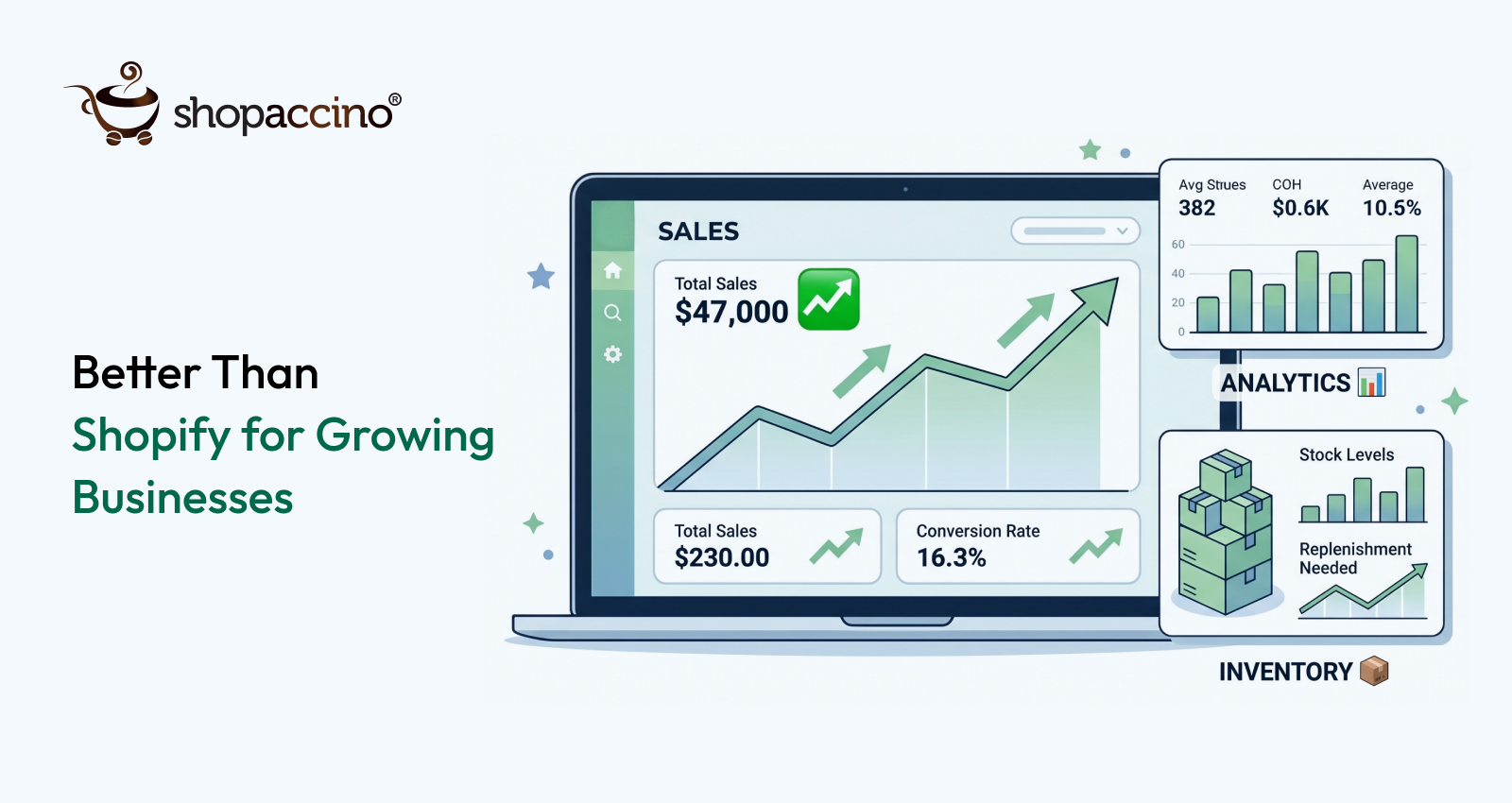
Best Ecommerce Software Better Than Shopify
Here's a conversation that happens every week inside ecommerce communities. Someone posts: “I'm paying too much for Shopify and not getting enough back. What should I switch to?” And the replies flood in — WooCommerce, BigCommerce, custom builds, and a dozen other names. If you've asked that same question, or you're about to, this guide is for you.
The truth is, Shopify is a great product — but it's built for a specific kind of seller. If your business has grown past that mold — if you're selling wholesale alongside retail, managing multiple warehouses, or selling internationally — then you've probably felt the friction. Transaction fees eating your margins. Features you need hidden behind expensive apps. A checkout experience you can't fully control. That's not a bug in your business. That's a sign you've outgrown the tool.
The good news? The best ecommerce software available today gives you more control, more flexibility, and in most cases, a much lower total cost — without requiring a developer on speed dial. Let's break down what actually matters when choosing a platform, and which ones deserve your attention.
Why Businesses Start Looking for a Shopify Alternative
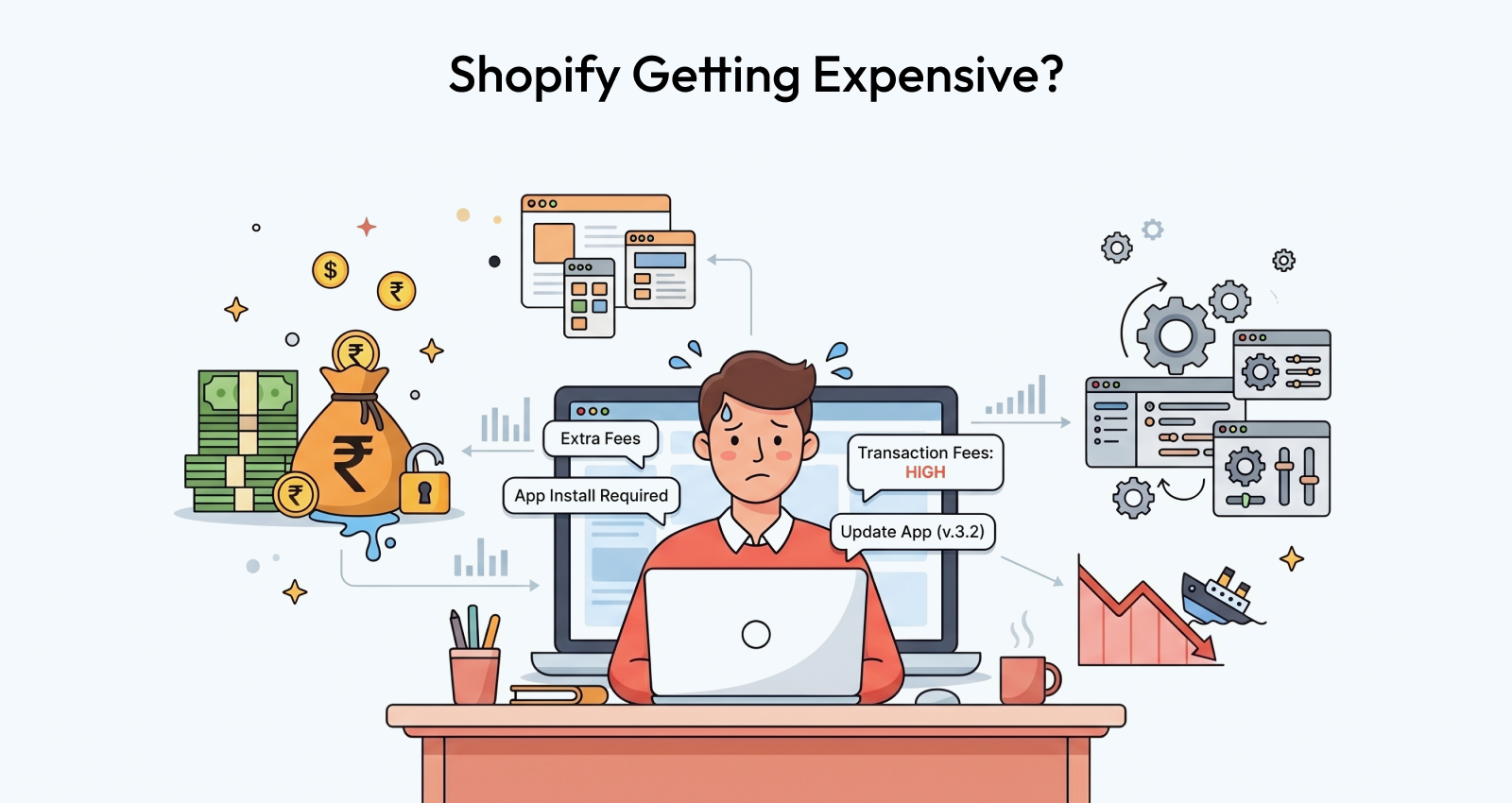
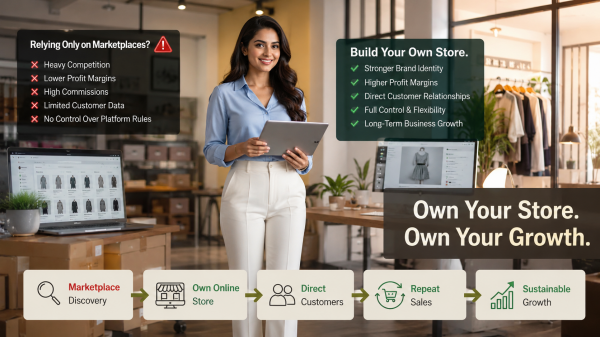
Most business owners don't start out looking for a Shopify alternative. They start on Shopify because it's familiar, well-marketed, and easy to set up. The first few months are usually fine. But as the business grows, the cracks start to show — and they usually show up in one of three places.
The first is cost. Shopify's transaction fees — charged on top of your payment gateway fees unless you use Shopify Payments, which isn't available everywhere — quietly take a percentage of every single sale. For small volumes, it's forgettable. For a business doing serious numbers, it's a real line item. Add in the monthly app subscriptions for things like wholesale pricing, loyalty programs, advanced reporting, or B2B features, and your actual monthly spend can be two to three times the advertised plan price.
The second is B2B limitations. Shopify is fundamentally a B2C tool. If you sell to retailers, distributors, or business buyers alongside your consumer store, you'll quickly discover that Shopify's native B2B features are limited — and the apps that fill the gap are expensive and don't always play well together. Businesses that need customer-group pricing, credit terms, or order approval workflows often end up managing these things manually, which is exactly what software is supposed to prevent.
The third is checkout control. Shopify locks down its checkout in ways that frustrate merchants who want a specific flow, a specific look, or specific payment options that aren't natively supported in their region. When your checkout experience is restricted, your conversion rate suffers — and that's a problem no amount of marketing spend can fix.
What to Actually Look for in Ecommerce Shopping Cart Software
Before comparing platforms side by side, it helps to know what you're really evaluating. The shopping cart software you choose isn't just a checkout tool — it's the operating system of your entire online business. Here are the things that will actually affect your day-to-day and your bottom line.
Total Cost, Not Just the Monthly Plan Price
Always calculate what you'll actually pay — plan fee, plus app subscriptions, plus transaction fees, plus payment gateway fees. A platform advertising ₹2,000/month can easily cost ₹8,000–10,000/month once you've added the tools you need to run a real business. Platforms that include more natively — inventory management, marketing automation, B2B features, loyalty programs — tend to be cheaper in practice, even if they look pricier at first glance.
How Well It Handles Your Business Model
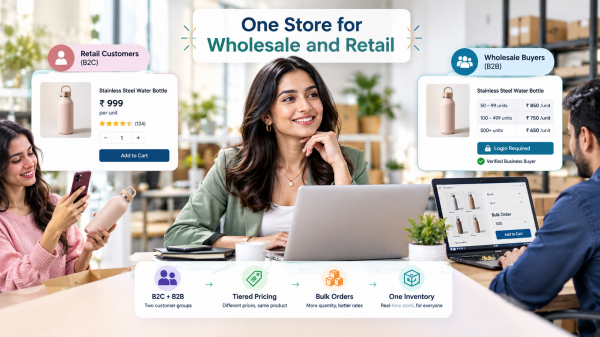
Not every platform is built for every kind of seller. A fashion D2C brand has very different needs from a marble and stone wholesaler or a beauty brand doing both retail and B2B. The best B2B ecommerce platforms handle both models — different pricing for different buyer types, bulk order management, credit-based payments — without requiring separate systems or expensive workarounds. If your business operates across both B2B and B2C, verify this before you commit.
Checkout and Payment Flexibility
This is where revenue actually changes hands. Your shopping cart software must support the payment methods your customers use — UPI, cards, wallets, net banking, international cards — without adding friction. A checkout that doesn't support a buyer's preferred payment method is a lost sale, every single time. Also check whether you can customise the checkout flow. A rigid checkout process that you can't adjust to your brand is a long-term conversion problem.
Mobile Experience — Both for Buyers and Sellers
In India especially, the majority of shoppers browse and buy on mobile. Your storefront must be fast and clean on a phone screen. But don't forget the seller side — if you're managing orders, checking inventory, or responding to customer queries on the go, a proper mobile app for store management makes a real difference in how efficiently you operate day to day.
Integrations With the Tools You Already Use
Your ecommerce platform doesn't work in isolation. It needs to connect with your shipping partners (Delhivery, Shiprocket, Bluedart), your accounting software (Tally, Zoho Books), your WhatsApp and email marketing tools, and your inventory management system. Platforms with strong native integrations save you from manually syncing data between tools — which is both time-consuming and error-prone.
The Best Ecommerce Software Options Worth Considering
So which platforms actually hold up? Here's an honest look at the options worth your time — starting with the one that makes the most sense for Indian businesses.
Shopaccino — Best for Indian Businesses Selling B2B and B2C
If your business is based in India, Shopaccino is the platform that deserves your first look — not your last. Most global ecommerce tools are built for Western markets and then adjusted for India. Shopaccino is the other way around. It's built from the ground up for how Indian businesses actually operate: GST-ready invoicing, native integrations with Indian payment gateways like Razorpay, PhonePe, and CCAvenue, direct connections with logistics partners like Delhivery, Shiprocket, and Bluedart, and a flat monthly pricing model with zero transaction fees. That last point alone saves growing businesses a meaningful amount every month compared to Shopify.
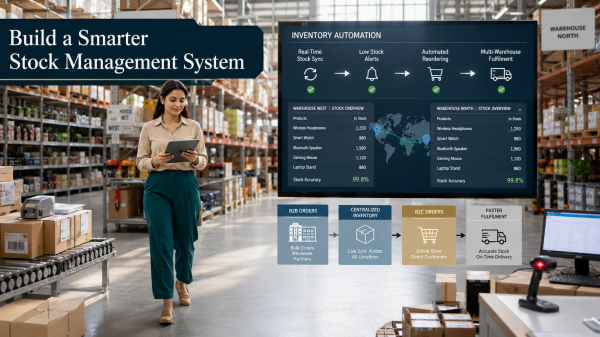
Where Shopaccino really pulls ahead is in handling both B2C and B2B from a single platform. You can run a consumer-facing storefront and a wholesale operation side by side — with separate pricing for different buyer groups, minimum order quantities, credit terms, and order approval workflows — all without juggling multiple systems or expensive third-party apps. Add a fully branded mobile app for your customers, multi-warehouse inventory management, and a loyalty program, and you have a platform that genuinely covers what a growing Indian brand needs. Whether you sell fashion, home decor, electronics, or B2B goods, it fits without forcing workarounds.
WooCommerce — Best for Businesses With a Technical Team
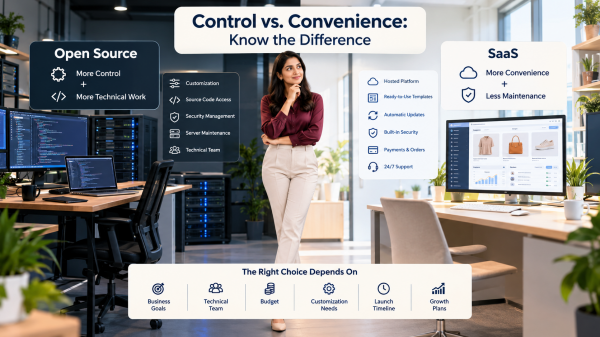
WooCommerce is free to install and runs on WordPress, giving you complete control over your store's code and design. If you have a developer on your team, it's highly flexible. But “free” is relative — once you factor in hosting, security, premium plugins, and ongoing developer time, costs add up quickly. For non-technical founders, updates and plugin conflicts become a recurring problem. It's a solid choice if you have the technical resources. If you don't, it's more friction than it's worth.
BigCommerce — Best for Mid-Sized Brands With Global Ambitions
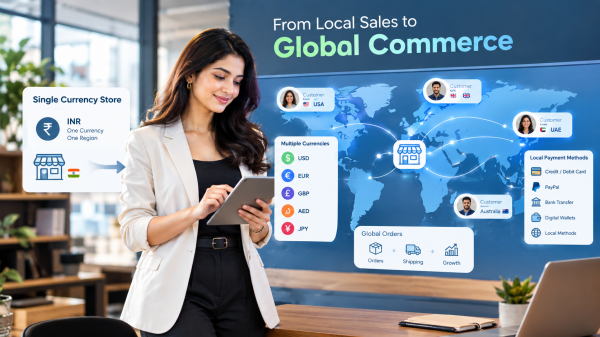
BigCommerce is a serious Shopify alternative for mid-sized businesses, especially those selling internationally. No transaction fees, solid multi-currency support, and stronger native B2B features than Shopify at comparable price points. The interface is less polished and the theme ecosystem smaller, but if you're a brand with cross-border ambitions and don't need India-specific market features, it's worth evaluating.
Magento (Adobe Commerce) — Best for Large Enterprises Only
Magento is powerful and deeply customisable — but it's built for enterprises with dedicated development teams and large budgets. For most small and mid-sized businesses, it's overkill. The setup cost, maintenance overhead, and technical complexity make it impractical unless you have very specific requirements that no other platform can meet. Large manufacturers or distributors with complex catalog and pricing structures are usually the right fit. For everyone else, there are better options.
The Real Conversation About B2B Ecommerce
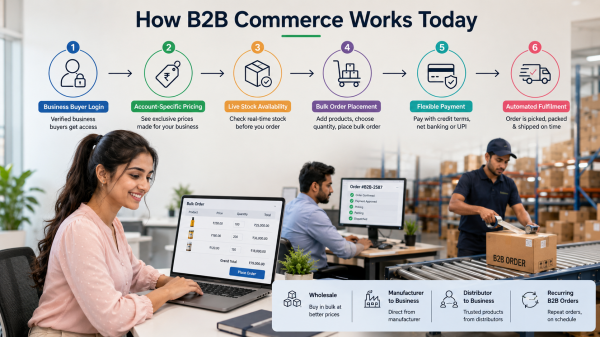
If you sell to other businesses — retailers, dealers, distributors, institutions — you need a platform that's actually built for it. Not one that sort of handles it through apps. The best B2B ecommerce platforms give you a specific set of tools that change how your wholesale business operates.
Customer group pricing is the foundation. You should be able to set a retail price, a dealer price, and a distributor price for the same product — without duplicating listings or maintaining separate price sheets over WhatsApp. Minimum order quantities protect your margins on bulk orders. Approval workflows let your team review large or new-account orders before confirming. Net payment terms — paying on invoice rather than at checkout — reflect how business buyers actually operate.
The businesses that get B2B ecommerce right stop treating it as a side function of their retail store. They give it its own infrastructure. When a distributor in Ahmedabad can log into their account, see their negotiated price list, place a bulk order, and get an invoice — without a single call to your sales team — that's when B2B ecommerce starts paying for itself.
What Makes Shopping Cart Software Actually Good in 2026
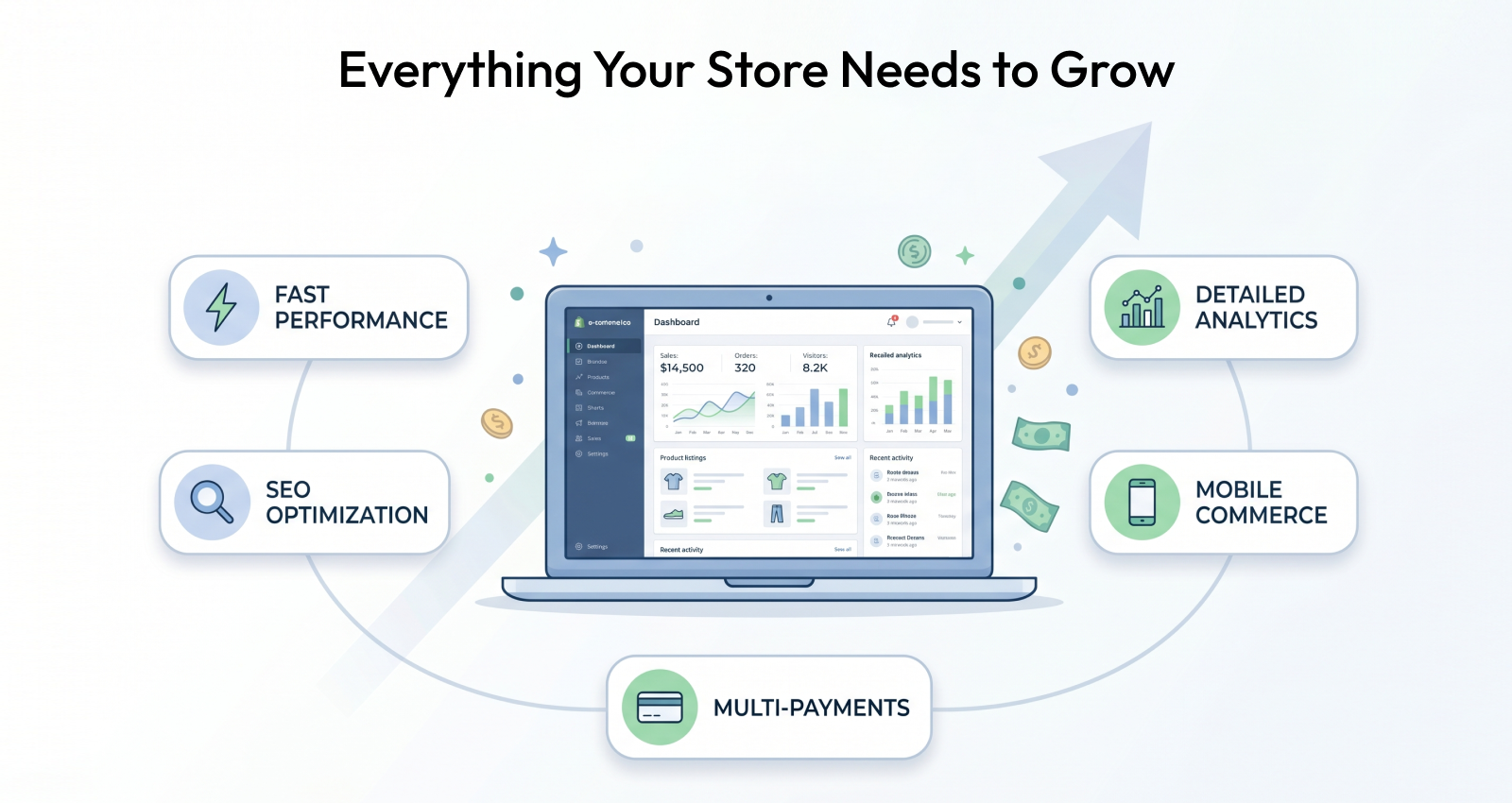
The standards have shifted. A few years ago, shopping cart software was judged on whether it could process payments and show products. Today, the bar is higher.
Speed matters more than it ever did. Google uses page speed as a ranking signal, and shoppers — especially on mobile — abandon stores that take more than three seconds to load. If your platform is bloated with unnecessary code or relies on a slow hosting infrastructure, you're losing sales and rankings simultaneously.
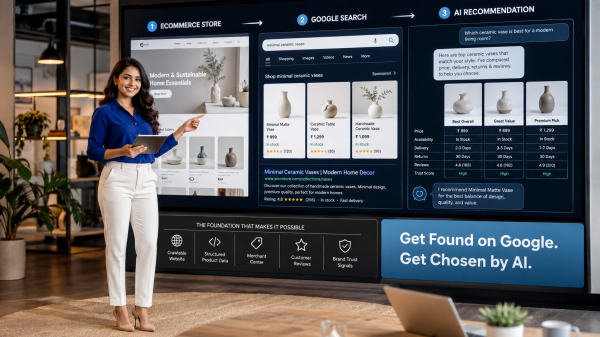
SEO control is non-negotiable. You need to be able to set custom meta titles, meta descriptions, and URLs for every product and category. Your platform should support structured data (schema markup) so that Google can properly understand and display your products. These aren't advanced features — they're table stakes for any business that wants organic traffic to be part of its growth strategy.
Post-purchase experience is where loyalty is built. Order confirmation, shipping updates, easy returns — these touchpoints shape whether a first-time buyer becomes a repeat customer. Your ecommerce software should handle these automatically, not require manual follow-up from your team.
And increasingly, data matters. Not just sales numbers, but understanding which products drive repeat purchases, which customer segments are most valuable, and where people are dropping off in your funnel. Platforms that give you real business intelligence — not just basic dashboards — help you make decisions based on what's actually happening, not what you think is happening.
How to Switch Without Losing Everything
Switching ecommerce platforms is one of those things businesses put off because it feels risky. And it does carry real risks — data loss, broken links, downtime during migration, and confused customers. But staying on the wrong platform carries risk too, just slowly. Here's how to do it without the chaos.
Start by exporting everything from your current platform — product catalog, customer data, order history, reviews. Don't rely on the new platform's import tools to handle this automatically. Back everything up manually before you touch anything.
Run the new platform in parallel — don't switch the live store until the new one is fully set up and tested. Add your products, configure your payment gateways, run test orders end-to-end. Check the checkout on mobile. Confirm that order confirmations reach customers. Verify that inventory updates correctly after a purchase. Only then go live.
Set up proper 301 redirects from your old URLs to the new ones. This is critical for SEO — without redirects, you lose the ranking value of any pages that Google has already indexed. For businesses with well-established organic traffic, this step alone can make the difference between a smooth migration and a painful traffic drop.
Tell your customers. A simple email explaining that you've upgraded your store — with a note about what's better — turns a potential source of confusion into a positive brand moment.
The Bottom Line
There's no single answer to which best ecommerce software is right for your business. It depends on your model, your market, your customers, and your ambitions. But there are wrong answers — and staying on a platform that's costing you money in transaction fees, limiting your B2B operations, or restricting your checkout experience is one of them.
Evaluate honestly. Calculate your real costs — not just the plan price. Test the features you'll actually use. Try the checkout as your customer would. And pick a platform that's built to support where your business is going, not just where it is today. The right shopping cart software doesn't just process orders. It becomes the infrastructure your growth runs on.
FAQs
The best ecommerce software for small businesses in India depends on your needs. Platforms built for the Indian market offer native GST compliance, Indian payment gateway support, and logistics integrations. Look for flat monthly pricing with no transaction fees, easy setup, and built-in tools for marketing and order management so you're not paying for multiple apps separately.
Yes. Several Shopify alternatives charge zero transaction fees — meaning you only pay your payment gateway's fee, not an additional platform cut on every sale. For businesses doing high volumes, this alone can save a significant amount monthly. Platforms like BigCommerce and India-specific tools offer this as standard, unlike Shopify which applies transaction fees unless you use Shopify Payments. See how zero commission ecommerce platforms like Shopaccino help sellers keep more of every sale.
Shopping cart software is the platform that powers your entire online store — product listings, checkout, payments, inventory, and order management. It matters because it directly affects your customer's buying experience and your team's efficiency. A slow or limited platform costs you sales. The right shopping cart software grows with your business and handles complexity without requiring constant manual work.
The best B2B ecommerce platforms support customer group pricing, minimum order quantities, credit terms, invoice-based payments, and order approval workflows. Shopify's native B2B features are limited without expensive apps. BigCommerce and India-focused platforms tend to handle B2B more natively. If you sell to retailers and distributors alongside consumers, choose a platform that handles both models in one system.
Yes, but it requires careful migration. The key step is setting up 301 redirects from your old URLs to the new ones so Google transfers ranking value. You should also export your product data, customer records, and order history before migrating. Avoid going live on the new platform until it's fully tested. Done correctly, a platform migration can improve your SEO by giving you better speed and more control.
Never compromise on mobile-optimised checkout, multiple payment gateway support, real-time inventory management, and SEO control over meta titles and URLs. For growing businesses, also look for abandoned cart recovery, customer loyalty tools, and shipping integrations. These aren't premium add-ons — they're the baseline of a store that converts visitors into buyers and buyers into repeat customers.