Mobile App Builder for Your Ecommerce Store
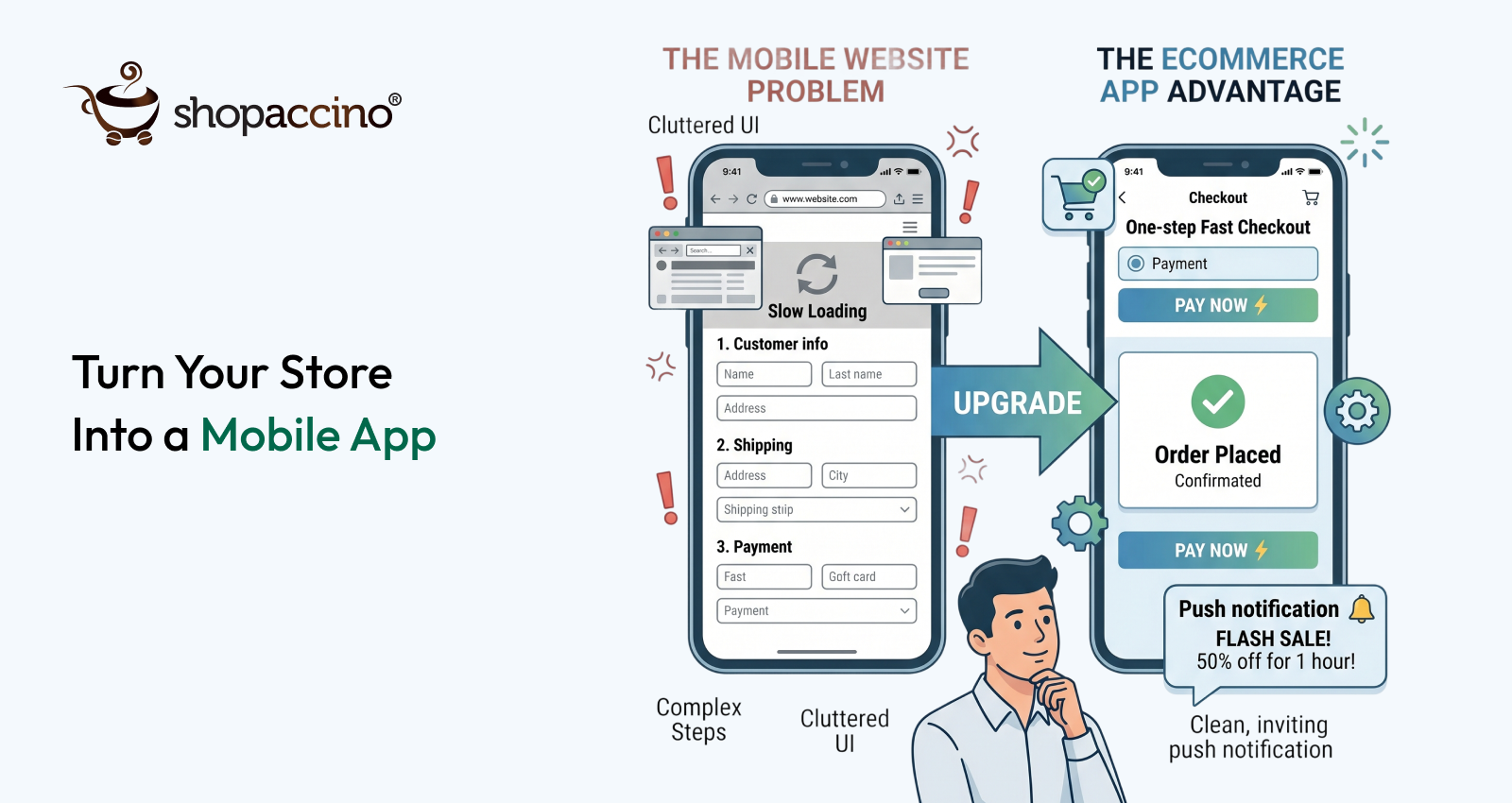
Think about the last time you made a purchase on your phone. Chances are, you didn't open a browser, search for the website, wait for it to load, and then navigate to the product. You opened an app. Tapped. Bought. Done. That experience — fast, clean, personal — is what your customers want from your store too. And if you're not offering it, someone else is.
The good news is that launching a mobile app for your ecommerce store no longer means hiring a development agency, spending a year in build cycles, and burning through your budget before a single customer downloads it. A mobile app builder changes that equation completely. It lets you create a branded, fully functional app for your store — without writing a line of code — and deploy it on both iOS and Android in a fraction of the time a traditional build would take.
This guide covers what a mobile app actually does for ecommerce businesses, what to look for in a builder, how the development process works in practice, and the mistakes to avoid when you're ready to make the move.
Mobile commerce accounts for more than 70% of all ecommerce traffic globally. If your store isn't app-ready, you're losing sales to stores that are.
Why Your Ecommerce Store Needs a Mobile App — Not Just a Mobile Website
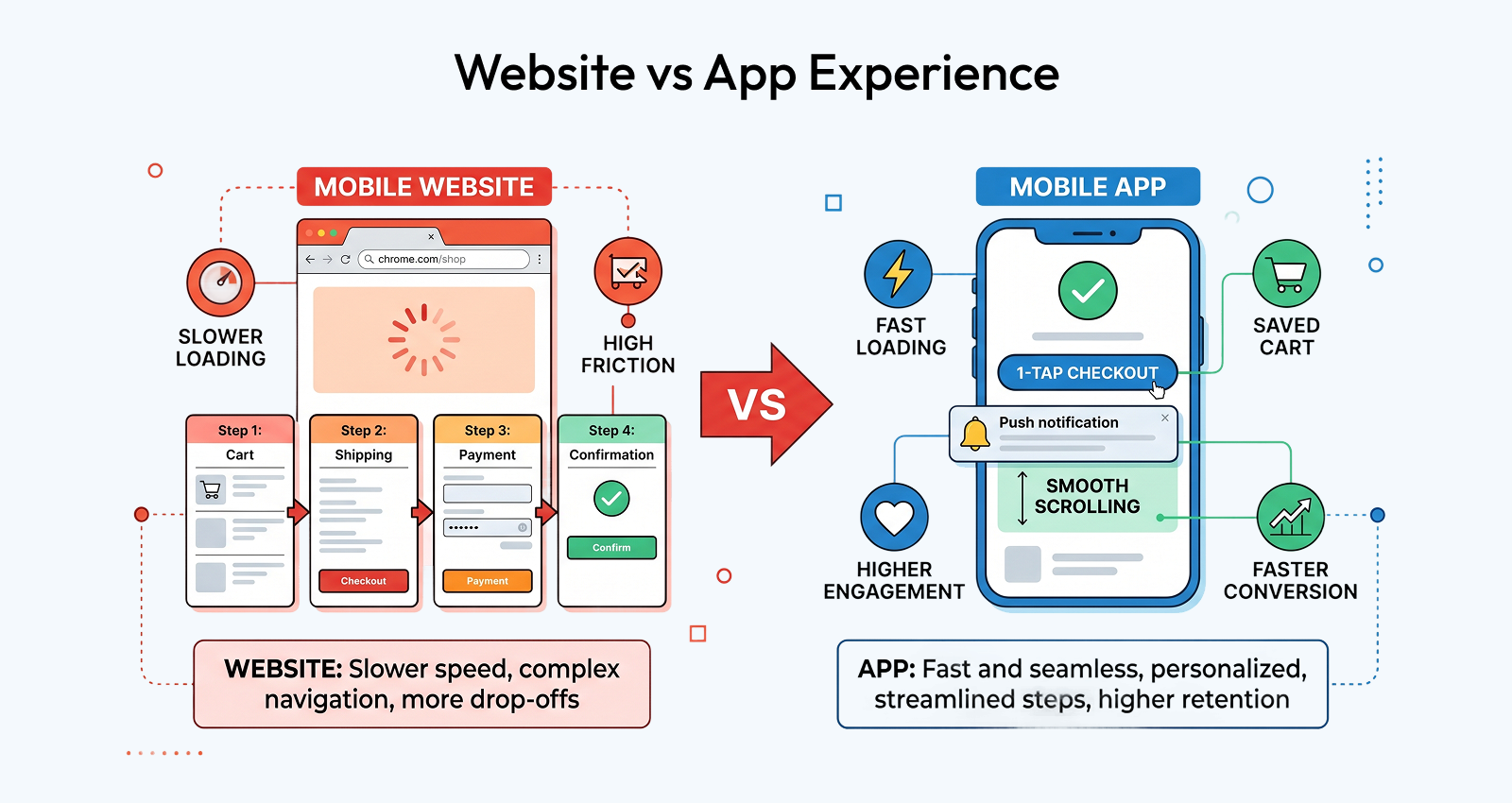
This is a question worth addressing head-on, because a lot of store owners assume their mobile-responsive website is enough. It's a reasonable assumption — but it misses something important about how mobile shoppers actually behave.
A mobile website is accessible. An app is engaging. Those are different things. When a customer installs your app, they're making a deliberate decision to keep your brand on their device. That single action — the download — changes the entire relationship. You now have a direct channel to reach them through push notifications. Your store loads faster because app data is cached locally rather than fetched from a server on every visit. The checkout flow is tighter, with fewer steps and saved payment methods. And because apps are designed for touch interfaces rather than adapted from desktop layouts, the browsing experience feels more natural.
The data backs this up. Mobile app conversion rates are consistently higher than mobile web rates — often three to five times higher. Average order values tend to be higher in apps too, partly because the experience removes friction and partly because push notifications and personalised offers can nudge buyers toward completing a purchase they might have abandoned on a browser.
App users convert at 3–5x the rate of mobile browser shoppers. A single well-timed push notification can recover an abandoned cart that a browser session never would.
For D2C brands, fashion retailers, home decor businesses, beauty brands, and anyone selling repeat-purchase products, the case for an app is particularly strong. These are categories where loyalty drives revenue, and loyalty is built through repeated engagement. An app makes that engagement effortless.
What Is a Mobile App Builder and How Does It Work?
A mobile app builder is a platform that generates a native mobile application for your store without requiring custom development. You connect it to your existing ecommerce store, configure your branding, set up your app's layout and navigation, and the builder outputs a fully functional app that can be submitted to the Apple App Store and Google Play.
The way this works under the hood varies between builders. Some generate a true native app for each platform — separate iOS and Android codebases that perform exactly like apps built by a development team. Others create a single cross-platform build that runs on both. Both approaches are valid, though native apps tend to deliver better performance and a more seamless user experience, especially for animations, gesture controls, and camera-based features like augmented reality product previews.
What matters from a business perspective is that the builder handles all the technical complexity. You don't need to understand Swift or Kotlin or React Native. You don't need to manage App Store certificates or configure push notification servers. The builder abstracts all of that, so your job is to make decisions about how your app looks and behaves, not how it's built.
The best mobile app builders sync automatically with your ecommerce store — products, pricing, inventory, and orders update in real time without any manual work on your end.
Ecommerce Mobile App Development: Build vs. Buy vs. Builder
When business owners first consider launching an app, they usually face three options. Understanding the difference between them is essential before committing to any path.
Custom Ecommerce Mobile App Development
Full custom ecommerce mobile app development means hiring a development team — either in-house or through an agency — to build your app from scratch. You get complete control over every feature, every interaction, and every design detail. The trade-off is time and cost. A custom app for both iOS and Android typically takes six to twelve months and costs significantly more than a builder-based solution. It also creates an ongoing dependency: every update, every new feature, every bug fix requires developer involvement.
Custom app development is the right choice when your ecommerce business has unique requirements, such as complex product configurators, advanced third-party integrations, or specialized business logic that no app builder can support. However, for most ecommerce businesses, this level of customization isn't necessary. The higher cost and longer development timeline of Custom app development can delay your launch by months while competitors are already live.
No-Code Mobile App Builder
A no-code mobile app builder sits at the other end of the spectrum. You configure rather than code. Choose your layout, set your brand colours and fonts, connect your store, and publish. The builder handles deployment, updates, and infrastructure. Launch timelines compress from months to weeks. Costs drop from development budgets to subscription fees.
The limitation is that you're working within the boundaries of what the builder offers. If you need a feature that isn't supported, you either wait for the platform to add it or accept the constraint. For most standard ecommerce app requirements — product browsing, cart, checkout, order tracking, push notifications, wishlists, loyalty programs — this constraint rarely matters in practice.
Hybrid Approach
Some businesses launch with a builder to get to market quickly, then invest in custom development once they have real user data about how their customers behave in the app. This is often the smartest path — validate the value of an app at low cost, then optimise for specific use cases once you know what your users actually want.
Ecommerce Android App Development: Why Both Platforms Matter
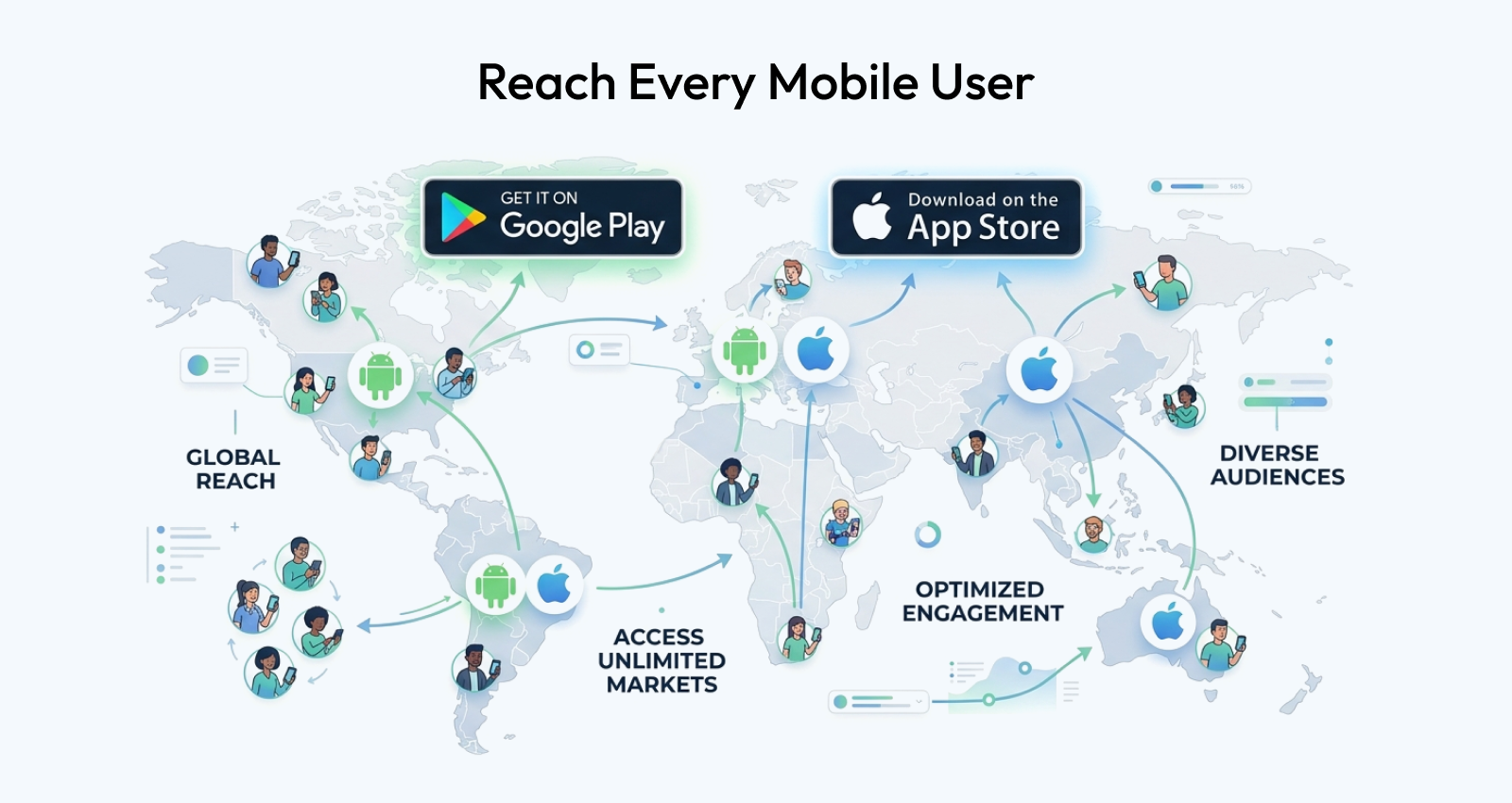
One decision that trips up many first-time app builders is platform priority. Should you launch on iOS first, or Android? The pragmatic answer for most e-commerce businesses is: both, at the same time.
Android has the larger global market share — significantly so in many markets across Asia, Africa, Latin America, and parts of Europe. iOS users in certain markets tend to have higher average spending. If you're building for a global customer base, excluding either platform at launch means excluding a substantial portion of your potential audience from day one.
Ecommerce Android app development through a builder follows the same process as iOS — same configuration, same branding, same feature set. The difference is in the submission process: Android apps are submitted to Google Play, iOS apps to the Apple App Store, and each has its own review and approval timeline. A good builder handles both submissions as part of the same workflow, so you're not managing two separate technical processes.
Android holds over 70% of the global smartphone market. Launching your ecommerce app on Android is not optional if you're building for a global audience.
The ongoing maintenance consideration matters here too. Native apps for each platform require separate updates — iOS updates for one codebase, Android for another. Builders that generate cross-platform code handle this in a single update cycle, which reduces the operational burden of keeping both apps current.
What to Look for in an Ecommerce Mobile App Builder
Not all mobile app builders are created equal, and the differences between them matter significantly for ecommerce use cases. Here's what to evaluate before you commit.
Real-Time Sync With Your Store
Your app and your store need to be the same thing, not two separate systems that you maintain in parallel. When you add a product to your store, it should appear in the app immediately. When stock runs out, the app should reflect that instantly. When an order is placed through the app, it should appear in your store's order management dashboard alongside web orders. A builder that requires manual syncing, CSV imports, or periodic refresh cycles is not a builder — it's extra work. Real-time sync is non-negotiable.
Push Notification Capability
Push notifications are the single most powerful feature that separates an app from a mobile website. Used well, they recover abandoned carts, announce flash sales to your entire customer base, alert buyers when a wishlisted product is back in stock, and remind lapsed customers that your store exists. Look for a builder that gives you full control over push notification scheduling, audience segmentation, and message content — not just a basic send-to-all broadcast.
Branded Design Control
Your app is a brand touchpoint. It should look and feel like your business — your colours, your typography, your tone. Builders that lock you into generic templates with minimal customisation produce apps that look like every other app on the platform. Buyers notice. Look for a builder that lets you control the full visual identity: home screen layout, category display, product page design, cart and checkout flow, and navigation structure.
Performance and Loading Speed
The speed advantage of an app over a mobile website disappears if the app is poorly optimised. Large uncompressed images, excessive API calls on every page load, and bloated codebases produce apps that feel slow and lead to uninstalls. During any trial period, test the app on a mid-range device — not just a flagship phone — and see how it performs on a standard connection. That's closer to the real-world experience most of your customers will have.
Analytics and User Behaviour Tracking
You need to understand what's happening inside your app — which products users view most, where they drop off in the checkout flow, which push notifications drive the most opens and purchases, and which customer segments are most active. Builders that provide detailed in-app analytics let you make decisions based on actual user behaviour rather than assumptions. This data becomes more valuable over time as you use it to refine your app experience and improve conversion.
Ecommerce Mobile App Builder: The Features That Drive Real Revenue
The best ecommerce mobile app builder platforms don't just replicate your website on a smaller screen. They add capabilities that actively grow your revenue.
Wishlists and save-for-later functionality drive repeat visits. When a buyer saves a product they're not ready to purchase yet, they're giving you a signal about their intent. A push notification when that product goes on sale or when stock is running low turns that signal into a sale.
Loyalty and rewards integration keeps buyers coming back. When your app tracks purchase history and rewards repeat buyers with points, discounts, or exclusive access, you're building a reason to open the app that exists independent of any specific product. Platforms like Shopaccino build this kind of loyalty infrastructure directly into their ecommerce and app ecosystem, so your rewards program works consistently whether a buyer is shopping on your website or your app.
Personalised product recommendations based on browse and purchase history turn your app's home screen into a curated shopping experience rather than a generic catalog. Buyers who see products relevant to their tastes engage more, spend more time in the app, and convert at higher rates.
Personalisation, push notifications, and loyalty rewards are the three features that consistently separate high-performing ecommerce apps from ones that get downloaded and forgotten.
One-tap reordering is underrated but commercially significant for repeat-purchase categories. Beauty products, home essentials, food and beverage, and B2B supplies all involve regular reorders. An app that shows a buyer their last five orders and lets them reorder in two taps is removing the last remaining friction from a transaction that was always going to happen.
How to Launch Your App Without Wasting Months Getting Ready
The biggest mistake businesses make with app launches is treating them like website launches. A website launch is a technical event. An app launch is a marketing event that happens to involve technology.
Start with your existing customers, not new ones. Your current buyers are your most receptive audience for an app. Email them, message them on WhatsApp, put a banner on your website. Give them a reason to download — app-exclusive discount on first purchase, early access to new arrivals, a loyalty bonus for installing. Getting your first 1,000 downloads from buyers who already trust you is faster and cheaper than trying to acquire new customers directly into the app.
Don't wait for perfect. Launch with the core experience working well — browsing, cart, checkout, order tracking — and iterate from there. The app that launched with five features and improved based on real user feedback will outperform the app that spent nine months adding features nobody asked for. Your early users will tell you what matters. Listen to them.
Set up push notifications before launch, not after. Configure your abandoned cart sequence, your welcome notification for new app installs, and your back-in-stock alerts before your app goes live. These are the automations that work quietly in the background and recover revenue that would otherwise be lost. Setting them up on day one means they're working from the moment your first customer downloads the app.
Track from day one. Know your install rate, your day-7 retention, your checkout conversion, and your average order value from the moment you launch. These numbers tell you whether your app is working and where to focus your attention. An app without measurement is just an expense. An app with clear metrics is a channel you can actively improve.
Your App Is the Closest Thing to a Store in Your Customer's Pocket
Mobile shopping isn't a trend that's still emerging. It's the default. The majority of your potential customers are already spending most of their online time on a phone, in apps. The question isn't whether a mobile app matters for your ecommerce business. It's how much longer you're willing to compete without one.
A mobile app builder removes the biggest barriers that used to make apps an enterprise-only advantage — cost, development time, technical complexity. A business owner who knows their brand and understands their customers can launch a fully functional, beautifully designed app in weeks, not months. That app then works around the clock, building the kind of direct, personal relationship with buyers that a website alone never can.
The stores that win in mobile commerce aren't necessarily the biggest ones. They're the ones that got there first, built the habit, and gave customers a reason to keep coming back. Start that process today, and your app will be earning its keep long before competitors get around to building theirs.
FAQs
A mobile app builder for ecommerce is a platform that lets you create a branded shopping app for iOS and Android without writing any code. You connect it to your existing store, configure your design and layout, and the builder generates a fully functional app you can publish on the App Store and Google Play. Products, pricing, and inventory sync automatically so you manage everything from one place.
A mobile website is accessible via browser; a mobile app is installed on a device. Apps load faster because data is cached locally, offer push notifications that mobile websites can't, support saved payment methods for faster checkout, and convert at three to five times the rate of mobile browsers. For repeat-purchase categories, apps also build stronger customer loyalty through personalisation and in-app rewards.
Look for real-time sync with your store so products and orders stay current automatically, full branded design control, push notification tools with audience segmentation, in-app analytics, and support for both iOS and Android. The builder should handle App Store and Google Play submission as part of its standard workflow. Builders that require manual product imports or lack push notification tools are not suitable for serious ecommerce use.
With a no-code mobile app builder, ecommerce mobile app development works through configuration rather than coding. You choose your layout, set brand colours and fonts, connect your store, configure navigation and featured collections, and set up push notifications. The builder generates the app code, handles platform compliance requirements, and submits your app to the App Store and Google Play on your behalf. Most businesses can launch in two to four weeks.
Android holds more than 70% of the global smartphone market, making ecommerce Android app development essential for any brand serving an international audience. Many high-growth markets have Android as the dominant platform. A good mobile app builder generates both iOS and Android apps from the same configuration, so you reach your full potential audience without running two separate development processes or maintaining two separate codebases.
Custom ecommerce mobile app development through an agency typically costs tens of thousands and takes six to twelve months. A no-code mobile app builder reduces this to a monthly subscription, usually a fraction of the custom cost, with launch timelines of a few weeks. For most ecommerce businesses, a builder delivers 90% of what a custom app would provide at 10% of the cost — and you can always invest in custom development later once you have real user data.