Best B2B Ecommerce Platform for Manufacturers (2026 Buyer's Guide)
Walk into almost any manufacturing facility and you'll find the same scene in the sales office: a stack of email threads, a phone that rings constantly with reorder calls, and a spreadsheet that someone updates manually every time a buyer changes their order. It keeps things moving — until it doesn't. The moment your business tries to grow beyond a handful of accounts, that manual system becomes the ceiling.
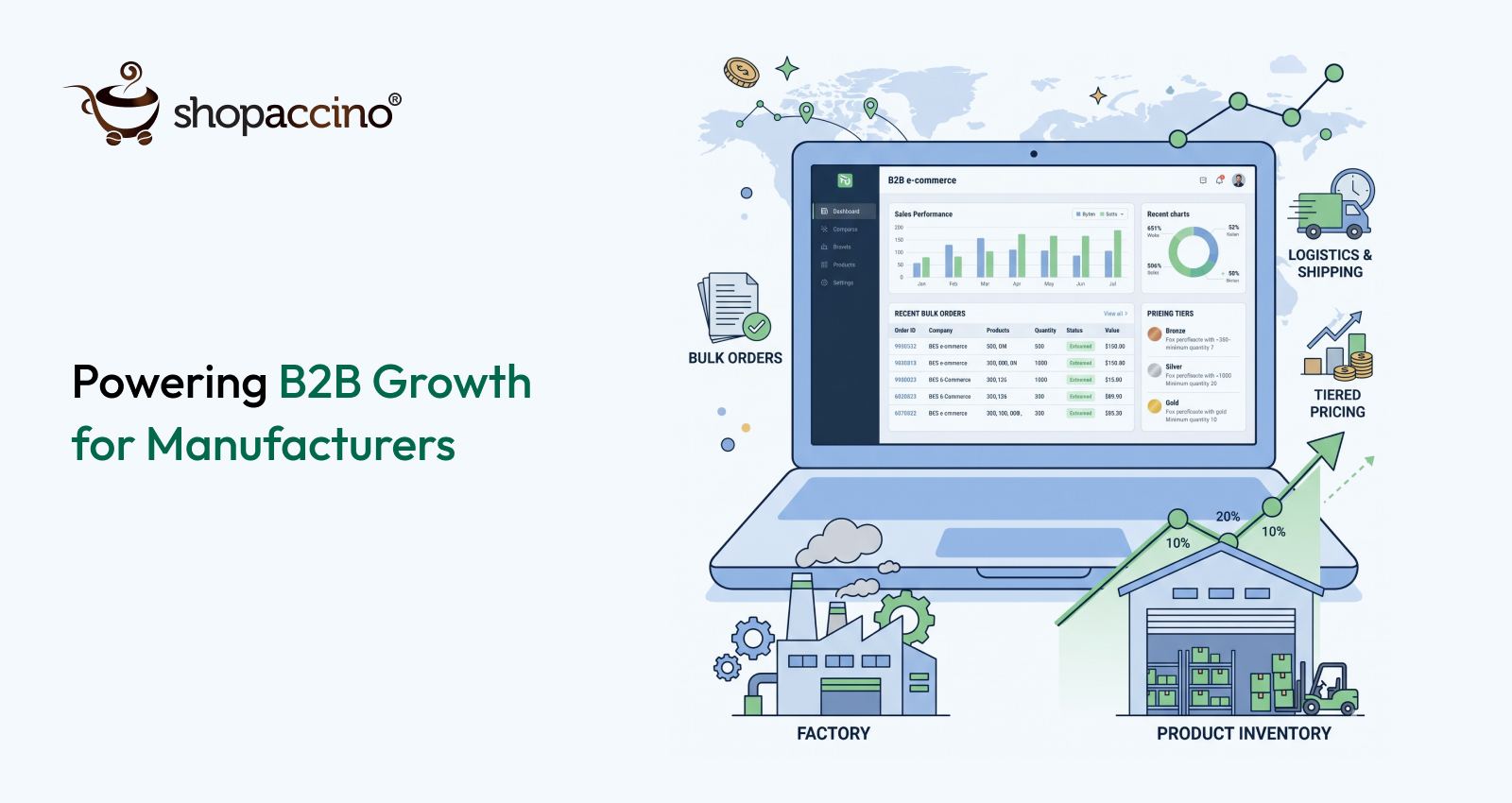
Choosing the right B2B ecommerce platform for manufacturers is how you remove that ceiling. Not by digitising your existing process and calling it done, but by building a proper online channel that lets buyers place orders on their own schedule, at their own negotiated pricing, with all the approval and payment flexibility that B2B trade requires. Done right, it doesn't replace your sales team — it frees them to do the work that actually needs a human.
This guide covers what B2B ecommerce really requires, what features separate a purpose-built platform from a standard retail tool dressed up in B2B clothing, and what to look for when you're ready to make the decision.
Why Most Ecommerce Platforms Fail Manufacturers
The ecommerce software market is dominated by platforms designed for B2C — a consumer, a product, a credit card, a confirmation email. That model works beautifully for selling trainers or skincare products. It falls apart the moment your buyer is a procurement manager placing a 500-unit order on a 60-day invoice, needing approval from three people before the order confirms.
This is the fundamental problem manufacturers run into when they try to use a standard retail-first platform for wholesale. The features that B2B requires — account-based pricing, minimum order quantities, credit terms, approval workflows, buyer-specific catalog access — are either missing entirely or available only through expensive third-party apps that don't always work together cleanly.
A true B2B ecommerce platform for manufacturers is architected differently from the ground up. It treats each buyer account as a relationship with its own pricing, its own payment terms, its own visibility into your catalog, and its own order history. That's not a feature you can bolt onto a B2C platform. It's a design decision that has to be made at the foundation.
The Features That Actually Matter in B2B Ecommerce
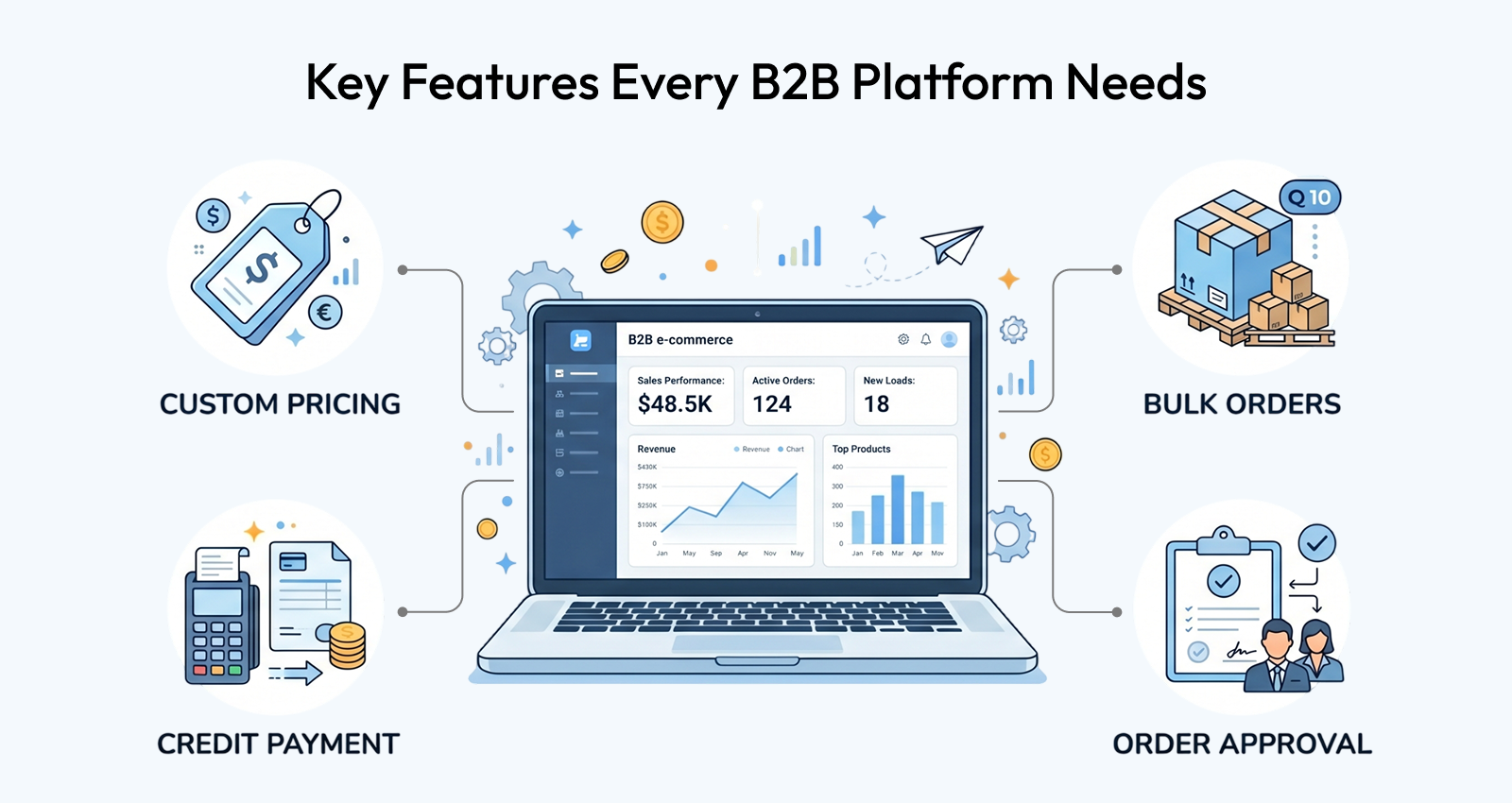
Before evaluating any platform, manufacturers need a clear picture of what their operation actually requires. Here's what a properB2B ecommerce platform for manufacturers must handle — not as optional extras, but as core functionality.
Account-Based Pricing
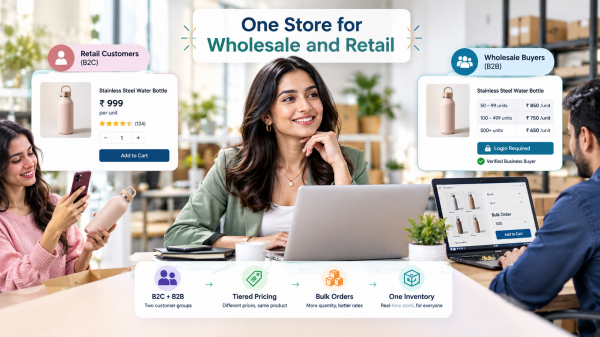
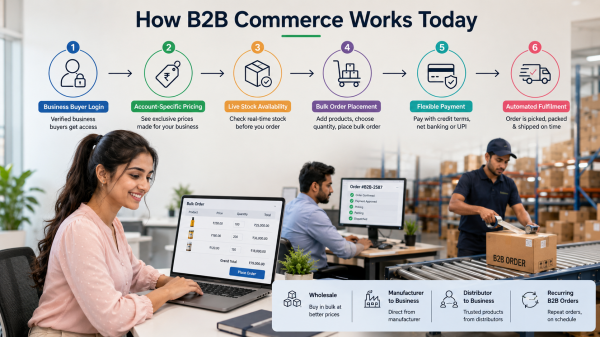
In B2B, there is no such thing as a single price. A long-term distributor gets one rate. A regional retailer gets another. A new account might see a standard price until they hit a volume threshold. Your platform needs to manage all of this automatically — each buyer logs in and sees exactly their pricing, without your team manually adjusting anything on every order. This is the baseline of B2B ecommerce platform for wholesalers capability, and any platform that can't do it natively is going to cause problems at scale.
Minimum Order Quantities and Bulk Order Entry
Manufacturers sell in volume. If a buyer can purchase a single unit at your wholesale rate, your margin structure breaks. A solid platform lets you set minimum order quantities at the product or category level, so every order that comes through is commercially viable. Equally important is bulk order entry — the ability for a procurement buyer to quickly enter quantities across a large SKU list without clicking through individual product pages. For buyers managing hundreds of line items, this isn't a convenience. It's a requirement.
Credit Terms and Invoice-Based Payment
Most B2B buyers don't pay at checkout. Trade credit is standard practice — buyers place orders, receive goods, and settle the invoice within an agreed window. Your platform needs to support this. That means allowing buyers to complete a purchase without upfront payment, generating and sending invoices automatically, and giving your finance team a clear view of outstanding balances. Platforms that only support card-at-checkout are fundamentally incompatible with how manufacturing and wholesale trade actually works.
Order Approval Workflows
Large B2B accounts often require internal sign-off before a purchase is confirmed. A junior buyer submits the order; a purchasing manager approves it; then it goes to fulfillment. This process protects both your buyer's budget control and your own order accuracy. A platform with built-in approval workflows handles this automatically — notifying approvers, waiting for sign-off, and only releasing the order to your team once it's been authorised. Without this, large accounts will either avoid your online channel or create internal workarounds that create confusion on both sides.
Buyer-Specific Catalog Access
Not every buyer should see everything you make. A regional distributor may only have rights to certain product lines. A new account might access a limited catalog until they've established a trading relationship. Some products may carry export restrictions that limit which markets can see them. A good B2B ecommerce platform for manufacturers gives you precise control over catalog visibility per buyer group, so each account sees exactly what they should — and nothing they shouldn't.
Selling Across Borders: What B2B Cross-Border Ecommerce Requires
For manufacturers with international buyers — or those looking to expand into new markets — the platform question becomes more complex. B2B cross border ecommerce platforms that handle international trade well are a specific category, and not every platform that claims global capability actually delivers it in practice.
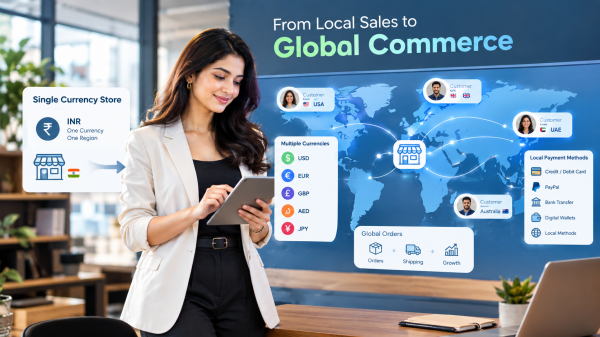
Multi-currency pricing is the starting point. Your buyer in Germany shouldn't have to manually convert your prices, and you shouldn't have to maintain separate price lists for every currency you trade in. A platform with proper multi-currency support shows each buyer prices in their local currency, handles exchange rate logic automatically, and settles in the currency your business operates in.
Multi-language storefronts matter more than most manufacturers expect. A procurement manager working in Japanese or Portuguese is going to engage far more confidently with a platform that speaks their language. Reducing language friction at the buying stage directly reduces the number of queries your sales team has to handle and increases the likelihood that an international buyer completes their order independently.
Tax compliance across borders is genuinely complex — VAT in Europe, GST in certain markets, different rules for goods crossing into different trade zones. A platform built for B2B cross border ecommerce handles this systematically, applying the right tax logic based on the buyer's location and the nature of the goods, so you're not manually managing tax rules for every market you sell into.
International logistics integration rounds this out. Connecting your platform directly with freight and courier partners, calculating accurate shipping costs by destination, and generating customs documentation automatically removes the back-and-forth that slows down cross-border orders and frustrates international buyers.
Build vs Buy: The B2B Ecommerce Website Builder Decision
Many manufacturers, when they first consider this, think about building a custom solution. The reasoning is understandable: their business has unusual pricing logic, complex product configurations, and specific workflows that no off-the-shelf tool seems to match exactly. So they call a development agency and start scoping a build.
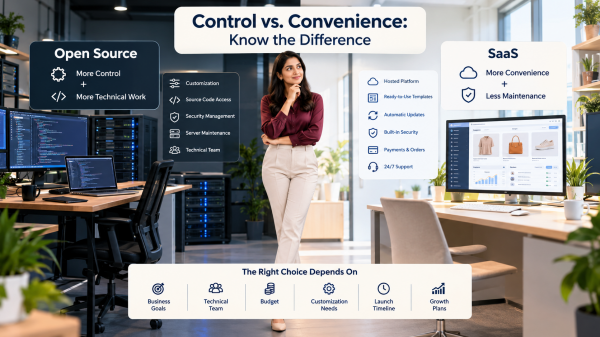
What usually happens next is a long development cycle, a large invoice, and a platform that works — for the business as it exists at launch. Six months later, when the business has changed — new buyer tiers, a new market, a new product line — they're back in the development queue. The hidden cost of custom B2B platforms isn't the build. It's the ongoing maintenance.
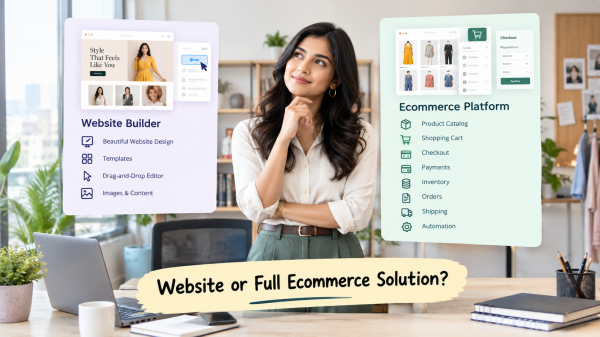
A purpose-built B2B ecommerce website builder solves this differently. The hard problems — pricing logic, approval workflows, buyer account structures, bulk ordering — are already built, tested, and maintained by the platform. You configure the platform to your business rather than building that logic from scratch. This means faster time to launch, lower ongoing costs, and the ability to change your setup as your business evolves without going back to a developer for every change.
The right question to ask any B2B ecommerce website builder is: how much of my configuration can I change without a developer? If the answer is “very little” — if updating a pricing tier or adding a new buyer group requires a technical project — that platform will cost you far more in development time than its subscription price suggests.
Integration: Where B2B Ecommerce Platforms Win or Lose
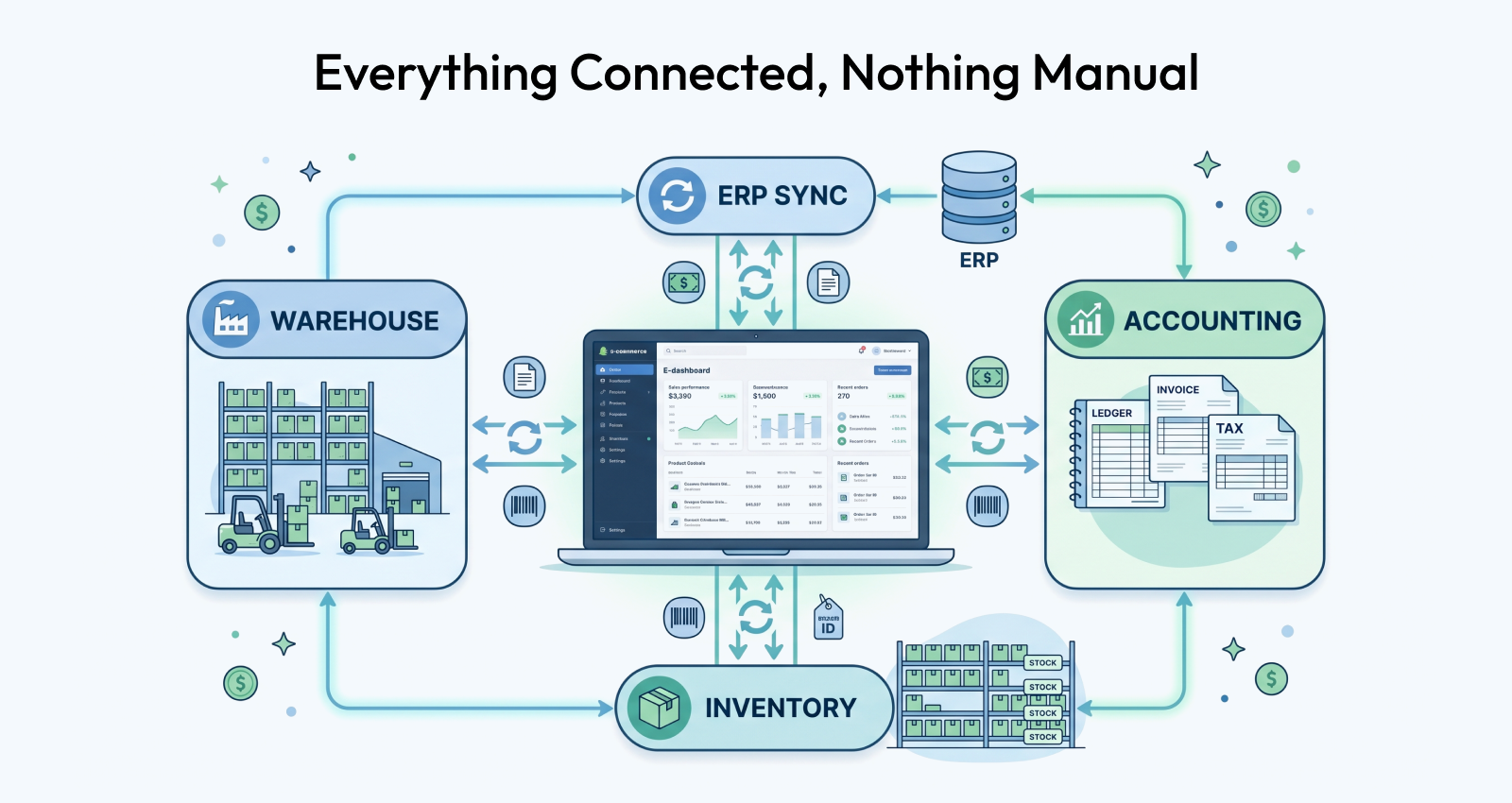
A B2B ecommerce platform doesn't operate as an island. For manufacturers, it needs to connect cleanly with the systems that run the rest of the business — and the quality of those integrations often determines whether the platform actually works in day-to-day operations or creates a new set of manual processes.
ERP Integration
If your production planning, inventory management, and financial reporting run through an ERP system, your ecommerce platform needs to sync with it in real time. Order data, stock levels, and customer account information should flow between systems automatically. Without this, you end up with manual exports, data mismatches, and orders being confirmed for stock that isn't actually available — the kind of errors that damage buyer relationships quickly.
Accounting and Invoicing
Credit-term orders create financial records the moment they're placed. Your accounting team needs visibility immediately — not when someone remembers to update the spreadsheet. Platforms like Shopaccino support accounting integrations that keep order and financial data in sync automatically, which means your finance team is always working from the same picture as your operations team.
Warehouse and Fulfillment
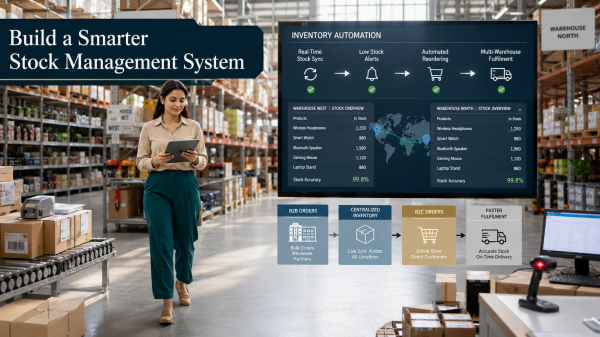
Manufacturers often fulfill from multiple locations — different warehouses, different production facilities, different third-party logistics partners depending on the product or the destination. A platform with multi-warehouse support routes each order to the right fulfillment point automatically, based on stock availability and buyer location. This reduces delivery time, cuts shipping costs, and removes the manual routing decisions that slow down your operations team.
The Buyer Portal: Your Quietest Salesperson
One thing manufacturers consistently underestimate when they first move to B2B ecommerce is the value of a proper buyer portal. Not just a catalog with a cart — a genuine self-service environment where buyers can log in, see their account-specific pricing, view their order history, track current shipments, download past invoices, and place new orders, all without contacting your team.
The commercial impact of this is significant and often overlooked. Every order placed through the portal is one your sales team didn't process manually. Every reorder a buyer makes by referencing their history is revenue that required no outbound effort. Buyers in different time zones can place orders outside your business hours without waiting for the next working day.
The buyer portal also changes the nature of your sales team's work. When routine reorders and standard queries are handled by the platform, your team's time shifts to the work that actually requires a human: new account development, complex negotiations, relationship management with strategic buyers. That shift is where the real return on B2B ecommerce investment comes from — not just the orders the platform processes, but the higher-value work it frees your people to do.
How to Choose Without Getting It Wrong
Platform demos are designed to make everything look straightforward. Here's how to evaluate what you're actually getting.
Test with your real data. Ask for a trial environment and load your actual catalog, your real pricing tiers, and your typical order structures. A 50-product demo with uniform pricing hides problems that a 2,000-SKU catalog with six buyer tiers and three currency markets will expose immediately. If the platform struggles with your real complexity during a trial, it will struggle in production.
Understand the true total cost. Add up the subscription fee, any apps or plugins needed to fill B2B feature gaps, transaction fees on every order, and the development cost if customisation is required. Compare exactly how these costs stack up across Shopify, BigCommerce, and Shopaccino for B2B. A platform that looks affordable at plan level can become genuinely expensive once you've built the setup your business needs. Platforms that include B2B features natively — pricing logic, approval workflows, buyer account management — tend to be more cost-effective in practice.
Ask for references from your sector. A platform that works well for fashion wholesale may not handle the complexity of industrial manufacturing, chemical distribution, or construction.
materials. Talk to existing customers in a similar business before you commit. Their experience will tell you more than any sales presentation.
Check the mobile experience for buyers. Procurement managers place orders from everywhere. Your buyer portal needs to work cleanly on a phone, not just on a desktop. If the mobile experience is clunky, buyers won't use the portal — which means they'll call your sales team instead, and you're back where you started.
The Shift That Changes Everything
The manufacturers who get B2B ecommerce right don't just move their existing sales process online. They rebuild how their buyers interact with them. Ordering becomes faster, pricing becomes transparent, reorders happen without friction, and international buyers can engage on the same terms as local ones.
The right B2B ecommerce platform for manufacturers makes this possible without requiring an enterprise IT budget or a team of developers. It handles the complexity that B2B trade actually involves — the pricing structures, the credit terms, the approval chains, the cross-border requirements — so your business can grow its buyer base without growing its back-office headcount in proportion.
Every month spent running wholesale through manual processes is a month your competitors with proper B2B ecommerce platform for wholesalers infrastructure are making it easier for shared buyers to choose them. The decision isn't whether to make the move. It's how long you wait before you do.
FAQs
A B2B ecommerce platform for manufacturers is an online commerce system designed specifically for wholesale and trade selling — not consumer retail. It handles account-based pricing, minimum order quantities, credit terms, order approval workflows, and buyer-specific catalog access natively. Unlike standard retail platforms, it's built for the way manufacturers and their business buyers actually trade.
A B2B ecommerce platform for wholesalers handles the complexity that wholesale trade requires: different prices for different buyers, bulk ordering tools, invoice-based payment, approval chains, and multi-user buyer accounts. Retail platforms are designed for one price, one buyer, one payment at checkout. That model doesn't fit wholesale, and trying to use a retail-first platform for B2B creates constant workarounds.
The core features are account-based pricing, minimum order quantities, bulk order entry, credit terms and invoice payments, order approval workflows, and buyer-specific catalog visibility. Beyond these, manufacturers should look for ERP integration, multi-warehouse fulfillment, a proper buyer self-service portal, and — for international trade — multi-currency and multi-language support.
B2B cross border ecommerce platforms should offer multi-currency pricing, multi-language storefronts, automated international tax compliance, and integration with global freight and logistics partners. They should let you manage regional catalogs and location-based pricing without maintaining separate systems for each market. The goal is giving international buyers the same smooth experience as your domestic accounts.
For most manufacturers, yes. A purpose-built B2B ecommerce website builder already has the core B2B logic — pricing, approvals, credit terms, buyer accounts — tested and maintained. You configure it to your business rather than building that complexity from scratch. Custom builds are expensive to develop and costly to maintain as your business changes. A good platform lets you change your setup without a developer.
When buyers can self-serve — placing orders, checking pricing, reviewing invoices, tracking shipments — without calling your sales team, the cost of processing each order drops significantly. Your team shifts from handling routine reorders to acquiring new accounts and managing strategic relationships. That shift is where the real commercial return on B2B ecommerce investment comes from for most manufacturers.