How to Build a Website to Sell Pharmacy Products Online
Overview: The Online Pharmacy Opportunity
The global online pharmacy and medical ecommerce market is growing at an unprecedented pace. Consumers are increasingly purchasing medicines, health supplements, surgical supplies, and medical equipment through digital channels. For pharmacy owners, medical distributors, and healthcare entrepreneurs, this shift represents an enormous business opportunity — one that demands both strategic clarity and regulatory discipline.
Unlike general ecommerce, selling healthcare products online comes with non-negotiable responsibilities. Your customers are trusting you with their health. This makes compliance, product authenticity, prescription handling, and transparent communication the cornerstones of a successful online pharmacy business.
Key Considerations Before You Begin
Legal requirements: Understand the pharmacy laws applicable in your country or state. In India, for instance, online pharmacies must comply with the Drugs and Cosmetics Act, 1940, and follow guidelines from the Central Drugs Standard Control Organisation (CDSCO).
Product authenticity: Source products exclusively from licensed manufacturers and distributors. Every batch should be verifiable.
Prescription handling: Prescription medicines require a validated prescription workflow — customers must be able to upload prescriptions securely.
Logistics and cold-chain management: Certain medicines require temperature-controlled storage and delivery.
Customer trust: In healthcare, trust is not a differentiator — it is the baseline. Invest in trust signals from day one.
Identify Your Market
The pharmacy and medical products market is broad and segmented. Understanding which segment you are entering will define your platform requirements, compliance obligations, and marketing strategy.
Key Market Segments
Over-the-Counter (OTC) Medicines
These include pain relievers, antacids, cold and flu medications, vitamins, and topical creams. OTC products can be sold without a prescription and are the easiest segment to enter for new online pharmacy businesses.
Prescription Medicines
This segment demands a robust prescription verification system. Customers must upload a valid prescription, which must be reviewed by a licensed pharmacist before order fulfilment. This is both a legal and ethical obligation.
Medical Equipment
Blood pressure monitors, nebulisers, pulse oximeters, glucose meters, and home-care devices fall under this category. This segment has seen exponential demand growth post-pandemic.
Surgical Supplies
Gloves, syringes, surgical masks, wound care products, and procedure kits are typically sold to hospitals, clinics, nursing homes, and individual practitioners. B2B models work well here.
Wellness and Nutraceuticals
Protein supplements, herbal formulations, vitamins, and lifestyle wellness products form a high-growth segment with relatively lower regulatory complexity.
Identify the Gap in the Market
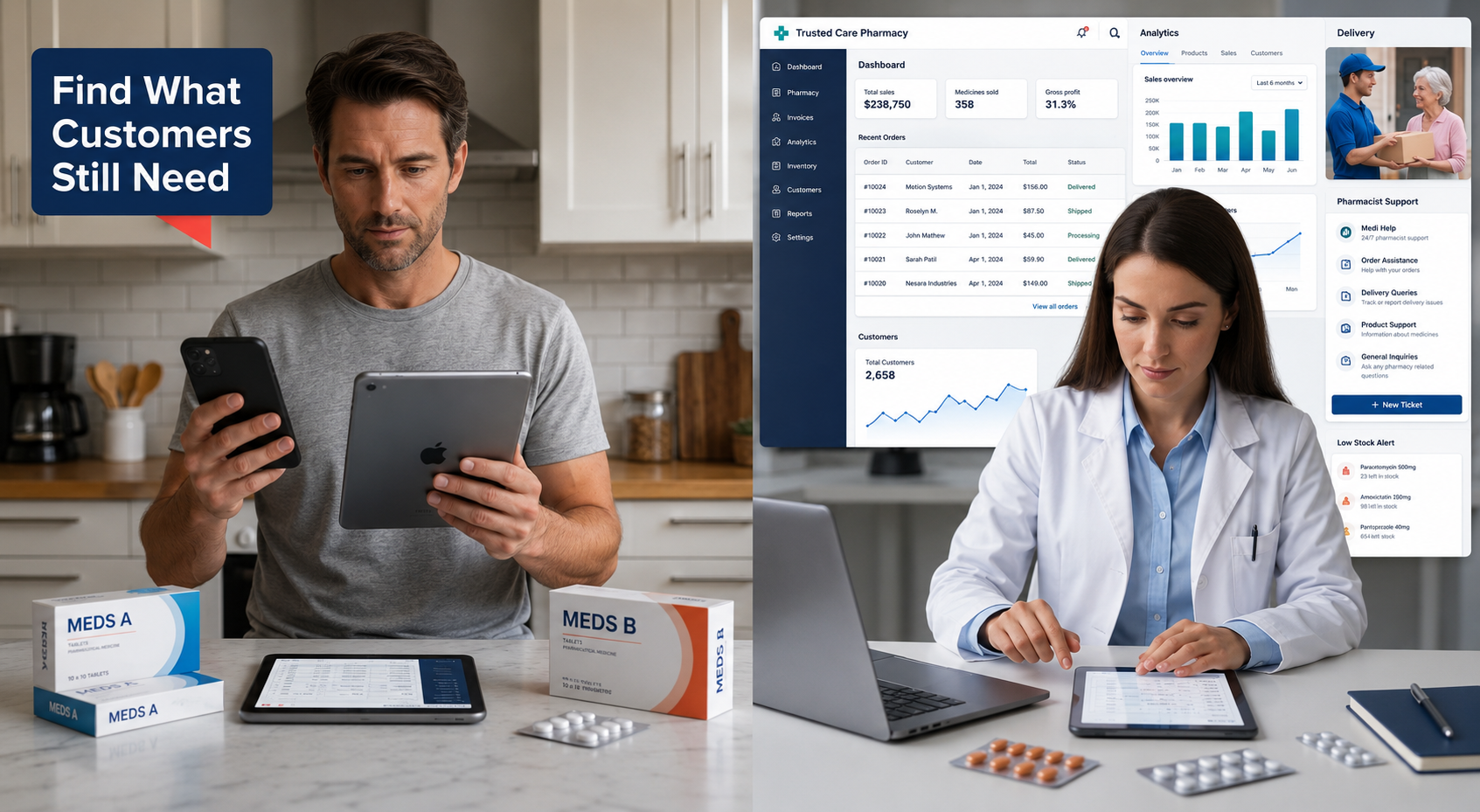
Competitor analysis in the pharmacy ecommerce space reveals consistent gaps that new entrants can exploit strategically. Before building your store, conduct thorough research across existing platforms.
How to Analyse Competitors
Browse top online pharmacies in your target geography and evaluate their product information quality, prescription handling, delivery times, and return policies.
Check customer reviews on Google, Trustpilot, and social platforms to understand what buyers are consistently dissatisfied with.
Identify which product categories are underserved or poorly represented.
Common Gaps You Can Fill
Inadequate prescription handling: Many platforms have cumbersome prescription upload flows or lack pharmacist verification. A seamless, secure, and transparent prescription process is a strong differentiator.
Poor product information: Generic product listings with no dosage information, composition details, or storage guidelines erode trust. Detailed, medically accurate product pages build confidence.
Slow or unreliable delivery: Healthcare products often need to reach customers quickly. Offering same-day or next-day delivery for your serviceable area is a significant advantage.
Lack of trust signals: Missing pharmacy license details, no registered pharmacist information, and absence of certifications create hesitation. Prominently displaying compliance credentials converts visitors into buyers.
B2B neglect: Most online pharmacies focus entirely on retail consumers. Serving clinics, hospitals, nursing homes, and diagnostic labs with bulk ordering and invoicing is a major underserved opportunity.
Once you identify the gaps relevant to your market, build your entire strategy around filling them systematically.
Select a Product and Prepare Your Catalogue
A well-prepared product catalogue is the backbone of your online pharmacy. In the healthcare space, incomplete or inaccurate product data is not just a conversion problem — it is a patient safety issue.
Required Product Data Fields
Product Name: Use the exact commercial and generic name.
Category: Organise by therapeutic area (e.g., cardiovascular, diabetes, orthopaedic, dermatology) and product type (OTC, prescription, device).
Brand: List the manufacturer and brand clearly.
Composition / Formulation: For medicines, include active pharmaceutical ingredients (APIs) with strengths.
Usage: Define the medical condition or purpose the product addresses.
Dosage Instructions: Include standard dosage, frequency, and any contraindications where applicable.
Pricing: Display MRP, your selling price, and any applicable taxes (GST) separately.
SKU: Assign unique stock-keeping unit codes for efficient inventory management.
Stock Availability: Real-time or regularly updated stock status.
Expiry Date: Critical for medicines and medical consumables.
Storage Instructions: Temperature requirements, humidity conditions, and light sensitivity information.
Gathering Accurate Data
Source product data directly from manufacturers, official package inserts, and licensed distributors. Cross-reference with databases like the National Drug Register or official drug monographs. Never rely solely on secondary sources for medical product data.
Hi-Res Images and Videos
In a sector built on trust, visual representation of products carries enormous weight. Customers cannot physically inspect medicines or medical devices before purchase — your images must do that job.
Image Requirements
Shoot products against clean, white or neutral backgrounds.
Capture the front label, back label, and packaging clearly. For medicines, the name, composition, MRP, and expiry date should be legible.
Include multiple angles for medical devices, equipment, and surgical tools.
Avoid over-editing or colour enhancement that misrepresents the actual product.
Video Content
Short unboxing or usage demonstration videos significantly increase buyer confidence for medical devices and equipment.
For complex equipment, consider how-to-use videos. These also reduce post-sale support queries.
Accurate visual representation is not just about aesthetics — it directly reduces returns, disputes, and customer complaints.
Prepare Your Store Content
Before going live, your platform needs well-crafted foundational content that communicates credibility, purpose, and professionalism.
Essential Content Elements
About the Pharmacy
Share your story — when your pharmacy was founded, your values, the expertise behind your team, and what drives your commitment to healthcare. Authenticity matters more than length.
Business Goals and Vision
Communicate why you are in this space. Customers and B2B partners want to work with businesses that have a clear mission aligned with improving healthcare access.
Product Descriptions
Each product description must go beyond specifications. Explain what the product does in plain language, who it is for, and why it is the right choice. Avoid copy-pasting manufacturer descriptions verbatim — rewrite for your audience.
Unique Selling Propositions (USPs)
Define what separates you from every other online pharmacy. Is it same-day delivery? A 24/7 pharmacist helpline? Specialisation in surgical supplies? A verified cold-chain network? Make it clear, specific, and prominent.
Store Policies
Shipping Policy: Delivery timelines, partner couriers, geographic coverage.
Return and Refund Policy: Especially important for medical products — be clear about which items are returnable and under what conditions.
Prescription Policy: How prescriptions are submitted, verified, and stored.
Privacy Policy: Reassure customers about how their health and personal data is handled.
Trust Signals
Display your pharmacy license number prominently.
List the name and registration number of your supervising pharmacist.
Show certifications, regulatory body memberships, or quality seals.
Include genuine customer testimonials and ratings.
Register Your Brand and Meet Compliance Requirements
Whether you are an established pharmacy expanding online or building a new digital-first healthcare brand, compliance is non-negotiable. The absence of proper licensing not only exposes you to legal risk — it destroys buyer confidence.
For New Brands
Register your business entity (proprietorship, partnership, LLP, or Pvt. Ltd.).
Obtain GST registration.
Register your brand or trademark if you intend to create proprietary products or packaging.
Set up a distinct brand identity — logo, colour palette, brand voice — that communicates trust and medical professionalism.
For Existing Pharmacy Businesses Going Online
Ensure your existing pharmacy license covers online sales, or obtain an additional licence where required.
Update your registered address or obtain necessary NOCs if operating from multiple locations.
Mandatory Compliance Checklist
Valid retail pharmacy licence (Form 20 and 21 in India, or equivalent in your jurisdiction).
A registered pharmacist on board — their details must be displayed on the platform.
Adherence to applicable drug control regulations and digital health laws.
Data protection compliance (especially for prescription data containing sensitive health information).
Compliance with advertising standards — avoid making unsubstantiated medical claims.
Choose the Right Ecommerce Software
The ecommerce platform you choose will determine how efficiently you can operate, scale, and comply with regulatory requirements. For medical and pharmacy businesses, a generic platform often falls short. You need a solution built — or customisable — for the specific demands of healthcare commerce.
Platform Selection Criteria
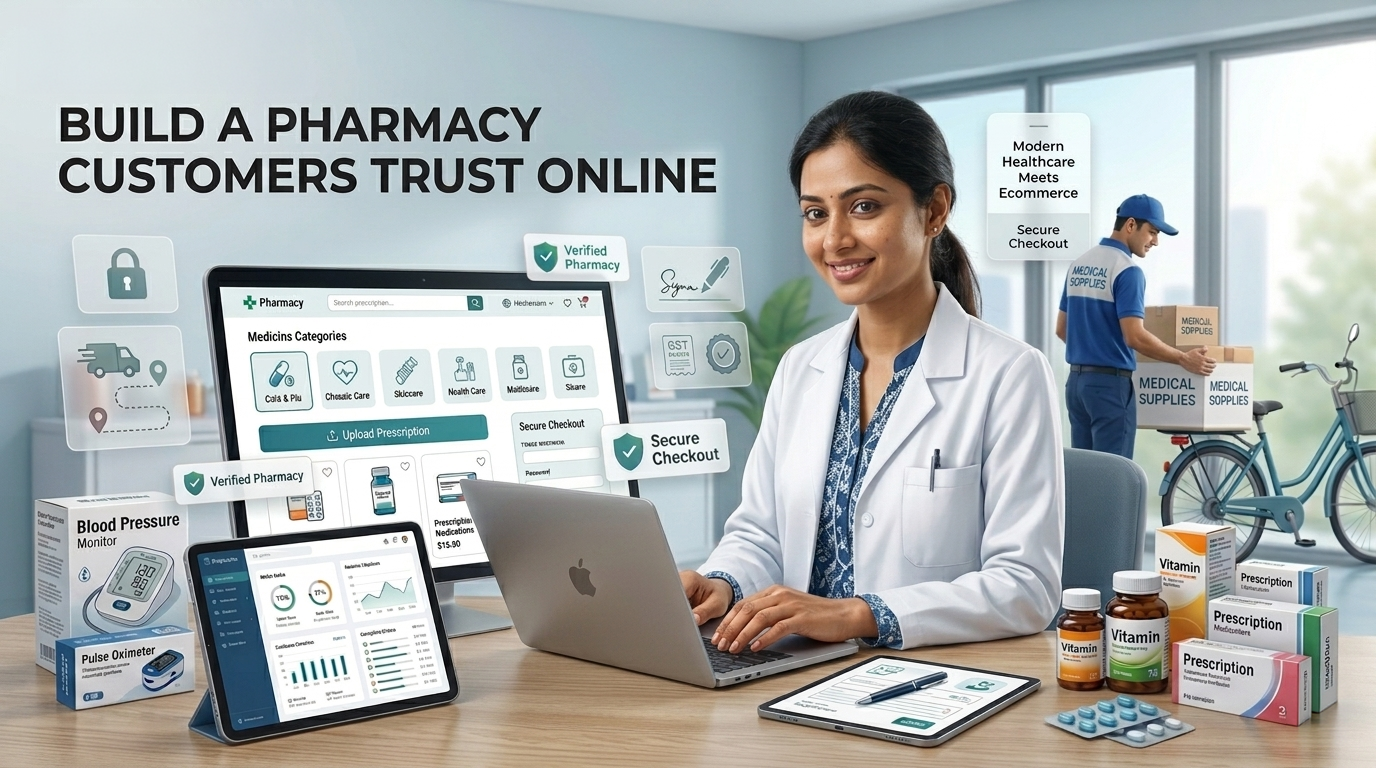
Prescription Upload Functionality: Your platform must enable customers to upload prescriptions securely. This is a fundamental legal requirement for selling Schedule H and Schedule X drugs online.
Secure Checkout: End-to-end encryption, secure payment processing, and data protection compliance are non-negotiable in the healthcare context.
Product Categorisation: A robust category and sub-category structure helps customers navigate OTC, prescription, wellness, equipment, and surgical supply sections effortlessly.
Compliance-Friendly Setup: The platform should allow you to display pharmacy licences, pharmacist credentials, and prescription verification workflows without workarounds.
B2B and Wholesale Capabilities: If you plan to supply clinics, hospitals, or laboratories, the platform should support custom pricing, bulk order management, and GST invoicing.
Mobile Optimisation: A significant proportion of healthcare purchases in India are made via mobile. Your platform must be fully responsive across devices.
Platforms like Shopaccino are designed for Indian ecommerce businesses and offer the flexibility and feature set needed to run a compliant, conversion-optimised healthcare store — including custom product fields, prescription management, and integrated payment and shipping solutions.
Choose Your Design and Theme
In healthcare ecommerce, design is not just about aesthetics — it is about communicating authority and reliability. A cluttered, confusing, or visually amateurish website will drive potential customers away before they read a single product description.
Design Principles for Online Pharmacies
Clean Layout: Use ample white space, a limited colour palette (preferably blues, greens, and whites associated with healthcare), and a clear visual hierarchy.
Easy Navigation: Customers should be able to find any product within three clicks. A well-structured category menu, a prominent search bar, and filter options by category, brand, and price are essential.
Medical-Grade Aesthetic: Avoid playful fonts, excessive animations, or casual design elements. Your visual language should inspire confidence.
Mobile Responsive: Every element — from product images to prescription upload buttons — must work flawlessly on smartphones.
Accessibility: Use legible font sizes (minimum 14–16px for body text), sufficient colour contrast, and alt text for all images.
Trust Badges Above the Fold: Place licence details, pharmacist credentials, and secure payment icons where customers see them without scrolling.
Upload Your Store Content
With your design in place, it is time to populate your store. This is a process that deserves care and attention to detail — every piece of content contributes to the customer experience and your store's SEO performance.
Products
Upload all products with complete data: name, brand, composition, category, usage, dosage, SKU, MRP, selling price, GST rate, stock status, expiry, and storage instructions.
Assign products to correct categories and apply relevant tags to improve search discoverability.
Informative Content
FAQs: Address common questions about ordering prescription medicines, delivery timelines, return eligibility, and prescription verification.
Health Guides and Articles: Publish condition-specific guides, medicine usage instructions, and healthcare tips. This content positions you as a knowledgeable, trustworthy partner — and drives organic search traffic.
Visuals and Banners
Design homepage and category banners that are clean, professional, and communicate your USPs clearly.
Use real product photography wherever possible. Stock images should be used sparingly and must not misrepresent actual products.
Policies
Publish your shipping, return, prescription, and privacy policies in plain language — no legal jargon that confuses customers.
Manage Your Store, Shipping, and Payments
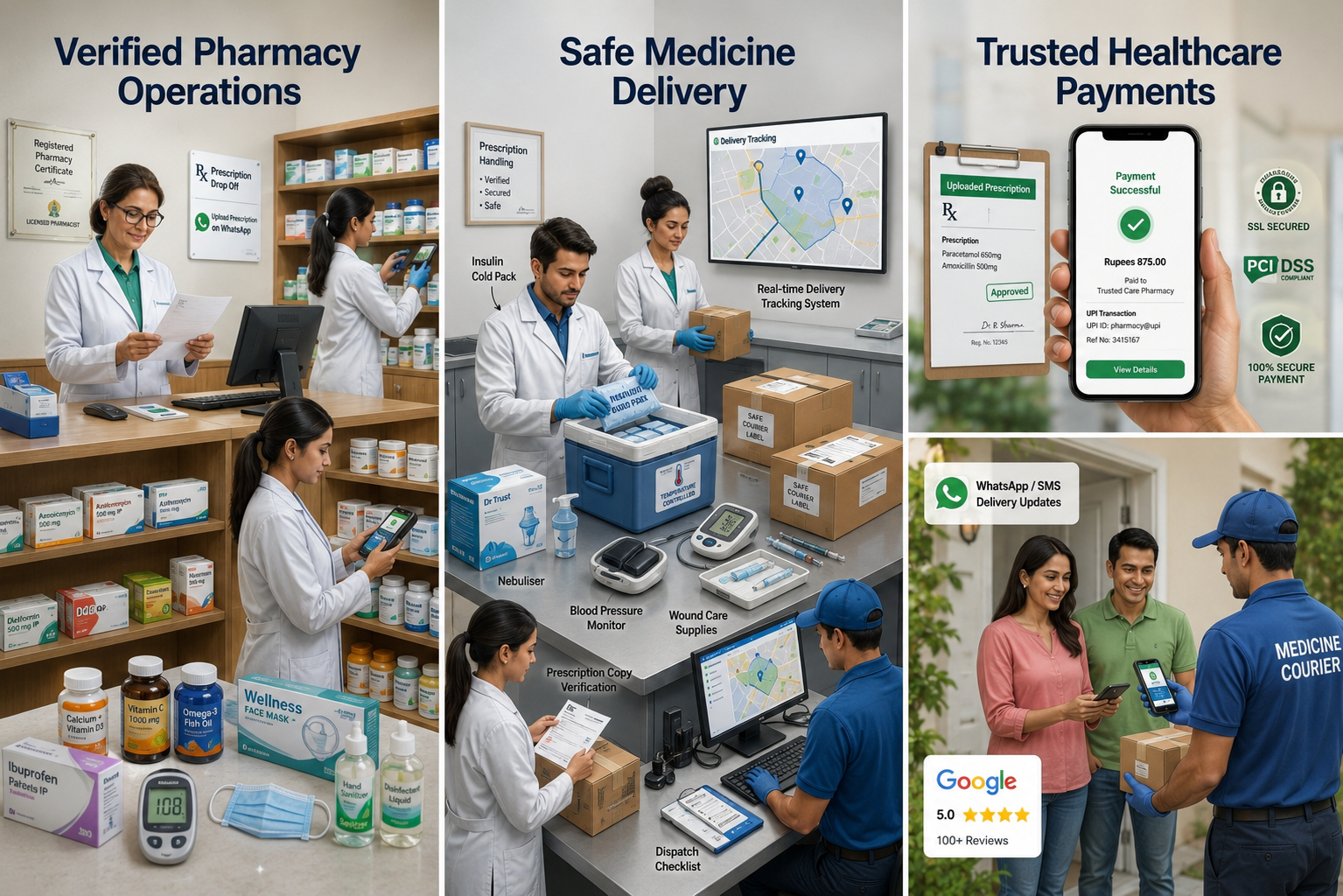
Before going live, ensure all operational systems are in place. A store without robust back-end management is a liability.
GST and Invoicing
Every transaction must generate a GST-compliant invoice. Medical products in India attract varying GST rates — some are exempt, others are taxed at 5% or 12%. Configure your tax settings accurately and ensure your invoices include all legally required fields.
Checkout Configuration
Enable prescription-linked checkout: orders for prescription medicines should not be processable without a valid uploaded prescription.
Offer multiple checkout options: registered account checkout and guest checkout.
Display order summary, taxes, and delivery charges transparently before payment.
Shipping Integration
Integrate with reliable courier partners — Delhivery, Shiprocket, Bluedart, or similar — based on your delivery area and product types.
For temperature-sensitive products, establish a cold-chain shipping protocol with specialised logistics providers.
Configure shipping rates, free shipping thresholds, and delivery zones accurately.
Payment Gateway
Integrate a PCI-DSS-compliant payment gateway (Razorpay, PayU, Cashfree, or similar).
Offer UPI, net banking, debit/credit cards, and EMI options for higher-value medical equipment purchases.
Ensure the checkout page is SSL-secured and visually reassures customers with trust badges.
Analytics and Security
Google Analytics: Set up conversion tracking, goal completions, and user journey analysis from day one. This data is invaluable for optimising your store over time.
Google reCAPTCHA: Integrate on checkout, contact forms, and prescription upload pages to prevent spam and fraudulent submissions.
Market Your Online Pharmacy
A well-built pharmacy website generates zero revenue without a deliberate, sustained marketing strategy. In healthcare ecommerce, trust-building and education are as important as promotional campaigns.
Search Engine Optimisation (SEO)
If you want to attract customers who are actively searching for ways how to sell medical products online, or buyers searching for specific medicines and devices, SEO is your most valuable long-term marketing channel.
Optimise every product page with a unique meta title, meta description, and relevant keywords including product name, composition, and therapeutic use.
Build a structured internal linking system connecting product pages to relevant health guides and FAQs.
Create landing pages targeting high-intent searches related to your specialisations — whether that is surgical equipment, OTC wellness products, or home healthcare devices.
Focus on local SEO if you serve a specific city or region — include your location in key pages and register on Google Business Profile.
Paid Advertising
Google Shopping Ads are highly effective for OTC and wellness products. Set up a well-structured product feed.
Google Search Ads targeting healthcare-related keywords, condition-specific terms, and competitor brand terms can deliver immediate traffic.
Meta Ads (Facebook and Instagram) are effective for wellness and nutraceutical products. Ensure all ads comply with healthcare advertising guidelines.
Informative Content Marketing
Publishing high-quality, medically accurate content on topics such as how to start an online medical supply business, condition management guides, and product usage articles positions your store as a trusted healthcare resource. This builds organic traffic and domain authority simultaneously.
Publish at least two to four health-related articles per month.
Target search queries that align with your product specialisation — for example, if you stock orthopaedic supplies, write about recovery care, physiotherapy tools, and post-surgery home care.
Distribute content through email newsletters to your registered customer base.
Order Fulfilment
In pharmacy ecommerce, fulfilment is where trust is either reinforced or broken. Customers ordering medicines have health-critical needs. Every order must be fulfilled accurately, safely, and on time.
Timely Delivery
Set realistic delivery timelines and communicate them clearly at checkout.
For urgent healthcare needs, offer express or same-day delivery for your local serviceable area.
Trigger automated order confirmation and shipment tracking notifications via SMS, WhatsApp, and email.
Compliant Packaging
Medicines must be packed in tamper-evident, moisture-proof packaging.
Temperature-sensitive products require insulated packaging and validated cold packs for the appropriate duration.
Include the GST invoice, prescription copy (if applicable), and any relevant usage or safety leaflets in every package.
Label packages clearly with handling instructions and do not include promotional inserts inside medicine packages unless they are product information leaflets.
Regular Updates
Keep customers informed at every stage: order confirmed, packed, dispatched, out for delivery, and delivered.
Proactively communicate any delays due to supply chain issues or delivery exceptions.
Scale Your Online Business
Once your store is live, operational, and generating consistent orders, the next phase is structured scaling. Growth in the pharmacy ecommerce space requires data-driven decisions, not guesswork.
Analyse
Review Google Analytics data monthly: which product pages have the highest traffic but lowest conversion rates? Which acquisition channels deliver the highest lifetime value customers?
Monitor return rates, prescription rejection rates, and customer satisfaction scores.
Track inventory turnover and identify which categories are growing.
Strategise
Use your data to build a quarterly growth plan. If you started with OTC products, consider expanding into medical equipment. If you are serving retail, explore how to sell medical equipment online to B2B buyers such as clinics and diagnostic labs. If you handle basic surgical consumables, research how to sell surgical instruments online to operating theatre supply chains.
Implement
Expanding Product Categories: Add new product lines systematically. Research how to sell medical supplies online in your target segments — wound care, infection control, patient monitoring, and rehabilitation equipment all represent growth verticals.
Refurbished and Pre-Owned Equipment: If demand exists in your geography, consider setting up a verified pre-owned section. Understanding how to sell used medical equipment online requires clear quality inspection protocols, transparent grading, and a distinct warranty policy.
B2B Medical Supply Business: The B2B opportunity is large and underserved. If you understand how to start a medical supply company online or how to start an online medical supply business targeting institutional buyers, building a separate B2B portal or buyer account tier can deliver significantly higher order volumes and margins.
Partnership and Franchise Opportunities: As your brand gains credibility, consider partnering with independent pharmacies to fulfil local orders, or offering white-label supply arrangements to smaller healthcare providers.
Repeat
Sustainable growth in healthcare ecommerce follows a consistent rhythm: measure what is working, double down on it, fix what is not, and continuously raise your compliance and service standards. The businesses that win in this space are those that treat quality and trust as a competitive advantage — not just a legal obligation.
Ready to Build Your Online Pharmacy? Shopaccino provides a flexible, feature-rich ecommerce platform designed for Indian businesses — including pharmacy and medical product sellers. From prescription upload workflows to GST-compliant invoicing, integrated shipping, and mobile-optimised storefronts, Shopaccino gives you the tools to build a compliant and conversion-ready online pharmacy — without the complexity. |