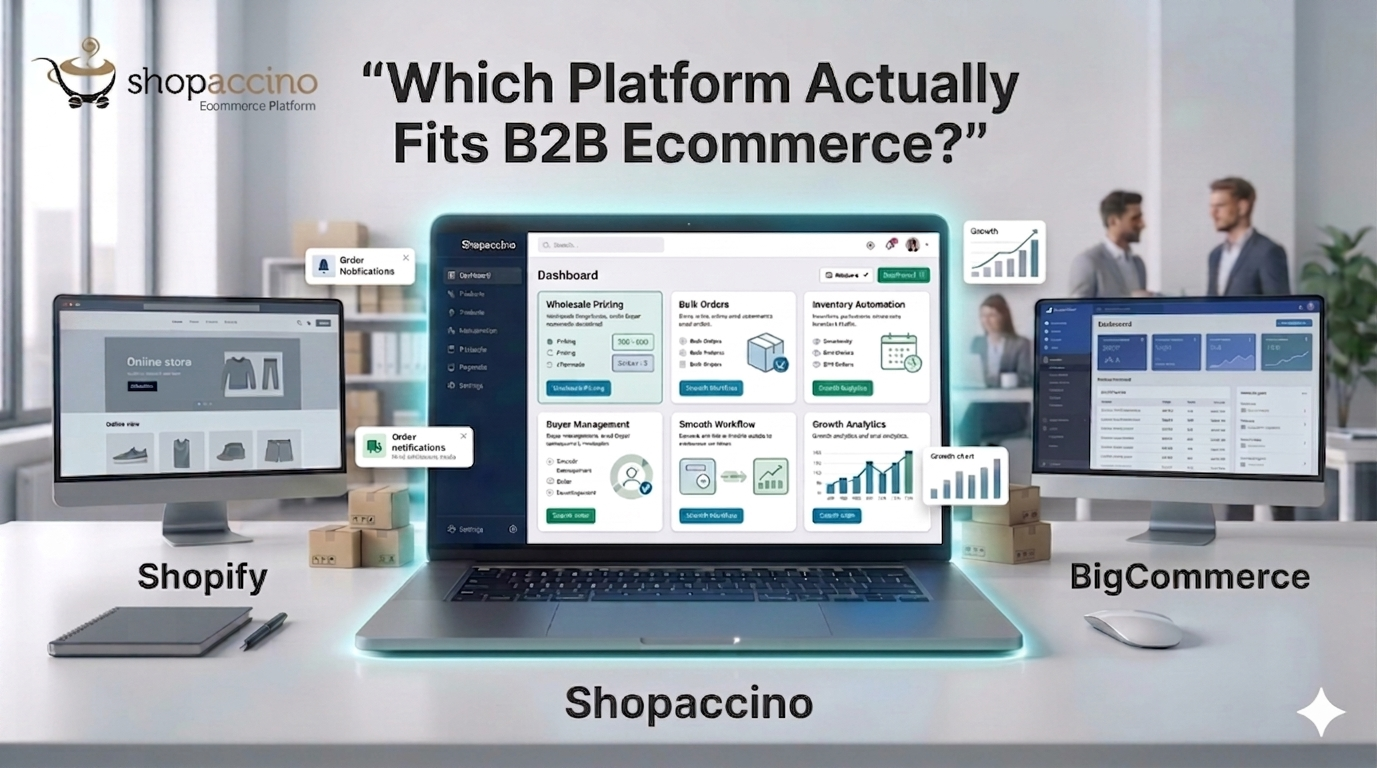
Shopify vs BigCommerce vs Shopaccino for B2B Ecommerce: Which One Actually Fits?
,Quick Answer: Shopify is best for B2C-first businesses adding limited wholesale capability. BigCommerce offers stronger native B2B features at mid-market scale. Shopaccino is purpose-built for businesses that run B2B and B2C together — with account-based pricing, wholesale portals, and zero transaction fees as standard. The right choice depends entirely on whether B2B is a feature you need or the core of how you operate.
Every ecommerce platform comparison on the internet seems to end the same way: Shopify wins, everything else is a footnote. If you are running a consumer brand selling T-shirts to individuals, that conclusion is probably right. But if you sell wholesale to retailers, manage distributor accounts with different pricing tiers, or need invoice-based payment built into your checkout — Shopify's dominance tells a much less helpful story.
The Shopify vs Shopaccino comparison is one that B2B business owners are making more frequently as they hit the ceiling of what retail-first platforms offer. This guide adds BigCommerce to the comparison because it sits meaningfully between the two — more capable than Shopify for B2B, less specialised than Shopaccino. The goal is not to declare a universal winner. It is to help you identify which platform fits your actual business model.
Why Does Platform Choice Matter So Much for B2B Ecommerce?
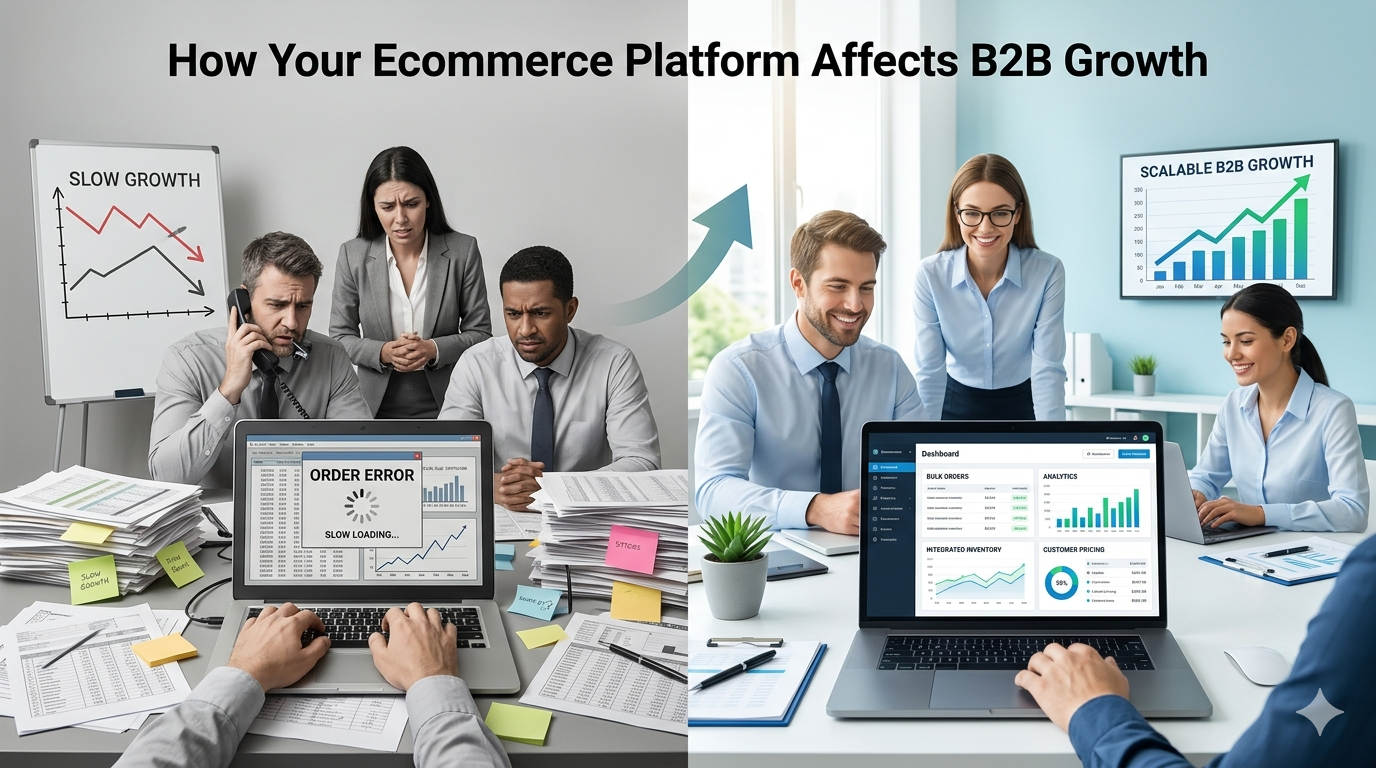
The ecommerce platform you choose determines what your B2B buyers experience every time they order. It determines how much manual work your operations team absorbs. And it determines how much of your revenue gets paid in transaction fees and app subscriptions rather than staying in your business. Choosing the wrong platform is a common and costly mistake — see the platform-selection errors manufacturers make most often.
According to Forrester's B2B buying research, 73% of B2B buyers say they prefer a self-service digital buying experience over a sales rep interaction for repeat purchases. That preference is only deliverable if your platform can support self-service with account-specific pricing, order history access, and invoice-based payment. Platforms that cannot deliver this force buyers back to phone and email — which means your digital channel exists on paper but not in practice.
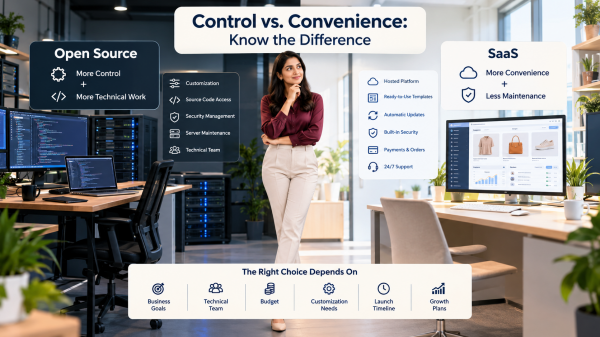
The three platforms in this comparison represent three fundamentally different architectural decisions about B2B commerce. Understanding those differences is the starting point for making the right choice.
A B2B ecommerce platform is not just software. It is the commercial infrastructure your buyer relationships run on. Choose one that was designed for the way your buyers actually buy.
What Is Shopify and How Does It Handle B2B?
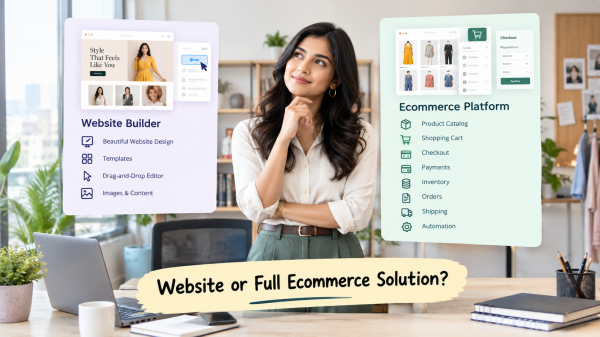
Shopify is the world's most widely used ecommerce platform, built from the ground up for consumer retail. Its strengths — fast setup, vast app ecosystem, polished storefront themes, and a well-optimised consumer checkout — are genuine and earned.
B2B on Shopify is available through Shopify Plus (their enterprise tier, starting at approximately $2,000/month) which includes native wholesale channel functionality. For businesses on standard Shopify plans, B2B capability requires third-party apps from the Shopify App Store, each with its own subscription cost and integration complexity.
What Shopify Does Well for B2B
- Large, mature app ecosystem with solutions for most B2B use cases
- Excellent consumer storefront quality — useful if you run B2C and B2B simultaneously
- Strong brand recognition and developer familiarity
- Shopify Plus includes draft orders, company accounts, and customised pricing natively
Where Shopify Falls Short for B2B
- Transaction fees on all plans unless you use Shopify Payments (not available in all markets)
- True B2B features — account pricing, approval workflows, credit terms — require Plus or expensive apps
- Wholesale portal experience is secondary to the consumer storefront, not purpose-built
- Highly dependent on the app ecosystem, which adds cost and creates maintenance complexity
- Checkout customisation is restricted on standard plans, limiting B2B-specific payment flows
The honest summary: Shopify is a world-class B2C platform. Its B2B capability is genuine at the Plus tier but comes at a price that makes it inaccessible for most small and mid-sized wholesale businesses. For businesses where B2B is a significant or primary channel, the cost and architectural mismatch create ongoing friction.
What Is BigCommerce and How Does It Handle B2B?
BigCommerce is a mid-market ecommerce platform that has invested more deliberately in B2B functionality than Shopify at equivalent price points. Its B2B Edition — a dedicated product tier — includes account-based pricing, customer groups, purchase order support, and invoice payment natively, without requiring Plus-tier pricing.
BigCommerce charges no transaction fees on any plan, which is a meaningful advantage over Shopify for high-volume wholesale businesses where per-transaction charges accumulate into significant annual costs.
What BigCommerce Does Well for B2B
- No transaction fees on any plan — a real cost advantage at volume
- Stronger native B2B features than Shopify at comparable plan prices
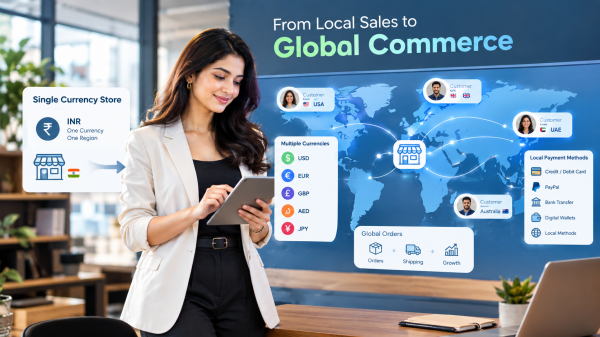
- Multi-currency support built in for international wholesale selling
- Open API architecture allows deep integration with ERP and logistics systems
- B2B Edition includes customer groups, net payment terms, and quote management
Where BigCommerce Falls Short for B2B
- Interface and admin experience is less polished than Shopify — steeper learning curve
- Theme ecosystem is smaller and less refined than Shopify's
- B2B Edition is an additional cost on top of the standard plan
- Less suitable for businesses in markets where local payment and logistics integrations matter
- Limited mobile app capability for buyers compared to purpose-built B2B platforms
BigCommerce sits meaningfully ahead of Shopify for businesses where B2B is a serious requirement and budget constraints rule out Shopify Plus. It is particularly strong for mid-sized distributors and wholesalers with international buyer bases. The trade-off is a less intuitive interface and a less developed ecosystem of integrations compared to Shopify.
What Is Shopaccino and How Does It Handle B2B?
Shopaccino is an ecommerce platform built from the ground up to handle both B2B and B2C commerce from a single system. Rather than starting with a consumer retail foundation and adding B2B capability as a secondary layer, Shopaccino's architecture treats wholesale and retail as equally valid commerce models that the platform is designed to serve simultaneously.
This architectural difference is not a marketing distinction — it has practical consequences for how the platform behaves. Features that Shopify and BigCommerce require additional configuration, apps, or higher-tier plans to deliver are standard in Shopaccino's core offering.
What Shopaccino Does Well for B2B
- Account-based pricing built into the core platform, not an add-on
- Zero transaction fees on all plans — no percentage taken from wholesale order values
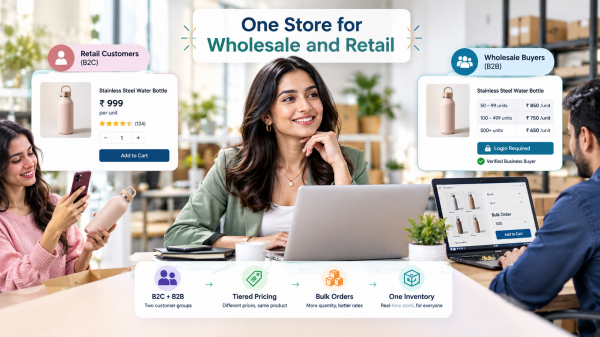
- Native B2B and B2C selling from a single backend with separate pricing and catalog rules
- Branded mobile app for buyers — allowing retailers to order from their phones
- Wholesale buyer portal with order history, invoice access, and reorder capability
- MOQ enforcement, credit terms, and approval workflows as standard features
- Built-in loyalty programs, multi-warehouse management, and marketing automation
- Integrations with ERP systems, accounting tools, and logistics partners
Where Shopaccino Has Trade-offs
- Smaller global brand recognition compared to Shopify and BigCommerce
- App ecosystem is smaller than Shopify's, though core features reduce dependency on third-party apps
- Developer community and public documentation are less extensive than Shopify's
For businesses where B2B ecommerce is the primary channel — manufacturers selling to retailers, distributors managing wholesale accounts, or brands running a wholesale operation alongside a consumer store — Shopaccino's native capability removes the architectural friction and additional cost that Shopify and BigCommerce require to reach the same functional outcome.
Shopify vs BigCommerce vs Shopaccino: Head-to-Head Comparison
The table below compares the three platforms across the features that matter most for B2B ecommerce. Green cells indicate the strongest performance in each row.
|
Feature |
Shopify |
BigCommerce |
Shopaccino |
|---|---|---|---|
|
Platform Fundamentals |
|||
|
Platform transaction fee |
0.5%–2% |
0% ✓ |
0% ✓ |
|
Starting price (approx) |
~$39/mo |
Free CE / $22K+ Commerce/yr |
★ ~$16.66/mo |
|
Human Support Available |
Partial — Chat & email only (no direct phone) |
Partial — Phone for paid plans only, no chat/email |
✓ Yes — Phone, Chat, Email, WhatsApp |
|
Free trial |
3 days only |
No |
14 days ✓ |
|
B2B Ecommerce |
|||
|
B2C + B2B from single platform |
✗ B2B on Shopify Plus only (~$2000/mo) |
◎ Commerce (enterprise) edition only |
★ Native — one unified system (Starting with $100/mo) |
|
Account-based / group pricing |
◎ Shopify Plus only |
◎ Yes — Commerce edition |
✓ Built-in customer groups |
|
B2B approval workflows |
◎ Shopify Plus only |
◎ Commerce edition only |
✓ Native B2B workflows |
|
Easy Setup & Management |
|||
|
GST Invoice per Warehouse Location |
Third-Party apps |
Custom dev needed |
✓ Built-in |
|
Vendor management |
◎ Basic — advanced via apps |
◎ Extension required |
✓ Native vendor assignment |
|
Advanced coupon engine |
◎ Basic — advanced via apps |
✓ Yes |
★ Advanced rules — all native |
|
Product visibility access control |
◎ Limited |
✓ Built-in |
✓ Per-user/group visibility control |
|
YouTube / Vimeo video on product page |
✓ Built in |
◎ Extension required |
✓ Built in |
|
SEO Optimisation |
|||
|
Built-in SEO tools |
◎ Basic SEO built-in |
✓ Basic SEO built-in |
✓ Schema + sitemap + robots.txt |
|
Bulk meta tag management (Excel) |
◎ Manual / app needed |
◎ Via admin tools |
★ Excel bulk meta management |
|
Google Shopping feed — auto-sync |
✓ Yes — native |
◎ Extension required |
✓ Content API auto-sync |
|
Meta (Facebook) catalog auto-sync |
✓ Native Facebook channel |
◎ Extension required |
✓ Auto-sync — Browser + API Events |
|
Native Apps |
|||
|
E-Gift Cards |
★ Built-in e-gift cards |
◎ Extension required |
★ Built-in e-gift cards |
|
Delivery Date & Time Slot at Checkout |
◎ Paid app needed |
◎ Extension needed |
✓ Built-in, Free |
|
Reward / Loyalty program |
✗ Third-party app (~$50+/mo) |
◎ Extension required |
★ Native app ($16/mo) |
|
Gold Flex — Dynamic Gold Pricing |
◎ Third-Party apps |
◎ Dev required |
✓ Built-in |
Green cells indicate the platform with the strongest native performance in each category. Shopaccino leads in B2B-specific features. Shopify leads in B2C storefront quality and ecosystem size. BigCommerce leads in multi-currency native support.
How Does the Shopify vs Shopaccino Cost Comparison Actually Work?
Pricing comparisons between ecommerce platforms are frequently misleading because they compare headline plan prices without accounting for the full operational cost. Here is a realistic cost breakdown for a mid-sized B2B business on each platform. For a broader framework on evaluating total cost before you commit, see how to choose a B2B ecommerce platform without getting it wrong.
Shopify — Real Cost for B2B
Shopify's standard plans range from $39 to $399/month. For genuine B2B capability — account pricing, wholesale portal, credit terms — you need Shopify Plus at approximately $2,000/month. On top of this, Shopify charges a transaction fee (0.5–2% depending on plan) unless you use Shopify Payments, which is not available in all markets. For a business processing $50,000/month in wholesale orders, a 1% transaction fee adds $500/month to the cost.
BigCommerce — Real Cost for B2B
BigCommerce plans range from $39 to $399/month with no transaction fees. The B2B Edition — which adds the wholesale-specific features — is an additional monthly cost on top of the base plan. For businesses needing the full B2B feature set, the combined cost typically falls in the $400–$700/month range. This is significantly cheaper than Shopify Plus for equivalent B2B functionality, which is BigCommerce's primary cost advantage.
Shopaccino — Real Cost for B2B
Shopaccino's plans include B2B and B2C features as standard rather than as tier upgrades. There are no transaction fees on any plan. The core B2B features — account pricing, wholesale portal, MOQs, credit terms, approval workflows, buyer mobile app — are included rather than requiring separate app subscriptions. For most mid-sized B2B businesses, the all-in monthly cost is substantially lower than the equivalent Shopify Plus or BigCommerce B2B Edition setup.
When comparing ecommerce platform costs for B2B, always calculate: base plan fee + B2B feature add-ons + transaction fees on your order volume + app subscriptions. The number that matters is total cost, not headline price.
Which Platform Should You Choose? Honest Guidance by Business Type
Choose Shopify if…
Your primary business is B2C and you want to add a limited wholesale channel. You are on Shopify Plus budget and need the largest possible app ecosystem. Your buyers are few in number and the self-service requirement is low. Your development team is already familiar with Shopify's architecture and Liquid templating.
Choose BigCommerce if…
You sell at mid-market scale internationally and multi-currency is a core requirement. You need stronger native B2B features than Shopify at a lower price point than Plus. Your team has the technical capability to work with an open API architecture. You do not need a branded mobile app for buyers.
Choose Shopaccino if…
B2B wholesale is your primary or equal channel alongside B2C. You need account-based pricing, credit terms, and buyer portals without the cost of enterprise-tier plans. You want a mobile app for your retail buyers without a separate development project. You operate in a market where local payment gateway and logistics integrations matter. You want zero transaction fees across all order volume. This shift toward B2B-native platforms is part of a broader trend — see why manufacturers are moving away from generic ecommerce platforms.
The Shopify vs Shopaccino decision, specifically, comes down to this: if B2B is genuinely central to your business, not a secondary channel you are experimenting with, Shopaccino's native capability and pricing structure make it the stronger fit. If B2C is your primary model and wholesale is a supplementary channel, Shopify's ecosystem and consumer storefront quality may justify the higher B2B cost.
What Do Real B2B Businesses Say About Switching Platforms?
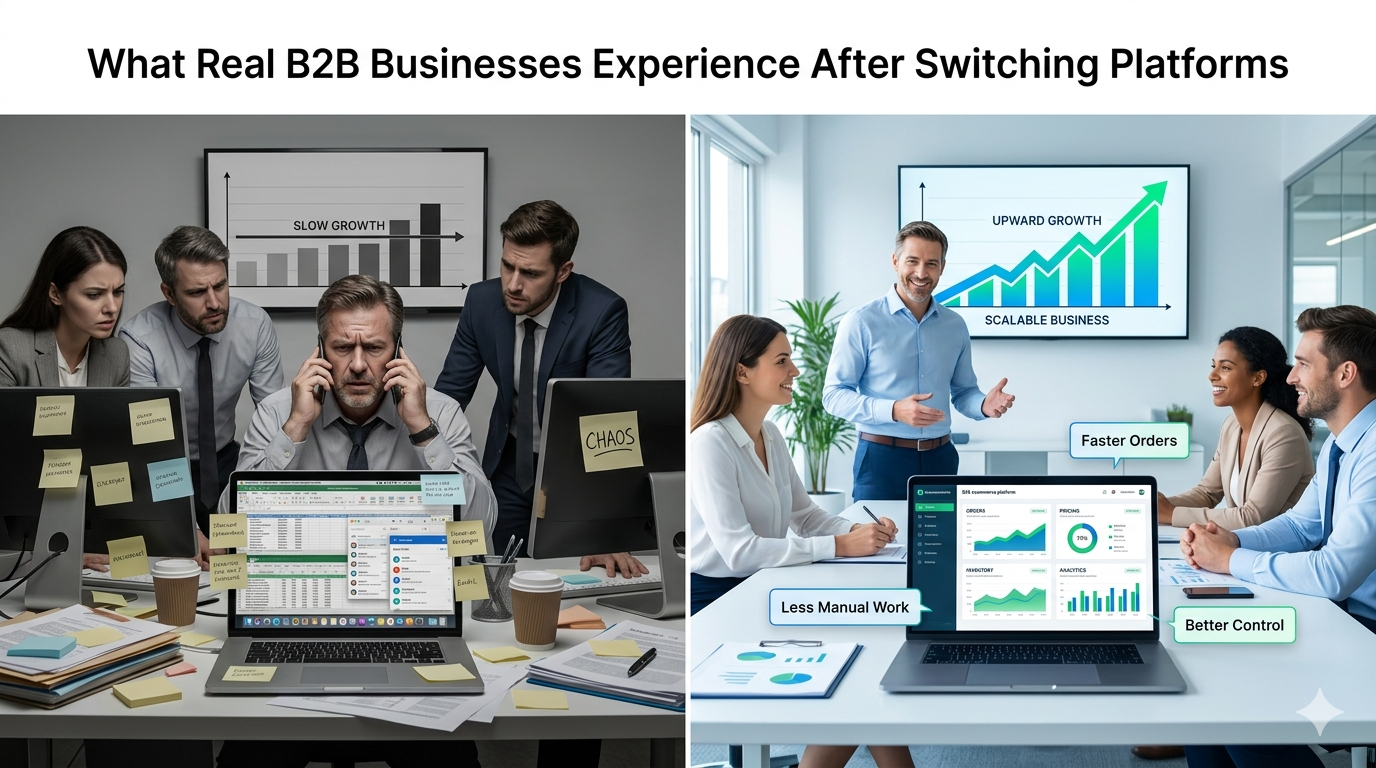
The pattern that emerges most consistently from businesses that have moved from Shopify or BigCommerce to a purpose-built B2B platform is the same: they underestimated the cost and complexity of filling the B2B gaps with apps, and overestimated how much a large brand name matters to their wholesale buyers.
A wholesale fashion brand that had been running on Shopify Plus described their B2B setup as “five apps doing the job of one feature.” Their pricing app conflicted with their discount app. Their wholesale portal app did not sync correctly with their inventory. Their invoice app required manual review before dispatch. Each app had its own support queue. The combined monthly cost of the app stack was approaching the base plan price itself.
After migrating to a platform where these features were native, the same business reported that their B2B order processing time dropped by over 60% and their accounts receivable team reduced the time spent on invoice management by approximately half. The technology itself did not change their products or their buyer relationships. It changed how much effort the commercial infrastructure required to maintain.
This is not an isolated experience. The G2, Techimply, SaaS Adviser and Capterra review patterns for purpose-built B2B platforms consistently show that the transition from workaround-heavy setups to native-capability platforms produces the highest satisfaction scores in operational efficiency categories.
The Right Platform Is the One Built for How You Actually Sell
The Shopify vs Shopaccino comparison is ultimately a question about architecture. Both platforms can process an order. Only one of them does it without requiring enterprise pricing, a stack of third-party apps, or a workaround for every B2B-specific requirement.
BigCommerce sits in a genuinely useful middle position — more capable than Shopify for B2B without the Plus price tag, but less complete than a purpose-built B2B platform for businesses where wholesale is the primary channel.
If you are reading this because your current platform is creating friction — manual pricing processes, app conflicts, transaction fees adding up, buyers who cannot self-serve without calling your team — the honest advice is to evaluate your total cost on the current platform before assuming switching is expensive. In most cases, the cost of staying on the wrong platform exceeds the cost of moving to the right one.
For businesses where B2B wholesale is central to their commercial model, the platform decision is not a minor configuration choice. It is the infrastructure decision that every buyer relationship, every reorder, and every invoice runs on. Make it based on what your business actually does, not on which brand name is most recognised in the consumer ecommerce world.
FAQs
Shopify is good for B2B ecommerce at the Plus tier, which starts at approximately $2,000/month and includes native wholesale features like company accounts, account-specific pricing, and custom B2B checkout. On standard Shopify plans, B2B capability requires third-party apps that add cost and complexity. For businesses where B2B is a primary channel, Shopify's B2B capability is real but expensive to access fully.
Shopaccino includes B2B features — account-based pricing, wholesale buyer portal, MOQ enforcement, credit terms, approval workflows, and a branded buyer mobile app — as standard on all plans rather than requiring enterprise pricing or app add-ons. It also charges no transaction fees. For wholesale-primary businesses, this makes Shopaccino significantly more cost-effective and operationally simpler than an equivalent Shopify setup.
BigCommerce offers stronger native B2B features than standard Shopify at comparable plan prices and charges no transaction fees. Its B2B Edition adds account management, purchase order support, and net payment terms. For mid-market businesses that need genuine B2B capability without Shopify Plus pricing, BigCommerce is a more cost-effective option. Shopaccino offers more complete B2B features for businesses where wholesale is the primary channel.
For manufacturers selling primarily to retailers through wholesale, a platform with native B2B features is essential. Shopaccino is purpose-built for this model, offering account-based pricing, trade buyer portals, MOQ controls, and credit terms without extra-cost add-ons. BigCommerce is a capable alternative for international sellers. Shopify works well only at Plus tier, which is expensive for smaller manufacturers moving their first direct B2B channel online.
Key considerations are: product catalog migration (most platforms have import tools), buyer account setup (replicating existing pricing tiers and credit terms), integration with your ERP or accounting software, and the transition communication to your retail buyers. Most mid-sized B2B businesses complete the migration in four to eight weeks. The operational improvement from native B2B features typically makes the transition cost-effective within the first quarter after launch.