From Phone Calls to One-Click Orders: Streamlining B2B Order Processing for Sales Teams
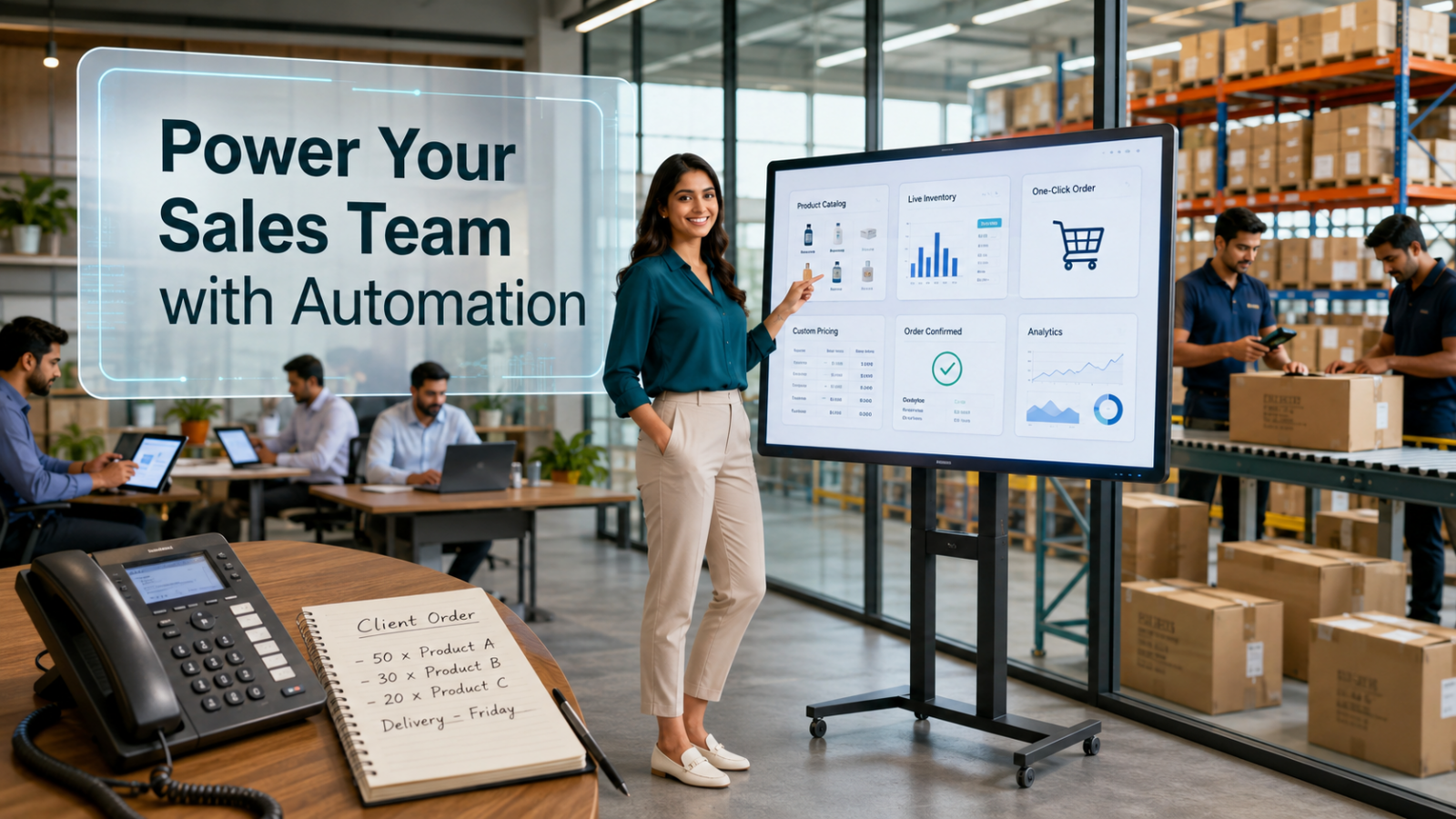
Ask any sales rep at a distribution business what she actually spends her day doing, and "selling" is rarely the honest answer. Right now, she probably has three orders scrawled on the back of an invoice pad, a missed call from a distributor asking whether the last shipment went out, and no real way to confirm if yesterday's phoned-in order was even entered correctly.
None of this is because she is bad at her job. It's because her job, as it currently exists, asks her to be a stenographer and a data entry clerk before she ever gets to actually sell anything.
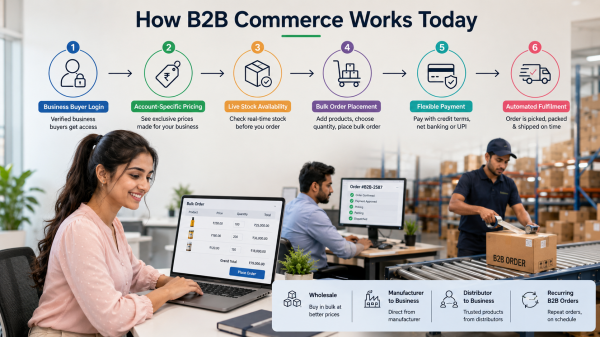
A B2B order management software lets distributors and wholesale buyers place, track, and confirm their own orders directly through a digital platform, instead of relying on phone calls, WhatsApp voice notes, or handwritten slips. Orders sync straight into inventory and accounts, closing the gap between what a buyer asks for and what actually gets recorded, without a rep retyping a single line.
The Real Cost of Running B2B Orders by Phone
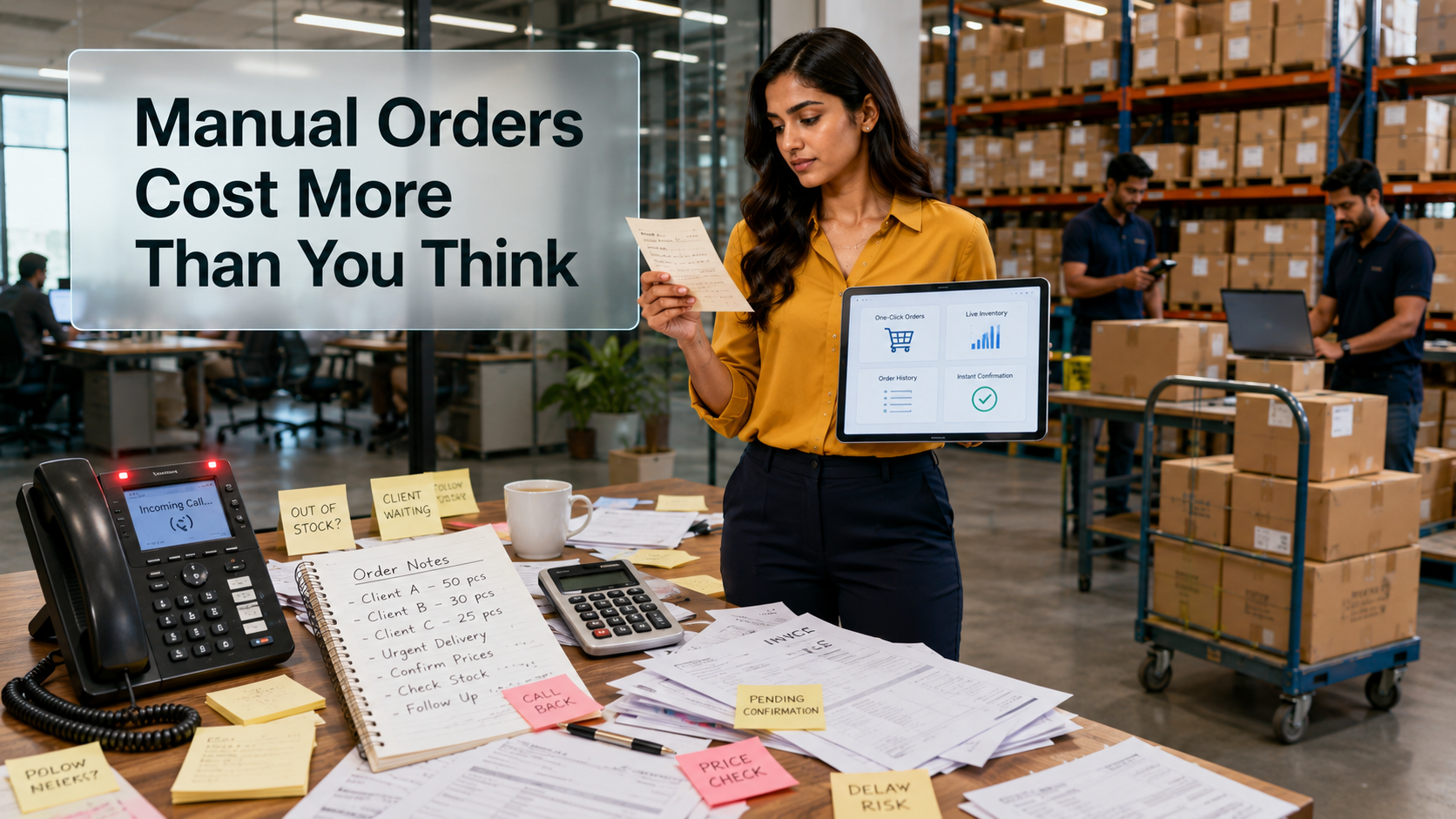
A phone call feels personal and dependable, right up until order volume outgrows what one person can hold in their head accurately.
Quantities get misheard. A product code gets confused with a similar one. A distributor asks about stock, and the rep has to put them on hold to go check, or worse, guesses based on what was true last week. Every order taken this way also has to be entered somewhere by hand afterward, a second point where a number can get transposed or an order forgotten in a busy afternoon.
Put a number on it and the problem stops being abstract. A rep fielding 25 order calls a day, at roughly eight minutes each once you include the callback to confirm stock and the manual entry afterward, is spending over three hours a day on work that a self-service order form does in seconds. That is three hours she is not spending on the one call that could have grown an account, multiplied across every rep on the team, every working day of the year.
And there's a hard ceiling to it. A rep can only take so many calls in a day, and a distributor in a different time zone who wants to order outside office hours either waits or leaves a voicemail that gets processed long after the stock they wanted has moved.
None of this is a reflection on the people doing the work. A skilled, careful rep can still mishear a quantity over a bad phone line, or lose track of one order among fifteen calls in an afternoon. The system is asking a person to do a computer's job with a human's memory, and eventually that gap shows up as a wrong shipment, a frustrated distributor, or a reconciliation headache at month end.
Laid side by side, the difference isn't subtle once you actually see it written out.
Phone Ordering vs a Digital B2B Ordering System
Phone / WhatsApp Ordering | Digital B2B Ordering System | |
When orders can be placed | Only during business hours | Any time, from anywhere |
Stock visibility | Rep has to check and call back | Live, visible to the buyer instantly |
Order entry | Manual, done twice (spoken, then typed) | One entry, made by the buyer directly |
Error risk | High, mishearing and re-keying | Low, no verbal transcription step |
Rep's time spent | Order-taking and data entry | Relationship building and exceptions |
Order history | Scattered across calls and notes | One searchable record per account |
Almost every row in that table traces back to the same root cause: a phone call has no memory of its own. The moment it ends, whatever was said has to survive being written down correctly, then typed in correctly, a second time, by someone who wasn't the one who said it. A digital order removes that whole relay, because the person placing it and the person recording it are the same person, at the same moment. That single change is why the error risk row and the order history row both improve together, they are really the same fix showing up twice.
How to Actually Make the Shift
This isn't a weekend switch, and treating it like one usually backfires. A phased rollout works better, because it gives both your team and your distributors room to adjust without breaking anything that currently works.
Phase 1: Lay the Foundation
Before anyone places a single digital order, the groundwork needs to be solid, otherwise the new system just digitizes the same confusion.
- Get your full catalog, stock, and B2B pricing tiers onto one platform, every negotiated rate needs to be visible, not locked in a rep's memory or an old price list PDF.
- Set order minimums, credit terms, and approval workflows before opening access, so a distributor placing their own order still has the same guardrails a rep would have applied by hand.
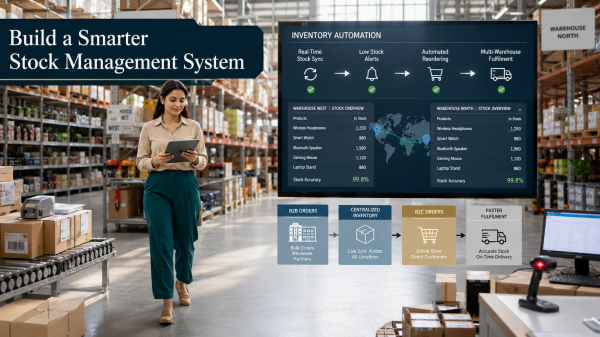
- Make sure orders sync directly into inventory and accounts. Platforms like Shopaccino handle this natively, with catalog, B2B pricing tiers, inventory, and accounts in one system. If someone still has to manually copy an order from the platform into another system, the manual step has only moved, not disappeared. from the platform into another system, the manual step has only moved, not disappeared.
Phase 2: Pilot With Your Best Accounts
Resist the urge to launch to everyone at once. A small, well-chosen pilot group tells you more in three weeks than a full rollout tells you in three months.
- Bring your highest-volume, longest-standing distributors onto it first, not just new signups. They benefit the most from the speed, and their feedback is the most useful.
- Keep phone support genuinely available during this window. Some accounts won't be ready to change habits overnight, and forcing it too hard tends to backfire.
- Train reps to sell the platform's benefits to distributors rather than just announcing that phone ordering is going away. How it's framed matters more than the feature list.
Phase 3: Expand and Measure
Once the pilot group is comfortable, expand deliberately and keep watching the numbers rather than assuming the job is done.
- Track the share of total orders placed through the platform versus phone each month, alongside average order processing time and order error rate.
- Watch what your reps do with the time they used to spend on manual entry. If it's going toward proactive account conversations, the shift is working the way it should.
- Only turn off phone ordering entirely once adoption is genuinely broad, not just among your pilot group.
What Changes for Your Reps and Your Distributors
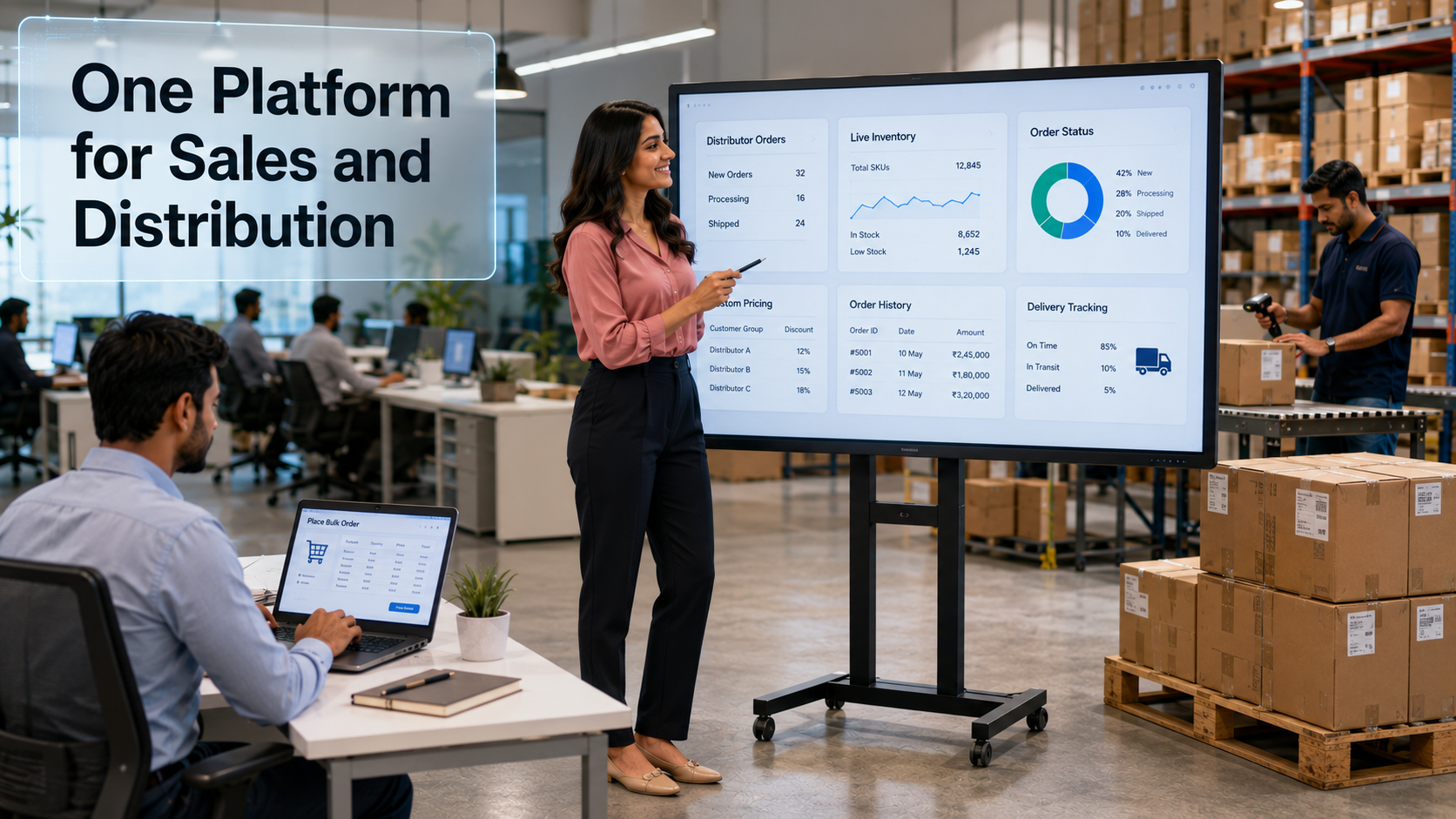
A rep no longer has to be the only entry point for every order. Their day shifts from a schedule built entirely around who needs to be called next, to one built around which accounts haven't ordered in their usual cycle, a far more valuable use of a sales conversation than reading back a quantity list.
New hires benefit too. They no longer need months of experience to remember every distributor's quirks and pricing arrangements, because the system already holds that information the day they log in.
There's also a morale side to this that's easy to overlook. Order-taking is the least satisfying part of most sales jobs, and reps who spend less time on it tend to spend more energy on the parts of the role that actually feel like selling, which shows up in retention as much as in revenue.
For Your Distributors
The buyer can browse the catalog and check stock at 9 PM if that's when they do their planning, instead of waiting for your office to open. Reordering becomes pulling up a past order and adjusting quantities, rather than reciting a full list from memory over the phone.
None of this requires them to be especially tech-savvy. It just requires the platform to be genuinely simple, which is worth testing with an actual distributor before a full rollout, not just your own team.
Distributors also get something they rarely had before: a paper trail they control. If a dispute ever comes up about what was ordered, the record exists in their own account history, not in someone's memory of a phone call from three weeks ago.
Is This Worth It for Your Business?
It fits best where the same distributors order repeatedly, which describes most manufacturers, wholesalers, and exporters running an ongoing relationship rather than a one-time deal. If most of your B2B revenue comes from a handful of custom, negotiated contracts each year, strong account management matters more than a self-serve ordering platform.
The businesses that benefit most are the ones processing dozens or hundreds of repeat orders a week, where sheer volume is what makes manual handling fragile. That scale is also where good Sales Order Management for Distributors pays off fastest, since every order sits in one place with a clean history instead of scattered across call logs and WhatsApp threads.
It's worth being honest about where this matters less, too. A business placing a handful of large, bespoke orders a year, each one negotiated individually, gets little from a self-service catalog, since the value there sits in the negotiation itself, not in order-placing speed.
For context on why this matters at scale: the U.S. Census Bureau's data on business ecommerce has long shown that B2B trade carries far more dollar value than consumer ecommerce, since a single wholesale order typically represents many multiples of an individual retail sale (census.gov). Getting that ordering process right isn't a minor operational detail; it's one of the highest-leverage fixes available to a growing distributor-facing business.
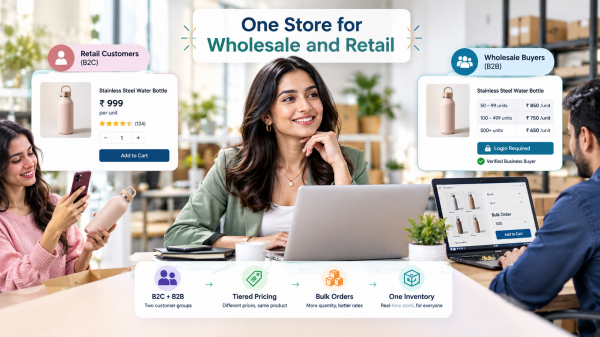
This matters even more for businesses running both B2B and D2C from the same operation, manufacturers supplying distributors while also selling direct, or exporters managing wholesale buyers across several countries. An Online B2B Ordering Platform like Shopaccino, built into the same system as a regular storefront, means a distributor's bulk order and a retail customer's single purchase both flow through one backend and one inventory count a distributor's bulk order and a retail customer's single purchase both flow through one backend and one inventory count, instead of two disconnected processes someone has to reconcile by hand.
What If Some Distributors Just Prefer the Phone?

This comes up in nearly every rollout, and it's a fair concern. Some of your longest-standing accounts built their entire relationship with your business around a phone call to a specific rep, and that relationship has real value worth protecting.
The honest answer is that you don't have to take it away from them. A digital ordering system works alongside phone ordering, not instead of it, for as long as an account needs that. The rep can take the call exactly as before, then enter the order into the same platform, so it still flows through one clean pipeline rather than a separate manual process living outside the system.
What usually happens in practice is that adoption grows on its own once a few distributors see how much faster reordering is. Nobody has to be forced. The businesses that struggle with this are usually the ones that tried to switch everyone off the phone on the same day, rather than letting the platform prove itself account by account.
Here's what that same rep's day looks like once the shift is made. The distributor places their own reorder before your office even opens, she spends her morning on a call about a new product line instead of transcribing quantities off an invoice pad, and nobody is put on hold to check stock a screen could have shown in two seconds.
None of this is about wanting fewer conversations with distributors. It's about making sure the conversations that do happen are worth both people's time.
A B2B order management software doesn't change what your sales team is for. It just finally lets them do it.
FAQs
It's a platform that lets distributors and wholesale buyers place, track, and manage their own orders digitally, syncing directly with your inventory and accounts instead of relying on phone calls or manual entry.
No. It removes repetitive order-taking so reps can spend more time on relationship building, new accounts, and exceptions that actually need a person, not less human contact overall.
It's the online catalog and checkout experience distributors use to place orders themselves, complete with their own pricing tiers, stock visibility, and order history, available anytime rather than only during business hours.
Yes, most businesses keep phone support available during the transition, with reps entering those orders into the same platform so everything still flows through one system.
A B2B ordering platform supports things a consumer store usually doesn't, like custom pricing per buyer, credit terms, minimum order quantities, and approval workflows for larger orders.
It helps most once you're processing a steady volume of repeat orders, which is common even for mid-sized manufacturers and exporters, not just large enterprises.