How to Build an Online Clothing Business With Your Own Website and Mobile App
You already know how to run a clothing business. You know the margins, the seasons, the suppliers. What you may not have yet is a direct line to customers online, one where you keep the revenue, control the brand, and don't lose 30% to a marketplace commission.
That's the real reason to build an online clothing business with your own website and mobile app. Not because everyone is doing it, but because the businesses that aren't doing it are already losing ground to those who are.
This guide is for clothing retailers, fashion wholesalers, garment manufacturers, and D2C brands who want to move online properly. Not through a marketplace. On their own terms.
Why Building Your Own Platform Beats Selling on Marketplaces
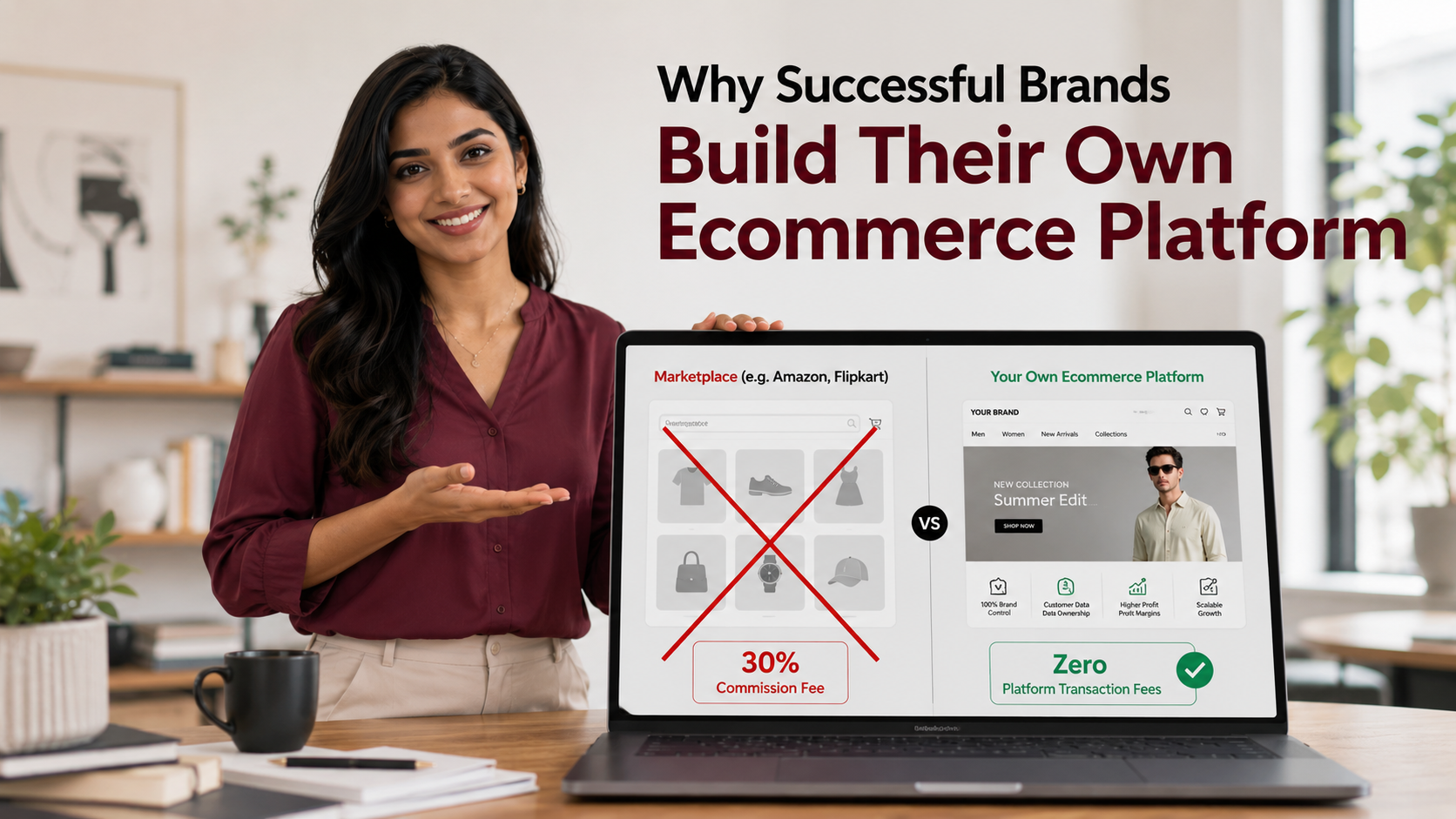
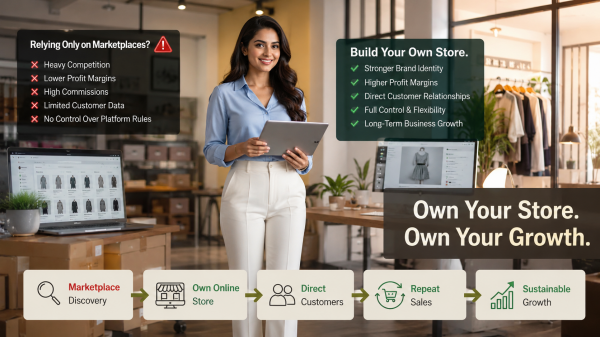
Selling on Amazon, Flipkart, or any large marketplace feels safe at first. There's traffic already. Setup is quick. But the tradeoffs pile up fast.
You pay per transaction. The customer belongs to the platform, not to you. Your brand is one listing among thousands. And the moment the algorithm shifts, your sales can drop overnight with no explanation.
Owning your website and app changes all of that:
- Zero commission on sales
- Your brand, your customer data, your repeat buyers
- Full control over pricing, promotions, and product presentation
- A mobile app keeps your store in customers' pockets year-round
A 2023 report from the Baymard Institute found that mobile users abandon carts at higher rates when the shopping experience feels unoptimized. Having your own app, purpose-built for your store, directly improves conversion rates in a way a marketplace listing never can.
How to Build an Online Clothing Business: Step-by-Step
Step 1: Define Your Business Model Before Building Anything
This sounds obvious but most businesses skip it and pay for it later. Before picking a platform or designing a homepage, answer these questions:
- Are you selling B2C (direct to customers), B2B (to retailers/wholesalers), or both?
- Do you sell a single collection or multiple categories across different buyer types?
- Do you need to manage multiple warehouses or stock across locations?
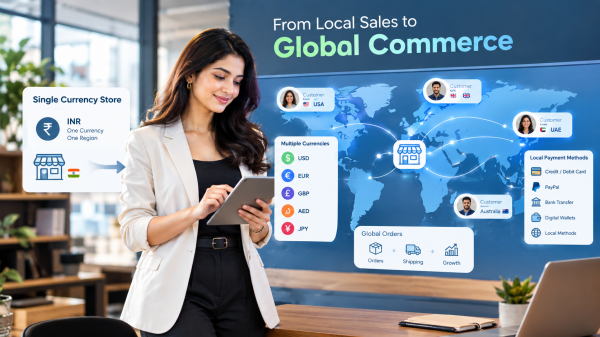
- Will you take international orders?
Your answers shape every technical decision downstream, from the platform you choose to how you set up shipping zones and pricing tiers. Get clarity here first.
Step 2: Choose a Platform Built for Ecommerce, Not Just Websites
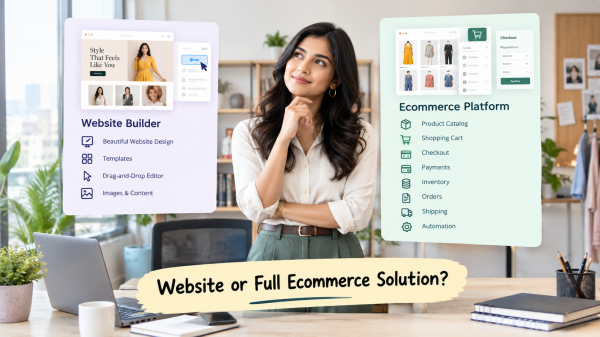
This is where most clothing businesses make a costly mistake. They use a general website builder, bolt on a payment gateway, and end up with something that works fine for five orders a day but breaks under real volume.
An ecommerce-specific platform gives you:
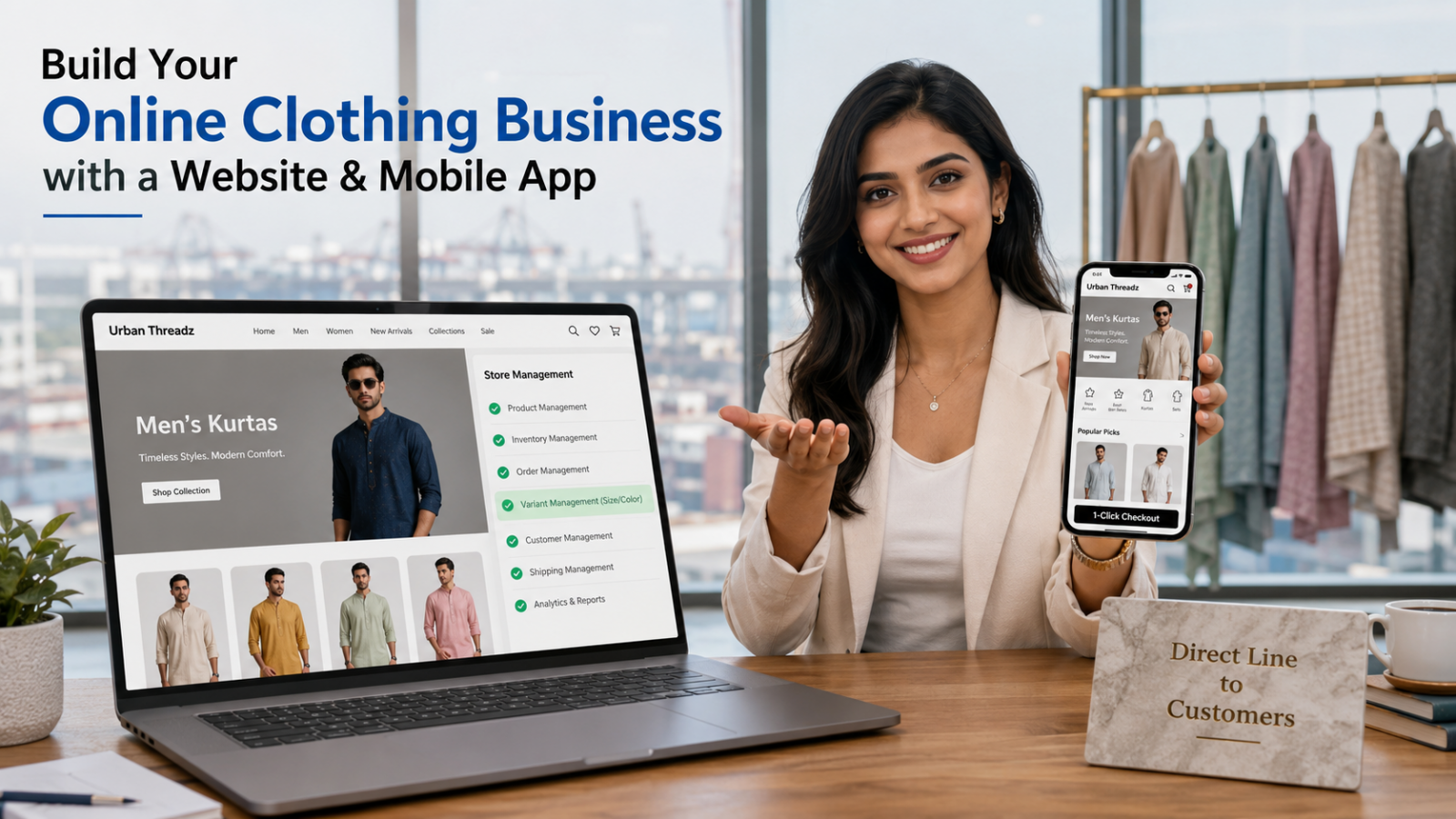
- Built-in product catalog management with variants (size, color, fabric)
- Integrated inventory tracking across SKUs
- Order management that scales without manual intervention
- Native mobile app capability so customers can shop on their phones
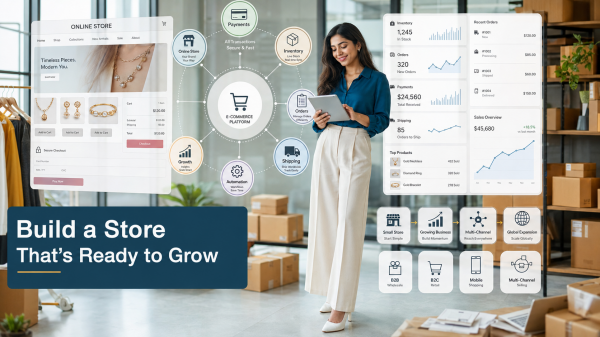
Platforms like Shopaccino are built specifically for manufacturers, exporters, distributors, and D2C brands. They handle the operational complexity (multi-warehouse fulfilment, B2B and B2C from one system, logistics integrations) so you're not duct-taping tools together.
Key point: A generic website builder is not an ecommerce platform. If inventory management, order automation, and a mobile app aren't built in, you'll spend more time managing the tech than running the business. |
Step 3: Set Up Your Product Catalog the Right Way
Clothing has more variables than almost any other product category. A single kurta might come in six colors, five sizes, and three fabric options. That's 90 variants from one SKU.
Your catalog setup needs to handle:
- Variant management (size, color, fit, material)
- SKU-level inventory so you know exactly what's in stock
- High-quality product photography from multiple angles
- Clear, accurate product descriptions with fabric composition, care instructions, and sizing guides
The Indian government's Bureau of Indian Standards (bis.gov.in) has published textile labeling guidelines that are worth reviewing if you sell domestically. Internationally, most buyers expect fabric composition and care instructions as a baseline.
Step 4: Build a Branded Website That Converts
Your website isn't just a catalog. It's where browsers become buyers. The design and structure of your site determines whether someone places an order or hits the back button.
What a high-converting clothing website needs:
- Fast loading speed, especially on mobile. Pages that take more than 3 seconds to load lose a significant portion of visitors before they even see your products.
- Clean navigation organized by category, collection, or occasion
- Prominent trust signals: return policies, secure payment icons, customer reviews
- A search function that handles fabric type, color, and product name queries
- A persistent cart so customers don't lose their selections while browsing
One thing most clothing brands underestimate: the mobile experience. Over 70% of fashion ecommerce traffic now comes from smartphones. If your website isn't designed mobile-first, you're already behind.
Why Does Your Clothing Business Need a Mobile App?
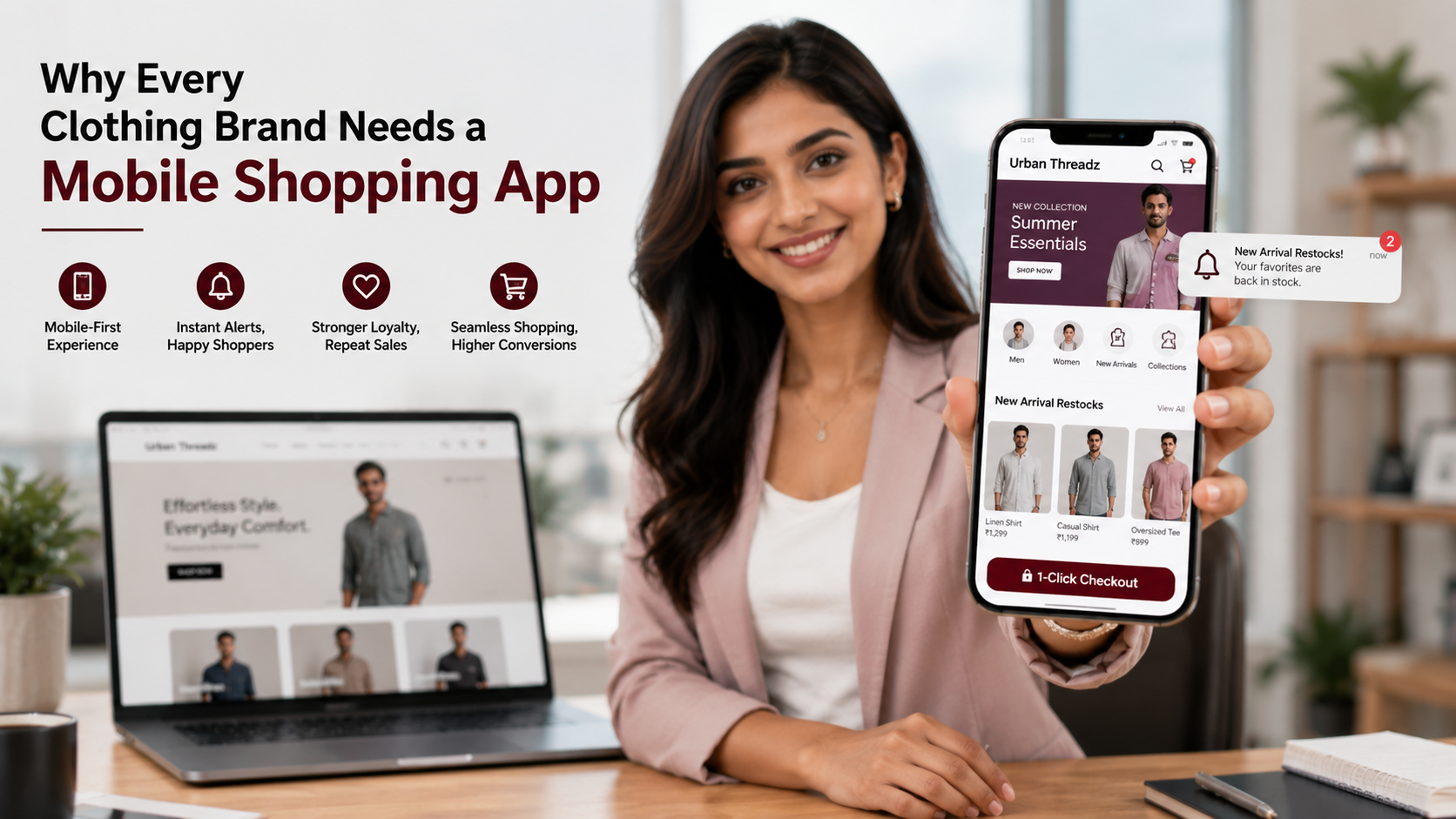
A website handles discovery and first-time buyers well. A mobile app handles repeat buyers even better.
Think about how your best customers behave. They don't Google you every time they want to reorder. They open an app. Push notifications remind them about new collections. Wishlist features keep them engaged between purchases. The checkout is faster because their details are saved.
Concrete differences between a website and a mobile app for clothing brands:
Website | Mobile App |
Good for first-time buyers | Better for repeat buyers |
No push notifications | Push notifications for sales, restocks |
Slower checkout (re-enter details) | 1-click checkout with saved preferences |
Requires browser intent to visit | Always visible on the home screen |
Harder to build loyalty habits | Wishlists, order tracking, easy reorders |
For a clothing business specifically, the app is where loyal customers live. Building it early means building that loyalty loop before a competitor does.
How Does Payment Setup Work for an Online Clothing Store?
Payments are where a lot of businesses get tangled up. You need to think about this from three angles:
1. Payment Gateways
A payment gateway processes the actual transaction. You need one that:
- Supports the currencies your customers use (especially if you sell internationally)
- Handles cards, UPI, net banking, and buy-now-pay-later options
- Has a fraud detection layer built in
- Settles funds quickly, ideally within 1-2 business days
Look for gateways that are compliant with your region's payment regulations. For global operations, PayPal, Stripe, and Razorpay cover a wide range of markets.
2. Zero Transaction Fees
This is worth specific attention. Some ecommerce platforms take a cut of every sale on top of what the payment gateway charges. A platform with zero platform transaction fees, like Shopaccino, means you're only paying the gateway fee, not losing an additional percentage to the software company on every order.
3. International Payments
If you export garments or sell to buyers overseas, you need a gateway that handles multi-currency transactions and currency conversion transparently. Platforms built for exporters handle this as a standard feature rather than an expensive add-on.
What Does Inventory Management Look Like for a Clothing Business Online?
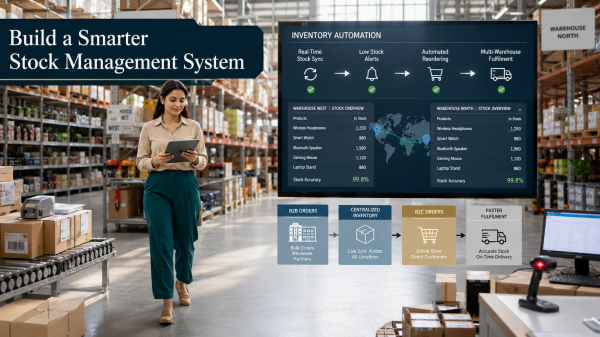
Clothing inventory is complicated. Sizes run out unevenly. Colors sell faster in some markets. You might stock from two suppliers and fulfil from three locations.
Your inventory system needs to handle:
- Real-time stock levels per SKU (not just per product)
- Low-stock alerts before you run out, not after
- Multi-warehouse order routing, so the nearest warehouse ships the order
- Automatic stock updates when returns come back into inventory
One thing offline clothing businesses often discover after going online: you can't manage online inventory the way you manage a physical store stockroom. Online buyers expect accurate availability. If a size is listed as 'In Stock' and it isn't, you lose the customer and potentially the review.
How to Handle Shipping and Logistics for an Online Clothing Store
Shipping is where a lot of clothing businesses quietly bleed money. The costs feel manageable at first, but they compound with scale.
What you need to set up:
- A logistics partner with nationwide (and ideally international) reach
- Rate cards that vary by weight, dimensions, and distance
- Tracking integration so customers can see where their order is
- A clear returns and exchange policy, visible before checkout
For clothing specifically, returns are higher than in almost any other category. Customers return because sizing was off, the color looked different on screen, or the fabric feel wasn't what they expected. An easy, clearly stated return policy reduces purchase hesitation and increases conversion.
According to the U.S. Small Business Administration (sba.gov), businesses with clear return policies report higher customer satisfaction scores and lower post-purchase dispute rates.
Tip: Build your return policy page before you launch. Don't add it as an afterthought. It's one of the most-read pages on any clothing store. |
How Do You Market a New Online Clothing Store?
Getting the store live is step one. Getting the right people there is the ongoing work.
Here's where clothing brands typically find traction:
Search Engine Optimization (SEO)
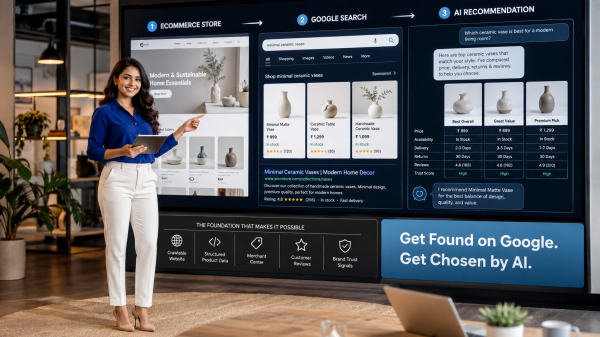
People search for specific things: 'cotton kurta under 1000', 'wholesale ethnic wear', 'sustainable linen shirts'. If your product pages and category pages don't show up for these searches, you're invisible.
- Optimize product titles with fabric type, occasion, and style
- Write descriptions that answer buyer questions, not just list specs
- Build category pages with enough content for Google to understand what you sell
Social Commerce
Instagram and Pinterest drive a meaningful portion of clothing discovery. A strong visual content calendar tied back to your store (not a marketplace link) builds brand equity and drives direct traffic.
WhatsApp and Push Notifications
For repeat buyers, WhatsApp broadcasts and app push notifications outperform email in open rates for most clothing categories. Build this channel from day one.
Wholesale and B2B Outreach
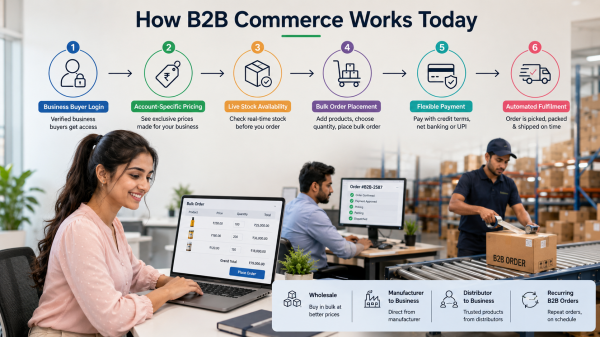
If you sell to retailers or distributors, a separate B2B section on your website with trade pricing, MOQs, and bulk order functionality converts far better than a generic inquiry form.
What Should You Look for in an Ecommerce Platform for Clothing?
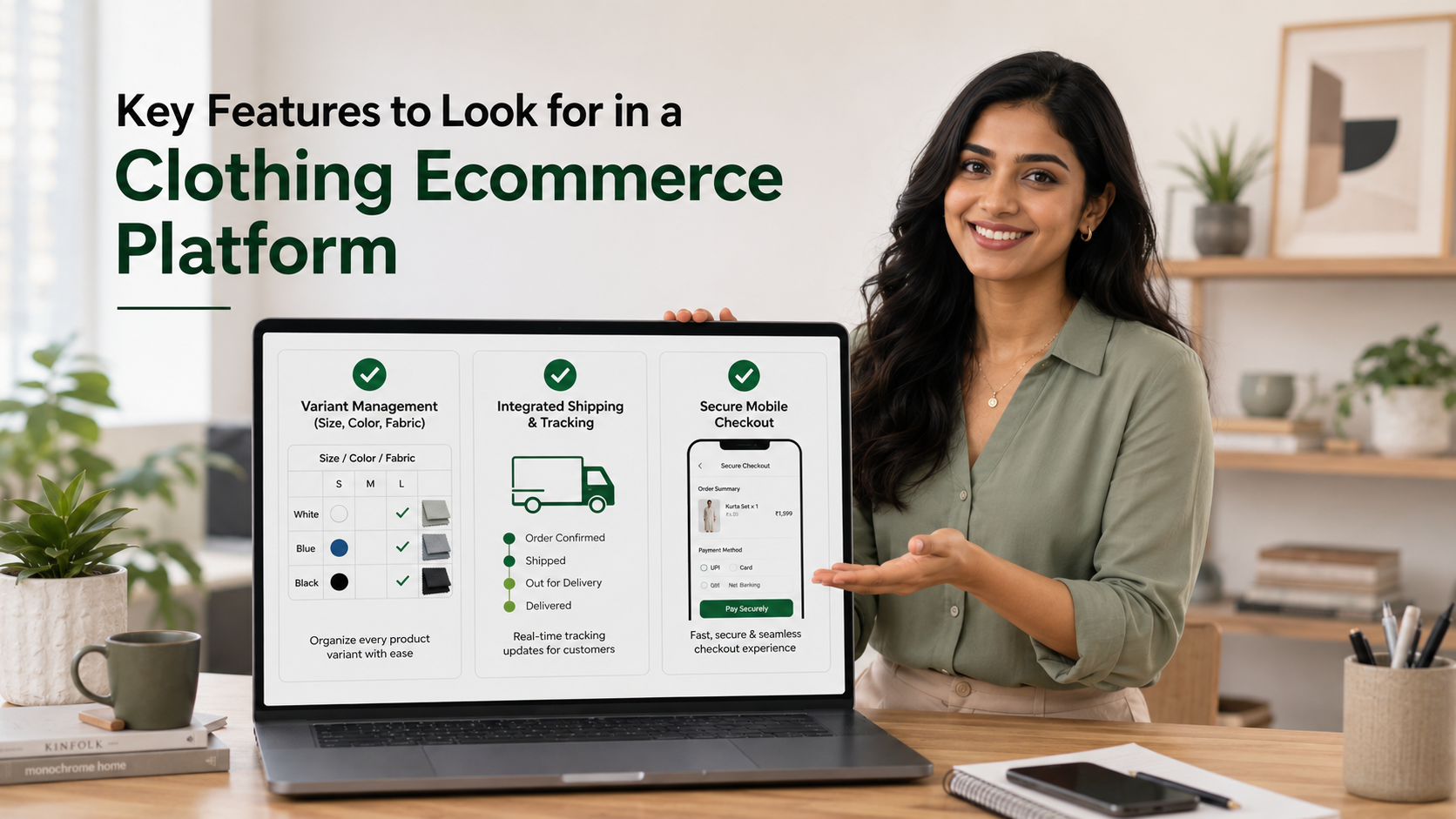
Not all platforms are built the same. Here's what specifically matters for a clothing business:
- Variant management that handles size, color, and fabric without breaking
- Mobile app included, not as a separate expensive add-on
- Multi-warehouse support if you stock from multiple locations
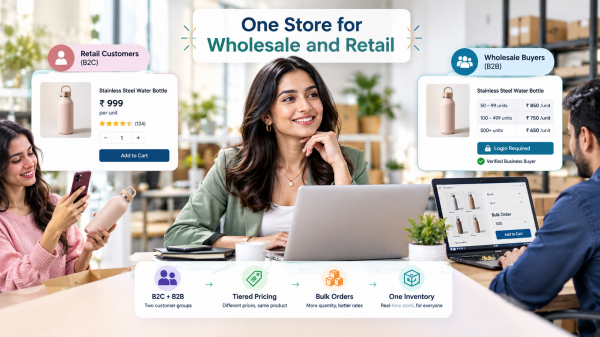
- B2B and B2C capabilities from one backend if you sell to both retail and wholesale buyers
- Integrated logistics and payment gateway connections
- Zero transaction fees so your margins stay intact
- Built-in automation to reduce manual processing as orders scale
Shopaccino was built around these exact pain points. It's designed for businesses that are already selling, whether offline or through intermediaries, and want to take that operation online without starting from scratch or paying for features they don't need.
Real-World Example: How a Garment Exporter Moved Online
A Jaipur-based garment exporter was managing international orders through emails, WhatsApp conversations, and Excel sheets. They knew most of their buyers by name, but onboarding a new international client took weeks of back-and-forth.
After setting up a dedicated B2B ecommerce store with a product catalog, bulk pricing tiers, and international payment options, they cut the onboarding time for new buyers from two weeks to two days. Orders that previously needed a sales rep to coordinate could be placed directly.
The mobile app gave their repeat buyers a shortcut. Instead of emailing to check what was in stock, buyers could browse the catalog, check availability, and place orders anytime. The sales rep's job shifted from order processing to relationship management.
This isn't an isolated case. Across India, Southeast Asia, and the Middle East, clothing businesses that built their own digital infrastructure are finding they can scale without proportionally scaling headcount.
The Bottom Line on Building an Online Clothing Business
Building an online clothing business isn't about chasing a trend. It's about owning your customer relationship directly, without giving up margin to a marketplace or relying on a platform that can change its rules at any time.
The combination of a well-built website and a mobile app gives you two things most clothing businesses lack online: visibility and loyalty. The website brings people in. The app keeps them coming back.
If you're already running a clothing business and haven't made this move yet, the infrastructure to do it properly has never been more accessible. An industry-focused platform that handles inventory, payments, logistics, and mobile out of the box means you're not building from zero.
You're taking what works offline and putting it where your customers already spend their time.
FAQs
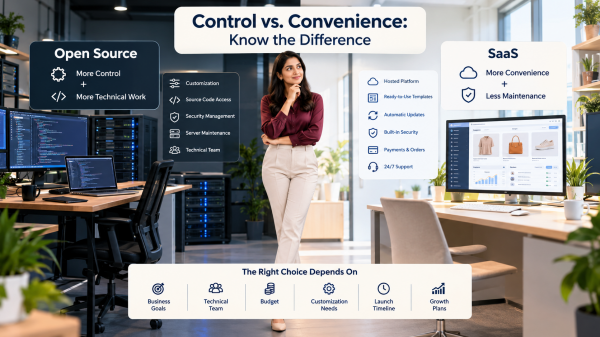
Costs vary widely. A SaaS ecommerce platform typically costs anywhere from a few thousand to tens of thousands of rupees per year, depending on features. Building a custom platform from scratch costs significantly more and takes longer. For most clothing businesses, a purpose-built ecommerce SaaS is the better starting point.
A mobile-responsive website handles discovery well. But a dedicated mobile app is measurably better for repeat purchase behavior, because it stays on the customer's phone, supports push notifications, and offers a faster checkout. For clothing businesses focused on repeat buyers, the app earns its keep quickly.
Yes, with the right platform. A B2B and B2C ecommerce system lets you show trade pricing to verified wholesale buyers and retail pricing to regular customers, all from the same product catalog. Platforms designed for manufacturers and distributors, like Shopaccino, support this natively.
Returns in clothing are higher than most categories. The basics: publish a clear return window (7, 15, or 30 days), specify what qualifies for return (unused, tags intact), define whether returns are free or buyer-paid, and automate the return request process. The easier it is to return, the more confident people are to buy in the first place.
Yes. You need three things: a payment gateway that processes multi-currency transactions, a logistics partner with international shipping capability, and product pages with accurate fabric and sizing information (international buyers especially rely on these). Platforms built for exporters handle the first two as standard features.
With a SaaS ecommerce platform, a basic store can go live in one to two weeks if your product catalog is ready. A fully configured store with a mobile app, logistics integrations, and B2B pricing typically takes four to eight weeks depending on the complexity of your catalog and the number of integrations needed.