How to Add EMI and Buy Now Pay Later to Your Ecommerce Store
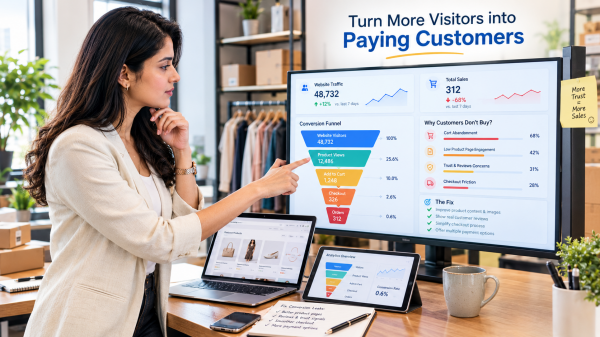
Picture a shopper who has been eyeing a ₹42,000 kitchen appliance set for weeks. They finally add it to the cart, reach the payment page, see the full amount, and quietly close the tab. No complaint, no support ticket, just a lost sale you'll never even hear about.
Ask around at any Indian online store doing decent volume, and you'll hear a version of this story constantly. The product was right. The price was fair. The customer simply didn't want to pay the whole amount in one shot, on one card, in one go.
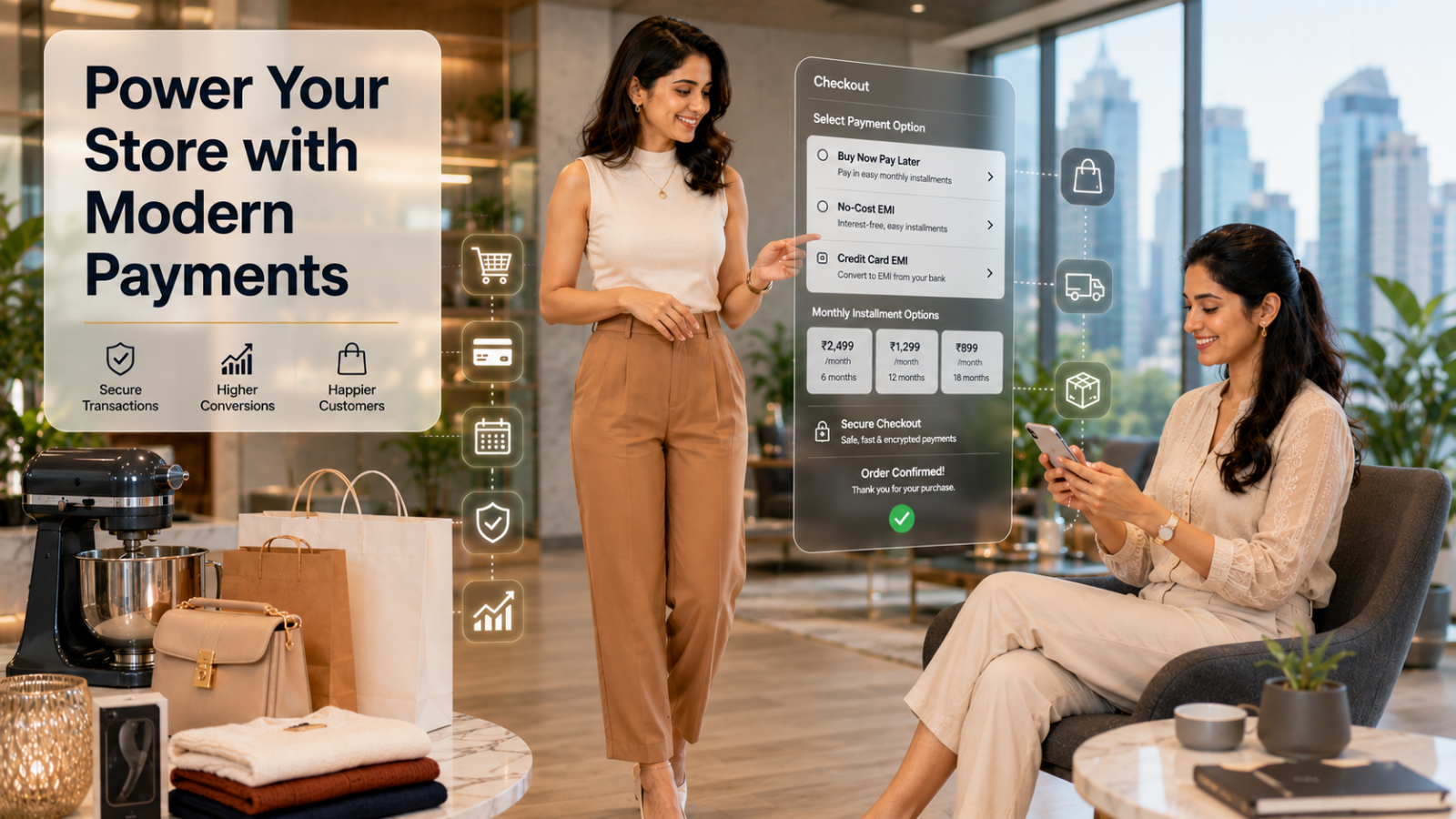
That single moment is exactly what Buy Now Pay Later for online store checkouts, alongside EMI, exist to fix.
Adding Buy Now Pay Later and EMI to an Indian ecommerce store means connecting your checkout to BNPL platforms like Snapmint, InstaCred, or TVS Credit, along with credit card EMI support from banks such as HDFC, ICICI, SBI, and Axis. Most Indian payment gateways already have these tie-ups built in, so enabling them is usually a settings change, not a development project.
What BNPL and EMI Actually Mean for an Indian Online Store
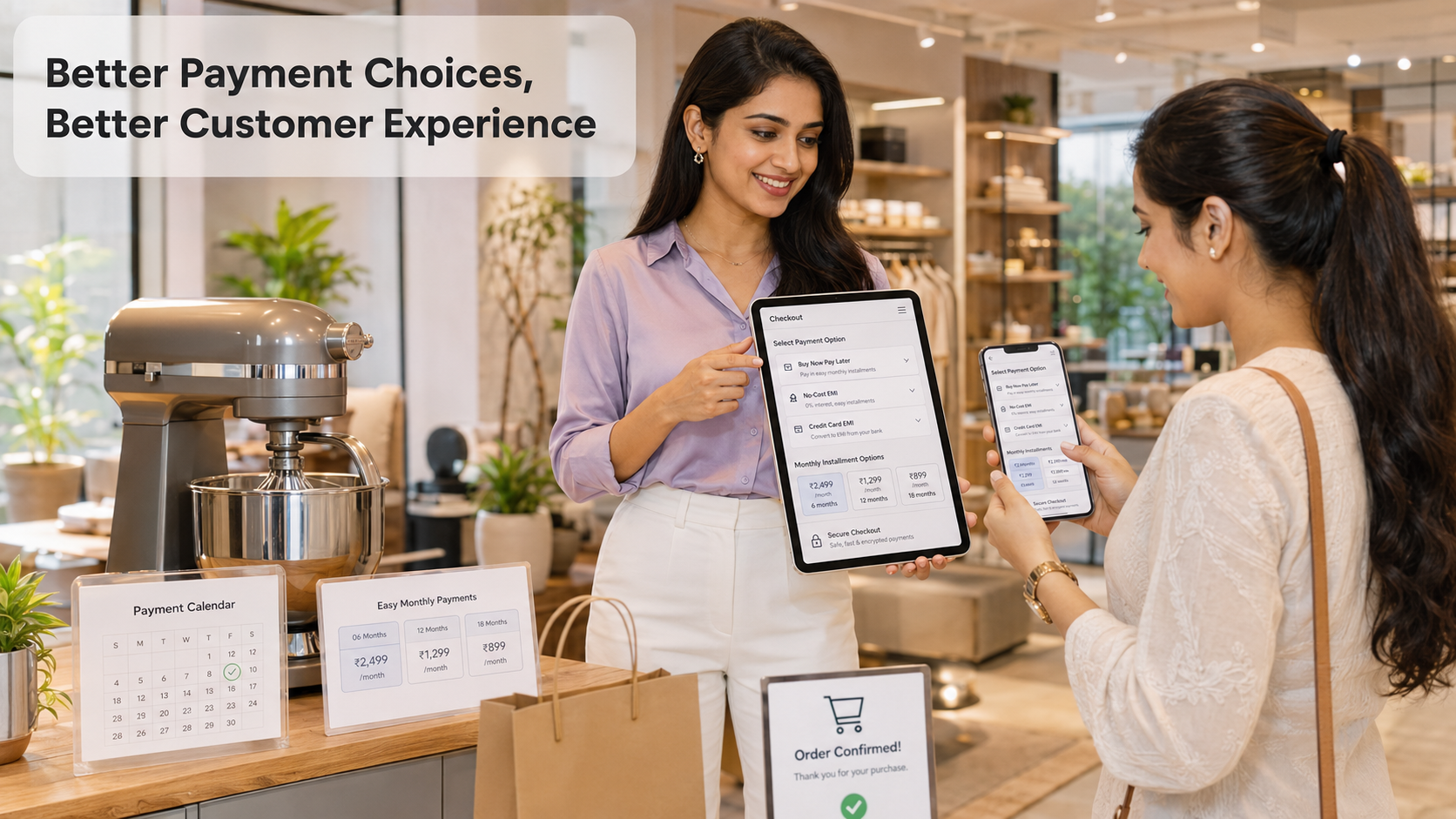
Buy Now Pay Later lets a shopper take the product home today and pay for it in smaller installments over a few weeks or months, often with zero interest. You, the merchant, get paid in full upfront by the BNPL provider. The shopper settles up with them, on their schedule, not yours.
EMI, or Equated Monthly Instalment, is the more familiar cousin of this in India. It usually runs through a bank's credit card, and can stretch anywhere from 3 to 24 months. A lot of Indian shoppers already associate EMI with big-ticket electronics and appliances from years of seeing it at offline stores, which makes it an easier sell online too.
There's also a category unique to how Indian ecommerce has grown: no-cost EMI without a credit card, offered by fintech lenders who assess a buyer quickly and extend short-term credit even to shoppers who've never held a credit card. This has genuinely opened up online big-ticket purchases to a much wider set of Indian buyers than card-only EMI ever could.
The Reserve Bank of India's own data on digital lending has tracked this shift for years, showing steady growth in disbursements through digital and fintech lending channels as more first-time borrowers get access to short-term, small-ticket credit online (rbi.org.in). For an Indian ecommerce seller, that trend translates directly into more buyers who are both willing and able to use installment options, provided the store actually offers them.
If you're setting this up for an Indian audience, three names come up again and again, and each one serves a slightly different kind of buyer.
BNPL Platforms Worth Integrating in India
Platform | How It Works | Best Fit |
Snapmint | No-cost EMI without requiring a credit card, using a quick digital credit check instead | Fashion, electronics, and mid-ticket D2C purchases, especially for buyers without a card |
InstaCred | Similar no-cost EMI model, focused on instant approval and a fast checkout flow | Impulse and mid-value purchases where checkout speed matters most |
TVS Credit | NBFC-backed consumer durable and EMI financing, with a strong presence in tier 2 and tier 3 cities | Electronics, appliances, and durable goods, especially outside metro markets |
Snapmint has built its name specifically around shoppers who don't have a credit card but still want to split a payment. For a store selling clothing, footwear, or home products in the ₹2,000 to ₹25,000 range, this tends to be the single biggest unlock, it opens up a segment of buyers who were never going to complete a full-payment checkout in the first place.
InstaCred plays a similar role but leans harder into speed. Its approval flow is built to keep the checkout moving, which matters most for categories where a shopper is comparing your store against two others in open tabs and will simply buy from whichever one lets them finish fastest.
TVS Credit comes from a different lineage entirely, it's the financial services arm of the TVS Group, with deep roots in consumer durable financing built over years of offline lending. That history shows up online as strong reach in smaller cities. and towns, where brand trust in a name like TVS often matters as much as the EMI terms themselves.
Card EMI works differently from BNPL. Instead of a single fintech partner, you're really enabling a shopper's own bank to let them split the payment, which means coverage depends on how many banks your checkout actually names and supports.
Credit Card EMI: Which Banks to Enable
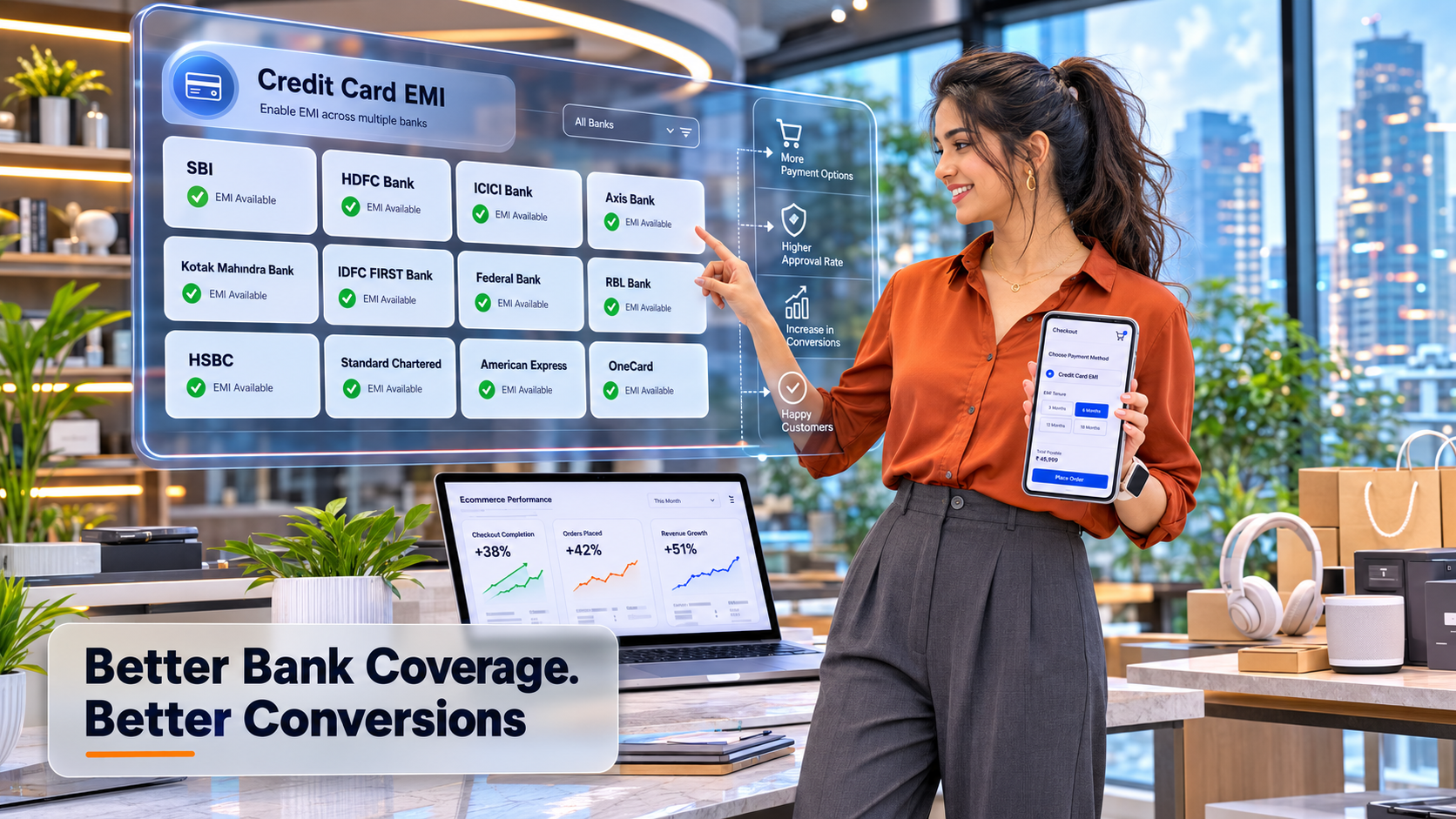
Public Sector Banks
State Bank of India (SBI): India's largest bank by cardholder base. Enabling SBI EMI alone covers a massive share of Indian shoppers, making it close to non-negotiable for any store serious about EMI reach.
Bank of Baroda: A major public sector bank whose cardholders increasingly expect standard EMI availability on higher-ticket online purchases.
IDBI Bank: Smaller in card volume than SBI, but useful additional coverage for public-sector banking customers who don't carry an SBI or Bank of Baroda card.
Private Sector Banks
HDFC Bank: Carries one of the largest active credit card bases in India. Skipping HDFC Bank EMI would exclude a genuinely large share of premium and mid-tier online buyers.
ICICI Bank: Similar in scale to HDFC, with cardholders very accustomed to seeing EMI offered at checkout on major online stores.
Axis Bank: A strong urban and semi-urban card base, frequently used for EMI on electronics, fashion, and travel purchases.
Kotak Mahindra Bank: A fast-growing card base, especially among younger, digitally comfortable professionals who convert purchases to EMI directly through their banking app.
IndusInd Bank: Smaller in overall volume but holds a loyal premium cardholder segment, useful for stores selling higher average order values.
Federal Bank: Particularly relevant if you have meaningful traffic from South India, where Federal Bank has a strong retail banking presence.
RBL Bank: Known for popular co-branded credit cards with notably high EMI conversion among younger, digital-first shoppers.
IDFC FIRST Bank: One of the fastest-growing card issuers in India, increasingly common among newer, first-time credit card holders.
Yes Bank: An established card base worth including for broader coverage across urban India.
AU Small Finance Bank: A smaller but rapidly expanding card base, especially relevant if you sell into Rajasthan and other northern Indian markets.
Foreign Banks
HSBC: A premium cardholder base with higher average spending limits, well suited to high-ticket categories like jewellery and electronics.
Citibank: Worth a specific note here: Citibank's India retail and credit card portfolio was migrated to Axis Bank in 2023, so many existing Citibank cardholders are now serviced under Axis Bank. It's worth checking with your payment gateway on how this shows up in your EMI bank list today.
Standard Chartered Bank: Popular among working professionals and NRIs, and a reliable option for high-ticket EMI conversions.
American Express: Often needs its own separate merchant tie-up distinct from standard card networks, but worth the extra setup given its premium-spending cardholder base.
Digital-First Card Issuers
OneCard: Represents a newer generation of app-first card issuers built for a younger, digitally native customer base, comfortable converting purchases to EMI directly within an app rather than calling a bank.
How Card EMI Actually Reaches Your Customer
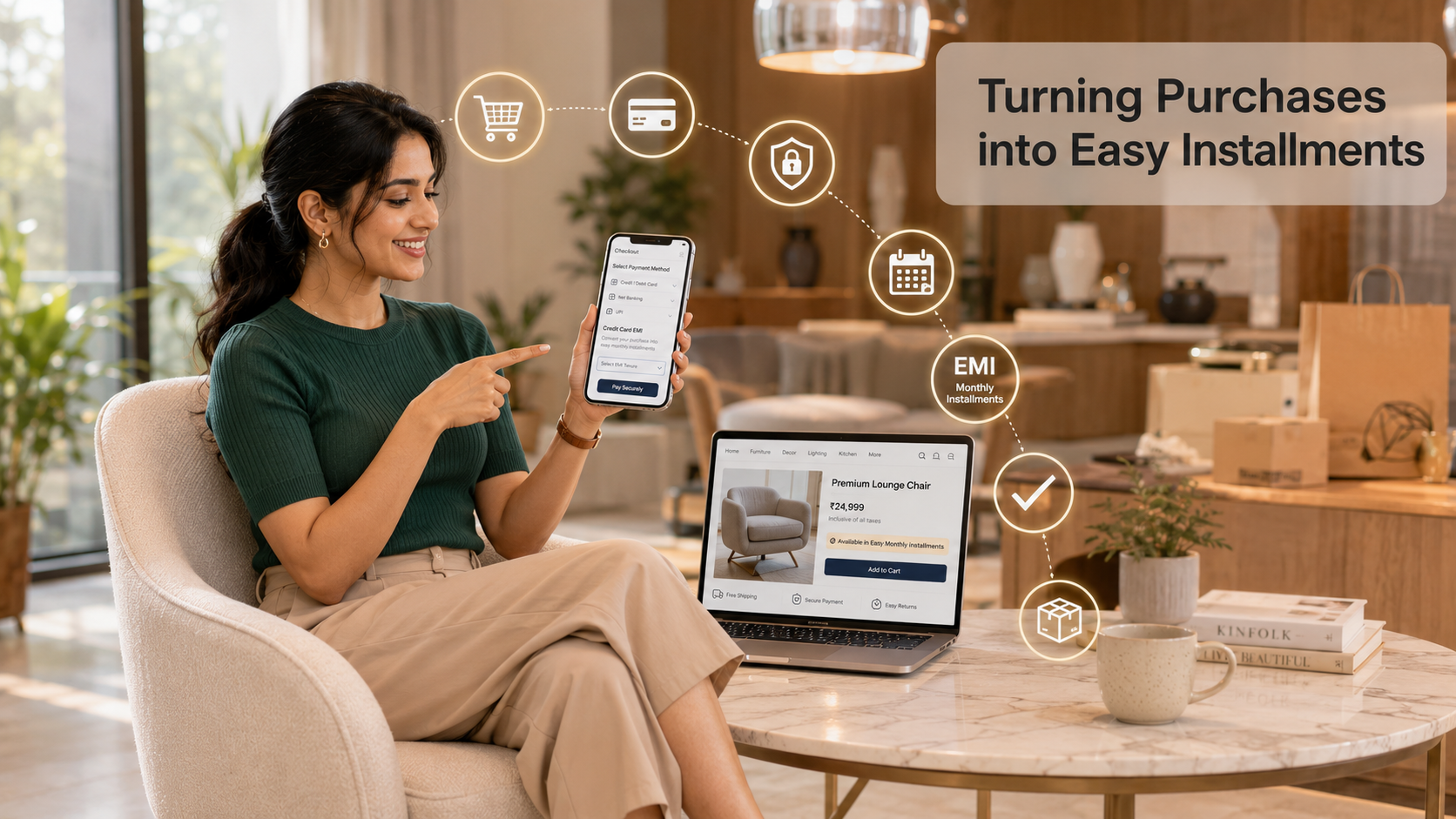
Here's the part that surprises a lot of first-time sellers: you don't sign a separate deal with each of these 19 banks. In almost every case, your payment gateway already has these EMI tie-ups built in, since gateways negotiate them once and offer them across all their merchants.
Your job is to confirm your gateway supports EMI, then turn it on, sometimes it's off by default even when the underlying capability exists. Once enabled, whichever bank's card a shopper is holding, the EMI option simply appears at checkout if that bank is part of your gateway's supported list.
This is also why the list of banks you enable matters more than it might seem. A shopper holding an IDFC FIRST Bank or Federal Bank card who doesn't see EMI as an option isn't going to email you asking why, they'll just pay in full if they can, or abandon the cart if they can't.
It's worth actually checking your gateway's EMI bank list rather than assuming it's comprehensive by default. Some gateways enable only the largest five or six banks unless you specifically request the full list, which quietly excludes cardholders from IndusInd Bank, RBL Bank, or AU Small Finance Bank, smaller in overall card volume, but not small enough to ignore if your buyers happen to bank there.
How to Set This Up on Your Store, Step by Step
The sequence is more about decisions than technical heavy lifting.
1. Check what your payment gateway already supports
Before reaching out to anyone new, confirm which BNPL partners and which banks' card EMI your current payment gateway already has tie-ups with. Most Indian gateways support a wide bank list and at least one or two BNPL players out of the box.
2. Fill the gaps with direct BNPL partnerships if needed
If Snapmint, InstaCred, or TVS Credit aren't already available through your gateway, each of them offers merchant onboarding directly. This typically involves a short integration and a quick verification of your business, not a lengthy process. It's worth requesting each provider's typical approval rate and settlement timeline upfront, since these vary and affect how quickly you actually see the money from a completed order.
3. Decide on a minimum order value for EMI and BNPL eligibility
A common approach in India is setting BNPL eligibility above ₹1,500 to ₹2,000, and reserving card EMI for orders above ₹3,000 to ₹5,000, since instalment amounts below that tend to feel unnecessary to most shoppers. Check this against your own average order value rather than copying a number from a competitor's site.
4. Turn on the options and confirm they display correctly at checkout
Once active, EMI and BNPL should appear as clear payment methods alongside UPI, cards, and net banking, not buried in a secondary menu.
5. Show the option on the product page, not just at checkout
A line like "Starting at ₹3,500/month with No Cost EMI" directly under the price does far more to prevent hesitation than a payment method a shopper only discovers after they've already committed to checking out.
6. Place a test order through each major option
Test at least one BNPL platform and two or three bank EMI options end to end, on both desktop and mobile, before your first real customer encounters it. Confirm the installment breakdown displayed to the buyer is accurate and that refunds are handled sensibly if an order is returned.
What This Actually Costs You
Nothing here is free, the question is just who pays. On standard EMI, the interest is usually charged to the customer by their bank. On no-cost EMI, the merchant typically absorbs that interest cost, either by adjusting margins slightly or treating it as a cost of acquiring the sale.
BNPL providers like Snapmint, InstaCred, and TVS Credit generally charge the merchant a subvention fee, a small percentage of the order value, in exchange for taking on the credit risk and paying you upfront in full. This fee needs to be checked against your margins before you commit, particularly on lower-priced products where a few percentage points matter more.
It's worth running this math on your three or four bestselling products specifically, rather than assuming a flat fee structure works evenly across your whole catalog.
Here's a simple way to see it: on a ₹10,000 order with a 2% BNPL subvention fee, you'd receive ₹9,800 upfront instead of ₹10,000, but you'd likely have converted a sale that otherwise wouldn't have happened at all. Weighed against a cart that was simply abandoned, ₹9,800 today is a considerably better outcome than ₹0 and a customer who bought from a competitor instead.
RBI's Digital Lending Rules, and Why They Matter for You
As a merchant, you're not the one extending credit, the BNPL provider or bank is, which means the direct regulatory weight sits with them rather than you. Even so, it's worth knowing the landscape you're plugging into.
The Reserve Bank of India issued its Guidelines on Digital Lending in 2022, tightening how lenders and their partners must disclose costs, obtain consent, and handle borrower data (rbi.org.in). Any BNPL provider or bank EMI partner worth working with will already be compliant with these, but it's a reasonable question to ask a new provider directly before signing on, since your store's reputation is tied to the experience your customers have with them.
In practice, this mostly shows up as clear, upfront disclosure of instalment amounts, interest if any, and repayment schedules, shown to the customer before they confirm the order. If a provider's checkout flow feels vague about any of this, it's worth a closer look before you integrate them.
It's also worth keeping an eye on this space generally, since digital lending regulation in India has continued to evolve as BNPL and short-term lending have grown. A provider that was compliant a year ago should still be checked periodically, rather than assumed to remain so indefinitely without any follow-up.
Common Mistakes Indian Sellers Make With EMI and BNPL
Most of these problems aren't about picking the wrong provider, they're small setup oversights that quietly cancel out the benefit of offering instalments at all.
- Enabling only one or two banks and assuming that's enough. A shopper holding a Federal Bank or RBL Bank card who doesn't see EMI simply won't ask why, they'll abandon the cart or pay in full if they can.
- Setting the minimum order value too high or too low without checking actual order data. A ₹5,000 floor makes little sense for a store where the average order is ₹1,800.
- Not disclosing the total repayment amount clearly, which risks confusing customers and creates avoidable support tickets during the first few weeks after launch.
- Treating no-cost EMI as automatically profitable without checking the subvention fee against margins on lower-priced products specifically.
- Forgetting to test the mobile checkout experience separately. Most Indian ecommerce traffic is mobile-first, and a payment option that renders awkwardly on a phone screen defeats the entire purpose.
Which Indian Businesses Benefit Most
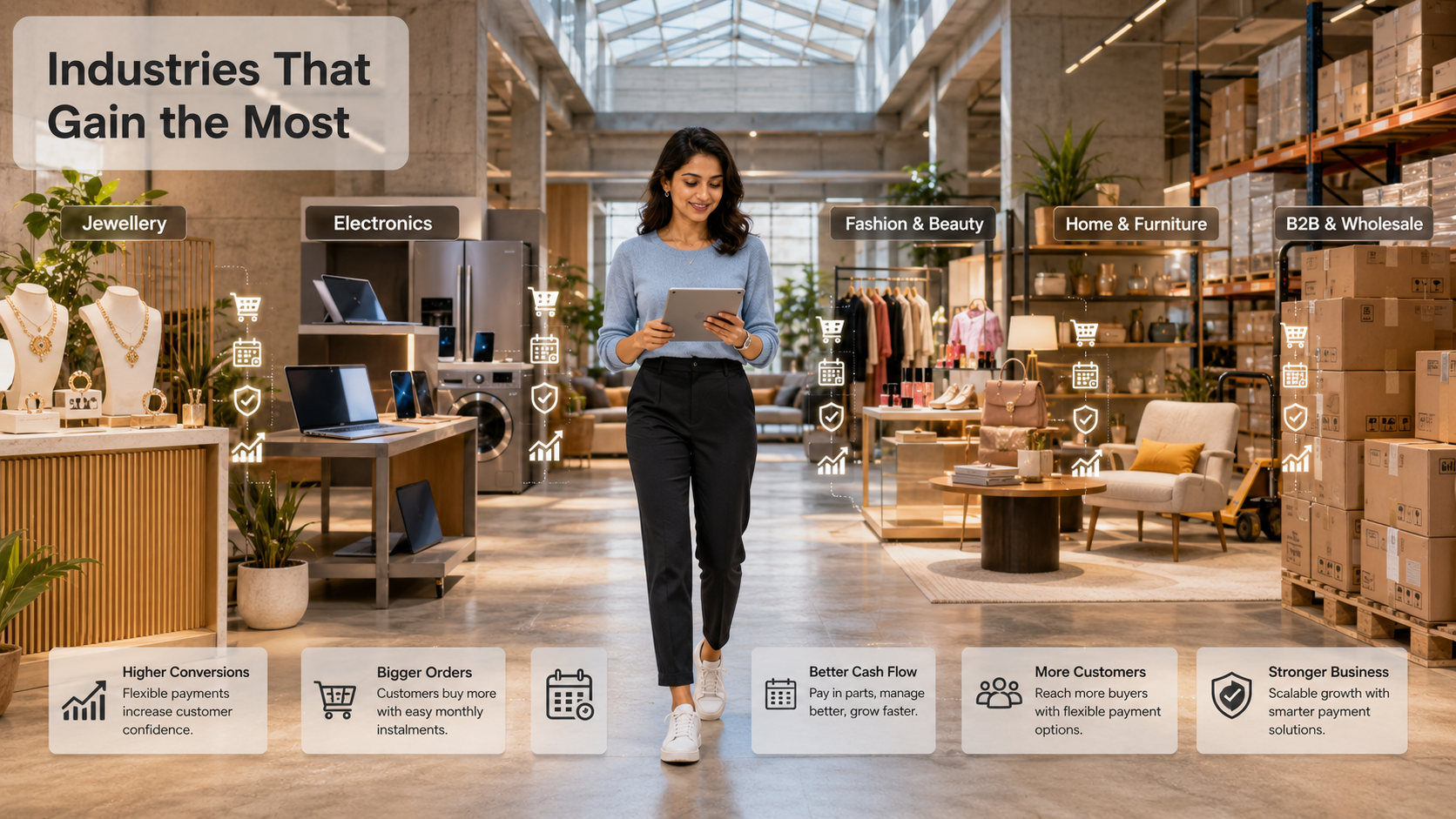
Jewellery and high-value fashion see some of the strongest lifts, since a single piece can easily cross ₹20,000 to ₹50,000, exactly the range where a customer's hesitation is about payment size, not desire for the product.
Consumer electronics and home appliances are close behind, since Indian shoppers already associate these categories with EMI from years of offline retail conditioning. TVS Credit in particular tends to perform well here, especially for buyers outside major metros.
Fashion and beauty brands selling in the ₹1,500 to ₹10,000 range benefit most from Snapmint and InstaCred style no-cost EMI, since these buyers are often younger, mobile-first, and less likely to hold a premium credit card.
B2B distributors and manufacturers selling bulk orders benefit less from consumer BNPL and more from extended credit terms negotiated directly with buyers, though card EMI can still help on the retail or D2C side of a hybrid B2B and D2C operation.
Home decor, furniture, and marble or stone sellers sit somewhere in between. Ticket sizes are often high enough that EMI genuinely changes a buyer's decision, but the purchase cycle tends to be slower and more considered, so pairing EMI with clear product information matters as much as the payment option itself.
Where Shopaccino Fits Into This
Shopaccino is built for established businesses, exporters, manufacturers, distributors, and D2C brands, whether they're already selling offline, online, or both, who are ready to scale with a proper, unified system instead of a patchwork of separate tools.
On Shopaccino, BNPL and EMI options are enabled through your connected payment gateway, the same gateway that already handles your UPI, card, and net banking payments. That means turning on Snapmint, InstaCred, TVS Credit, or bank-wise card EMI is a configuration step within your existing setup, not a separate integration project bolted onto the side.
For a business running both a B2B order book and a D2C storefront on Shopaccino, this matters twice over, a retail customer gets the EMI or BNPL option that fits their basket size, while a wholesale buyer can still be offered extended credit terms separately, all from the same backend and the same product catalog.
This also means the pricing, inventory, and payment options a customer sees stay consistent whether they're buying one unit at retail price or a distributor is placing a bulk order under a separate credit arrangement, rather than being split across two disconnected systems someone has to reconcile manually.
Go back to that shopper eyeing the ₹42,000 kitchen appliance set. With EMI or BNPL live at checkout, that same hesitation has an obvious answer sitting right next to the price, split it into smaller payments, keep browsing, and complete the order in the time it takes to read one line of text.
That's the entire case for adding Buy Now Pay Later for online store checkouts alongside EMI in India. Not a passing trend, just one less reason for a customer who already wanted your product to leave without it.
Set it up once, across a genuinely wide range of banks and BNPL providers, and it keeps quietly doing this work on every order that follows, without a single sales call or discount code involved.
FAQs
It is a checkout option that lets customers split a payment into smaller installments, often interest-free, while the store still gets paid in full upfront by the BNPL provider.
Not quite. BNPL is usually short-term and interest-free. EMI typically runs longer, from 3 to 24 months, and may involve interest through a bank, card, or NBFC.
No. A licensed BNPL or EMI provider handles the credit and repayment side. Your store simply integrates their option at checkout, nothing more.
In most cases, yes. When a higher-priced item can be split into smaller payments, customers are more willing to keep it in cart instead of switching to something cheaper.
Yes. Many third-party BNPL and EMI providers connect directly with ecommerce platforms, so you don't need an existing banking relationship to offer this at checkout.
It can be, as long as the provider is upfront about fees and repayment terms. Shoppers should always confirm the schedule and check for late fees before choosing it.