
Google AI Mode vs ChatGPT Search: What Ecommerce Businesses Need to Know
Search Has Changed Forever
For more than two decades, Google Search has been the primary gateway between customers and ecommerce businesses. If someone wanted to buy a product, compare brands, read reviews, or learn about a service, they would typically start with a Google search. Businesses invested heavily in SEO, content marketing, backlinks, and paid advertising to secure visibility in search results because rankings directly influenced traffic, leads, and sales.
Today, however, the search landscape is undergoing one of its biggest transformations since the birth of modern search engines. Artificial intelligence is changing how people discover information online. Instead of browsing through multiple websites and comparing information themselves, users are increasingly turning to AI-powered platforms that can provide direct answers, recommendations, and insights in a matter of seconds.
This shift is forcing ecommerce businesses to rethink their digital marketing strategies. Visibility is no longer just about ranking for keywords. It is becoming increasingly important to ensure that AI systems recognize, understand, and trust your brand. This is one of the major ecommerce trends 2026 that online stores cannot ignore.
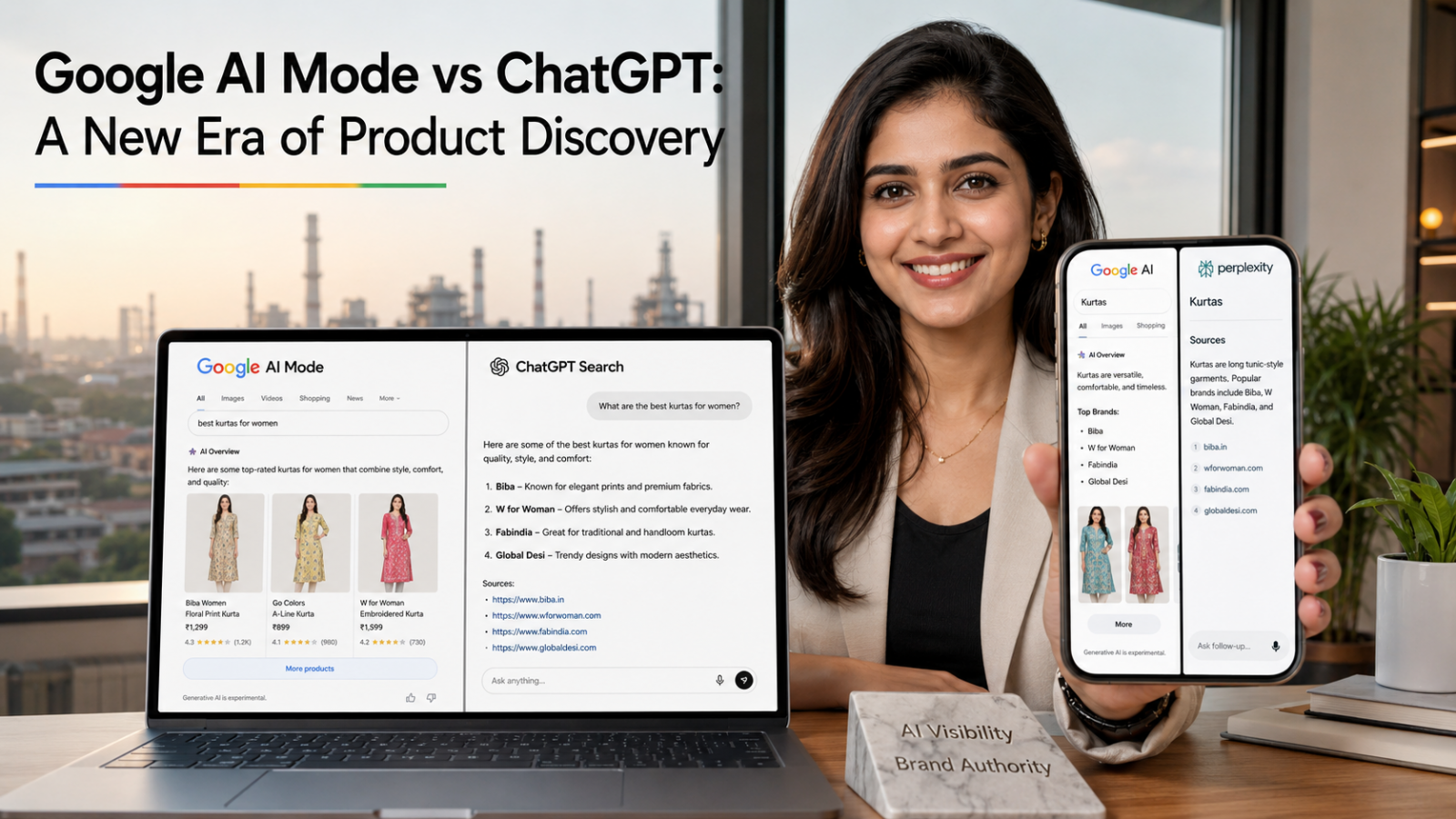
Two major players are leading this change: Google AI Mode and ChatGPT Search. While both leverage artificial intelligence to improve the search experience, they operate differently and create new opportunities and challenges for ecommerce businesses.
The Rise of AI-Powered Search
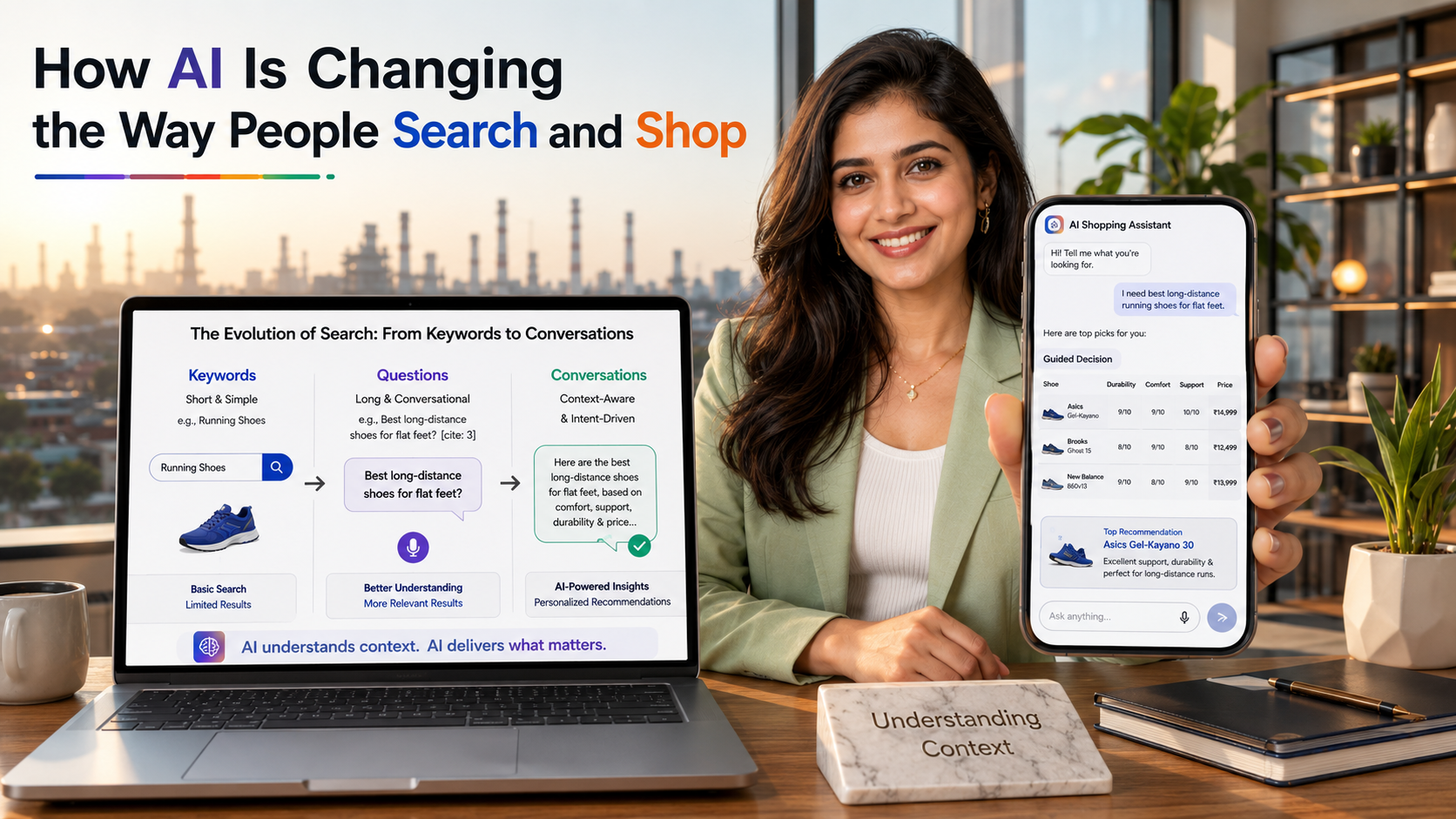
Search behavior has always evolved alongside technology. Years ago, users searched with simple keywords such as "running shoes" or "best smartphone." Over time, search queries became more detailed and conversational. Today, users are comfortable asking complete questions such as, "What are the best running shoes for flat feet under ₹10,000?" or "Which ecommerce platform is best for a growing grocery business in India?"
Artificial intelligence is accelerating this shift by making search more intuitive and personalized. Instead of providing a list of links, AI-powered platforms attempt to understand the user's intent and deliver a complete answer.
This evolution is particularly significant because it changes how consumers make purchasing decisions. The customer journey is becoming shorter, more conversational, and more dependent on AI recommendations. As a result, businesses must understand how AI search platforms work and how they influence consumer behavior.
What Is Google AI Mode?
Google AI Mode is Google's AI-enhanced search experience designed to help users find answers faster and more efficiently. Rather than displaying only traditional search results, Google can now generate AI-powered summaries that synthesize information from multiple sources across the web.
When users ask complex questions, Google AI Mode attempts to provide a comprehensive response directly within the search interface. The goal is to reduce the effort required to gather information while still connecting users to relevant websites, products, reviews, videos, and resources.
Unlike traditional search results, where users must visit several websites to understand a topic, AI Mode often provides key insights immediately. This creates a more streamlined search experience while preserving Google's connection to the broader web ecosystem.
How Google AI Mode Works
Google AI Mode analyzes information from its vast search index and uses artificial intelligence to generate summarized responses. It combines information from multiple sources, identifies the most relevant insights, and presents them in a conversational format.
For example, if a user searches for the best ecommerce platforms for small businesses, Google AI Mode may compare leading solutions, explain their strengths and weaknesses, provide pricing insights, and suggest which platform may be best for different business needs.
Importantly, Google typically supports these AI-generated responses with citations and links to websites. This means publishers and businesses still have opportunities to gain visibility and traffic if their content is recognized as valuable and trustworthy.
Why Google AI Mode Matters for Ecommerce Brands
For ecommerce businesses, Google AI Mode introduces a significant change in how visibility is earned. Historically, securing a top-ranking position often guaranteed substantial traffic. Now, users may find many of the answers they need directly within AI-generated summaries.
This doesn't mean SEO is becoming less important. Instead, it means businesses must create content that is comprehensive, authoritative, and useful enough to be included in AI-generated responses. Brands that become trusted sources of information can benefit from increased visibility, even if users don't always click through immediately.
What Is ChatGPT Search?
ChatGPT Search approaches information discovery from a different perspective. Instead of functioning primarily as a search engine, it operates as a conversational AI assistant capable of answering questions, conducting research, and providing recommendations.
Users interact with ChatGPT much like they would interact with a knowledgeable consultant. They ask questions, receive detailed responses, and continue the conversation through follow-up questions.
This conversational experience eliminates much of the friction associated with traditional search. Rather than opening multiple websites and piecing together information manually, users receive a synthesized answer tailored to their query.
How ChatGPT Search Differs From Traditional Search Engines
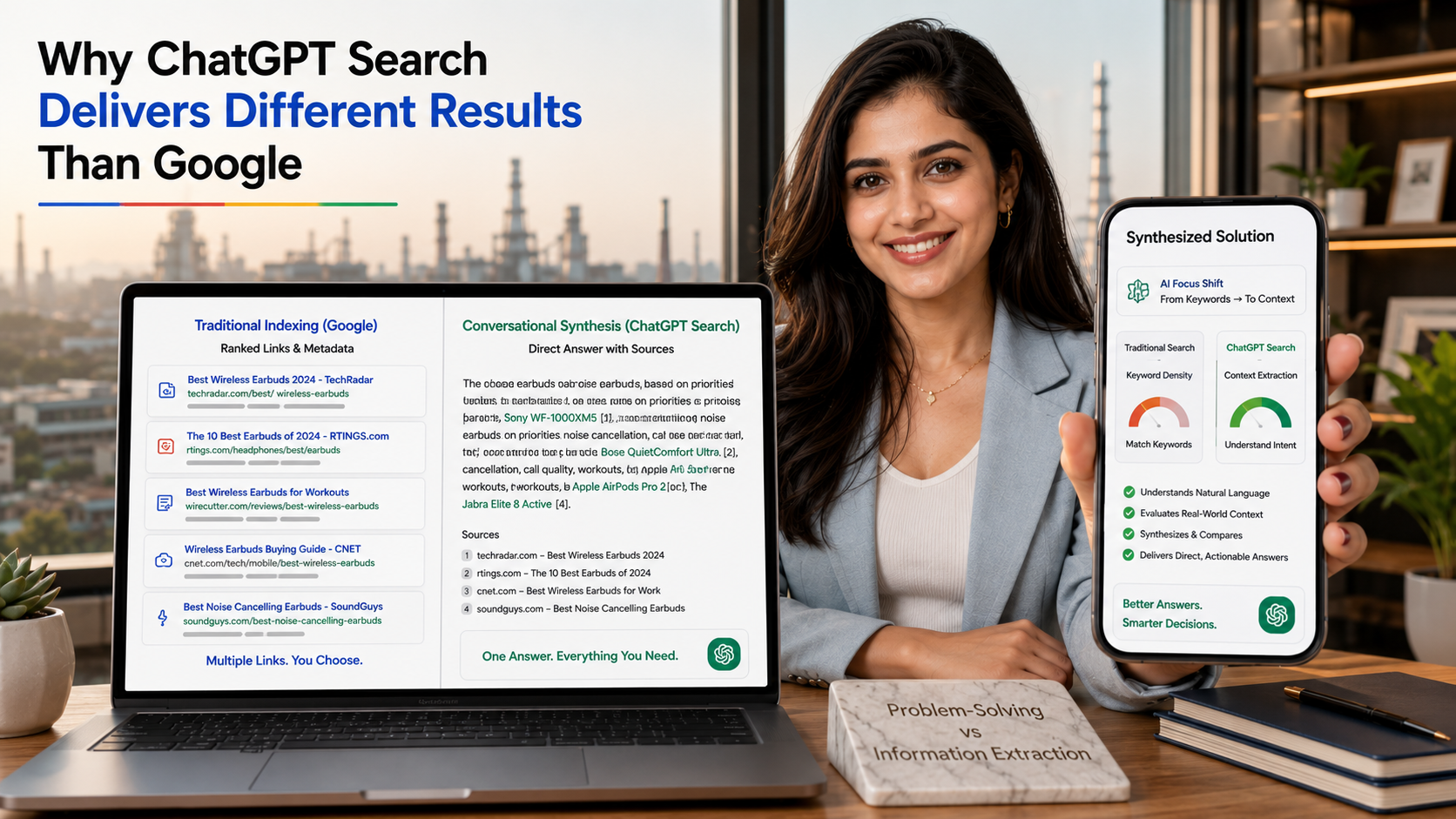
Traditional search engines are designed to help users find information. ChatGPT Search is designed to help users understand information.
This distinction is important. Instead of presenting dozens of possible sources, ChatGPT focuses on generating a clear and useful answer. The emphasis is on solving the user's problem rather than directing them toward multiple webpages.
For consumers, this creates a more efficient research experience. For businesses, it creates a new challenge: becoming part of the answer itself.
Why Consumers Are Adopting ChatGPT for Product Research
Consumers increasingly use AI tools because they save time. Rather than reading multiple reviews, watching videos, and comparing specifications independently, users can ask AI platforms for recommendations tailored to their needs.
For example, someone shopping for a laptop can describe their budget, intended use, and priorities, and receive personalized recommendations within seconds. This level of convenience is reshaping how customers discover products and evaluate brands.
As AI adoption grows, ecommerce businesses must ensure that their products, content, and brand information are visible and understandable to AI systems.
Google AI Mode vs ChatGPT Search: The Key Differences
Although both platforms rely on artificial intelligence, their goals and user experiences differ significantly.
Google AI Mode remains closely connected to the web. It combines AI-generated summaries with traditional search results, advertisements, shopping listings, and external websites. Google's business model still depends heavily on helping users discover information across the internet.
ChatGPT Search, by contrast, focuses on delivering complete answers within a conversational environment. While it may reference external information, its primary objective is to help users solve problems directly through conversation.
User Experience
Google AI Mode typically serves as an enhanced version of traditional search. Users still interact with search results, websites, and shopping listings alongside AI-generated responses.
ChatGPT Search provides a more interactive and conversational experience. Users can ask follow-up questions, request clarification, and refine recommendations without starting a new search.
Information Sources
Google relies heavily on its search index and web ecosystem. AI-generated responses are often supported by citations and external references.
ChatGPT Search combines web information with advanced language understanding to generate detailed responses. The focus is on presenting information in a coherent and useful manner.
Website Traffic Impact
Google AI Mode still encourages website discovery, although some users may obtain answers without clicking through to a website.
ChatGPT Search may reduce website visits for informational queries because users often receive sufficient information directly within the conversation.
Product Discovery
Both platforms influence product discovery, but they do so differently. Google emphasizes search and shopping experiences, while ChatGPT emphasizes recommendations, comparisons, and guided decision-making.
How Consumer Search Behavior Is Evolving
The way people search online is becoming increasingly conversational. Consumers are moving away from fragmented keyword searches and toward complete questions that reflect their actual needs.
Instead of searching for "best camera," users may ask, "What is the best camera for travel photography under ₹75,000?" AI systems are particularly effective at answering these detailed questions because they can process context and intent more effectively than traditional search interfaces.
For ecommerce businesses, this means understanding customer questions is becoming just as important as understanding customer keywords.
From Keywords to Conversations
For years, SEO strategies focused heavily on keyword optimization. While keywords remain important, AI search is shifting the focus toward intent and context.
Businesses must now think about the questions customers ask before making purchasing decisions and create content that answers those questions comprehensively.
Why Long-Tail Queries Are Becoming More Important
Long-tail queries are often highly specific and indicate strong purchase intent. AI systems excel at understanding these nuanced questions and providing tailored recommendations.
Brands that create content addressing specific customer needs are more likely to appear in AI-generated responses and recommendations.
Why Traditional SEO Alone Is No Longer Enough
SEO remains essential, but the rules are changing. Ranking well for keywords is still valuable, yet AI systems evaluate content differently than traditional search algorithms.
Instead of focusing solely on keyword relevance, AI platforms prioritize content quality, expertise, accuracy, and usefulness.
AI Systems Prioritize Expertise Over Keyword Density
In the past, some businesses achieved rankings by optimizing heavily for keywords. Today, AI systems are increasingly capable of recognizing whether content demonstrates genuine expertise.
Well-researched, insightful content written by knowledgeable professionals is more likely to be trusted than content created primarily for search engines.
Helpful Content Wins in the AI Era
The most successful content strategies focus on helping users solve problems. Detailed buying guides, educational resources, comparison articles, and expert insights are becoming increasingly valuable because they align with what AI systems are trying to provide to users.
The Growing Importance of Brand Authority
Brand authority is becoming one of the most valuable assets in digital marketing. AI systems evaluate information from across the web, not just from a company's website.
If a brand is consistently mentioned by reputable sources, receives positive reviews, and demonstrates expertise within its industry, AI platforms are more likely to view that brand as trustworthy.
Why Brand Mentions Matter More Than Rankings
A brand that is frequently referenced across industry publications, news websites, review platforms, and social discussions sends strong credibility signals.
These signals help AI systems determine which businesses deserve visibility in recommendations and answers.
How AI Evaluates Brand Credibility
AI systems analyze a variety of trust indicators, including expert content, customer reviews, media coverage, industry recognition, and overall online reputation. Businesses with strong credibility signals are more likely to earn AI visibility.
The Rise of AI Visibility
Just as marketers track search rankings today, many will soon track AI visibility.
What Is AI Visibility?
AI visibility refers to how often a brand appears in AI-generated recommendations, citations, comparisons, and answers.
A company that consistently appears when users ask relevant questions has strong AI visibility.
How Businesses Can Measure AI Visibility
Businesses can monitor whether their brand appears in AI-generated responses, track referral traffic from AI platforms, analyze branded search growth, and evaluate how often their products are recommended in AI-driven research journeys.
How Ecommerce Businesses Should Prepare
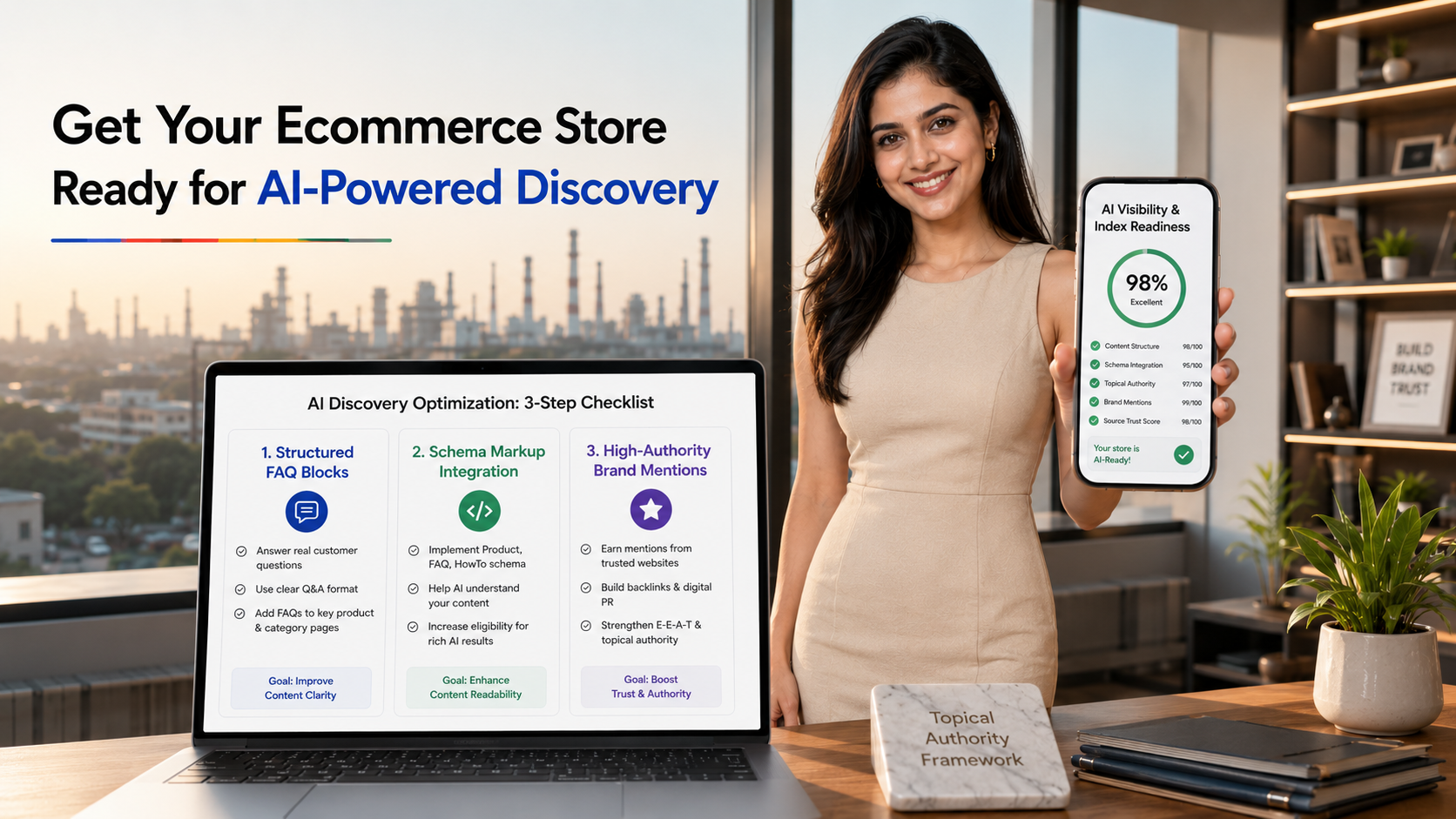
The businesses that succeed in the AI era will be those that adapt early.
Create Content That Answers Real Questions
Focus on solving customer problems rather than simply targeting keywords. Understand the questions your audience asks and provide detailed, practical answers.Businesses working with an experienced AI development company can also build AI-powered search.
Build Topical Authority in Your Niche
Aim to become the most trusted resource within your industry. Publish comprehensive content that demonstrates expertise across related topics.
Invest in Digital PR and Brand Mentions
Earn visibility beyond your own website. Industry publications, interviews, partnerships, reviews, and media coverage help strengthen authority signals.
Strengthen Trust Signals Across Your Website
Clear contact information, transparent policies, verified reviews, author profiles, certifications, and customer testimonials help establish trust.
Use Structured Data and Schema Markup
Schema markup helps search engines and AI systems understand your content, products, reviews, and business information more effectively.
The Future of Ecommerce SEO and Content Marketing
AI search is not replacing SEO; it is expanding it. Businesses will need to optimize for both traditional search engines and AI-powered discovery platforms.
Search Everywhere Optimization
Future marketing strategies will focus on visibility across multiple channels, including search engines, AI assistants, social media platforms, review sites, online communities, and industry publications.
The Shift From Traffic to Influence
In the AI era, success will not be measured solely by website traffic. Brands will increasingly compete for influence, authority, and inclusion in AI-generated recommendations.
Businesses that educate, inform, and build trust will have a significant competitive advantage.
Final Thoughts
Google AI Mode and ChatGPT Search represent a fundamental shift in how consumers discover information and make purchasing decisions. While their approaches differ, both platforms are moving toward a future where users receive faster, more personalized, and more helpful answers.
For ecommerce businesses, the implications are clear. Traditional SEO remains important, but it is no longer enough to focus solely on rankings and traffic. Brands must build authority, create exceptional content, earn trust, and establish a strong presence across the digital ecosystem.
The businesses that thrive in the coming years will not simply be those that rank highest in search results. They will be the brands that AI systems recognize, trust, and recommend when customers are ready to make a decision.
Key Takeaways for Ecommerce Businesses
- AI search is changing how consumers discover products and brands.
- Google AI Mode and ChatGPT Search have different approaches but similar goals: delivering better answers.
- Traditional SEO remains important but must be complemented by authority-building strategies.
- High-quality, expert-driven content is becoming more valuable than keyword-focused content.
- Brand mentions, trust signals, and digital reputation significantly influence AI visibility.
- The future of ecommerce marketing will focus on becoming a trusted source that both customers and AI systems rely on.
FAQs
The primary difference lies in how they deliver information. Google AI Mode combines AI-generated summaries with traditional search results, shopping listings, videos, and website links. ChatGPT Search focuses on providing direct, conversational answers and often helps users complete their research within a single interaction. While Google still emphasizes web discovery, ChatGPT prioritizes answering the user's question as comprehensively as possible.
Potentially, yes. Since users can receive answers directly from AI-generated responses, some informational searches may result in fewer website visits. However, businesses that create authoritative, trustworthy content may benefit from being cited or recommended by AI platforms. The focus is shifting from simply attracting clicks to becoming a trusted source of information
Businesses can improve AI visibility by creating high-quality content, building topical authority, earning mentions from reputable websites, collecting genuine customer reviews, implementing structured data (schema markup), and strengthening their overall online reputation. AI systems are more likely to recommend brands that demonstrate expertise, authority, and trustworthiness.
Absolutely. Traditional SEO remains the foundation of online visibility. Factors such as technical SEO, website performance, content quality, internal linking, and backlinks still play a significant role. However, businesses should expand their focus beyond rankings and optimize for AI-driven discovery by creating comprehensive, expert-led content that answers real user questions.
The most successful ecommerce brands will combine all three. SEO helps search engines understand and rank your website, content marketing builds authority and trust, and AI optimization increases the likelihood of being cited or recommended by AI platforms. Rather than choosing one approach, businesses should focus on creating valuable content that serves users across traditional search engines and AI-powered search experiences.
You can manually test relevant industry queries and see whether your brand is mentioned in AI-generated responses. Businesses can also monitor branded searches, referral traffic, online mentions, media coverage, and third-party citations. As AI search continues to evolve, dedicated AI visibility and AI brand monitoring tools are also emerging to help businesses track their presence across AI platforms.