How to Build a Website to Sell Clothing Online
1. Overview
The global fashion ecommerce market is worth hundreds of billions of dollars, and it continues to grow year on year. Consumers today prefer the convenience of browsing and buying clothing online, which means the opportunity for fashion entrepreneurs, boutique owners, and D2C brands has never been more accessible. But opportunity alone is not enough. Building a website to sell clothing online requires a disciplined, strategic approach to branding, product presentation, customer experience, and operations.
This is not a guide about simply setting up a store. It is a guide about taking your business online. Understanding how to start an online clothing store the right way means making informed decisions before you write a single product description or select a theme color. Every detail on your website, from the way a product image is lit to the clarity of your size guide, communicates something to a potential buyer. Done well, it builds trust and drives conversion. Done poorly, it costs you sales.
Before you launch, think carefully about the following:
- Branding: What does your label stand for? What emotions should it evoke? Your brand identity is the foundation every other decision rests on.
- Product presentation: Clothing is a tactile product being sold on a visual medium. Your images, videos, and descriptions are the only substitute for the in-store experience.
- Pricing: Your pricing must reflect your brand positioning, your cost of goods, and what your target customer is willing to pay. Guessing here is expensive.
- Sizing and fit: The single biggest driver of returns in fashion ecommerce is incorrect sizing. A robust size guide and clear fit information are non-negotiable.
- Customer experience: From discovery to delivery, every touchpoint matters. Customers expect a seamless, fast, and transparent experience.
- Operations: Inventory management, order fulfilment, returns handling, and logistics must be planned before the first order arrives, not after.
This guide will walk you through every stage of building and scaling your online clothing business, from market research and catalogue preparation to platform selection, marketing, and growth.
2. Identify Your Market
Fashion is one of the most segmented retail categories in existence. Before you can build anything, you need to decide precisely where in the market you intend to compete. Attempting to serve everyone serves no one.
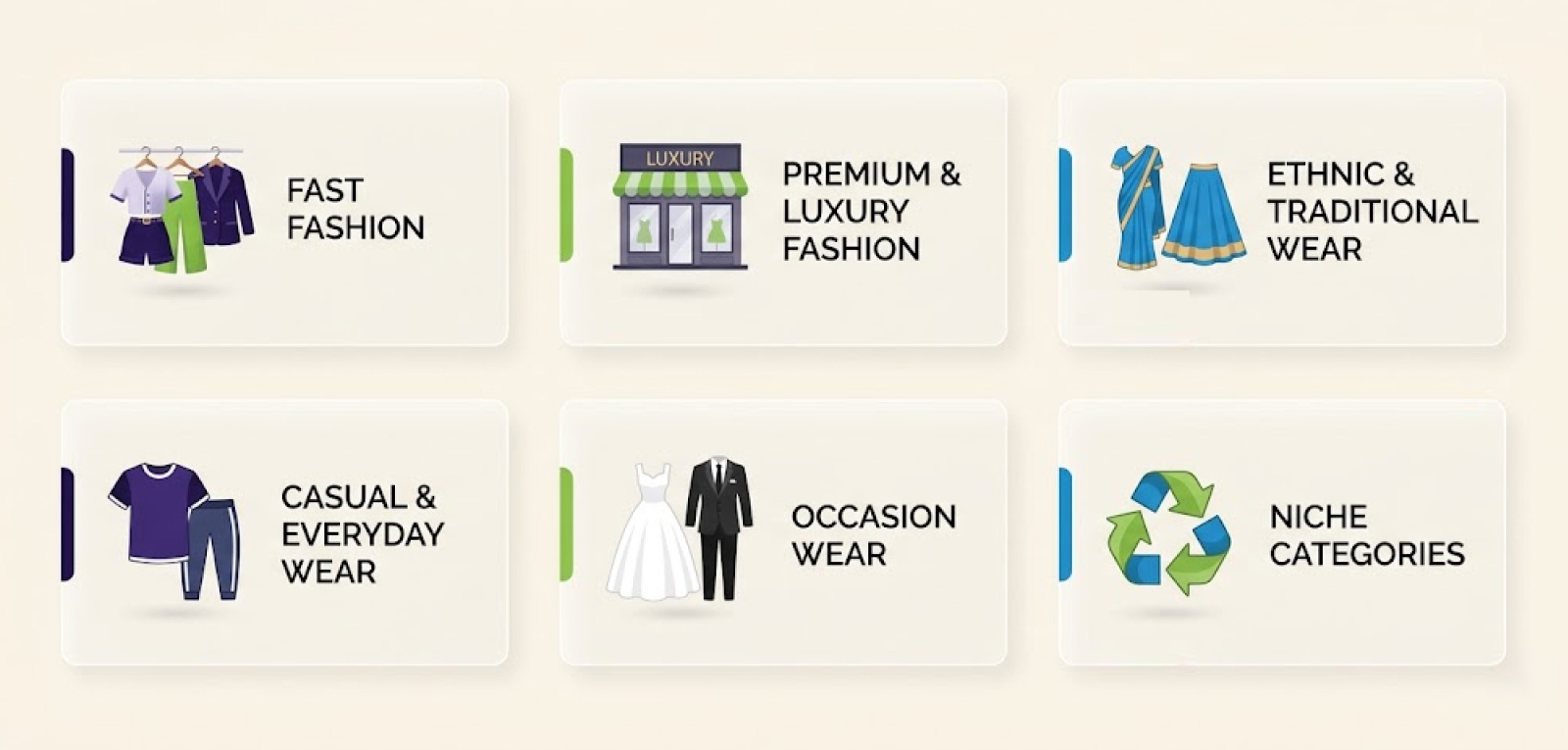
The fashion market broadly breaks down into the following segments:
Fast Fashion
High volume, low price, trend-driven. The advantage is demand; the disadvantage is intense competition from large incumbents. Success here depends on speed, sourcing efficiency, and marketing at scale. Margins are thin.
Premium and Luxury Fashion
Lower volume, higher price, brand-driven. Customers in this segment are buying into an identity as much as a garment. Quality, storytelling, and an immaculate brand presentation are critical.
Ethnic and Traditional Wear
A growing category online, particularly in South Asia and among diaspora communities globally. There is strong demand and relatively lower digital competition compared to western casualwear. Occasion-specific buying patterns apply.
Casual and Everyday Wear
The largest category by transaction volume. Basics, loungewear, co-ords, and athleisure fall here. Customers are practical and value-driven. Fit, fabric comfort, and durability are key decision factors.
Occasion Wear
Wedding, festive, formal, and party wear. These purchases are emotionally significant and price-sensitive in different ways than everyday items. Customers research extensively before buying.
Niche Categories
Sustainable fashion, adaptive clothing for people with disabilities, extended size ranges, workwear, maternity wear, and gender-neutral clothing are all growing niches with underserved audiences. Niche positioning allows a new brand to compete without fighting large incumbents on their own ground.
Choose your segment based on your sourcing capabilities, investment level, target demographic, and long-term brand vision. Knowing your market also means knowing your customer: their age range, income bracket, purchase triggers, preferred platforms, and how they make buying decisions.
3. Identify the Gap in the Market
Every successful online clothing brand enters the market with a point of difference. Finding that point requires honest, detailed competitor analysis combined with an understanding of unmet customer needs.
Analyse Your Competitors
Select five to ten direct competitors operating in your chosen segment. Study their websites carefully. Note their product range, pricing, photography style, size offerings, brand tone, return policy, and customer reviews. Read the reviews closely, particularly the negative ones. They reveal exactly what customers are not getting.
Look at how they handle:
- Product photography and video
- Size and fit guidance
- Product descriptions and fabric information
- Customer service and return process
- Mobile experience
- Delivery times and transparency
Common Gaps to Look For
Based on analysis of the fashion ecommerce landscape, the following gaps appear repeatedly:
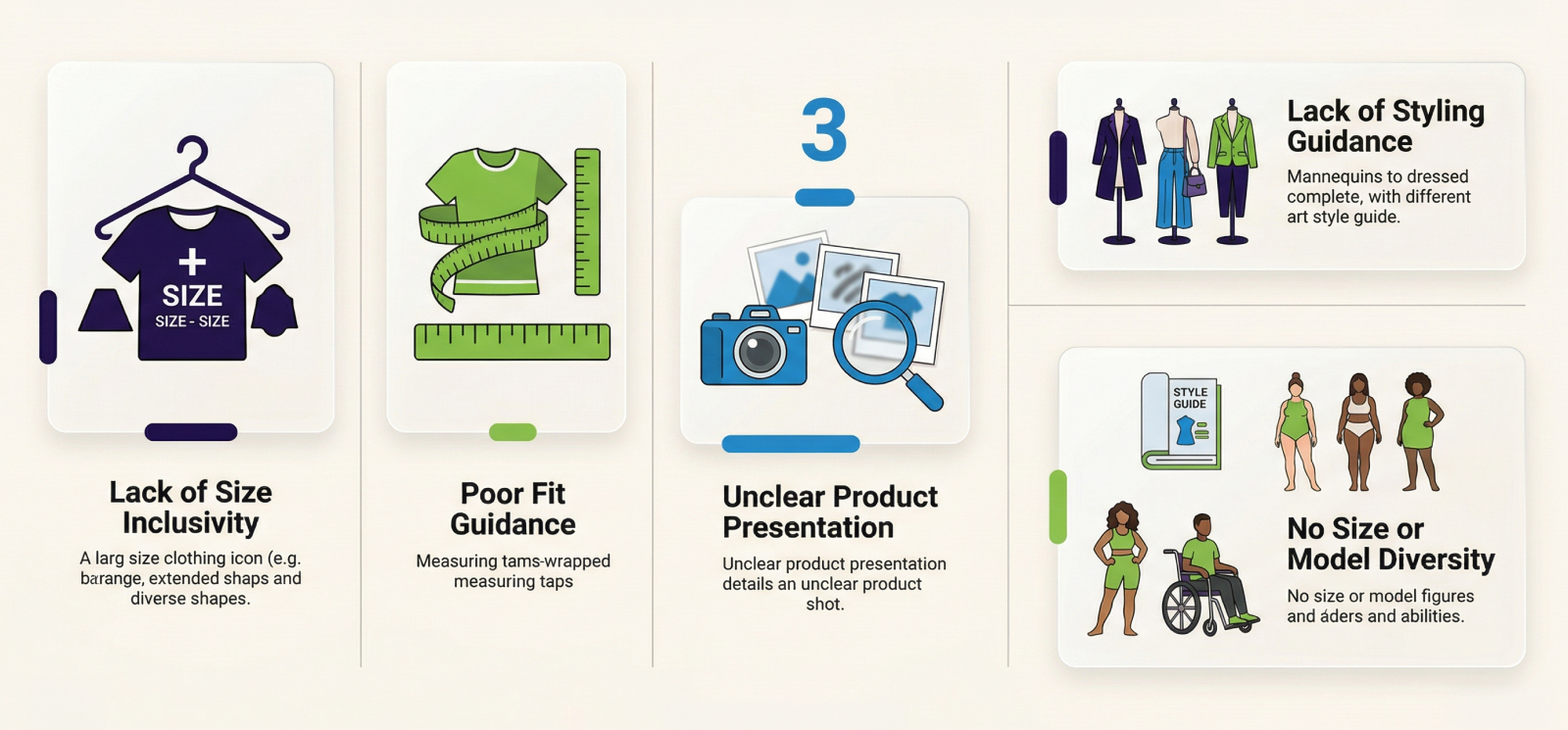
- Lack of size inclusivity: Many brands stock only S to XL. Customers in sizes beyond this standard range have fewer options, yet represent a large and underserved audience.
- Poor fit guidance: Brands list measurements but do not explain how a garment is cut, whether it runs large or small, or how to choose between sizes. This directly causes returns.
- Unclear product presentation: Images taken in poor lighting, against cluttered backgrounds, or in a single angle fail to communicate the product accurately. Customers cannot make confident buying decisions.
- Lack of styling guidance: Customers want to know how to wear a product, what to pair it with, and how it looks in real-life contexts. Brands that provide this content convert better and attract organic traffic.
- No size or model diversity: Showing a garment on only one body type limits a customer's ability to visualize how it will look on them.
Filling the Gap Strategically
Once you identify a gap, build it into the architecture of your brand and website from day one. If fit guidance is the gap, build a detailed size guide system and include model measurements on every product page. If size inclusivity is the gap, expand your range and make extended sizes as visible and well-photographed as standard sizes. Your competitive advantage should be visible in your product pages, not just in your brand story.
4. Select Your Products and Prepare Your Catalogue
Choosing Your Initial Product Range
New online clothing store frequently make the mistake of launching with too many SKUs. A focused catalogue of 20 to 40 well-selected, beautifully presented products will outperform a sprawling range of 200 products with inconsistent photography and thin descriptions. Depth beats breadth at the start.
Select products that align tightly with your brand positioning, are available reliably from your supplier, and can be presented compellingly online. Avoid products with excessive fit complexity until you have built customer trust and a robust returns process.
Required Product Data
For each product in your catalogue, you must gather and record the following information with precision:
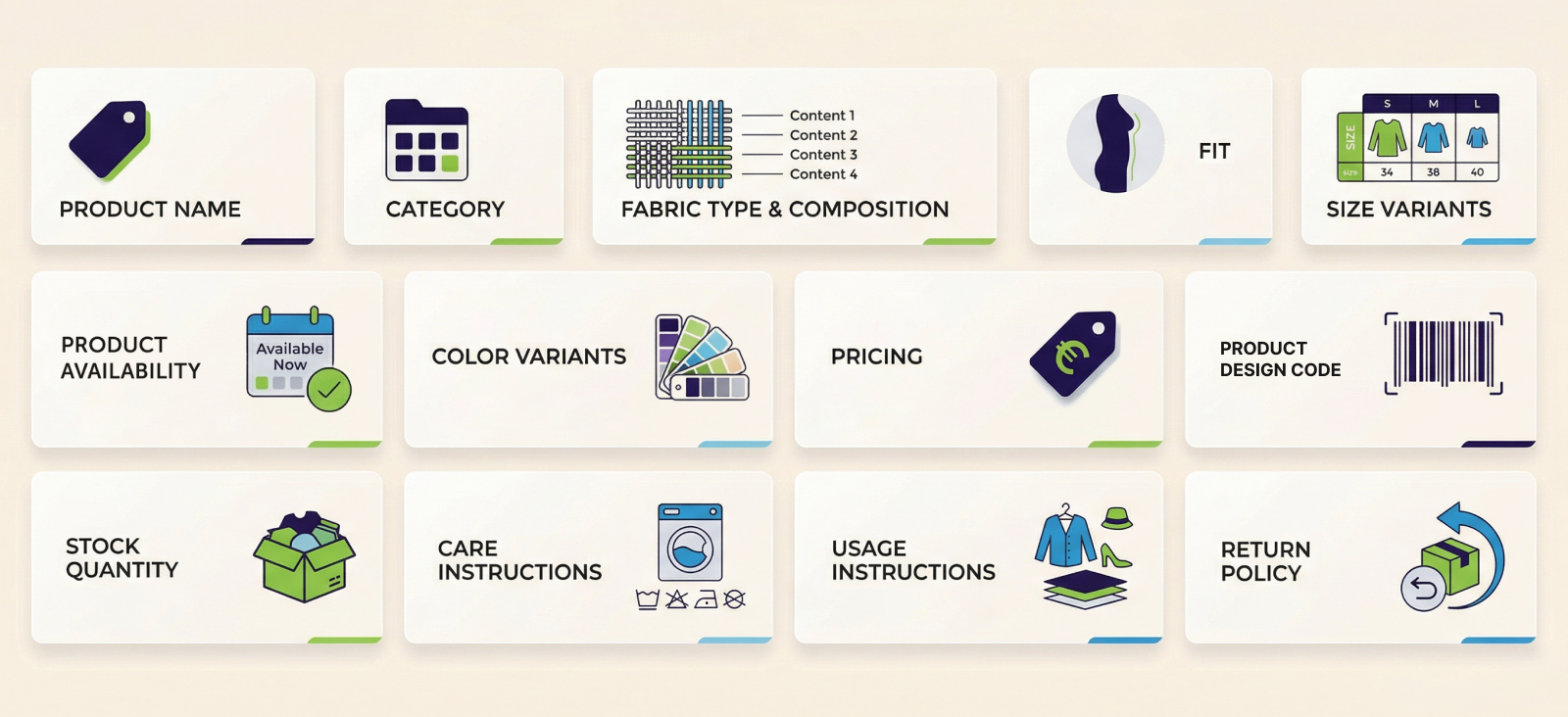
- Product Name: Clear, descriptive, and consistent in naming convention across your range.
- Category: Tops, bottoms, dresses, outerwear, etc. Your platform's navigation depends on accurate categorization.
- Fabric Type and Composition: Exact fabric content (e.g., 60% cotton, 40% polyester). This affects care instructions, fit expectation, and customer confidence.
- Fit: Regular, slim, relaxed, oversized, tailored. Be specific.
- Size Variants: XS, S, M, L, XL, XXL, or numeric sizing. Each size should have its own SKU, pricing if applicable, and stock quantity.
- Color Variants: Each color should be treated as a linked variant, not a separate product. Customers should be able to switch between colors on the same product page.
- Pricing: MRP, sale price if applicable, and GST-inclusive pricing for Indian markets.
- SKU: A unique stock keeping unit code for each size-color combination. This is essential for inventory accuracy.
- Stock Quantity: Available inventory per variant. Never guess; inaccurate stock data causes overselling.
- Care Instructions: Machine wash, hand wash, dry clean only, do not tumble dry, etc. Mandatory from a regulatory standpoint and critical for customer satisfaction.
- Usage Instructions: Occasions and styling guidance relevant to the product.
- Return Policy: Clearly state eligibility, timeframe, and process at the product level as well as in your general policy pages.
Gathering this data upfront, before you begin uploading to your platform, will save significant time and prevent inconsistencies that undermine your brand's credibility.
5. Hi-Resolution Images and Videos
In online clothing retail, your visual content is your product. A customer cannot touch the fabric, check the stitching, or try on the garment. Your images and videos must do all of that work for them. Investing in professional visual content is not optional; it is one of the highest-return investments you will make in your business.
Photography Requirements
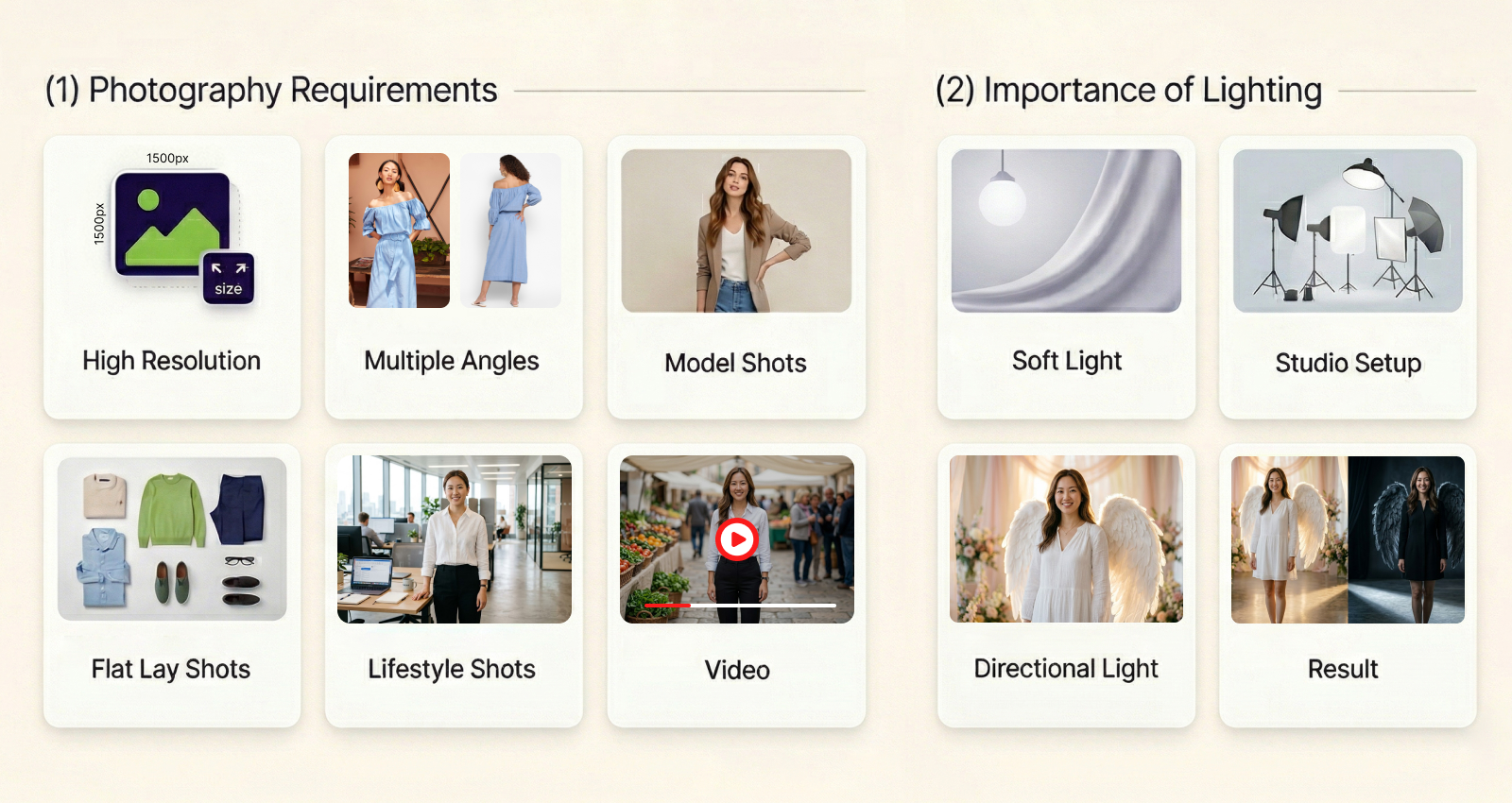
- High resolution: All product images should be a minimum of 1500 x 1500 pixels. Zoom functionality on product pages depends on image resolution.
- Multiple angles: Front, back, side, and any detail shots (fabric texture, stitching, print closeup, care label). Customers want to see the full product.
- Model shots: Show the garment on a model of a size representative of your target customer. Include the model's height and size worn in the product description.
- Flat lay shots: Useful for showing pattern, print, and cut clearly, and for social media content.
- Lifestyle shots: Contextual images showing the garment being worn in a real-world setting create aspiration and help customers visualize the product in their own lives.
- Video: A short 10 to 20 second video showing the garment in motion, ideally on a model, dramatically increases conversion rates and reduces returns. It communicates drape, movement, and fit in ways static photography cannot.
The Critical Importance of Lighting
Lighting is the single most important technical variable in fashion photography. Poor lighting distorts product colors, flattens texture, creates unflattering shadows, and misrepresents the garment entirely. When a customer receives a product that looks different in color from the website image, due to poor lighting during the shoot, they return it. That return costs you the shipping, the reverse logistics, and potentially the customer.
Shoot in diffused natural light or use professional studio lighting with softboxes. Avoid direct overhead lighting, harsh flash, and mixed light sources. Always photograph the same product under consistent lighting conditions across all angles. Calibrate your monitor before editing images to ensure color accuracy.
Before publishing any image, review it on both a desktop monitor and a mobile screen. Colors can render differently across devices, and your product page images must look accurate on both.
6. Prepare Your Content
Your website content goes far beyond product descriptions. Every piece of text on your site, from your About page to your return policy, contributes to the customer's trust in your brand. Prepare all content before you begin building your website.
Brand-Level Content
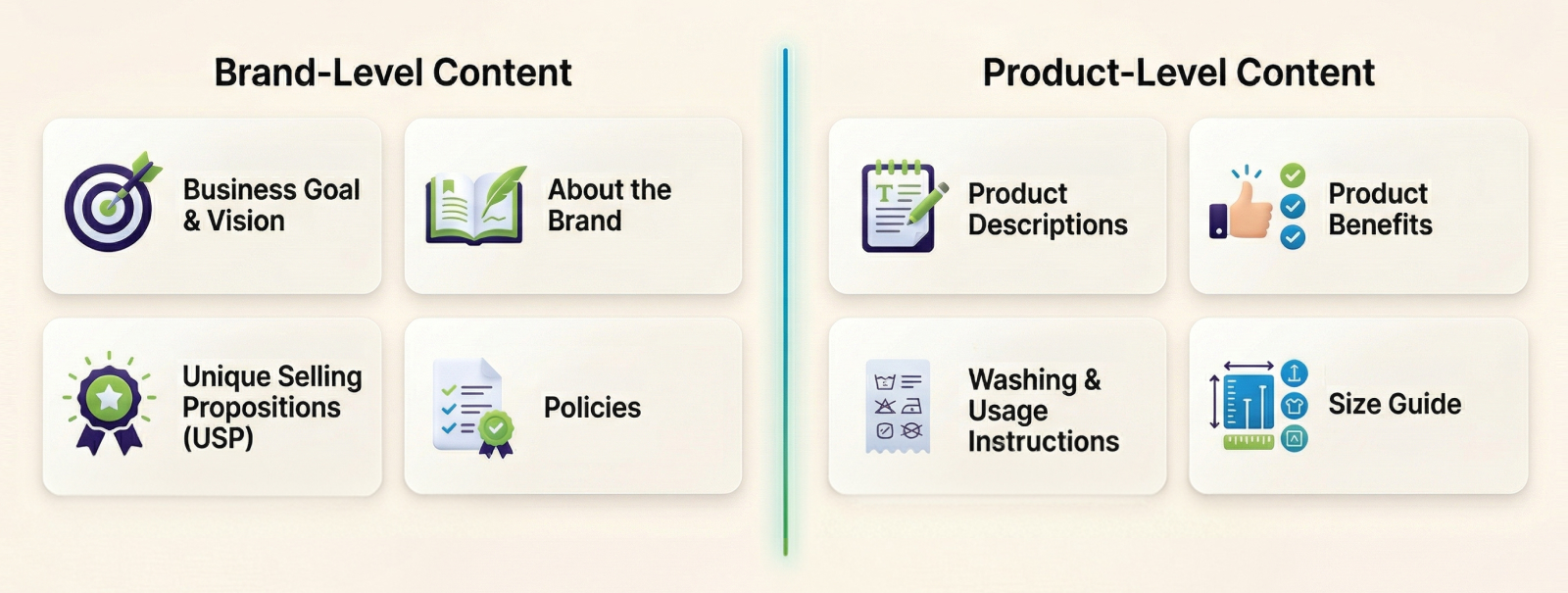
- Business goal and vision: Clearly articulate what your brand is trying to achieve and where it is headed. This forms the basis of all brand communication.
- About the brand: A genuine, well-written brand story that explains who you are, why you started, and what you stand for. Customers buy from brands they connect with.
- Unique selling propositions (USPs): What makes you different? Extended sizing? Sustainable sourcing? Fit-first design? Make these visible and specific.
- Policies: Shipping policy, return and exchange policy, and privacy policy. These must be clear, comprehensive, and accessible from every page of your site.
Product-Level Content
- Product descriptions: Write descriptions that go beyond repeating the product name and color. Describe how it fits, how the fabric feels, what occasion it suits, and how to style it. Be specific and sensory.
- Washing and usage instructions: Publish clear, accurate care instructions for every product. This reduces damage during customer care and subsequent return requests.
- Size guide: Provide a detailed, measurement-based size guide. For each size, list the chest, waist, hip, and length measurements in both inches and centimetres. Specify whether your sizing runs true, large, or small.
Well-prepared content means your website is ready to go live correctly the first time, rather than being published with placeholder text and incomplete policies that damage first impressions.
7. Register Your Brand
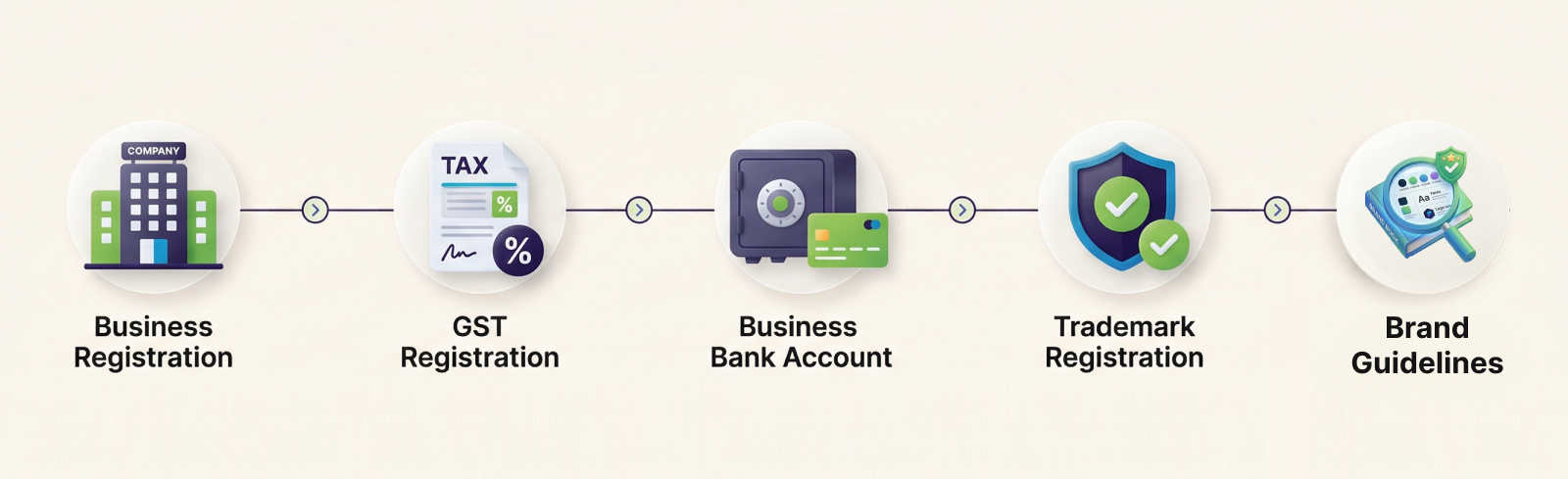
Whether you are launching a completely new clothing label or taking an existing offline business online, formalizing your brand identity and business registration is a foundational step that protects your work and enables you to operate professionally.
New vs. Existing Brand
If you are starting fresh, register your brand entity first. In India, this typically means registering as a sole proprietorship, partnership, LLP, or private limited company depending on your scale and future plans. Obtain a GST registration, open a dedicated business bank account, and apply for trademark registration of your brand name and logo.
If you are taking an existing brand online, review your current registration structure to ensure it covers ecommerce operations. Update your GST filings to include online sales.
Develop Your Brand Guidelines
Brand guidelines are the document that ensures your visual and verbal identity stays consistent across every channel, from your website to your packaging to your social media.
- Color palette: Define your primary and secondary brand colors with exact hex codes (for digital) and Pantone references (for print and packaging).
- Typography: Select one to two fonts for headlines and body text respectively. Specify sizes and weights for different applications.
- Tone of voice: Describe how your brand sounds in words. Professional and aspirational? Warm and conversational? Bold and irreverent? Your tone should be consistent across all written content.
- Visual identity: Logo variations, clear space rules, and approved usage across different backgrounds.
- Do's and don'ts: Explicit guidelines on what is never acceptable, such as distorting the logo, using unapproved color combinations, or using low-resolution assets.
Brand guidelines are not only for agencies and designers. They are a reference document for anyone who creates content for your brand, including you, and they are instrumental in maintaining the visual consistency that builds brand recognition over time.
8. Choose the Right Ecommerce Platform
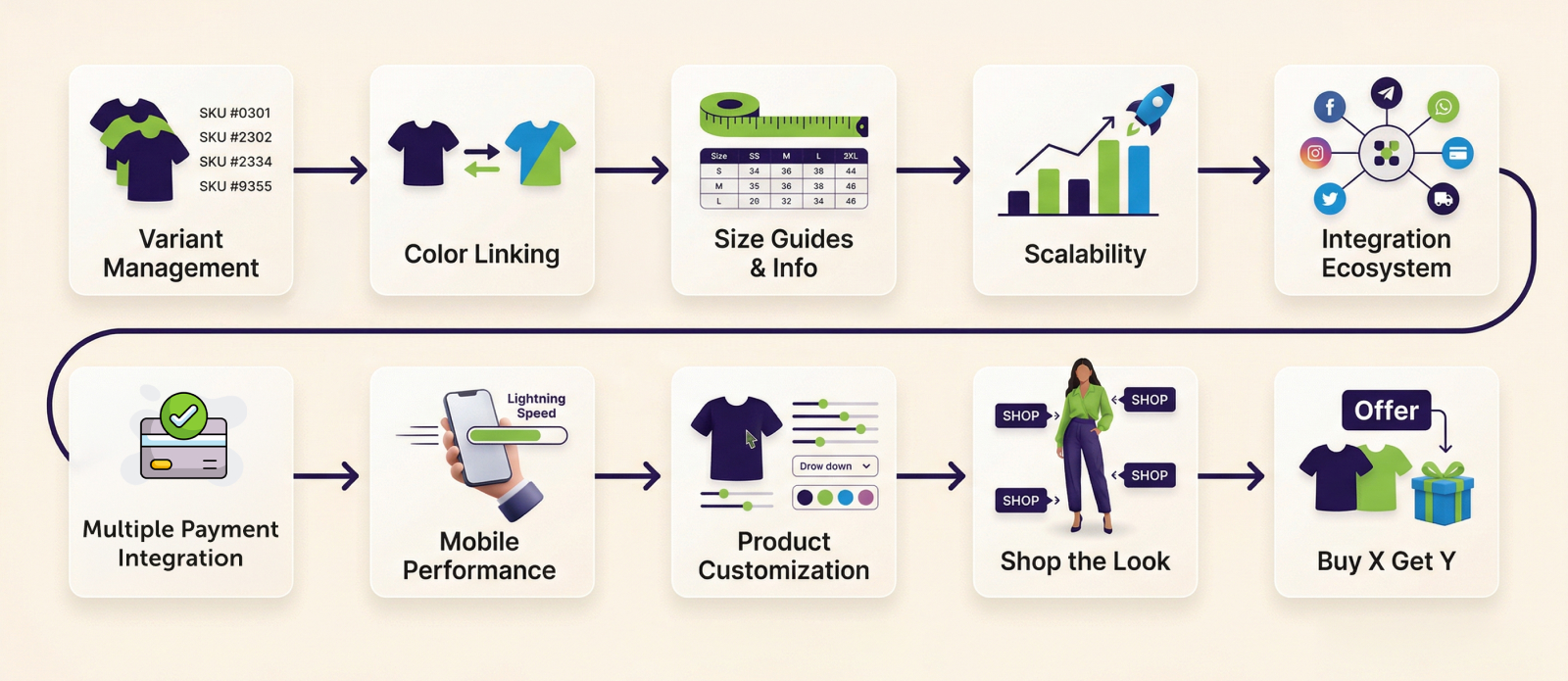
Platform selection is one of the most consequential decisions you will make. The platform you build on determines what you can and cannot do operationally, how easily you can scale, and what your customer experience looks like. Choosing the wrong platform early creates significant friction and cost when you eventually need to migrate.
What to Look for in a Fashion Ecommerce Platform
- Variant management: Fashion products are inherently complex. A single t-shirt may come in 5 colors and 6 sizes, creating 30 SKUs. Your platform must handle this gracefully, with individual stock, pricing, and SKU management per size-color combination.
- Color linking: Products that come in multiple colors should be connected seamlessly. A customer should be able to switch between color variants on the same product page without losing their place.
- Size guides and informational content: The platform must allow you to attach size guides, care information, and fit notes directly within product pages.
- Scalability: Your platform should handle a catalogue of 50 products as efficiently as it handles 5,000. It should also support traffic spikes during sale events without performance degradation.
- Integration ecosystem: Shipping, payment gateway, analytics, and marketing tool integrations must be available and reliable.
- Mobile performance: A majority of fashion purchases are made on mobile. Your platform's frontend performance on mobile devices is a direct driver of conversion.
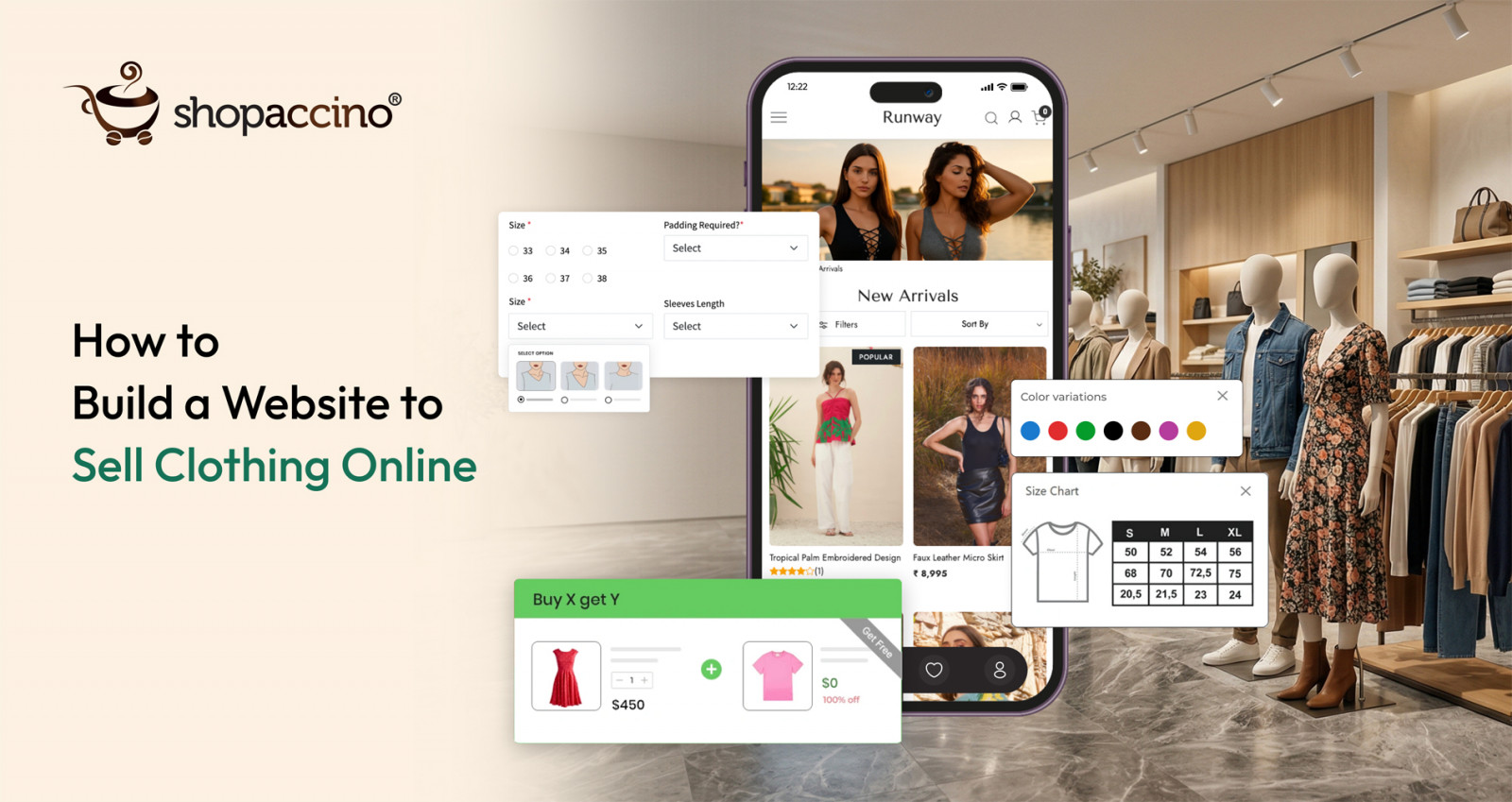
- Advanced Product Customization: For clothing brands that offer made-to-measure, customization, or stitching services, a product options customizer is essential. Platforms like Shopaccino offer apps such as a Product Option Customiser that allows you to build conditional logic into your product pages. For example, you can show stitching options (like blouse stitching for sarees) only when relevant, orcustom measurement fields conditionally display based on the selected product type. This level of advanced customization, handled through a native app rather than complex workarounds, simplifies operations significantly for fashion brands.
- Shop the Look
Fashion customers rarely buy a single item in isolation — they buy an outfit. A platform that supports "Shop the Look" functionality allows you to group complementary products into a styled ensemble and present them together on a single page or within a product image. Customers can then add multiple items to their cart directly from that look, increasing average order value and reducing the effort required to complete a full outfit. For clothing brands with a strong styling identity, this feature is not a nice-to-have; it is a direct revenue lever - Buy X Get Y
Promotional mechanics are central to how fashion ecommerce drives volume, clears seasonal inventory, and rewards loyal customers. A platform that natively supports Buy X Get Y offers — such as buy two tops, get one free, or buy any kurta and get a dupatta at no extra cost — gives you a powerful tool to increase basket size without simply discounting. The key advantage of a native implementation over manual coupon workarounds is that the offer applies automatically at checkout, creating a seamless experience for the customer and reducing the operational overhead of managing promotions manually.
When evaluating platforms, look specifically for support of clear size variant management with individual SKU, pricing, stock, and weight per variant, seamless color variant linking on a single product page, and the ability to add custom product options for brands that offer personalization. Shopaccino is built with these requirements in mind and is well-suited for fashion brands looking for a platform that understands the complexity of apparel retail.
9. Choose Your Design and Theme
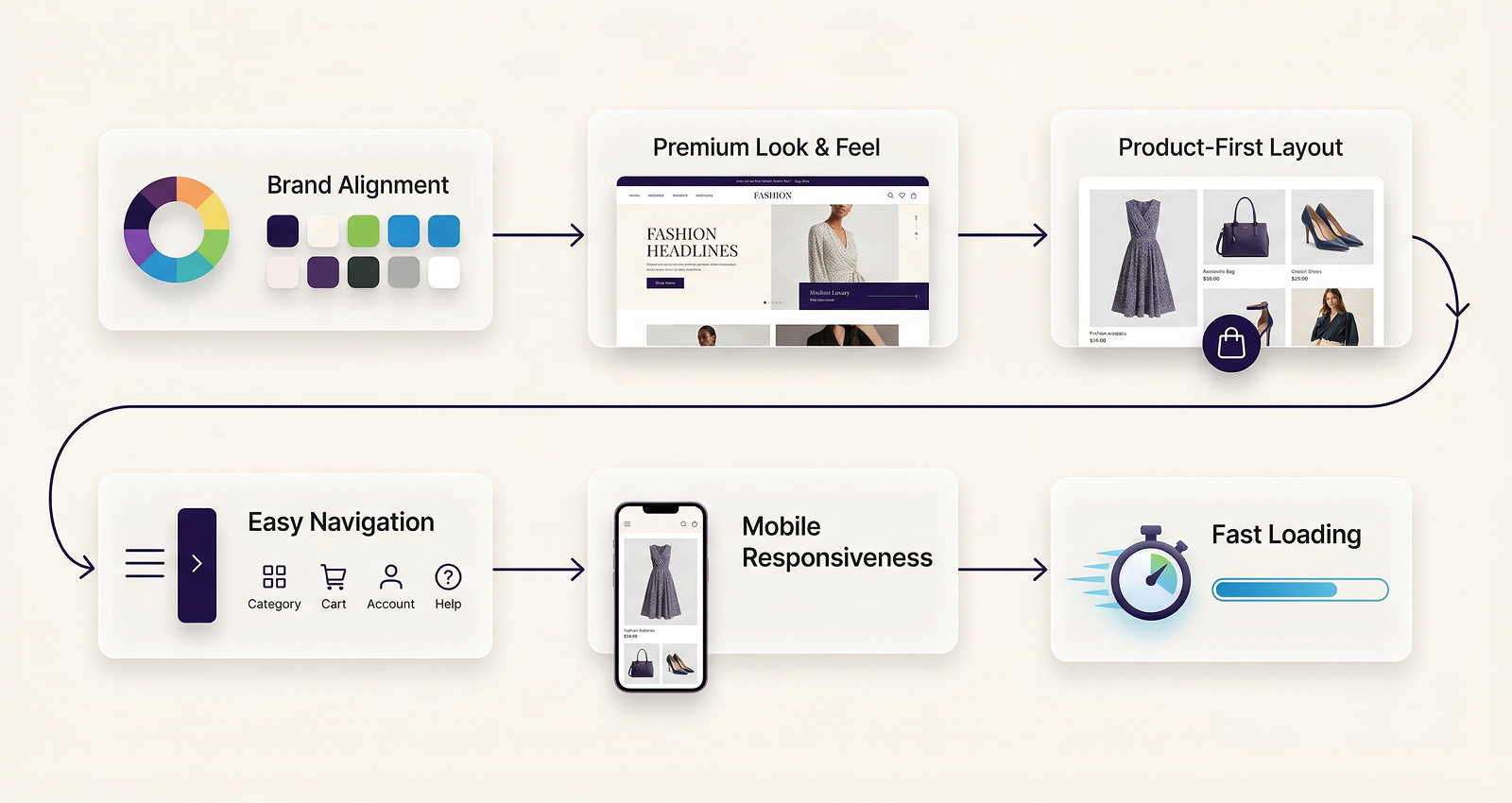
Design Principles for Fashion Ecommerce
- Brand alignment: Every design choice, color, font, spacing, button style, must be consistent with your brand guidelines. A mismatch between your brand identity document and your actual website undermines credibility.
- Premium look and feel: White space is not wasted space. Clean, uncluttered layouts with generous product imagery create a premium feel regardless of your price point.
- Product-first layout: Your product images are your hero content. The design should frame and elevate them, not compete with them for attention.
- Easy navigation: Customers must be able to find what they are looking for within two or three clicks. Logical category architecture, a powerful search function, and visible filters are all essential.
- Mobile responsiveness: Every element of your design must work flawlessly on a smartphone screen. Test on multiple devices and screen sizes before going live.
- Fast loading: Slow websites lose customers. Optimize every image and choose a platform and hosting configuration that prioritizes speed.
If your platform offers pre-built themes, select one designed for fashion retail rather than adapting a generic template. A fashion-specific theme will handle product galleries, color swatches, size selectors, and lookbook sections correctly out of the box.
10. Upload Your Content
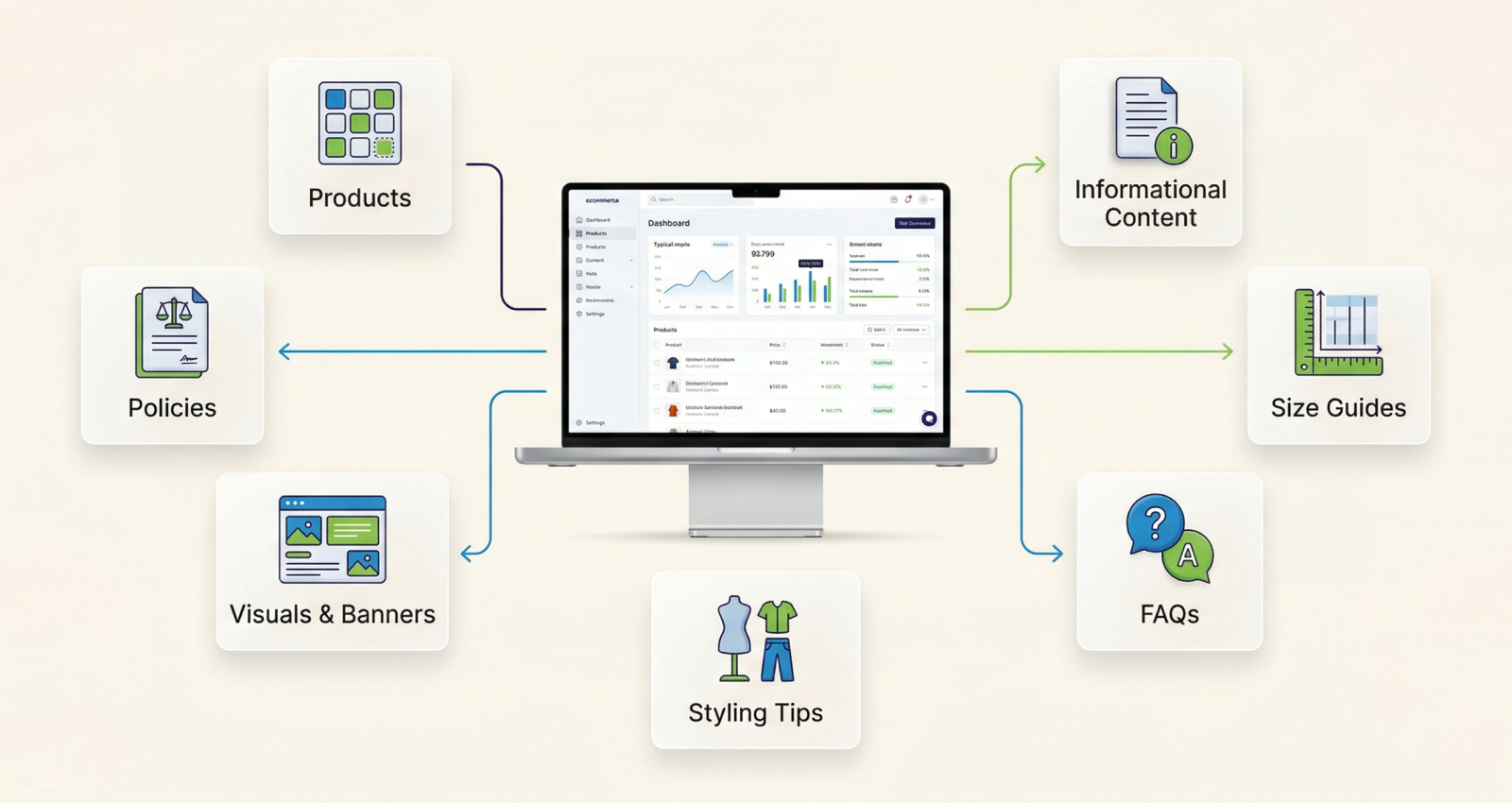
With your products catalogued, content prepared, images ready, and platform selected, you are ready to build the actual pages of your store. Approach this methodically to ensure consistency and completeness.
Products
Upload each product with all required data: name, description, fabric, fit, pricing, size variants with individual SKU and stock, color variants linked correctly, images in the required order, and all supplementary information. Double-check every variant to confirm stock levels and pricing are accurate before going live.
Informational Content
- Size guides: Create a comprehensive size guide page and link it from every relevant product page. Offer both alpha sizing (XS, S, M) and numerical measurements.
- FAQs: Address the most common questions your customers will have: delivery timeframes, return eligibility, sizing questions, fabric care, and payment options. A well-built FAQ page reduces support queries.
- Styling tips: A styling guide or lookbook section adds editorial value to your site, improves time-on-site metrics, and supports SEO. It also helps customers envision wearing your products.
Visuals and Banners
Homepage banners, category banners, and promotional graphics should be brand-aligned, high quality, and designed with mobile viewing in mind. Text overlaid on images must be readable on small screens. Avoid cluttered banner designs; a single strong image with a clear message converts better than a busy collage.
Policies
Your shipping policy, return and exchange policy, and privacy policy must each have their own dedicated page. These pages must be linked clearly in your footer and at the checkout stage. Customers who cannot find your return policy before purchasing will abandon the checkout.
11. Manage Your Store, Shipping, and Payments
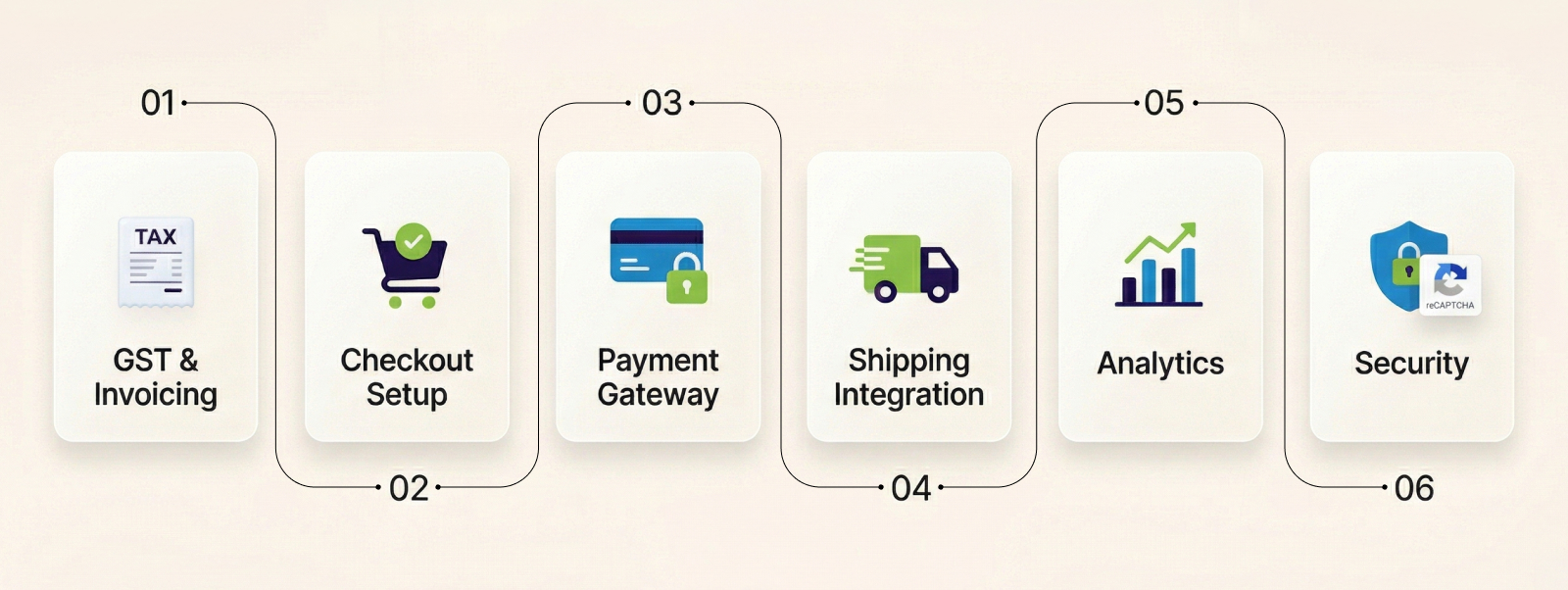
A well-built store that is operationally unprepared will fail at the point of fulfilment. Before you go live, every operational component must be configured and tested.
GST and Invoicing
Configure your tax settings to automatically calculate and apply GST on all applicable transactions. Your platform should generate GST-compliant invoices automatically for every order. Verify this before you process your first sale.
Checkout Setup
Your checkout flow should be as short as possible. Every additional step is a drop-off point. Enable guest checkout to reduce friction for first-time buyers. Autofill address fields wherever supported. Display your return policy and delivery estimate prominently at checkout.
Payment Gateway
Integrate a reliable payment gateway that supports UPI, cards, net banking, wallets, and EMI options for your target market. In India, gateways such as Razorpay, Cashfree, and PayU are widely used. Test every payment method end-to-end before going live.
Shipping Integration
Integrate with one or more shipping aggregators to automate label generation, tracking, and delivery management. Choose a partner with strong coverage in your target delivery zones and a track record for timely fulfilment. Set clear delivery estimates on your product and checkout pages and stick to them.
Analytics and Security
- Google Analytics: Install and configure Google Analytics from day one. Understanding where your traffic comes from, how customers navigate your site, and where they drop off is fundamental to improving your business.
- reCAPTCHA: Protect your checkout and account creation forms from bot activity. Fraudulent orders and fake account creation are common threats for new ecommerce stores and can be mitigated with basic security tools from the outset.
12. Marketing Your Online Clothing Store
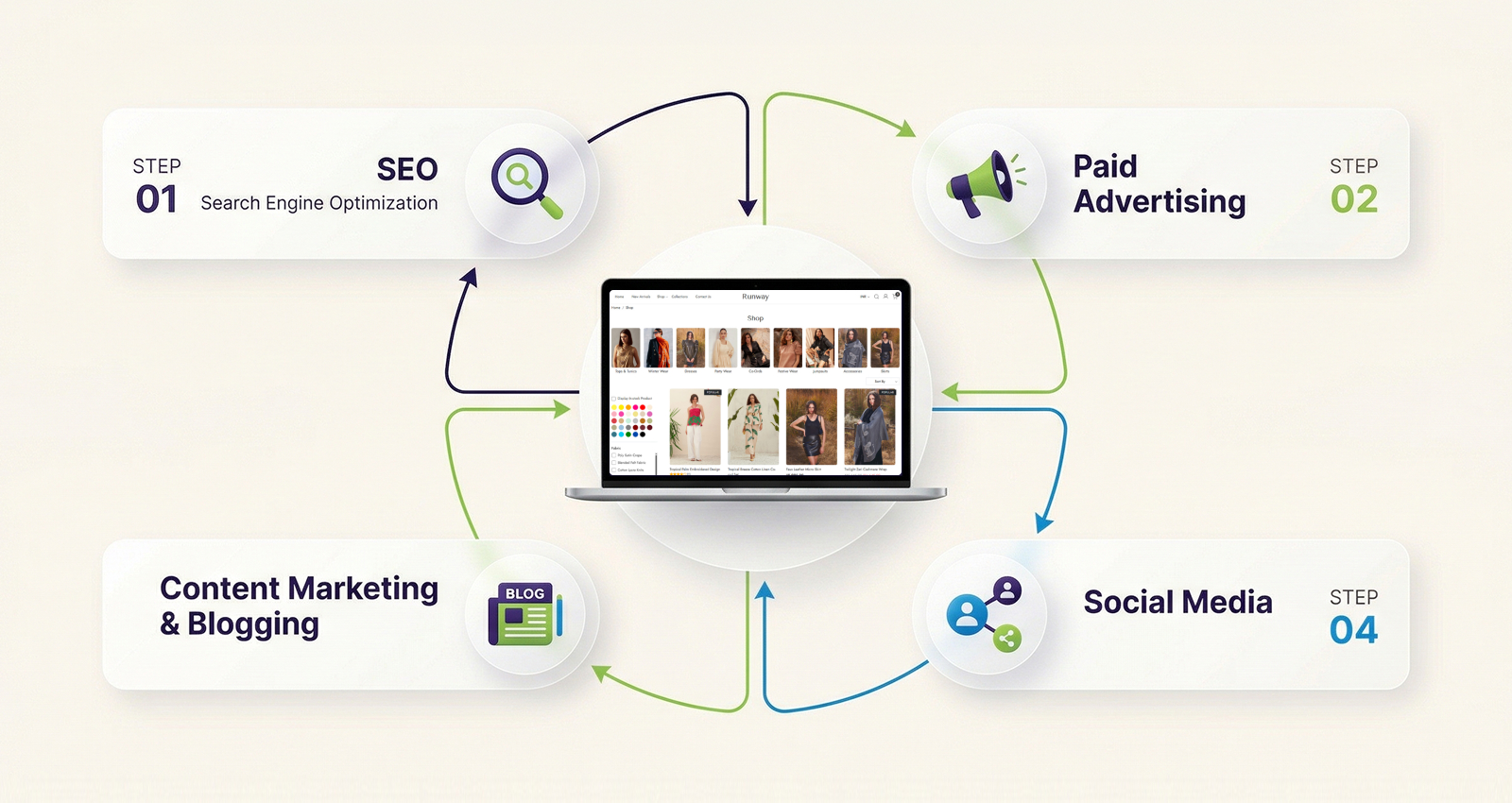
A store without traffic is a store without revenue. Understanding how to start an online clothing store is only part of the equation; understanding how to market it is equally important. A multi-channel marketing strategy is essential from launch.
Search Engine Optimization (SEO)
SEO is the foundation of sustainable organic traffic. Anyone who has searched for how to start online clothing business or how to open online clothing store knows that search engines are often the first place people turn for guidance. Your customers are searching too, for specific products, styles, occasions, and brands. You want to be visible when they do.
Optimize every product page with a unique, keyword-rich title tag and meta description. Write product descriptions with natural language that incorporates search terms your customers use. Build dedicated category pages with editorial introductions. Create a blog that answers real fashion and styling questions. Page speed, mobile optimization, and structured data markup all contribute to organic ranking.
Paid Advertising
Google Shopping campaigns and Meta (Instagram and Facebook) advertising are the two most effective paid channels for fashion ecommerce. Google Shopping puts your products in front of customers actively searching to buy. Meta advertising allows you to reach highly targeted audiences based on demographics, interests, and behavior.
Begin with a modest budget and test before scaling. A single well-performing creative and a well-structured campaign will outperform a large spend on untested ads. Retargeting campaigns, targeting customers who have already visited your site, are typically among your highest-return campaigns.
Content Marketing and Blogging
A blog is one of the most underutilized assets in fashion ecommerce. Questions like how do I start an online clothing business, how to style a kurta for a semi-formal occasion, or what fabrics suit Indian summers all attract real search traffic. Writing genuinely useful, well-optimized content positions your brand as an authority and drives organic visitors who may convert to customers. Each blog post is a long-term asset that continues to generate traffic without ongoing spend.
Social Media
Instagram and Pinterest are the primary visual discovery platforms for fashion. Build a consistent posting schedule with a mix of product photography, styling content, behind-the-scenes content, and customer features. Engage with your audience authentically. Influencer collaborations, particularly with micro-influencers whose audiences closely match your customer profile, can drive both awareness and conversions efficiently.
13. Order Fulfilment
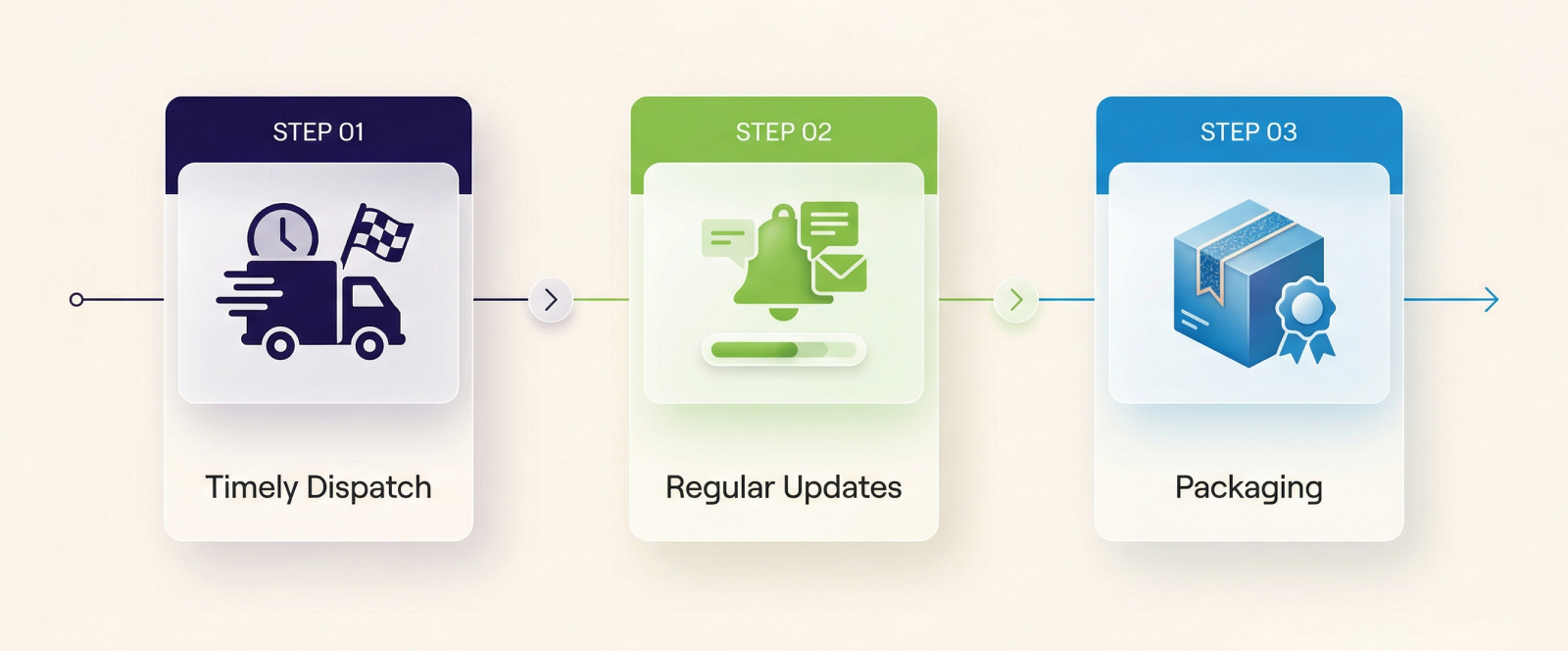
Your brand's reputation is built or destroyed in the fulfilment stage. A customer who has an excellent browsing and buying experience but receives their order late, in damaged packaging, or without communication, will not return and is likely to leave a negative review.
Timely Dispatch
Commit to a dispatch window and meet it consistently. If you state a one to two business day dispatch time, then every order must leave your facility within that window. Build your dispatch process and staffing around this commitment, not around your best-case scenario.
Regular Updates
Automated order confirmation, dispatch notification, and delivery tracking updates are minimum expectations for online shoppers. Customers should never have to contact you to find out where their order is. Configure these automations before going live.
Packaging
Your packaging is the physical embodiment of your brand at the moment of delivery. Invest in packaging that is protective, brand-consistent, and thoughtful. A branded poly bag, tissue paper, and a simple thank-you card costs very little but significantly elevates the unboxing experience and increases the likelihood of a repeat purchase and a social share.
Returns handling must be equally well-organized. A smooth, hassle-free return process is a competitive advantage in fashion ecommerce, where return rates are inherently higher than other categories. Make the process clear, easy, and prompt in terms of refund or exchange processing.
14. Scale Your Online Business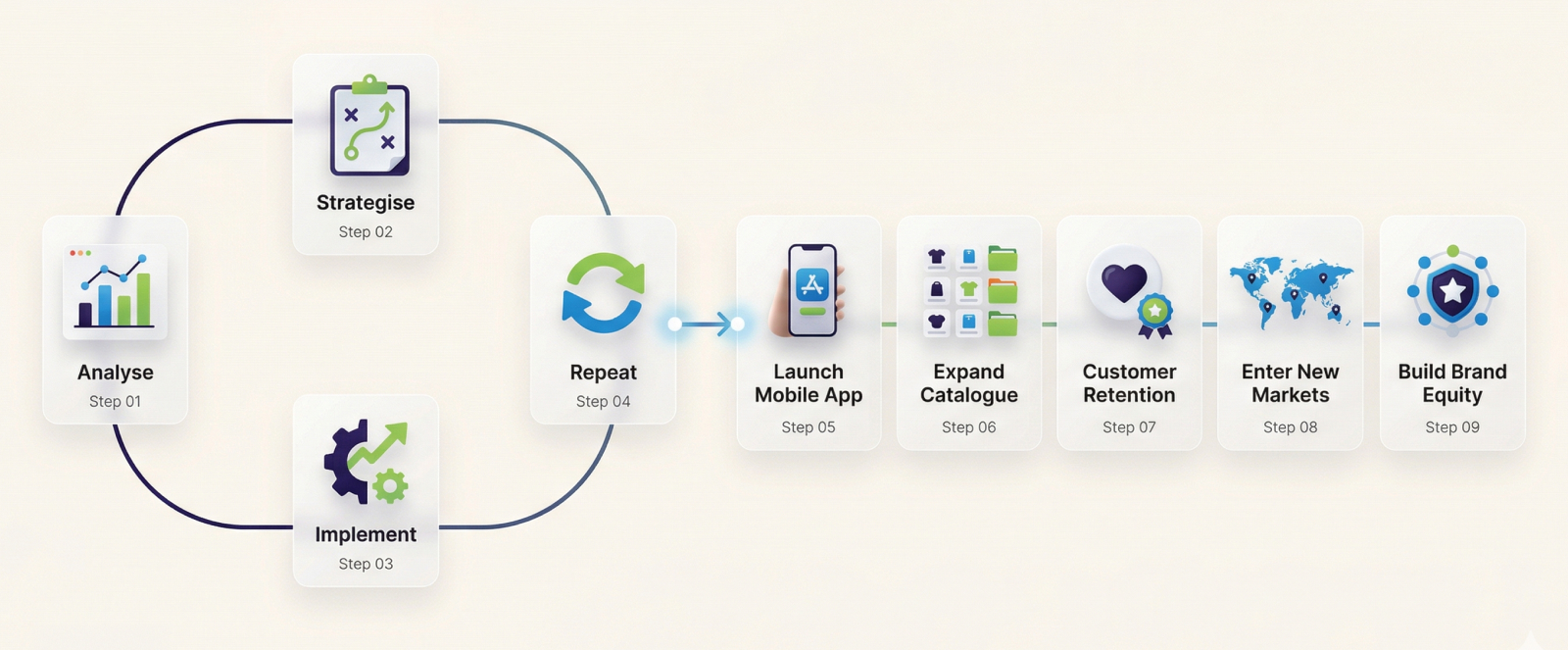
Understanding how to start a clothing brand online is only the beginning. The real work, and the real opportunity, lies in building a scalable business that grows systematically over time.
The Scaling Framework: Analyse, Strategise, Implement, Repeat
- Analyse: Use your analytics data rigorously. Identify your best-performing products, your highest-converting traffic sources, your most common abandonment points, and your most loyal customer segments. Data should drive every major decision.
- Strategise: Based on your analysis, identify the two or three highest-leverage actions you can take. This might be expanding into a new product category, entering a new marketing channel, improving your checkout conversion rate, or launching a loyalty programme.
- Implement: Execute decisively and completely. Half-implemented strategies produce half-results. Set clear timelines, assign responsibility, and measure outcomes.
- Repeat: The cycle is continuous. Businesses that stop analysing stop growing.
Launch a Mobile App
As your brand grows, one of the most impactful investments you can make is launching a dedicated mobile app. Mobile apps offer a significantly better customer experience than mobile websites for returning customers: faster load times, push notification capabilities, personalized recommendations, and a one-tap checkout experience. App customers typically have higher retention rates, higher average order values, and lower acquisition costs than non-app customers.
For fashion brands scaling their ecommerce operations, Shopaccino provides a native mobile app solution alongside its web platform, allowing you to extend your store to iOS and Android without building from scratch. This integrated approach ensures your inventory, orders, and customer data remain unified across all channels.
Other Scaling Levers
- Expand your catalogue strategically: Add products that are adjacent to your existing range and serve your existing customers, rather than diversifying into unrelated categories.
- Invest in customer retention: Acquiring a new customer costs significantly more than retaining an existing one. Email marketing, loyalty programmes, and personalized communication are your primary retention tools.
- Enter new markets: Once you have a proven model domestically, consider expanding to new geographies. This may require localised sizing, language support, and region-specific payment and shipping solutions.
- Build brand equity: Long-term scaling is not just about acquiring more customers. It is about building a brand that customers seek out, trust, and advocate for. Every decision you make, from packaging to customer service to visual identity, either builds or erodes that equity.
Final Thought
Building a successful online clothing business is not a single event. It is the product of hundreds of considered decisions made consistently over time, from the quality of your product photography to the speed of your order dispatch. The brands that succeed online are not necessarily the ones with the largest budgets or the most products. They are the ones that understand their customer most deeply, present their products most compellingly, and execute their operations most reliably.
The framework in this guide gives you the structure. The work, the taste, and the persistence are yours to provide.