What Is Multi Store Ecommerce Software, And How Do You Know If You Really Need It
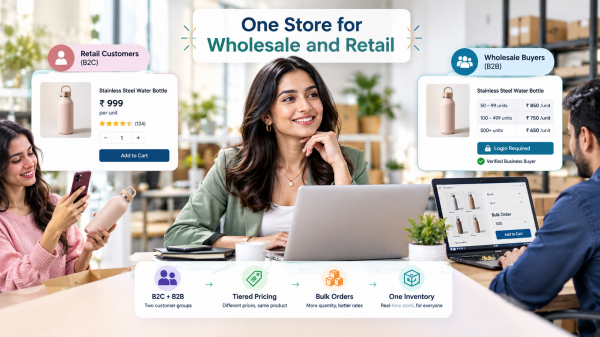
Quick Answer: Multi store ecommerce software lets one business serve more than one type of buyer or market without duplicating its catalogue, stock, or orders. There are two ways to do it. You can run separate storefronts, or you can run one store where what a visitor sees depends on the account they log in with, so a wholesale buyer gets B2B prices and minimum purchase requirements while a retail customer gets B2C pricing on the same site. For most businesses selling both wholesale and retail, the second approach does the job with a fraction of the upkeep.
The phrase multi store ecommerce software makes people picture a wall of separate websites. Sometimes that is what it means. More often, what a business actually needs is one website that behaves differently depending on who is looking at it, which is a much smaller thing to build and a much smaller thing to maintain.
The reason this matters is that the two approaches solve different problems, and businesses regularly choose the heavier one for a problem the lighter one already handles. A distributor who wants wholesale buyers to see trade pricing does not need a second website. They need their existing site to recognise a logged-in trade account. A company running three unrelated consumer brands genuinely does need separate storefronts, because the whole point is that shoppers should not connect them.
This article covers what the term means, how each approach works, and a straight test for which one your business needs. The honest answer for a lot of readers will be that they need less than they thought.
What Is Multi Store Ecommerce Software?
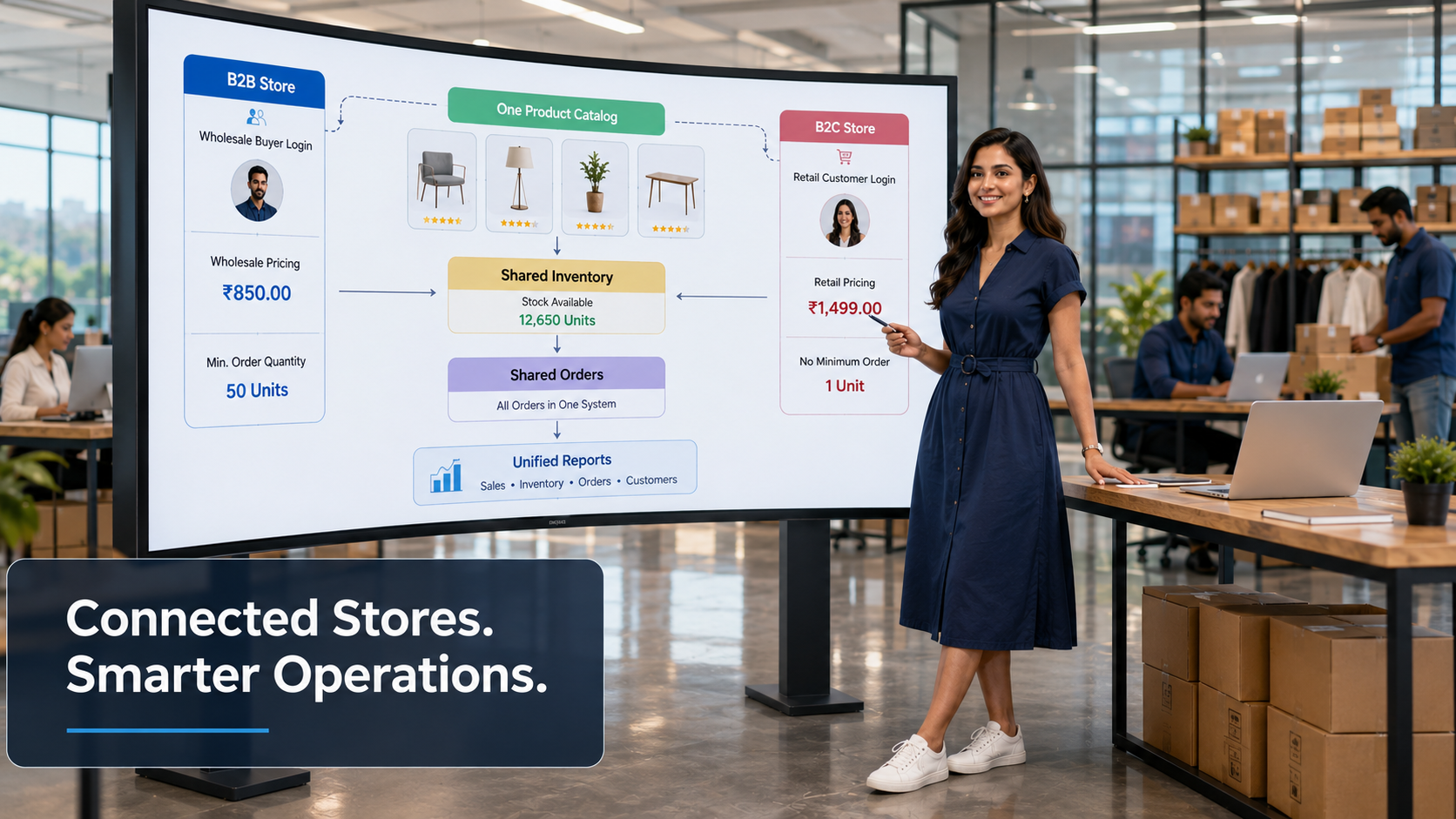
Multi store ecommerce software is any platform that lets a single business present different prices, catalogues, and purchase rules to different audiences while keeping one catalogue, one inventory pool, one order pipeline, and one set of reports behind the scenes. The buyer-facing experience varies. The back office does not.
That definition deliberately covers both models, because the shared back office is what actually matters. Whether the differentiation happens across separate storefronts or inside one store, the value comes from not maintaining the same product, the same stock count, and the same order queue twice.
Model one: separate storefronts
Several customer-facing sites, each with its own look and its own audience, connected to one admin. Useful when the storefronts must appear unrelated, such as a group running multiple consumer brands, or when different legal entities are involved.
Model two: one store, login-based differentiation
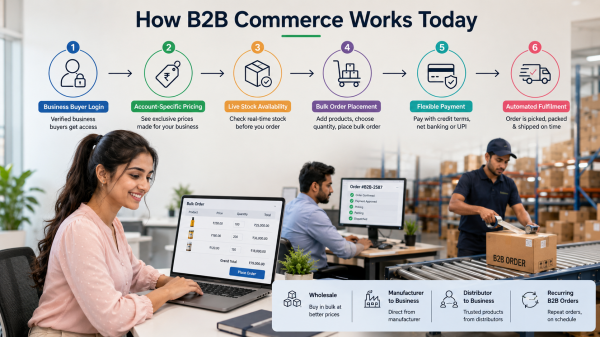
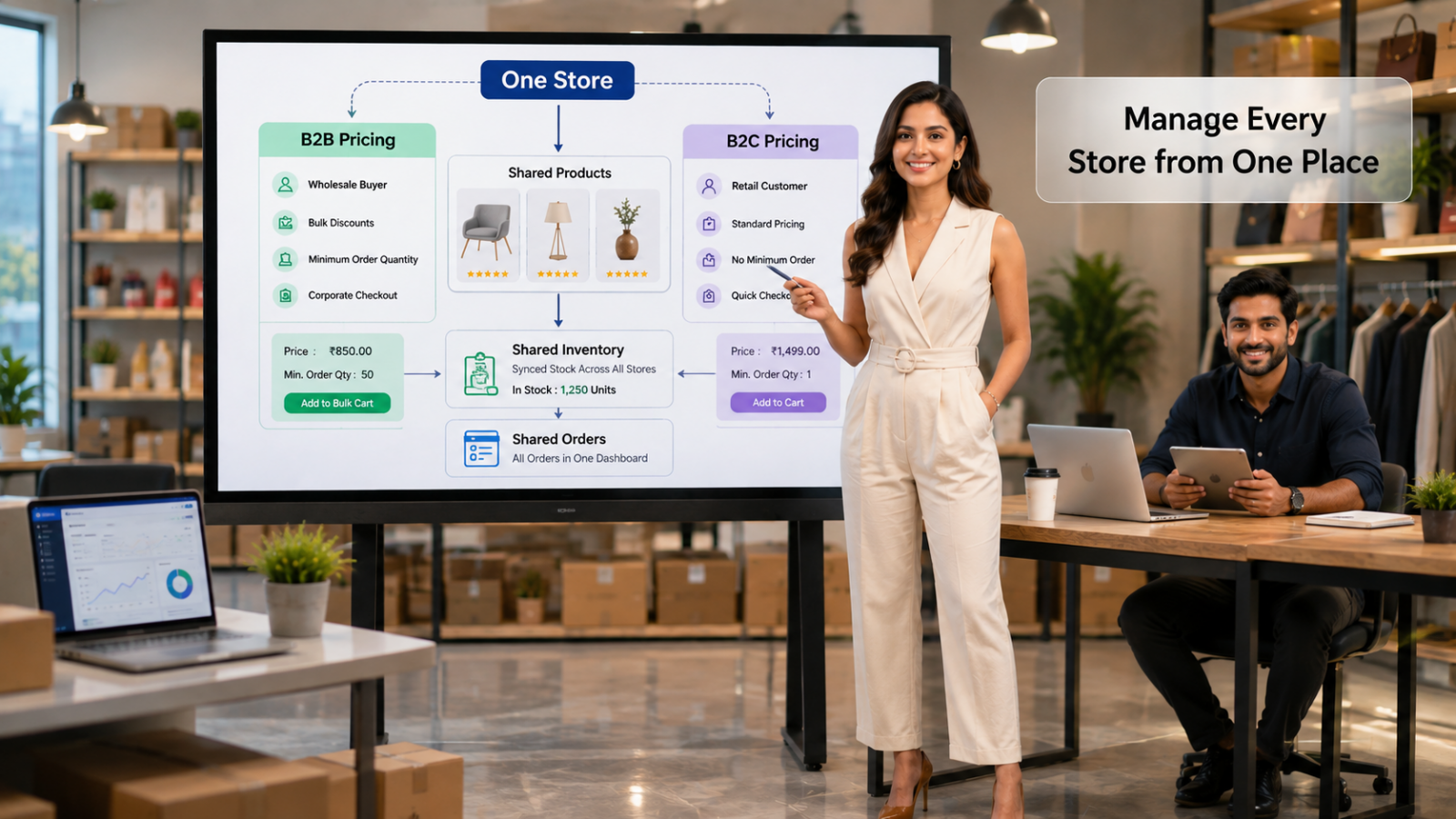
One website, one domain, one design. What changes is what each visitor is shown once they sign in. A B2B account sees wholesale prices and the minimum purchase requirements that apply to trade orders. A B2C account sees retail prices and retail minimums. Nothing is duplicated because there is nothing to duplicate. This is login-based store differentiation, and it covers the most common multi-audience situation in ecommerce, which is selling wholesale and retail from the same business.
How Does Login-Based Store Differentiation Actually Work?
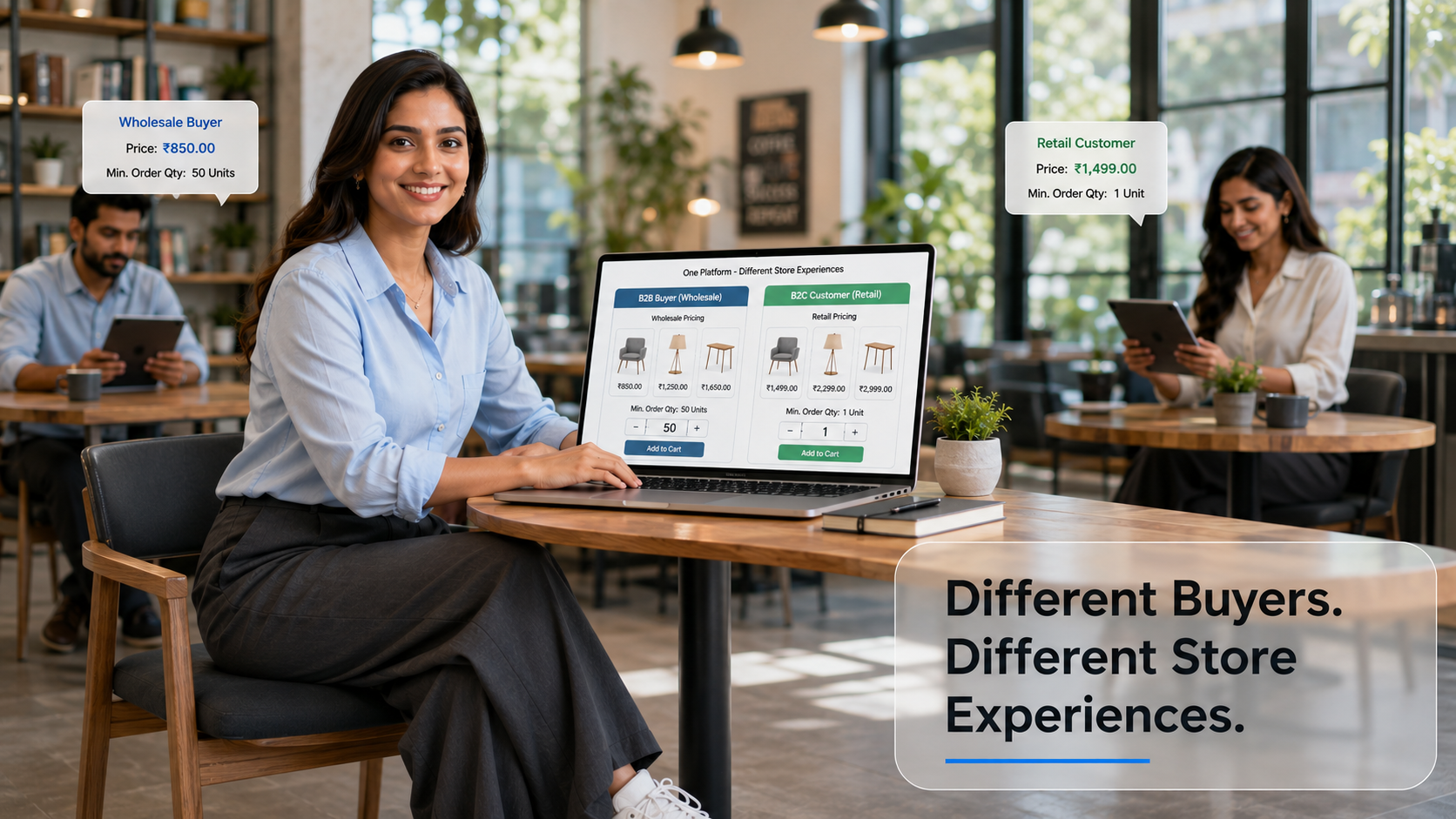
Worth walking through properly, because this is the model most readers will end up using and the one least well explained elsewhere.
The site is the same, the account decides the experience
A trade buyer and a retail shopper can type the same web address and land on the same homepage. Once each signs in, the store checks what kind of account it is dealing with and applies the rules attached to it. Prices change. Minimum order quantities change. What a buyer is permitted to purchase can change.
Pricing follows the customer group, not the page
A product does not carry one price. It carries the price that applies to the group the buyer belongs to. Retail customers sit in a retail group and see retail rates. Wholesale buyers sit in a trade group and see trade rates, and where different trade segments need different levels, each segment gets its own group. Customer group pricing is what turns one catalogue into as many price structures as your business needs.
Minimum purchase requirements follow the same logic
Retail customers can buy a single unit. Trade accounts have to meet whatever minimum you set, whether that is a quantity per line, a value per order, or a pack size. The same product page enforces different rules depending on who is buying, which is exactly what a rep does manually today when a small order comes in from a wholesale buyer.
Everything behind it stays single
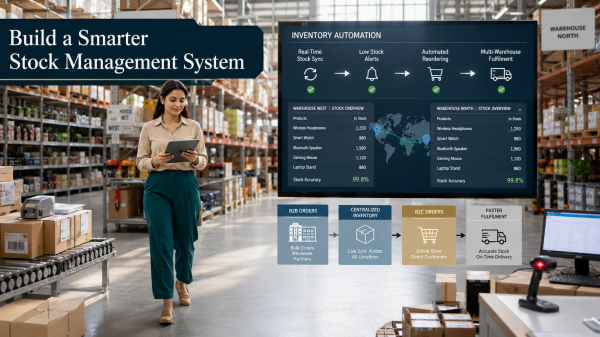
One catalogue. Oneshared inventory pool, so a unit sold to a retail customer is no longer available to a distributor. One order queue. One customer list, so a buyer who orders both ways is one relationship rather than two records. One set of reports covering all of it. None of this requires any effort to keep in sync, because none of it was ever split.
What it cannot do
Login-based differentiation does not give you separate branding, separate domains, or a storefront that hides its connection to your main business. If a genuine requirement is that two audiences must never see the same brand, this model is the wrong tool and separate storefronts are the right one. Being clear about that boundary is the difference between choosing well and discovering a limitation after launch.
Do You Really Need Multi Store Ecommerce Software?
Two lists, and the answer usually falls out within a minute of reading them honestly.
Signs you need genuinely separate storefronts
- You run more than one brand and buyers should not connect them. Separate branding is the one requirement login-based differentiation cannot meet. If a shopper on brand A must never sense brand B, you need separate storefronts.
- Different legal entities are involved. Separate companies, separate registrations, separate filings, and separate terms of sale usually mean separate storefronts, driven by compliance rather than merchandising preference.
- Catalogues barely overlap. If two audiences buy almost entirely different products, a shared catalogue with heavy visibility rules gets messy. Separate storefronts are cleaner.
- A market needs its own local site to compete credibly. Occasionally a region requires a distinct local presence, in local language, with local trust signals, rather than a section of a global site.
Signs one store with login-based differentiation is enough
- You sell wholesale and retail from overlapping stock. This is the big one, and it describes most manufacturers, distributors, and brands that added a trade channel. Same products, different prices and minimums. One store handles it.
- Different buyers need different prices, not different brands. If the requirement is commercial rather than visual, customer group pricing solves it without a second site to maintain.
- You want trade pricing kept private. Prices visible only after login protects trade rates from competitors and from your buyers' own customers, and that comes free with customer group pricing.
- The new market is unproven. Test it on your existing store with multi-currency and international shipping before you commit to a dedicated storefront that somebody has to keep current.
- Your team is small. Every extra storefront needs content, product copy, and promotions maintained. One store that gets full attention outperforms two that get half each.
The pattern is consistent. Separate storefronts answer questions about identity. Login-based differentiation answers questions about commercial terms. Businesses get into trouble when they use the first to solve the second, because the cost arrives every week afterwards.
Quick Reference: Which Setup Fits Your Situation
Your Situation | What Usually Fits Better |
|---|---|
Wholesale buyers and retail customers, overlapping products | One store with login-based pricing, so each account type sees its own rates and minimums |
Distributors on negotiated rates alongside walk-in retail buyers | One store, customer groups for the negotiated accounts, retail pricing for everyone else |
One brand, one market, one type of buyer | A single store, no differentiation layer needed at all |
Testing demand in a new country before committing | One store, using multi-currency and international shipping |
Two or three brands that must look unrelated to buyers | Genuinely separate storefronts, since branding cannot overlap |
Separate legal entities filing separately in different countries | Genuinely separate storefronts, driven by compliance rather than merchandising |
What Goes Wrong When You Duplicate Systems Instead?

The common mistake is not choosing the wrong model. It is opening a second, disconnected system to serve a second audience, which is what happens when a business bolts a separate wholesale site onto a separate retail site. The costs arrive in this order.
Stock drifts apart. Two systems, one shelf. Each sells what it believes is available. The gap shows up as a cancelled order, an unhappy distributor, or a reconciliation session at month end that nobody can fully explain. With wholesale order sizes, this is not a small apology.
Catalogue work multiplies. Every new product, price change, and photo swap gets done once per system, forever. The second copy is always the one that goes stale, and buyers find the stale one.
Reporting stops being trustworthy. Numbers assembled by hand arrive late and carry human error. Worse, they arrive in a format nobody can drill into, so questions get answered with opinions instead of data.
Customer history fragments. A buyer who orders wholesale and also buys retail becomes two unrelated records. You lose the total value of that relationship, which is exactly the number that should decide who gets your attention.
Fixed costs stack quietly. Separate subscriptions, app fees, payment gateway setups, and integrations for shipping and accounting, each renewing on its own date. The total is rarely reviewed as one line, which is precisely why it grows.
Policies drift. Shipping rules, return windows, and tax settings get updated in one system and forgotten in the other. Buyers notice inconsistency faster than they notice most improvements.
What Should You Look for in a Platform?
Whichever model fits you, the platform has to hold the pieces together properly. This checklist separates real capability from marketing language.
- Customer group pricing, so what a buyer sees depends on the group their account belongs to rather than the page they land on.
- Minimum purchase requirements that vary by account type, enforced at checkout rather than corrected by a rep afterwards.
- The option to hide prices until login, so trade rates are not sitting on the open web.
- One catalogue and one inventory pool feeding every audience, with allocation by warehouse if you hold stock in several locations.
- Consolidated reporting that still lets you separate wholesale performance from retail.
- Cross-border capability in the same system, meaningmulti-currency and multi-languagesupport, international payments, and international shipping, rather than a separate setup per market.
- A pricing model that does not charge you a percentage of every order, since transaction fees scale with success and quietly reverse the savings you built the setup to get.
Shopaccino takes the login-based approach to this. Rather than asking you to run and maintain separate websites, one store serves both audiences on the same domain, and the account signing in determines what that visitor sees. A B2B buyer logs in to wholesale pricing and the minimum purchase requirements that apply to trade orders. A B2C customer logs in to retail pricing and retail minimums. Because it is one store, the catalogue, stock, orders, customers, and reporting are unified by default, with nothing to reconcile. Around that sit the pieces this kind of operation depends on: customer group pricing, quantity-based pricing, multi-warehouse fulfilment, a branded mobile app, and cross-border capability including multi-currency, multi-language, international payments, and international shipping, with no transaction fees on the platform.
How Do You Set It Up Without Making a Mess?
If you are starting from a single retail store and adding a trade channel, or untangling two systems you already run, sequence it like this.
- Write down what differs between your audiences. Be specific. Prices, minimum quantities, payment terms, catalogue access, shipping rules. Most of the difficulty in these projects comes from teams that never wrote the differences down and discovered them mid-build.
- Standardise your SKUs before anything else. If the same product carries different codes in different systems or spreadsheets, no platform can merge them cleanly. Codes, units, and pack sizes first.
- Set up your customer groups next. Create a group for each set of commercial terms you offer, such as retail, standard trade, and any trade segment on different rates. Every buyer belongs to exactly one group, because that group is the source of their pricing across the whole catalogue.
- Decide what logged-out visitors see. No prices, retail prices only, or a request-access flow for trade. This single decision does more to protect your negotiated rates than anything else on the list.
- Test as each type of buyer, not as an admin. Log in as a buyer from each customer group you created. Check prices and minimums on product pages, in the cart, and on the final invoice. The invoice is where group rules most often fail to carry through.
So, Do You Need It?
If you sell to one audience, in one market, under one brand, you do not need any of this yet, and a single straightforward store will serve you better. If you sell wholesale and retail from the same stock, you need multi store ecommerce software in the login-based sense: one site that shows each buyer their own prices and purchase rules. And if you run brands that must appear unrelated, or separate legal entities, then genuinely separate storefronts are worth the extra upkeep they demand.
The decision is not about size. It is about whether your audiences differ in identity or only in commercial terms. Different identity means different storefronts. Different terms mean one store that knows who is logged in. Get that distinction right and you avoid the most expensive mistake in this whole category, which is building three websites to solve a pricing problem.
FAQs
It is a platform that lets one business show different prices, catalogues, and purchase rules to different audiences while keeping one catalogue, inventory, and order pipeline. This can work through separate storefronts or through one store that changes based on who logs in.
Yes, and it is usually the better route. On platforms like Shopaccino, one store serves both: a B2B account logs in to wholesale prices and trade minimum purchase requirements, while a B2C account sees retail pricing on the same site.
Rarely. If the difference is pricing, minimum quantities, and payment terms, one store with customer group pricing handles it. A separate site is only necessary when wholesale must carry different branding or belong to a different legal entity.
Trade pricing is tied to the account, so it only appears after that buyer signs in. You can also hide prices entirely from logged-out visitors, which keeps negotiated rates away from competitors and from your buyers' own customers.
Not usually. Multi-currency display, international payments, and international shipping let one store serve several markets. A dedicated local site makes sense only when a market genuinely needs its own presence rather than a section of yours.
When someone maintains the same product in two places, or builds a spreadsheet to see total performance. Both mean your operation has already split, and the software is only formalising work you are doing by hand.