
How to Make Your Products Recommended by AI Shopping Assistants
A shopper opens ChatGPT and types “best waterproof hiking boots under $150 for wide feet.” Within seconds she gets three specific recommendations, taps one, and buys it. Your product was never in that conversation. That is the quiet shift happening right now: AI Shopping Assistants are becoming the new storefront, and the brands that show up inside their answers are quietly winning sales the rest of the market never even sees. If your listings are built only for classic blue-link search, you are already invisible to a fast-growing slice of buyers.
The good news is that getting recommended by AI Shopping Assistants is not luck. These systems follow patterns you can learn and influence. This guide breaks down how they decide what to suggest, and the exact steps you can take to earn a spot in their answers, whether you sell fashion, electronics, home decor, marble and stone, beauty products, or trade B2B across borders.
What Are AI Shopping Assistants, and Why Do They Matter Now?
An AI shopping assistant is a tool that uses large language models (LLMs) to understand a shopper’s request in plain language, then hand back specific product suggestions instead of a page of ten blue links. You describe what you want, in your own words, and it does the filtering, comparing, and recommending for you.
You have almost certainly met a few already. ChatGPT now surfaces products directly inside chats. Perplexity answers buying questions with shoppable results. Google folds product picks into its AI-generated answers. Amazon’s Rufus lives inside the Amazon app and coaches shoppers through choices. Microsoft Copilot and Gemini do the same across their ecosystems. Together they are pushing us into an era of conversational commerce, where buying starts with a question and ends with a recommendation, no scrolling required.
Why does this matter for you right now? Because buyer behaviour is moving faster than most catalogs are. People are increasingly comfortable asking an assistant “which one should I buy?” and trusting the shortlist it returns. When your product is on that shortlist, you skip the crowded search results page entirely. When it is not, you lose the sale before the shopper ever knew you existed. This is not a far-off trend to plan for someday. It is happening in every category, in every market, today.
How Do AI Shopping Assistants Actually Choose Products?

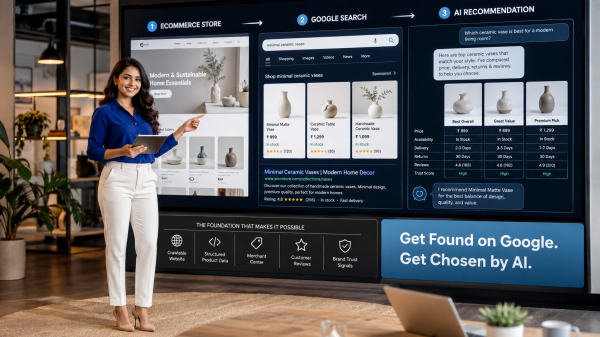
To get recommended, you first need to understand what these assistants are doing under the hood. They are not guessing. Most of them work in two steps: they retrieve information about products from around the web and from connected data sources, then they use an LLM to read that information and compose a helpful answer. This is why the quality and clarity of your product information matters far more than clever keyword stuffing ever did.
Across the major assistants, the same signals keep coming up as the things that decide who gets named:
- Clear, structured product data. Machine-readable details like price, availability, sizes, materials, and specs that an assistant can pull without guessing.
- Specific, descriptive copy. Descriptions that answer real questions (“is this good for wide feet?”) beat vague marketing fluff.
- Trust signals. Genuine reviews, ratings, and a credible brand reputation the model can lean on.
- Availability and freshness. In-stock, current pricing, and up-to-date listings. Assistants avoid recommending things people cannot buy.
- Presence in trusted sources. Being mentioned in reviews, comparison articles, marketplaces, and reputable roundups gives the model more reasons to cite you.
In short, AI Shopping Assistants reward clarity, specificity, and trust. The clearer and more complete your information is, the easier it is for a model to confidently pick you over a competitor whose data is messy or thin.
Why Is Traditional SEO No Longer Enough?
For two decades, the goal was simple: rank on page one. You optimized for keywords, chased backlinks, and hoped to land in the top few results. That work still matters, but it now solves only part of the problem. Ranking gets you into a list. Getting recommended gets you into an answer, and answers are what shoppers increasingly act on.
This is where two newer disciplines come in. Answer engine optimization (AEO) is about structuring your content so it can be lifted directly into answer boxes and assistant responses. Generative engine optimization (GEO) goes a step further, shaping how LLMs understand, trust, and cite your brand when they generate recommendations. Traditional SEO asks “will Google list my page?” AEO and GEO ask “will the AI actually name my product when someone asks what to buy?”
The practical takeaway: keep your SEO foundations strong, because assistants still crawl and trust well-optimized sites. But layer AEO and GEO thinking on top, because that is what turns a listing into a recommendation.
How Do You Make Your Products Recommended by AI Shopping Assistants?
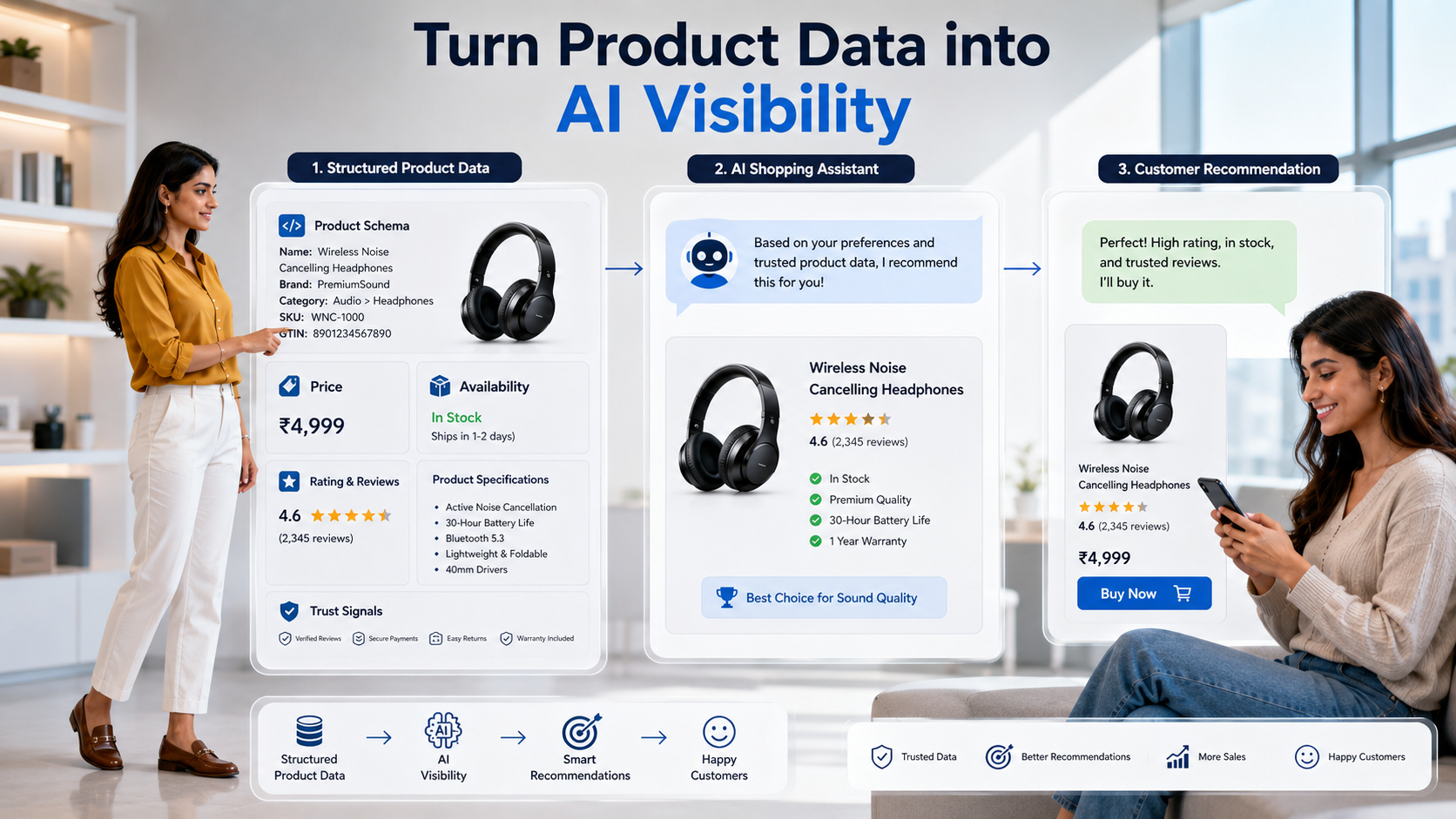
This is the part you came for. Here is a practical, ordered playbook you can start working through this week. None of it requires magic, just discipline and good data hygiene.
How Should You Structure Your Product Data and Schema?
Start here, because it delivers the biggest return. Add product schema markup to every product page using the Product structured data format. Fill in name, brand, description, price, currency, availability, GTIN or SKU, ratings, and review count. This is the machine-readable layer that assistants read first, and clean structured product data makes it dramatically easier for an LLM to quote your exact price and specs with confidence.
A quick checklist for each product page:
- Valid Product schema with price, currency, and availability filled in, not left blank.
- Unique product identifiers (GTIN, MPN, or SKU) so assistants can match your item across sources.
- AggregateRating and review markup when you genuinely have reviews.
- Consistent data between your page, your schema, and any feed you send to marketplaces.
Why Do Specific, Question-Led Descriptions Win?
Vague copy like “premium quality, best in class” tells an assistant nothing it can use. Specific copy does. Write descriptions that answer the questions a real buyer would ask before purchasing: who is this for, what problem does it solve, what are the exact measurements, materials, care instructions, and compatibility details.
Think in use cases. Instead of “elegant marble slab,” write “20mm honed Statuario marble slab suited for low-traffic kitchen islands and feature walls, sold per square metre.” That single sentence gives a model the material, thickness, finish, ideal use, and unit of sale. When someone asks an assistant for “honed white marble for a kitchen island,” you have already answered the question inside your listing.
How Important Are Reviews and Social Proof?
Very. Reviews are one of the strongest trust signals assistants lean on, because they represent real buyer experience the model can summarize. Encourage post-purchase reviews, respond to them, and make sure they are visible on the page and captured in your rating schema. Beyond your own site, mentions in reputable roundups, comparison posts, and marketplace reviews all feed AI-powered product discovery. The more consistent, credible evidence exists that people buy and like your product, the more comfortable an assistant is recommending it.
Should You Optimize Content for Questions and Comparisons?
Yes, and this is where many stores leave easy wins on the table. Assistants love content that already resembles an answer. Build buying guides, comparison pages, and FAQ-rich product content that directly address the questions your customers ask. “X vs Y,” “best [product] for [use case],” and “how to choose [product]” formats are gold, because they map neatly onto the way people phrase requests in conversational commerce.
A simple rule: for every product category you sell, publish at least one honest buying guide and one comparison piece. Keep the language factual and helpful, not salesy, and the assistants will treat it as a reliable source to draw from.
How Do Product Feeds and Marketplaces Extend Your Reach?
Many assistants pull from structured commerce sources, not just your website. A clean, complete product feed sent to Google Merchant Center and relevant marketplaces multiplies the number of places an assistant can discover you. Keep feeds accurate, refreshed, and free of missing attributes. If your price, stock, or title is wrong or stale in a feed, you risk being filtered out entirely, since assistants avoid recommending items that might be unavailable or mispriced.
Does Technical Health, Speed, and Availability Really Matter?
It does, quietly but decisively. Assistants prefer sources they can crawl easily and trust to be current. That means fast-loading pages, mobile-friendly design, crawlable HTML rather than content locked behind heavy scripts, accurate stock status, and current pricing. A technically healthy store is easier for a model to read and safer for it to recommend. A slow, half-broken store is a risk it would rather skip.
How Do You Build the Brand Authority AI Trusts?
Assistants favour brands that appear credible across the web. You build that authority over time by being consistently mentioned, cited, and reviewed. Get listed in respected industry directories, earn coverage in relevant publications, keep your business details consistent everywhere, and maintain an active, trustworthy presence. This is the slow-compounding side of generative engine optimization (GEO): the more the wider web treats you as a legitimate authority, the more readily an assistant will name you.
Which AI Shopping Assistants Should You Prioritize?
You do not need to chase every platform at once. Focus on the ones your buyers actually use, and cover the fundamentals that help across all of them. Here is how the major players tend to source their picks:
- ChatGPT: Pulls from web content and connected shopping data. Clean product pages, schema, and strong reviews help you surface.
- Perplexity: Cites sources heavily. Being present in reputable reviews and comparison content increases your odds of a mention.
- Google AI answers: Reward solid SEO plus product feeds and structured data. Your Merchant Center hygiene matters here.
- Amazon Rufus: Draws on Amazon listings and reviews. Rich, accurate listing content and genuine ratings are the levers.
- Copilot and Gemini: Lean on web trust signals. Broad, consistent authority across the web serves you well.
Notice the pattern: clean data, honest reviews, and web-wide credibility help you everywhere. Nail those, and platform-specific tuning becomes a smaller job on top.
How Do You Track Whether AI Assistants Are Recommending You?

You cannot improve what you never measure, and AI recommendations are trickier to track than classic rankings because there is no single “position 3” to check. Still, you can build a clear picture with a few simple habits.
Start by testing the assistants yourself. Once a week, ask ChatGPT, Perplexity, Gemini, and Amazon’s Rufus the exact buying questions your customers ask, using natural phrasing like “best [your product] for [use case] under [budget].” Note whether you appear, which competitors are named, and how each assistant describes the options. Over time this reveals which phrasings you win and which you miss.
Then watch your analytics for the fingerprints of AI-driven traffic:
- Referral sources: look for visits from ChatGPT, Perplexity, and similar domains in your traffic reports.
- Branded and long-tail queries: a rise in very specific, question-style searches often signals shoppers cross-checking an assistant’s suggestion.
- Direct visits to deep product pages: people landing straight on a niche product URL are frequently arriving from an AI recommendation.
None of these is a perfect metric on its own. Read together, they tell you whether your work on schema, reviews, and content is actually earning mentions, and where to focus next.
How Can the Right Commerce Platform Make This Easier?
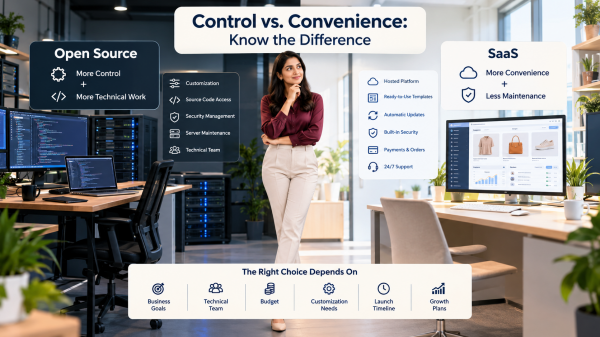
Everything above is achievable manually, but it gets a lot easier when your store already produces clean, structured, machine-readable data by default. That is where your choice of commerce platform matters, because the platform decides how much of this you do by hand versus how much happens automatically.
Shopaccino is built around exactly these operational needs. It generates structured product data and clean, crawlable product pages, keeps inventory and pricing accurate in real time, and supports product feeds so assistants can discover your catalog wherever they look. Because it was designed by identifying real pain points across exporters, manufacturers, distributors, and D2C brands, the plumbing that AI-powered product discovery depends on is handled for you rather than bolted on.
For businesses selling across borders, a few of Shopaccino’s built-in capabilities are especially useful when you want assistants worldwide to recommend you:
- Global by default: multi-currency, multi-language, international payments, and region-based pricing, so your listings read correctly to assistants in every market.
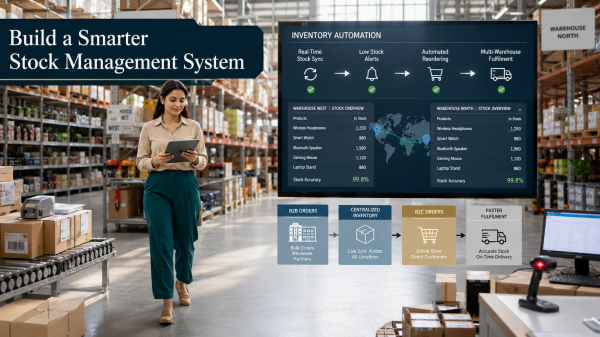
- Accurate, always-current data: integrated inventory, payments, logistics, and multi-warehouse fulfilment keep stock and pricing signals fresh, exactly what assistants trust.
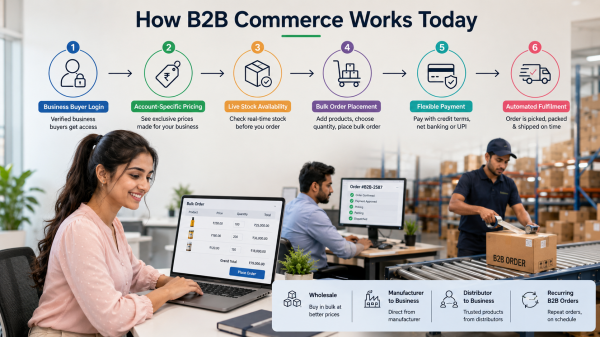
- B2B and B2C from one system: manufacturers and distributors can manage both sales models cleanly, without fragmenting their product data.
- Scale without friction: built-in automation and zero transaction fees on the platform let you grow and reinvest instead of leaking margin.
The point is not the tooling for its own sake. It is that consistent, structured, up-to-date data is the raw material assistants recommend from, and a platform that produces that data automatically removes most of the manual effort.
Turning AI Recommendations Into Real Sales
Getting recommended by AI Shopping Assistants comes down to a simple idea: make it effortless for a machine to understand, trust, and confidently suggest your product. That means clean structured product data, specific and question-led descriptions, honest reviews, helpful buying guides, accurate feeds, a technically healthy store, and steady brand authority across the web.
None of this is about gaming the system. Assistants reward the same things good shoppers do: clarity, honesty, and genuine usefulness. Start with schema and descriptions this week, layer in reviews and comparison content next, and keep your data clean and current as a habit. Do that consistently, and you will move from being a link nobody clicks to the product an assistant names when a buyer asks what to buy. In a world of conversational commerce, that is the difference between being found and being chosen.
FAQs
They are AI tools that use large language models to understand a shopper’s plain-language request and return specific product recommendations instead of a list of links. Examples include ChatGPT, Perplexity, Google’s AI answers, and Amazon Rufus.
They retrieve product information from the web, feeds, and marketplaces, then use an AI model to pick the best match. Clean structured data, specific descriptions, genuine reviews, accurate availability, and brand trust are the biggest deciding factors.
Yes. Strong SEO keeps your site crawlable and trusted, which assistants rely on. AEO and GEO simply add a layer on top, shaping your content and data so an AI can lift it directly into a recommendation.
Strongly. Reviews are a key trust signal that assistants use to gauge real buyer satisfaction. Genuine, visible reviews captured in your rating schema make an assistant far more comfortable naming your product.
Foundational fixes like adding product schema and improving descriptions can be indexed within days to weeks. Brand authority and review depth build more gradually, so treat it as steady, compounding work rather than an overnight switch.
Any store can. The signals that matter (clean data, clear copy, honest reviews, accurate feeds) are within reach of small businesses and startups. A commerce platform that outputs structured data automatically makes it even easier.