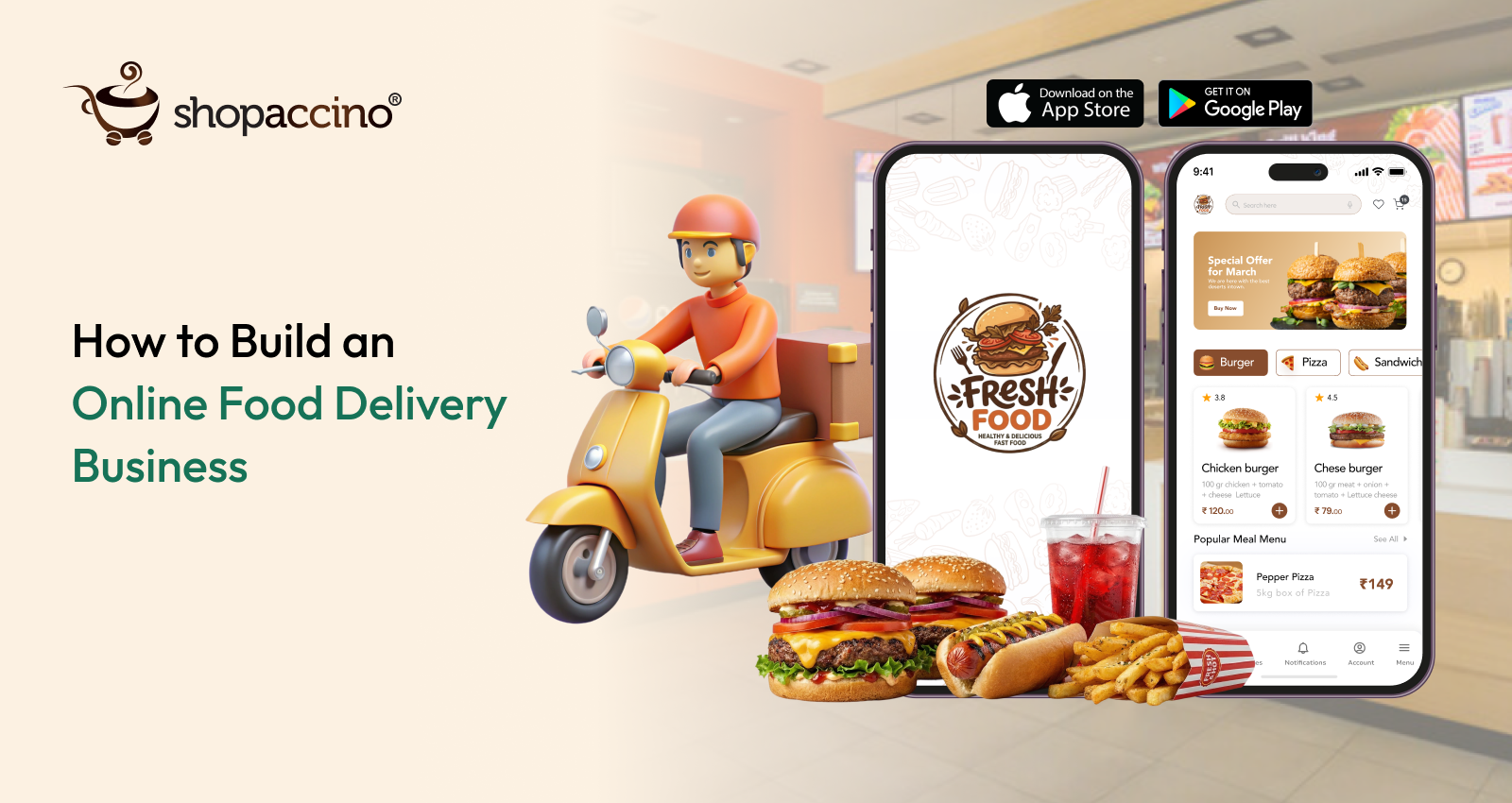
How to Build an Online Food Delivery Business
Overview
The food industry has undergone a fundamental shift. Customers today don't just want great food — they want it delivered fast, reliably, and with a seamless ordering experience. The rise in how to start food business online searches reflects exactly how much appetite exists for digital-first food ventures.
Whether you're running a restaurant, operating a cloud kitchen, or launching as a home chef, building an online food delivery system is no longer optional. It is the baseline. Aggregator platforms like Zomato and Swiggy dominate visibility but impose heavy commissions and create a dependency that limits long-term profitability. Owning your own delivery channel — your own store, your own customer relationships — is what separates a sustainable business from one that's permanently at the mercy of third-party algorithms.
Before you build anything, you need to be clear on the four non-negotiable pillars of any successful food delivery operation:
Delivery Logistics: Speed, coverage area, real-time tracking, and last-mile reliability define the customer experience more than the food itself. A great dish arriving cold and late is a failed order.
Food Quality in Transit: Not all food travels well. Menu design must account for packaging, travel time, and how dishes hold up between preparation and consumption.
Packaging: Good packaging preserves temperature, prevents spillage, and communicates brand quality. It is part of the product, not an afterthought.
Consistency: Repeat orders are driven by consistency. The same dish must look, taste, and arrive the same way every single time.
This guide walks you through every stage of building an online food delivery business — from identifying your market to scaling operations — with the depth and precision that actual food entrepreneurs need.
Identify Your Market
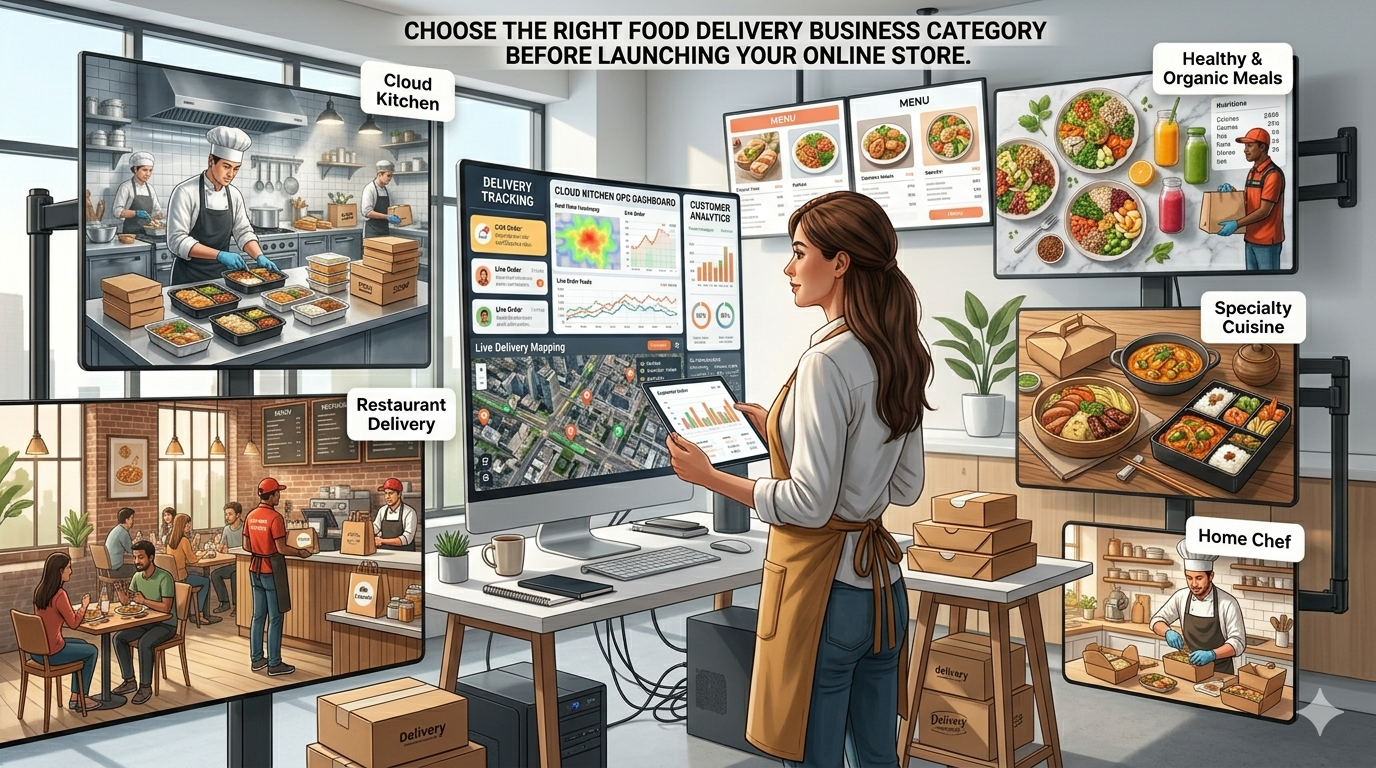
The online food delivery market is large but not uniform. Each segment has different customer expectations, price sensitivity, and operational requirements. Before you invest in infrastructure, you need to know exactly which market you're entering and why.
Key Market Segments
Cloud Kitchens: Delivery-only operations with no dine-in space. Lower overhead, higher delivery volume potential. Ideal for scaling multiple brands from a single kitchen.
Restaurants with Delivery: Established restaurants expanding into digital ordering. Benefit from existing brand recognition but need to manage dual-channel operations.
Niche and Specialty Cuisines: Regional food, ethnic cuisines, or hyper-specific menus (e.g., Jain food, keto meals, authentic regional thalis). Less competition, more loyal customers.
Health, Organic, and Diet-Specific Food: One of the fastest-growing segments. Customers are willing to pay a premium for clean ingredients, calorie transparency, and customization.
Home Chefs: A growing category. Home chefs operating at micro-scale often outperform large kitchens on quality and trust, particularly in tier-2 cities.
Knowing your segment shapes every downstream decision — your menu, your packaging, your pricing, your delivery radius, and your marketing. Don't try to serve everyone. The most successful online food businesses are precise about who they're serving and why they're the best option for that customer.
Identify the Gap in the Market
Market entry without differentiation is expensive and ineffective. You need to find a gap — a specific unmet need or underserved demand — that your business can fill better than existing options.
How to Analyse Competitors
Order from every competitor operating in your target area. Evaluate delivery time, packaging quality, food temperature, ordering experience, and customer communication.
Read customer reviews on aggregator platforms and Google Maps. Negative reviews reveal consistent pain points that you can directly address.
Map their menus. Identify what's missing — missing cuisines, missing dietary options, missing customization, missing portion flexibility.
Evaluate their ordering experience. Is the menu easy to navigate? Can customers leave instructions? Is ordering fast on mobile?
Common Gaps to Target
Long Delivery Times: Many businesses overpromise and underdeliver. If you can consistently deliver in 30–35 minutes in a specific radius, that becomes a genuine differentiator.
Limited Menu Flexibility: Aggregators often limit how often you can update or customise your menu. If you run your own platform, you can turn dishes on and off in real time based on availability.
No Customisation Options: Customers increasingly want the ability to modify dishes — spice levels, ingredient swaps, portion sizes. Most local food businesses don't offer this.
Poor Ordering Experience: Clunky ordering interfaces, no mobile app, no delivery tracking — these are gaps your own platform can close immediately.
No Scheduled Delivery: Office lunches, party orders, meal preps — many customers want to place orders in advance for a specific time. Very few local operators support this.
Once you identify the gap, build your entire operation around closing it. That gap is your brand promise.
Select a Product and Prepare Your Catalogue
Your menu is your product catalogue. Unlike physical retail, food menus require very specific data for each item — and getting this right from the start saves significant operational headaches later.
Limited vs. Extensive Menus
Resist the temptation to launch with 60 items. A focused menu of 15–25 well-executed dishes outperforms a sprawling catalogue in every measurable way: faster kitchen execution, lower ingredient waste, stronger brand identity, and better quality consistency. You can always expand after you've nailed operations.
Required Data for Each Menu Item
Every dish in your catalogue must have the following clearly defined before upload:
Dish Name: Clear, descriptive, and appetising. Avoid generic names — 'Spicy Chicken Biryani' beats 'Biryani #3'.
Category: Starters, Mains, Sides, Desserts, Beverages, Combos, etc. Helps customers navigate quickly.
Ingredients: Important for allergen transparency and building customer trust. Specify key ingredients even if not exhaustive.
Portion Size: Serves 1, Serves 2, Half portion, Full portion. Prevents customer disappointment and reduces refund requests.
Pricing: Factor in food cost, packaging, delivery cost allocation, and desired margin. Avoid underpricing — it signals poor quality.
Combo Options: Group dishes into value combos. Combos increase average order value and simplify decision-making for customers.
Availability: Specify if an item is available all day, only at lunch, only on weekends, or based on ingredient availability.
Preparation Time: Accurate prep times help set realistic delivery expectations and prevent customer escalations.
Gathering Accurate Data
Run test orders before going live. Time your preparation for every dish, calculate accurate food costs, and test packaging for each item type. Data gathered from this process is your operational baseline.
Hi-Res Images and Videos
Food is one of the most visually driven purchase categories. Research consistently shows that high-quality food photography directly increases order conversion. When customers can't taste or smell the food, the image is the product.
What to Shoot
Hero Dish Shots: Each dish photographed in its best presentation — correct plating, good lighting, appetising angles. Shoot close-up to highlight texture and freshness.
Packaging Visuals: Show the dish in its delivery packaging. This sets accurate expectations and signals quality control.
Process / Kitchen Shots (optional): Behind-the-scenes images build trust and humanise the brand, especially for cloud kitchens where there's no physical space customers can see.
Combo and Bundle Shots: Flat-lay photography of complete meals works exceptionally well for combo and family pack promotions.
Key Principles
Use natural light or a professional food lighting setup. Avoid over-filtering — the food must look realistic, not artificially enhanced.
Maintain consistent photo style across all menu items. Inconsistency makes menus look disjointed and unprofessional.
Update images whenever a dish's presentation or packaging changes. Outdated images are a common source of customer complaints.
Short looping videos of food being plated or cut are highly effective for social media and homepage banners. Even 5–10 seconds of the right visual is enough.
If professional photography isn't immediately feasible, a modern smartphone with a basic ring light and a neutral background can produce acceptable results. Do not launch with no images — text-only menus underperform significantly.
Prepare Content
Content is the voice of your brand online. Before your store goes live, every page should have purposeful, accurate, and brand-consistent copy.
Content to Prepare
Business Goal Statement: Why does your business exist? What problem are you solving? This anchors everything downstream.
About the Brand: Your origin story, what makes you different, and why customers should trust you. Keep it authentic — customers respond to real stories.
Vision: Where is the business heading? A stated vision adds credibility and attracts loyal customers who want to be part of something.
Menu Descriptions: Write clear, enticing descriptions for every dish. Include key flavour profiles, cooking methods, and what makes each dish special. Good descriptions reduce customer uncertainty and increase conversions.
Unique Selling Propositions (USPs): State clearly what sets you apart — freshly ground spices, locally sourced produce, 35-minute guaranteed delivery, zero preservatives, etc.
Policies: Delivery policy, cancellation policy, refund and return guidelines. These reduce customer service overhead significantly.
Hygiene and Safety Standards: FSSAI compliance details, kitchen hygiene practices, contactless delivery protocols. Post-pandemic customers are highly sensitive to hygiene transparency.
All content should be reviewed for typos, factual accuracy, and brand tone consistency before going live. Once customers see outdated or incorrect content, trust erodes quickly.
Register Your Brand
Legal and Compliance Requirements
FSSAI Food License: Mandatory for all food businesses in India. Depending on your scale, you may need a Basic, State, or Central FSSAI registration. This must be done before you begin operations.
GST Registration: Required if your annual turnover exceeds the threshold. Also critical for issuing proper tax invoices to customers.
Business Registration: Sole proprietorship, partnership, LLP, or private limited — choose the structure that aligns with your scale and future growth plans.
Trademark (optional but recommended): If you're building a brand with long-term potential, trademark your business name and logo early.
For Existing Businesses
If you're an existing restaurant or kitchen moving online, ensure your existing FSSAI and GST registrations cover your delivery operations. Some businesses need to update their registration if they add delivery or expand geographically.
Brand Guidelines — Define These Before Launch
Colour Scheme: Choose 2–3 brand colours that are consistent across all digital and physical touchpoints.
Typography: Select 1–2 fonts that reflect your brand personality — clean and modern for health food, warm and classic for traditional cuisine.
Brand Tone: How does your brand speak? Friendly and informal? Premium and confident? Define this before writing any content.
Visual Identity: Logo usage guidelines, image style, icon style. Consistency in visual identity builds brand recognition over time.
Do's and Don'ts: What your brand will and won't do — in terms of messaging, imagery, and customer communication.
Choose the Right Ecommerce Software
Platform selection is one of the highest-leverage decisions you'll make. The wrong platform creates operational friction every single day. The right platform becomes invisible infrastructure that just works.
If you're serious about understanding how to start food delivery business on your own terms — without sacrificing margins to aggregators — you need a platform that was built for this use case, not adapted from a generic ecommerce template.
Non-Negotiable Platform Features
No Platform Commission: Every order you fulfil should generate full revenue for your business. Avoid platforms that charge a percentage of each order — this fundamentally erodes profitability at scale.
Easy Menu Management: The ability to turn individual dishes on and off in real time is essential. If a key ingredient runs out, you need to pull that dish immediately without needing technical assistance.
Customer Mobile App: A dedicated mobile app for customers significantly improves repeat order rates. Push notifications for offers, order updates, and new launches keep your brand top of mind.
Delivery Partner App: Your delivery staff needs a dedicated app for order assignment, route navigation, and delivery confirmation. This removes manual coordination and reduces errors.
Advanced Delivery Capabilities
Custom Delivery Zones: Define exactly which areas you deliver to, with different pricing or minimum order values for different zones.
Delivery Instructions: Allow customers to add specific delivery notes — 'ring the bell twice', 'leave at reception', 'call on arrival'. Small feature, major impact on customer satisfaction.
Additional Order Instructions: Customers should be able to leave instructions for the kitchen — extra spice, no onions, specific packaging requests.
Scheduled Delivery / Time Slots: Allows customers to place advance orders for a specific date and time. Critical for tiffin services, catering, and office lunch orders.
Platforms like Shopaccino are specifically designed for businesses that want to how to run a food delivery business with full operational control — without dependency on aggregators, without per-order commissions, and with delivery infrastructure built in.
Choose Your Store Design and Theme
Your store design is the first thing customers experience before they place an order. A poorly designed interface loses customers in seconds. A well-designed one guides them from discovery to checkout effortlessly.
Design Principles for Food Delivery Stores
Brand Alignment: Your colours, fonts, and visual tone must match your brand identity. A health food brand should look clean and fresh. A biryani cloud kitchen can afford richer, bolder visuals.
Mobile-First: The majority of food orders happen on mobile. Every element of your design should be optimised for mobile interaction — tap targets, image sizes, text readability.
Easy Navigation: Customers should be able to find what they want in under 10 seconds. Categories must be clearly labelled and logically grouped.
Frictionless Ordering Flow: From the moment a customer decides what they want to the moment they confirm checkout, every step should be intuitive and fast. Remove every unnecessary click.
Visual Hierarchy: Hero banners should feature your best-selling or most profitable dishes. New arrivals or limited-time items should be prominently placed.
Before finalising your design, place a test order yourself on mobile. If anything feels slow, confusing, or unclear — fix it before going live.
Upload Your Store Content
With your platform selected and your design ready, it's time to populate your store with everything customers need to browse confidently and order easily.
Products — Menu Items
Upload all dishes with accurate descriptions, pricing, portion information, and customisation options.
Assign each dish to its correct category and ensure availability settings are correct.
Include preparation time so the system can calculate realistic delivery ETAs.
Informational Content
FAQs: Cover common questions — minimum order value, delivery charges, cash on delivery availability, allergen information, reheating instructions.
Hygiene Standards: A dedicated section on kitchen hygiene, health department compliance, and packaging standards builds trust and reduces hesitation.
Delivery Process: Explain how your delivery works — estimated time, delivery radius, real-time tracking availability.
Visuals and Banners
Homepage banners should feature your most appetising dishes or current promotions. Update these regularly to keep the store feeling fresh.
Ensure all product images are consistently styled and optimised for web (fast loading without quality loss).
Policies
Publish clear delivery, cancellation, and refund policies. Customers who can find policies easily are more likely to place orders — it signals professionalism and accountability.
Manage Store, Delivery, and Payments
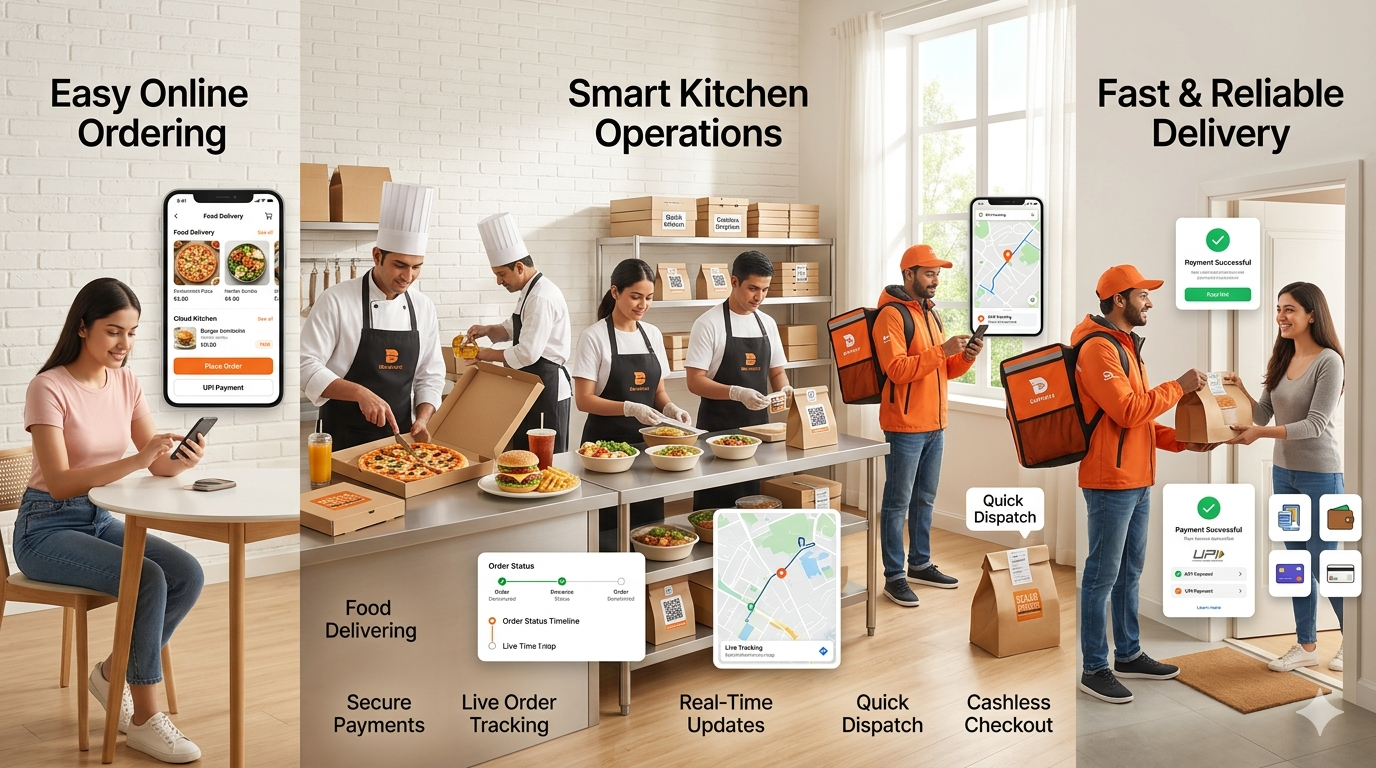
Operational setup is where many businesses stumble. Getting this right from day one prevents compounding errors that damage customer trust.
GST and Invoicing
Configure your store to automatically generate GST-compliant invoices for every order. This is not optional — it's a legal requirement and builds customer trust.
Ensure your GST number is visible in invoices and on your store's policy page.
Checkout Configuration
Set minimum order values by zone if applicable. Protects your delivery cost per order.
Configure delivery charges — flat rate, distance-based, or free above a threshold. Be transparent; hidden charges at checkout are the number one cause of cart abandonment.
Enable reCAPTCHA to prevent bot orders and fraudulent activity.
Delivery Setup
Define your delivery zones with precision. Overextending your delivery radius leads to delays, cold food, and negative reviews.
Set realistic delivery time estimates. Underpromise slightly — a customer expecting 45 minutes and receiving in 38 minutes is delighted. The reverse creates escalations.
Assign delivery partners via the delivery app and monitor live order fulfilment.
Payment Gateway
Integrate a reliable payment gateway that supports UPI, cards, net banking, and wallets. The more payment options you offer, the lower your checkout abandonment rate.
Offer cash on delivery where feasible, particularly in markets where digital payment adoption is still growing.
Analytics and Security
Google Analytics: Connect Google Analytics to your store from day one. Understanding where your traffic comes from, what pages customers spend time on, and where they drop off is essential for growth.
reCAPTCHA: Protect your ordering system from spam and fake accounts. Particularly important as your store's visibility grows.
Marketing Your Online Food Business
Even the best food and the most seamless ordering experience won't generate orders without consistent, targeted marketing. The good news is that food marketing with genuine product quality behind it compounds effectively over time.
SEO — Search Engine Optimisation
Optimise your store pages for local and category-based search terms. When someone searches how to start an online food store or looks for your cuisine in your city, your store should appear. Key SEO actions:
Optimise page titles, meta descriptions, and image alt text for your primary cuisine and location.
Create a Google Business Profile and keep it updated. This drives significant local search visibility.
Build location-specific landing pages if you serve multiple areas.
Paid Advertising
Google Ads: Target high-intent search terms — people actively looking for food delivery in your area. Start with a small budget, test which keywords convert, then scale.
Meta Ads (Facebook / Instagram): Highly effective for food because of the visual format. Carousel ads featuring your best dishes with a direct ordering link work exceptionally well.
Retargeting ads for users who visited your store but didn't order convert at significantly higher rates than cold traffic.
Content Marketing
Share behind-the-scenes content — kitchen processes, sourcing stories, chef introductions. This builds authenticity and trust.
Post consistently on Instagram and WhatsApp Business. Food content performs well organically when it's genuine and visually strong.
Use WhatsApp broadcasts to communicate with existing customers — new dishes, limited-time offers, weekend specials.
Encourage satisfied customers to leave Google Reviews. Social proof significantly influences first-time orders.
Marketing compounds when it's consistent. Even three months of disciplined, targeted marketing builds brand familiarity that dramatically reduces customer acquisition cost over time.
Order Fulfilment
Fulfilment is where promises become reality. Every operational decision you've made upstream — menu design, delivery zones, preparation times — converges at this point.
Speed and Accuracy
Establish a kitchen workflow that minimises the time between order receipt and dispatch. The first 5–10 minutes after an order is placed are the highest-leverage window.
Verify every order before dispatch — correct items, correct portions, correct customisations. A single wrong order costs more than the order value in customer service time and reputation.
Real-Time Updates
Customers expect to know where their order is. Automated order status updates (confirmed, preparing, out for delivery) significantly reduce inbound enquiries and improve satisfaction.
The delivery partner app should update delivery status in real time, giving customers accurate ETAs without manual intervention.
Packaging — A Critical Operational Variable
Match your packaging to the dish. Gravies need leak-proof containers. Fried items need vented packaging to stay crispy. Biryani needs sealed containers to retain heat and aroma.
Invest in tamper-evident seals. Customers are significantly more comfortable with sealed packaging — especially post-pandemic.
Brand your packaging. Even simple stamped boxes with your logo and a QR code to your store create a professional impression and drive repeat orders.
For long-distance deliveries, use insulated bags to maintain food temperature. Cold food on arrival is the single most common reason for negative reviews in food delivery.
Scale Your Online Business
Once your operation is running consistently — orders flowing, delivery reliable, customer feedback positive — scaling becomes a disciplined process of analysing, strategising, implementing, and repeating.
Analyse
Review your order data weekly: which dishes sell most, which have the highest margin, which generate the most complaints.
Analyse customer repeat rates. A high one-time order rate with low repeat rate signals a food or experience quality issue.
Track your delivery performance metrics: average delivery time, failed deliveries, late deliveries by zone.
Strategise
Identify your highest-margin dishes and allocate marketing budget to promote them specifically.
Identify your weakest delivery zones and either improve operations there or reduce coverage to protect customer experience.
Consider launching additional virtual brands from the same kitchen — a proven cloud kitchen scaling strategy that maximises kitchen utilisation.
Implement
Expanding the Menu: Add dishes systematically — one or two at a time — after ensuring the kitchen can handle increased SKU complexity without compromising existing quality.
Improving Delivery Efficiency: Add delivery staff during peak hours. Implement zone-based routing to reduce delivery time. Invest in better insulated packaging as volume grows.
Increasing Order Volume: Launch loyalty programmes, referral incentives, and subscription meal plans. Consistent customers are far less expensive to retain than new ones are to acquire.
Understanding how to start cloud kitchen business and scale it is ultimately about operational discipline. The businesses that grow sustainably are those that treat every data point as an instruction and every customer complaint as a product brief.
The cycle is simple: analyse what's working, strategise around the highest-leverage improvements, implement with precision, measure the outcome, and repeat. Every iteration should produce a more efficient, more profitable, and more customer-centric operation.
Ready to launch your food delivery business?
Shopaccino provides everything you need to build, manage, and grow your online food delivery store — from a fully branded customer app to a real-time delivery partner app, custom delivery zones, scheduled orders, and zero per-order commission. It is a purpose-built ecommerce platform for food businesses that want full ownership of their digital channel.