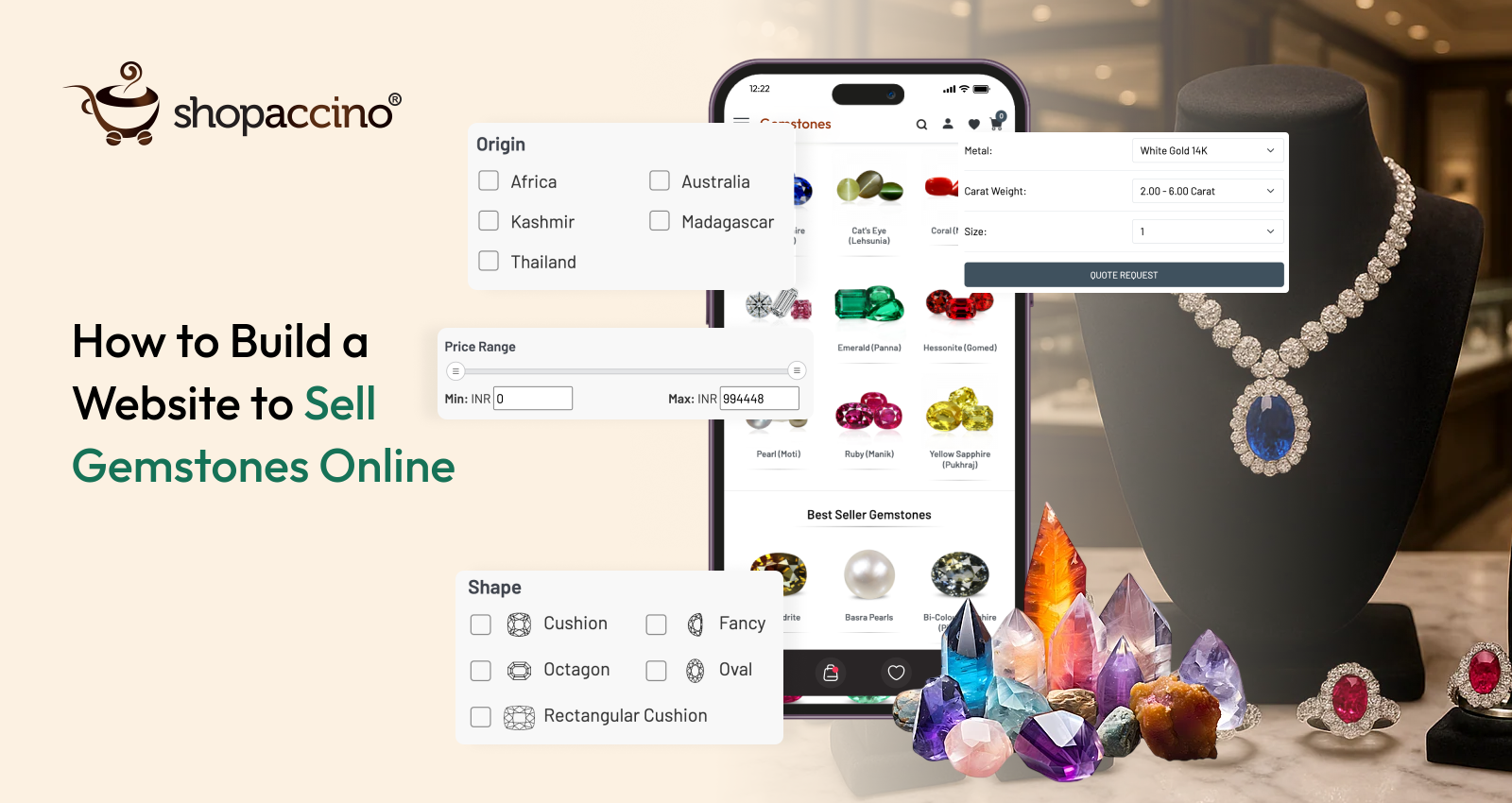
How to Build a Website to Sell Gemstones Online
Overview
The global gemstone market is one of the few retail categories where trust, provenance, and product knowledge are as critical as pricing. Unlike fashion or electronics, buying a gemstone online is a high-consideration purchase — one where buyers rely almost entirely on the seller's credibility. This makes building the right kind of online presence not just a technical task, but a commercial and reputational one.
Understanding how to sell gemstones online is not simply about listing products on a website. It requires a structured approach to certification transparency, product data accuracy, visual presentation, and trust-building at every touchpoint.
Why These Fundamentals Matter
Credibility: Buyers cannot physically inspect the stone. Your website must substitute for the in-person experience through verifiable information and professional presentation.
Transparency: Origins, treatments, and certifications must be disclosed clearly. Hidden information erodes trust and increases returns and disputes.
Product Information: Incomplete listings drive buyers away. Every stone must carry full specifications — weight, origin, colour grade, treatment status, and certification.
Global Demand: Markets in the USA, Europe, the Middle East, and Southeast Asia have significant appetite for natural gemstones. Indian sellers are especially well-positioned given access to quality rough and established export infrastructure.
Pricing Variability: Gemstones do not have fixed MRP. Prices vary by quality, rarity, and market dynamics. Your platform must accommodate quote-based pricing for high-value or rare stones.
Identify Your Market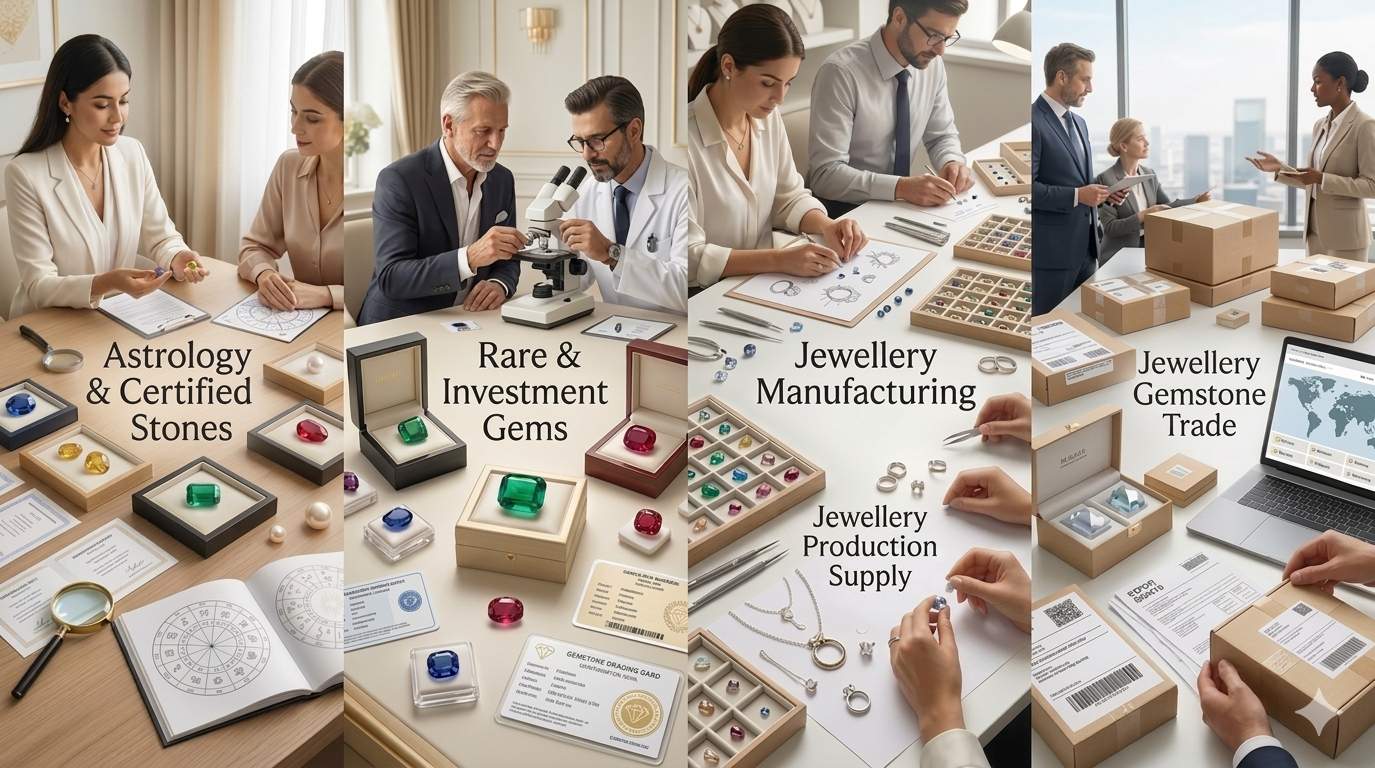
Before building your store, identify precisely which segment of the gemstone market you are entering. The strategies, pricing models, and customer education required vary significantly across these categories.
Astrological Gemstones
In India and across South and Southeast Asia, gemstones are purchased as much for astrological significance as for aesthetic value. Blue sapphire, yellow sapphire, ruby, emerald, diamond, pearl, coral, and hessonite garnet are the primary stones in this segment. Buyers here want natural, unheated, untreated stones with laboratory certification confirming these qualities. This segment demands precision in treatment disclosure and certification from recognised labs like GIA, IGI, GRS, GJEPC, or SSEF.
Luxury and Collector Stones
This segment targets collectors, investors, and high-net-worth buyers seeking rare or exceptional specimens — Paraiba tourmalines, Kashmir sapphires, Burmese rubies, Colombian emeralds, and Padparadscha sapphires. Buyers are sophisticated, expect provenance documentation, and often request certificates from internationally respected laboratories. Pricing is negotiation-driven and relationship-dependent.
Jewellery-Grade Stones
These are calibrated, commercially graded stones purchased by jewellers and jewellery manufacturers for setting. This is a volume-driven, B2B-oriented market where consistent quality, cut standardisation, and reliable supply are more important than rarity. Buyers here often purchase in bulk and value catalogue depth, filter capability, and smooth repeat ordering.
Export-Focused Markets
India is a global hub for gemstone cutting, polishing, and trading. If you are exploring how to export gemstones from India, your target markets include wholesalers, jewellery manufacturers, and retailers in the USA, UAE, UK, Thailand, Hong Kong, and Germany. This segment requires an understanding of export documentation, GST implications, HS codes, and international payment handling.
Identify the Gap in the Market
Most gemstone websites share common weaknesses. Before building your store, study what competitors are doing — and more importantly, what they are failing to do.
How to Analyse Competitors
Review the top-ranking gemstone websites for your target market.
Evaluate their product pages: are certifications prominently displayed? Is origin clearly mentioned?
Test their filtering: can a buyer filter by origin, treatment, colour, and carat weight simultaneously?
Assess their content: do they educate buyers about gemstone quality, treatments, or astrological significance?
Check their trust signals: are there return policies, authenticity guarantees, and customer reviews?
Common Trust Gaps in the Market
Lack of certification clarity: Many sellers list 'certified' without specifying which laboratory issued the certificate or what the certificate covers.
Poor filtering options: Buyers cannot find what they want. Without filters for origin, treatment, colour, shape, and weight, the buying experience becomes frustrating.
Unclear origin details: Country of origin affects value significantly — a Burmese ruby commands a premium over a Mozambique ruby of similar quality. Most sites do not make this distinction.
Lack of buyer education: First-time buyers need guidance on what treatments mean, how to read a certificate, or why origin matters. Sites that provide this build more trust and convert better.
Inconsistent pricing rationale: When prices vary widely for seemingly similar stones with no explanation, buyers disengage. Context around pricing — quality factors, rarity, provenance — builds confidence.
Fill these gaps systematically. Your advantage does not need to be price — it can be transparency, education, and trust.
Select a Product and Prepare Your Catalogue
A well-structured product catalogue is the operational backbone of any gemstone business online. Each listing must carry complete, accurate, and verifiable information. Incomplete listings are one of the primary causes of abandoned purchases in this category.
Required Product Data for Each Listing
Product Name: Clear, search-friendly name. Example: Natural Blue Sapphire — Ceylon, Unheated, 3.45 Ct.
Gemstone Type: Ruby, Emerald, Sapphire, Diamond, Alexandrite, etc.
Origin: Country of origin. For premium stones, specify region where relevant — Burma (Mogok), Kashmir, Colombia (Muzo), Ceylon (Sri Lanka), etc.
Colour: Primary colour, secondary hue, and saturation. Use standardised colour grading terminology where possible.
Clarity: Eye-clean, minor inclusions, moderate inclusions. For coloured stones, clarity grading differs from diamonds.
Cut: Faceted (oval, round, cushion, pear, emerald cut), cabochon, or raw/rough.
Shape: Oval, round, cushion, pear, heart, marquise, trillion, etc.
Treatment: Natural/unheated, heated, fracture-filled, oiled, irradiated. Always disclose treatment status. This is non-negotiable in the international market.
Certification: Issuing laboratory (GIA, IGI, GRS, SSEF, AGL, Gubelin, IGI-India, GGTL, Gem Research Swisslab), certificate number, and a scan or photograph of the certificate.
Weight in Carat: To two decimal places minimum.
Weight in Ratti: For the astrological segment, displaying weight in ratti (1 carat = 0.9 ratti approximately) is essential.
Product Type: Loose stone, calibrated stone, specimen, pair, lot.
Pricing: Per carat or total price. For rare or high-value stones, use a 'Request a Quote' or 'Contact for Price' option.
SKU: Unique identifier for inventory management.
Stock: Single piece, limited quantity, or available to order.
Building Effective Filters
For a gemstone store to be functional, filtering must be deep and precise. Buyers should be able to narrow results by:
Origin (country and region)
Colour (primary hue and saturation)
Certification (laboratory name)
Shape (faceted shape or cabochon)
Treatment (natural/untreated vs. treated)
Cut
Weight range (carat and ratti)
Generic ecommerce filtering by category or price is insufficient for gemstones. The platform you choose must support attribute-based filtering at this level of granularity.
Gathering Accurate Product Data
Source laboratory certificates from GIA, IGI, GRS, or recognised Indian labs for every stone you list with claims of origin or treatment status.
Work directly with reputable suppliers who provide origin documentation and full disclosure.
For stones sourced without certification, be transparent about this. Do not claim lab-certified status without evidence.
Maintain a master product spreadsheet with all attributes before uploading to your store.
Hi-Res Images and Videos
In the absence of a physical viewing experience, visual presentation is your most powerful selling tool. Buyers are making significant financial decisions based on what they see on screen — the standard must be exceptional.
Photography Standards
Minimum resolution: 1500 x 1500 pixels per image. Larger is preferable.
Multiple angles: top-down, side profile, and three-quarter view at minimum.
Zoom capability: product pages must support high-magnification zoom so buyers can inspect inclusions, cut quality, and colour distribution.
Consistent backgrounds: white or neutral grey for colour accuracy. Avoid styled or cluttered backgrounds that distort colour perception.
Include a scale reference or weight indicator in at least one image.
Video Requirements
Short video clips (15–30 seconds) rotating the stone under a light source reveal brilliance, colour shift, and inclusion patterns more accurately than any photograph.
For alexandrite, colour-change garnets, and chatoyant stones, video is non-negotiable — it is the only way to demonstrate the stone's defining optical property.
Videos should be embeddable directly on the product page, not linked externally where possible.
Building Trust Through Visuals
Show the certificate photograph alongside the product. Show the inclusion patterns honestly — attempting to hide flaws destroys trust when the buyer receives the stone. Buyers who can see exactly what they are purchasing return less, dispute less, and refer more.
Prepare Content for Your Brand
Before building the website, your brand's narrative and informational content must be clear. Content is not an afterthought — it is foundational to trust and SEO.
Essential Content to Prepare
Business Goal: Define whether you are targeting astrological buyers, collectors, jewellers, or exporters — or a combination. This shapes your messaging and product strategy.
About the Brand: Your sourcing story, years of experience, geographic reach, and any credentials or affiliations (gem associations, laboratory partnerships). Buyers want to know who they are buying from.
Sourcing Transparency: Where do your stones come from? Direct mine sourcing, trading relationships, auctions? Transparency here builds significant trust, particularly with international buyers.
Unique Selling Propositions: What makes you different? Specialisation in a particular origin, treatment-free guarantee, laboratory certification on every stone, next-day dispatch, or competitive pricing on rare varieties.
Policies: Return and exchange policies, authenticity guarantees, dispute resolution process, and international shipping terms. These must be clearly accessible — not buried in the footer.
Trust Signals: Customer testimonials, press mentions, gem laboratory partnerships, membership of trade bodies (GJEPC, ICA), and social proof.
Register Your Brand
Whether you are starting fresh or expanding an existing physical business online, your brand identity must be formalised before you launch.
New vs. Existing Businesses
If you are entering the gemstone market for the first time, register a business entity (proprietorship, LLP, or private limited company), obtain a GST registration, and consider an Import Export Code (IEC) if you intend to sell internationally.
If you are an existing trader or jeweller moving online, ensure your existing registrations cover ecommerce activity and that your IEC is active if export is part of your plan.
Brand Guidelines
Consistency in visual identity builds recognition and signals professionalism. Define the following before you build:
Logo: Professional, scalable, and appropriate for a premium product category. Avoid overly ornate designs that do not render cleanly at small sizes.
Colour Scheme: Deep, rich, or neutral palettes work well for gemstone brands — navy, dark green, black, or warm gold/ivory combinations.
Typography: Serif fonts for headings convey heritage and luxury. Sans-serif for body text maintains readability.
Tone of Voice: Authoritative, informative, and trustworthy. Avoid overly salesy language — gemstone buyers respond better to expertise than hard selling.
Visual Identity: Consistent image treatment, graphic elements, and layout principles that carry across your website, social media, and packaging.
Choose the Right Ecommerce Software
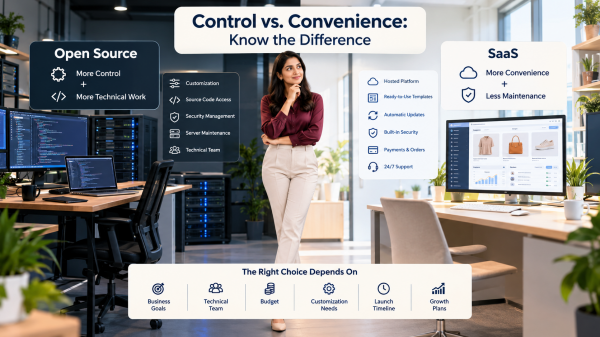
Selecting the right ecommerce platform is one of the most consequential decisions you will make. Many general-purpose platforms were not designed with high-consideration, attribute-rich products like gemstones in mind.
What to Look for in a Gemstone Ecommerce Platform
Advanced filter and attribute options: The ability to create multiple product attributes and filter combinations is critical. A buyer must be able to filter by origin AND treatment AND weight AND certification simultaneously.
Video embedding on product pages: Not just image galleries. Video is essential for gemstones.
Quote request / Contact for Price functionality: For high-value stones or rare specimens, fixed price display is not always appropriate. The platform must support a 'Request a Quote' or 'Contact for Price' option at the product level.
International selling capability: Multi-currency display, international payment processing, and smooth checkout for overseas buyers.
SEO control: Full control over meta titles, descriptions, product URLs, and structured data.
Performance and mobile optimisation: A significant proportion of buyers browse on mobile. Page load speed directly affects conversion.
Shopaccino is an Indian ecommerce platform built for serious product businesses. It supports advanced product attributes and filtering, video embeds, quote-based pricing options, international shipping integration, and complete SEO control — making it a practical choice for sellers looking to understand how to start an online gemstone business without the complexity of enterprise solutions or the limitations of generic platforms.
Choose a Design and Theme
Your website's design must communicate premium quality before a visitor reads a single word. In the gemstone category, first visual impressions determine whether a visitor trusts you enough to explore further.
Design Principles for Gemstone Stores
Premium aesthetic: Clean, spacious layouts with high-quality imagery. Avoid cluttered designs, excessive animations, or discount-store visual cues.
Easy navigation: Buyers should be able to find stones by type, origin, colour, or certification within two clicks. A clear top-level navigation with logical category structures is essential.
Filter-friendly layout: The left-sidebar or top-bar filter panel must be prominent, fast, and responsive. If filtering is buried or slow, buyers leave.
Product-focused presentation: Product images should be large, clean, and central. The product page layout must prioritise the visual experience over text.
Trust elements above the fold: Certification badges, 'natural & certified' statements, and contact accessibility should be visible without scrolling.
Upload Content
With your platform configured and design in place, systematically upload and structure your content across four key areas.
Products
Upload all product listings with complete attribute data as detailed in Section 4.
Write unique, informative descriptions for each stone — not templates. Include quality observations, suitability (jewellery use, astrological use, collection), and any unusual characteristics.
Price every stone, or enable the 'Request a Quote' option where pricing is flexible or negotiation-driven.
Upload certificate scans or photographs alongside product images.
Informative and Educational Content
Gemstone buyers, especially first-time buyers, need education. Build a resource section that covers:
Gemstone origin guides — what makes Burmese rubies, Ceylon sapphires, or Colombian emeralds distinct.
Treatment disclosure guides — what heating, filling, and oiling mean, and why it matters to value.
How to read a gemstone certificate — a walkthrough of a GIA or IGI report.
Ratti vs. carat — explaining the difference for the astrological buyer.
FAQs — returns, authenticity, shipping timelines, and what certifications you carry.
Visuals and Banners
Homepage banners should feature your best product photography — no stock imagery.
Use category banners that set visual tone for each stone type.
Keep design clean and premium. Avoid promotional clutter on first impression.
Policies
Return and exchange policy — be specific about timeframes and conditions.
Shipping policy — domestic and international timelines, carriers used, insurance.
Authenticity guarantee — what you stand behind and how disputes are handled.
Privacy policy and terms of service — mandatory for trust and compliance.
Manage Store, Shipping & Payments
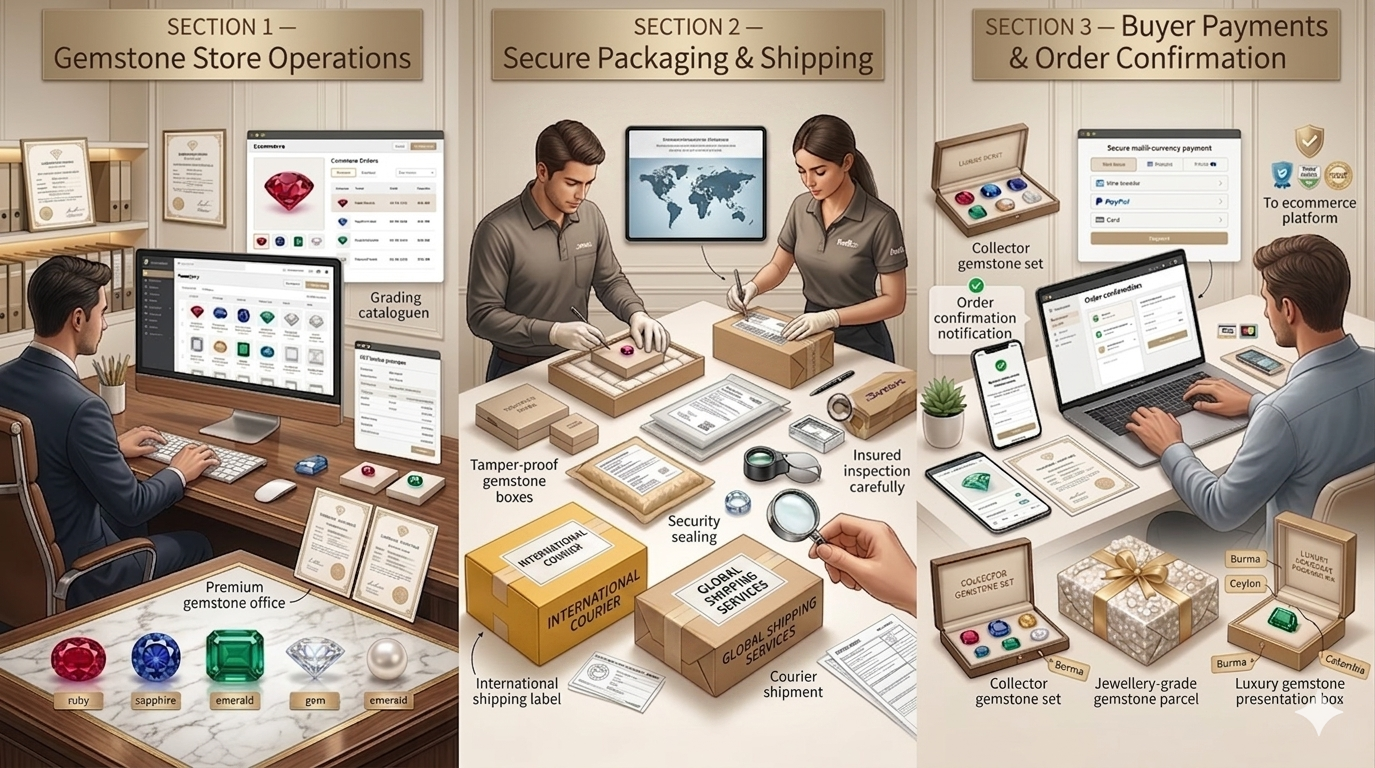
The operational infrastructure of your store must be configured correctly before you go live.
GST and Invoicing
Ensure your GST registration is active and that the platform generates GST-compliant invoices automatically.
For B2B buyers and jewellers, the ability to provide proper tax invoices is a minimum requirement.
Checkout Setup
Keep the checkout process simple — multi-page, friction-heavy checkouts increase abandonment.
Offer guest checkout alongside account-based checkout.
For high-value orders, consider an order review or confirmation step that allows buyers to verify their purchase details.
Payment Gateway
Integrate a domestic payment gateway (Razorpay, PayU, or CCAvenue) for Indian buyers.
For international buyers, PayPal or Stripe integration is essential. Ensure your gateway supports multi-currency transactions.
Wire transfer options should be available for high-value wholesale orders.
Shipping Integration
For domestic shipping, integrate with Delhivery, BlueDart, or FedEx India. For international shipping — essential if you are pursuing how to start gemstone export business — integrate with DHL Express, FedEx International, or UPS. Gemstones must always be shipped insured and with appropriate customs documentation.
Include HS code (7103 series for precious/semi-precious stones) on all export shipments.
Always use tamper-evident, padded packaging with full certificate inclusion.
Analytics and Security
Install Google Analytics 4 and set up conversion tracking from day one. Understand where buyers are coming from and where they drop off.
Enable reCAPTCHA on all forms to prevent spam and fraudulent enquiries.
Use SSL (HTTPS) — mandatory for customer trust and Google search ranking.
Marketing Your Gemstone Store
Building the store is only half the equation. To sell gemstones globally online, you need a consistent, multi-channel marketing approach.
Search Engine Optimisation (SEO)
How to sell gemstones online and related long-tail keywords should be targeted across product pages, collection pages, and informational content.
Write unique meta titles and descriptions for every product page.
Build internal links between related stone types, origin guides, and product listings.
Target local SEO for astrological buyers in India, and international SEO for export-focused keywords.
Submit your sitemap to Google Search Console and monitor indexing.
Paid Advertising
Google Shopping ads are highly effective for gemstone searches with commercial intent.
Instagram and Pinterest ads work well for jewellery-grade and luxury collector segments.
Retargeting campaigns recapture visitors who viewed high-value stones but did not purchase.
For international markets, consider Google Ads campaigns targeting specific geographies with localised ad copy.
Content Marketing
Gemstone buying is a considered decision. Buyers research extensively before purchasing. Informative content — origin stories, quality guides, certification walkthroughs — drives organic search traffic and positions your brand as an authority.
Publish blog articles targeting specific search queries: 'difference between heated and unheated ruby', 'how to choose a gemstone for astrology', 'Ceylon vs. Bangkok sapphire'.
Educational YouTube videos can drive significant discovery-stage traffic.
Email marketing to previous buyers with new arrivals, rare finds, and gemstone education keeps your audience engaged.
Order Fulfilment
The fulfilment process is where your brand's promises are tested. In the gemstone business, how you deliver is as important as what you deliver.
Dispatch and Packaging
Dispatch within the stated timeframe — prominently communicated on the product page and in the confirmation email.
Packaging must be premium: a padded gemstone box or a folded pouch, inside a secure outer carton. Presentation matters even for a purely functional B2B order.
Always include the original laboratory certificate. The stone without its certificate is worth less to the buyer and creates disputes.
For high-value shipments, include a personalised note or authentication card from your brand.
Tracking and Communication
Send an automated dispatch notification with a tracking number the moment the order ships.
For international orders, communicate proactively about customs — what documentation has been included and what the buyer may be expected to handle at their end.
Respond to delivery exception alerts immediately. A stuck shipment that is communicated about transparently creates far less damage than one that is silently delayed.
Scale Your Online Business
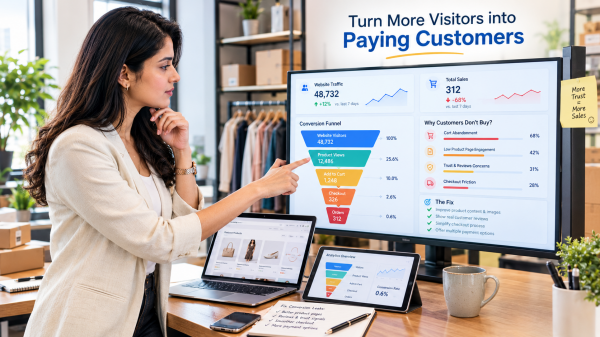
Once your store is operational and generating consistent orders, the path to scaling — particularly if you are exploring how to sell gemstones globally online — follows a repeatable cycle: analyse, strategise, implement, and repeat.
Analyse
Review Google Analytics data monthly: top-traffic pages, conversion rates by stone type, geographic distribution of visitors, and cart abandonment rates.
Identify which stone categories are driving revenue and which are not converting.
Monitor customer feedback and return reasons — patterns reveal catalogue or trust gaps.
Strategise
Expand catalogue depth in your best-performing categories.
Identify emerging market opportunities — new geographies, seasonal demand (wedding season, astrological calendars), or trending stone types.
If export is a growth target, invest in understanding how to export gemstones from India at a commercial scale: GEM & Jewellery Export Promotion Council (GJEPC) membership, export documentation workflows, and building relationships with international buying agents.
Implement
Launch targeted campaigns for new markets or stone types.
Add new filtering attributes as your catalogue complexity grows.
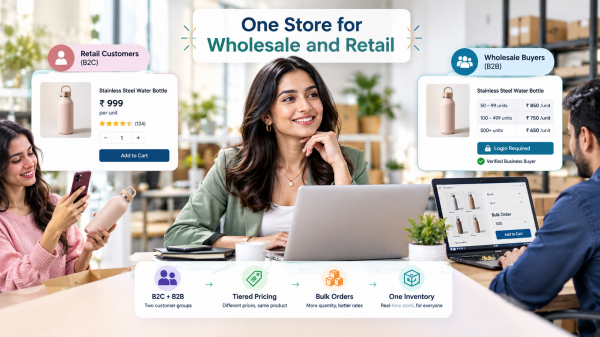
Consider a B2B portal or trade pricing tier for repeat wholesale buyers and jewellers.
Explore wholesale or trade show relationships that can feed your online inventory with unique, rare, or origin-specific stones.
Repeat
Growth in the gemstone business compounds through trust. Every buyer who receives an accurate, well-presented, correctly certified stone and has a seamless purchase experience is a potential repeat customer and a source of referrals. The operational and catalogue standards you establish from the beginning determine the ceiling of your growth.
Ready to Build Your Gemstone Store?
Shopaccino provides the ecommerce infrastructure gemstone and jewellery businesses need — advanced product attributes, deep filtering, video-enabled product pages, quote request functionality, and international selling capability. Build your store on a platform built for how gemstones are actually sold.